
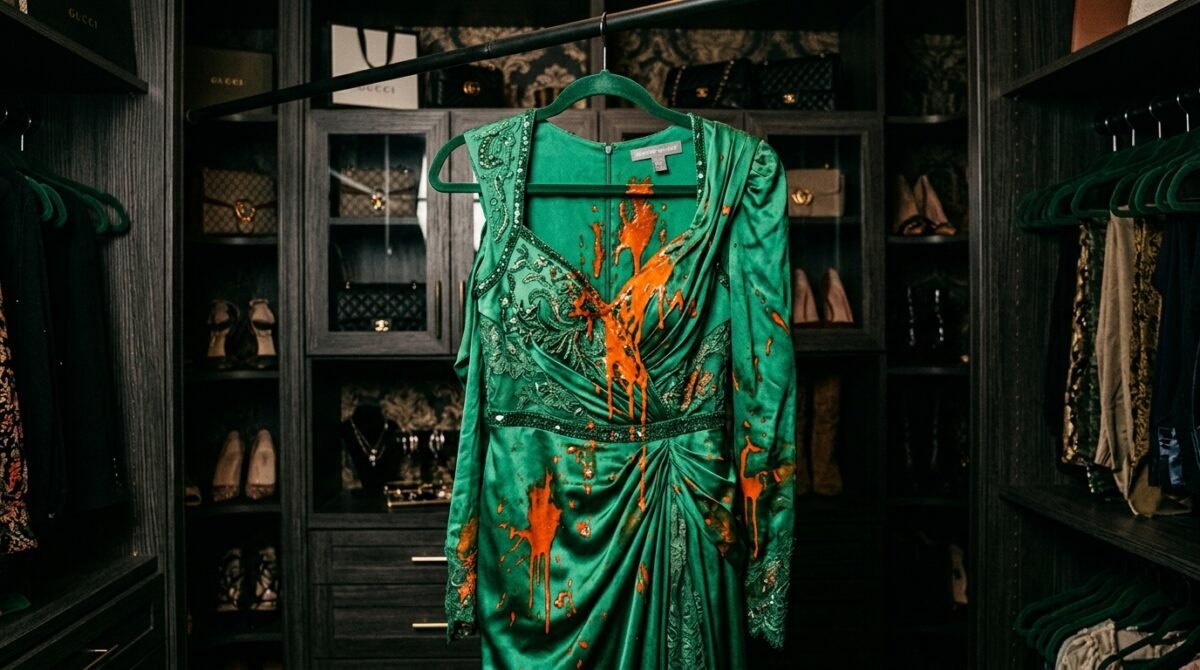
We all have that one friend who treats our belongings like their own private rental warehouse. For years, I tolerated Chloe’s carelessness because I valued our decade-long friendship more than things. I’ve lent her shoes, bags, and jewelry, usually getting them back with minor scuffs I’d just buff out myself. But there is a line, a literal and metaphorical line, that should never be crossed. That line was drawn in $2,200 worth of vintage Italian silk, hand-dyed and cut to perfection.
The gown in question wasn’t just a dress; it was an investment piece, an heirloom-quality garment I had saved months for to wear to my sister’s black-tie wedding. When Chloe begged to borrow it for her company’s end-of-year gala, I hesitated. I laid out the ground rules: no smoking, no red wine, and absolutely no eating while wearing the garment. She laughed, promised me it would stay in a garment bag for 90% of the night, and swore on our friendship that I wouldn’t even know it had left my closet.
When she returned the dress three days later, the sight made me physically ill. It wasn’t just a spill; it looked like she had been eating buffalo wings or perhaps a heavy taco platter directly over the bodice. The hot sauce had oxidized, turning a deep, stained crimson that was already eating into the delicate fibers of the silk. To make matters worse, she had stuffed it into a plastic grocery bag, sealing the moisture and the stain into the fabric permanently.
But the true horror wasn’t the damage; it was the nonchalant, almost mocking attitude she adopted when I demanded we discuss the cost of dry cleaning or, more realistically, total replacement. I thought I knew who my best friend was. I thought I knew what she valued. I was profoundly wrong.
The Morning of the Great Betrayal

The morning the dress was returned, I woke up to a frantic knock at my door. Chloe was standing there, looking slightly disheveled, holding a crinkled plastic shopping bag like it was a bag of discarded laundry. She didn’t even look me in the eye as she shoved it into my hands. ‘It was a great night, but I’m running late for work, so I’ll catch you later!’ she chirped, before turning on her heels and speed-walking to her car.
I felt a knot of dread form in my stomach. I carried the plastic bag to my room, feeling the strange, stiff texture of the fabric through the thin plastic. When I opened the bag, the smell of vinegar and capsaicin hit me first, followed by the sight of the ruined silk. My heart dropped. This wasn’t a smudge; it was a disaster zone of orange-red grease covering the entire front of the gown.
I immediately pulled out my phone and dialed her number. She picked up on the third ring, her voice already sounding annoyed that I was calling her during her commute. I didn’t mince words. I needed her to understand exactly what I was looking at.
“Chloe, I just opened the bag. There is hot sauce all over the front of my gown. The silk is stained, and the fabric is already starting to pucker. How did this happen?”
— Me
“Oh, that? It was an accident at dinner. Someone bumped my arm. Honestly, it’s just a dress, and it’s probably going to come out with a little club soda. Don’t be so dramatic.”
— Chloe
I was floored. Her lack of accountability was staggering. I had explicitly told her this was a delicate fabric, one that required specialized care. By the time I sat down at my vanity, trembling with a mix of fury and disbelief, I knew that our friendship was fundamentally altered.
I spent the next hour calling three different high-end dry cleaners, sending them photos of the damage. Every single one of them told me the same thing: the acidity of the sauce had likely compromised the dye, and even if they managed to lift the stain, there would be a permanent shadow left on the silk. It was essentially trash.
The Audacity of the Text Message Exchange
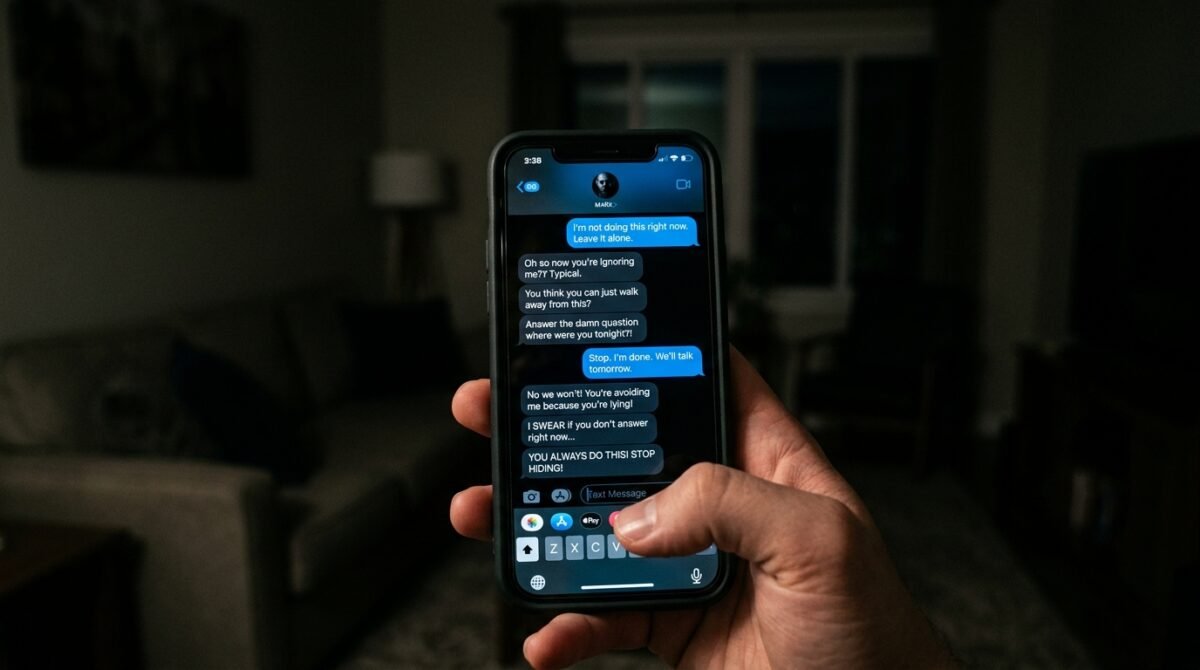
I knew that a calm, face-to-face conversation might be too much for her to handle without her getting defensive. I decided to start a paper trail. I sent her a detailed breakdown of the cost and the professional opinion regarding the damage. I didn’t want to be mean, but I wanted to be clear: this was a financial loss, not just a social inconvenience.
I waited for the response for three hours. When the notification finally popped up, it felt like a punch to the gut. She wasn’t just refusing to pay; she was gaslighting me about the value of the dress and my own expectations of her. It was as if she felt entitled to ruin my property because we were ‘friends.’
“Hey, I looked into the cleaning. It’s going to be $200 just to attempt it with no guarantees, and the dress is likely a total loss. Since you borrowed it under strict conditions, I need you to cover the cost of a replacement or at least the original price of $2,200.”
— Me
“Are you serious? You expect me to pay two grand for a dress I wore once? You’re acting like I did this on purpose. That is not how friends treat each other. Maybe if you didn’t buy such expensive stuff, you wouldn’t be so stressed out by life.”
— Chloe
The audacity made my blood boil. It wasn’t about the money anymore—though $2,200 is certainly not a negligible amount. It was about the complete lack of respect for my boundaries and my belongings. She was turning this into a moral failing on my part for being ‘too materialistic.’
I realized then that this was a pattern. She had always pushed boundaries, but because I had always folded, she assumed she had carte blanche. This time, I wasn’t going to fold. I sat down and started documenting every single thing she had ever borrowed and returned damaged, building a list that proved this wasn’t a one-time accident.
The Escalation to Social Media
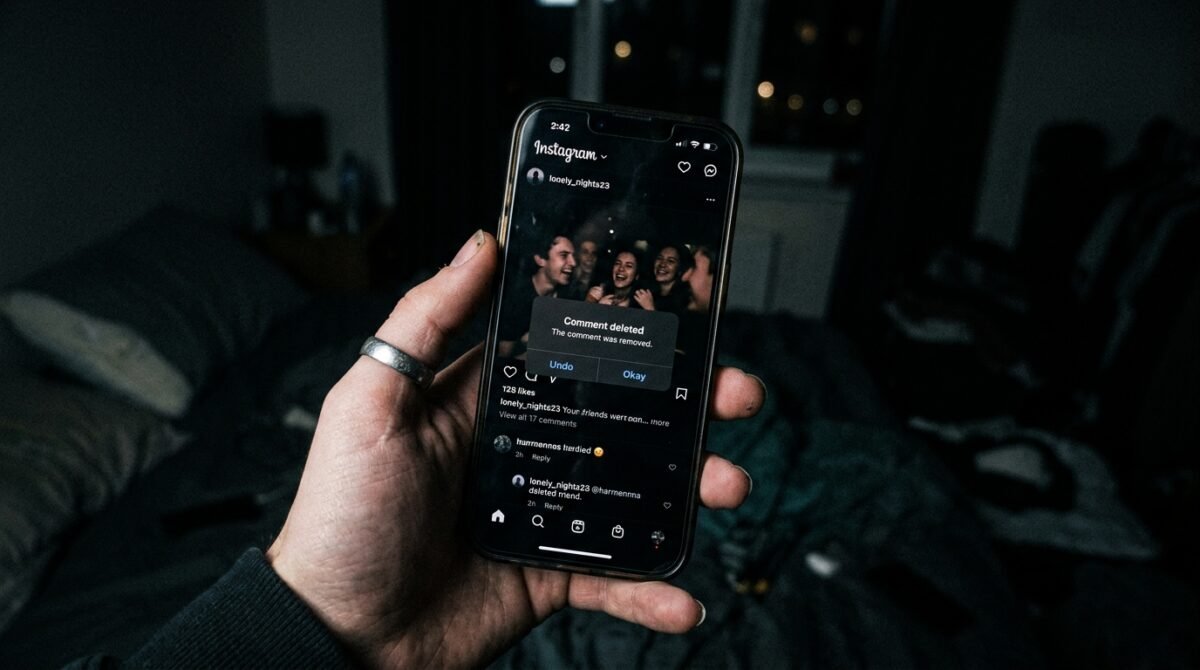
When Chloe decided to post a picture of herself in the dress on her Instagram, looking radiant and completely ignoring the fact that she had destroyed it, I snapped. The comments were full of people praising her ‘stunning look,’ unaware of the carnage that remained in my closet. I left a comment, simply stating: ‘Glad you enjoyed wearing it! Let me know when you’re ready to pay for the cleaning/replacement so I can use the dress again.’
She deleted it within seconds. Then she blocked me. The pettiness was breathtaking. It was the digital equivalent of slamming a door in my face. I realized that my gentle attempts at resolution were being met with hostility and active avoidance.
That night, I didn’t sleep. I instead wrote out the entire story, anonymized, and posted it to a popular relationship advice subreddit. I needed to know if I was the one losing my mind. Was $2,200 a reasonable amount to ask for? Was I being the ‘materialistic’ one? The response was immediate and overwhelming.
“You are not the bad guy. If you borrow something of high value, you are responsible for its condition. If you ruin it, you pay for it. Period. The fact that she’s gaslighting you is a massive red flag. Ditch the friend.”
— u/ReasonableObserver (Top Comment, 32.5k upvotes)
Seeing thousands of strangers validate my anger was the push I needed. It wasn’t about the money; it was about the lack of integrity. Chloe didn’t just owe me a dress; she owed me an apology and a recognition of the damage she had caused. I was no longer interested in ‘keeping the peace.’
The Confrontation at the Cafe

I knew I couldn’t just keep this to texts. I wanted to see her reaction in person. I told her we needed to talk and offered to meet at a neutral, public place—a crowded coffee shop where she wouldn’t be able to scream at me or cause a scene. She showed up late, looking annoyed, clearly expecting me to apologize for ‘harassing’ her.
She sat down, didn’t order anything, and crossed her arms. ‘So, what is it? Are you going to continue your weird crusade on social media?’ she asked, her voice dripping with condescension. I stayed calm, taking a slow sip of my coffee before looking her straight in the eyes.
“Chloe, this isn’t a crusade. It’s an invoice. You ruined a $2,200 garment. You have the means to pay, and you have the moral obligation to do so. If you refuse, I will take this to small claims court. I have the receipts, I have the photos, and I have the text messages.”
— Me
“You’re going to sue me over a dress? That’s friendship-ending. You are absolutely pathetic. I can’t believe you’d throw away ten years over some stupid fabric.”
— Chloe
She tried to make me feel small. She tried to make me feel like the villain. But in that moment, I saw her for what she was: a spoiled adult who had never been told ‘no.’ The realization brought me a strange sense of clarity. I wasn’t losing a friend; I was losing a drain on my resources and my peace of mind.
I didn’t argue back. I just stood up, placed a copy of the receipt on the table, and walked away. I told her she had one week to make it right, or the next communication she received would be a summons.
The Paper Trail of Destruction

As I prepared for the possibility of small claims court, I compiled the ‘Evidence Binder.’ It felt like a divorce proceeding, but for a friendship. I included the original purchase receipt, the professional appraisal for the insurance I had taken out, and the screenshots of our conversations.
But I also included the history of previous items. The scratched sunglasses from three years ago, the torn designer blouse from the year before, the missing jewelry that she ‘lost’ at a party. It was a staggering pattern of negligence that I had simply chosen to ignore in the name of ‘loyalty.’
Each page I turned was a reminder of how much I had let myself be taken advantage of. I had spent years buying her things, picking up the tab at dinner, and being the ‘supportive’ friend while she treated my generosity as a bottomless well. The dress wasn’t the breaking point; it was the catalyst that finally made me look at the last decade with clear eyes.
I felt a strange, cold detachment as I organized these papers. This was no longer about a dress. This was about reclaiming my self-respect. I was finally treating myself with the same care I had been lavishing on someone who didn’t respect me in the slightest.
The Mutual Friends Intervene

By the end of the week, word had gotten out. Our mutual friends were split down the middle. Some were horrified by what Chloe had done, while others thought I was being ‘petty’ and ‘aggressive’ for threatening legal action. One of my oldest friends, Sarah, called me, trying to mediate.
‘She’s really upset, you know,’ Sarah said. ‘She feels like you’re attacking her character over a mistake.’ I laughed, a hollow sound. A mistake is leaving a light on or forgetting to call. Ruining someone’s property and refusing to take responsibility is a character issue.
“Sarah, if I borrowed your car and crashed it, would you expect me to pay for the repairs? Or would you call it a ‘mistake’ and move on? Why is it different because it’s a dress?”
— Me
“It’s just… it’s not the same. It’s an object. Chloe has been there for you through your breakup, through your job loss. Can’t you just let this go for the sake of the history you have?”
— Sarah
The argument that past kindness excuses current bad behavior is the most toxic sentiment in friendship. I told Sarah that I loved the memories we had, but those memories didn’t give Chloe the right to treat me like a doormat. I was done with the emotional hostage-taking.
I realized then that many of these ‘friends’ were really just enablers. They liked the status quo because it meant they didn’t have to confront the uncomfortable reality of who Chloe was. I was the one disrupting the equilibrium, and they didn’t like it.
The Formal Demand Letter
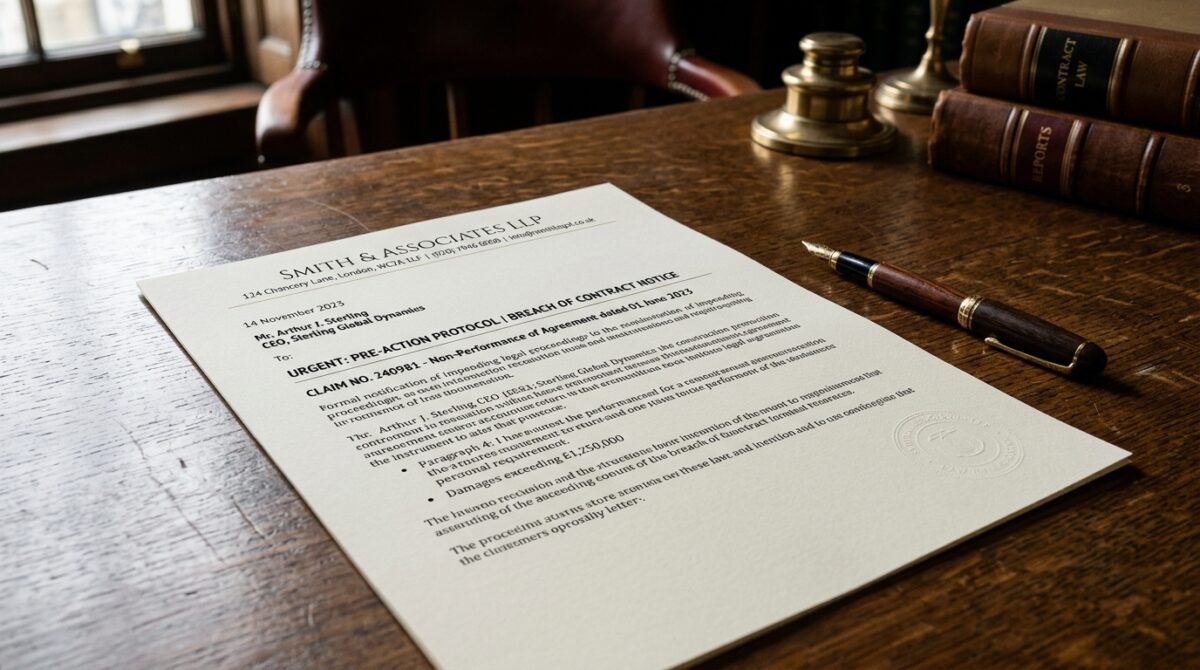
When the week was up and no apology or offer of payment had arrived, I went to a lawyer friend who helped me draft a formal demand letter. It wasn’t a lawsuit yet, but it was a warning shot. It laid out the damages, the attempts to settle, and the deadline for payment before formal legal action would commence.
Sending that letter was one of the most empowering things I’ve ever done. It turned the situation from a messy, emotional confrontation into a clear, transactional matter. I wasn’t asking for her love or her friendship; I was asking for the cost of the property she had destroyed.
The impact was immediate. Within 24 hours of receiving the letter, my phone exploded with messages from Chloe. She wasn’t calling me; she was texting me in a panic, calling me ‘cruel’ and ‘heartless.’ She tried to frame me as the one who was destroying the relationship, conveniently forgetting that she had started the fire.
“You’re really going to send a lawyer’s letter? You’re dead to me. I hope that $2,200 was worth losing a best friend for life. You are a terrible person.”
— Chloe
“The amount is what you owe. The friendship ended when you decided your convenience was more important than my property. Send the check by Friday.”
— Me
I didn’t feel guilty. I felt relieved. The weight of the friendship had been crushing me for years, and now, finally, I was setting it down. The financial aspect was secondary; the primary goal was the finality of the split.
The Small Claims Court Reality

She didn’t send the check. So, I filed. Walking into the local courthouse, I felt a strange mix of nerves and excitement. I had everything prepared: the receipts, the photos, the text messages, and even an email from a professional cleaner confirming that the damage was indeed caused by an acidic substance that had set into the silk.
Chloe arrived with a smirk, clearly thinking she could charm the judge or that I would drop it at the last minute. She was dressed in an expensive designer outfit—ironically, one that looked very similar to the style of the gown she ruined. She didn’t look at me once.
The hearing was brief. The judge didn’t care about our ten-year history. He didn’t care about her ‘feelings.’ He looked at the evidence of the destruction and the lack of attempt to remediate. He asked her, ‘Did you borrow the item? Did you return it damaged? Did you refuse to compensate the owner?’ She tried to stammer out an explanation about ‘accidents,’ but the judge cut her off.
“The defendant clearly acknowledges the act and the refusal to pay. Property damage is not excused by friendship. Judgment for the plaintiff in the amount of $2,200 plus court costs.”
— The Judge
I walked out of the courtroom feeling like I had just finished a marathon. Chloe was still standing there, looking like she’d been slapped. She had lost more than just the money; she had lost the power she thought she held over me. I didn’t say a word to her. I just walked past, took a deep breath of fresh air, and kept moving.
The Aftermath and Social Cleanup

In the weeks following the judgment, the fallout was swift. Chloe tried to spin the story to our friend group, claiming I had ‘sued her for no reason’ and that I was ‘obsessed with money.’ But the truth was out. People had seen the photos. People knew about the lawyer’s letter. The reality was much harder for her to hide.
I lost a few more friends who insisted that I should have been the ‘bigger person.’ I let them go without a fight. If ‘being the bigger person’ means allowing people to walk all over you and destroy your things, then I was more than happy to be the ‘small’ person.
I also blocked her on everything. I stopped checking her social media. I stopped asking mutual friends about her. I allowed myself to grieve the friendship, because even if she was toxic, the loss of a decade-long connection is a real form of grief. I acknowledged the good times, but I refused to let them outweigh the bad.
I bought a new dress with the money from the judgment. I didn’t wear it to a party. I wore it to a quiet dinner with my family, just to celebrate the fact that I had finally set a boundary and held it, no matter how hard it was. I realized that my life was much lighter without the constant stress of ‘what is she going to break next?’
Reflections on Friendship and Value

Looking back, the hot sauce incident was the best thing that could have happened to me. It forced me to confront the reality of a relationship that had been unbalanced for years. I had spent so much time being the ‘good friend’ that I had forgotten to be a ‘valued person.’
Friendship shouldn’t be about endurance. It shouldn’t be about how much you can tolerate before you break. It should be a partnership of mutual respect and care. When you realize that you are the only one putting in the effort to maintain that balance, it’s time to move on.
I learned that people who don’t respect your boundaries are not your friends; they are users. And users will always be angry when their source of supply is cut off. The anger they show you is not a sign that you did something wrong; it’s a sign that your boundary is working.
I’m much more selective about who I let into my inner circle now. I’m not afraid to say ‘no,’ and I’m not afraid to ask for what I’m owed. That $2,200 gown taught me more about self-worth than any therapy session ever could.
Conclusion
This saga of the hot-sauce-ruined gown was never really about the dress. It was a litmus test for respect, integrity, and the willingness to stand up for oneself in the face of blatant entitlement. Many of you might argue that $2,200 isn’t worth losing a decade of history, but I would argue that no amount of history is worth a lifetime of being treated like a disposable resource.
Boundaries are only as strong as your willingness to enforce them. If I had let this slide, there would have been a next time, and a time after that, until I was left with nothing but resentment and a closet full of broken things. By choosing to hold Chloe accountable, I didn’t lose a friend; I gained my own respect back.
What about you? Have you ever had a ‘friend’ who treated your belongings or your kindness as a convenience? How did you handle the fallout when you finally decided to draw the line? Let’s talk about it in the comments below—I want to hear your stories of boundary setting and the aftermath of cutting off toxic connections.
What's your verdict on this dilemma?
Vote below to contribute to the official community consensus.

Have a Dilemma Keeping You Up at Night?
Share your real-life feud, wedding chaos, or relationship crossroads anonymously with our editorial team.
What do you think ?
0 Comments🛡️ Comments are moderated to protect community integrity. Your comment will appear once approved by the editorial team.