

Friendship is often tested by the small things: a borrowed sweater, a forgotten lunch, or a slightly awkward social faux pas. But sometimes, the cracks in a relationship are exposed by something as cold and precise as a credit card receipt. For years, Sarah and I navigated our twenties together. We were inseparable, moving through the city with the kind of shared history that makes people assume you’re sisters. But there was always an undercurrent of inequality, a subtle belief on her part that because my lifestyle was ‘cheaper’—due to my sobriety—I was essentially a secondary character in her high-octane social life.
The breaking point arrived on a humid Saturday night at ‘The Obsidian,’ a club where the velvet ropes are real and the prices are astronomical. It was a milestone birthday for her, one that required spectacle, excess, and, apparently, a bottle service tab that could pay a monthly mortgage. I was there to celebrate, to support, and to be a witness to her joy. I was not, however, there to be her financial safety net. When the check arrived—a staggering $1,800 for two bottles of overpriced vodka and mixers—I felt a familiar, sharp pang of dread.
The interaction that followed wasn’t just about money; it was a masterclass in entitlement. Sarah leaned over, her eyes glassy with expensive spirits, and casually suggested that because I hadn’t touched a drop of alcohol, I should be the one to cover her portion of the tip and the hefty service fees. It was the logic of a narcissist: my restraint was to be punished, and her indulgence was to be subsidized. I looked at the check, then at her, and realized that the friendship I had been pouring my energy into was a one-sided investment.
Deciding to split the check down the middle wasn’t just a move of fiscal responsibility; it was a declaration of independence. I didn’t want to play the role of the ‘sober enabler’ any longer. I wanted to see if our bond was strong enough to withstand the reality of a shared bill. What happened next wasn’t just a fight; it was a total collapse of our social circle, a flurry of passive-aggressive texts, and a realization that some people view their friends as nothing more than walking, talking ATMs.
In this article, I am going to walk you through the night everything changed, the fallout that ensued, and why, months later, I don’t regret walking away from a friendship that cost me more than just money. This is a story about the intersection of lifestyle choices, financial abuse, and the moment you finally realize that being a ‘good friend’ shouldn’t mean being a doormat.
The Illusion of the Perfect Night

The night started with the usual fanfare. Sarah had been planning this ‘epic’ birthday for months. She had curated a guest list that felt more like a social ladder than a circle of friends. I was her ‘ride or die,’ the person who made sure she got home safe, the person who listened to the drama, and the person who, for years, had been the quiet stabilizer in her chaotic world. I didn’t drink, a choice I’d made years ago for health reasons, and Sarah had always claimed to ‘respect’ that. Or at least, she respected it as long as it didn’t interfere with her fun.
When we arrived at The Obsidian, the music was a physical weight against my chest. The flashing lights and the sea of people were a stark contrast to my usual quiet Saturday nights. But it was Sarah’s birthday. I wanted her to feel seen, to feel celebrated. We were joined by three other friends, all of whom seemed more interested in their phones than in actual conversation. The table was reserved, the bottles arrived with sparklers, and the atmosphere was thick with the scent of expensive perfume and entitlement.
As the night wore on, the consumption was relentless. I sat there, nursing a sparkling water with a lime wedge, watching as the ‘VIP’ treatment escalated. I was the designated observer. I saw the way Sarah preened for the cameras, the way she ignored the waiters, and the way she began to talk about her finances as if they were infinite. She wasn’t just celebrating; she was performing, and she needed an audience that wouldn’t ask questions about the cost.
“Isn’t this just the best? I feel like a queen tonight! Don’t you just love how the light hits these bottles? We are going to make this a night for the history books, I promise you that.”
— Sarah, shouting over the music
I smiled, but the smile felt thin. I knew the bill was going to be substantial. I had set aside a reasonable amount for a birthday gift and a modest contribution to the table, but I had never signed on to sponsor a lifestyle I didn’t participate in. The irony of the situation wasn’t lost on me: the less I contributed to the bill in terms of consumption, the more Sarah seemed to expect me to contribute in terms of cash.
I kept a mental tally. Two bottles, tax, gratuity. I knew exactly what my share should be. I was prepared to pay it. But I also knew Sarah. I knew the way she looked at people who had less, and the way she assumed that ‘splitting’ meant ‘the person with the most money covers the most.’ I was about to find out exactly how far she thought she could push that boundary.
The Arrival of the Eighteen-Hundred-Dollar Envelope
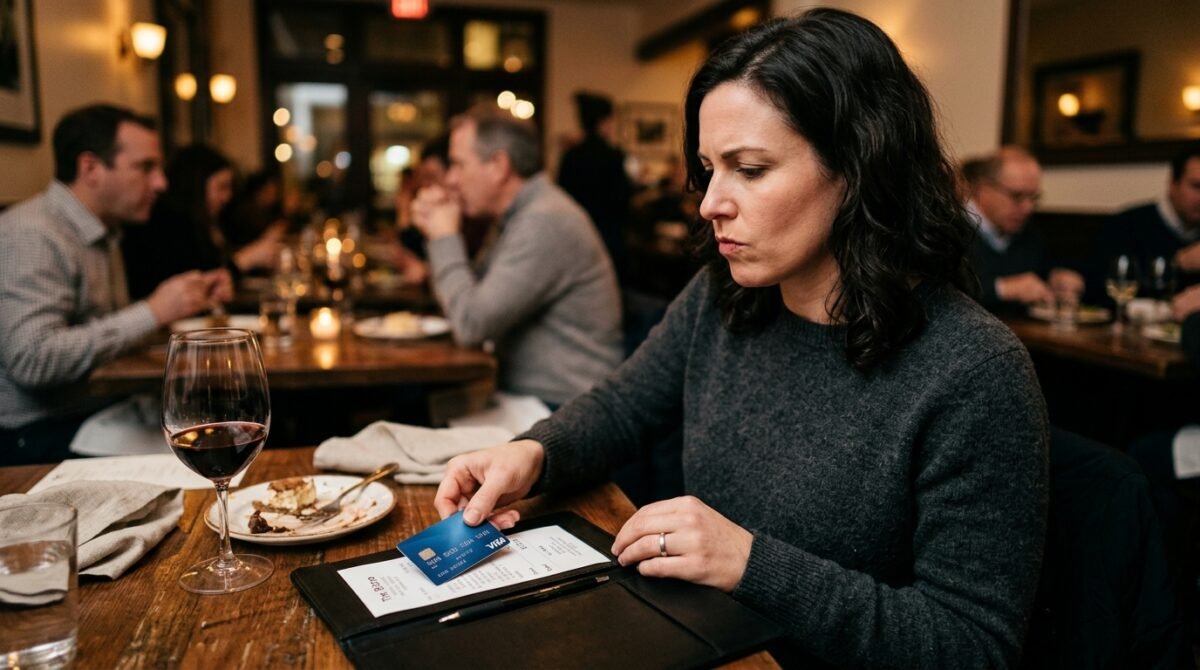
The moment the check hit the table, the music didn’t stop, but the energy in our immediate vicinity certainly shifted. The waiter, a man with a tired expression that suggested he’d seen this exact drama play out a thousand times, dropped the leather folder onto the table. It was heavy, weighted with the promise of a massive tip he was hoping for. Sarah didn’t even open it. She just slid it toward me with a coy, practiced smile that I had learned to fear over the years.
“You handle this, right?” she asked, her voice light, as if she were asking me to pass the salt. “You’re the one who hasn’t been drinking all night, so you’re basically saving money. It only makes sense that you cover the big service fees. Plus, you’re the most organized with money. I don’t want to deal with the math while I’m this buzzed.”
The table went silent. The other girls stopped their chatter, looking between me and the bill. They knew exactly what she was doing. They also knew that if they spoke up, they might be the next target for her ‘organizational’ skills. I looked down at the receipt. $1,850. The service fee was $370. The tax was another $150. Her demand wasn’t just a request; it was an attempt to shift her own indulgence onto my wallet because I had the audacity to be sober.
“Sarah, I’m happy to split the bill evenly among the five of us, plus a fair tip for the service. But I am not covering your fees just because I didn’t drink. That’s not how splitting a bill works.”
— Me, firmly
Her face dropped. The mask of the happy birthday girl slipped for a micro-second, revealing the cold, hard entitlement underneath. She wasn’t used to being told no, especially not by me. She leaned in, her voice dropping to a whisper that was still sharp enough to cut through the bass of the club music. She began to argue that my lack of drinking was ‘an inconvenience’ to the group, and therefore, I owed them a ‘sober tax.’
I felt a strange sense of calm wash over me. It was the calm of a person who has finally stopped trying to maintain a facade. I didn’t argue back. I didn’t get angry. I simply took my credit card out, did the math for exactly one-fifth of the total, and laid it on the table. It was a precise, surgical strike. I was paying for myself, and not a penny more. The look of pure, unadulterated shock on her face was worth more than the $1,800.
The Silent Ride Home

The walk to the exit was excruciating. The other girls, sensing the radioactive fallout, made themselves scarce, pretending to look for their coats or fumbling with their purses. I walked alone, my heels clicking on the polished concrete floor, leaving Sarah behind to figure out how she was going to cover the remaining four-fifths of the tab. I could hear her voice, elevated and shrill, berating the waiter, then shifting to her friends, demanding they pick up the slack.
I waited for my Uber outside, the cool night air a relief after the stifling atmosphere of the club. I checked my phone. Three notifications from the group chat. Sarah had wasted no time. The messages were coming in fast, a stream of vitriol and ‘how-could-you’s that felt almost cartoonish in their intensity. I didn’t open them yet. I just watched the car on the app move closer, a little digital dot representing my escape.
“I cannot believe you left me like that. Do you have any idea how embarrassing that was? You’re such a pathetic friend. You literally ruined my birthday over a few hundred dollars. I hope you’re happy with yourself.”
— Text from Sarah
The ride home was quiet. The driver didn’t say a word, sensing the tension radiating off me. I stared out the window, watching the city lights blur into streaks of neon. I thought about the years of ‘friendship’—the dinners where I’d pick up the extra appetizer, the trips where I’d cover the gas because ‘I had a better job,’ the subtle ways she had conditioned me to feel guilty for being responsible. I realized then that I hadn’t been a friend; I had been a patron.
When I got home, I didn’t go to bed immediately. I sat in the dark and poured myself a glass of water. It tasted clean. Simple. It was a stark reminder of why I’d chosen this path, and why I would never, ever go back to the world of bottle service and manufactured joy. The friendship was over; I knew that with a certainty that was both terrifying and incredibly liberating.
I looked at the group chat one more time. The other girls were chiming in now, echoing Sarah’s sentiment. They were afraid of her, and in their fear, they were becoming just as toxic. I realized I was the only one who had the courage to draw a line. I archived the chat. I blocked the numbers. I was done with the drama, the expectations, and the soul-crushing weight of being someone else’s financial puppet.
The Digital Firestorm
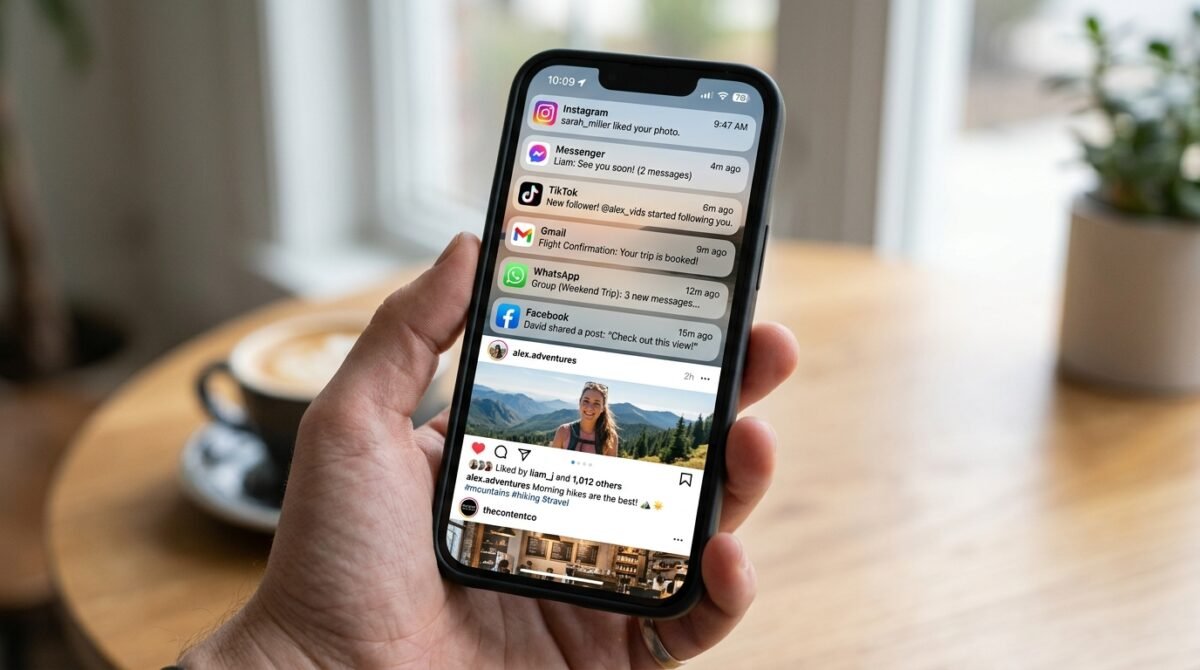
By the next morning, the digital fallout was in full swing. Because I had blocked Sarah, she turned to our mutual friends to spread her narrative. I started getting messages from people I hadn’t spoken to in months, all asking the same question: ‘What actually happened at the club?’ It was clear that Sarah had painted herself as the victim of a ‘stingy, sober friend’ who had ‘abandoned her in her time of need.’ The irony was so thick you could cut it with a knife.
I decided to be transparent. I didn’t post a public rant, but I sent a simple, factual message to the mutual friends who reached out. I didn’t apologize. I didn’t try to justify my choices. I just laid out the math: the total bill, the split, and the expectation Sarah had voiced. The reaction was surprisingly divided. Some were shocked at her level of entitlement; others were clearly trying to stay in her good graces and took her side, calling me ‘petty’ for not just ‘being the bigger person.’
“It’s not about the money, Sarah. It’s about the fact that you think my sobriety is an excuse to exploit me. I paid my share, and that is where my obligation ends. If you can’t afford your lifestyle, maybe you shouldn’t be buying bottle service.”
— My response to a mutual friend defending Sarah
The drama escalated when Sarah posted a vague but pointed story on Instagram, featuring a photo of an empty club table and a caption about ‘finding out who your real friends are when the bill comes.’ It was so immature that I almost laughed. She was trying to frame it as a test of loyalty, when in reality, it was just a failed attempt at financial manipulation. I ignored it. Watching her spin the narrative was like watching a child throw a tantrum because they couldn’t have a second scoop of ice cream.
I realized that the ‘friendship’ had always been based on this power dynamic. Whenever I stood up for myself, even in small ways, she would pull away or make me feel like I was the one doing something wrong. This time, I wasn’t backing down. I was comfortable in my decision. For the first time in years, I didn’t feel the urge to apologize, to fix things, or to make myself smaller to fit into her life.
I spent the day blocking and muting. It was a cleansing ritual. Every notification I cleared felt like a weight being lifted. I was reclaiming my time, my energy, and my peace of mind. The digital firestorm was just a distraction, a way for her to avoid looking at the reality that she had pushed a loyal friend too far. I was done being a part of her performance art.
The Anatomy of Financial Entitlement

I started thinking about why this had happened, not just on that night, but over the years. Sarah had always had this strange, warped view of money. She grew up in a middle-class household but aspired to a lifestyle that was far beyond her means. She viewed money as a social tool—something to be flaunted, to be used to impress, and ultimately, something to be shared by whoever was ‘lucky’ enough to be in her orbit. I was the ‘lucky’ one because I didn’t spend my money on alcohol, so she deemed my surplus ‘fair game.’
This is a common dynamic in friendships, often ignored until it hits a breaking point. It’s the ‘friendship tax,’ where the more stable or responsible person is expected to subsidize the one who lacks boundaries. It’s insidious because it’s framed as ‘friendship’ or ‘doing it for the team.’ But when you strip away the social niceties, it’s just exploitation. Sarah didn’t see me as a person; she saw me as a budget line item.
“Financial boundaries aren’t just about money. They are about respect. When you allow someone to consistently take advantage of you, you are telling them that your worth is tied to your bank account. It’s time to stop the cycle.”
— My therapist’s advice during our session
I realized that my sobriety had actually been a blessing in this regard. It forced me to be present, to see the world as it was, and not through the haze of a social lubricant. I could see the cracks in the table, the desperation in her eyes, and the hollowness of the lifestyle she was chasing. I wasn’t just paying for a bottle of vodka; I was paying for an illusion that I no longer wanted to support.
The entitlement wasn’t just about the money; it was about the lack of autonomy she granted me. If I wasn’t ‘part of the party,’ I was ‘part of the problem.’ She needed me to buy into her narrative because she knew, deep down, that her narrative was fragile. By refusing to pay, I had shattered the illusion. I hadn’t just split the check; I had split from her worldview.
I’ve since talked to other friends about this, and the stories are surprisingly similar. There’s always that one friend who ‘forgets’ their wallet, who insists on the most expensive menu items, who assumes the bill will be ‘taken care of.’ The lesson, I’ve learned, is that you have to define your boundaries early and enforce them without apology. Because if you don’t, the tab only gets higher.
The Reddit Trial: How the Internet Reacted
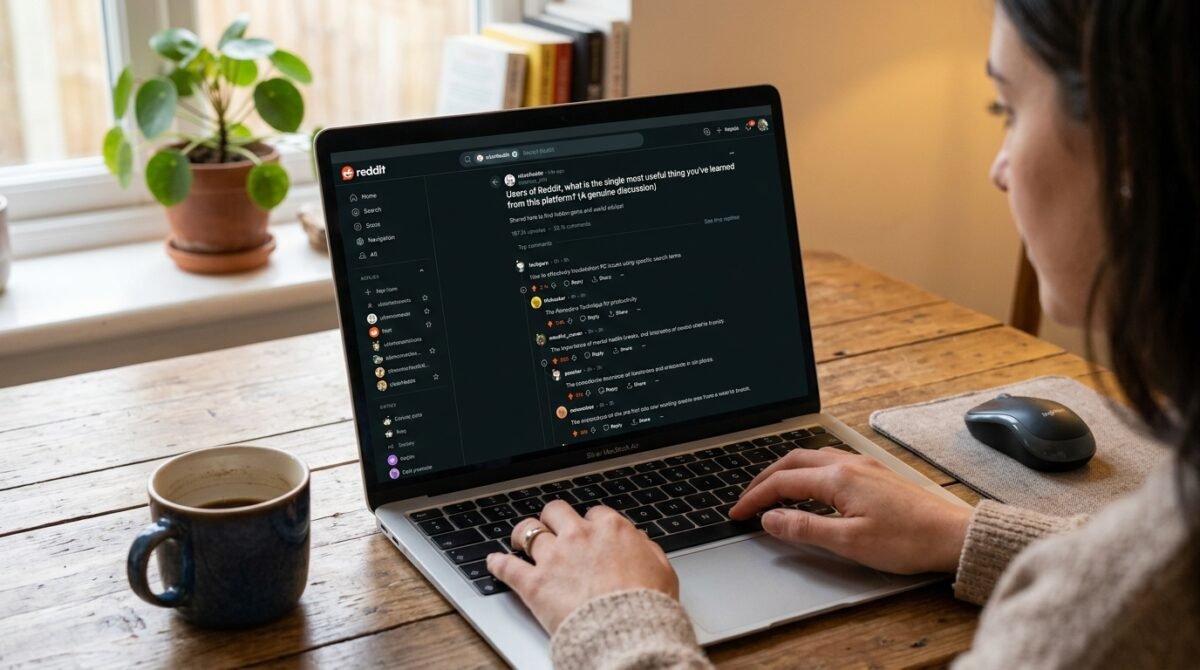
I decided to share my story on a popular subreddit to see if I was losing my mind. I didn’t reveal names or specific locations, but the situation was clear. The response was immediate and overwhelming. Thousands of people weighed in, and the consensus was not what Sarah would have wanted to hear. The Reddit community, known for its brutal honesty, didn’t hold back.
The top comments were almost universally supportive of my decision to split the check. Many users pointed out that the expectation of a ‘sober tax’ was completely absurd and, in some cases, a sign of a larger pattern of abuse. People shared their own stories of friends who had taken advantage of them, validating my feelings and encouraging me to stay the course.
“NTA. You paid for what you consumed, plus your share of the shared costs. That is the definition of a fair split. Her entitlement to your money because you don’t drink is not only rude; it’s manipulative. Cut her off.”
— u/BudgetBoundaryQueen (Top Comment, 32.5k upvotes)
There were, of course, the contrarians. A few people argued that when you go out for a ‘big’ night, you should expect to split the bill evenly regardless of consumption. But even they were quickly shouted down by the majority who pointed out that there is a massive difference between a $100 dinner and an $1,800 bottle service tab. The scale of the expense made all the difference.
“I had a friend like this once. She would always order the most expensive dish and then suggest we split the bill. The moment I started asking for separate checks, the friendship ended. It wasn’t a friendship; it was a subscription service I was paying for.”
— u/BrokenFriendshipStories (12.4k upvotes)
Reading the comments was therapeutic. It made me realize that I wasn’t ‘petty’ or ‘mean.’ I was standing up for my own financial integrity. The sheer volume of people who had dealt with similar ‘Sarahs’ in their own lives was staggering. It made me feel less alone and more confident in the decision I had made to walk away.
The community also provided some practical advice for the future: never go out with people who have different financial priorities, always confirm the ‘split’ policy before the check arrives, and never be afraid to ask for a separate check at the start of the meal. These were lessons I would definitely take with me. The Reddit ‘trial’ had delivered its verdict, and it was a resounding vindication of my actions.
The Aftermath: Redefining Friendship

Months have passed since that night. Sarah and I haven’t spoken. I’ve seen through social media—from a distance, because I still have her muted—that she’s still doing the same things: clubs, bottles, and complaining about ‘fake friends.’ It’s almost sad to watch, but it’s no longer my concern. I’ve moved on. I’ve found a new circle of friends who respect my choices, my boundaries, and my wallet.
Redefining friendship has been the most important part of this journey. I used to think that being a friend meant being a permanent fixture in someone’s life, no matter the cost. Now, I realize that friendship is a two-way street. It’s based on mutual respect, shared values, and a genuine care for the other person’s well-being. If someone only values you for what you can provide—financially or otherwise—they aren’t your friend. They are a parasite.
“The quality of your life is determined by the quality of your friendships. Surround yourself with people who make you feel seen, respected, and valued for who you are, not for what you can buy for them.”
— My favorite quote from a self-help book I read post-breakup
I’ve become much more assertive about my boundaries. I don’t feel guilty about saying ‘no’ to outings that don’t fit my budget or my values. I’m comfortable being the one who orders water, who leaves early, and who insists on paying only for what I’ve consumed. It’s a level of freedom I never thought possible when I was trapped in the cycle of trying to please Sarah.
I also learned to appreciate the people who were there for me during the fallout. The few friends who checked in on me, who didn’t take sides, and who just wanted to make sure I was okay—they are the ones who matter. They are the ones I’ve invested my time in. The ‘Sarahs’ of the world are a dime a dozen, but true friends are rare and precious.
If you’re in a situation like this, don’t wait for the $1,800 bill to wake you up. Look at the small things. Look at the way your ‘friends’ treat your boundaries. If they aren’t respecting them, they aren’t your friends. It’s okay to walk away. It’s okay to put yourself first. And honestly? It’s the best thing you can ever do for your own mental health.
Financial Lessons from a Failed Friendship

When I look back at the numbers, it’s not just about the money. It’s about the lack of communication. If Sarah had come to me before the night and said, ‘Hey, I’m planning a huge night, I know you don’t drink, would you be willing to chip in more to help cover the table cost?’, I might have said yes. I might have decided that for her birthday, I wanted to treat her. But she didn’t ask. She expected.
That is the core of the issue: the assumption of entitlement. Financial transactions in friendships are often handled with a lack of transparency that leads to resentment. We assume our friends ‘know’ how much we have or how we like to spend, but that’s a dangerous game. From now on, I have a strict policy: if it’s a group outing, we discuss the budget beforehand. If someone wants to do something expensive, they need to communicate that clearly.
| Action | Before | After |
|---|---|---|
| Group Outings | Assume split | Discuss budget first |
| Drinking Habits | Hiding sobriety | Open and honest |
| The Bill | Fearful of confrontation | Separate checks upfront |
| Expectations | People-pleasing | Defined boundaries |
This table is my new blueprint for social interactions. It might seem a bit cold, but it has saved me from countless headaches and awkward situations. It’s not about being ‘unfun’; it’s about being responsible. If someone is offended by the request to discuss money, then they are probably someone you don’t want to be spending money with anyway.
I’ve also learned to be more vocal about my own needs. For years, I kept my sobriety and my financial goals quiet to avoid being ‘that person.’ Now, I’m proud of them. They are part of who I am. If someone can’t handle that, they aren’t for me. It’s a simple filter, but it’s an incredibly effective one for finding genuine people.
In the end, losing a friend over a bill is a small price to pay for gaining your own self-respect. Money comes and goes, but your sense of worth is something you have to protect. I’m glad that night happened. I’m glad the check was $1,800. Because without that price tag, I might still be there, paying for someone else’s idea of a good time instead of living my own.
The Choice to Stay Sober and Solvent

Staying sober in a world that revolves around alcohol is a radical act of self-care. It means choosing clarity over confusion, health over temporary highs, and long-term peace over fleeting social validation. But it also means being the constant ‘odd one out.’ I’ve had to deal with the pressure, the questions, and the occasional ‘you’re no fun’ comment. But I wouldn’t trade it for anything.
My financial solvency is just as important as my sobriety. By not spending hundreds of dollars on drinks I don’t want, I’ve been able to invest in things that actually bring me joy: travel, hobbies, and my own future. I’m not ‘stingy’; I’m intentional. There is a world of difference between the two. Sarah couldn’t see that, and that’s why our friendship was doomed to fail.
“The most expensive thing you can do is pretend to be someone you’re not for the sake of people who don’t care about you.”
— A piece of advice I wish I had heard years ago
I’ve realized that my ‘friendship’ with Sarah was really just a performance. We were both playing roles. She was the star, and I was the supporting character who was expected to provide the funding. When I stopped playing my part, the whole production fell apart. And that’s fine. I don’t want to be a supporting character in someone else’s life anymore. I want to be the lead in my own.
The choice to be sober and solvent has allowed me to build a life that feels authentic. I don’t have to apologize for my choices, and I don’t have to subsidize the choices of others. It’s a quiet, stable, and deeply satisfying way to live. I’ve learned that the people who are meant to be in your life will celebrate your choices, not try to exploit them.
As for the $1,800? It’s long gone. And I’m richer for it. I’m richer in peace of mind, richer in time, and richer in the knowledge that I stood up for myself when it mattered most. I’m living proof that you can set boundaries, lose a ‘friend,’ and end up exactly where you need to be.
Finding New Connections on Honest Ground

It’s funny how life works. Once you clear the dead wood from your life, new growth starts to appear. Since the incident with Sarah, I’ve made some incredible new friends. They are people who value transparency as much as I do. We talk about money, we talk about our goals, and we never, ever assume that the other person is responsible for our lifestyle choices. It’s refreshing, and it’s how friendships are meant to be.
We go out for dinners where everyone pays for their own meal. We plan trips where we agree on the budget before we book the flights. We support each other’s sobriety and health goals without judgement. It’s not always ‘perfect’—there are still arguments, still disagreements—but they are based on reality, not on manipulation or hidden agendas.
“I love that we can just say ‘I can’t afford that’ or ‘I don’t want to do that’ and no one takes it personally. It makes the time we do spend together so much more meaningful.”
— A comment from my new friend, Maria, during our last brunch
This is the kind of community I was searching for, even when I didn’t know it. I was so caught up in the drama of my old ‘friendship’ that I didn’t realize there was a whole world of people who live by different, healthier rules. It’s been a revelation to see how easy it can be to navigate relationships when there’s mutual respect at the foundation.
I’m no longer afraid of ‘being the bad guy.’ I’m no longer afraid of the group chat. I’m no longer afraid of the bill. I know who I am, I know what I value, and I know that my worth is not determined by how much I contribute to someone else’s party. It’s a lesson that was hard-won, but it’s one that I will carry with me for the rest of my life.
If you take anything away from this, let it be this: you are the gatekeeper of your own life. Don’t let people in who don’t deserve to be there. Protect your energy, your money, and your peace. You deserve to be surrounded by people who lift you up, not by people who try to drag you down to their level of entitlement. Keep your boundaries high, and your standards higher.
Conclusion
Looking back at the entire saga, I realize that the $1,800 bill was perhaps the most valuable investment I ever made. It wasn’t an investment in a bottle of vodka, but an investment in my own self-worth. It was the price of clarity. When you finally stop paying for the privilege of being around people who don’t value you, you free up so much more than just money; you free up your capacity to be happy on your own terms.
The debate about ‘who should pay’ will likely rage on forever in the comments sections of the internet, but the real issue is never the money itself—it’s the underlying respect (or lack thereof) between friends. I chose to enforce my boundaries, and while it cost me a years-long friendship, it gained me a lifetime of peace. I hope my story serves as a reminder that your ‘no’ is a powerful tool, and you should never be afraid to use it when your integrity is on the line.
So, I leave the question to you: Have you ever been in a situation where a friend expected you to subsidize their lifestyle? How did you handle it, and would you change anything if you had the chance? Let’s talk about it in the comments below.
What's your verdict on this dilemma?
Vote below to contribute to the official community consensus.

Have a Dilemma Keeping You Up at Night?
Share your real-life feud, wedding chaos, or relationship crossroads anonymously with our editorial team.
What do you think ?
0 Comments🛡️ Comments are moderated to protect community integrity. Your comment will appear once approved by the editorial team.