
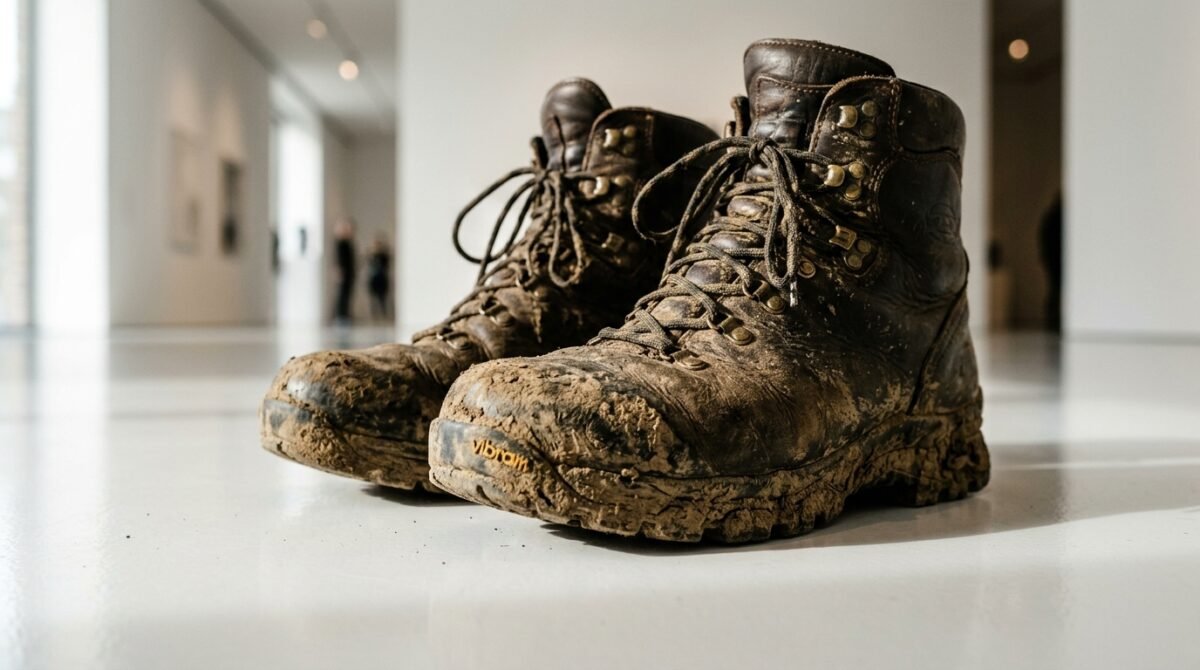
Friendship is often defined by the little things: the shared coffees, the late-night venting sessions, and the unspoken rule that when you borrow something, you return it exactly as you found it. But what happens when that unspoken contract is shredded, replaced by a level of audacity that leaves you questioning the very foundation of the relationship? This is the story of a pair of designer boots, a muddy outdoor wedding, and a demand so surreal it felt like something out of a badly scripted reality television show.
My name is Sarah, and until last month, I considered Chloe one of my closest friends. We had been through college, job losses, and heartbreak together. I trusted her with my belongings, my secrets, and my time. That trust was put to the ultimate test when she asked to borrow my limited-edition leather boots for a destination wedding in the countryside. I hesitated, knowing the terrain, but her desperate pleading and promises of care convinced me. It was a mistake I would regret within hours of her arrival at the venue.
The events that followed weren’t just a simple case of a loan gone wrong. It was a masterclass in gaslighting and entitlement. I didn’t just get my boots back in a state of disrepair; I received a bill for the ‘inconvenience’ of her having to deal with the mud. It sounds impossible, yet here we are. This story isn’t just about footwear; it’s about the erosion of respect in a long-term friendship and the moment I finally decided that being ‘the nice friend’ wasn’t worth the cost of my sanity.
As the conflict escalated from awkward text messages to full-blown confrontation, I realized that Chloe had developed a distorted view of our dynamic. She saw my kindness as a resource to be exploited, and my possessions as communal property that she could use without consequence. This is my account of the incident, the fallout, and the harsh lessons I learned about the people we choose to keep in our inner circles.
Through this narrative, we will explore the nuances of setting boundaries and the fallout that occurs when you finally start enforcing them. It is a tale of realization, the gut-wrenching feeling of being taken advantage of, and the eventual, necessary step of cutting ties. Welcome to the saga of the boots, the mud, and the friend who truly believed she was the victim.
The Pleading Phone Call
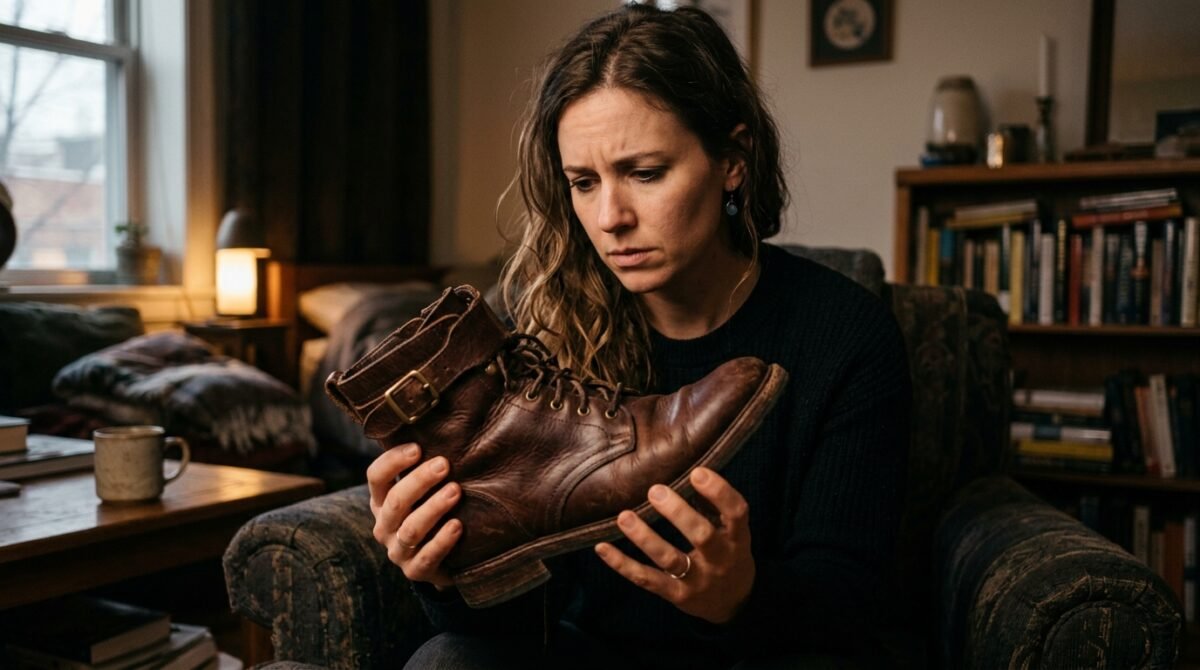
It started on a Tuesday evening, a week before the wedding. Chloe was frantic, her voice cracking over the phone as she explained that her heels had snapped while she was trying them on. She needed the boots, she insisted, because they were ‘the only things that would match the aesthetic’ of the outdoor venue. I tried to suggest alternatives, but she was relentless, layering on the guilt until I finally gave in.
I remember sitting on my couch, looking at the boots in their dust bag. They were an investment piece, something I had saved up for months to afford. I explained the care they required—no water, no rough terrain, and definitely no heavy dancing. She promised she would treat them like gold, even going so far as to call them ‘sacred’ in a bid to ease my anxiety. I should have listened to my gut, which was screaming at me to say no.
“Sarah, I promise you, I’ll only wear them for the ceremony and maybe the photos. I’ll change into flats the second we head to the reception. They won’t even touch the grass for more than five minutes. You are literally saving my life right now.”
— Chloe, via Phone Call
The irony of her words would become glaringly obvious a few days later. At the time, however, I bought it. I wanted to be a good friend. I wanted her to feel confident and beautiful at her friend’s wedding. I packed the boots carefully, wiped them down one last time, and handed them over with the solemnity of a parent sending a child off to their first day of school. I believed her. That was my first mistake.
Looking back, I recognize the pattern of her behavior. Chloe always had a way of framing her needs as emergencies, forcing me into a position where denying her would make me look like the selfish party. It was a subtle form of manipulation that I had grown accustomed to over the years. I didn’t see the trap then; I only saw a friend in need.
The conversation concluded with her thanking me profusely and reiterating her promise to return them in ‘better condition than she found them,’ a phrase that would eventually become the source of my deepest, most bitter laughter. I hung up the phone feeling helpful, unaware that I had just handed over a piece of my wardrobe to be sacrificed on the altar of her carelessness.
The Mud-Caked Reality

When Chloe returned the boots three days later, she didn’t bring them to my house. She left them on my porch in a crumpled plastic shopping bag, sending me a text that she was ‘too exhausted to chat’ and needed to catch up on sleep. I opened the bag on my porch, and the smell of damp earth hit me immediately. I pulled them out, and my heart sank. They weren’t just dirty; they were destroyed.
The leather was saturated with thick, dark sludge, and the soles were caked in hardened mud and what looked like gravel. There were deep gouges on the toe caps, as if she had been dragging her feet through the very forest floor she swore she would avoid. It was clear that she hadn’t just worn them for the ceremony; she had clearly spent the entire night, including the outdoor, rain-soaked reception, tromping through the mud.
“I opened the bag and just stared. The leather was ruined. It wasn’t even about the money at that point; it was about the fact that she had looked me in the eye and lied about every single aspect of how she would treat my property.”
— Sarah’s internal monologue
I spent the next hour in a state of shock, trying to wipe away the grime with a specialized cleaner, but the leather was already stained beyond repair. The moisture had seeped into the grain, causing it to warp and discolor. Every stroke of the cloth felt like a betrayal. I wasn’t just losing a pair of boots; I was losing the image I had of my friend.
I took photos of the damage from every angle, my hands shaking. I didn’t want to confront her immediately because I knew I needed to stay calm. I needed to formulate a response that was firm but fair. But as the minutes ticked by, the anger began to replace the sadness. She had promised. She had given her word. And she had broken it without a second thought.
The worst part was knowing that she probably expected me to just ‘get over it.’ She had a history of minimizing her mistakes, often laughing them off as ‘dramatic’ or ‘silly accidents.’ But this wasn’t an accident. This was a direct result of her ignoring my explicit instructions. It was an act of profound disrespect that I could no longer ignore.
The Audacious Invoice
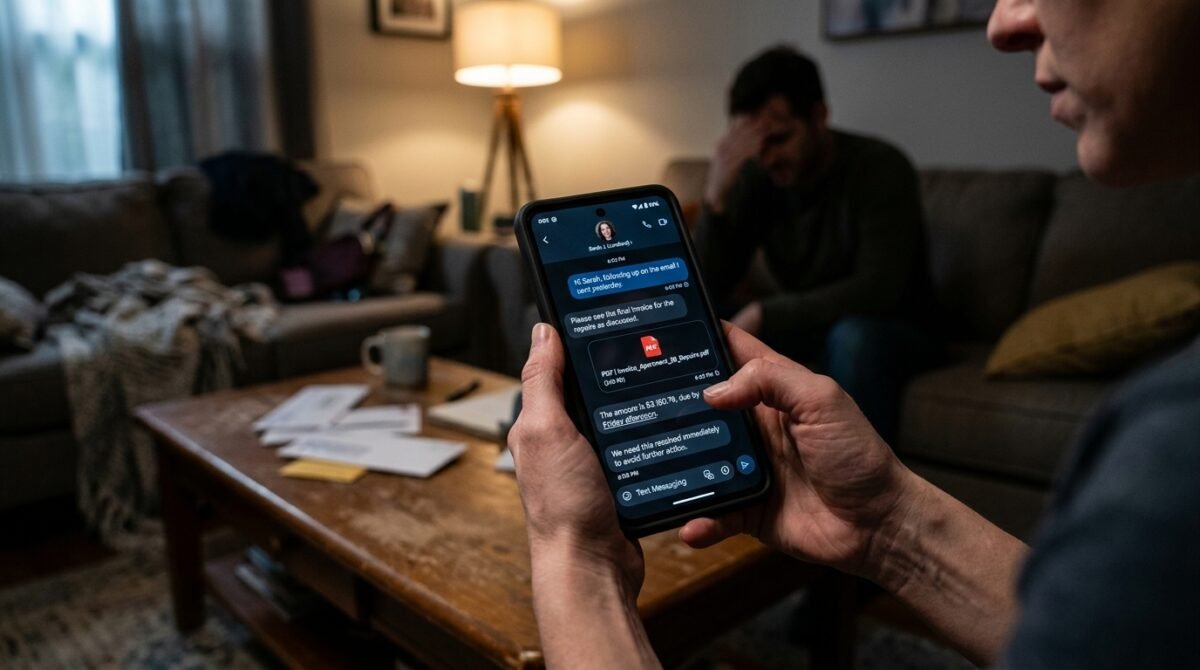
The next morning, I sent her a photo of the damage. I didn’t attack; I simply laid out the facts. I told her that the boots were ruined beyond repair and that I would need her to pay for the replacement cost. I expected an apology, or at least a sheepish admission of guilt. Instead, I received a message that made my blood run cold. She wasn’t apologizing; she was invoicing me.
She claimed that she had taken the boots to a ‘specialist cleaner’ before returning them, and that the process had cost her a significant amount of money because of how ‘difficult the materials were.’ She attached a screenshot of a receipt for a generic dry cleaning service, demanding that I reimburse her for the cost of the cleaning before we even talked about the boots themselves.
“Hey! I saw the message. Honestly, it’s a bit dramatic. I had them professionally cleaned before I dropped them off because I knew they got a bit messy. It cost me $150 to get them back to you. I’m happy to split the cost of the repair if you really think they’re ruined, but you owe me for the cleaning first.”
— Chloe, via Text
I read the message three times, unable to process the level of entitlement. She had ruined my property, returned it in a state that made it unwearable, and now expected me to pay for the ‘cleaning’ that clearly hadn’t worked. It was a masterclass in deflection. She was shifting the narrative from her negligence to my ‘financial obligation’ for a failed cleaning attempt.
My response was short. I told her that the cleaning was irrelevant because the boots were destroyed, and that she was responsible for the full cost of replacing them. She immediately went on the defensive, accusing me of being a ‘bad friend’ and saying that I was ‘nickel-and-diming’ her over something that was ‘just an accessory.’ The gaslighting had begun in full force.
She started bringing up past favors, reminding me of the time I borrowed her sweater (which I had returned cleaned and pristine) and claiming that our friendship shouldn’t be about money. It was the classic ‘friendship card’—using our history to invalidate my current grievance. It was exhausting to watch, and even more painful to participate in.
The Group Chat Intervention

The situation escalated when she decided to loop our mutual friends into the conversation. She posted a screenshot of my request for reimbursement, carefully cropped to exclude her own initial promises and the context of the damage. She framed it as me attacking her over ‘a few scuffs’ and demanding an ‘exorbitant amount of money’ for ‘minor wear and tear.’ She wanted an audience to validate her version of events.
Our group chat exploded. Suddenly, I was getting messages from people who barely knew the situation, telling me that I was being ‘petty’ and that ‘friendships are more important than things.’ It was incredibly isolating. Chloe was playing the victim perfectly, and my attempts to explain the actual damage were being drowned out by her narrative of me being ‘obsessed with material goods.’
“Is it really that deep, Sarah? They’re just boots. Chloe feels terrible about the mud, but you’re literally asking her to pay hundreds of dollars? That feels like you’re trying to profit off a mistake.”
— Mutual Friend in Group Chat
I realized then that Chloe had been cultivating this image of me as the ‘materialistic’ one for a long time. She had successfully turned the group against me by framing my desire for accountability as greed. I felt a profound sense of betrayal. These were people I had trusted, yet they were willing to take her word over the reality of the situation without even checking the facts.
I chose to stay silent in the group chat, refusing to engage in a public argument that would only make me look more volatile. Instead, I started private conversations with the friends I truly trusted, showing them the photos of the boots and the original promise Chloe had made. The tide started to turn, but the damage to the group dynamic was already done. The trust was fractured.
The irony of being called greedy while the person who destroyed my property tried to extract money from me was not lost on me. It was a bizarre, upside-down world where the victim was being forced to apologize for the inconvenience they caused the perpetrator. I knew then that there was no going back to the way things were.
The Financial Breakdown

To keep things organized, I decided to document everything. I made a list of the costs involved, the state of the boots before and after, and the timeline of the messages. I needed to see it all in one place, not just for my own sanity, but as a potential record if she tried to escalate this further. It was a cold, clinical exercise in reality versus her perception.
| Category | Details | Cost Impact |
|---|---|---|
| Purchase Price | Original investment for limited-edition boots | $450.00 |
| Cleaning Attempt | Chloe’s ‘failed’ professional cleaning bill | $150.00 |
| Replacement Value | Current market cost (due to limited edition status) | $550.00 |
| Total Financial Loss | Net loss to Sarah | $700.00 |
Seeing the numbers on paper solidified my resolve. This wasn’t just about ‘a pair of boots.’ This was about a $700 loss that she was actively trying to worsen by demanding I pay for her failed cleaning attempt. It was a clear-cut case of negligence and subsequent financial manipulation. I wasn’t being ‘petty’; I was dealing with a significant financial hit.
I calculated the cost of repairing the leather professionally, which was close to the cost of replacing the boots entirely. I realized that the $150 she spent was essentially wasted money on a service that couldn’t fix the deep-set damage. She had spent money in the wrong way and now wanted me to foot the bill for her incompetence. It was infuriating.
I knew that if I let this go, it would set a precedent. If I allowed her to treat my belongings with such disregard and then demand compensation for her mistakes, I would be signaling that my boundaries were non-existent. I had to hold the line, not for the sake of the money, but for the sake of my own self-respect and the integrity of my personal space.
This table became my anchor. Whenever I felt the urge to apologize just to make the conflict stop, I looked at these figures. They reminded me of the reality behind the emotional manipulation. She was in the wrong, and the numbers didn’t lie. The financial burden was a physical manifestation of her disregard for my boundaries.
The Confrontation at the Coffee Shop

Finally, I agreed to meet her in person. I told her I wanted to resolve this, but only on the condition that we spoke privately, away from the group chat and the prying eyes of our mutual friends. We met at a neutral, crowded coffee shop. I wanted to keep it professional and calm. She arrived looking defensive, already armed with her excuses.
She started by telling me how much pressure she had been under at the wedding, and how ‘everyone’ had told her the boots were fine. She kept insisting that I was overreacting and that the leather was ‘bound to get worn’ eventually. It was clear she wasn’t going to take responsibility. She was still stuck in the mindset that my things were disposable.
“I think you’re holding onto this because you’re mad at me for something else. It’s just boots, Sarah. Why are you acting like this is the end of the world? I’ll pay for half, but you need to stop acting like I did this on purpose.”
— Chloe, during the confrontation
I looked her in the eye and told her exactly what I needed: the full replacement cost, or the boots were staying with me, and our friendship would end. I wasn’t interested in ‘splitting the cost’ for something she had destroyed through her own direct negligence. The ultimatum hung in the air, heavy and silent. I could see the shock on her face; she hadn’t expected me to be this firm.
She tried to pivot, talking about the years of history we had. I acknowledged that history, but I told her that history doesn’t entitle her to destroy my property. I wasn’t attacking her character; I was addressing a specific, damaging action. She couldn’t handle the boundary. She stood up, threw a ten-dollar bill on the table for her coffee, and walked out without another word.
That moment was the point of no return. I didn’t chase her. I didn’t send a follow-up text. I sat there in the coffee shop, finished my drink, and felt a strange, quiet sense of relief. The ambiguity was gone. I had stated my position, and she had chosen her path. The friendship, in its current form, was over.
The Viral Reddit Verdict

I didn’t initially post this on Reddit, but a friend of mine did, curious to see if I was actually the villain in this story. The post went viral within hours, and the community response was overwhelming. Thousands of people weighed in, and the vast majority were firmly on my side. It was validating to see that my reaction was considered normal and reasonable.
“NTA. Your friend is a disaster and a manipulator. She ruined your property, lied about her usage of it, and then tried to bill you for her own incompetence. This isn’t a friendship; it’s a hostage situation. Cut her off and get your money.”
— u/FashionPoliceReddit (Top Comment, 32.5k upvotes)
Reading the comments helped me realize that this wasn’t just a simple disagreement; it was a clear case of boundary violation. The community pointed out the ‘DARVO’ technique—Deny, Attack, and Reverse Victim and Offender—that Chloe had used. It was exactly what she had done: she denied the extent of the damage, attacked my character, and then claimed to be the victim of my ‘greed.’
There were some dissenting voices, of course, mostly people who thought I should ‘forgive and forget’ for the sake of the friendship. But those comments were quickly buried by others pointing out that forgiveness doesn’t mean allowing someone to walk all over you. The discussion provided me with a different perspective, one that wasn’t clouded by my long history with Chloe.
One comment really resonated with me: ‘The trash took itself out.’ It was a bit harsh, but it felt true. By walking away from the confrontation, Chloe had essentially decided that the friendship wasn’t worth the price of the boots. It made me realize that our friendship had been one-sided for a long time, and I had just been too invested to notice.
I kept the thread open for a few days, reading through the stories of other people who had dealt with similar ‘friends.’ It made me feel less alone. The support from strangers was, in a way, more meaningful than the silence of my mutual friends who were still too afraid to take a side.
The Fallout with the Group

The fallout in my social circle was messy. Chloe continued to tell her version of the story, painting me as a cold-hearted person who valued money over people. Some of our mutual friends distanced themselves, not wanting to deal with the drama. Others reached out privately, finally admitting that they had noticed her patterns of behavior before but were too afraid to say anything.
It was a painful process of pruning. I lost some friends, but I found out who the real ones were. The people who stood by me didn’t care about the boots; they cared about me. They saw how hurt I was and how hard I had tried to handle the situation with grace. They were the ones who truly mattered, and they were the ones I started spending more time with.
I had to learn to be okay with not being liked by everyone in the group. I had to accept that some people would always see the situation through Chloe’s lens, and that was okay. I couldn’t control their perception, and trying to change it was just another form of exhaustion. I decided to focus on my own well-being and the friendships that brought me peace rather than chaos.
The group chat eventually went quiet. I didn’t leave it, but I muted it. Every so often, I’d see a notification, but I stopped checking. It was a small act of self-care. I realized that my mental health was far more valuable than keeping up with the latest gossip or trying to defend myself to people who had already made up their minds.
I also realized that I had been carrying a lot of weight in that friendship. I was always the one planning, the one listening, the one lending. Without Chloe in my life, I felt a sudden influx of time and energy. It was strange at first, a bit empty, but soon it became a space where I could grow and pursue my own interests without the constant drain of her drama.
The Legal Threat and Finality

The situation took one last, bizarre turn. Chloe sent me a formal letter, claiming that I was ‘harassing’ her by bringing up the boots and that I should cease all contact. She even threatened to take me to small claims court for the $150 ‘cleaning bill’ she still felt I owed her. It was so ridiculous that I almost laughed, but it was also a sign that she was desperate.
I consulted with a friend who is a lawyer. They told me that her threat was baseless and that I should simply ignore it. There was no case for harassment, and there was no legal obligation for me to pay for a failed cleaning attempt on my own property. I sent her one final, neutral message stating that I would not be paying, that I considered the matter closed, and that I did not wish to have any further contact.
“I am not interested in continuing this conversation. You have your position, and I have mine. Please do not contact me again, and please do not involve any further third parties in this matter. Consider this the final word on the subject.”
— My final text to Chloe
That finality was liberating. I blocked her on all platforms—social media, phone, email. It was a digital severing of ties that felt incredibly necessary. I didn’t look back. I didn’t check to see if she responded. I just closed the door and moved on. It was the most empowering thing I had done in years.
I learned that boundaries are not just for others; they are for me. By enforcing them, I was protecting my peace and my self-respect. I realized that I didn’t need to apologize for wanting what was mine, or for expecting honesty and integrity from the people in my life. The legal threat was just the final attempt of someone who had lost control to regain it, and it failed.
I haven’t heard from her since. I see her occasionally in the background of social media posts from our mutual friends, but it doesn’t sting anymore. She is just a person I used to know, a chapter that closed in the most dramatic way possible. I’ve replaced the boots, and honestly, every time I wear them, I’m reminded of how much I value my own boundaries now.
Reflecting on the Cost of Kindness

Looking back, I don’t regret being kind, but I regret not being discerning. I was so caught up in the ‘good friend’ narrative that I ignored the red flags that had been there all along. I allowed her to treat me as a resource rather than a person. I learned that true friendship is a two-way street, and if one person is constantly taking while the other is constantly giving, it’s not a friendship—it’s a transaction.
I’ve become much more protective of my things and my time. I don’t lend out my ‘special’ items anymore, and I’m much more comfortable saying no to people who have a history of being unreliable or entitled. It’s not about being stingy; it’s about knowing the value of what I have and who I want to share it with. I’ve realized that my belongings are mine, and I don’t owe anyone access to them.
The most important lesson I’ve taken away is that I am the guardian of my own boundaries. No one else will do it for me. If I don’t set them, I am essentially giving people permission to cross them. It’s a hard lesson, and it came at the cost of a long-term friendship, but the peace of mind I have now is worth every penny of those ruined boots.
I’ve also learned to trust my gut. If something feels off, if I feel hesitant about lending something or doing a favor, I listen to that feeling now. It’s usually there for a reason. I don’t need to justify my decisions to anyone, and I don’t need to apologize for setting boundaries. The people who truly care about me will respect those boundaries, and those who don’t… well, I don’t need them in my life.
Finally, I’ve found a new appreciation for the people who do respect my boundaries. It’s a different kind of relationship, one based on mutual respect and understanding rather than guilt and obligation. It’s a breath of fresh air. I’m happier, more confident, and more secure in my own skin than I ever was when I was trying to please people who didn’t truly care about me.
Conclusion
The saga of the boots and the muddy field ended up being one of the most transformative experiences of my life. It forced me to confront the uncomfortable reality of a friendship that had long since outlived its purpose. It taught me that while generosity is a virtue, it shouldn’t come at the expense of your own self-respect. We often fear being ‘the bad guy,’ but sometimes, the ‘bad guy’ is just someone who finally decided to say ‘no.’
When we allow people to walk all over us, we aren’t being good friends; we are being enablers. And while the process of cutting ties is never easy, it is sometimes the only way to reclaim your space and your worth. I walked away from a toxic dynamic, and in doing so, I opened up room for healthier, more respectful relationships to enter my life.
Have you ever had a friend who treated your kindness like a weakness? What was the moment you realized you had to draw the line? Share your stories in the comments below—I’d love to hear how you handled your own ‘muddy field’ moments and the lessons you learned along the way.
What's your verdict on this dilemma?
Vote below to contribute to the official community consensus.

Have a Dilemma Keeping You Up at Night?
Share your real-life feud, wedding chaos, or relationship crossroads anonymously with our editorial team.
What do you think ?
0 Comments🛡️ Comments are moderated to protect community integrity. Your comment will appear once approved by the editorial team.