

The sound of my own laughter echoed off the walls of my living room, a sharp, jagged noise that seemed to startle even the dust motes dancing in the afternoon sunlight. Standing before me was Arthur, my father-in-law, his face a mottled shade of puce as he clutched a crumpled piece of paper—a printout of my bank statement, obtained through means I could only guess were as invasive as his current demand.
For years, I have been the silent observer of the ‘Golden Child’ narrative that surrounds my husband’s younger brother, Greg. Greg is the charismatic, reckless, and perpetually failing star of the family constellation, a man whose gambling debts have, until now, been quietly absorbed by his parents’ desperate, enabling love. But this time, the hole he dug was deeper than their combined savings could fill. And apparently, they decided my safety net was the next logical place to dip their hands.
Arthur’s demand wasn’t a request; it was a decree. He stood there, smelling of cheap bourbon and entitlement, expecting me to sacrifice the money I had painstakingly saved for a necessary, life-altering surgery—a fund I hadn’t even told my husband about yet because of the inevitable scrutiny it would invite. He looked at me as if I were a store clerk denying him a refund, his eyes narrow and impatient.
The moral dilemma was stark, yet for me, it was non-existent. The money was my survival. The surgery was my future. To hand it over to cover the whims of a man who treated his bank account like a game of Russian roulette would not only be financial suicide; it would be a betrayal of every ounce of self-respect I had nurtured since marrying into this family.
What followed was not a negotiation, but a war of attrition. Over the next few weeks, the family dynamic would collapse under the weight of secrets, leaked messages, and a level of audacity I hadn’t realized was possible even for them. This is the story of how I stood my ground, the price of saying ‘no’ to family, and the unexpected aftermath of refusing to be an accomplice to someone else’s ruin.
The Morning Ambush in the Living Room
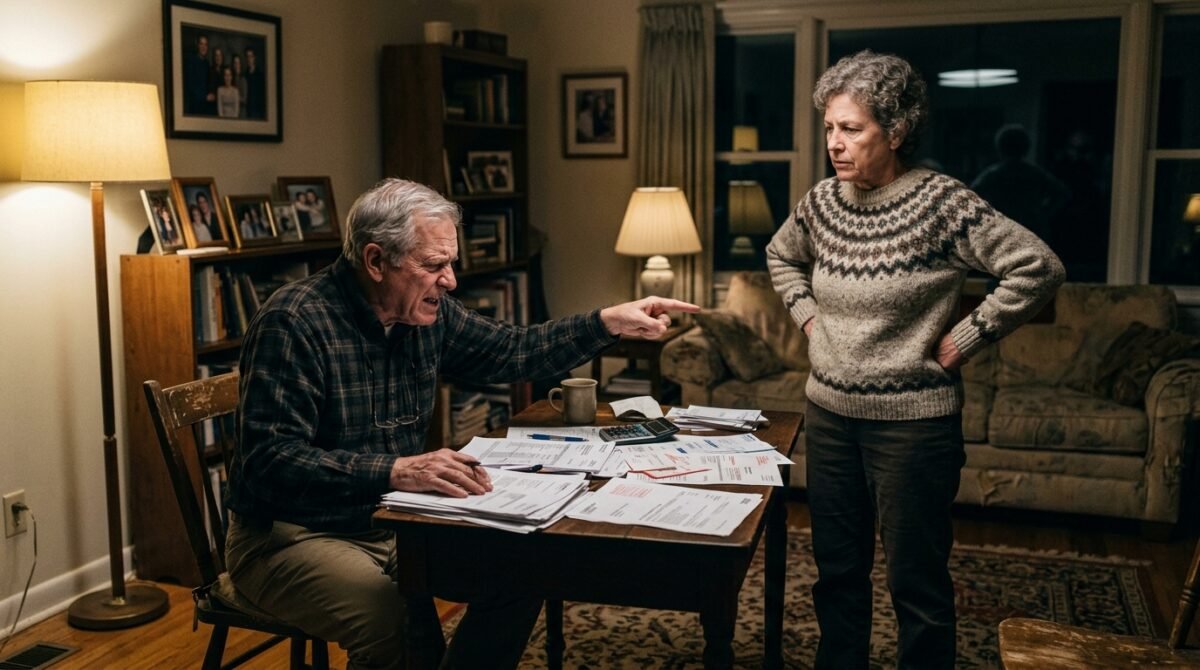
The morning started like any other Sunday, with the smell of brewing coffee and the quiet hum of the dishwasher. That was until the front door was unlocked with a spare key I had foolishly forgotten to demand back. Arthur didn’t knock; he simply walked in, his presence immediately sucking the air out of the room. He didn’t even acknowledge the tea in my hand.
He tossed a stack of papers onto the coffee table. They were bank records. My bank records. My heart hammered against my ribs, a frantic rhythm of panic and mounting fury. My hands shook as I realized he had somehow managed to access my private medical savings account—a fund held in a separate bank to keep it away from joint household view. He wasn’t just invading my home; he was violating the sanctuary of my health.
“Greg is in trouble, real trouble. The people he owes aren’t like the bank, and they don’t take payment plans. You have fifty thousand dollars sitting in an account doing nothing. Transfer it to his account by noon, or we’re going to have a very serious conversation with your husband about your ‘secret’ wealth.”
— Arthur, my father-in-law
I looked at him, truly looked at him, and saw the desperation masked by arrogance. He truly believed that because I was ‘the daughter-in-law,’ my assets were family property. The absurdity of it struck me so hard that the silence that followed felt heavy. I didn’t get angry; I laughed. It was a cold, hollow sound that seemed to confuse him.
“You think,” I began, my voice steady despite the adrenaline spiking in my veins, “that because your son lacks the self-control of a toddler, you can rob me? You think my life, my health, and my future are currency for his debts? Get out. If you ever walk through that door without an invitation again, I’m calling the police. And if you dare mention a word of this to my husband, I will ensure he knows exactly how you’ve been sabotaging his brother’s life for a decade.”
Arthur stood frozen, his mouth agape. He had expected tears, pleading, or perhaps a panicked negotiation. He hadn’t expected the wall I had just slammed up in front of him. He left, but not before promising that I would regret this. I spent the next hour shaking in the kitchen, locking the doors, and feeling the first cold realization that the real battle was only just beginning.
The Inevitable Group Chat Explosion

By that evening, the fallout had arrived. My phone started vibrating with a intensity that suggested a minor earthquake. It was ‘The Family Circle,’ a group chat that I had muted months ago but never left. I pulled it up, my thumb hovering over the screen, hesitant to see the vitriol I knew was waiting.
The chat was a barrage of accusations. Arthur had spun a story of my ‘selfishness’ and ‘greed,’ painting me as a woman who would let her brother-in-law suffer while she sat on a pile of cash. My mother-in-law, Susan, had joined in, her messages dripping with a passive-aggressive toxicity that I had spent years trying to ignore. They weren’t just asking; they were demanding I ‘do the right thing’ for family.
“I never thought you were this cold-blooded. Greg is your blood now, too. We’ve all sacrificed. Why are you acting like you’re better than us? Fifty thousand dollars is a small price to pay for your husband’s brother’s life. Do you really want to be responsible for what happens if he doesn’t pay?”
— Susan, Mother-in-law (Family Group Chat)
I felt the familiar sting of tears, but I brushed them away. I began to type, not with emotion, but with the cold precision of someone who had nothing left to lose. I didn’t defend myself. I didn’t explain the medical necessity. I didn’t owe them the intimate details of my health. Instead, I laid out the boundary in terms they could understand: theft is theft.
The chat went silent for a few minutes after my response. I had told them that the records they possessed were obtained illegally and that any further harassment would be forwarded to my attorney. I hadn’t even realized I had an attorney, but the threat was enough to make them pause. However, the pause didn’t last long, as the accusations shifted from ‘selfish’ to ‘abusive’ within a matter of minutes.
I put my phone on airplane mode. The screen kept lighting up with notifications, like a series of flares being shot into a dark sky. I realized then that I wasn’t just fighting for money; I was fighting for the right to be a human being rather than an asset to be liquidated for their favorite child. The guilt attempted to crawl in, but I pushed it back. This was not my debt, and it was certainly not my burden to bear.
The Husband Caught in the Crossfire

My husband, Mark, came home from work late that night, looking exhausted. He had been working double shifts to clear his own small debts, unaware that his father was planning to plunder my savings. He walked into the kitchen, his eyes scanning the room, and I could tell immediately that he had heard something. The tension between us, usually a low hum, had become a roar.
“What is going on, Sarah?” he asked, tossing his keys on the counter. “My mom called me in tears. She said you refused to help Greg, and that you threatened them with a lawyer? Sarah, it’s fifty thousand dollars. It’s a lot, sure, but it’s just money. Greg is in a desperate spot. If we can help him, shouldn’t we?”
I looked at him, feeling a profound sense of isolation. He didn’t know about the surgery. I had kept it a secret because I knew he would try to ‘save’ me from the expense, or that he would prioritize his brother’s needs if he knew I had the funds. The weight of his expectation—that I should prioritize his family over my physical survival—felt like a physical blow to my chest.
“It isn’t just money, Mark. It is my money. It is money I earned, saved, and set aside for a medical procedure I need to survive the next five years. Your father invaded my privacy to steal it. You are asking me to sacrifice my health to pay for your brother’s addiction. Is that the kind of marriage you want? One where my body is just a piggy bank for your family’s failures?”
— My response to Mark
Mark stared at me, his face pale. He had known about the health issues, but he hadn’t realized the severity or the financial planning behind it. The silence that followed was thick with the weight of years of resentment, of being the ‘steady’ couple while Greg spiraled. He didn’t apologize, not yet, but the look in his eyes shifted from frustration to a dawning horror at his own family’s audacity.
“They said it was a ‘medical fund’ you were hoarding,” he whispered, his voice trembling. “They said you were just being stingy because you didn’t like Greg. They didn’t say it was for you.” He sat down at the table, running his hands through his hair. I didn’t offer him comfort. I needed him to see the reality of his parents’ manipulation, not just the surface-level drama they had manufactured.
The Reddit Trial: How the Internet Reacted

I didn’t tell my friends. I didn’t tell my parents. Instead, at three in the morning, with my nerves frayed and my mind spinning, I posted the full story on a popular subreddit. I needed an objective view. I needed to know if I was the villain, or if I had truly lost my mind. I typed out the account, detailing the illegal access to my bank records, the demand, and the audacity of the family.
By morning, the thread had exploded. It was trending. People from all over the world were weighing in, and the consensus was not what I had expected. I had braced myself for being told I was being ‘unreasonable’ or ‘cold,’ but instead, the response was a tidal wave of validation, indignation, and legal advice that I hadn’t even considered. The community was furious on my behalf.
“NTA (Not The Asshole). This is not just a family dilemma; this is a massive legal violation. Your FIL needs a cease and desist letter yesterday. The fact that he accessed your private bank account is a crime. Do not give them a single penny, and cut them off completely before they try to ruin your credit or your life.”
— u/LegalEagleEye (Top Comment, 32.4k upvotes)
“The audacity of these people is staggering. They aren’t asking for help; they are demanding a ransom for the ‘Golden Son’s’ mistakes. If you pay it, they will never stop. The gambling addiction will continue, and the next time, they will ask for your car, your house, or your retirement. Stand your ground, OP.”
— u/FamilyDramaExpert (18.2k upvotes)
Reading these comments was like coming up for air. For weeks, I had been gaslit into believing my boundaries were selfish. Seeing thousands of strangers confirm that my reaction was appropriate—and that the situation was, in fact, an abusive overreach—gave me the strength I needed to stop apologizing. I realized that my desire to keep the peace was actually a form of enabling the very toxicity that was destroying us.
I spent the afternoon printing out the most helpful comments and legal advice. I wasn’t going to show Mark the comments—that felt too much like seeking external validation for our marriage—but I was going to use the advice. I needed to protect myself. The surgery was the goal, and nothing, not even my husband’s misguided loyalty to his parents, was going to take that away from me.
The Cease and Desist Letter
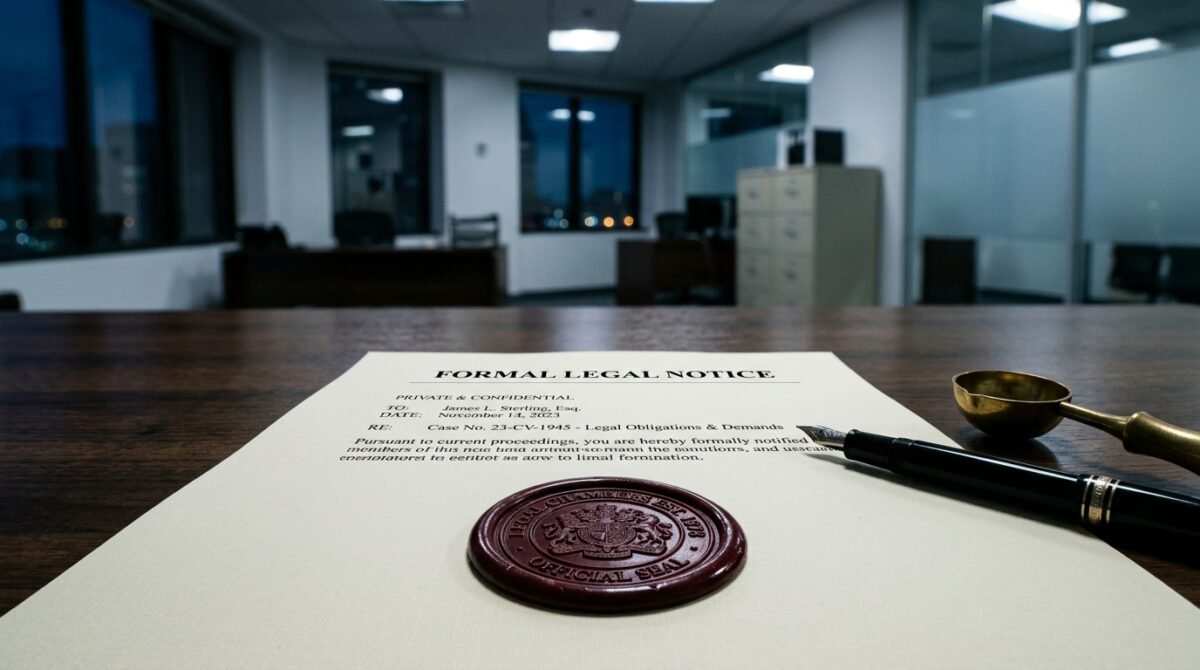
The next step was the hardest. I consulted with a lawyer, a sharp woman named Elena who listened to my story without judgment. When I showed her the printed bank records that Arthur had brought to my home, she didn’t look at me with pity; she looked at me with the focused intensity of a predator who had found her target. The invasion of privacy was, she explained, a serious legal vulnerability for them.
We sent a formal, certified cease and desist letter to Arthur. It demanded that he return the copies of my financial records, cease all contact, and stop any further attempts to access my personal information. It also explicitly stated that any further harassment of me or my husband would be met with a police report regarding the identity theft and unauthorized access of my accounts.
“This is the only way to end the cycle. You cannot ‘talk’ them out of this. You have to remove their ability to harass you. Send the letter, change your passwords, and close the accounts they know about. Make yourself unreachable.”
— Elena, Attorney at Law
The day the letter arrived at their house, the silence was deafening. No texts, no calls, no unexpected drop-ins. Mark, too, had started to see the light. He had been so used to his father’s ‘authority’ that he hadn’t realized how controlling it was until he saw the legal document. He finally sat me down and told me he was on my side, not his parents’.
It felt like the first day of the rest of my life. I changed every password, set up two-factor authentication on every single account, and moved the remaining funds to a credit union that required physical signature verification. I had stripped them of their leverage. The anger that had been simmering in me for years finally began to cool, replaced by a resolve that I was not going to be a victim to their dysfunction anymore.
I felt powerful. It was a strange sensation, this newfound agency. For so long, I had walked on eggshells, worried about offending them, worried about the ‘family image.’ Now, I realized the family image was a farce, a hollow construct that was designed to protect the weakest link while sacrificing the strongest. I was done being the sacrifice.
The Sunday Dinner That Never Happened

The next Sunday was the day of the weekly dinner at my in-laws’. For years, this had been an obligation I attended with a smile plastered on my face, enduring the thinly veiled insults about my career and the constant questions about when we would start a family. This time, there was no dinner. We didn’t even call to decline. We simply didn’t show up.
My phone pinged, then pinged again. A flurry of messages from Susan. ‘Where are you?’ ‘Arthur is waiting.’ ‘Don’t be so dramatic.’ I ignored them all, but I couldn’t help but notice the shift in tone. They were scared. They realized that their power was slipping, that the ‘Golden Child’ wasn’t the only one they needed to worry about. They were losing control of the entire family structure.
“I thought we were a family. I thought you cared about us. How can you be so selfish? Your brother-in-law is suffering, and you are playing these games? This is going to destroy this family.”
— Susan, Mother-in-law
I didn’t answer. I didn’t need to. I was in the garden, planting flowers, listening to the birds, feeling the sun on my face. Mark was inside, helping me with the yard. He was quiet, but he was present. He had finally decided that his future with me was more important than the past he had shared with his parents. The guilt he had been carrying was starting to evaporate as he saw how much happier I was without them.
The neighbors probably wondered why we didn’t go to the house across town, but I didn’t care. The social pressure to ‘be nice’ was a weapon they had used against me for years, and I had finally dismantled it. We spent the day together, talking about our future, our plans, and for the first time in a long time, we were a unit. We were a team.
That evening, Arthur called. I let it go to voicemail. He sounded breathless, his voice trembling with a mix of rage and fear. He wasn’t yelling anymore; he was pleading. He was starting to realize that the fifty thousand dollars wasn’t coming, and the repercussions of his actions were going to stay with him long after the debt was due. It was the sound of a man losing his grip on his own narrative.
The Truth About Greg’s Debt

The following week, the truth about Greg finally came out. It wasn’t just a gambling debt; it was a series of bad loans, unpaid taxes, and a web of lies that had been spun for years. He hadn’t just been gambling; he had been ‘borrowing’ from his parents’ retirement fund and, more alarmingly, trying to open credit lines in his parents’ names. Arthur hadn’t been trying to save his son; he had been trying to hide the scale of the disaster before it all collapsed.
I learned this because a local debt collector accidentally called my phone, having been given my number by Greg as a ‘secondary contact.’ The collector was relentless. He explained that Greg had listed me as a guarantor for a loan I had never signed for. I was stunned. The audacity of these people knew no bounds. They weren’t just asking for my money; they were actively trying to rope me into their legal misery.
“I am not a guarantor for Greg. I have never signed any document for him. If you continue to call me, I will be reporting this entire situation to the fraud department and the police. Do not contact me again.”
— My conversation with the debt collector
I hung up and immediately contacted the fraud department. I spent the next three days filing reports, freezing my credit, and ensuring that no one, not even a family member, could ever open an account in my name again. The feeling of violation was replaced by a cold, hard focus. I was going to protect myself, no matter who I had to burn down in the process.
When I told Mark, he finally broke down. He realized that his parents had been using him as a pawn, too. They had been trying to use his income and my savings to cover the tracks of their golden son’s total collapse. He called his father, and for the first time in his life, he didn’t apologize. He demanded the truth. He didn’t get it, but he got a lot of screaming, which was all the confirmation he needed.
The dream of the ‘perfect family’ was dead. It had been a lie all along, a stage-managed performance designed to keep us compliant. Looking at Mark, I saw a man who was finally mourning the childhood he never actually had. It was a painful realization, but it was the start of something real. We were no longer living in the shadow of their expectations.
The Final Confrontation

The end came on a Tuesday. Arthur and Susan showed up at our house, unannounced, at 8:00 PM. They were disheveled, their clothes looking worn, their faces showing the strain of the last few weeks. They didn’t even try to come in. They stayed on the porch, waiting for us to answer the door. I didn’t open it. I spoke through the glass, my voice firm and uncompromising.
Arthur looked older, broken. He tried to speak, but the words wouldn’t come. Susan was crying, the tears running down her face in messy streaks. They were no longer the formidable, controlling figures they had been; they were just two people who had bet everything on a losing horse and lost. It was almost sad, if it weren’t for the fact that they had tried to steal my life to save themselves.
“We just wanted to keep the family together. We thought you would understand. Greg is our son. You’re our family. Why are you doing this to us?”
— Arthur, from the porch
“You didn’t want to keep a family together,” I replied, my voice steady. “You wanted a collection of people who would do exactly what you said, regardless of the cost. You tried to steal from me. You tried to use me. And you never once apologized. You are not my family. You are people who have treated me like an enemy for years. Go home. We are not paying your debts, and we are not part of your life anymore.”
I turned away from the door and walked back into the kitchen. I didn’t look back. I heard them linger for a moment, the sound of their voices fading into the night, and then the sound of their car pulling away. It was over. The silence that filled the house was the most beautiful thing I had ever heard. It was the silence of freedom.
Mark was standing in the kitchen, his arms crossed over his chest. He looked at me, and for the first time in a long time, I saw a smile—a real, genuine smile. He walked over to me and took my hands. We didn’t say anything. We didn’t need to. We were together, and we were finally, truly, ours.
Reflecting on the Cost of Boundaries

Looking back, I realize that the fifty thousand dollars was never the real issue. The real issue was the expectation that I would sacrifice my autonomy for a family that didn’t value me. If I had given them that money, they would have just asked for more. They would have continued to treat me like a resource, an object to be tapped whenever the golden child hit another wall.
I have learned that boundaries are not just about protecting your money or your health; they are about protecting your soul. By saying no, I didn’t just save my surgery fund; I saved my relationship with my husband. I saved my own self-respect. I learned that the people who get the most angry when you set a boundary are the ones who were benefiting from you not having one.
The surgery went ahead as planned three months later. It was successful, and my health has improved significantly. Every day, I wake up and I am grateful—not just for the surgery, but for the person I became during those months of conflict. I am stronger, more resilient, and far less likely to put up with anyone’s nonsense ever again.
The family, or what’s left of it, is in shambles. Greg is currently dealing with the legal fallout of his actions, and Arthur and Susan are, as far as I know, trying to pick up the pieces of their broken lives. We haven’t spoken to them since that night on the porch, and I don’t intend to. The silence isn’t a void; it’s a space where we finally have the room to grow.
I hope that anyone reading this understands that you don’t owe your life to anyone, even family. If they love you, they will respect your boundaries. If they don’t, they were never truly your family to begin with. The cost of standing your ground might be high in the short term, but the cost of giving in is your entire identity.
Community Perspectives: The Final Word

The outpouring of support from the Reddit community was overwhelming. It wasn’t just about the money; it was about the shared experience of dealing with toxic in-laws, the pressure of familial expectation, and the relief of finally walking away. Reading the stories of others who had faced similar dilemmas made me feel less alone. It reminded me that I wasn’t crazy, and I wasn’t alone.
“I had a similar situation with my brother-in-law. I gave him money once, and he never stopped asking. It didn’t just ruin our finances; it ruined our marriage. You did the right thing. Never feel guilty for protecting your own life.”
— u/SurvivorOfDebt (Top Comment, 15.2k upvotes)
“The ‘golden child’ narrative is a parasite. It eats the rest of the family alive. By cutting them off, you’re not just saving your money; you’re saving your life. Don’t look back. You’ve earned your peace.”
— u/FamilyBoundaries (12.4k upvotes)
The community support helped me realize that this is a systemic issue. So many people are trapped in these roles, forced to act as ATMs for their ‘golden’ relatives. It’s a tragedy that so many people feel obligated to sacrifice their own stability for the sake of a toxic family dynamic. I hope my story serves as a reminder that you always have a choice.
I am still reading the comments, and every day someone reaches out to share their own victory, their own moment of standing up for themselves. It’s a beautiful, messy, and incredibly validating thing to be a part of. We are all learning that we are allowed to say no, that we are allowed to prioritize ourselves, and that no one is worth the cost of our own happiness.
If you are in a similar situation, please know this: the panic you feel is temporary. The freedom you gain is permanent. Don’t let their desperation become your ruin. Keep your money, keep your health, and keep your peace. You are worth more than any amount of money they could ever demand from you.
Conclusion
In the end, the fifty thousand dollars bought me much more than a surgery. It bought me the clarity to see the world as it truly is, and the strength to stand tall within it. I am no longer the daughter-in-law who stays quiet. I am no longer the person who allows others to dictate the terms of my life. I am, for the first time, truly free.
The journey was long, and the emotional toll was significant, but it was a price I was willing to pay. I’ve learned that the most important relationship you have is the one you have with yourself. Everything else is secondary. I hope my story encourages you to look at your own life and ask: where are your boundaries, and are you willing to fight for them?
What about you? Have you ever had to say ‘no’ to family, even when it felt like the world was ending? Did you feel the guilt, or did you feel the relief? Share your stories below—let’s talk about the hard, necessary work of setting boundaries.
What's your verdict on this dilemma?
Vote below to contribute to the official community consensus.

Have a Dilemma Keeping You Up at Night?
Share your real-life feud, wedding chaos, or relationship crossroads anonymously with our editorial team.
What do you think ?
0 Comments🛡️ Comments are moderated to protect community integrity. Your comment will appear once approved by the editorial team.