

When you start planning a life with someone, you expect the big conversations: finances, children, career goals, and where to spend the holidays. You do not, under any circumstances, expect to be handed a legal contract that treats your physical body like a depreciating asset in a corporate merger. I had always admired Julian for his meticulous nature, his sharp suit, and the way he commanded a room. I thought his obsession with ‘optimal outcomes’ was a quirk, something that made him a successful partner in his firm. I didn’t realize that his desire for optimization would eventually extend to my own reflection.
The planning had been going perfectly. We had the venue booked, the invitations were being finalized, and we were navigating the typical stresses of marriage with relative grace. Or so I thought. The only hurdle was the prenuptial agreement, which his family insisted upon. They were wealthy, and I was not, so I signed up for the process with an open mind. I hired my own attorney, a fierce woman who prides herself on protecting the underdogs. It was meant to be a formality—a way to ensure that in the event of an unlikely split, both parties would walk away with their dignity intact.
Everything changed on a rainy Tuesday afternoon when my lawyer called me into her office to review the final draft. She looked troubled, a look I hadn’t seen on her face throughout our months of preparation. She slid the document across the mahogany desk, her finger resting on a specific paragraph. ‘I have never seen anything quite like this,’ she said, her voice tight with suppressed anger. I leaned in, expecting to see a dispute over property or inheritance. Instead, I saw numbers—weight thresholds, financial penalties, and a requirement for a quarterly ‘wellness verification.’
My stomach dropped. It wasn’t just a request; it was a demand written in legalese. If I gained more than fifteen pounds, a significant portion of the spousal support we had negotiated would be forfeited. It was a conditional marriage contract, a transactional arrangement where my physical form served as the collateral. I felt the air vanish from the room, replaced by a cold, numbing realization that I had been living with a stranger all along.
This is the story of how I stopped being a project to be managed and started being a person who refused to sign away her autonomy. It is the story of the morning I canceled the flowers, the caterer, and the life I thought I wanted with a man who loved a version of me that didn’t exist in reality. It is a story about the audacity of expectations and the freedom found in walking away from a life built on conditional affection.
The Tuesday Afternoon That Shattered My Reality
The office of my attorney, Sarah, always smelled of old paper and expensive espresso. I arrived expecting to sign the final papers and move on to the more pleasant task of cake tasting. Sarah didn’t offer me coffee. She didn’t offer the usual small talk. She simply sat there, staring at the document on her desk, her brow furrowed in a way that made my skin crawl with apprehension.
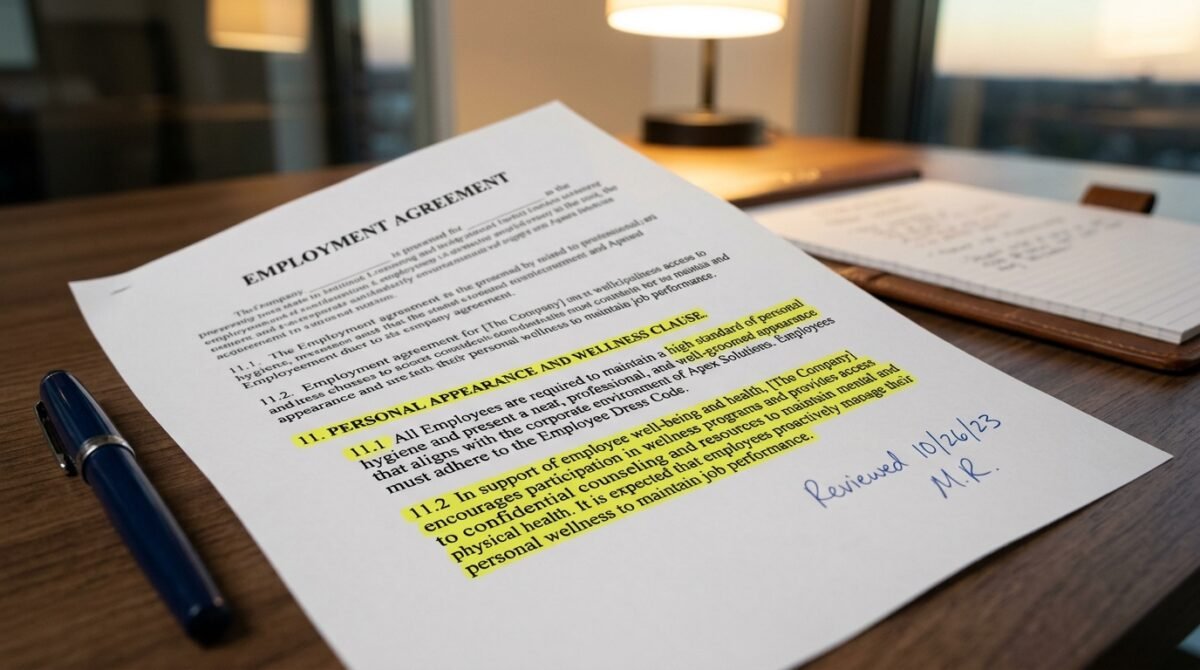
She didn’t speak for a long time. She kept tapping the page, as if she were trying to decide whether to tell me what she was seeing. When she finally looked up, her eyes were filled with pity. ‘You need to see this,’ she said, pushing the document toward me. I scanned the lines. I saw the usual boilerplate, the division of assets, the retirement accounts. And then, I hit the ‘Personal Appearance and Wellness Clause.’
The Party of the Second Part (Wife) agrees to maintain a physical weight not exceeding 135 pounds for the duration of the marriage. Failure to remain within this threshold for a period exceeding three consecutive months will result in a 25% reduction in alimony payments in the event of dissolution.
I felt a sound escape my throat—not a scream, but a sharp, jagged laugh of pure disbelief. I read it again, thinking my eyes were playing tricks on me. Surely, this was a joke. Maybe Julian had included it to mock me, or perhaps it was a bizarre test of my sense of humor. But the ink was dark, the legal language was precise, and there was absolutely no ambiguity in the text.
I looked at Sarah, searching for some sign that this was standard practice. She shook her head slowly. ‘This is not standard. This is not even legally enforceable in many jurisdictions, but the fact that he requested it—and that his legal team pushed it through—tells you everything you need to know about his mindset. He isn’t just looking for a partner, he is looking for a trophy that comes with a performance review.’
I sat in that chair for an hour, the world narrowing down to those three sentences. I thought about the times Julian had suggested I skip dessert, or the ‘subtle’ comments he made when I didn’t hit the gym for a week. I had laughed them off, thinking he was just a health nut. I hadn’t realized he was actually drafting a contract to control my body.
The Confrontation Over a Stolen Dinner

I went straight to our apartment. I didn’t wait for him to come home. I didn’t wait for a convenient time. I threw the document on the kitchen island and stood there, my hands shaking with a rage so pure it felt electric. When Julian walked through the door, he looked his usual impeccable self, briefcase in hand, ready to discuss our wedding timeline.
He didn’t notice my face immediately. He walked to the fridge, grabbed a bottle of sparkling water, and asked me how the meeting with the lawyer went. I didn’t say a word. I just pointed at the document. He looked at it, then back at me, his face remaining entirely composed. He didn’t look guilty. He looked annoyed that I had found it before he could ‘explain’ it.
“It’s just a safeguard, honey. I’m an investor. I hedge my risks in every other part of my life. Why should our marriage be any different? You know how much I value aesthetics, and I just wanted to make sure we were both incentivized to keep our spark alive.”
I couldn’t believe his tone. It was as if he were talking about a stock portfolio. He wasn’t talking about love, or growth, or the challenges of life that might change us. He was talking about a hedge against potential ‘devaluation.’ He truly believed that a human being could be optimized through a financial penalty clause.
I asked him if he had ever considered pregnancy, illness, or just the natural aging process. He waved his hand dismissively. ‘We can talk about riders for that later,’ he said, as if that were a reasonable compromise. I realized then that I wasn’t arguing with a husband; I was arguing with a CEO who had hired a subordinate. The power imbalance in the room shifted, and for the first time, I felt the terrifying clarity of my own insignificance in his world.
I told him that the marriage was off. He stared at me, genuinely shocked. He thought I was being dramatic. He thought I would eventually see the logic of his ‘safeguard.’ He even tried to reach for my hand, to talk me down from the ledge, but I recoiled. The touch that used to feel safe now felt like a violation of my personal autonomy.
The Group Chat Where Everyone Saw the Truth
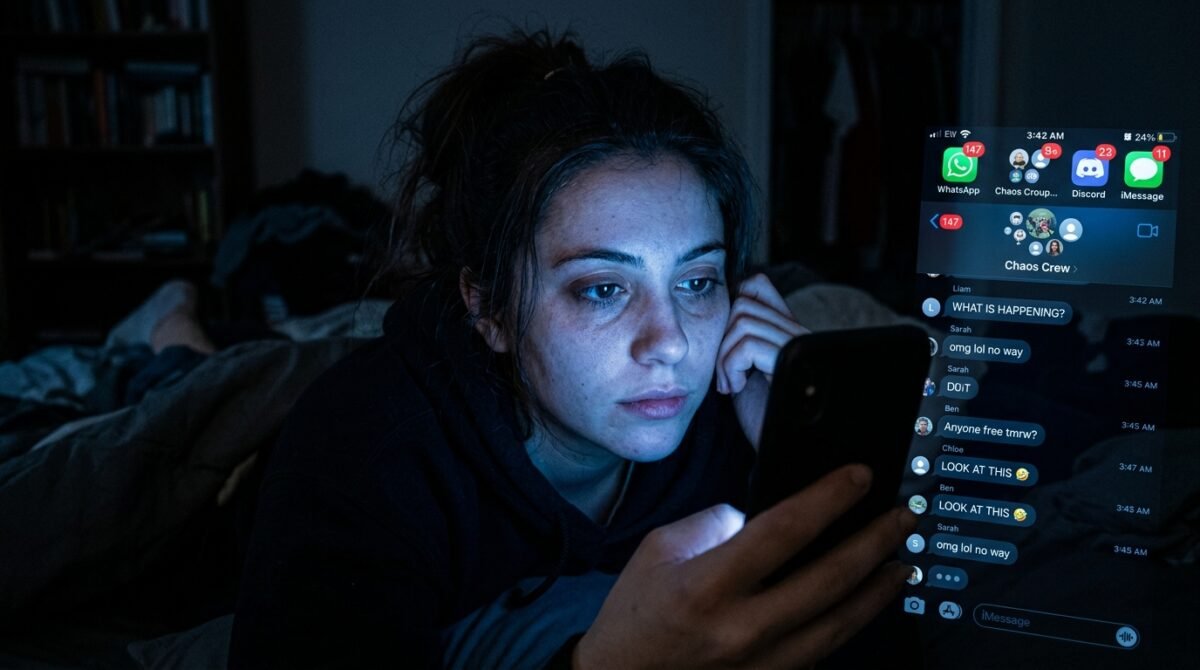
The next morning, the fallout began. Julian had clearly gone to his mother, who was the architect of his ‘pragmatic’ worldview. She didn’t call me; she started a group chat with the wedding party. She framed the situation as me being ‘unstable’ and ‘unwilling to commit to the responsibilities of a high-value union.’ It was a masterclass in manipulation.
“Listen, Julian is just trying to protect our family legacy. If she can’t handle a simple wellness clause, how is she going to handle the pressures of our social circle? She’s clearly looking for an easy out.”
— Future Mother-in-Law, Family Group Chat
My phone didn’t stop buzzing. Cousins I barely knew were chiming in with ‘advice’ about how marriage is about compromise. I sat on my bed and watched the messages roll in, feeling a strange sense of detachment. It was like watching a train wreck from a distance. I decided to reply, not to them, but to the truth.
I screenshotted the exact clause—the one about the 135-pound limit—and pasted it into the group chat. I didn’t write a long manifesto. I just posted the image and a simple caption: ‘This is the responsibility he expects.’ The silence that followed was deafening. The messages stopped instantly. Even the most dedicated enablers in his family didn’t know how to defend that.
A few minutes later, my phone pinged with a private message from his sister, who had always been the quiet one. She apologized for the group chat and admitted she had been forced to sign something similar in her own engagement. The realization hit me then: this wasn’t just about me. This was a generational sickness, a cycle of objectification that had been running through their family for decades.
I realized then that I wasn’t just saving myself; I was breaking a chain. I blocked the mother-in-law, left the group chat, and turned off my phone. The liberation was instant. I didn’t need to explain myself to them, and I certainly didn’t need to justify my worth to a group of people who measured value in kilograms.
The Logistics of a Canceled Life

Canceling a wedding is an administrative nightmare, but it is also a strange, therapeutic exercise in reclaiming your time. I spent the next forty-eight hours on the phone with vendors. I started with the caterer, then moved to the florist, the photographer, and finally the venue coordinator. Each conversation required me to repeat the same sentence: ‘The wedding is canceled. Please process the cancellation fee.’
Most of the vendors were surprisingly kind. They had seen it all. One woman from the flower shop even sent me a bouquet after I explained why I was canceling. She told me she had once canceled her own wedding two weeks before the date, and it was the best decision she ever made. We talked for twenty minutes about the stress of expectations, and it was the first time I felt human in days.
The hardest part wasn’t the logistics; it was the emotional weight of the ‘what-ifs.’ I had imagined this day for eighteen months. I had picked out the china, the music, the color palette. Now, I was packing boxes, separating my belongings from his, and creating a space that felt like mine again. Every item I put into a box felt like a weight being lifted off my shoulders.
Julian tried to contact me multiple times. He sent emails, he left voicemails, and he even showed up at my work once. He kept insisting that he was ‘willing to negotiate’ the clause. He didn’t understand. It wasn’t about the number. It wasn’t about the weight. It was about the fact that he thought it was acceptable to negotiate my dignity. I never responded to him, not once.
By the end of the week, the apartment was empty of him. The walls felt brighter. The air felt cleaner. I realized that the life I had been building was a facade, a carefully curated performance that I was exhausted from maintaining. I was free, and for the first time in years, I was hungry—and I ate exactly what I wanted.
Why the Reddit Community Stood Up
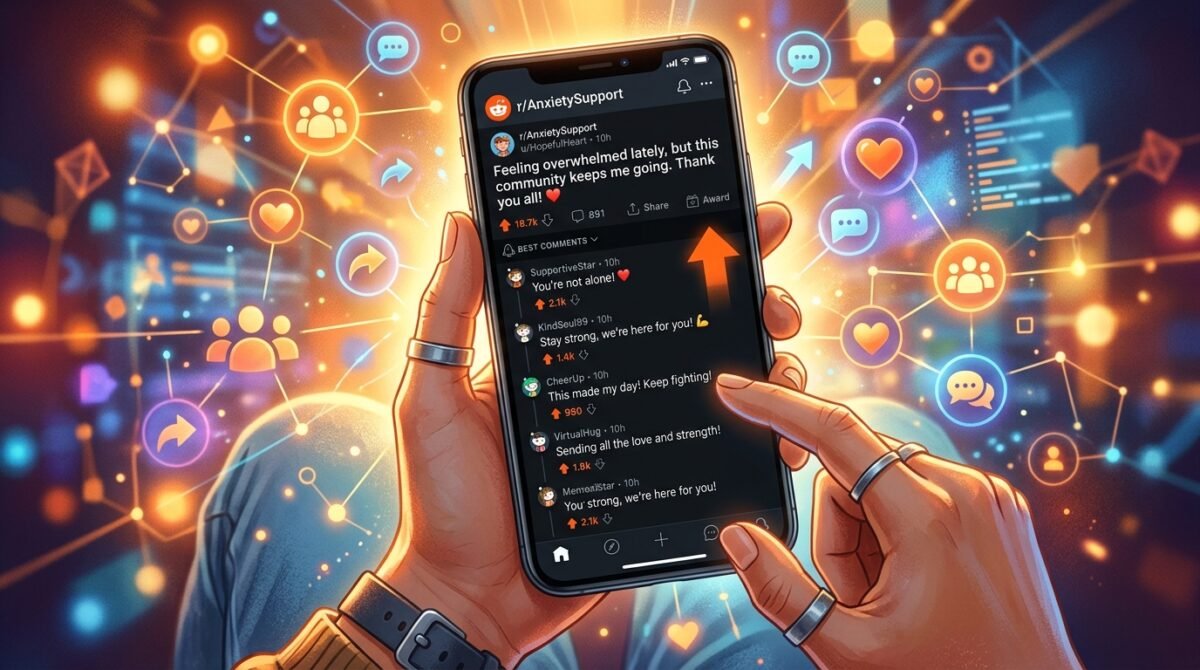
I posted my story on a subreddit dedicated to relationship advice, mostly because I needed to know if I was actually the villain. The response was overwhelming. I went from being confused and hurt to feeling validated by thousands of strangers who saw the exact danger I had been living in. The top comment, which received nearly thirty thousand upvotes, became my manifesto.
“OP, you didn’t just cancel a wedding; you escaped a domestic prison. This isn’t a ‘prenup.’ This is a control mechanism designed to keep you in a state of constant anxiety about your own body. If he thinks he can put a price tag on your weight, he will eventually put a price tag on everything you value. Run, don’t walk, and never look back.”
— u/HopefulHorizon (Top Comment, 28.5k upvotes)
The thread became a repository for other women who had experienced similar ‘wellness clauses’ or ‘lifestyle requirements’ in their relationships. It turned out to be a massive, quiet epidemic of controlling partners who use the legal system to enforce their insecurities. The comments were a mix of horror, shared trauma, and intense encouragement.
Some commenters tried to play devil’s advocate, suggesting that maybe it was just his way of ensuring a ‘healthy lifestyle’ for the family. They were immediately shut down by hundreds of users who pointed out that a healthy lifestyle is a personal choice, not a contractual obligation with a financial penalty. It was heartening to see the community rally around the idea of bodily autonomy.
I spent hours reading the responses. Some were funny, some were heartbreaking, but all of them reinforced the same truth: you are worth more than your appearance. I learned that my experience wasn’t a unique tragedy; it was a symptom of a larger, systemic issue. Sharing it felt like a form of therapy, a way to process the trauma of the situation by seeing it through the eyes of others.
The community also provided me with a wealth of information about how to protect myself legally after the split. They recommended specific resources for women leaving high-net-worth relationships where the partner might try to retaliate or use their resources to make life difficult. I felt prepared, supported, and finally, completely in control of my own future.
The Financial Fallout of Leaving

Leaving was expensive, but staying would have cost me my soul. Julian was furious that I had walked away, and his legal team made sure I knew it. They sent a series of threatening letters, demanding reimbursement for the non-refundable deposits and the legal fees associated with the drafting of the prenup. They tried to frame the cancellation as a breach of contract on my part.
My lawyer, Sarah, handled it with surgical precision. She wrote a single letter back, citing the ‘unconscionable and coercive’ nature of the clause as grounds for rendering the entire document void. She also pointed out that any attempt to sue me for wedding costs would result in a counter-suit detailing the psychological abuse and harassment, which would be incredibly damaging to his firm’s reputation.
The letters stopped. It was a bluff, and he knew it. He didn’t want the publicity; he didn’t want his firm’s clients knowing that their high-powered partner was obsessed with his wife’s weight to the point of creating a legal contract about it. He wanted to keep his image as a rational, successful man, and I was the only person who could tear that image down.
I had to dip into my savings to cover the initial costs of the breakup, but the sense of peace I felt was worth every penny. I moved into a smaller, cheaper apartment, and I started over. I didn’t need the expensive furniture or the high-end appliances that we had picked out for our ‘dream home.’ I needed a space that was mine, a space where I could be imperfect without fear of a penalty.
It’s strange how much money we spend trying to impress people we don’t even like. Once I stopped spending money on appearances—the gym, the designer clothes, the ‘healthy’ food plans that Julian insisted on—I found that I had more than enough. I was finally living within my own means, and the freedom of that was intoxicating.
The Silence of the Sunday Dinner Table

I remember the last Sunday dinner I had with his family before everything fell apart. It was a lavish affair, with expensive wine and perfectly plated food. I felt like a guest in someone else’s life. Julian’s father talked at length about ‘optimization’ and ‘managing assets,’ while his mother constantly scanned the room for any sign of disorder.
I looked at the table and realized that I was just another asset. I was there to provide a certain image, to be a certain weight, to play a certain part. I wasn’t there to be a family member. I was there because I fit the aesthetic of their life. The table was silent, but it wasn’t a peaceful silence. It was the silence of people who were afraid to say anything that might disturb the carefully constructed reality they had built.
I remember looking at Julian across the table and wondering if he ever felt the weight of his own expectations. Did he have to maintain himself to stay in his father’s good graces? Did he have his own hidden clauses in his contracts, his own fears of failure? It was a sad realization: we were all prisoners of the same system, but I was the only one who had dared to step out of it.
Now, when I eat, I don’t feel the need to count calories or track my steps for someone else’s approval. I eat with my friends, with my family, and sometimes just by myself. The food is simple, the conversation is real, and no one is grading my performance. It is a level of comfort I didn’t know I was missing.
The Sunday dinner table is now a memory, a snapshot of a life I narrowly escaped. I don’t miss the expensive wine or the perfectly cooked meals. I miss the authenticity that was missing from every single interaction I had in that house. I learned that you cannot build a healthy relationship on the foundation of someone else’s rules.
Finding Strength in the Aftermath

The months following the breakup were a period of intense discovery. I started doing things I had given up during my time with Julian. I went back to painting, a hobby I had abandoned because he thought it was ‘messy’ and ‘unproductive.’ I started running, but only because I enjoyed the feeling of the wind in my hair, not because I was trying to reach a specific goal.
I found a new community of people who didn’t care about my weight or my social status. They cared about my thoughts, my humor, and my kindness. I learned that my value wasn’t tied to how well I performed in a relationship. I learned that I was worthy of love, even if I gained a few pounds or lost my job or made a mistake. That was a revolutionary concept for me.
I also started seeing a therapist to unpack the trauma of the relationship. It wasn’t just the prenup; it was the subtle, daily eroding of my self-esteem that had made me think that such a contract was a ‘normal’ thing to encounter. We worked through the ways in which I had allowed my boundaries to be pushed, and I learned how to set them firmly in the future.
The journey back to myself was not linear. Some days I felt strong, and other days I felt like a failure. But the difference was that I was allowed to be a failure. I was allowed to be human. I no longer had to answer to anyone but myself, and that was the greatest gift I could have given myself.
I am now in a place where I look back at that time with a mixture of sadness and relief. I am sad that I spent so much time trying to be the person he wanted, but I am relieved that I finally had the courage to say ‘no.’ I am not the woman I was, and I am glad for it. I am stronger, more authentic, and infinitely happier.
The Lesson That Changed Everything

If there is one thing I want people to take away from my story, it is this: never, ever ignore your gut feeling when something feels wrong. Your intuition is a powerful tool, and it is usually the first thing that warns you when someone is trying to control you. I ignored my gut for months, thinking I was just being ‘difficult’ or ‘unreasonable.’ I wasn’t.
Love should never feel like a contract. Love should never come with conditions on your body or your appearance. If someone says they love you but only on the condition that you remain a certain way, they don’t love you. They love the version of you that they have created in their own head. They love the object, not the person.
I also learned that it is okay to walk away. It is okay to change your mind, even if it is at the very last minute. It is okay to disappoint others if it means staying true to yourself. The social pressure to ‘make it work’ or to ‘save face’ is immense, but it is not worth your dignity. Your life is your own, and you are the only one who has to live it.
I am grateful for the Reddit community, for the kind strangers who reached out to me, and for the support I found when I felt the most alone. It is easy to feel like you are the only one experiencing a certain type of trauma, but you are not. There is a whole world of people who have been exactly where you are, and who have come out the other side stronger.
I don’t know what the future holds, but I know it will be on my terms. I know that I will never let anyone make me feel like I am a commodity again. And that, in itself, is the greatest victory I could have ever achieved.
Reflections on a New Beginning

Looking back, I sometimes wonder if Julian ever realized what he lost. Did he ever look at that contract and see the absurdity of it? Did he ever wonder why I really left? I suspect he didn’t. I suspect he just saw it as a business failure, a transaction that didn’t close. And that is perhaps the saddest part of all: he will likely continue to look for ‘optimal outcomes’ and miss the humanity in every single relationship he enters.
I have moved on. I have a new job, a new apartment, and a new perspective on life. I have found joy in the small things: a quiet morning, a good book, a walk in the park. I don’t feel the need to document it for the world to see, or to perform for anyone else’s benefit. I am content in my own skin, and that is a feeling I would never trade for anything.
My advice to anyone facing a similar situation is simple: trust yourself. If something feels off, it is. If you feel like you are being monitored, judged, or controlled, you probably are. Do not be afraid to step away. Do not be afraid to be the ‘difficult’ one. Your happiness is worth more than any convenience or social expectation.
We are not projects. We are not assets. We are people with the right to grow, change, and evolve without fear of punishment. We are allowed to be imperfect, to be messy, and to be exactly who we are. And that is the most beautiful thing of all. I hope that by sharing my story, I can help someone else find the courage to walk away from their own gilded cage.
The ceremony was canceled, the flowers wilted, and the life I thought I wanted is gone. But in its place is a life that is truly mine. And for that, I am profoundly, deeply grateful. The road ahead is uncertain, but it is free, and for the first time, I am walking it with my head held high.
Conclusion
My decision to cancel the wedding was the single most important act of self-love I have ever performed. It was not easy—it was fraught with legal threats, emotional manipulation, and the awkwardness of explaining my choice to those who couldn’t understand. Yet, in the silence that followed, I found a voice I didn’t know I had. I learned that my worth is not a figure on a scale, nor a clause in a document, nor a social status conferred by a ring. My worth is mine alone, and I am the only one who gets to define it.
Relationships are complex, and they require compromise, but they should never require the sacrifice of your personhood. When someone asks you to sign away your autonomy for the sake of their ‘investment,’ they are showing you exactly who they are. Believe them. When they treat your body as a conditional asset, they are showing you that their love is conditional. Accept that, and choose yourself every time.
I leave you with this: are you living a life that reflects who you truly are, or are you living a life that reflects someone else’s expectations? If it’s the latter, remember that you have the power to walk away. You have the power to tear up the contract. You have the power to start again.
What about you? Have you ever had to draw a line in the sand to protect your own boundaries in a relationship? Or have you seen similar ‘wellness clauses’ in your own circles? Let’s discuss in the comments below. Your stories matter, and your experiences can help others find the courage to speak up.
What's your verdict on this dilemma?
Vote below to contribute to the official community consensus.

Have a Dilemma Keeping You Up at Night?
Share your real-life feud, wedding chaos, or relationship crossroads anonymously with our editorial team.
What do you think ?
0 Comments🛡️ Comments are moderated to protect community integrity. Your comment will appear once approved by the editorial team.