
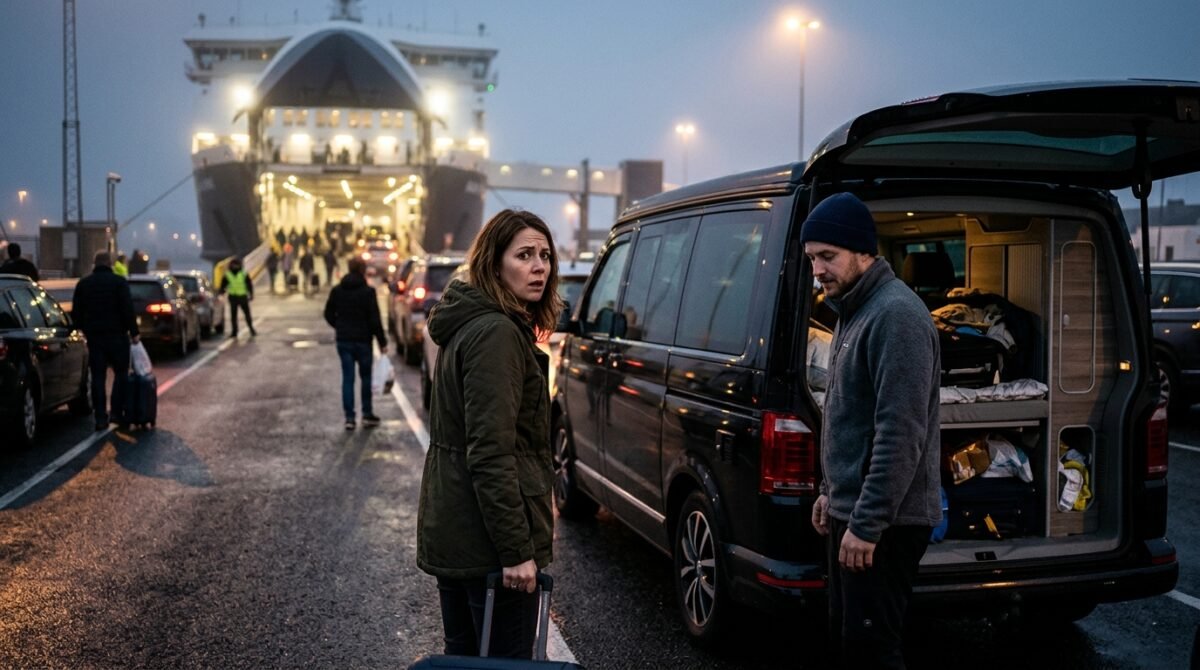
It was supposed to be the trip of a lifetime. After months of saving, planning, and painstakingly renovating our custom sleeper van, Mark and I were finally setting off on our ‘pre-honeymoon’ road trip across the coast. We had mapped out the scenic route, booked the ferry crossings, and curated a playlist that was meant to soundtrack our future. I never imagined that the most significant obstacle to our happiness wasn’t a mechanical breakdown or a storm, but my own fiancé’s inability to draw a line between our life together and his mother’s suffocating presence.
We had been engaged for eighteen months, and in that time, I had learned to tolerate the Sunday dinners, the ‘casual’ pop-ins, and the thinly veiled critiques of my home decor. But this trip was different. It was supposed to be just us—two people preparing to build a life. Or at least, that’s what I told myself. I didn’t realize until we hit the gravel of the ferry terminal that Mark had been harboring a secret that would fundamentally alter the trajectory of our relationship.
The air was crisp and salt-sprayed as we waited in the boarding queue. I felt the familiar hum of excitement in my chest, a stark contrast to the growing unease I’d felt ever since we left the driveway. Mark had been unusually twitchy, constantly checking his phone and pacing near the back of the van under the pretense of ‘checking the tire pressure’ every ten miles. I dismissed it as pre-trip jitters, a common byproduct of the immense pressure he claimed the vacation was putting on him.
But when the ferry whistle blew and the line began to crawl forward, something shifted. I watched through the side mirror as Mark hurriedly moved toward the rear, his face pale and his movements frantic. When he didn’t return to the driver’s seat, the silence in the cab became heavy, suffocating. I stepped out, expecting a mechanical issue, only to find the back latch unhooked. What I saw inside wasn’t an engine component or a loose bag, but the unmistakable, indignant face of my future mother-in-law, wedged behind a pile of sleeping bags.
The betrayal wasn’t just about her presence; it was the calculated, deceptive nature of the entire operation. He had planned this. He had hidden this. And in that moment at the ferry terminal, with the engine idling and the ferry crew waving us forward, I didn’t see a partner. I saw a man who would always choose his mother’s comfort over our boundary. So, I took the only action that felt sane: I got back in the driver’s seat, left the van—and my fiancé—at the terminal, and drove my own sedan home, leaving the keys to the camper in the ignition.
The Three-Month Campaign of Subtle Manipulation

Looking back, the signs were there, masquerading as ‘sweet gestures.’ For months, Mark had been suggesting that his mother, Linda, needed a ‘change of scenery’ due to her chronic back pain and general malaise. I had been supportive, offering to help find local wellness groups or even suggesting a short weekend trip for her, but Mark always pushed for something more—something that involved us.
He would leave brochures for coastal resorts on the kitchen counter, specifically highlighting accommodations that were conveniently located near our planned stops. I brushed it off, thinking he was just being a dutiful son. I even felt a twinge of guilt for being annoyed by his constant need to include her. Little did I know, this was the groundwork for a much more audacious plan.
“I just think it would mean the world to her if we stopped by for a day or two on our drive. She’s so lonely, and we have all this space in the van. It’s barely an inconvenience, right?”
— Mark, during a dinner three weeks before departure
I had been firm. I told him that this trip was meant to be for us to reconnect before the wedding. He seemed to agree, nodding and taking my hand. It was the classic ‘Mark-style’ compromise—agreeing to my face while already having a backup plan in motion. I realize now that he never intended for the trip to be just us; he intended for me to eventually cave under the pressure of having her nearby.
The shopping habits changed, too. We bought extra groceries—enough for three people, not two. I thought we were just being prepared for remote camping, but the items were specific: her favorite tea, her specific brand of crackers, and enough wine to sustain a small army. Every time I questioned the excess, Mark had a ready excuse, a quick-witted lie that kept my suspicions at bay.
By the time the week of the trip arrived, the tension was palpable. Mark was more focused on the packing list than the itinerary. He insisted on loading the van himself, telling me to focus on work while he ‘handled the logistics.’ I should have been more curious, but I was so wrapped up in the romantic fantasy of the road trip that I blinded myself to the logistical reality staring me in the face.
The Morning of the Disappearing Act
The morning of our departure was eerily quiet. Mark was up before the sun, loading the last of the gear into the back of the sleeper van. I heard the sliding door open and close several times, but I attributed the noise to his neuroticism about packing the heavy items low to the floor for weight distribution. I was busy double-checking our documents and securing the house, blissfully ignorant.
When he finally came inside to get me, he looked disheveled and frantic. He didn’t have his usual morning coffee; he just grabbed my hand and urged me to get in the car. ‘We’re behind schedule,’ he muttered, avoiding eye contact. I remember thinking how strange it was that he was so concerned about time, given that we had zero commitments other than catching the ferry.
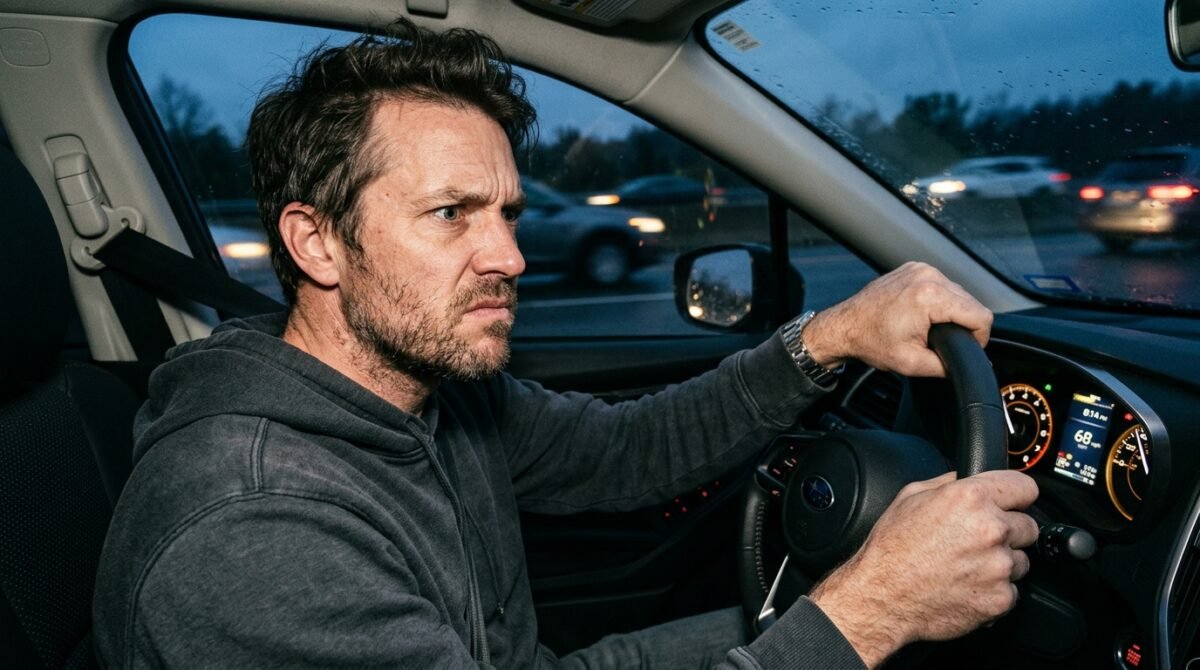
The drive to the terminal was a blur of silence. Mark kept checking the rearview mirror, his knuckles white against the steering wheel. I tried to make small talk, asking about our first stop, but he gave one-word answers. It felt like we were fugitives rather than vacationers. The air in the cab was thick with the scent of his cologne, which seemed to be hiding something else—the faint, lingering smell of mothballs.
“You’re acting like we’re smuggling contraband, Mark. It’s a two-hour drive to the port. Relax, we have plenty of time.”
— My attempt to lighten the mood in the car
He didn’t laugh. He just tightened his grip on the wheel and said, ‘I just really want this to be perfect. If we miss the boat, the whole schedule is ruined.’ I didn’t know at the time that the schedule he was worried about wasn’t the ferry’s—it was the secret rendezvous he had arranged for his mother to meet us at a specific exit ramp nearby.
Everything felt wrong, but I suppressed my gut instinct. I kept telling myself I was being paranoid, that I was projecting my own anxieties onto his behavior. I wanted this trip so badly that I was willing to ignore the red flags waving in my face, which only made the eventual reveal that much more devastating.
The Clatter Behind the Bulkhead
About halfway to the ferry terminal, we hit a particularly rough patch of road construction. The van jolted, and from the back, I heard a distinct, unmistakable sound: a sharp intake of breath, followed by a muffled, ‘Ow, my hip!’ I froze. I looked at Mark, who immediately cranked up the radio to full volume, his face turning a shade of pale that I had never seen before.
I reached for the volume knob, but he grabbed my wrist, his hand shaking. ‘It’s just shifting gear, don’t worry about it,’ he said, his voice strained. I didn’t say anything, but my heart started racing. I knew that sound. It wasn’t a loose pot or a shifting sleeping bag. It was the sound of a human being in pain, and it was coming from the cargo area where no one should have been.
I spent the next forty-five minutes in a state of hyper-vigilance. Every bump in the road was amplified. I started noticing things I had missed earlier: the excessive amount of water bottles on the floor, the lack of space in the back that I had previously attributed to our ‘excessive’ packing, and the way Mark was sweating despite the air conditioning being on full blast.
“Mark, pull over. I need to check the back. Something is shifting and it sounds like it could break.”
— Me, trying to maintain a calm facade while my internal panic meter redlined
He refused, his voice rising in pitch. ‘We can’t stop now! We’ll lose our boarding position. Just sit tight, it’s fine!’ The desperation in his tone was the final piece of the puzzle. He wasn’t afraid of losing our place on the ferry; he was afraid of me finding out what he had tucked away behind the bulkhead.
When we finally pulled into the loading line at the terminal, he didn’t wait for the engine to cool. He was out of the van before I could unbuckle my seatbelt, rushing to the back. ‘I’ll just secure the load,’ he called out, his voice cracking. I sat there for a second, then decided I had had enough of the secrets. I stepped out, determined to see for myself what was so important that it was worth driving in silence for three hours.
The Reveal at the Ferry Port
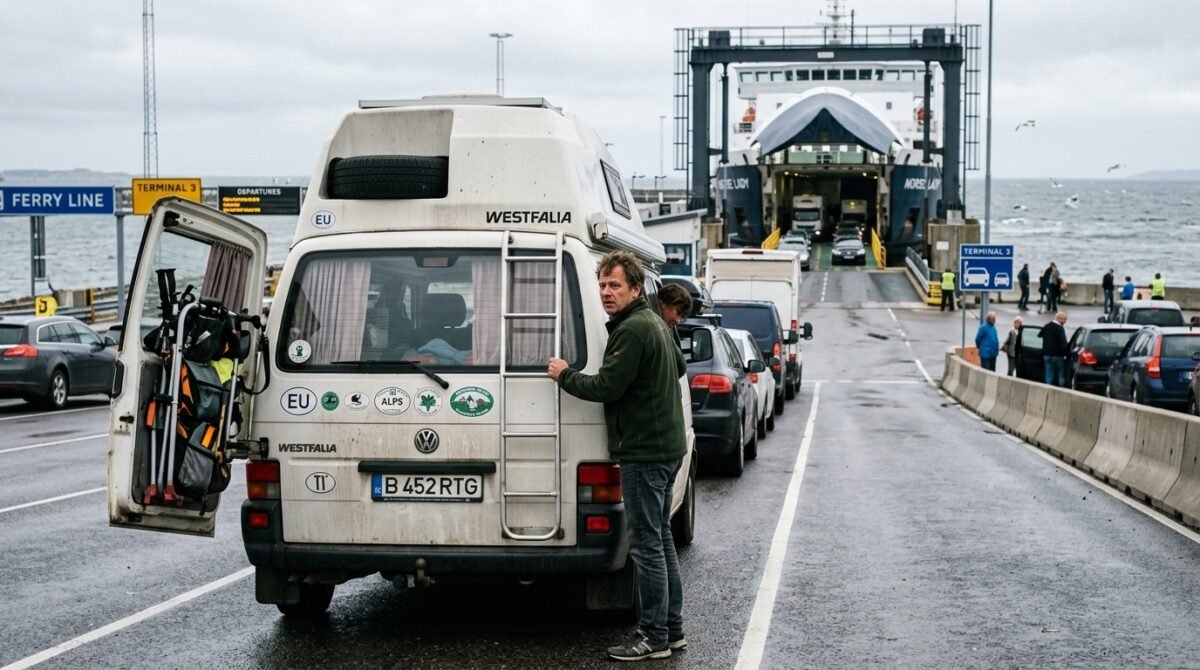
The scene at the ferry port was chaotic. Cars were lined up, engines were idling, and the smell of diesel and sea air was overwhelming. I walked toward the back of our van, my legs feeling heavy, as if I were walking through mud. I saw Mark frantically trying to wedge a cooler against the bulkhead, his back to me. He didn’t hear me approach.
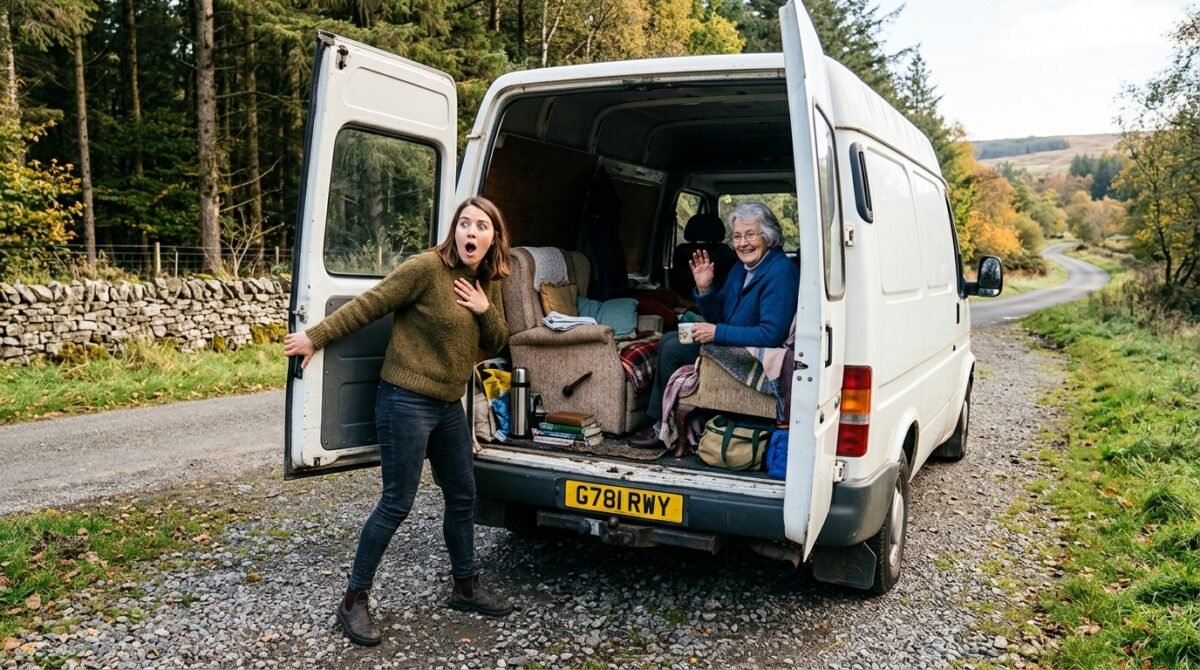
I reached out and pulled the latch. The door swung open, and the sight that greeted me was something out of a surrealist nightmare. Tucked between the kitchen unit and our sleeping area, surrounded by pillows and a makeshift blanket fort, was Linda. She was holding a thermos and looking at me with an expression that was half-sheepish, half-defiant.
“Oh, dear. I suppose you weren’t meant to see me until we reached the coast. Mark, I told you she’d notice the rattling.”
— Linda, caught red-handed in the back of our van
I couldn’t speak. My mind was reeling, trying to process the sheer audacity of what had just happened. Mark turned around, his face crumbling. ‘I was going to tell you,’ he stammered, his hands out in a placating gesture. ‘I just knew you’d say no, and she really needed this break. It’s just for the first week, I swear!’
The betrayal hit me like a physical blow. He had lied to me for weeks. He had manipulated our finances, our time, and our trust to smuggle his mother onto our honeymoon trip. And he had done it behind my back, treating me like an obstacle to be bypassed rather than a partner to be consulted. The level of disrespect was staggering.
I looked at Linda, then at Mark, and then at the ferry ramp. The workers were motioning for us to move forward. The weight of the situation crashed down on me. I realized that if I stayed, I was accepting this new reality. I was accepting that Mark would always prioritize his mother’s whims, no matter the cost to our relationship or my boundaries. In that moment, I made the decision that would change everything.
The Departure on My Own Terms
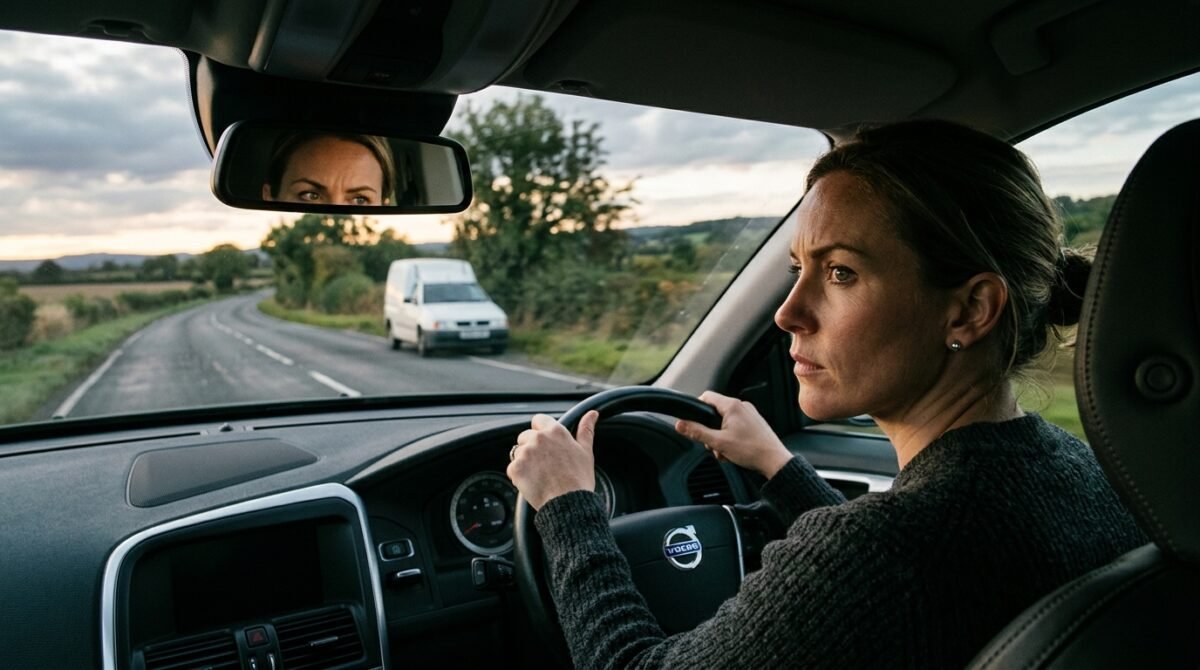
I didn’t yell. I didn’t scream. I didn’t even argue. I looked at Mark, who was still trying to explain why this was ‘the only way,’ and I felt a strange sense of clarity. The chaos in my mind suddenly became perfectly ordered. I realized that the life I had been planning with this man was a mirage, built on a foundation of his mother’s shadow.
I reached into my pocket and pulled out my keys—the ones to my own car, which I had driven to the terminal behind the van just in case we needed a backup vehicle for the local area tours. I looked at the van, then at Mark, and then back at the keys. ‘You have everything you need, Mark,’ I said, my voice eerily calm. ‘You have your mother, and you have your van. You don’t need me.’
I walked away. I didn’t look back to see his reaction, but I could hear him calling my name, his voice echoing off the concrete walls of the terminal. I got into my car, started the engine, and drove. I didn’t stop until I was two hours away, at a rest stop, where I finally allowed myself to break down.
“You’re really going to leave me here? We have a trip to finish! How am I supposed to drive this thing back with her in the back? This is insane!”
— Mark, shouting as I pulled away
The irony was not lost on me. He was worried about driving the van back with his mother, the very woman he had fought so hard to bring along. He had wanted the fantasy of a perfect trip without considering the logistical or emotional reality of his choices. He wanted the fun without the consequences.
As I sat in my car, I felt the heavy weight of the engagement ring on my finger. It felt like a stone. I knew I couldn’t go back to that house, to that life. The trust had been completely incinerated, and I knew that no amount of apologizing or ‘I didn’t mean it’ would ever fix the fact that he had actively conspired against me to put his mother in our personal space.
The Fallout in the Family Chat

My phone didn’t stop buzzing for three days. It was a relentless assault of texts, calls, and voice messages. The family group chat, which I had previously muted but never left, became a battlefield. Mark had clearly told his version of the story, and his family was not pleased.
The messages were a mix of outrage, blame, and gaslighting. They claimed that I was being ‘dramatic,’ that ‘families help each other,’ and that I had abandoned Mark in a vulnerable position. They didn’t seem to care that he had lied to me or that he had violated my trust in the most egregious way possible.
“How could you do this to him? You left him stranded at the port like a criminal. He’s your fiancé! You need to go back and pick them up immediately.”
— Mark’s sister, in the family group chat
I read the messages and felt nothing but a cold, detached sense of relief. I wasn’t being ‘dramatic’; I was setting a boundary that I should have set years ago. The fact that they thought my behavior was the issue, rather than Mark’s deceit, only confirmed that I was making the right decision by walking away.
I didn’t respond to any of them. I blocked the entire clan, one by one. It was the most liberating thing I had ever done. Every block was like cutting a thread that had been tethering me to a life that wasn’t mine, a life that belonged to Mark and his mother.
The silence that followed was heavy, but it was a good silence. It was the silence of a clean slate. I spent the next few days in a hotel, just breathing, just being. I wasn’t worried about groceries, or itineraries, or keeping anyone else happy. I was finally, for the first time in a long time, only responsible for myself.
The Reddit Verdict: Echoes of Validation

I posted my story on a throwaway account, just to see if I was losing my mind. I needed an objective perspective, and the internet did not disappoint. The outpouring of support, the sheer volume of ‘NTA’ (Not The Asshole) judgments, was overwhelming. It wasn’t just that they agreed with me; it was that they saw the patterns I had spent years ignoring.
“This isn’t about the van. This is about a man who has been conditioned to put his mother above his partner, and he’s clearly not ready for marriage. You didn’t leave him; you left a situation that was designed to make you the third wheel in your own relationship. Good for you for having the guts to walk away.”
— u/RelationshipGuru88 (Top Comment, 32.1k upvotes)
Reading the comments was like reading a mirror of my own internal monologue. People pointed out the financial manipulation, the gaslighting, and the classic ‘enmeshment’ that had been happening for years. It was validating to see that I wasn’t crazy, that my reaction was a rational response to an irrational and toxic situation.
Others shared their own stories of dealing with overbearing in-laws and partners who couldn’t set boundaries. I felt less alone, less like the villain of my own life. I realized that my story wasn’t just a random event; it was a symptom of a larger, systemic problem in our relationship that I had been too close to see.
The community support helped me navigate the legal and practical fallout. People gave advice on how to handle the shared assets, how to manage the breakup, and most importantly, how to prioritize my own mental health. I was no longer the girl who was waiting at the ferry terminal; I was a woman taking control of her future.
Counting the Cost: The Financial Reality

The cleanup was messy. We had shared expenses, joint accounts, and the van itself was technically in both our names. I had put in more than my share of the labor and the funds, and getting that back was going to be a nightmare. I sat down with my bank statements and the receipts, trying to make sense of the financial wreckage.
| Category | My Contribution | Mark’s Contribution | The Reality |
|---|---|---|---|
| Van Purchase | $15,000 | $5,000 | I funded the majority. |
| Renovation Costs | $8,000 | $2,000 | Mark did ‘labor’ (mostly oversight). |
| Trip Expenses | $2,000 | $0 | Mark ‘borrowed’ the rest. |
The numbers were stark. I had been subsidizing his life and his mother’s comfort for years. The realization that I was the primary financier of the very vehicle he used to try and trick me was a bitter pill to swallow. But it was all just money. It could be earned back. What couldn’t be earned back was the time I had spent trying to make a man love me enough to respect me.
I hired a lawyer to handle the dissolution of our joint ventures. It was expensive, but it was worth every penny to avoid having to speak to him directly. I didn’t want closure; I didn’t want an apology. I wanted my money, and I wanted my life back. The process was cold and calculated, but it was necessary.
Mark tried to fight it at first, claiming the van was ‘his’ because he was the one who ‘planned’ the trip, but the receipts and the documentation were clear. My lawyer made short work of his claims. It was a lesson in the importance of keeping your finances separate until you’re absolutely sure of who you’re dealing with.
The Quiet After the Storm

Six months later, I am in a completely different place. I’ve moved into a new apartment, one that doesn’t have a single trace of Mark’s influence. I’ve started traveling again, but on my own terms. I’ve been to three countries and countless cities, and I’ve never once felt the need to hide anyone in the back of my car.
I’ve learned that boundaries are not just suggestions; they are the walls that keep our lives intact. I’ve learned that when someone tells you who they are—or who they prioritize—you should listen to them the first time, not the fiftieth. I’ve learned that I am capable of making hard decisions, and that I don’t need anyone else’s permission to be happy.
“I used to think that love meant compromising until you were nothing. Now I know that love is finding someone who adds to your life, not someone who expects you to shrink your own to fit theirs.”
— My journal entry, one month post-breakup
I still see the occasional camper van on the highway, and sometimes, for a split second, I feel a pang of nostalgia. But then I remember the feeling of the cold, crisp air at the ferry terminal, and the feeling of freedom as I drove away. And that nostalgia fades, replaced by a deep sense of gratitude for the woman I have become.
I am not angry anymore. Anger is a heavy thing to carry, and I’m done carrying other people’s baggage. I’ve forgiven myself for being naive, and I’ve forgiven Mark for being exactly who he was. We weren’t a match, and that’s okay. The important thing is that I didn’t let that mismatch define the rest of my life.
Lessons Learned: Why I Don’t Regret the Exit

Looking back, I realize that the van was the perfect metaphor for our relationship. It was supposed to be a tool for exploration and growth, but it became a cage, a place where I was meant to stay in my designated spot while Mark and his mother controlled the direction. The fact that I left it at the terminal wasn’t an act of abandonment; it was an act of reclamation.
I’ve had friends ask me if I regret leaving the van behind. ‘You could have sold it!’ they say. And sure, financially, maybe it would have been smarter to stick around for the negotiations. But that wouldn’t have been me. I needed to walk away cleanly. I needed the symbolic act of leaving it all behind to truly let go of the emotional baggage that went along with it.
I have a newfound appreciation for the people in my life who respect my boundaries. It’s amazing how much clearer your vision becomes when you stop looking for approval from the wrong people. I’ve surrounded myself with friends and family who celebrate my independence, who don’t see my boundaries as a threat but as a sign of a healthy, functioning person.
If there’s one thing I want anyone reading this to take away, it’s that your gut is the most reliable compass you have. If something feels off, if you’re constantly making excuses for someone else’s behavior, if you feel like you’re being hidden or pushed to the side—listen to that feeling. It’s not ‘drama’ or ‘insecurity’; it’s your own self-respect trying to get your attention.
Conclusion
I often wonder what happened at that ferry port after I left. Did they go on the trip anyway? Did they have to turn around? The truth is, I don’t care. That chapter of my life is closed, and the book has been put back on the shelf. I am writing a new story now, one where I am the main character, and where the boundaries are clear, respected, and non-negotiable.
The experience taught me that I am capable of immense strength, and that I don’t need anyone else to validate my worth. I’ve moved on, and I’ve found peace in the knowledge that I stood up for myself when it mattered most. I hope that by sharing my story, I can encourage others to do the same—to trust their instincts, to set their boundaries, and to never settle for being a second-class citizen in their own lives.
What about you? Have you ever had to walk away from a situation because your boundaries were being ignored? What was the moment you realized you had to leave? Let’s share our stories in the comments below—maybe your perspective will help someone else find the strength to walk away, too.
What's your verdict on this dilemma?
Vote below to contribute to the official community consensus.

Have a Dilemma Keeping You Up at Night?
Share your real-life feud, wedding chaos, or relationship crossroads anonymously with our editorial team.
What do you think ?
0 Comments🛡️ Comments are moderated to protect community integrity. Your comment will appear once approved by the editorial team.