

We all have that one possession—the one object that tethers us to the people we’ve lost. For me, it was my great-grandmother’s diamond ring. It wasn’t just a piece of jewelry; it was a promise of continuity, a vintage gold band housing a brilliant, slightly imperfect diamond that had survived two wars and three generations of women. When I met Mark, I didn’t just share my life with him; I shared my history. I told him stories of the woman who wore it during the Great Depression, the woman who insisted it be passed down to someone who truly valued the concept of ‘forever.’
Mark seemed to be that person. For two years, he was the picture of stability, a partner who claimed to honor the traditions I held dear. We were engaged for eight months, and the ring sat securely in a velvet-lined box on my vanity. It was waiting for the day I’d reset it to match my wedding band, or perhaps just wear it as my ‘something old.’ I never could have imagined that the sanctity of that box would be violated not by a burglar, but by the person who had vowed to protect my heart.
The trouble didn’t start with a bang; it started with a casual, almost insulting assumption. It began with ‘just trying it on’ and spiraled into a complete disregard for ownership. The entitlement was subtle at first—a borrowed sweater here, a forgotten earring there—but it quickly evolved into a belief that anything in our home was communal property. When I finally realized the ring was gone, the silence that followed in our apartment was deafening, a precursor to the storm that was about to shatter my entire future.
This isn’t a story about a misunderstanding or a simple mistake. It is a story about the intersection of toxic family dynamics and a partner who lacked the spine to defend his own household. It is a cautionary tale about what happens when you realize that ’till death do us part’ carries no weight if your partner values their sibling’s temporary happiness over your deepest, most sacred trust.
The Disappearing Act of a Legacy
It happened on a Tuesday, a day so mundane it felt insulting that my world was ending. I had come home from work early, planning to clean the bedroom before Mark returned. I reached for the velvet box to polish the band, a small ritual that always centered me. The box was there, its weight feeling familiar, but the moment I flipped the lid, my breath hitched. The box was empty.
My first thought was that I had misplaced it, perhaps dropped it while changing clothes. I spent the next hour tearing apart the room, checking behind the dresser, under the bed, and inside the pockets of every coat I owned. Panic began to set in, a cold, sharp sensation that radiated from my chest. I called Mark, my voice trembling, hoping he might have moved it for cleaning or safekeeping.
When Mark picked up, his voice was tight, distant. He told me he was in a meeting and would ‘look when he got home.’ The lack of urgency in his tone was the first red flag. He didn’t ask if I was okay; he didn’t offer to come home. He simply dismissed my panic as an inconvenience, a reaction that, in hindsight, was a symptom of a much deeper, more sinister issue.
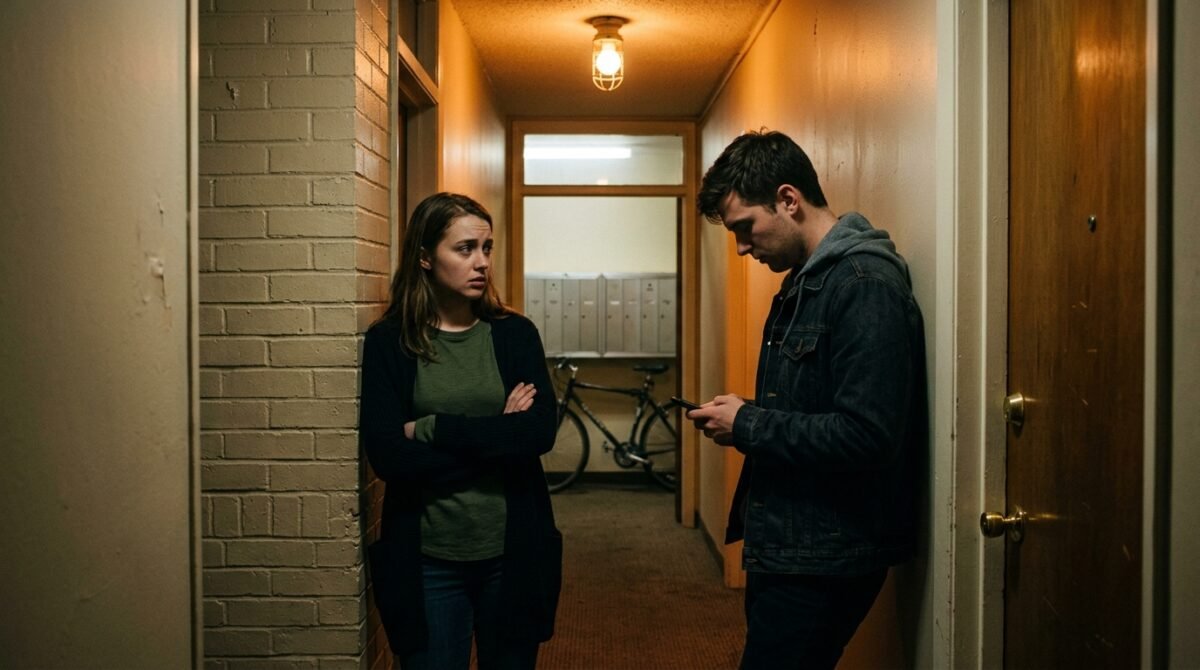
By the time he walked through the door, I had checked every drawer in the house twice. I met him in the hallway, my eyes red from crying. I demanded to know if he had moved it. He avoided my gaze, his eyes darting toward the living room where his sister, Sarah, had been staying for the past week. My stomach dropped. The realization hit me before he even opened his mouth.
“Mark, where is the ring? You were the only one who knew where I kept it. Please tell me you didn’t touch it.”
He stood there, shifting his weight, the classic tell of a man who knew he had crossed a line but was hoping to talk his way out of the consequences. He finally muttered that Sarah had ‘really liked it’ and that she was going through a hard time, hinting that she needed a win. I felt the blood drain from my face. My family heirloom was not a charity donation.
The Sister’s Audacious Display
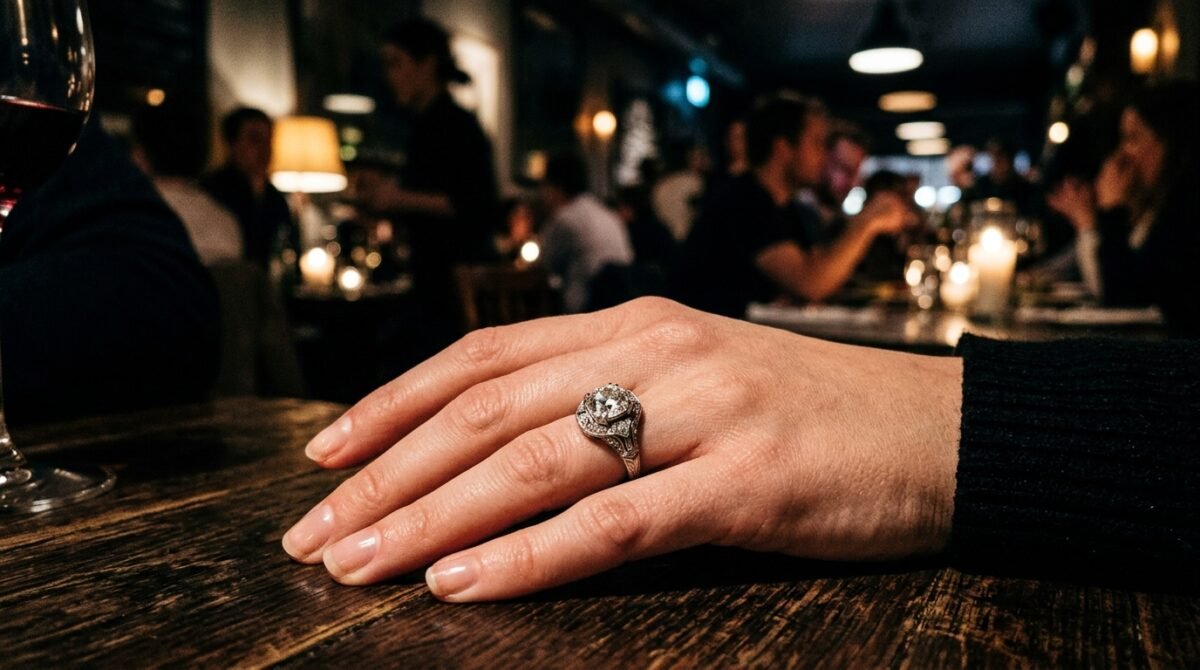
I didn’t wait for him to explain further. I pushed past him, my heart hammering against my ribs, and marched into the living room. Sarah was sitting on the sofa, scrolling through her phone, and there it was—sparkling on her ring finger, catching the dim light of the lamps. It looked wrong on her hand, a perversion of the history I had carefully protected. I felt a surge of adrenaline that was almost intoxicating.
I walked straight up to her, my voice eerily calm. I asked her, point-blank, why she was wearing my great-grandmother’s ring. She looked up, her expression one of genuine confusion, as if I were the one overreacting. She told me that Mark had said it was ‘just sitting there’ and that he thought it would be a nice gesture since she had recently gone through a difficult breakup.
The sheer audacity left me speechless for a second. She spoke as if my heritage was a hand-me-down sweater. I reached out and took her hand, pulling it closer to inspect the band. There were micro-scratches on the gold that hadn’t been there before. The diamond, which I had kept professionally cleaned, was dulled by hand lotion and grime. I ripped my hand away, feeling physically ill.
“Take. It. Off. That ring is not a prop for your bad mood. It belonged to my great-grandmother, and you had no right to touch it, let alone wear it.”
Sarah looked at Mark, her eyes welling up with performative tears. She was counting on him to defend her, to tell me that I was being ‘crazy’ or ‘dramatic.’ And he did. He stepped between us, telling me to ‘lower my voice’ and that I was making a scene over something that was ‘just a piece of jewelry.’ That was the moment something inside me snapped. The engagement wasn’t just in trouble; it was effectively dead.
The Group Chat Confession
That night, while Mark and Sarah were in the kitchen ‘discussing the situation’ with hushed tones, I didn’t sit around waiting. I did something I never thought I would do: I checked the family group chat that Mark had added me to months ago, thinking it would be a good way to bond. I hadn’t looked at it in weeks, but tonight, it was the only place where the truth was leaking out.
They weren’t just talking about the ring; they were talking about me. Sarah had sent a photo of herself wearing the ring earlier that afternoon, captioned with a joke about how ‘easy’ it was to take things that didn’t belong to me because I ‘never wore them anyway.’ The replies from Mark were even worse. He had validated her, saying that I was ‘too attached to material things’ and that it was time I learned to share with ‘the family.’
“She’s so uptight about that ring. It’s been sitting in a box for months. Sarah needs a win right now. Don’t let her guilt-trip you into asking for it back immediately.”
— Mark, in the family group chat
I felt a cold, sharp clarity wash over me. This wasn’t a mistake; it was a conspiracy. They viewed me as an outsider, someone whose boundaries were meant to be pushed and whose property was up for grabs. I didn’t say a word. I didn’t confront them again. I walked into the bedroom, pulled my suitcase out from the top of the closet, and began to pack.
Midnight Packing and the Final Departure
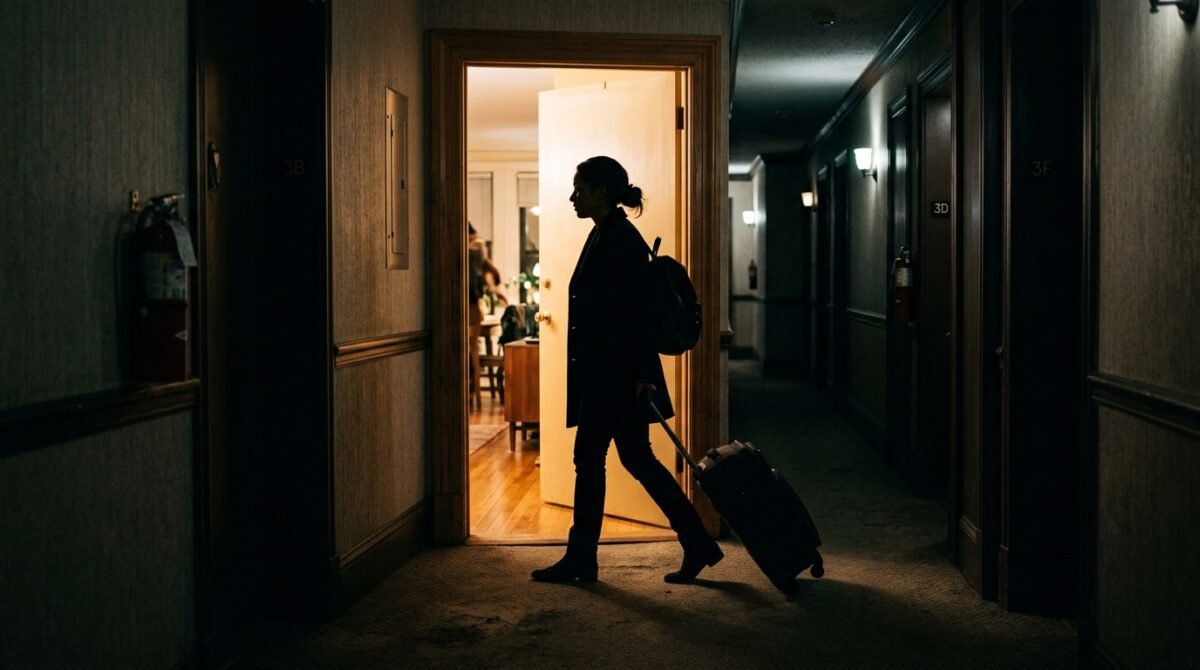
Packing is an intimate act of separation. As I moved through the room, choosing what to take, I realized how much of myself I had already given away to fit into Mark’s life. I packed my clothes, my books, and the few mementos that hadn’t been ‘borrowed’ by his sister. Every item I folded felt like a piece of my independence being reclaimed. I was surprisingly efficient, my movements mechanical.
Mark eventually came into the bedroom, still acting like the victim of a minor spat. He saw the suitcase and his face paled. He asked what I was doing, his voice devoid of the bravado he had shown in the texts. He tried to touch my arm, but I recoiled. I didn’t want him to touch me. The physical revulsion I felt was overwhelming, a complete override of the affection I had held for him for two years.
I didn’t yell. I didn’t cry. I told him exactly what I had seen in the group chat. I told him that the ring wasn’t the issue—the issue was the fact that he was actively working against me to prioritize his sister’s vanity over my sanity. I told him that if I couldn’t trust him with a piece of jewelry, I certainly couldn’t trust him with my life, my finances, or my future children.
“I’m leaving, Mark. Not because of the ring, but because I finally see exactly where I stand in your family’s hierarchy. At the bottom.”
He tried to stop me, offering to get the ring back immediately, but it was too late. The ring was just the catalyst. The realization that I was living with a man who would betray my trust to appease his sister was the end of the line. I walked out the door, leaving my key on the counter, and didn’t look back.
The Aftermath: Legal and Emotional Fallout

The days following my departure were a blur of logistics and emotional processing. I stayed with a friend, and the first thing I did was hire an attorney to ensure my property was retrieved properly. I didn’t trust Mark to return the ring without causing more drama, and I was done with the games. My lawyer sent a formal notice to Mark, demanding the immediate return of the heirloom under threat of legal action for conversion.
The return was cold. Mark left the ring in a padded envelope at my lawyer’s office, along with a note demanding to know why I was ‘ruining everything’ over a piece of jewelry. I didn’t respond. I took the ring to my jeweler, had it cleaned and inspected for damage, and locked it away in a bank vault. I couldn’t bear to look at it for weeks, fearing it would always be tainted by the memory of Sarah’s finger.
Emotionally, I went through the stages of grief in record time. I was angry at myself for not setting firmer boundaries earlier. I was grieving the version of Mark I thought I knew, the one who existed before his family dynamics took over. I started therapy, which was essential in unpacking why I had allowed myself to stay in a relationship where my boundaries were so routinely ignored.
My friends were supportive, though some were shocked at how quickly I had ended the engagement. They asked if I was sure, if it wasn’t ‘too extreme.’ I told them that once you realize you aren’t a partner but an accessory in someone else’s life, leaving isn’t extreme—it’s survival. I had to learn to redefine what ‘family’ meant, and more importantly, what I was willing to sacrifice for it.
Reddit Weighs In: The Community Verdict

I posted my story on a popular relationship subreddit, expecting a mix of advice and criticism. Instead, I was met with an overwhelming wave of validation that left me crying for hours. Thousands of people shared their own stories of boundary-crossing family members, and the consensus was absolute: I had done the right thing. The top comments focused not just on the ring, but on the pattern of behavior that led to the theft.
“The ring is just the symptom. The disease is your fiancé’s lack of respect for you as an individual. You are not a ‘member’ of his family to them; you are an object they can exploit. Good on you for leaving.”
— u/RelationshipGuru101 (28.4k upvotes)
Other users pointed out the ‘enmeshment’ between Mark and his sister. They noted that his need to please her, at the expense of his partner, was a classic sign of an emotionally immature person who would never prioritize the marriage. I spent days reading through the comments, feeling a strange sense of community with people I would never meet, all of whom understood that this was never really about the jewelry.
There were, of course, a few ‘devil’s advocates’ who suggested I could have tried to talk it out more, but they were quickly drowned out by the reality check of others who had stayed in similar situations too long. Their stories of wasted years, lost property, and broken spirits were the best encouragement I could have asked for to stay the course and never go back.
The community also provided practical advice on how to handle the inevitable fallout. They warned me about the ‘hoovering’—the attempts to bring me back with apologies and promises of change. It prepared me for the inevitable texts from Mark’s mother, his friends, and even his sister, all trying to paint me as the villain of the story for ‘throwing away a perfectly good relationship’ over a piece of metal.
The Inevitable Hoovring Attempts

About three weeks after I moved out, the messages started coming. It wasn’t just Mark anymore. It was his mother, sending me long, guilt-ridden texts about how ‘family is supposed to support each other’ and how Mark was ‘heartbroken’ and ‘couldn’t understand’ why I was being so cold. They were trying to reframe the narrative, making me the aggressor who had abandoned a loving partner.
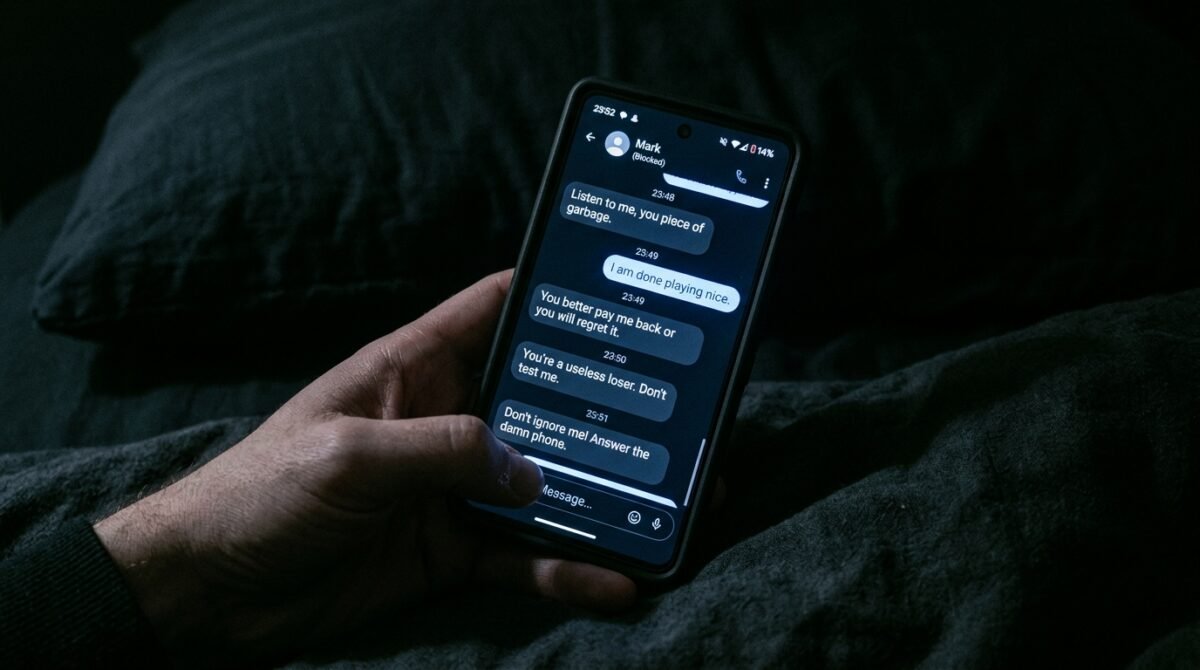
Mark’s texts were a mix of rage and pathetic pleading. He told me he had kicked Sarah out, that he realized he was wrong, and that he would do ‘anything’ to have me back. He begged for a chance to talk, to show me that he had learned his lesson. It was exactly what I had been warned about in the comments. He wasn’t apologizing because he understood the betrayal; he was apologizing because his life was now inconvenient without me.
“I don’t want to be with someone who only realizes my value once I’ve packed my bags. The trust is gone, Mark. Please stop contacting me.”
— My response to Mark’s 15th attempt at contact
I blocked them all, one by one. It was a cathartic experience. Each block was a step toward a cleaner, quieter life. I didn’t owe them an explanation, and I didn’t owe them a chance to manipulate me again. I realized that my silence was the most powerful tool I had. I was no longer a player in their game; I had taken my ball and gone home.
Reflecting on the Pattern of Entitlement

Looking back, the signs were there from the very beginning. The way Mark would dismiss my concerns about his sister’s ‘borrowing’ habits, the way he would invite her over without asking, the way he would treat my boundaries as negotiable suggestions. I had ignored all of them because I wanted to believe in the fantasy of a perfect, united family. I wanted to be the ‘cool girl’ who didn’t let small things bother her.
I realized that my aversion to conflict had been weaponized against me. Because I didn’t want to be the ‘bad guy,’ I had allowed a pattern of disrespect to take root. This wasn’t just about a ring; it was about the fundamental way Mark viewed me. He viewed me as a resource to be managed, not a partner to be cherished. That realization was a bitter pill, but it was necessary for my growth.
I started noticing this pattern in other areas of my life, too. I began to speak up more at work, to set firmer boundaries with friends, and to stop apologizing for things that weren’t my fault. The dissolution of my engagement had been the painful kickstart I needed to reclaim my agency. I was no longer willing to be a secondary character in someone else’s narrative.
I also started to value my possessions differently. I realized that the things we own reflect our history and our values. By protecting the ring, I was protecting my history. By letting go of the relationship, I was protecting my future. The two acts were linked, a realization that gave me a sense of peace I hadn’t felt in years.
Finding Strength in Independence

Living alone has been one of the most rewarding experiences of my life. I have full control over my space, my time, and my peace. There is no one to ‘borrow’ my things, no one to pressure me into compromises I don’t want to make, and no one to make me feel small in my own home. I’ve discovered that I am much stronger than I ever gave myself credit for.
I’ve started dating again, but the stakes are completely different now. I don’t hide my rings. I don’t tolerate boundary-crossing. I am transparent about what I value and what I expect in a partner. If someone shows the slightest sign of the entitlement I saw in Mark, I walk away immediately. I have a zero-tolerance policy for disrespect, and it has made my life so much easier.
“I learned that my boundaries are not a negotiation. They are the price of admission for a place in my life.”
I still have the ring. I haven’t reset it yet, and maybe I never will. Sometimes I just look at it, a reminder of the day I finally stood up for myself and chose my own sanity over a false sense of security. It’s not just a diamond anymore; it’s a symbol of my freedom. And that, I think, is worth more than any price tag.
The Final Lesson: Never Compromise Self-Worth

The story of the ring is a story of a boundary crossed and a life reclaimed. It serves as a reminder that we are the final arbiters of our own value. If we don’t demand respect, no one else will give it to us. The people who truly love us will respect our boundaries, and the people who don’t, were never truly on our side to begin with.
I’ve moved on, and I am thriving. I have a new apartment, a new perspective, and a sense of self-worth that is unshakable. I’ve learned that the most important relationship you will ever have is the one you have with yourself. When you protect that, everything else eventually falls into place, even when it means making the hardest, most painful choices imaginable.
If you are in a situation where you feel your boundaries are being ignored, where your partner is more loyal to their family than to you, or where your property is treated like public domain, please know this: you don’t have to stay. You don’t have to convince them to respect you. You can pack your bags and leave. Your life is waiting for you on the other side of that door.
I’m finally at peace with my past, and I’m incredibly excited about my future. The ring is safe, and more importantly, so am I. Thank you for reading my story, and I hope it gives you the strength to stand up for yourself in whatever capacity you need.
Conclusion
Reflecting on this journey, the biggest takeaway has been the realization that ‘family’ is not a blank check for entitlement. Whether it’s a diamond ring or personal space, the rules of respect apply to everyone. My departure wasn’t a tragedy; it was a necessary separation from a situation that was slowly eroding my self-worth.
What about you? Have you ever had a partner or family member treat your most cherished belongings—or your personal boundaries—with such callous disregard? How did you handle it? Let’s discuss in the comments below. Was the ‘no-contact’ route the right move, or would you have tried to fight for the relationship one last time?
What's your verdict on this dilemma?
Vote below to contribute to the official community consensus.

Have a Dilemma Keeping You Up at Night?
Share your real-life feud, wedding chaos, or relationship crossroads anonymously with our editorial team.
What do you think ?
0 Comments🛡️ Comments are moderated to protect community integrity. Your comment will appear once approved by the editorial team.