
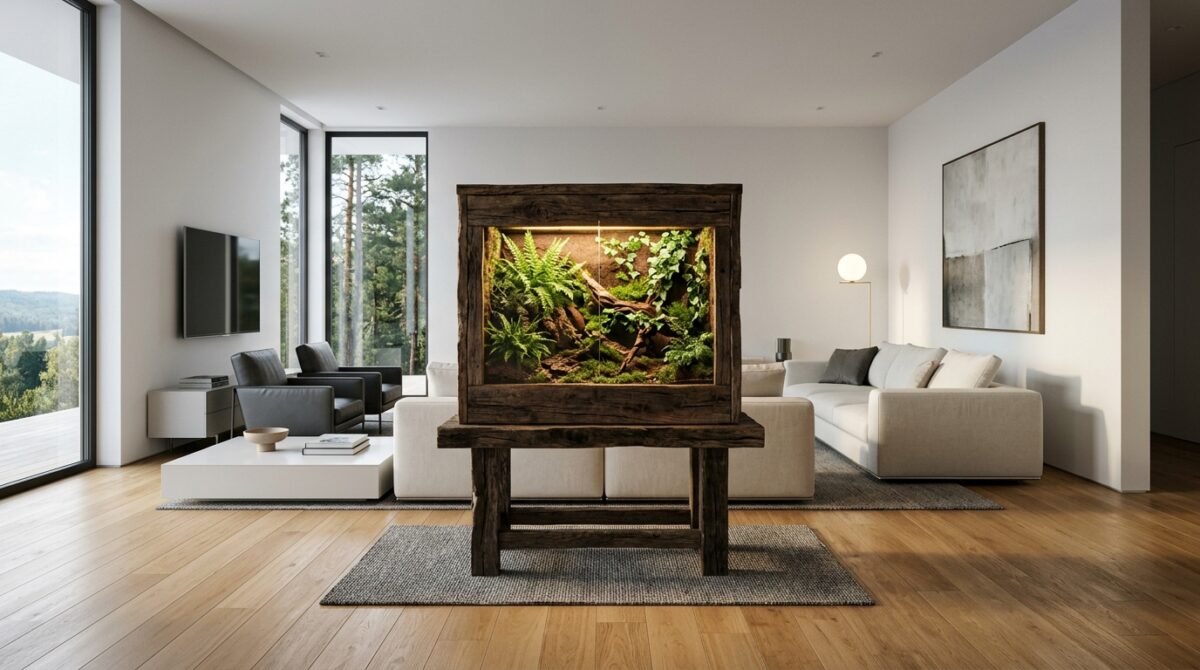
They say you never truly know a person until you move in with them, but I thought I had bypassed that phase of discovery. Julian and I had been dating for three years. We had navigated the complexities of long-distance, survived a global pandemic, and successfully merged our disparate lives into a singular, meticulously curated apartment that screamed architectural digest material. Or, at least, that was what Julian screamed whenever he arranged a throw blanket by half an inch.
I brought Sheldon, my Sulcata tortoise, into the relationship with full disclosure. He was a rescue I had rehabilitated over six years—a gentle, slow-moving creature with a shell worn by his past life in a cramped cage. Julian initially acted like the doting ‘step-dad,’ even buying him specialized kale at the farmer’s market. It felt like a perfect, albeit peculiar, domestic harmony.
The shift didn’t happen overnight. It began with subtle comments about ‘clutter’ and ‘visual noise’ before spiraling into a bizarre, calculated crusade against my pet. The breaking point arrived on a Tuesday evening when Julian stood in the center of our living room, gesturing wildly at the terrarium as if it were a structural defect in our foundation. He didn’t just want the tank moved; he wanted the sentient being inside it gone.
This wasn’t about interior design. It was about control, ego, and a chilling lack of empathy that I had ignored for far too long. As I stared at the man I was supposed to marry, I realized that his vision of a perfect life didn’t include anything that couldn’t be wiped clean with a microfiber cloth. The modernism he worshiped was cold, and suddenly, so was the man standing across from me.
I am now sitting in a hotel room with a tortoise carrier at my feet, wondering how a creature with a heart rate of ten beats per minute managed to expose a human heart that was completely hollow. This is the story of how ‘minimalism’ became the ultimate weapon in a relationship, and why I chose the shell over the ring.
The Tuesday Night Ultimatum
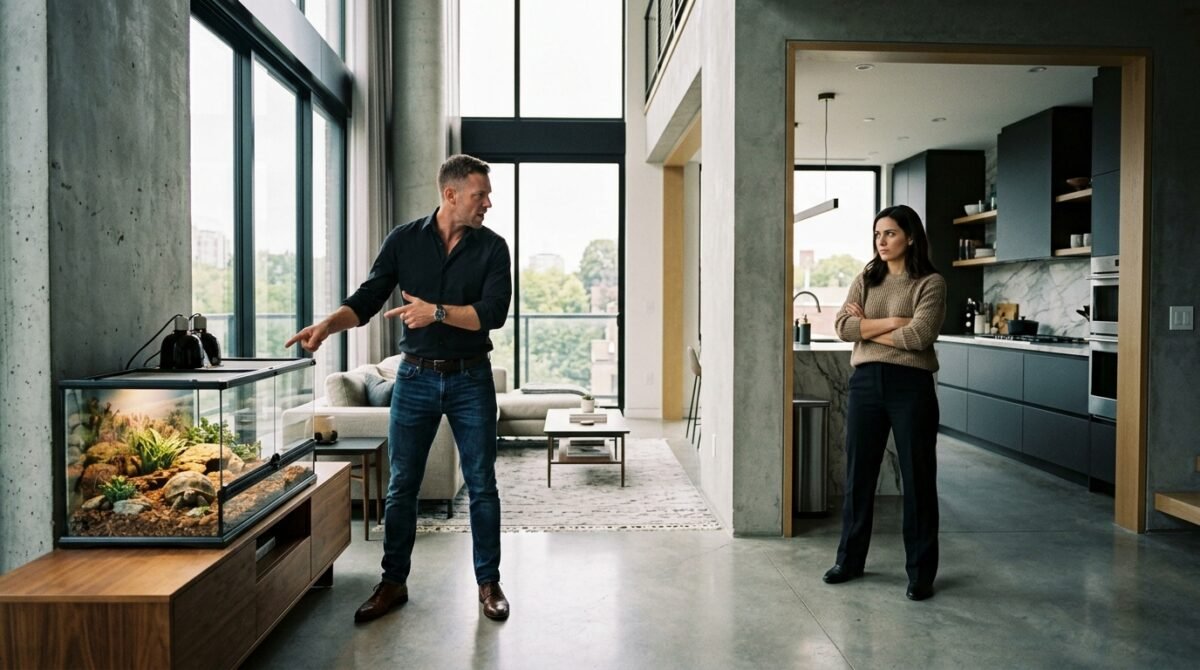
It was 8:15 PM when the air in our apartment turned frigid. Julian had been obsessing over a new coffee table—a piece of sharp, glass-topped geometry that cost more than my first car. He was hovering near Sheldon’s habitat, his brow furrowed in a way that signaled an impending lecture on ‘spatial integrity.’ I was in the kitchen, trying to ignore the tension, when he finally dropped the hammer.
He walked toward me, his hands gesturing to the corner of the room. He spoke with a terrifying level of calmness, as if he were discussing a minor paint touch-up rather than the eviction of a living, breathing companion. I felt a cold knot form in my stomach as the words left his lips.
“I’ve been doing the math on the sightlines, and honestly, the tortoise tank is a complete eyesore. It breaks the flow of the monochromatic palette we’ve spent months building. It’s time for him to go to a rescue or a sanctuary. We need this space to be perfect for the housewarming party next week.”
I stopped mid-pour with my tea. The room suddenly felt very small and very bright. I looked at Sheldon, who was peacefully munching on a piece of dandelion leaf, entirely oblivious to the fact that his existence was being treated as a logistical error. I felt a surge of adrenaline, the kind that usually precedes a fight you know you can’t win with logic alone.
“Are you actually serious, Julian? He’s a rescue. I’ve had him for six years. He’s not a decorative lamp you can just toss into storage because he doesn’t match the curtains. He’s my responsibility, and more importantly, he’s my family.”
Julian sighed, a sound of profound disappointment that made me feel like an uncultured nuisance. He didn’t blink. He just adjusted his cuff, looking at me with those cold, calculating eyes. It was clear that he had thought this through, weighing the value of a tortoise against the aesthetic appeal of a social gathering. The dehumanization of my pet was complete, and he was already waiting for me to concede.
I stood my ground, my hands trembling slightly. I realized then that I wasn’t just defending a pet; I was defending the sanity of my own boundaries. If I let this slide, what would be next? Would he demand I stop wearing colorful clothes because they ‘clashed’ with the mood lighting? The sheer absurdity of the request was the final brick in a wall I hadn’t realized he was building around me.
The Architectural Design Disconnect
Over the next few hours, the argument devolved into a surreal debate about the ‘philosophy of home.’ Julian insisted that a home should be a sanctuary of pure form and function, a place where the mind is not cluttered by organic messiness. He spoke about his ‘vision’ for our life as if we were characters in a glossy magazine editorial, and Sheldon was the smudge on the lens.
“You don’t understand, it’s not about the tortoise,” he pleaded, his voice rising in an attempt to sound reasonable. “It’s about the intention of the space. Every object in this room should serve a purpose or provide aesthetic value. A massive, dusty box with a reptile inside does neither. It’s a sensory disruption. Don’t you want our home to look like an oasis?”
I tried to explain that an oasis is meant to be lived in, not curated like a museum. I brought up the fact that I loved how Sheldon’s presence made our apartment feel like a home rather than a stage set. I reminded him that he was the one who helped me build the custom heat lamp fixtures only a year ago, back when he was trying to prove he was a ‘supportive partner.’
“You helped me build his habitat! You spent an entire weekend cutting the wood and measuring the UV lights. How does it suddenly become a design flaw now? Did the aesthetics change, or did your patience for me just run out?”
Julian’s reaction was chilling. He didn’t acknowledge the hypocrisy. Instead, he deflected, claiming that he had ‘compromised’ back then because he was blinded by the ‘newness’ of our relationship. It was a classic move: retroactively framing his past kindness as a sacrifice he was forced to make, essentially blaming me for his own past choices.
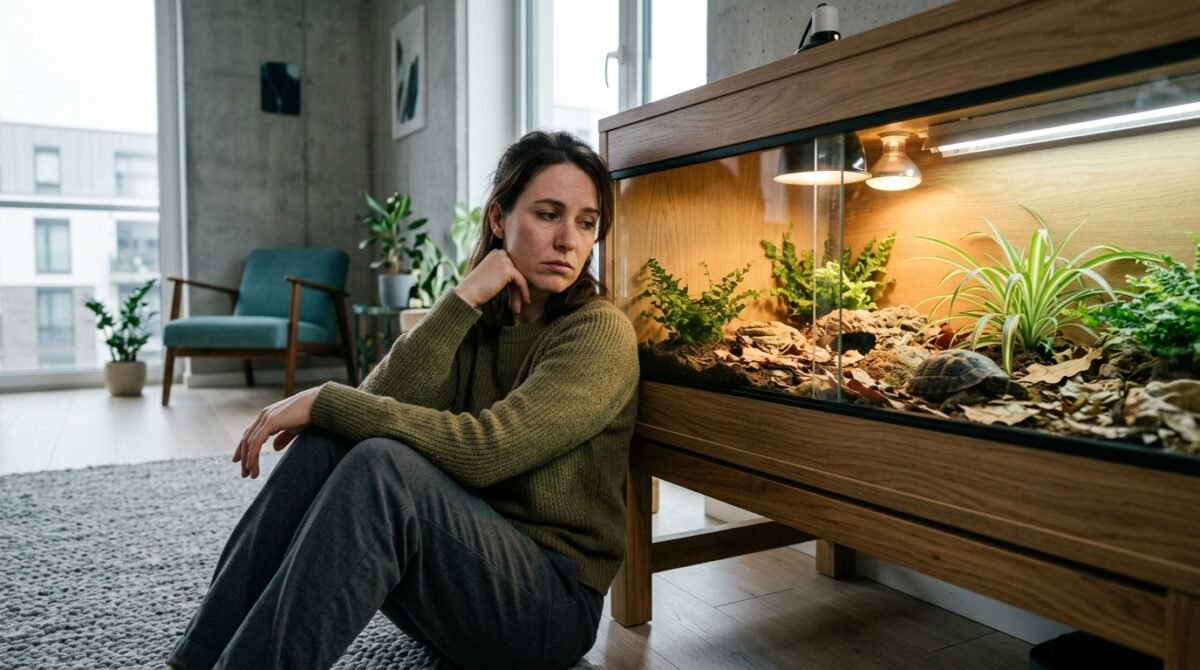
I walked to the terrarium and sat on the floor, watching Sheldon blink slowly. The contrast between Julian’s sharp, frantic energy and the tortoise’s steady, rhythmic breathing was stark. I knew then that there was no middle ground to be found. Julian wasn’t asking for a compromise; he was asking for a surrender of my identity and the things I held dear.
I spent the rest of the night reading about local reptile rescues, not because I was considering giving him up, but because I wanted to see exactly what Julian was suggesting. The thought of Sheldon in a facility, away from the person who knew his favorite hiding spots and his specific temperature needs, was physically painful. I knew I couldn’t do it, and more importantly, I knew I couldn’t stay with someone who would ask it of me.
The Digital Paper Trail
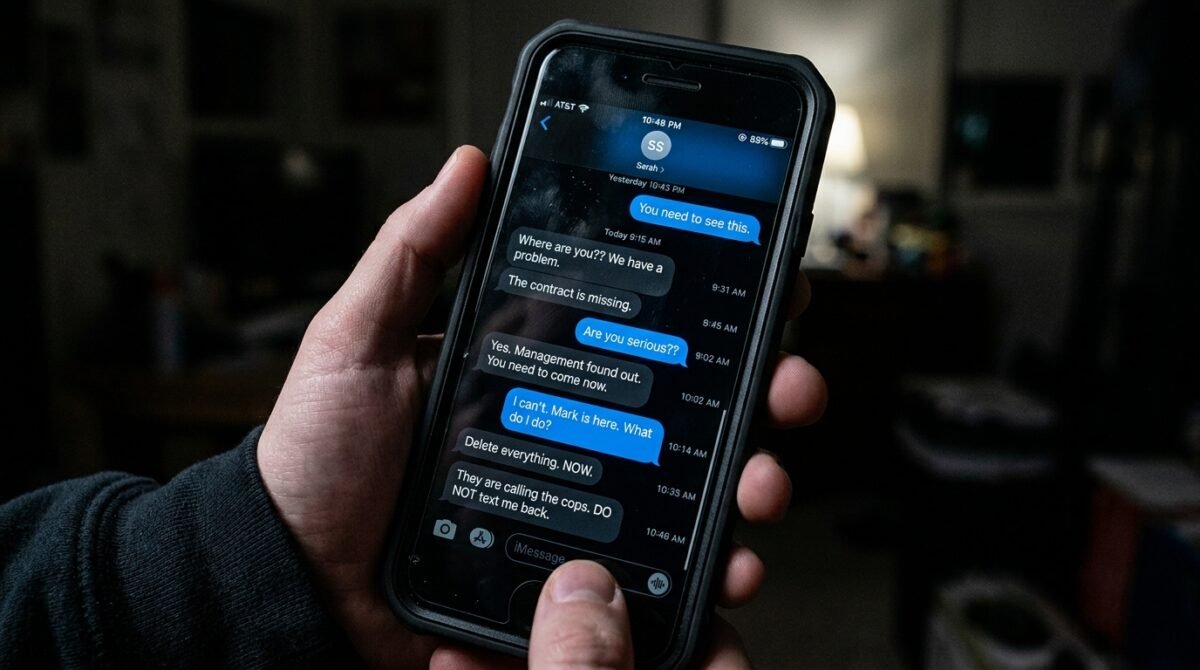
While Julian retreated to the office to ‘clear his head’—a phrase he used to signal that he was going to brood in silence—I began to look through our past messages. I needed to see if I was crazy. Maybe I had forgotten an agreement we made? Maybe there had been signs of this resentment that I had been too blind to see?
The search revealed a history of passive-aggression that I had excused as ‘Julian being Julian.’ There were messages about ‘cleaning up the tortoise footprint,’ texts asking me to keep the cage in the basement during his ‘clients’ visits,’ and even an email from a designer he’d been consulting with about our home, where he referred to our living area as ‘the problem zone.’
“Hey, just making sure the turtle-thing isn’t in the living room for the shoot tomorrow. The photographer is very specific about the ‘vibe’ and I don’t need a reptile distracting from the mid-century credenza. Move it to the guest bath for the day.”
— Text Message from Julian, 3 months ago
Reading these messages, I felt sick. I had been moving Sheldon around like a piece of furniture for months just to appease Julian’s need for an Instagram-ready lifestyle. I had been teaching Sheldon that his home was temporary, that he was an intruder in our own shared space. The guilt was overwhelming, and it fueled my growing anger.
I realized then that this wasn’t an isolated incident. It was part of a pattern where my needs, my interests, and even my pet’s well-being were constantly subordinated to Julian’s image. I was a prop in his life, and Sheldon was the prop that had finally broken character. The realization was liberating and terrifying all at once.
I began to draft a response in my head. I wasn’t going to fight about the furniture anymore. I was going to fight for my dignity. I pulled out my phone and started screenshotting the most egregious demands. I didn’t know why I needed a record, maybe just to prove to myself later that I hadn’t imagined the slow erosion of my own life.
By midnight, I had documented enough to fill a small archive of ‘design-related’ gaslighting. The silence in the apartment was heavy, punctuated only by the occasional scratching of Sheldon’s claws against the substrate. I realized that the life I had planned with Julian—the wedding, the future home, the curated happiness—was nothing more than a facade that was starting to crack under the weight of reality.
The Morning Confrontation
I didn’t sleep. I spent the night on the couch, watching the light change from the soft glow of the city to the harsh, gray morning. When Julian emerged, he looked refreshed and composed, as if the previous night’s argument had never happened. He made his coffee with his usual precision, not even glancing in my direction.
“Are we going to talk about this like adults, or are you going to keep pouting?” he asked, tapping his fingers on the marble countertop. He had already moved past the ‘negotiation’ phase and into the ‘instruction’ phase. He expected me to fall in line, to apologize for my ‘stubbornness’ and go about the day as his obedient partner.
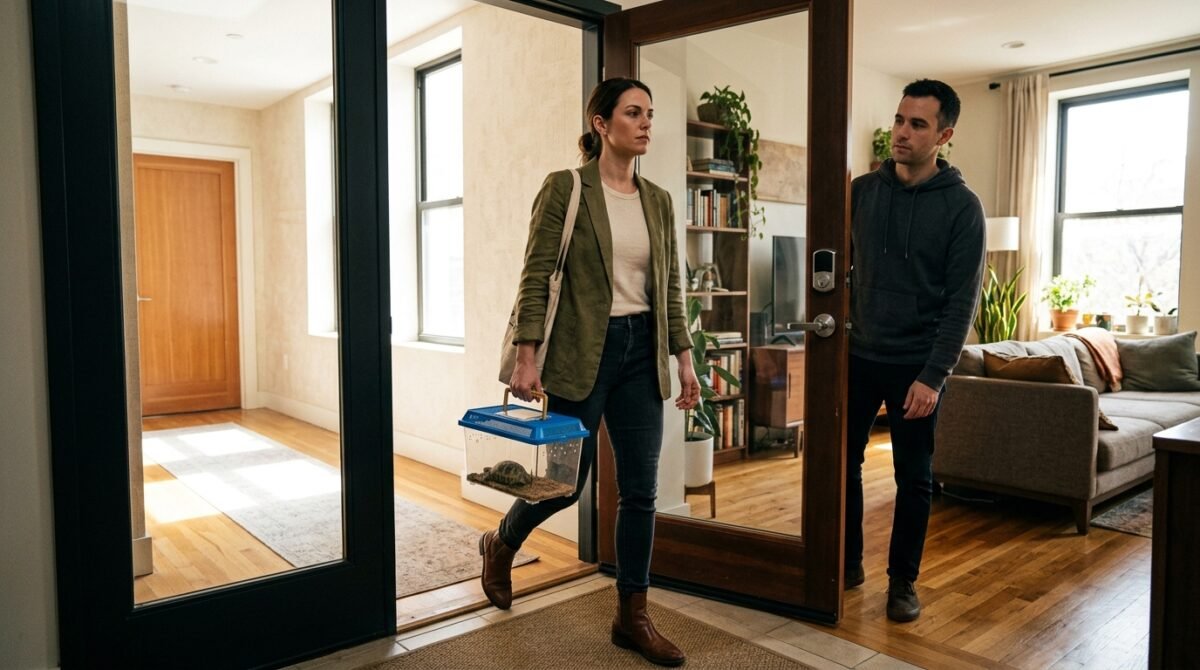
I stood up, holding the carrier I had pulled from the closet. I had already packed Sheldon’s essentials. I wasn’t leaving, but I was making a statement. I walked into the kitchen and set the carrier on the island. Julian stared at it, his face twitching with irritation. He didn’t like being confronted with the reality of the situation.
“You want the space to be perfect, Julian? You want a life that’s clean and empty and curated? You can have it. I’m not re-homing Sheldon. I’m re-homing myself. You can keep your precious aesthetic, but you’re going to be living in it alone.”
The look on his face was one of pure shock, then confusion, then anger. He hadn’t expected me to call his bluff. He thought the tortoise was the only variable in the equation, not the entire relationship. He started to stammer, trying to backtrack, claiming he was just ‘stressed’ and ‘didn’t mean it like that,’ but the damage was done.
“It’s not just the tortoise, Julian. It’s the way you look at everything I love as if it’s a failure on my part. I’m tired of being an accessory in your life. I’m tired of hiding my pet to satisfy your need for a magazine spread. We are done.”
He tried to stop me, he tried to argue, but I walked past him. I felt light for the first time in months. I had spent so much energy trying to maintain the ‘look’ of our relationship that I had forgotten what it felt like to be heard. As I walked out the door with Sheldon, I didn’t look back at the expensive furniture or the perfectly curated walls. I only looked at the carrier in my hands.
The Reddit Trial

I posted my story on a popular subreddit later that day, not for validation, but because I needed to hear that I wasn’t living in a fantasy. The response was immediate and overwhelming. Thousands of people weighed in, and the sheer volume of support made me weep. It was a chaotic, beautiful outpouring of people who had been in the exact same position.
“My ex once complained that my dog’s fur ‘ruined the vibe’ of his living room. He didn’t realize that the dog was a package deal. It’s a red flag when your partner values furniture over a living, breathing creature. You made the right call. Run.”
— u/DogMomForever (Top Comment, 32.1k upvotes)
The community was ruthless toward Julian. They dissected his behavior, calling it a form of ‘aesthetic narcissism’ that was bound to turn on me eventually. Many shared their own stories of partners who tried to ‘edit’ their lives until they were unrecognizable. It was a massive wake-up call, realizing how common this type of controlling behavior was.
There were some dissenting voices, of course—people who argued that I should have compromised or that I was being ‘too sensitive’ about a tortoise. But they were shouted down by the majority, who understood that the issue wasn’t the pet, but the total disregard for my boundaries. The ‘tortoise vs. modernism’ debate became a meme overnight, which was strangely cathartic.
I read through thousands of comments. I saw people sharing tips on how to handle the breakup, how to re-establish independence, and how to heal. I felt less alone than I had in years. The internet, for all its flaws, had provided me with a community that valued empathy over design, and it was exactly what I needed to hear.
I kept the thread open for days, watching the conversation evolve. It became a space for people to discuss the importance of keeping one’s identity intact within a relationship. I realized that my story wasn’t just about a tortoise; it was about the struggle to remain yourself in the face of someone who wants to mold you into their own image.
The Aftermath of the Breakup

Moving out was a whirlwind of logistics and emotional exhaustion. Julian, realizing that I was serious, shifted his tactics from pleading to petty legalism. He started sending me lists of ‘communal’ items he wanted to keep, including a blender I had bought and a rug he had ‘gifted’ to me. It was his final way of trying to control the narrative of our breakup.
I didn’t argue. I let him keep the blender. I let him keep the rug. I took Sheldon, my clothes, and my sense of self-respect. Every box I packed felt like a layer of weight being lifted. As I cleared my things from the apartment, I noticed how quickly the space felt empty without me in it. It was no longer an oasis; it was just a showroom.
My friends were incredible. They helped me move on a Saturday morning, laughing at the absurdity of the situation while helping me protect Sheldon from the boxes. One of my friends, Sarah, couldn’t stop making jokes about how the tortoise was the smartest one in the relationship for hiding in his shell while the drama unfolded.
“You’re trading a designer apartment for a real life, and trust me, the real life has way better furniture. Plus, Sheldon doesn’t care if you have a mid-century modern credenza. He just wants his kale. He’s the better date anyway.”
— Sarah, my best friend
Julian tried to reach out a few times, sending texts about ‘how we can fix this’ and ‘why can’t we just talk.’ I blocked him after the third message. There was nothing left to say. The ‘fix’ he was proposing was just a return to the status quo, and I knew now that the status quo was a prison.
I moved into a small, older apartment with plenty of floor space for Sheldon. It wasn’t ‘designed’ in the way Julian would have liked. It had mismatched shelves, a few too many books, and a giant wooden tank in the center of the living room. But for the first time in years, it felt like home. I finally understood that home isn’t about the aesthetics; it’s about the feeling of being safe, accepted, and free.
Reflections on Control

Months later, I find myself thinking about why I stayed as long as I did. It’s easy to look back and see the red flags, but in the moment, they were masked by the allure of a ‘perfect’ life. Julian was so good at selling the vision that I started to believe in it myself. I thought that by conforming, I was becoming a better, more refined version of me.
I realize now that the need for total control over one’s environment is often a sign of a deeper insecurity. Julian needed the apartment to be perfect because he couldn’t handle the unpredictability of human life—or, in this case, the slow, messy reality of a tortoise. He saw anything he couldn’t control as a threat to his reality.
I learned that love shouldn’t feel like an audition. I shouldn’t have to edit my life or hide the things that bring me joy just to make my partner feel more comfortable. The right person isn’t the one who helps you curate your existence; it’s the one who shares the mess with you, who laughs at the chaos, and who loves you for the things you refuse to change.
“When someone tells you to hide the things that make you happy for the sake of their ‘vibe,’ they aren’t looking for a partner. They are looking for an extension of their ego. You were never his partner; you were his project.”
— A wise Redditor’s follow-up comment
I feel a strange sense of gratitude toward Julian. If he hadn’t made that ridiculous ultimatum about the tortoise, I might still be there, slowly losing my sense of self in a house that looked beautiful but felt empty. The tortoise, in his slow and steady way, saved me from a life that was fundamentally misaligned with my heart.
I still talk to my friends about the ‘tortoise incident.’ It’s become a litmus test for my future dating life. If a potential partner shows any sign of wanting to ‘remodel’ my life, I know exactly what to do. I’ve learned that the only thing that truly needs to be in my home is the person who appreciates the whole package—clutter, pets, and all.
The Evolution of My Life
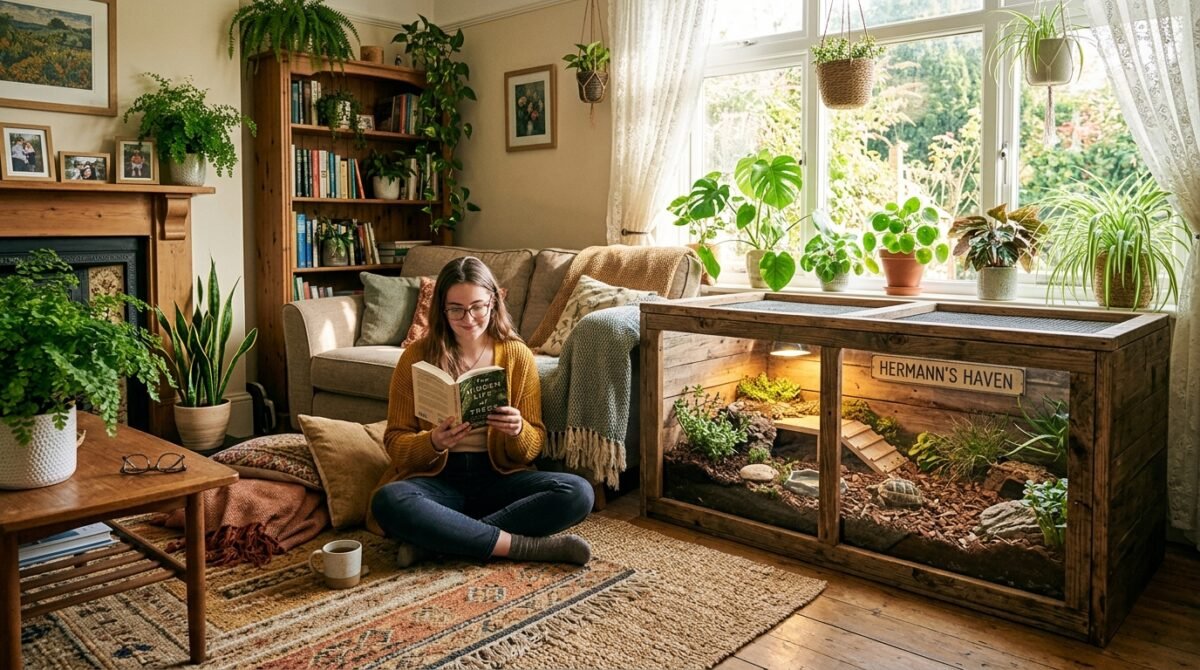
Life today is drastically different. I’ve embraced the ‘imperfect’ nature of my home. I don’t care about sightlines or monochromatic color schemes. I care about comfort, warmth, and the joy of having my own space. Sheldon is happier, too. He has a new setup with a larger outdoor pen where he can roam in the sun, and he doesn’t have to worry about ‘clashing’ with the decor.
I’ve started a new hobby: woodworking. I’m building things that are functional and personal, rather than trying to buy things that are ‘curated.’ It’s a way of reclaiming the space that Julian tried to strip of its personality. I’m finding that I actually have a knack for it, and it feels good to create things that are mine.
I’ve also started dating again, but the criteria have changed. I’m not looking for someone who shares my taste in furniture. I’m looking for someone who shares my values, who has a sense of humor, and who would never, ever, ask me to get rid of my pet. It’s a much more grounded, realistic way to approach a relationship.
“The best relationship isn’t the one that looks like a magazine cover. It’s the one where you can leave your shoes in the middle of the hall, have a tortoise in the living room, and still feel completely loved by the person standing next to you.”
— A piece of advice from my grandmother
I look back at the photos of my old apartment sometimes. It really was beautiful, in a sterile, cold way. I don’t miss it. I miss the time I lost trying to keep it up, but I don’t miss the space itself. I have something much better now: I have my own life, on my own terms, and a very slow, very happy tortoise who doesn’t care about anything but his next dandelion.
I hope that anyone reading this who feels like they’re being ‘edited’ in their own relationship knows that it’s okay to push back. You don’t have to conform to someone else’s vision of a perfect life. You are the architect of your own happiness, and you deserve a home that fits who you are, not who someone else wants you to be.
A Final Word to the Community

The response to my story has been a testament to the power of sharing one’s truth. So many of you reached out with your own ‘dealbreaker’ stories, and it made me realize that we are all navigating these small, daily battles for our own identity. We don’t have to win every argument, but we should never have to sacrifice the fundamental pieces of our soul to keep the peace.
I want to thank everyone who commented, whether you supported me or challenged me. The debate was healthy, and it helped me clarify my own feelings. It turns out that a tortoise, of all things, is a surprisingly good catalyst for self-discovery. I hope my experience serves as a reminder that no one is worth the loss of your own integrity.
If you find yourself in a situation where you are being asked to change, move, or hide the things that bring you joy, take a step back. Ask yourself why your partner is asking this of you. If the answer is about their ‘vision’ rather than your mutual well-being, take notice. You deserve to be in a relationship where you are loved for your messy, complex, beautiful reality.
Finally, to all the ‘Sheldons’ out there: stay slow, stay steady, and never let anyone move your habitat unless you want to move. Life is far too short to live in a room that doesn’t feel like your own. I’m signing off now to go give my favorite reptile some extra kale. He deserves it, and honestly, so do I.
The Verdict: What Would You Do?

As I reflect on this journey, I keep coming back to the question of ‘compromise’ in a partnership. Where is the line between shared life and individual boundaries? When does a preference become a demand, and when does a demand become a dealbreaker? I’ve realized that the line is drawn exactly where your sense of self begins.
Many people asked me if I ever felt guilty for ‘throwing away’ the relationship over something as ‘trivial’ as a tortoise. But as I’ve explained, the tortoise was never the issue. It was the principle of the thing. If I had traded the tortoise for the ‘vibe,’ I would have been signaling that my choices were up for negotiation. And once you start negotiating your identity, where does it end?
I’m curious to know what the community thinks. Have you ever faced a ‘design’ ultimatum? Have you ever had to choose between your pet and your partner? Or perhaps you were the one who had to learn how to live with someone else’s ‘mess’? Share your stories in the comments—I’d love to hear how you navigate the tricky waters of living with someone else.
“Do you think the OP was right to end the relationship, or should they have tried to find a compromise with the terrarium? Let us know your thoughts below!”
Ultimately, I am content. I am sitting in my living room, surrounded by things I love, with a tortoise who is completely indifferent to my interior design choices. It’s not perfect. It’s not a magazine cover. But it’s mine. And that is the most important thing of all.
Conclusion
The story of Sheldon and the ‘clashing’ shell has become more than just a viral anecdote; it has become a touchstone for thousands of readers who have felt the pressure of domestic conformity. My journey taught me that boundaries aren’t just rules—they are the structures that allow us to remain ourselves. When Julian demanded I re-home my tortoise, he wasn’t just talking about a pet; he was testing the limits of my autonomy. By choosing the tortoise, I chose my own agency, and I have never looked back.
Reflecting on the discourse this incident sparked, it is clear that the real issue wasn’t the living room, but the lack of shared values. A relationship that cannot accommodate the things that make us whole is a relationship that is destined to stagnate. I encourage everyone reading this to look at their own lives and ask: am I hiding anything to satisfy someone else’s comfort? And if so, why?
I am now in a place where I am respected for who I am, and my home is a reflection of my own joy, not someone else’s projection of success. Sheldon is thriving, and I am finally breathing easy. The lesson is simple but profound: never settle for a life that requires you to shrink yourself to fit someone else’s vision. Stay true to yourself, even if it means walking away from the ‘perfect’ life.
What is your take? Did I go too far, or was the ultimatum the final straw for any self-respecting partner? Let us know in the comments below!
What's your verdict on this dilemma?
Vote below to contribute to the official community consensus.

Have a Dilemma Keeping You Up at Night?
Share your real-life feud, wedding chaos, or relationship crossroads anonymously with our editorial team.
What do you think ?
0 Comments🛡️ Comments are moderated to protect community integrity. Your comment will appear once approved by the editorial team.