
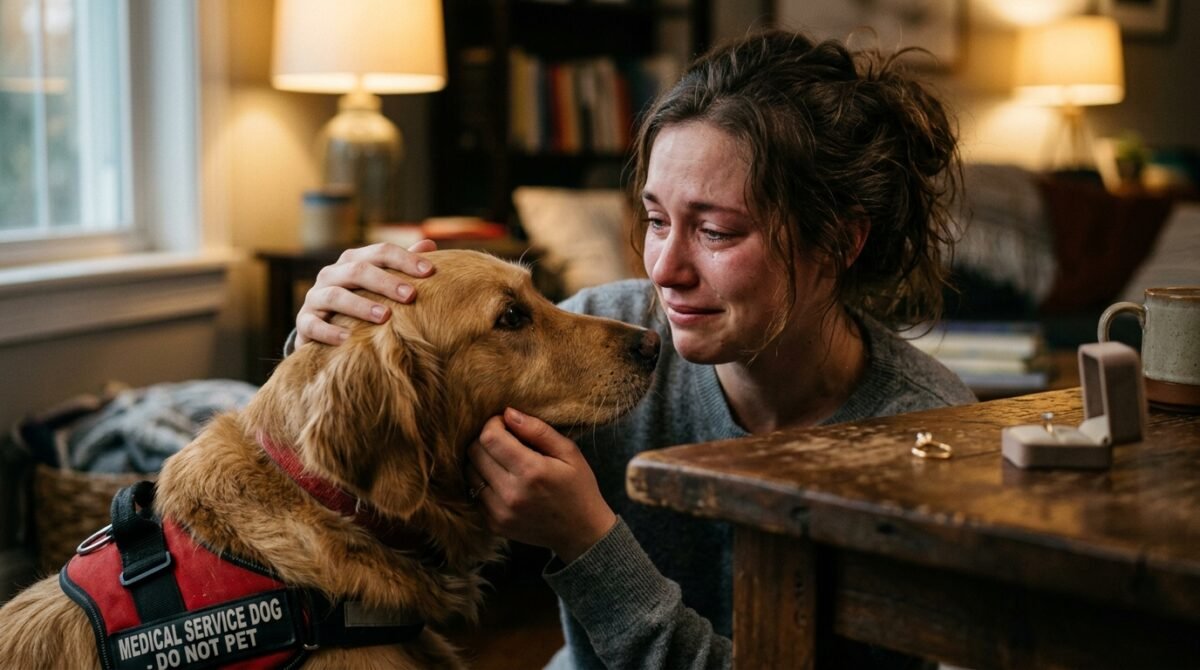
Relationships are built on compromise, but there is a line that should never be crossed: the line between inconvenience and survival. For three years, Barnaby, my Golden Retriever, has been my constant companion. He is not a pet; he is my medical alert dog, trained to detect my life-threatening vasovagal syncope episodes before they happen. Without him, I am quite literally walking on a tightrope without a net.
Mark, my fiancé of two years, always seemed to understand this. Or so I thought. When he decided to adopt ‘Lulu,’ a temperamental, untrained designer puppy, I expected the typical adjustment period. I didn’t expect a campaign of emotional sabotage. Mark’s insistence that Lulu needed ‘total, absolute silence’ to thrive—and that Barnaby’s presence was somehow ruining that—quickly devolved from a mild annoyance into a dangerous ultimatum.
The tension didn’t build slowly; it exploded one Tuesday evening when I returned from work to find my medical supplies moved and a ‘For Sale’ ad for a dog kennel open on Mark’s laptop. He wasn’t just asking me to crate Barnaby; he was asking me to give away the very thing that keeps me breathing. He prioritized a designer accessory over my health, and in that moment, the vision of our future simply dissolved.
What follows is the account of how a man’s obsession with a status-symbol puppy shattered our engagement. This isn’t just a story about a bad breakup; it is a story about the moment I realized that my partner viewed my disability as an obstacle to his own comfort. It is a cautionary tale about what happens when you hold up a mirror to someone’s entitlement.
The Arrival of the Designer Accessory
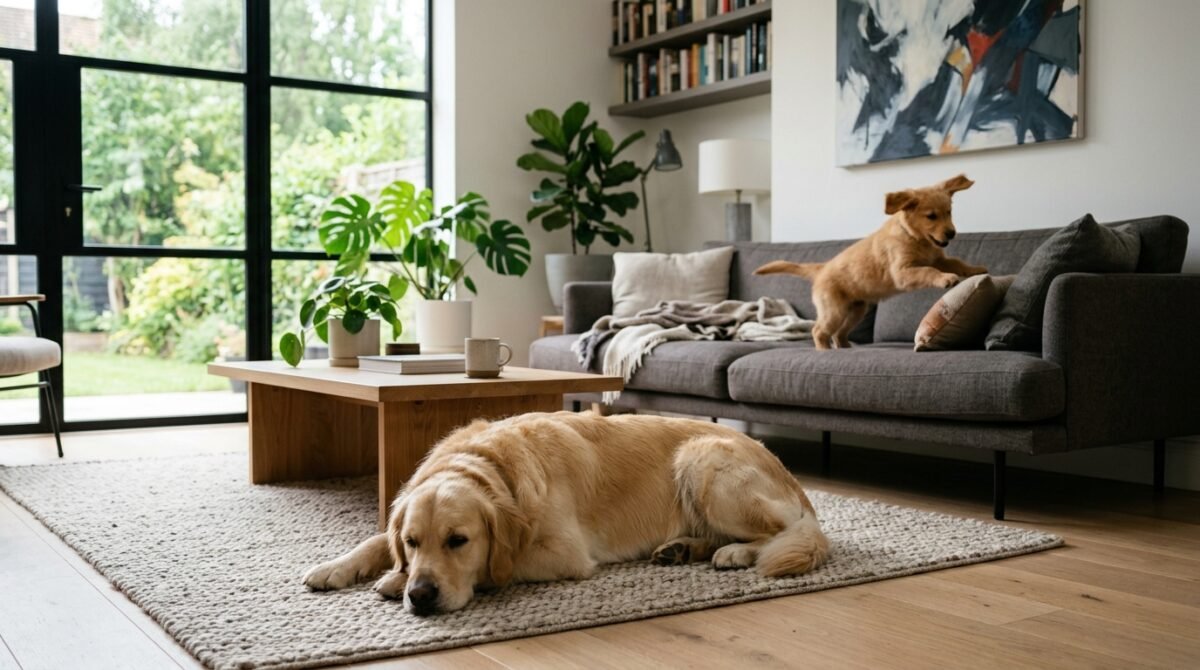
The shift in our household began the day Mark brought Lulu home. He hadn’t consulted me, claiming it was a ‘surprise’ to help manage his stress. Lulu was an expensive, purebred puppy with a temperament that made her bark at everything from a rustling leaf to the sound of my heartbeat. Mark was immediately enamored, treating the dog like a fragile porcelain doll that needed to be protected from the harsh realities of the world.
Barnaby, by contrast, is a seasoned professional. He knows his job, he knows his boundaries, and he knows exactly when I am about to faint. He has saved me from concussions and hospital visits more times than I can count. Yet, Mark began to view Barnaby as a direct rival to his new puppy. He would complain about the ‘energy’ in the room, claiming that Barnaby’s calm, stoic presence made Lulu anxious.
I tried to explain the difference. I showed him videos of service dog training. I explained the medical necessity. Mark just shrugged, eyes glued to his phone as he scrolled through puppy-training influencers. He wasn’t listening; he was filtering out anything that didn’t align with his new obsession. It felt like I was living with a stranger who had suddenly decided that my medical equipment was just a piece of furniture that clashed with the decor.
“Look, Barnaby is a great dog, but Lulu is a puppy. She needs this space to be hers. Your dog is just too… heavy. He’s always watching. Can’t you just put him in the spare room?”
— Mark, during a heated dinner argument
The suggestion to isolate Barnaby was the first red flag. It was a subtle attempt to strip me of my safety net. Every day, the requests became more frequent and more absurd. He wanted the house to be ‘puppy-proofed,’ which apparently meant banning my dog from the living room because the sound of his tags jingling ‘triggered’ Lulu’s howling. The entitlement was mounting, and I was starting to realize that the ‘surprise’ wasn’t about companionship; it was about control.
The 6:00 AM Kitchen Intrusion
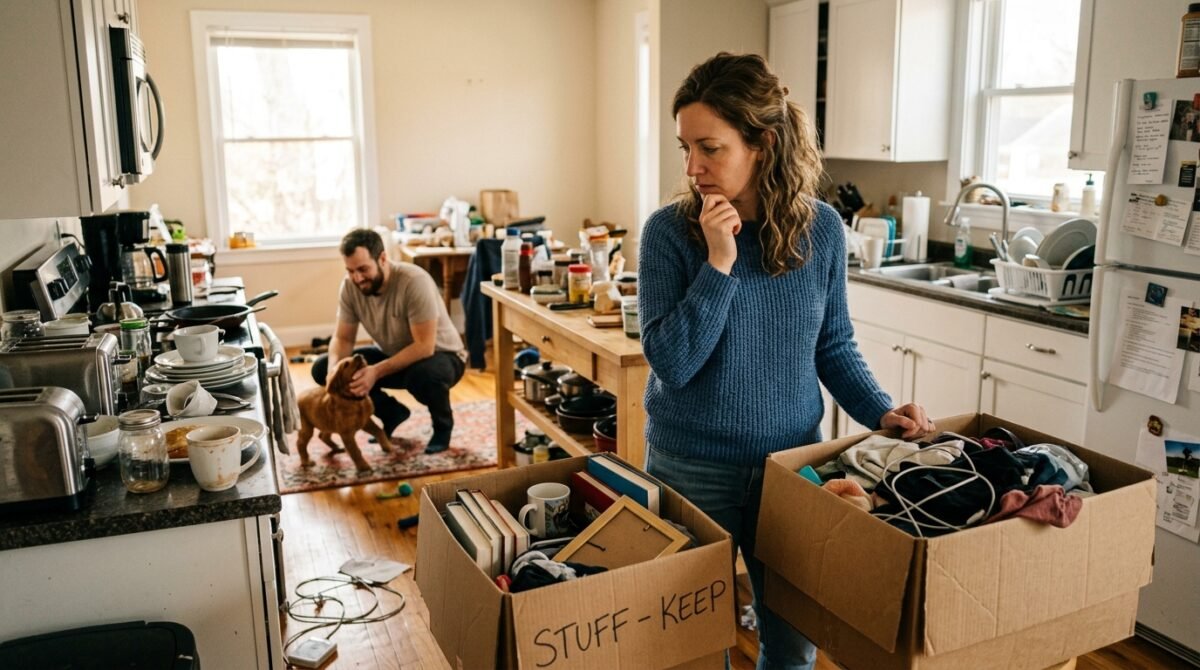
I woke up at 6:00 AM to the sound of my kitchen cabinets slamming. I walked into the room to find Mark frantically rearranging my life. He had cleared out the lower shelves where I kept my medical supplies—the ones Barnaby was trained to retrieve for me—and replaced them with a massive collection of high-end, organic puppy treats and designer dog bowls. My essentials were shoved into a cardboard box in the pantry, hidden behind a vacuum cleaner.
My heart rate spiked, which immediately caused Barnaby to alert. He stood pressed against my side, his firm weight providing the grounding I needed to stay conscious. Mark didn’t even look up. He was busy setting up a ‘calm zone’ for Lulu in the center of the kitchen floor, right where I usually did my daily exercises to maintain my blood pressure. The audacity was suffocating.
I asked him calmly, despite the dizziness, why he had moved my things without a word. He didn’t apologize. Instead, he launched into a tirade about how ‘my stuff’ was cluttering the house and how his new dog needed an unobstructed path to the backyard for ‘optimal house training.’ He wasn’t even looking at me; he was looking at his watch, checking his schedule as if he were managing a business merger rather than living with a human being.
“You’re overreacting. It’s just a few boxes. Lulu is learning, and she needs consistency. Your dog is just standing there staring at me. Tell him to go lay down. He’s making me nervous with that constant alert nonsense.”
— Mark, while moving medical supplies
That sentence—’that constant alert nonsense’—was the moment the veil finally dropped. He wasn’t just being inconsiderate; he was actively resenting my disability. To him, my need for safety was a hurdle to his life of luxury. I realized then that I wasn’t his partner; I was a tenant in his life, and my medical needs were a breach of his lease.
The Secret Group Chat Revelation
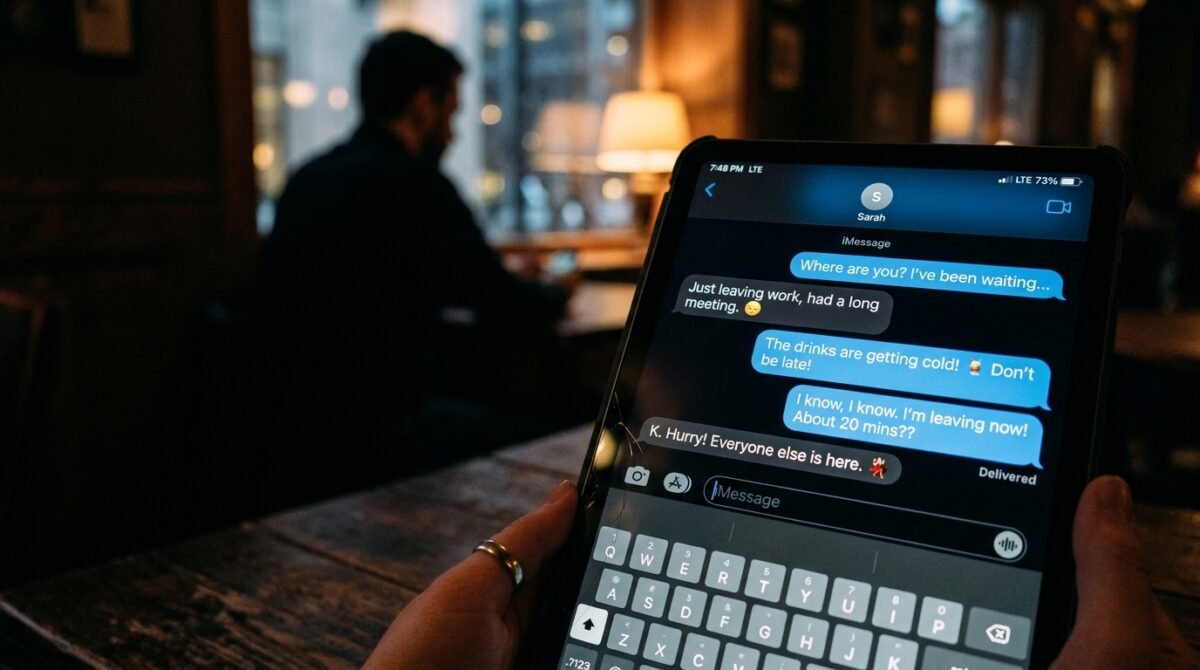
The tipping point came when I accidentally saw a notification on Mark’s iPad, which he had left open on the kitchen island. It was a group chat with his buddies—the ones who always encouraged his worst impulses. The thread was titled ‘The Puppy Project,’ and the messages made my blood run cold. They weren’t talking about training techniques; they were talking about how to ‘get rid of the nuisance’ to make room for the ‘good dog.’
I felt a sick feeling in my stomach as I read through the history. Mark had been complaining about me for weeks, calling me ‘high maintenance’ and claiming that my medical condition was a ‘ploy’ to hold him back from traveling. He was telling them that he was planning to ‘gift’ Barnaby to a shelter or a random family member without my permission, under the guise of ‘finding him a better home.’
The betrayal was absolute. He wasn’t just asking; he was plotting. He had been looking up local shelters and rescue groups, not to rehome Barnaby, but to dump him. The man I was supposed to marry, the man who had promised to stand by me in sickness and in health, was actively working to remove the very thing that kept me healthy.
“She’s not going to notice if he’s gone for a day or two. She’s so foggy from the fainting, she’ll think she just lost him. It’s for the best. Lulu needs this house to herself, and I’m sick of the medical circus. Who’s in for a road trip to a neighboring county to drop off the retriever?”
— Leaked text from Mark to his friends
I didn’t scream. I didn’t throw things. I simply picked up the iPad, took a dozen screenshots, and sent them to my own phone. I felt a weird, detached calm, the kind that comes when you finally understand exactly who you are dealing with. My hands were shaking, but for the first time in months, my mind was perfectly clear.
The Final Confrontation in the Living Room
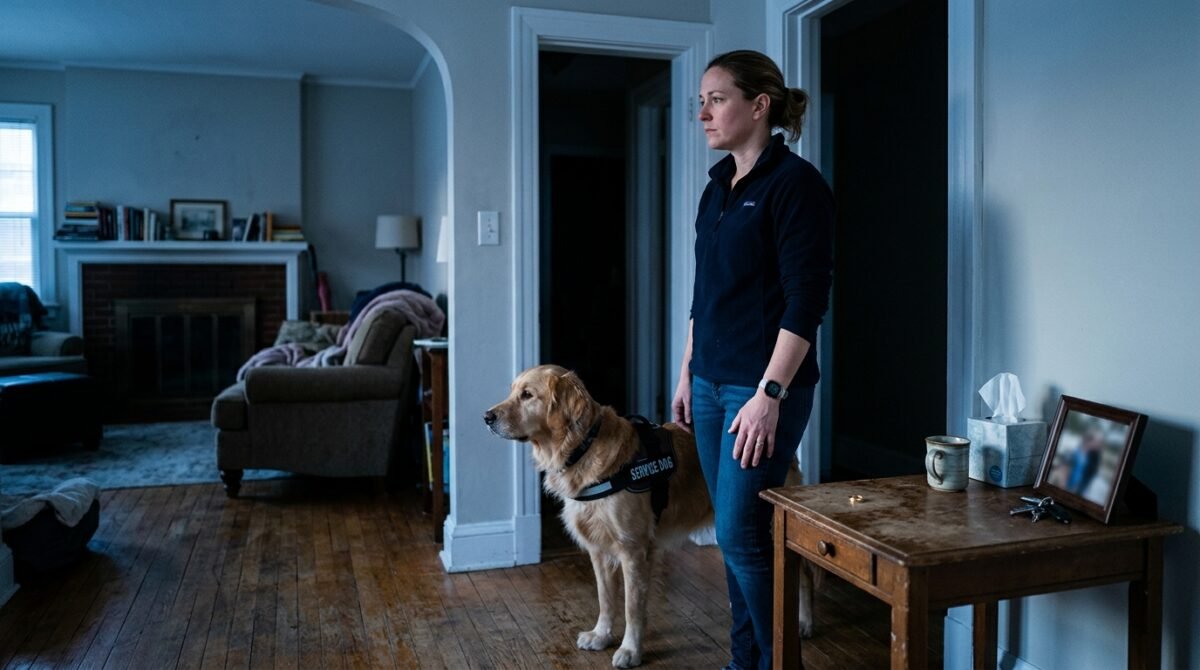
I waited until he got home from work. He walked through the door with a smile on his face, holding a bag of gourmet treats for the puppy. I was sitting on the sofa with Barnaby at my feet. My engagement ring was sitting on the coffee table in front of me. The atmosphere in the room was heavy, thick with the silence of a dying relationship. He noticed the ring immediately, and his smile vanished.
I didn’t yell. I didn’t engage in the usual circular arguments. I simply opened my phone and showed him the screenshots of the group chat. I watched his face go through the entire spectrum of emotions: shock, denial, anger, and finally, a pathetic attempt at deflection. He tried to tell me that it was ‘just locker room talk,’ that he didn’t mean any of it, that it was a joke.
I told him that the only joke was the fact that I had believed he was a good person. I told him that I knew about the shelter plans, and that I would never trust him with anything ever again, let alone my life. He tried to take the ring back, but I stood up—Barnaby immediately alert and at my side—and told him he had until the end of the day to get his things out of my house. Yes, the house was mine; he had been living with me for the duration of our engagement.
“You’re choosing a dog over me? Are you serious? I’ve been building a life for us, for our future, and you’re throwing it away because I wanted a quiet home for my puppy? You are the most selfish person I have ever met.”
— Mark, shouting as he realizes the engagement is over
It was ironic that he called me selfish. He wanted me to give up my medical aid for a designer puppy, and I was the selfish one. As he packed his bags, he kept glancing at Barnaby with pure malice. He still didn’t understand. He still didn’t see that he wasn’t the victim; he was the villain of his own pathetic story. When the door finally closed behind him, I didn’t feel lonely. I felt light.
The Aftermath and the Online Fury
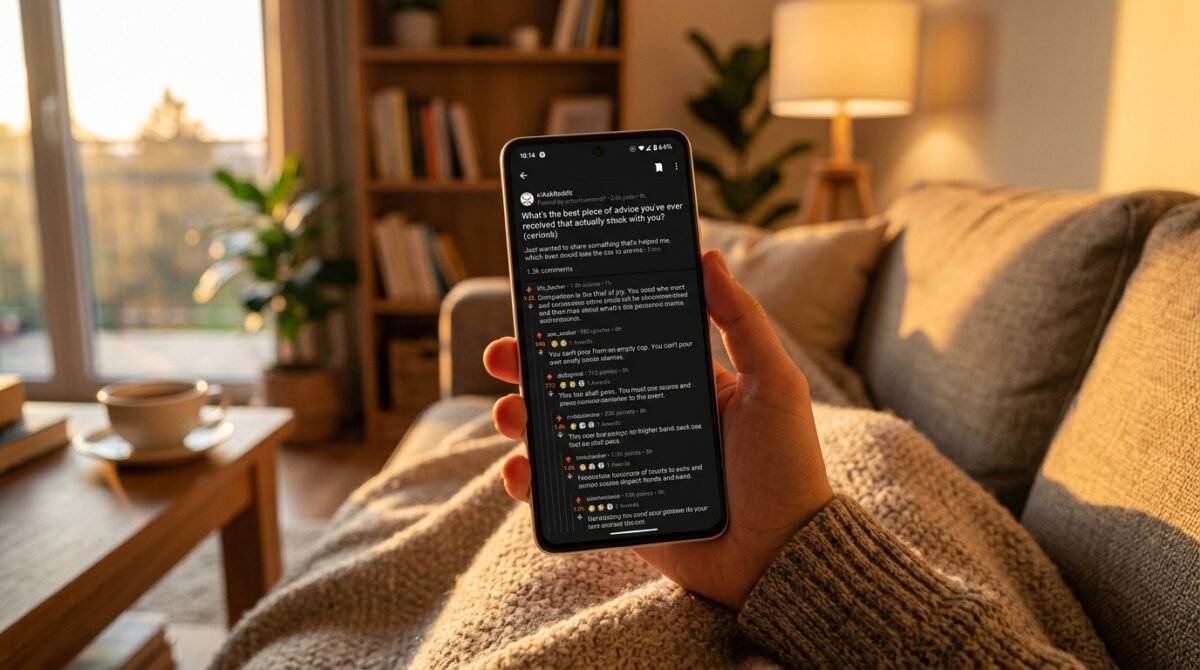
The fallout was instantaneous. Mark tried to spin the story to our mutual friends, claiming I had a ‘psychotic break’ and kicked him out because I was jealous of his dog. He didn’t mention the group chat. He didn’t mention the stolen medical supplies. He didn’t mention the plans to abandon my service animal. But he had forgotten one thing: I had the screenshots.
I posted my side of the story on a popular online forum, keeping the names anonymous but laying out the facts. The reaction was overwhelming. Thousands of people weighed in, and the consensus was absolute. People were horrified by the audacity of his demands. The comments weren’t just supportive; they were a roadmap for how to handle someone who tries to isolate you from your support system.
It was validating to see that I wasn’t ‘crazy’ for drawing a hard line. People shared their own stories of partners who had tried to get rid of pets or medical aids, and the stories were all the same: it started small, with ‘convenience’ and ‘boundaries,’ and ended in control and abuse. I felt like I had dodged a bullet, a massive one. The internet, for all its flaws, had given me the perspective I needed to heal.
“This is a classic abuser tactic. Isolate the partner from their support, then control their environment. He didn’t want a quiet home for his puppy; he wanted a victim who couldn’t fight back because you were too dizzy from your own medical issues. You didn’t just save your dog; you saved yourself.”
— u/SafetyFirstAlways (Top Comment, 32.5k upvotes)
The messages from friends who had heard his side started to trickle in. Once I sent them the screenshots, the apologies were profuse. It was a hard lesson to learn, but I learned it well. I learned who my real friends were, and I learned that I am much stronger than I ever gave myself credit for. I wasn’t a ‘medical circus’; I was a survivor.
The Reality Check: Why We Fail to See the Red Flags

Looking back, I realize how much I had ignored. The gaslighting about my ‘high-maintenance’ status, the way he would ‘forget’ to pick up my prescriptions, the way he would intentionally disrupt my routine to see if I would ‘snap.’ I thought it was just the stress of wedding planning, but it was much deeper. It was a calculated erosion of my autonomy.
We often tell ourselves that our partners are just going through a ‘phase’ or that we need to ‘meet them halfway.’ But when it comes to medical necessity, there is no halfway. You either support the person you love, or you don’t. Mark didn’t love me; he loved the idea of me, provided I didn’t interfere with his lifestyle or his status symbols.
The puppy was just the catalyst. If it hadn’t been the dog, it would have been something else. Maybe my job, maybe my family, maybe my hobbies. Anything that required his attention to be diverted from his own desires was a target. The ‘total quiet’ he demanded for Lulu was just a metaphor for the total silence he wanted from me—no complaints, no needs, just compliance.
“I’m not saying you’re wrong for the dog, but maybe you could have compromised more? People have puppies, and they adjust. Did you really have to end the engagement over a dog?”
— A misguided comment from a distant acquaintance
I responded to that acquaintance with a single sentence: ‘If he had asked me to stop taking my medication because it didn’t fit his aesthetic, would you still tell me to compromise?’ The silence that followed was deafening. It’s amazing how quickly people change their tune when they realize the ‘dog’ is actually a medical device, and the ‘convenience’ is actually a human life.
Rebuilding the Life I Was Almost Denied
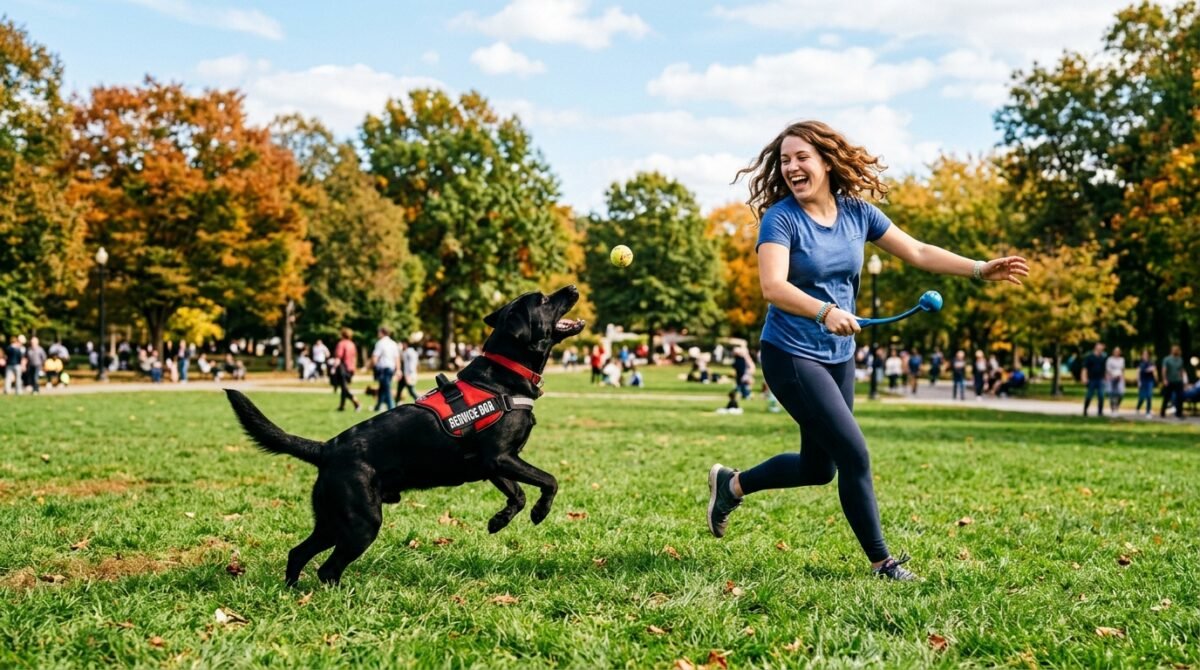
Life is quiet now, and I don’t mean the kind of silence Mark was obsessed with. It’s a peaceful, orderly quiet. Barnaby is back to his old self, no longer stressed by the frantic barking of a puppy, and I am back on my medication schedule without anyone trying to hide my pills. The recovery from the breakup has been a process, but it’s a process of rediscovery.
I started attending support groups for people with invisible disabilities, and I found a community of people who understand exactly what I went through. We share stories, we share tips on how to handle insensitive partners, and we laugh about the absurd demands people make when they have no idea what it’s like to live with a chronic condition. I am no longer ashamed of needing a service dog.
I’ve also started donating to local shelters, the very ones Mark threatened to dump my dog at. It feels good to turn a negative into a positive. I’m not living for anyone else’s approval anymore. My life is mine, my dog is my partner in health, and I am content with the decisions I’ve made. The ring? I sold it, and I used the money to pay for a year of high-quality training and care for Barnaby.
“You sold the ring and invested in the dog? That’s the most poetic justice I’ve ever heard. You didn’t just end a relationship; you upgraded your life. Wishing you and Barnaby the best.”
— u/KarmaIsReal (Top Comment, 18.2k upvotes)
I often wonder what Mark is doing now. I hear he’s still with the puppy, and that he’s already moved on to the next ‘status symbol’ obsession. I don’t harbor any ill will, but I do feel a sense of pity. He will never know the kind of unconditional, life-saving loyalty that Barnaby gives me. He will always be chasing the next ‘perfect’ thing, never realizing that he’s already broken the most important thing he had.
The Anatomy of Emotional Entitlement
In retrospect, the entitlement was everywhere. It was in the way he talked about his career being ‘more important’ than my appointments, the way he expected me to handle all the housework despite my condition, and the way he viewed my service dog as a ‘pet’ rather than a trained professional animal. He wanted a partner who was an accessory, not an equal.
I learned that when someone shows you who they are, you should believe them the first time. I kept making excuses for him, thinking that I could change his perspective, but you cannot change someone who doesn’t see a problem with their own behavior. Mark didn’t think he was being abusive; he thought he was being ‘efficient.’ That is the most dangerous kind of person.
The most important lesson I’ve learned is that my boundaries are not negotiable. If someone sees my medical needs as a burden, they aren’t the right person for me. Period. It took a near-catastrophe to force me to see that, but I’m glad I saw it before we were married. I shudder to think about what would have happened if we had children or if my health had declined further while trapped in that relationship.
“The scariest thing about stories like this is how many people actually think the ‘puppy’s needs’ supersede the ‘human’s medical needs.’ It’s a terrifying look into how some people view disabled partners as second-class citizens.”
— u/DisabilityAdvocate (Top Comment, 25.1k upvotes)
I am stronger now. I am more aware of my worth. I have learned to walk away from anyone who asks me to sacrifice my safety for their comfort. It’s a simple rule, but it’s saved my life in more ways than one. If you are ever in a position where you feel like you have to choose between yourself and your partner’s ‘convenience,’ choose yourself. Every single time.
Moving Forward: Boundaries and New Beginnings

Today, I am in a much better place. I’ve started dating again, but the criteria have changed. The first thing I tell any potential partner is that I have a service dog and a medical condition, and that they are not optional. If they don’t like it, they can leave before we even get to the first date. It saves a lot of time and heartache.
I’ve also become more vocal about the role of service dogs. It’s not just about ‘petting the dog’; it’s about understanding the function. People are often curious, and I’m happy to educate them, but I no longer tolerate the ‘can you just put him away’ comments. My dog is my health, and I treat him with the respect and gratitude he deserves.
I’ve also started a blog where I write about the intersection of disability and relationships. It’s been healing to share my story and to hear from others who have been in similar situations. We are not ‘burdens,’ and our medical needs are not ‘inconveniences.’ We are human beings who deserve partners who support us, not partners who try to prune us to fit their own small, narrow worlds.
“Thank you for sharing your story. As someone with a chronic illness, it’s refreshing to see someone stand their ground. We need more of this. Don’t ever settle for less than someone who treats your health as a priority.”
— u/ChronicWarrior (Top Comment, 15.7k upvotes)
I hope that if anyone reading this is in a similar situation, they find the courage to leave. It’s not easy, and the emotional toll is high, but the alternative is far worse. You deserve to be with someone who celebrates your life, not someone who tries to minimize it. You are enough, just as you are, and your support system is non-negotiable.
Lessons Learned from the Ring I Returned

Returning the engagement ring wasn’t just about ending the relationship; it was an act of reclamation. I was returning the symbol of a broken promise and taking back my autonomy. It was a physical manifestation of everything I had learned: that a diamond is not worth my life, my dog, or my peace of mind. Mark was shocked that I would just ‘give it back,’ as if it had no value to me. He didn’t understand that the value was in the freedom it bought me.
I’ve realized that the ‘total quiet’ he wanted was really just his inability to handle reality. Real life is messy, it’s loud, and it’s full of challenges that we have to navigate together. If he couldn’t handle a dog, he certainly couldn’t have handled the real struggles of marriage—the sickness, the financial stress, the aging. I didn’t lose a husband; I lost a liability.
I am proud of how I handled the situation. I didn’t lose my temper, I didn’t get into a long, drawn-out fight, and I didn’t let him manipulate me into staying. I saw the signs, I gathered the evidence, and I left. It’s a template I’ll use for the rest of my life. When something feels wrong, it usually is, and I don’t need to apologize for trusting my gut.
“This is the most rational, level-headed breakup story I’ve ever read. You didn’t just win; you transcended. The way you handled the proof and the departure is a masterclass in setting boundaries.”
— u/BoundaryQueen (Top Comment, 19.3k upvotes)
So, to everyone who asked, no, I don’t regret it. Not for one second. And to Mark, if you’re reading this: thanks for the lesson. It was the most expensive, and the most valuable, education I’ve ever received. I’m doing great, and I hope you find whatever it is you’re looking for—though I doubt you ever will.
Conclusion
The story of my engagement is a reminder that we are the final arbiters of our own well-being. We often look for validation from our partners, but when that validation is conditional on our silence or our sacrifice, it is not love—it is control. By choosing Barnaby, I chose myself, and it was the best decision I ever made.
Relationships should be partnerships that amplify our strengths, not structures that stifle our needs. If you find yourself apologizing for your existence or your necessities, it is time to take a long, hard look at who you are with. Your health is your wealth, and no one, regardless of how ‘designer’ their life may be, has the right to threaten that.
What about you? Have you ever had to choose between your own needs and a partner’s demands? How did you handle the pressure to ‘compromise’? Join the discussion in the comments below—your story might be the wake-up call someone else needs today.
What's your verdict on this dilemma?
Vote below to contribute to the official community consensus.

Have a Dilemma Keeping You Up at Night?
Share your real-life feud, wedding chaos, or relationship crossroads anonymously with our editorial team.
What do you think ?
0 Comments🛡️ Comments are moderated to protect community integrity. Your comment will appear once approved by the editorial team.