

We all have that one friend who believes money grows on trees, or perhaps, more accurately, on their partner’s credit card. For two years, I thought Mark was just a bit ‘ambitious’ with his tastes. I told myself it was charming—a sign that he wanted the best for us. But the mask started slipping months before our planned anniversary trip to the coast, and by the time we stood at that rental counter, the cracks in our foundation were wide enough to swallow a luxury sedan whole.
It wasn’t just about the money. It was about the audacity. It was about the assumption that my financial stability was his personal safety net for ego-driven purchases. We had agreed on a budget. We had discussed the importance of saving for our future move. Yet, when we reached the front of the line, Mark looked at me with that signature sheepish grin, pulled out his empty wallet, and handed the agent my gold card before I could even blink.
The silence that followed wasn’t just awkward; it was the sound of a relationship imploding in real-time. The rental agent looked at me, waiting for confirmation, while Mark whispered that he ‘deserved’ a better experience to celebrate our milestone. In that moment, the romantic veil was ripped away. I didn’t see a partner anymore; I saw a parasite who had finally run out of hosts.
This story isn’t just about a car rental upgrade. It’s about the cumulative weight of a thousand small boundary violations that lead to one final, explosive breaking point. It’s a journey through the realization that love is not a license to exploit, and that sometimes, the most liberating thing you can do is walk away—even if you’re standing in the middle of an airport with your suitcase in hand.
I am writing this not to vilify my ex, but to offer a stark warning to anyone who finds themselves playing the role of the ‘sugar parent’ in a relationship that was supposed to be a partnership of equals. Here is how it all went down, and why, for the first time in my life, I chose myself over a toxic dynamic.
The Budgetary Blueprint That Never Existed

Months before the trip, Mark and I sat down to plan. We were supposed to be responsible. I had just gotten a promotion, and he was between jobs—a situation he described as ‘finding his purpose.’ We agreed on a moderate budget: a compact car, a mid-range hotel, and a focus on hiking and local sights rather than high-end dining or flashy transportation.
Mark was all for it during our planning sessions. He even helped create a spreadsheet. I remember him highlighting the ‘Car Rental’ cell in red, emphasizing how important it was that we stay under the four-hundred-dollar threshold for the week. I felt secure, thinking we were finally on the same page regarding our financial future.
However, as the weeks ticked by, the ‘purpose-finding’ phase of his career transition started to look suspiciously like a lifestyle upgrade. He began ordering top-shelf liquor for our dinners at home and mentioning how his old car was ‘depressing’ him. Every time I brought up the trip budget, he would wave it off with a casual, ‘Don’t worry, I have a surprise for us.’ I should have realized then that the surprise was going to be mine to pay for.
“I just want our time away to feel special, babe. You’ve been working so hard, and you deserve to feel like you’re riding in style. We’re going to have the best memories.”
— Mark, during a dinner two weeks before the trip
I pushed back, reminding him that the budget was for *our* stability, not for a temporary dopamine hit. He was incredibly persuasive, framing his desire for luxury as an act of love for me. It’s a classic gaslighting tactic: making the recipient of the bill feel like they are being stingy or unappreciative for wanting to stick to a plan.
The day before the flight, he insisted he had checked the rates and that everything was ‘taken care of.’ I foolishly trusted him. I packed my bags, double-checked my work emails, and looked forward to the coast. I didn’t know that the ‘taken care of’ part meant he had secretly booked a base model under his name, fully intending to manipulate the rental agent into an upgrade at the counter.
The Countertop Confrontation

The airport was crowded, and the line at the rental agency was long. We were exhausted from the flight, but Mark seemed energized, vibrating with an intensity I hadn’t seen in weeks. When we finally reached the desk, the clerk, a weary-looking man in a blue vest, asked for our reservation details. Mark handed over his ID and then gestured for me to provide the credit card.
I frowned, pulling out my card but hesitating. ‘Mark, you said you paid the deposit online. Why are you asking for my card now?’ I asked, my voice low but sharp. He leaned in, his smile tight and forced. ‘The online rate was for a tiny economy car, but they have a gorgeous convertible available right now. It’s only a few hundred more. Don’t be like that, it’s our anniversary trip.’
The rental clerk stood there, his hand hovering over the keyboard. He looked between us, sensing the tension. I felt a flush of heat creeping up my neck. I realized then that the entire trip plan had been a lie. He didn’t book the car we agreed on; he booked the cheapest thing he could find just to secure the reservation so he could upsell himself at my expense.
“Sir, the upgrade is an additional $600 for the week. Are you sure you want to proceed with the lady’s card? I need her verbal confirmation.”
— The Rental Clerk
I felt like the walls of the terminal were closing in on me. The audacity was breathtaking. He had planned to surprise me with a luxury I couldn’t afford and had explicitly said I didn’t want, all while using my own money to pay for it. I looked at him—really looked at him—and saw the selfishness I had been ignoring for two years.
I looked back at the clerk and said, ‘Actually, we are not interested in the upgrade. And we are not interested in the original reservation either.’ Mark’s face went from pale to beet red in three seconds. He grabbed my arm, but I pulled away, my resolve hardening like cold steel. This was the end of the line.
The Walk-Away Moment

The silence that followed was absolute. People in line behind us were watching now, some looking away uncomfortably, others leaning in to catch the drama. Mark was stuttering, trying to save face, but the damage was already done. He tried to pull me aside, telling me I was ‘making a scene’ and ‘ruining everything.’ I just looked at him and laughed, a dry, humorless sound.
I turned to the clerk and canceled the entire transaction. I grabbed my suitcase from the floor and started walking toward the exit. I didn’t even look back to see if he was following. I knew, with a sudden and terrifying clarity, that if I stayed, I would spend the rest of my life paying for his ‘surprises.’
Mark finally caught up to me at the shuttle bus stop. He was frantic, his voice cracking as he tried to justify his actions. ‘It’s just a car! You make good money, why are you being so dramatic? I was doing this for us!’ He truly believed that his entitlement was a form of affection. It was a staggering level of delusion.
“You aren’t doing this for ‘us,’ Mark. You’re doing this for your ego, and you’re using my labor to pay for it. I’m done. Take the bus back to the city or find another way home. I’m booking a flight back.”
— My parting words to Mark
I didn’t argue. I didn’t let him convince me that I was ‘overreacting.’ I pulled out my phone and checked the next flight out. There was one in two hours. I booked it, sat down on a bench, and watched him pace back and forth, muttering to himself. I felt a sense of peace that I hadn’t felt in years. The weight was gone.
He eventually stopped pacing and looked at me, realizing I wasn’t going to cave. He didn’t apologize. He didn’t offer to pay for the ride home. He just turned and walked away, likely trying to figure out how he was going to get back to the city without my credit card. I never saw him again.
The Aftermath: A Digital Reckoning
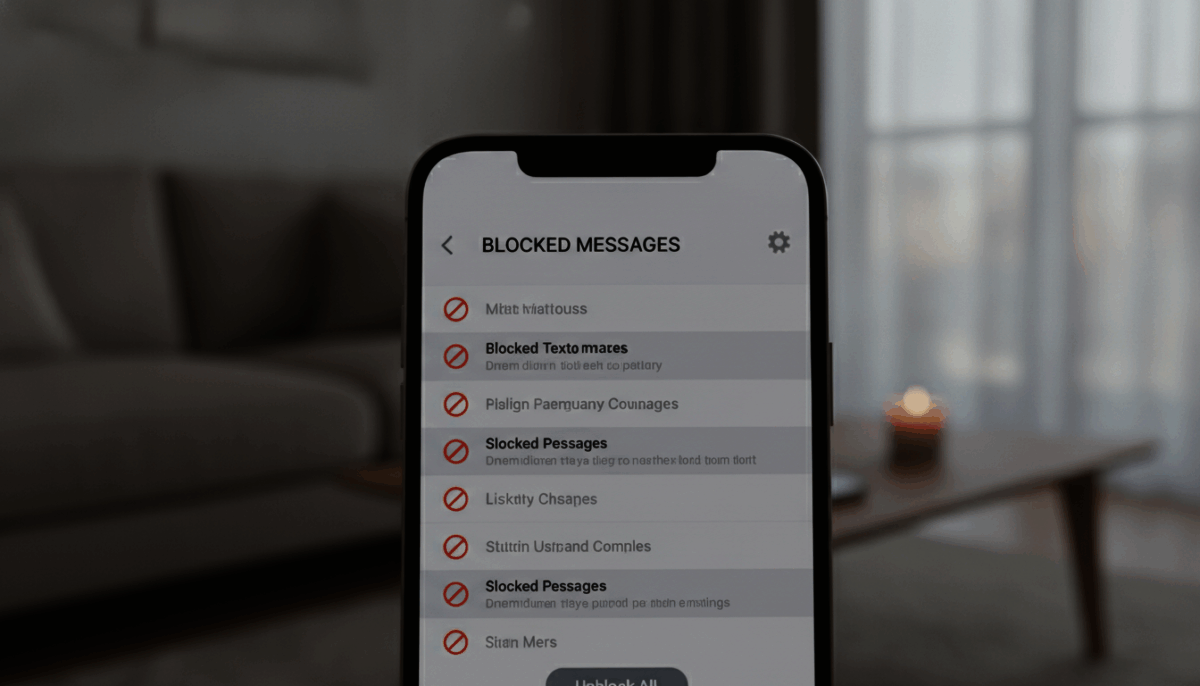
When I got home, the fallout began. My phone was blowing up with notifications. Mark had messaged me, called me, and even tried to involve our mutual friends. He was painting a picture of me as a ‘cold, controlling girlfriend’ who ruined an anniversary trip over a simple disagreement. The gaslighting had moved from verbal to digital.
I didn’t engage with him directly. Instead, I took screenshots. I knew that if he was going to rewrite history, I needed the receipts. I saw messages where he asked for ‘loans’ that were never paid back, texts where he guilt-tripped me for wanting to save for a house, and finally, the messages from the day of the airport incident.
“You really ruined our anniversary over a car? I just wanted us to look good. You’re so selfish. I hope you’re happy being alone.”
— Text message from Mark, sent 3 hours after I left
I didn’t reply to any of them. I blocked him on every platform, including our shared banking apps. I contacted the bank to ensure he had no residual access to my accounts. It felt like cleaning a wound—painful at first, but necessary for the healing process to begin. The sheer relief of not having to explain my finances to him anymore was worth more than any luxury car.
The following week was a blur of notifications from friends asking what happened. I kept it brief: ‘We had different values, and I realized I couldn’t support his lifestyle choices anymore.’ Most of them were supportive, though a few asked if I had been ‘too harsh.’ I stopped caring about their opinions the moment I stopped caring about Mark’s.
It is fascinating how people will rush to defend the status quo, even when that status quo is abusive or unsustainable. But I held my ground. I stayed in my apartment, I focused on my work, and for the first time in two years, I checked my bank account without a knot of anxiety in my stomach. The financial freedom was intoxicating.
Reddit Weighs In: The Verdict of the Internet

I posted my story on a popular subreddit, needing an objective perspective. I expected a mix of responses, but the sheer volume of support was overwhelming. Thousands of strangers validated my decision, pointing out patterns I had been too close to see. The ‘NTA’ (Not The Asshole) votes flooded in, accompanied by stories of their own experiences with financial predators.
People shared similar stories of ‘partners’ who treated them like ATMs, and the common thread was the erosion of self-esteem. They told me that the car rental incident wasn’t an isolated event; it was the final straw in a long history of boundary-crossing. Reading these comments was the validation I needed to finally stop questioning if I had ‘ruined’ the trip.
“The car rental counter was just the theater. The play had been running for two years. He wasn’t trying to ‘surprise’ you; he was trying to corner you into a financial commitment you hadn’t agreed to. You didn’t ruin the trip; you saved yourself from a lifetime of being his bank.”
— u/FinanceTruthSeeker (Top Comment, 32.5k upvotes)
There were, of course, the contrarians. Some argued that I should have ‘communicated better’ or that I was being ‘petty’ over money. I read these, but they didn’t sting. I realized that these people likely had the same entitlement Mark did, or they were trapped in similar dynamics and were lashing out in defense of their own ‘partners.’
The community was a mirror. It showed me that I wasn’t crazy for wanting a partner who respected my boundaries. It showed me that the discomfort I felt for months was a valid signal from my gut. The Internet, for all its toxicity, really helped me process the finality of the breakup and move toward a space of radical self-acceptance.
The Anatomy of Financial Entitlement

Looking back, I can map out exactly how the entitlement grew. It started with small things: ‘Oh, you make more, you get this,’ or ‘Let’s just put it on your card for points, I’ll Venmo you.’ The Venmo payments would always be delayed, or ‘forgotten,’ or partially paid. It was a slow creep, a systematic desensitization to having my boundaries pushed.
By the time we hit the rental counter, the entitlement was absolute. He didn’t even ask me if it was okay to put the charge on my card; he just assumed it was his right. He viewed our resources as a shared pool that he could dip into whenever his ego required a boost. That is the fundamental difference between a partner and a dependent.
I realized that I had been enabling this behavior by not standing my ground earlier. Every time I said ‘fine’ to a small, unnecessary expense, I was teaching him that my boundaries were flexible. He wasn’t a monster; he was a person who had learned that he could get away with anything if he pushed hard enough.
“Financial infidelity is a slow-motion car crash. It starts with a forgotten lunch tab and ends with a complete disregard for your future. When someone treats your hard-earned money like their personal slush fund, they don’t respect you as an individual.”
— Relationship Expert / Community Discussion
It’s a hard lesson to learn, but an essential one. Financial boundaries are not about being cheap or stingy; they are about respect. If a partner cannot respect your financial limits, they cannot respect your autonomy. Period. I had to learn that the hard way, but I am grateful I learned it before we were married or sharing a mortgage.
I now have a strict ‘my money, your money, our money’ rule. We discuss major expenses well in advance, and I never, ever let someone else hold the key to my credit cards. It’s a simple rule, but it has changed my life entirely.
Reframing the Anniversary Memories

I used to feel sad when I thought about that ‘anniversary trip.’ I had spent so much energy planning, so much money on the flights, and so much hope on the outcome. But now, I reframe it. That trip wasn’t a failure; it was the most successful trip of my life. It was the trip where I finally stood up for myself and reclaimed my independence.
I remember the look on his face when I said ‘no.’ It wasn’t just shock; it was the realization that he had lost his leverage. He didn’t care about the trip or the anniversary; he cared about the status of the luxury car. And in that moment, I saw him for exactly who he was. That clarity is a gift I wouldn’t trade for a thousand vacations.
I have since taken a trip on my own. I went to the same coast, stayed in a modest hotel, and drove a compact car. It was the best trip I’ve ever had. I didn’t have to apologize for my spending, I didn’t have to manage anyone else’s ego, and I felt a sense of peace that I had been craving for years.
“You don’t need a partner to make a trip special. You need your own freedom. The best souvenir I brought back from that coast was the knowledge that I am enough on my own.”
— My internal monologue during my solo trip
The memories are no longer tainted by his disappointment. They are vibrant with my own autonomy. I learned that I can survive a breakup, I can handle the fallout, and I can be happy even when things don’t go according to the ‘perfect’ plan. That is a lesson that has served me well in every area of my life.
The Hard Truth About ‘Partnership’

There is a dangerous myth that relationships are about ‘becoming one.’ This often leads to the erosion of individual identity and, in cases like mine, the erosion of individual financial health. We are taught to share everything, but we aren’t taught how to set boundaries around that sharing. We aren’t taught that you can be a committed partner and still protect your own future.
My relationship with Mark taught me that true partnership is about two independent people choosing to walk together, not one person carrying the other. When I looked at the dynamic, I realized that I was doing all the emotional and financial labor. I was the one managing the budget, the one planning, and the one whose credit card was always the backup.
I don’t regret the relationship, but I do regret not ending it sooner. I spent two years trying to ‘fix’ someone who didn’t want to be fixed, and in the process, I was the one who was being broken down. The car rental counter wasn’t just a scene; it was a mirror that showed me the reality of the dynamic I had been ignoring.
“A partner who treats your bank account as their own without your permission is not a partner; they are a liability. True love respects your boundaries as much as it respects your feelings.”
— Community Wisdom
I know now that I deserve someone who is as invested in our collective growth as I am. I don’t need someone to pay for everything, but I do need someone who respects that I work hard for my money. I am no longer looking for a ‘plus one’; I am looking for a team member. And until I find that, I am perfectly happy being the captain of my own ship.
Rebuilding My Financial Fortress

Post-breakup, I went into a phase of extreme financial discipline. I cleared all my debts, rebuilt my savings, and took control of my investments. It was therapeutic. Every dollar I saved felt like a brick in the fortress I was building around my life. I found a sense of power in knowing that I was the one making the decisions, and I was the one reaping the rewards.
I also started therapy. My therapist helped me understand why I had allowed myself to stay in a relationship that was so clearly draining me. I learned about ‘people-pleasing’ and the fear of conflict. It was a difficult process, but it helped me understand that my tendency to avoid friction was being used against me.
I am now in a place where I feel incredibly secure. I have no shared finances, no pending debts, and no one to answer to but myself. I have a new standard for dating: if they can’t afford it, they don’t suggest it. And if they suggest it on my tab, it’s an immediate ‘no.’ The ease with which I can say ‘no’ now is my favorite part of the new me.
“The most expensive thing you can keep is a partner who doesn’t respect your boundaries. Once you realize that, the cost of being single drops to zero and the return on investment skyrockets.”
— My financial advisor (paraphrased)
It’s not just about money, though. It’s about the mental space that has opened up. I have time for my hobbies, my friends, and my own goals. I am no longer spending my evenings worrying about how to pay for someone else’s vanity. I am free, and that is a feeling that no luxury car could ever provide.
Looking Forward: Lessons for the Future

I am currently seeing someone new, and the dynamic couldn’t be more different. We have separate accounts, we split everything down the middle, and we have open, honest conversations about money. It’s not ‘romantic’ in the way movies depict, but it’s real. And that reality is so much better than the fantasy I was living before.
We talk about our goals, our dreams, and our fears. We don’t try to impress each other with expensive gifts or luxury upgrades. We impress each other with our support, our listening, and our respect. It’s a partnership of equals, and I have never felt more seen or more heard.
The car rental incident is a distant memory now, but it remains a touchstone for me. Whenever I feel the urge to compromise my boundaries for the sake of ‘keeping the peace,’ I think of that rental counter. I think of the silence, the walk to the exit, and the feeling of freedom. And I choose myself.
“Never let someone make you feel like you are the problem for having boundaries. You are not the problem. You are the solution to the toxic cycle you were in.”
— A final note to myself
I hope that by sharing this, someone else finds the courage to walk away from their own rental counter moment. You don’t have to pay for someone else’s ego. You don’t have to sacrifice your stability for their temporary happiness. You are worth more than that, and you have the power to change your story at any moment.
Conclusion
My journey from the rental counter to this moment of clarity has been nothing short of transformative. It wasn’t just a breakup; it was a reclamation of my life, my values, and my financial dignity. The decision to walk away was the hardest thing I’ve ever had to do, but it was also the most necessary.
If you find yourself questioning your partner’s entitlement or feeling the weight of their financial choices, take this as your sign. You are not responsible for their ego. You are not the bank. Your boundaries are not negotiable, and you deserve a partner who respects your hard work as much as they love you. Don’t wait for the airport meltdown to realize you’re worth more.
What about you? Have you ever had a ‘rental counter’ moment where you finally realized the dynamic you were in was toxic? Did you stay, or did you walk away? Join the conversation in the comments below—your story might be the one that gives someone else the strength to choose themselves today.
What's your verdict on this dilemma?
Vote below to contribute to the official community consensus.

Have a Dilemma Keeping You Up at Night?
Share your real-life feud, wedding chaos, or relationship crossroads anonymously with our editorial team.
What do you think ?
0 Comments🛡️ Comments are moderated to protect community integrity. Your comment will appear once approved by the editorial team.