
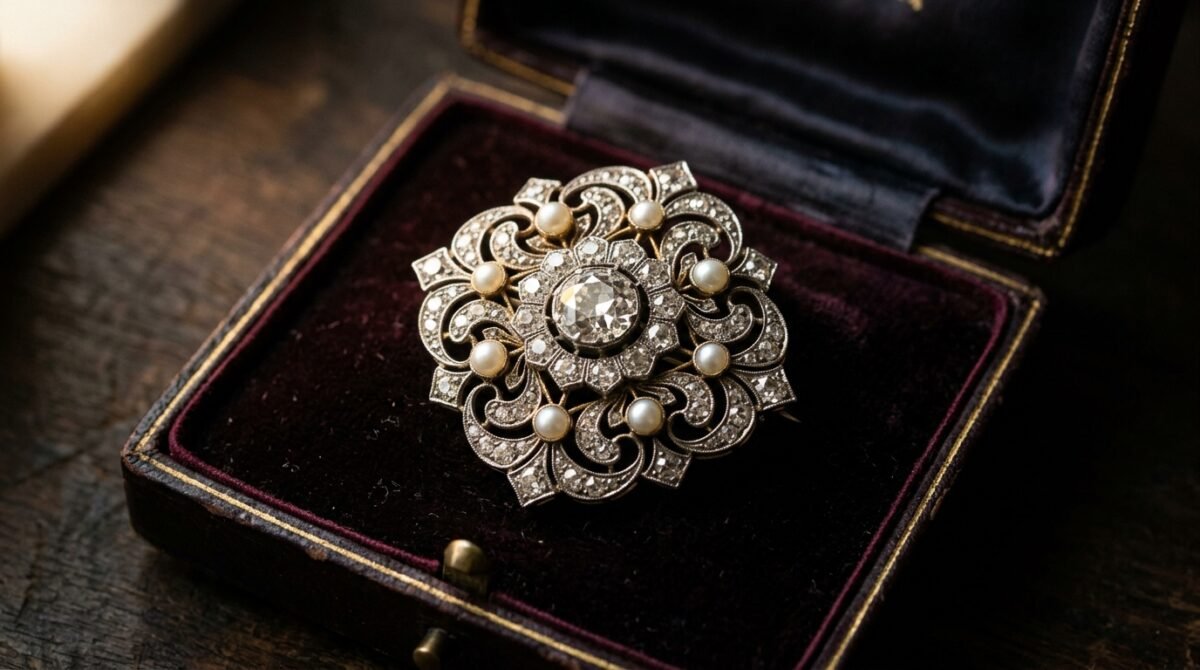
Grief is a strange, shifting landscape. It is not a straight road but a labyrinth of memories, sometimes triggered by a scent, a song, or, in my case, a piece of jewelry. My mother passed away six years ago, leaving behind very little—a few photographs, a stack of handwritten letters, and one singular, breathtaking heirloom: a Victorian-era diamond brooch. It was the only thing she owned that she insisted must remain with me, a promise of a future I would one day build without her.
My father moved on quickly. Too quickly, according to some. Within two years, he was remarried to Sarah, a woman who brought her own daughter, Chloe, into our home. For years, I played the role of the quiet, accommodating stepdaughter. I kept my head down, finished my degree, and rarely caused waves. But silence is often mistaken for weakness, and in my father’s house, my boundaries were becoming increasingly invisible.
The trouble began when Chloe’s sixteenth birthday started approaching. It wasn’t just a birthday; it was a production. My father and Sarah were obsessed with making it a ‘fairytale event,’ a phrase that usually preceded a demand for me to give up something of mine to make her day ‘perfect.’ I didn’t realize until it was almost too late that their definition of perfect required the very piece of my heart that I kept locked away in my jewelry box.
When the demand finally came, it wasn’t a request. It was an expectation. My father, emboldened by his new life, decided that my inheritance was better served as a prop for his stepdaughter’s vanity. He didn’t ask; he took for granted that I would comply. What he didn’t account for was the quiet resolve I had been building since the day my mother was buried.
This story is about more than a piece of jewelry. It is about the audacity of men who think they can erase a daughter’s history to cater to a new family’s performance. It is about the day I decided that being the ‘polite daughter’ was a death sentence for my self-respect, and the lengths I went to ensure that no one—not my father, not his wife, and certainly not his stepdaughter—would ever touch what belonged to my mother.
The Unspoken Agreement at the Dinner Table
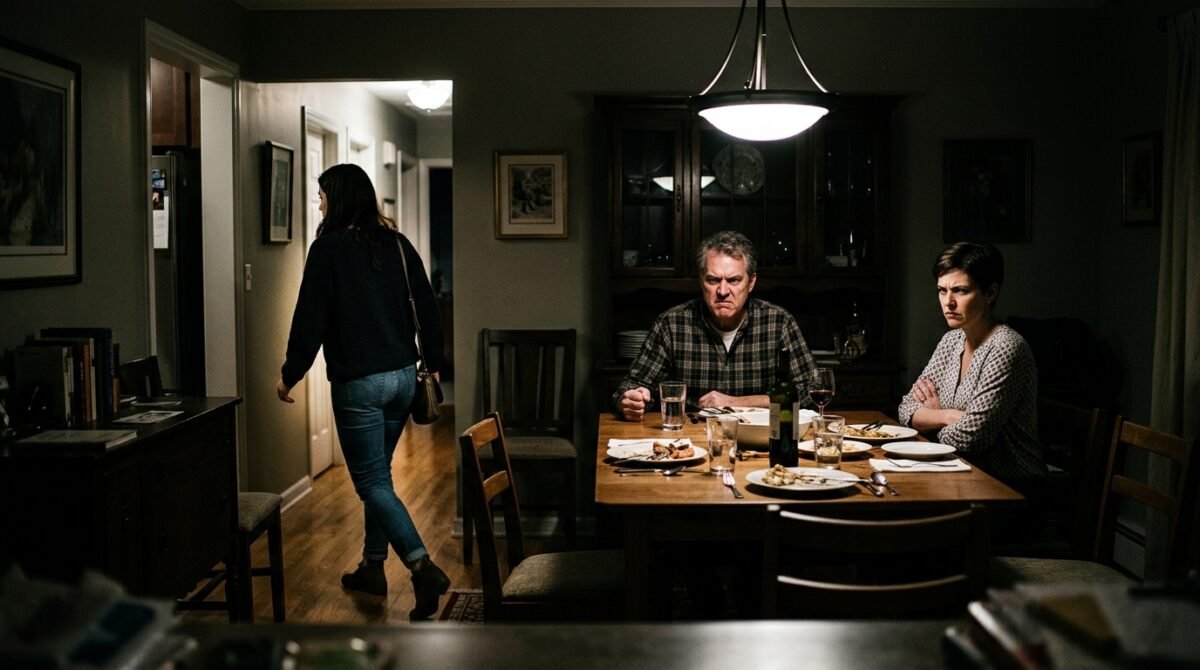
It started on a Tuesday evening, a night that felt deceptively normal. The air was thick with the smell of roast chicken and the artificial cheerfulness my stepmother, Sarah, always brought to the table. Chloe was scrolling through her phone, showing my father photos of extravagant ballgowns and tiaras. I was just trying to finish my meal in peace, but the atmosphere felt heavy, as if a storm was brewing just out of sight.
“We really want this year to be special for Chloe,” my father announced, his voice booming with a false sense of importance. “A landmark birthday. She needs something truly meaningful, something that connects her to a legacy of elegance.” I felt a cold knot form in my stomach. I knew that tone. It was the tone of someone who had already decided how to spend money—or in this case, objects—that didn’t belong to them.
Sarah smiled, a thin, rehearsed expression. “We were thinking about your mother’s diamond brooch, dear. It would look absolutely stunning pinned to the bodice of Chloe’s dress. It’s the perfect ‘something old’ for her big night.” My fork clattered against the plate. The room went deafeningly silent. I looked at my father, waiting for him to interject, to tell her that it was off-limits, but he just stared at me, expectant.
“That brooch is not a costume piece, Sarah. It was my mother’s. It is not for Chloe to wear, and it is certainly not for anyone else to decide its fate.”
My father sighed, a sound of profound annoyance. “Don’t be selfish. It’s sitting in your jewelry box gathering dust. Chloe will take excellent care of it. It’s about family unity. Can’t you just for once put the past aside and support your sister?” The word ‘sister’ felt like a slap in the face. I looked at the three of them—the new family, the new life—and realized that to them, my history was just a prop.
I stood up, pushing my chair back with a harsh screech against the hardwood. “It’s not gathering dust. It’s waiting for me. And it’s staying exactly where it is.” I walked out of the dining room before they could protest further, my hands shaking with a mixture of rage and fear. I knew my father. He wouldn’t let this go. He saw it as a minor hurdle, not a hard line.
The 6:00 AM Intrusion
I didn’t sleep that night. I spent the dark hours staring at the ceiling, wondering if I was being too harsh. Maybe it was just a piece of jewelry? Maybe I was holding onto grief too tightly? But then I thought of my mother’s voice, the way she told me that the brooch was a symbol of my own worth, meant to be worn on my own wedding day, not paraded around for a Sweet 16 party.
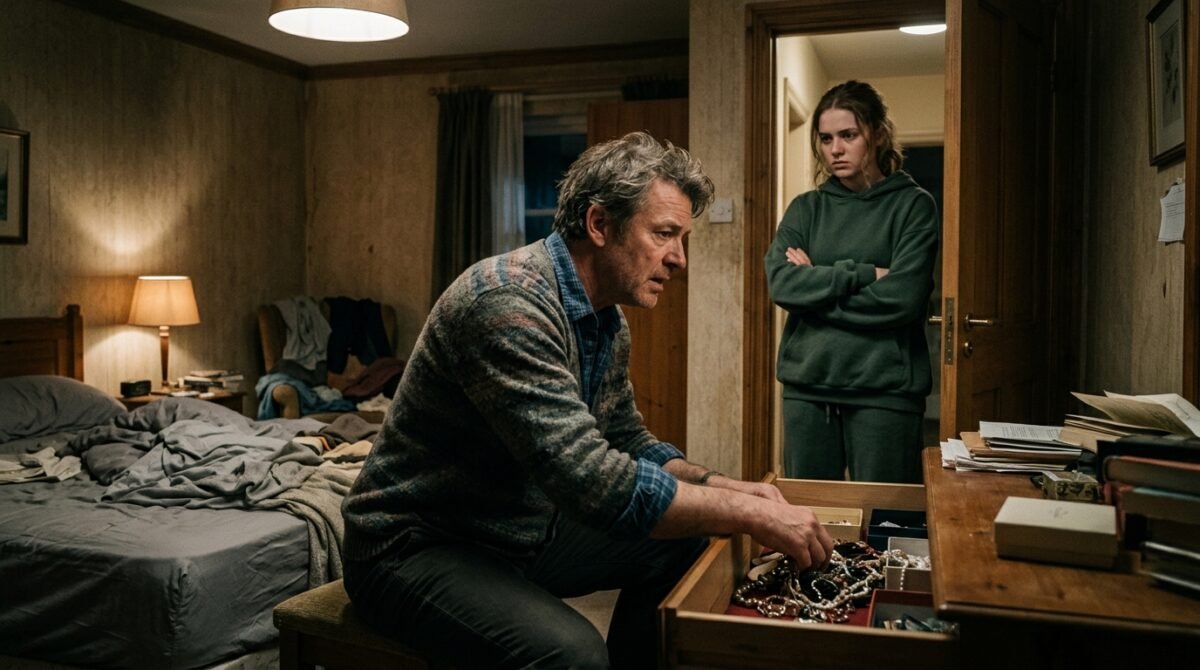
At 6:00 AM, the sound of a key turning in my bedroom door lock jolted me awake. I didn’t lock my door because I had grown up in a house where privacy was a right, not a privilege. But the door creaked open, and there was my father, looking rumpled and determined. He walked straight toward my vanity, his eyes scanning for the small, unassuming box where I kept my treasures.
“Dad? What are you doing in my room?” My voice was hoarse, thick with shock. He didn’t even turn around. He started opening drawers, shuffling through my belongings with a casual disregard that made my skin crawl. He was looking for the brooch, plain and simple. He thought if he could just get his hands on it, I would eventually give up and accept it as a fait accompli.
“I’m just borrowing it for the fitting, you’re being unreasonable. Stop acting like a child and let me take it.”
I lunged forward, grabbing his arm. “Get out of my room! You have no right to touch my things! That is my property. You aren’t ‘borrowing’ anything!” He looked at me with genuine confusion, as if the concept of personal boundaries was a foreign language he couldn’t quite grasp. The violation felt absolute. This wasn’t about a party; it was about control.
He shook me off, his face hardening. “You are living in my house. You are eating my food. You are under my roof. Everything in this room is mine until you move out. If I want you to share, you will share.” That was the moment everything broke. The pedestal I had kept him on—the pedestal of the loving father—crumbled into dust. I realized then that he didn’t see me as a person, but as an extension of his own ego.
I didn’t scream. I didn’t beg. I walked to the corner of my room, grabbed my bag, and told him clearly that if he touched anything else, I would be calling the police. He laughed, a dry, dismissive sound, and walked out, but the look in his eyes told me he wasn’t done. He was just regrouping.
The Financial Move: Securing the Legacy
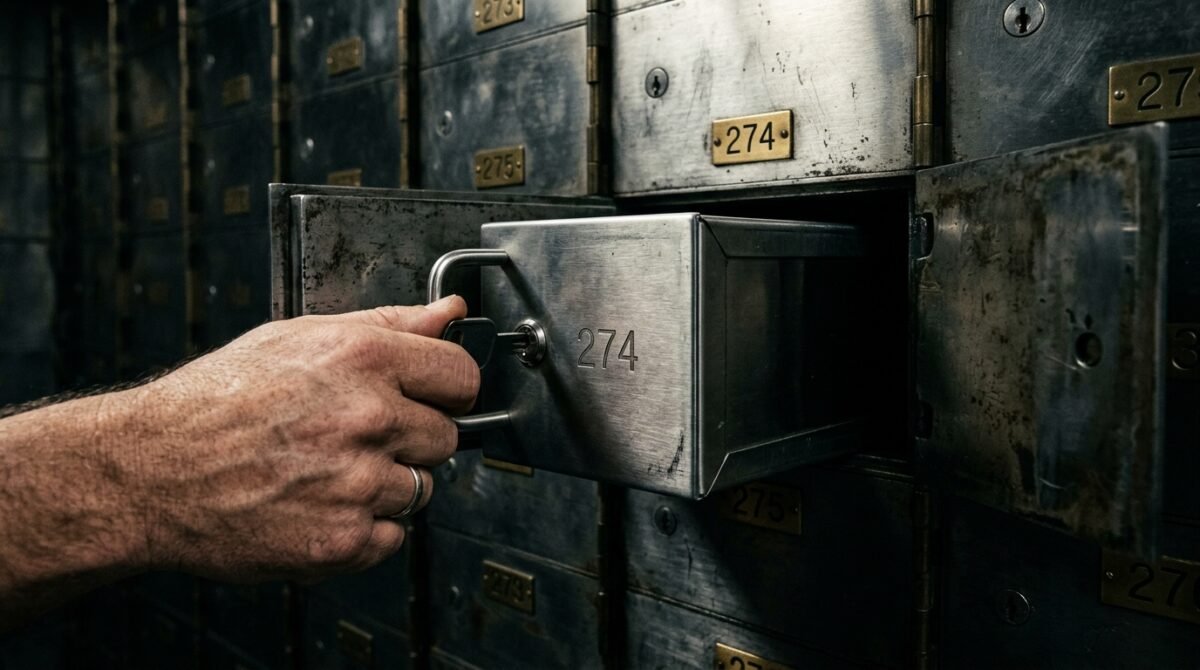
I knew he was waiting for me to leave for work or school. He thought that if he could just wait me out, he would find his opening. I spent that morning in a feverish state, calling my local bank. I had saved enough money from my part-time job to rent a safe deposit box, a small, cold metal locker that promised security in a world where I felt increasingly vulnerable.
I emptied my jewelry box into a small velvet pouch, hiding it deep in my backpack. I felt like a spy, or perhaps a thief stealing back my own life. Every creak of the floorboards in the hallway made me jump. I kept the door locked now, listening for Sarah or Chloe, their giggles from the kitchen sounding like sirens of impending doom. I had to get out, and I had to do it before my father returned from his morning errands.
When I finally slipped out of the house, I didn’t go to work. I went straight to the bank. The air inside the vault area was cool and sterile, a stark contrast to the stifling humidity of my father’s house. I signed the paperwork, feeling the weight of the key in my palm. It was the heaviest, most significant thing I had ever held.
“I need to secure this item, permanently. It is not to be accessed by anyone but me, under any circumstances, not even under duress.”
The bank employee nodded, used to the gravity of such requests. When I finally tucked the brooch into the safety deposit box and locked it, a wave of profound relief washed over me. For the first time in years, the knot in my chest unraveled. I wasn’t just protecting a piece of jewelry; I was protecting the last tangible piece of my mother’s love from being tainted by a family that didn’t know how to respect it.
I walked out of the bank feeling taller, lighter. I knew the fallout would be immense. My father would notice it was gone. He would search my room again, maybe even flip my mattress or tear through my closet. But it didn’t matter. He could burn the house down for all I cared; he would never find the brooch. The power shift had officially occurred.
As I walked back to my car, I checked my phone. There were three missed calls from my father and a flurry of text messages from a group chat I had been added to recently—the one they called ‘Chloe’s Big Day Planning Committee.’ I didn’t open them yet. I knew what they would say, and I knew I was finally ready to face them.
The Group Chat Explosion

I sat in my car for a long time, staring at the screen. The group chat was active, the bubbles popping up with alarming speed. It was a digital assault, a coordinated effort to make me feel small, ungrateful, and irrational. I took a deep breath and opened the messages. The first one was from Sarah, acting as the peacemaker, followed by a barrage of demands from my father.
“OP, we really need that brooch for the fitting today. Chloe is so excited! Don’t ruin her birthday by being stubborn. It’s just a piece of metal, honey. Think of the family memory we are creating!”— Sarah (Family Group Chat)
Then, my father chimed in, his tone shifting from manipulative to aggressive. “I don’t know what kind of game you think you’re playing, but you need to bring that brooch home before I get back from the office. This is ridiculous. You are being selfish and cold. Chloe has done nothing but be nice to you, and you’re acting like a spoiled brat. Bring it home. Now.”
My thumbs hovered over the screen. I felt a strange sense of clarity. For years, I had been trying to please people who would never be pleased. I had been trying to keep the peace in a house that was built on my own erasure. I typed my response, my hands steady for the first time in days. I knew this would be the bridge-burner, the text that would fundamentally change my relationship with them forever.
“The brooch is secured in a location where it will never be accessible to any of you. It is mine, it was my mother’s, and it is not a prop for Chloe’s party. Do not ask me again. And do not enter my room while I am out. The next time I find evidence of someone in my space, I will be reporting it to the police as an intrusion. We are done discussing this.”
The silence that followed was deafening. No one replied for a solid ten minutes. I turned my phone off, tossed it into the passenger seat, and drove to a park. I sat on a bench and watched the world go by, feeling a strange, quiet joy. I had done it. I had set the boundary, and for the first time in my life, I didn’t care if they liked it or not.
When I finally turned my phone back on, the notifications were overwhelming. My father had called five more times. Sarah had sent a long, rambling paragraph about how I was ‘tearing this family apart.’ But then, there was something else—a message from my aunt, my mother’s sister, who had been added to the chat by my father in an attempt to get backup. She had clearly read everything, and her response was short and sharp.
The Ally in the Shadows
My aunt, Clara, was a force of nature. She was the one who had kept my mother’s memory alive in our family, the one who sent me cards on my birthday and always remembered the stories of my mother’s youth. Seeing her name in the chat felt like a lifeline. She didn’t waste time with pleasantries or passive-aggressive sugar-coating. She went straight for the throat.
“I am reading this thread in complete disbelief. That brooch was my sister’s legacy, and it belongs to her daughter. The fact that you would even think to ask for it for a stepchild’s party is beyond ghoulish. If you lay one more finger on OP’s belongings, I will be hiring an attorney to look into the estate documents. Do not test me, brother.”— Aunt Clara (Family Group Chat)
The impact of her words was immediate. The chat went completely dead. My father, who usually puffed his chest out and acted like the king of the castle, clearly knew better than to go toe-to-toe with his sister, who was far more litigious and formidable than I could ever be. I felt a rush of adrenaline. For the first time, I wasn’t fighting alone.
I sent a private message to my aunt, thanking her. She responded within seconds: ‘I’ve known for years he was a narcissistic jerk, I’m just glad you finally saw it too. Pack your bags if you need to; you have a room at my place anytime.’ The weight of the last few days seemed to dissipate. I wasn’t just a victim in their house; I was a person with options.
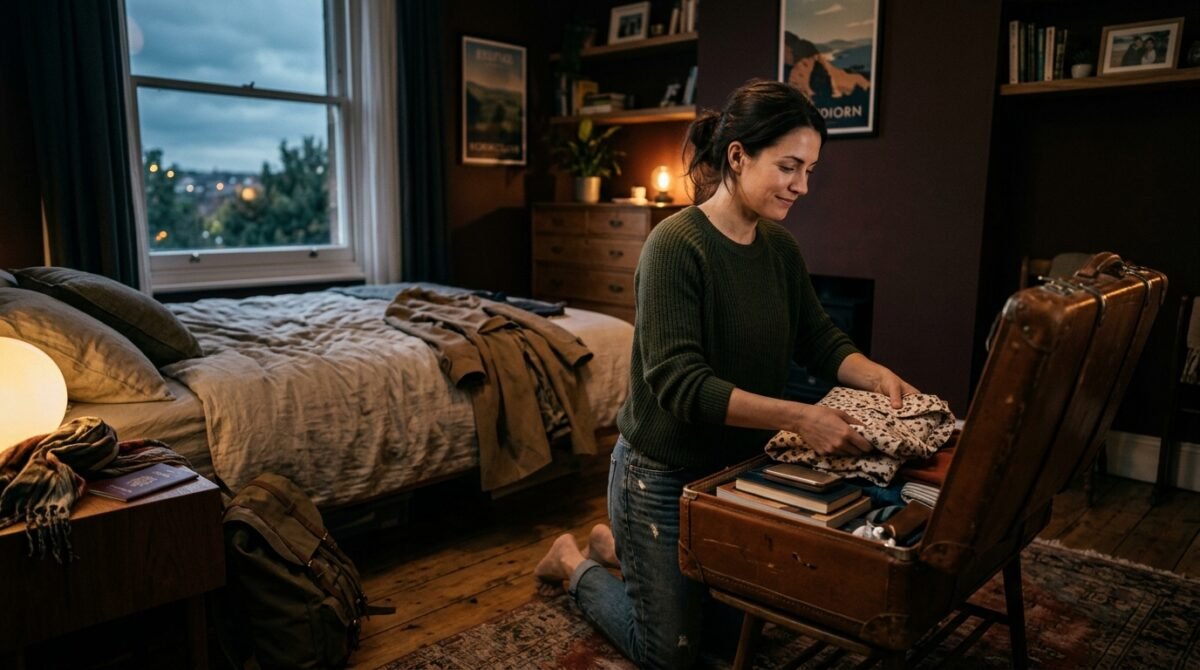
I returned home that evening, expecting a confrontation. The house was quiet, almost too quiet. My father was in his study, the door firmly shut. Sarah was in the kitchen, her back to me, avoiding eye contact. Chloe was in the living room, looking at her phone, her eyes red as if she’d been crying. I didn’t say a word. I walked straight up the stairs, locked my door, and started packing.
It wasn’t a permanent move yet, but I knew I couldn’t stay there. The trust was gone, replaced by a cold, hard wall of resentment. I packed my most important items, the things that couldn’t be replaced, and kept them in my car. My father didn’t come out to stop me. He didn’t even acknowledge that I was moving things out. It was as if he was waiting for me to apologize, to crawl back and beg for forgiveness.
I had no intention of apologizing. I realized that my father’s ‘love’ was conditional, based entirely on my compliance. As long as I was the perfect, silent daughter, I was ‘loved.’ As soon as I stood up for myself, I became the enemy. I looked around my room—my sanctuary—and realized I didn’t belong here anymore. The house was a museum of his control, not a home.
The Sunday Dinner Table Silence
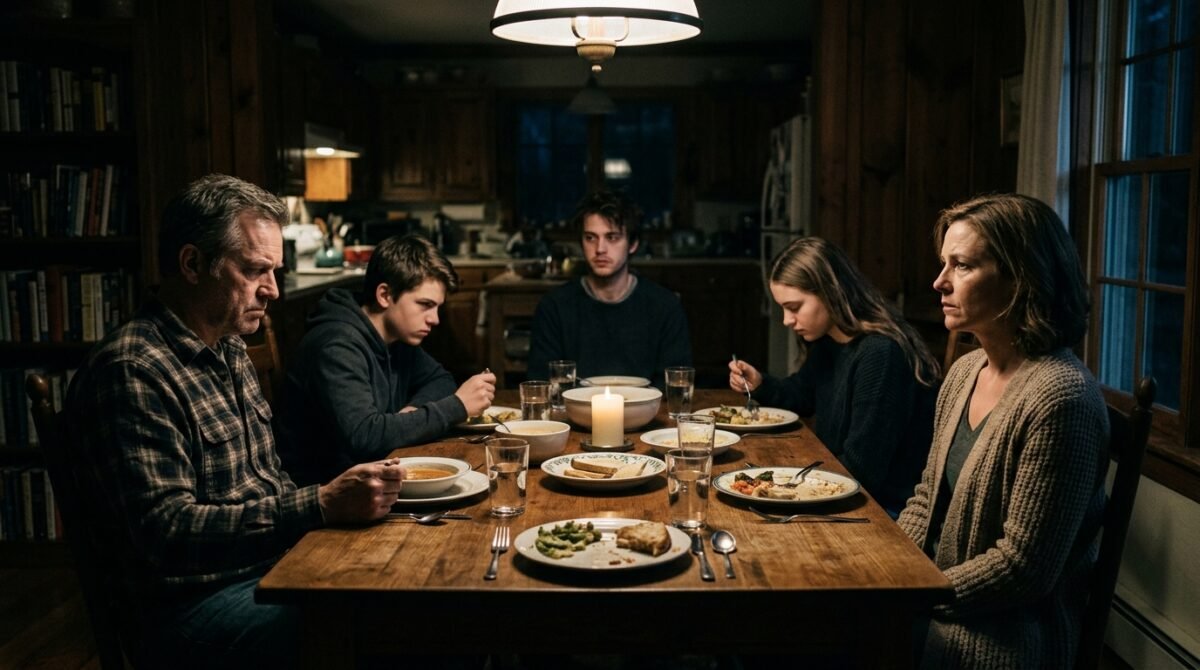
Sunday dinner was a tradition my father insisted on, a time for the ‘whole family’ to come together. It was always a charade, a performance of domestic bliss designed to make us look like the perfect suburban family. But this Sunday, the air was toxic. The tension was so thick it felt like it could choke us. I sat in my seat, staring at my plate, refusing to engage in the forced conversation.
My father was trying to lead the conversation as if nothing had happened. He talked about his work, about the upcoming birthday party plans—which he now referred to as a ‘private, intimate affair’—and about the weather. But Sarah was quiet, and Chloe looked down at her lap, clearly uncomfortable. The elephant in the room was the size of a skyscraper, and nobody dared mention its name.
Then, my father looked at me, his eyes cold and devoid of any warmth. “I hope you’ve done some thinking, OP. It’s not too late to apologize and do the right thing. Chloe’s birthday is next week. It would be a shame to have such a dark cloud over the celebration.” I looked up, meeting his gaze with a steady, unflinching stare. I wasn’t scared anymore. I was simply done.
“The only cloud over this family is your inability to respect boundaries. I’m not apologizing for protecting what is mine. If you want a ‘perfect’ party, maybe you should focus on your daughter’s character instead of her jewelry.”
The reaction was instantaneous. My father slammed his hand on the table, the wine glasses rattling. “How dare you! In this house, I am the parent! You will show respect!” I didn’t flinch. I just stood up, picked up my plate, and carried it to the kitchen. I didn’t argue back. I didn’t yell. I just walked away. The power dynamic had shifted irrevocably, and he knew it.
As I walked out, I heard my father mutter something about ‘ungrateful brats,’ but it didn’t hurt. It just confirmed everything I had come to believe. I spent the rest of the night in my room, listening to the muffled sounds of the house. I had reached a point of detachment that I hadn’t realized was possible. The emotional tether to my father had been cut, and I felt nothing but a cool, calm indifference.
The next morning, I left for university early. I had already decided that I wouldn’t be coming back for the summer. I would stay in my dorm or find a sublet. I had enough money saved to make it work, and for the first time, the future didn’t feel terrifying. It felt like mine. I was finally, truly, on my own.
Reddit Weighs In: The Verdict of the Internet

I decided to post my story on an advice subreddit, just to see if I was losing my mind. The title was simple, but the reaction was explosive. Thousands of people chimed in, their comments flooding my inbox. It was an overwhelming display of support that I hadn’t expected. It turns out that my father’s behavior wasn’t just ‘strict’; it was deeply, fundamentally toxic.
“NTA. Your father is trying to strip you of your agency and your heritage to buy points with his new family. The fact that he entered your room at 6:00 AM to search your things is a massive, massive violation of privacy. Get out of there as soon as you can. You are doing the right thing.”— u/SupportiveSoul (Top Comment, 32.1k upvotes)
Others were more practical, offering advice on how to handle the inheritance aspect. ‘Make sure you have your mother’s will or any documentation proving the brooch is yours,’ one user wrote. ‘He might try to claim it was a gift to the family. Don’t let him gaslight you into thinking it’s communal property.’ The validation was like a tonic. I wasn’t a brat; I was a person standing up to a bully.
“The way he keeps calling it ‘family property’ is classic manipulative behavior. It’s not ‘family property’ if it was your mother’s personal heirloom. He wants to use it to elevate his new status. Good for you for locking it away. Never give it back. Ever.”— u/LegalEagleEye (15.4k upvotes)
There were, of course, the contrarians. ‘ESH,’ one person wrote, ‘You should have just sat down and talked about it instead of escalating to police threats.’ But they were drowned out by the sheer volume of support. People shared their own stories of step-parents and entitled relatives, creating a community of solidarity that made me feel less alone than I had in years.
I read the comments until my eyes grew heavy, feeling a strange sense of community. The internet, for all its faults, had given me the perspective I needed to realize that I wasn’t the problem. My family’s dysfunction was not my burden to bear. I felt a surge of gratitude for the strangers who, for just a moment, stood in my corner and told me I was worth fighting for.
I started replying to some of the comments, clarifying the details and thanking them for their support. It felt like I was finally processing the trauma, putting it into words and seeing it for what it truly was. The brooch was the catalyst, but the realization was the prize. I was a person of value, and I didn’t need to sacrifice my past to be accepted in the present.
The Legal Reality Check
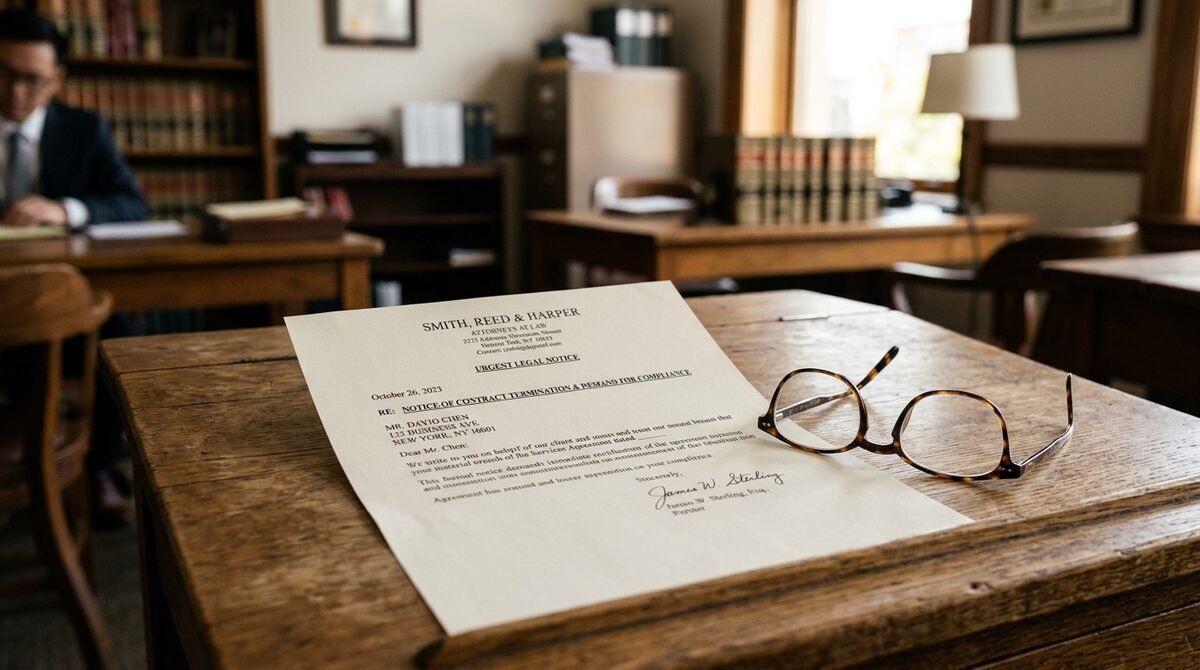
A week later, I received a certified letter in the mail. It was from a lawyer representing my father. My heart hammered against my ribs as I opened it. It was a formal request for the ‘return of family property,’ specifically the brooch, citing it as an asset of the ‘marital estate.’ My hands shook as I read the legalese, but then I laughed. It was so pathetic.
I called my aunt, Clara. She didn’t hesitate. ‘Send me a copy of that letter and don’t reply to a single word,’ she said. ‘I already have a lawyer looking into your mother’s probate records. If that brooch was left to you in her will, it is yours. Period. He has absolutely no claim to it, and his attempt to intimidate you with a letter is just a desperate move.’
It was a turning point. My father was no longer just being a jerk; he was engaging in a legal battle. And he was losing. The arrogance of assuming I wouldn’t have backup, or that I wouldn’t understand the law, was his undoing. He thought he could bully me into compliance, but he had underestimated my resolve—and my allies.
“Let him try. If he wants to take this to court, we will gladly show the judge exactly how he treated his daughter after her mother’s death. He’s going to regret the day he sent that letter.”— Aunt Clara
I felt a strange sense of calm. The brooch was safe, and the legal threats were just empty noise. My father was trying to control me through fear, but I had moved past fear. I was focused on the truth, and the truth was on my side. I went back to my daily life, ignoring his calls and refusing to engage in any more ‘discussions’ about the brooch.
The silence from his end grew longer, more strained. He wasn’t getting what he wanted, and he didn’t know how to handle the rejection. It was a power shift that was both terrifying and incredibly empowering. I was living my own life, on my own terms, and for the first time, I wasn’t waiting for his approval. I had finally realized that his approval was not the currency of my happiness.
I spent the weekends working, studying, and spending time with my aunt. We talked about my mother, about her life, about the woman she was before she became ‘the mother who left.’ It was a healing process, a way to reconnect with my heritage on my own terms. The brooch, sitting in that safe deposit box, was just a symbol. The real inheritance was my resilience, and that was something he could never touch.
The Birthday That Wasn’t

Chloe’s Sweet 16 arrived, and it was a spectacle. From what I could see on social media—because I had blocked my father and Sarah, but not Chloe—it was a lavish event, complete with a professional photographer and a rented ballroom. I saw photos of Chloe wearing a dress that looked suspiciously similar to the ones she’d been showing off, but there was no brooch on her bodice. She looked pretty, but there was a forced quality to her smile.
I felt a flicker of pity for her. She was being raised to believe that things, objects, and performances were the keys to happiness. My father was clearly trying to buy her loyalty, to replace the ‘real’ family with a version that he could control. It was a hollow victory. He had the party, but he didn’t have the heirloom, and he didn’t have me.
I spent that evening with my friends, having a simple dinner and laughing until my sides hurt. It wasn’t a ‘fairytale’ event, but it was real. It was genuine. I didn’t need to prove anything to anyone. I didn’t need to perform for an audience. I was just me, and that was enough. The contrast between the two worlds was stark, and I knew exactly which one I wanted to live in.
“I heard you weren’t at the party. Everyone was asking where you were. Your dad didn’t say much, but he looked pretty annoyed. You really made a statement, you know.”— Text from a mutual family friend
I didn’t respond. I didn’t care about the gossip. I had moved on. The brooch was still in the box, a silent testament to the line I had drawn. My father’s attempt to use it as a symbol of his new life had failed, and in the process, he had revealed the true nature of his character. He cared more about status than his own daughter.
I realized then that my mother had been right. The brooch was not a prop. It was a symbol of my own worth, a reminder that I was meant to stand on my own two feet. He had tried to take that from me, but he had only succeeded in making me stronger. I was free, and that was the greatest gift I could have ever received.
The chapter of my life with my father was effectively over. I wasn’t going back, I wasn’t reconciling, and I wasn’t looking for his permission. I had carved out my own path, and it was beautiful. The brooch was still there, waiting for the day when I would wear it—not for a party, but for a life that was entirely, authentically mine.
Reflecting on the Aftermath

It has been a year since the incident. I have moved out, cut ties with my father, and am currently thriving in my own space. The brooch is still in the bank, a quiet guardian of my history. Every time I think of that day—the 6:00 AM intrusion, the group chat explosion, the lawyer’s letter—I feel a sense of pride. I didn’t break. I didn’t fold. I set a boundary and I held it.
My father still tries to reach out occasionally, sending emails about ‘family unity’ and ‘forgiveness.’ I don’t reply. Some things cannot be forgiven, especially when the person responsible for the hurt refuses to acknowledge the damage they caused. He still sees himself as the victim, the ‘misunderstood parent’ who just wanted his family to be happy. He doesn’t see the woman who had to grow up far too fast because he couldn’t respect her boundaries.
I’ve learned a lot about what it means to be a person of worth. It’s not about the objects we own, but about the integrity we maintain. My mother’s brooch taught me that. It taught me that some things are too precious to be used for the performance of others. It taught me that my history is mine to hold, to cherish, and to protect, and that no one else has the right to decide how it should be used.
“Boundaries aren’t about being mean or difficult. They are about protecting your peace and your dignity. If someone pushes your boundaries, they aren’t respecting your right to exist as an individual. And that is a dealbreaker.”
I am happy now. I am free. I have a life that I built, a life that is mine alone. And whenever I wear that brooch—which I do now, on special days that are truly special—I feel my mother’s presence, not as a ghost, but as a guiding force. I am the woman she raised, and I am exactly where I need to be.
If you are in a similar situation, know this: you are not alone. You do not owe anyone your past, your heritage, or your boundaries. Stand your ground. Protect your peace. And remember that the people who really love you will never ask you to sacrifice your worth for their comfort.
Conclusion
My journey from the girl who kept her head down to the woman who stood her ground was not easy. It required the destruction of a version of my family that I had clung to for years. But in that destruction, I found the space to build something far more durable: a life centered on my own values. My father’s attempt to claim my mother’s legacy was the catalyst for my liberation.
The debate about entitlement versus inheritance is one that rages in families everywhere. Is it ever okay to ask for a family heirloom? Perhaps. But it is never okay to demand it, to coerce it, or to treat it as a tool for social standing. When we give away our boundaries, we give away pieces of ourselves. And that is a cost no piece of jewelry is worth.
What about you? Have you ever had to stand up to a parent or relative who felt entitled to your property or your history? Did you manage to set a hard line, or did you cave to the pressure? Let’s talk in the comments below. Your stories matter, and your experiences can help others who are currently in the thick of their own battles for independence.
What's your verdict on this dilemma?
Vote below to contribute to the official community consensus.

Have a Dilemma Keeping You Up at Night?
Share your real-life feud, wedding chaos, or relationship crossroads anonymously with our editorial team.
What do you think ?
0 Comments🛡️ Comments are moderated to protect community integrity. Your comment will appear once approved by the editorial team.