

Grief is a strange landscape, one that shifts under your feet long after the funeral flowers have wilted and the thank-you cards have been sent. For me, my connection to my late in-laws, Eleanor and Arthur, was anchored in the tangible—the heavy, cold, and beautiful antique silver service they left in my care. It was a collection built over decades, polished by hands that are no longer here, and meant to be passed down through my own family line. I never expected that the greatest threat to these heirlooms wouldn’t be a burglar or a fire, but my own father, a man who seemed to view my inheritance as his personal resource to distribute as he saw fit.
My father, Robert, had remarried two years after my mother passed away. His new wife, Elena, brought with her a daughter, Sophie—a woman I had met exactly three times. When Robert approached me with the ‘suggestion’ that I gift the silver to Sophie for her upcoming wedding, I assumed it was a misunderstanding. I was wrong. The request wasn’t just a suggestion; it was an entitlement masquerading as family harmony. What followed was a masterclass in manipulation, gaslighting, and the slow, painful realization that some family members are just strangers with the same bloodline.
The stakes were never about the silver itself. It was about the audacity. It was about the idea that because I had ‘plenty’ and Sophie was ‘just starting out,’ my boundaries were optional. I didn’t realize how deeply this would fracture my relationship with my father until I found myself standing in his kitchen, listening to him rationalize theft under the guise of ‘generosity.’ This is the story of how I drew the line, how the family turned into a battlefield, and why I chose to stand my ground against those who thought my history was up for grabs.
The Casual Sunday Morning Ambush

It was a Sunday morning, the kind that usually promised coffee and calm, when my phone vibrated with a message from my father. He asked me to drop by, saying he had ‘something important’ to discuss regarding the upcoming holiday season. I arrived expecting to talk about logistics or perhaps a gift exchange, but the air in the kitchen felt heavy the moment I stepped inside. Robert was already pouring tea, his movements stiff, while Elena sat at the counter, her eyes darting toward the hallway where a stack of wedding invitations for Sophie lay on the sideboard.
He didn’t wait for the pleasantries to fade before he dove in. He talked about how lovely it was that Sophie was finding her way, how the ‘new family’ was finally coalescing, and how crucial it was that she felt welcomed. I nodded along, oblivious to the trap being set, until he placed a hand on my arm. He told me he’d been thinking about my silver—the set I’d inherited from my in-laws—and how it was just sitting in storage, collecting dust, while a young bride like Sophie had nothing ‘meaningful’ to start her life with.
“You have so much, and Eleanor would have wanted this to go to someone who actually needs it. Sophie is starting a home, and you’re just keeping these pieces in a box. It’s the right thing to do, to help her out.”
— Robert, my father
I felt a cold prickle of irritation at the base of my neck. My in-laws had given that silver to me specifically because they knew I curated it, polished it, and used it for family gatherings. It wasn’t ‘collecting dust’; it was part of my legacy. I told him, as calmly as I could, that the silver was not a donation pile for his new stepdaughter. I explained that these were family heirlooms, not a starter kit for someone I barely knew. His reaction was a slow, deliberate tightening of his jaw that told me the conversation was far from over.
Elena chimed in, her voice dripping with that specific brand of saccharine concern that makes your teeth ache. She argued that family isn’t about legal technicalities, but about generosity. I looked at her, then back at my father, and realized they had clearly discussed this at length before I even arrived. They weren’t asking; they were pressuring, hoping that if they frame it as ‘helping the needy,’ I’d be too ashamed to say no.
I left that house with a knot in my stomach that wouldn’t uncoil for days. I didn’t raise my voice, but I didn’t yield an inch. As I drove away, my phone pinged again. It was a follow-up text from my father, minimizing my concerns and suggesting I was being ‘selfish.’ The battle lines weren’t just drawn; they were being fortified by a man I used to trust with everything.
The Escalating Pressure of the Family Group Chat

By Monday afternoon, the pressure had migrated from the kitchen to the digital realm. A family group chat, one that had been quiet for months, suddenly exploded with notifications. My father had invited Sophie into the mix, and she immediately began sharing photos of her wedding registry, followed by a pointed remark about how ‘hard it is to find quality antique pieces these days.’ It was transparent, pathetic, and infuriating.
I watched as my aunt, always eager to play the mediator, chimed in, suggesting that maybe there was a ‘compromise.’ She proposed that I lend the silver to Sophie for her wedding dinner, and perhaps ‘reconsider’ letting her keep a few pieces after. The entitlement was breathtaking. I had never felt so alienated from the people I shared DNA with. They were treating my property as if it were a community resource that I was selfishly hoarding.
“I don’t think it’s too much to ask for you to be a bigger person here. Sophie is family now, and it would be a beautiful gesture to welcome her with an heirloom that has history. Think of the legacy you’re building by being kind.”
— My Aunt, in the family group chat
I didn’t bite. I replied with a simple, ‘The silver is not available, and it will never be available. Please stop asking.’ I thought that would be the end of it, but the toxicity only grew. The replies became more aggressive, with my father questioning my character and suggesting that I was ‘acting out’ because of my own unresolved grief. He was weaponizing my loss against me to get what he wanted for his new wife’s daughter.
The chat grew into a cacophony of voices. People who hadn’t spoken to me in years were suddenly experts on my inheritance, offering their opinions on how I should ‘behave.’ I felt like I was being dissected in public. I finally muted the chat, my hands shaking with a mixture of rage and disbelief. It was clear that my father didn’t just want the silver; he wanted to see if he could force me to submit to his new reality.
I spent the evening in my storage room, pulling out the silver pieces. I looked at the engravings, the marks of time and care. They weren’t just objects; they were the last tangible link to the people who had treated me like a daughter when my own father was busy reinventing himself. I made a promise then and there: not a single fork would leave my house. Not for a wedding, not for a photo shoot, and certainly not to appease a man who didn’t respect my boundaries.
When the Boundaries Were Physically Crossed

The audacity hit a new peak on a Tuesday morning. I came home from work to find my father’s car parked in my driveway. I had no idea why he was there, as I hadn’t given him a key, but I saw him standing on my porch, peering into my living room window. When he saw me pull up, he didn’t even look guilty. He waved, as if he were just a neighbor dropping by for a chat, and walked down the steps to meet me.
He didn’t have the silver, but he had a demand. He told me that since I was being ‘unreasonable,’ he had decided to ‘help me out’ by finding a professional who could appraise the silver so I could ‘understand its true value,’ implying that I should be selling it anyway. He was moving the goalposts. When he realized I wouldn’t gift it, he decided he would try to convince me to sell it, likely thinking he could then ‘suggest’ I donate the proceeds to the wedding.
“You’re holding onto things that don’t serve you. If you won’t give them to Sophie, you should at least sell them. I have a buyer lined up who would pay a fortune. Why keep them tucked away?”
— My father, standing in my driveway
I looked at him, truly looked at him, and saw a stranger. I told him that my possessions were none of his business and that his presence on my property without an invitation was a violation I would not tolerate. I reminded him that I was an adult, not his subordinate, and that he needed to leave immediately. The look of shock on his face was almost comical—he was so used to manipulating people that he hadn’t prepared for a hard, immovable boundary.
He tried to pivot, claiming he was just ‘looking out’ for me, that I was clearly struggling, and that he was worried about my mental state. It was a classic projection. He was the one obsessed with the silver, he was the one causing the drama, and yet he had the gall to frame it as my instability. I didn’t argue. I simply walked into my house, locked the door, and waited for him to leave. He lingered for ten minutes, pacing, before finally driving off.
That night, I changed the locks. It was a small, practical step, but it felt like a declaration of war. I realized that my father wasn’t just a misguided parent; he was a man who felt entitled to every aspect of my life, including the items I held most dear. The silence in my house that night was heavy, but it was the silence of freedom, not the silence of defeat.
The Secret Group Chat OP Wasn’t Supposed to See

The real turning point came when my cousin, who had been quietly watching the group chat drama from the sidelines, reached out to me. She told me she felt sick about how everyone was ganging up on me, and she sent me a screenshot of a *separate* group chat—one I wasn’t part of. It included my father, Elena, Sophie, and my aunt. The conversation was chilling. They weren’t just asking for the silver; they were planning how to ‘take’ it.
They discussed how they could pressure me into giving it up, using ‘family pressure’ as a tool. My father had even suggested that if I didn’t comply, he would ‘accidentally’ mention to other family members that I was being cruel to a ‘sweet young bride.’ They were orchestrating a smear campaign to force my compliance. Reading those messages felt like an ice-water shower. The level of malice was beyond anything I had imagined.
“If she keeps being difficult, we start the narrative that she’s keeping heirlooms from the family because she’s greedy. Once the rest of the family starts commenting, she’ll fold. She hates confrontation.”
— My father, in a private text to Elena and Sophie
I felt a strange sense of clarity. The ambiguity was gone. I no longer had to wonder if my father had my best interests at heart or if he was just confused. He was actively plotting against me. I took the screenshots, saved them, and realized that I didn’t owe these people any more explanations or polite declensions. The gloves were officially off. I didn’t reply to the group chat, and I didn’t confront them yet. I sat with the information, feeling the anger transform into a cold, sharp resolve.
I started thinking about how I could protect my property more effectively. I moved the silver to a high-security storage facility and contacted an estate lawyer just to ensure that my legal standing regarding the heirlooms was ironclad. If they wanted to play dirty, I was going to ensure that I had the legal, financial, and emotional high ground. I was done being the person who absorbed the family’s dysfunction so they could feel better about themselves.
The next day, when the group chat lit up again with ‘checking in’ messages—a thinly veiled attempt to see if I had cracked—I didn’t reply. I let the silence hang there. I realized that my silence was more powerful than any argument I could have made. They wanted a reaction; they wanted a fight they could twist. By giving them nothing, I was stripping them of their ammunition.
The Sunday Dinner Table Silence
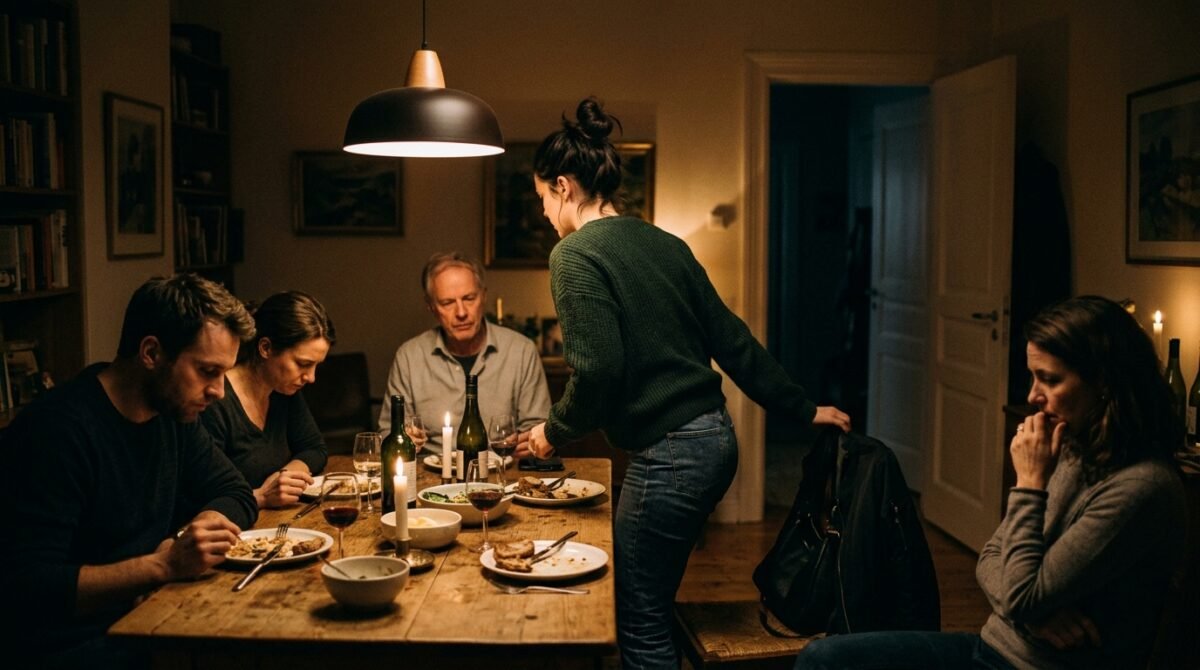
Despite everything, I had committed to a family dinner at my father’s house—a commitment made before the silver drama spiraled out of control. I almost canceled, but I decided to go. I wanted to see them in person, to look them in the eye and show them that I wasn’t intimidated. The atmosphere was palpable the moment I walked in. My father was overly jovial, acting as if nothing had happened, while Sophie wouldn’t even look at me.
The dinner was an exercise in passive-aggressive torture. Every few minutes, someone would drop a comment about ‘tradition’ or ‘generosity’ or ‘the importance of sharing.’ I ate my meal in near-total silence, refusing to take the bait. My father finally tried to force the issue, asking me in front of everyone, ‘So, have you given any more thought to the silver? Sophie’s wedding is only two months away.’
“I’ve given it plenty of thought. The answer remains no. And if anyone asks again, I will leave, and I will not be coming back to these dinners. Let’s enjoy the meal.”
— Me, speaking clearly at the dinner table
The table went silent. The clinking of silverware against porcelain sounded like a drumbeat. My father looked furious, his face reddening, while Elena started talking about the weather as if I hadn’t just shut down the entire room. It was the most awkward, satisfying moment of my life. I had reclaimed my power, and the realization that I didn’t care about their approval was liberating.
Sophie, however, wasn’t done. She let out a small, dramatic sigh and said that she ‘understood’ why I wouldn’t share, even if it was ‘sad for the family.’ I looked at her and said, ‘It’s not sad. It’s an heirloom, not a community toy.’ The silence returned, deeper than before. I finished my meal, thanked them for the food, and stood up to leave while they were still midway through their dessert.
As I walked out the door, I didn’t look back. I could hear my father calling my name, but I kept walking. I got into my car and drove away, knowing that I had effectively closed the chapter on that dynamic. I wasn’t going to be the family’s punching bag, and I certainly wasn’t going to be their supplier for wedding decor. The freedom felt like I could finally breathe for the first time in weeks.
The Legal Pivot and the Certified Letter
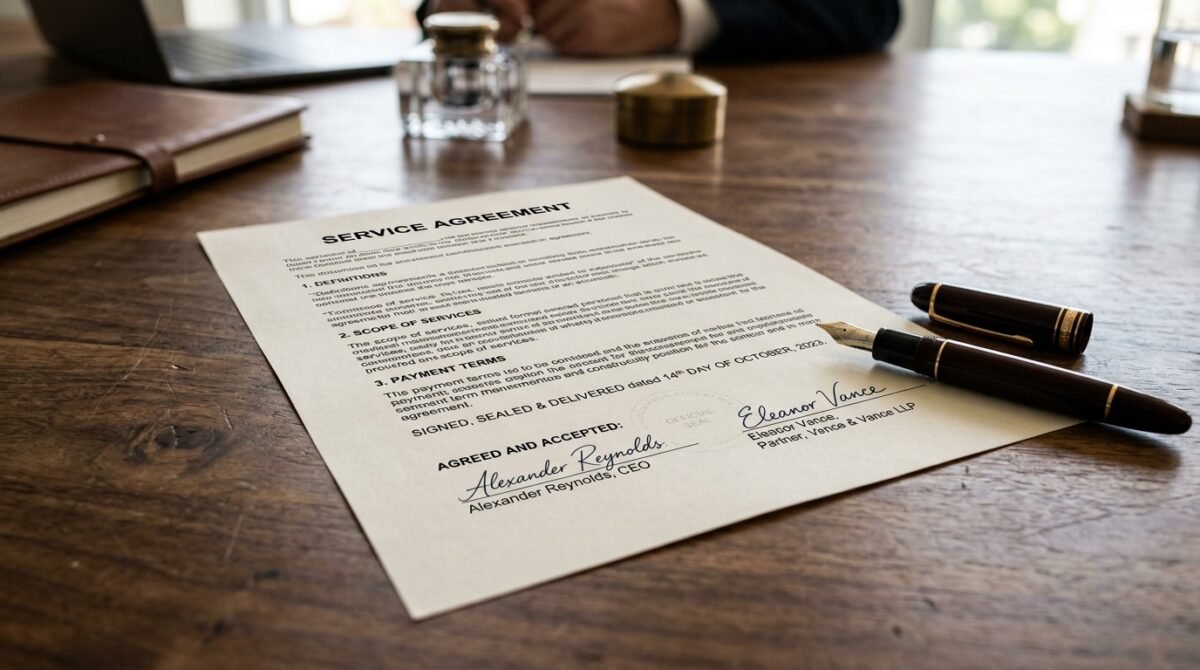
After the dinner, my father tried to contact me multiple times, but I ignored his calls. A few days later, a certified letter arrived from his lawyer. It claimed that the silver was part of the ‘family estate’ and that they were ‘requesting’ I return it to the ‘rightful family line’—implying that because I was his daughter, I had an obligation to the broader family unit. It was a bluff, and a poorly constructed one at that.
I didn’t panic. I had already spoken to an attorney, and I had the documentation from my in-laws explicitly stating the silver was gifted to me as my personal property. I sent a response through my own lawyer that was short, professional, and brutal. It stated that the silver was a private gift, that the matter was closed, and that any further harassment regarding my personal property would be met with a cease-and-desist order.
“This matter is settled. Any further attempts to claim ownership of private property or to harass my client will be dealt with through formal legal channels. Consider this the final communication on this subject.”
— My lawyer’s letter to my father
The effect was immediate. The calls stopped. The group chat, which I had already left, apparently died down, though I heard rumors through other relatives that my father was telling people I was ‘unhinged’ and ‘litigious.’ I didn’t care. Let them talk. I had spent my life trying to be the perfect daughter, the one who never caused trouble, and look where it got me. Being the ‘troublemaker’ who protected her own interests was infinitely more comfortable.
I realized that my father’s entire strategy had been based on the assumption that I would always prioritize his comfort and the family’s ‘image’ over my own peace. By forcing him to deal with lawyers and concrete boundaries, I broke the cycle of entitlement. He didn’t know how to handle someone who wouldn’t play by the rules he’d written. He was used to getting his way through manipulation, and once that was gone, he had nothing left.
I started attending therapy to help me process the grief of realizing who my father really was. It’s a strange kind of mourning—not for a death, but for the loss of a relationship you thought you had. I had to accept that he wasn’t the man I wanted him to be. And that was okay. The silver was safe, my boundaries were firm, and for the first time in a long time, I was living my life for myself.
Reddit’s Verdict: The Community Weighs In

When I finally posted my story on a popular forum, I didn’t expect the outpouring of support I received. Thousands of people commented, shared their own stories of family entitlement, and reinforced the idea that I had done the right thing. It was validation that I didn’t know I needed. The consensus was overwhelming: the silver belonged to me, and my father’s behavior was predatory.
“This isn’t about the silver. This is about a man who wants to show off his ‘generosity’ using your assets. Don’t give an inch. If you do, he’ll just come back for the next thing. You’re doing great.”
— u/StoicBoundaries (Top Comment, 32.1k upvotes)
Another user noted the danger of the ‘slippery slope’ of family demands. ‘Once you give, you’re the designated giver,’ they wrote. ‘You have to be the bad guy once, or you’ll be the victim forever.’ Reading those comments reminded me that I wasn’t alone. There were so many others who had been in the exact same position, struggling to separate their own identity from their family’s demands. It gave me the courage to stay the course.
“The fact that he tried to involve a lawyer for an heirloom that was explicitly gifted to you by someone else’s estate is insane. He’s not just entitled; he’s delusional. Keep the silver, cut the contact.”
— u/LegalEagle99 (15.4k upvotes)
There were a few dissenters, of course, who argued that ‘family is family’ and that I should have compromised for the sake of peace. But the community shut them down quickly, pointing out that peace at the expense of one’s own values isn’t peace—it’s subjugation. Seeing the debate play out reinforced my belief that I had made the right choice. I wasn’t just defending my silver; I was defending my autonomy.
The thread became a repository of wisdom, with people sharing advice on how to handle similar toxic dynamics. I felt like I was part of a community that understood the weight of the situation. It was healing to see my ‘private’ problem treated with such seriousness and to know that my decision to hold the line was supported by so many rational, independent people.
I eventually stopped reading the comments, but I kept the thread saved. Whenever I feel a flicker of guilt—which happens less and less—I look back at the support I received. It’s a reminder that my feelings were valid, my boundaries were necessary, and that I don’t have to apologize for existing as an independent person with my own life, my own property, and my own history.
The Aftermath: Life After the Storm

It’s been six months since the last major confrontation. My father and I are effectively no-contact. There was no grand explosion, no final dramatic showdown; just a gradual fading away as he realized I wasn’t going to give him what he wanted. He still tries to reach out occasionally, sending messages about ‘forgiveness’ or ‘family unity,’ but I don’t respond. I’ve found peace in the silence.
The silver is still in the storage facility. I’m thinking about bringing some pieces back home, maybe to use for a small, quiet dinner with friends who actually respect my history and my boundaries. It feels different now, looking at the silver. It’s no longer a source of conflict; it’s a symbol of my resolve. Every time I polish a piece, I’m reminded that I stood up for myself when it mattered most.
“I don’t regret the silence. I regret the years I spent trying to keep the peace at the expense of my own self-respect. Now, I have peace, and it’s real.”
— My internal reflection
Sophie got married, and I didn’t go. I heard through the grapevine that the wedding was ‘lovely,’ and I honestly hope it was. I don’t hold any ill will toward her; she was just a pawn in my father’s game, and it wasn’t her fault he chose to try and steal from me to make himself look good. My focus is entirely on my own life, my work, and the people who genuinely support me.
I’ve learned a lot about myself in this process. I’ve learned that I am capable of being the ‘bad guy’ in someone else’s story if it means being the ‘good guy’ in my own. I’ve learned that boundaries are not just suggestions; they are the foundation of healthy relationships. And I’ve learned that family is what you make of it, not just who you happen to share a bloodline with.
My father might think he lost a battle for silver, but he lost much more: he lost access to the person I had become, and he lost the opportunity to have a genuine, respectful relationship with his own child. That’s a price he paid, not me. I’m moving forward, lighter and freer than I have been in years, with my own history firmly in my own hands.
Lessons from the Heirloom Conflict

Looking back, the most striking part of this entire experience is how quickly a ‘small’ request can reveal the cracks in a family’s foundation. If my father had simply respected ‘no,’ we wouldn’t be where we are. But he couldn’t. His entitlement was so deep that any pushback was treated as a personal insult. This taught me that the moment someone refuses to accept a ‘no,’ they aren’t looking for a compromise; they are looking for control.
I also realized that we often carry the weight of other people’s expectations for far too long. I spent years trying to be the daughter he wanted, and all it took was one piece of antique silver to break that dynamic. It was painful, but it was necessary. Sometimes, you need a crisis to see who the people in your life really are. I would rather see the truth and be hurt than live a lie and feel safe.
“Never mistake silence for agreement. And never let the fear of being perceived as ‘difficult’ keep you from protecting what is yours.”
— Advice I’d give my past self
The financial aspect was only a distraction. Even if the silver were worth nothing, the conflict would have happened. My father needed to exert power, and he chose the most sentimental target he could find. Understanding this helped me detach from the ‘value’ of the silver and focus on the ‘value’ of my peace of mind. It’s a lesson I’ll carry with me in all my future relationships.
If you find yourself in a similar position, my advice is simple: trust your gut. If you feel like you’re being manipulated, you probably are. If you feel like your boundaries are being tested, they are. And if you feel like you have to sacrifice your own values to ‘keep the peace,’ you are already in a toxic environment. Don’t be afraid to take a stand.
Ultimately, I don’t miss my father. I miss the relationship I thought I had, but that relationship didn’t exist. It was a projection, a performance. Now, I’m free to build authentic connections based on mutual respect, not duty or expectation. I’m the custodian of my own life, and that includes the things I choose to keep and the people I choose to let in.
Final Reflections and Moving Forward

I often wonder what my in-laws would think of all this. Eleanor, with her sharp wit and love for tradition, would probably have been the first one to tell me to stand my ground. She knew exactly who my father was. I think they would be proud that I didn’t just ‘gift’ their legacy away to satisfy someone else’s ego. The silver is safe, and it will be passed down to someone who truly appreciates its history, not just its market value.
This journey has been a testament to the power of saying no. It’s a simple word, but it’s the most powerful tool we have. By saying no to the silver demand, I was saying yes to my own integrity. I was saying yes to the idea that I am worthy of respect, even from my own family. That realization has changed everything in my life, from how I approach my career to how I choose my friends.
“The most important inheritance we receive isn’t the silver or the property. It’s the ability to define our own worth, independent of those who would try to diminish it.”
— My final takeaway
I hope that by sharing my story, others who are dealing with similar pressures feel emboldened to set their own boundaries. It’s not easy, and it often feels like you’re losing something, but you are actually gaining so much more. You are gaining yourself back. And that is the most valuable heirloom of all.
I’m looking forward to a future where my choices are mine alone, where my boundaries are respected, and where the only things I hold onto are the things that bring me joy. The storm has passed, the air is clear, and for the first time in a long time, I am excited about what’s next.
Thank you for walking this path with me. If you’ve ever had to draw a line in the sand with family, tell me how it went. What was the moment you realized you had to change the dynamic? Share your thoughts below, because the more we talk about these ‘taboo’ family secrets, the less power they have over us.
Conclusion
The story of the silver is now effectively a closed chapter, but the lessons learned remain etched into my daily life. It is never easy to confront a parent, especially when they use your own history and sentimentality as weapons. However, the cost of compliance was far higher than the cost of conflict. I realized that my self-worth was not something I could allow others to negotiate, and that protecting my boundaries was not an act of selfishness, but an act of self-preservation.
We often fall into the trap of believing that family grievances should be swept under the rug to maintain the illusion of harmony. But true harmony is not the absence of conflict; it is the presence of respect. By walking away from a dynamic that demanded my submission, I didn’t lose family; I freed myself from a toxic cycle that would have eventually consumed my sense of self.
What about you? Have you ever had to draw a hard line with a family member who viewed your boundaries as optional? Or perhaps you’ve been in a situation where you had to choose between being the ‘perfect’ family member and being the honest one. Share your experiences in the comments below. Let’s discuss how we reclaim our agency when those closest to us seem the least interested in respecting it.
What's your verdict on this dilemma?
Vote below to contribute to the official community consensus.

Have a Dilemma Keeping You Up at Night?
Share your real-life feud, wedding chaos, or relationship crossroads anonymously with our editorial team.
What do you think ?
0 Comments🛡️ Comments are moderated to protect community integrity. Your comment will appear once approved by the editorial team.