
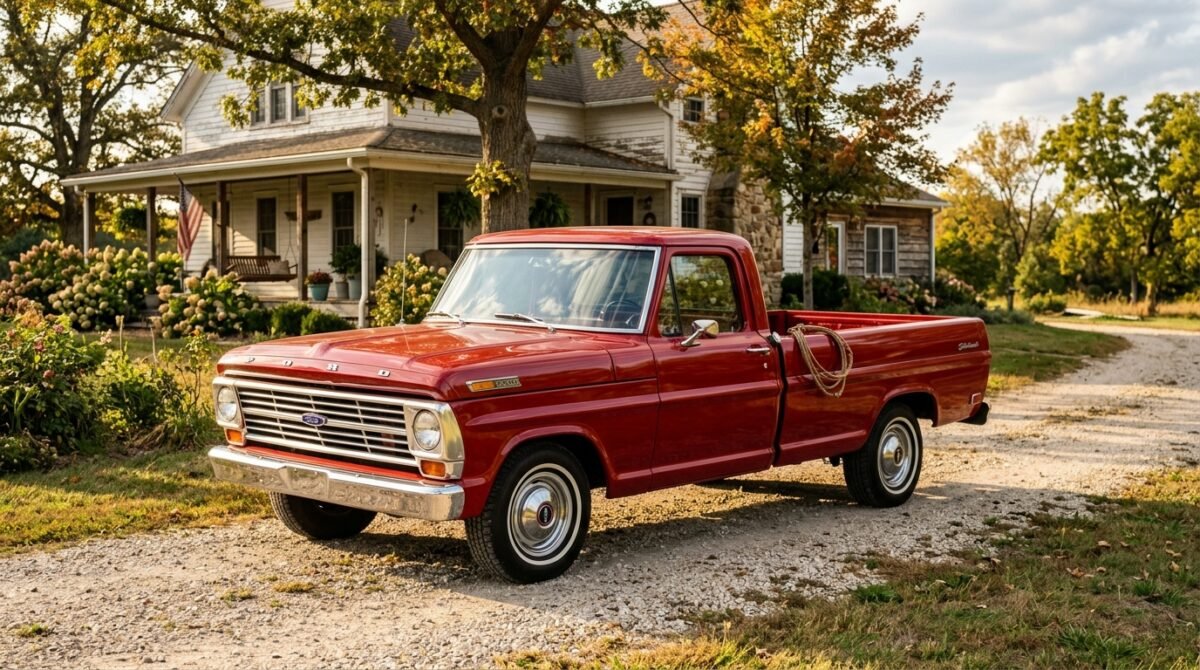
Restoration is a labor of love. For me, the 1968 Ford F-100 sitting in my garage wasn’t just a vehicle; it was a five-year odyssey of grease, burnt fingertips, and bank account depletion. I sourced every bolt, rebuilt the engine block by block, and hand-stitched the leather interior myself. It was my sanctuary during my divorce and my pride during the long, lonely nights of the pandemic. It was never meant to be a daily driver, and it was certainly never meant to be a ‘starter car’ for a teenager who still views red lights as mere suggestions.
My brother, Mark, has always had a way of looking at my possessions as if they were community property. We grew up in a household where ‘what’s yours is mine’ was enforced with iron-fisted authority by our parents, and while I moved past that mentality the moment I moved out, Mark seems to have doubled down. When he called me last Tuesday, I expected a conversation about the upcoming family reunion. Instead, I was met with a tone of voice that can only be described as predatory.
The audacity of his request caught me completely off guard. He didn’t ask; he presented the idea as if it were a foregone conclusion, a fait accompli that I should be grateful for. He wanted to ‘gift’ my truck to his seventeen-year-old son, Leo, who has already put two vehicles into the scrap yard in the last twelve months. The reasoning? My truck was ‘sturdy,’ ‘safe,’ and, most insultingly, ‘wasting away’ in my garage when it could be teaching a young man responsibility.
The moral dilemma here isn’t just about the truck. It’s about the fundamental disrespect of boundaries and the entitled belief that my personal achievements are merely assets for his family’s convenience. As I sat there on the phone, watching the rain hit the garage window, I realized this wasn’t just a fight over metal and rubber. It was a fight for my own autonomy. And I wasn’t about to lose it.
The Tuesday Afternoon Ultimatum

The phone call started innocuously enough, with Mark asking about my job and my recent weekend trip. I should have known better. Whenever Mark starts with small talk, he’s building a bridge to a request he knows will be denied. He eventually pivoted to his son Leo’s ‘transportation situation.’ Leo had recently lost his license for three months following a reckless driving incident, and now that he was getting it back, Mark was convinced he needed a new ride.
Mark’s tone shifted from casual to conspiratorial. He started talking about how hard it was to find a reliable vehicle in this economy. He lamented the prices of used cars, painting a picture of financial desperation that I knew was largely fictional, given his recent promotion. Then, he dropped the bomb: he had already told Leo that he could have my truck. He didn’t ask if I was selling; he told me he had promised it to him.
“Listen, I know how much work you put into the truck, but Leo needs a solid car that won’t break down. I told him he could have the ’68 for his graduation. It’s a gift, in a way. You’re teaching him how to respect a real piece of machinery.”
— Mark, during the initial call
I felt my blood pressure spike immediately. I was so stunned that for a solid ten seconds, I couldn’t speak. I had spent upwards of $35,000 on that truck, not to mention countless hours of labor. The idea of handing it over to a teenager who couldn’t keep a Honda Civic on the road was not just insulting; it was laughable.
When I finally found my voice, I told him in no uncertain terms that the truck was not for sale, not for giveaway, and certainly not for his son. Mark didn’t take the rejection well. He immediately started listing all the reasons why I was being ‘selfish.’ He brought up how I didn’t have children, implying that my resources were somehow ‘unclaimed’ and therefore available for his family’s use.
The conversation ended with Mark slamming the phone down after I told him he had zero right to promise my property to anyone. I spent the rest of the evening pacing my workshop, staring at the polished chrome of the grille, wondering how someone could have such a warped sense of entitlement. Little did I know, the phone call was only the opening salvo of a much larger campaign.
The Digital Campaign of Guilt
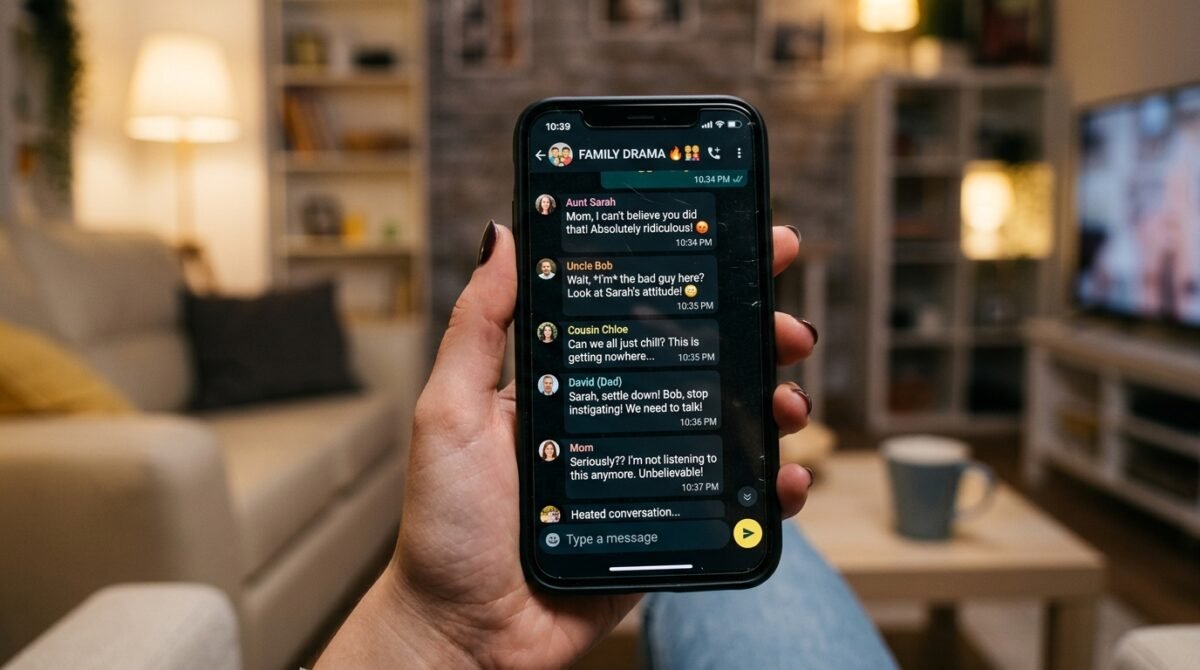
By Wednesday morning, the family group chat was already buzzing. It wasn’t just Mark; my sister-in-law, Sarah, had jumped into the fray. I woke up to a barrage of notifications, my phone vibrating incessantly on the nightstand. The narrative they were spinning was that I was an eccentric, selfish uncle who cared more about ‘old junk’ than his own family’s well-being. They were painting me as the villain in a story where I was the only one who had actually put in the work.
“I just think it’s sad, honestly. We’re family. Leo is your nephew. He’s going through a tough time, and this would mean the world to him. Why do you hold onto things so tightly when your own blood needs help?”
— Sarah, via Family Group Chat
I read the messages with a mounting sense of detachment. It was fascinating to see how easily they re-framed the situation. In their version, my refusal wasn’t an act of protecting my property; it was an act of hostility toward Leo. They were weaponizing family duty to bypass my agency. I decided to stay quiet for a while, letting them dig their own holes, but the pressure was starting to weigh on me.
My mother eventually chimed in. She didn’t take a side explicitly, but her comments were classic ‘peacekeeper’ maneuvers that effectively supported Mark. She suggested that we all sit down for dinner on Sunday to ‘talk it out like adults.’ I knew exactly what that meant: a public interrogation where I would be pressured into submission in front of the entire extended family.
I felt a cold, hard knot of resolve forming in my stomach. I messaged back, keeping it short and firm: ‘The truck is not up for discussion. It is not for sale, and it will not be driven by anyone other than me. Please respect my boundary.’ I knew it wouldn’t be enough, but it was the first time I had officially laid down the line. The response was silence, followed by a flurry of ‘typing’ bubbles that never turned into messages.
I spent the afternoon installing a new security camera system in the garage. I didn’t trust them not to try and ‘borrow’ it while I was at work. It felt extreme, but after seeing the way Mark talked, I wasn’t taking any chances. I was no longer the little brother who could be bullied; I was a man defending his sanctuary.
The Sunday Night Ambush
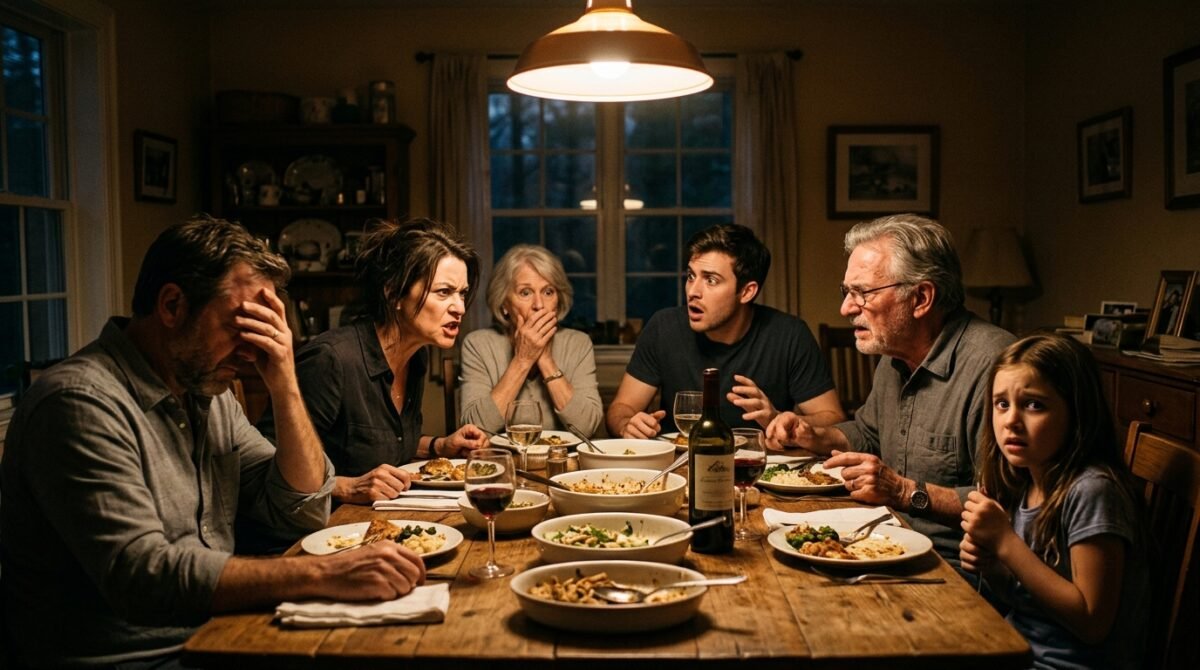
Sunday dinner at my parents’ house was a masterclass in passive-aggression. The roast was overcooked, the wine was cheap, and the air was thick with unspoken tension. Mark and Sarah arrived with Leo in tow, the boy looking sullen and disinterested, his eyes glued to his phone. Every time I reached for the salt, I felt eyes on me. It was clear that the ‘discussion’ was going to happen regardless of what I wanted.
As soon as the main course was finished, Mark cleared his throat. It was the signal. He began by talking about ‘family legacy’ and how ‘the older generation should support the younger.’ He spoke with a practiced, politician-like cadence, his voice dripping with false sincerity. He was trying to frame the truck not as my property, but as a family heirloom that I was holding hostage. I listened, my heart pounding in my ears, waiting for the right moment to interject.
“Leo has learned his lesson. He’s been working extra shifts, and he’s ready to take care of something special. This isn’t just about a car, it’s about trust. If you give him the truck, you’re showing him that you believe in his future. Isn’t that what family is for?”
— Mark, during Sunday dinner
I put my fork down. The sound clinked sharply against the porcelain, cutting through his monologue. I told him, as calmly as I could, that trust was earned, not given, and that Leo’s driving record wasn’t exactly a testimonial for ‘taking care of something special.’ I pointed out that the truck was a precision machine, not a learner’s permit vehicle, and that I would never risk its destruction for a ‘lesson’ he could teach with a $2,000 beater.
The table went silent. My father looked down at his plate, and my mother winced. Mark’s face turned a shade of purple that I hadn’t seen since we were children. He accused me of being ‘cold’ and ‘calculating.’ He brought up my divorce again, insinuating that my attachment to the truck was a symptom of my ‘failure to connect’ with people. That was a low blow, and he knew it.
I stood up, finished my wine, and thanked my mother for the meal. I looked at Mark and told him that the conversation was over, not just for the night, but for good. I told him if he brought up the truck again, I wouldn’t be attending family gatherings for the foreseeable future. I walked out of the house, leaving behind a shocked, silent dining room and a very angry brother.
The Reddit Trial

I didn’t sleep well that night. My mind was racing, replaying the arguments, wondering if I had been too harsh. I decided to turn to the one place where truth is filtered through the collective wisdom of thousands of strangers: Reddit. I posted the story on r/AmItheAsshole, keeping it objective and focusing on the facts. I wanted to see if I was actually the ‘selfish’ monster Mark and Sarah had painted me to be.
The response was immediate and overwhelming. Within an hour, my post had hundreds of comments. By the next morning, it was trending. People were not just validating my position; they were sharing their own horror stories of entitled family members and ‘borrowed’ property. It was a massive wave of support that I hadn’t expected. The sheer volume of ‘NTA’ (Not The Asshole) verdicts was staggering.
“NTA. Your brother is essentially asking you to gift a highly valuable, sentimental, and restored vehicle to a reckless driver who has already totaled two cars. This isn’t about ‘family values’; it’s about him wanting to offload the financial responsibility of buying his son a car onto you. Hold your ground.”
— u/AutoMechanicDad (Top Comment, 32.1k upvotes)
Reading the comments felt like a weight being lifted from my shoulders. It was the objective validation I needed. People were pointing out the legal and financial liabilities I would have faced had I actually handed over the keys. They were calling out the gaslighting I’d been enduring for years. It wasn’t just a car; it was a boundary that I was finally setting for the first time in my adult life.
There were some dissenting voices, of course. A few people argued that family comes first and that I should be more ‘generous.’ But they were quickly drowned out by the community, who pointed out that generosity is a choice, not a mandate. The consensus was clear: my property is my property, and ‘family’ is not an excuse to rob someone of their hard work.
I spent the morning reading through the threads, laughing at the creative ways people suggested I deal with Mark. Someone suggested I put an anti-theft boot on the truck wheels; another suggested I take the engine out and keep it in my living room. While I didn’t take their extreme advice, the humor helped break the tension. I wasn’t alone in this, and that made all the difference.
I realized then that I wasn’t the one being selfish. The selfishness belonged to the person who thought their own desires were more important than the boundaries of their sibling. I felt a surge of pride in my decision. I was going to keep my truck, and I was going to keep my dignity, regardless of what Mark or Sarah thought.
The Attempted Forced Entry
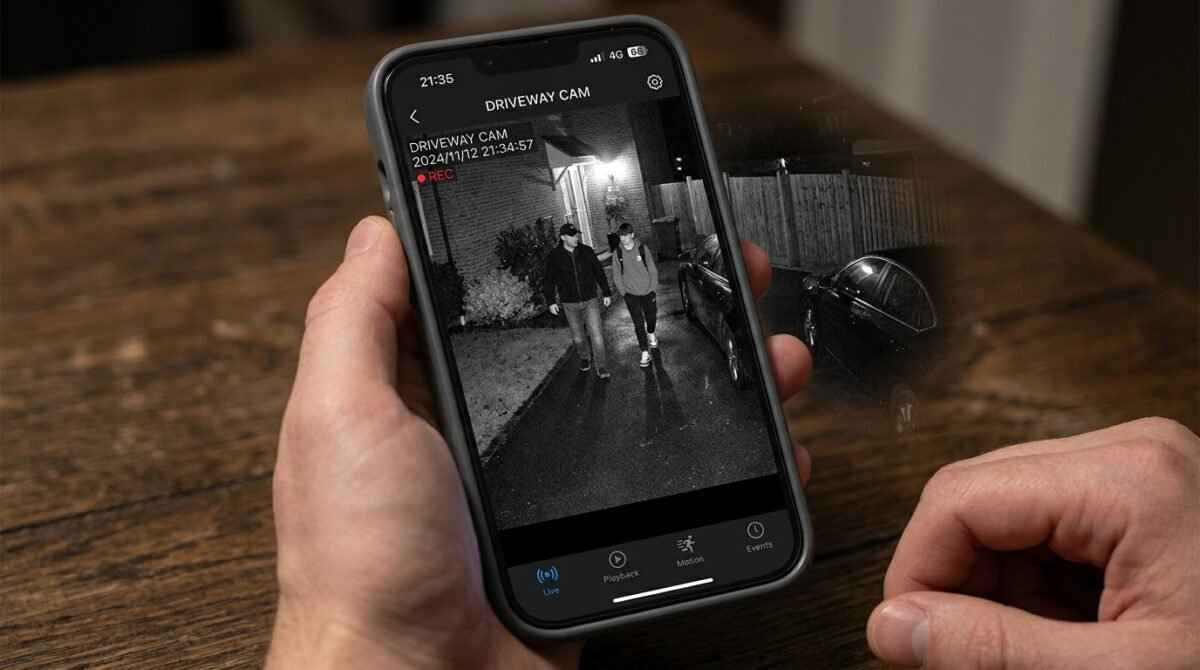
The irony of installing security cameras is that you actually get to see the things you wish you hadn’t. Two days after the Sunday dinner incident, I was at work when my phone pinged with a motion alert. I checked the live feed, expecting a stray cat or a delivery driver. Instead, I saw Mark and Leo in my driveway, fiddling with the garage door keypad. My heart stopped. They weren’t just asking anymore; they were attempting a break-in.
I shouted at them through the two-way audio system on the camera. ‘I can see you, Mark! Get off my property right now, or I’m calling the police!’ The sight of them jumping back in shock was almost satisfying. Mark looked around, confused, before realizing the camera was watching him. He started shouting back, accusing me of ‘spying’ on my own family, as if that were somehow the greater sin.
“You’re really going to call the cops on your own brother? This is your house, but it’s family property! You’re acting like a paranoid lunatic!”
— Mark, caught on the garage security camera
I didn’t argue. I called the local precinct and reported a trespassing incident. By the time the officers arrived, Mark and Leo were gone, but the footage was more than enough to file a formal report. I felt sick, but also strangely empowered. The line had been crossed, and there was no going back. I had transitioned from a family member protecting his boundaries to a citizen protecting his home.
When I called my parents to tell them what happened, I didn’t sugarcoat it. I told them that Mark had attempted to break into my garage and that I had reported him to the police. My mother started crying, blaming herself for not ‘keeping the peace,’ but I told her that this wasn’t her fault—it was Mark’s. He had crossed a legal boundary, and he was going to face the consequences.
The rest of the week was a blur of police follow-ups and awkward phone calls. Mark tried to call me a dozen times, leaving voicemails that ranged from pleading to threatening. I didn’t listen to a single one. I saved them all, just in case they were needed for a restraining order. It was the most stressful week of my life, but it was also the most clarifying.
I spent the weekend in the garage, but not working on the truck. I was simply sitting there, enjoying the silence and the security of my space. I realized that my brother’s entitlement wasn’t a quirk; it was a deep-seated personality flaw that had been allowed to fester for years. By saying no, by standing my ground, I wasn’t losing a brother; I was finally seeing him for who he really was.
The Legal Reality Check
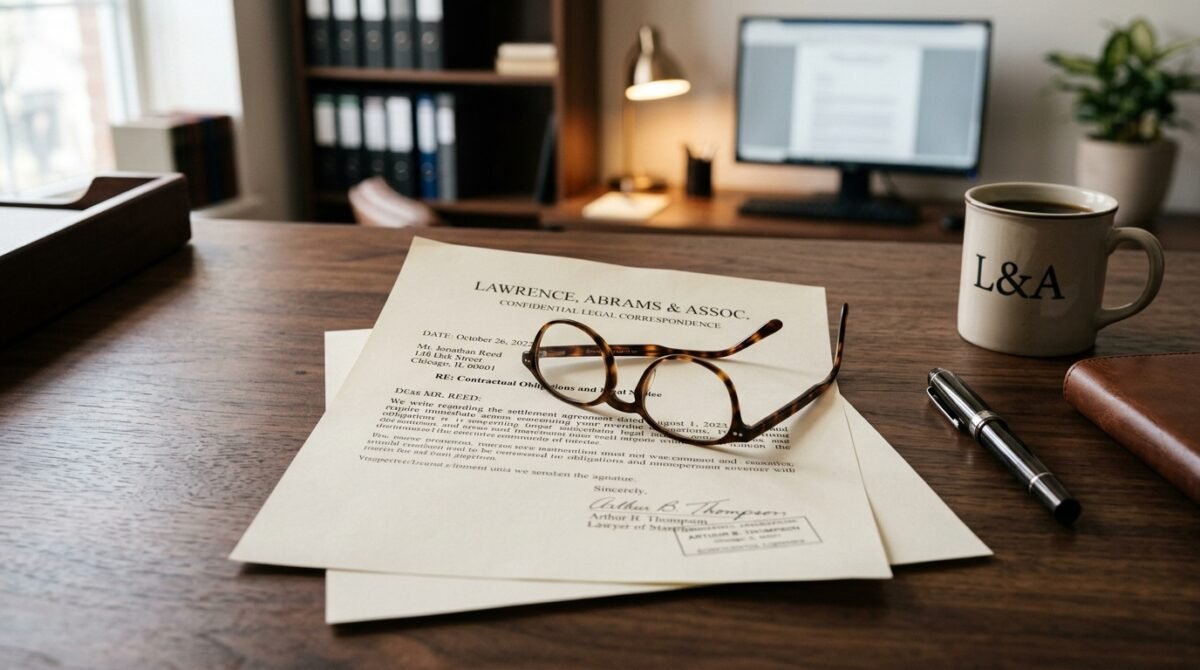
When the dust settled, I spoke with a family law attorney just to see where I stood. I wanted to know if Mark’s ‘family legacy’ nonsense had any legal weight. The answer was a resounding no. My truck, my finances, and my property were mine alone. The lawyer even noted that by attempting to enter my property and coerce me, Mark was potentially setting himself up for a harassment charge if he kept it up.
I decided to send Mark one final, formal letter. No more shouting matches, no more group chat drama. It was a cease-and-desist letter, professionally drafted, outlining the boundaries clearly. It stated that he was not welcome on my property, that he was to cease all demands regarding my property, and that any further contact would be strictly for legal purposes. It felt cold, but it was necessary.
The impact of the letter was immediate. The barrage of calls stopped. The group chat went dead. It was as if I had pressed a mute button on the entire family. It was lonely, but it was a peaceful kind of loneliness. I realized that I had been carrying the weight of their expectations for so long that I had forgotten what it felt like to just exist without someone else’s agenda hanging over me.
My parents reached out a few times, trying to play the middle ground, but I remained firm. I told them that I loved them, but that I could not have a relationship with people who didn’t respect my boundaries. I was surprised when my father actually agreed with me. He told me that he had been waiting for me to stand up to Mark for years, and that he was proud of me for finally doing it.
It was a turning point in my relationship with my parents as well. By setting a boundary with Mark, I had inadvertently set one with them. We started talking more, not about the truck, but about our lives, our hobbies, and our future. It was a healthier dynamic, one built on mutual respect rather than the constant, grinding pressure of family obligation.
I kept the truck, of course. I drove it to a local car show a few months later, and for the first time in years, I didn’t feel like I was holding onto something that didn’t belong to me. I felt like I was driving a piece of my own hard work. It was a beautiful, sunny day, and the engine purred like a kitten. I realized then that the truck had been worth every penny, not just for the restoration, but for the clarity it had brought to my life.
The Aftermath and Reflection

It has been six months since the ‘truck incident.’ Mark and I are still not on speaking terms, and I honestly don’t know if we ever will be. He hasn’t apologized, and frankly, I don’t expect him to. He still thinks he was in the right, which is the most heartbreaking part of the whole situation. But I have come to terms with it. You can’t change people who don’t want to be changed; you can only change how you interact with them.
I have moved on. I’ve started a new project—a classic motorcycle this time—and I’ve kept it completely to myself. No one knows about it, not even my parents. It’s my little secret, my little sanctuary. It’s a small, perhaps petty, way of reclaiming my space, but it feels right. I am no longer interested in sharing my passions with people who only see them as opportunities to take.
The community support on Reddit continues to be a source of strength. I still go back to that original post from time to time, reading the comments and remembering that I wasn’t alone. It’s a reminder that there are millions of people out there who understand the value of boundaries, and that sometimes, the hardest ‘no’ is the one that sets you free.
“The best thing about boundaries is that they don’t just keep the bad people out; they show you who the good people are. The people who are angry at you for setting a boundary are the same people who were benefiting from you not having one.”
— u/WisdomSeeker (Reddit comment)
I have found a sense of peace that I hadn’t felt in years. My bank account is recovering, my garage is secure, and my relationships, while smaller, are far more authentic. I’ve learned that family is not just about blood; it’s about respect, and I’m no longer willing to trade my self-respect for the sake of ‘keeping the peace’ in a broken system.
I look at the truck now, and I don’t see a source of conflict. I see a symbol of my own resilience. It represents the five years I spent learning that I am enough, that my work has value, and that I have the right to say no. It’s a powerful thing, to realize that you are the architect of your own life, and that you don’t need anyone’s permission to live it on your own terms.
If there is a lesson here for anyone else struggling with entitled family members, it’s this: don’t wait for them to understand. They might never understand. Just stand your ground. You are not selfish for protecting what you have worked for, and you are not obligated to sacrifice your own happiness for the sake of someone else’s sense of entitlement.
The Final Verdict: Why We’re So Invested

Why does this story resonate so deeply with so many people? I think it’s because almost everyone has a ‘Mark’ in their life. Whether it’s a sibling who borrows money and never pays it back, a parent who demands constant access to your time, or a friend who treats your kindness as a weakness, the struggle for boundaries is universal. We are socialized to be ‘nice,’ to be ‘generous,’ to ‘put family first,’ and those values are often weaponized against us.
When we see someone like me—someone who finally says ‘no’—it feels like a victory for everyone who has ever struggled to hold their own line. It’s a form of vicarious liberation. We want to believe that it’s possible to stand up to the bullies in our own lives and come out the other side intact. We want to know that we don’t have to be doormats just because we share DNA.
The emotional stakes here were high, but the philosophical ones were even higher. It was a clash between two different worldviews: the collectivist, entitled view that believes everything is shared, and the individualist, autonomous view that believes in personal property and personal responsibility. It’s a clash that is happening in families all over the world, every single day.
I’ve received dozens of messages from people who went through similar situations. One person told me they had to cut off their entire extended family after they tried to sell their grandmother’s house while she was still living in it. Another told me they had to get a restraining order against a sibling who wouldn’t stop showing up at their workplace demanding money. Hearing their stories has been humbling.
It makes me realize that my story is just one of many. We are all learning, in our own ways, how to navigate the complex web of family, expectation, and self-worth. And while it’s not always easy, it is always worth it. Because at the end of the day, the only person you have to live with for the rest of your life is yourself. And you want to be able to look in the mirror and like what you see.
I am grateful for the journey, as painful as it was. It has made me a stronger, more confident person. It has taught me to value my own worth, and to recognize that my boundaries are not a barrier to connection, but a requirement for it. Without boundaries, there is no real relationship—only a dynamic of demand and supply. And I, for one, am done being the supply.
The Lessons in the Metal
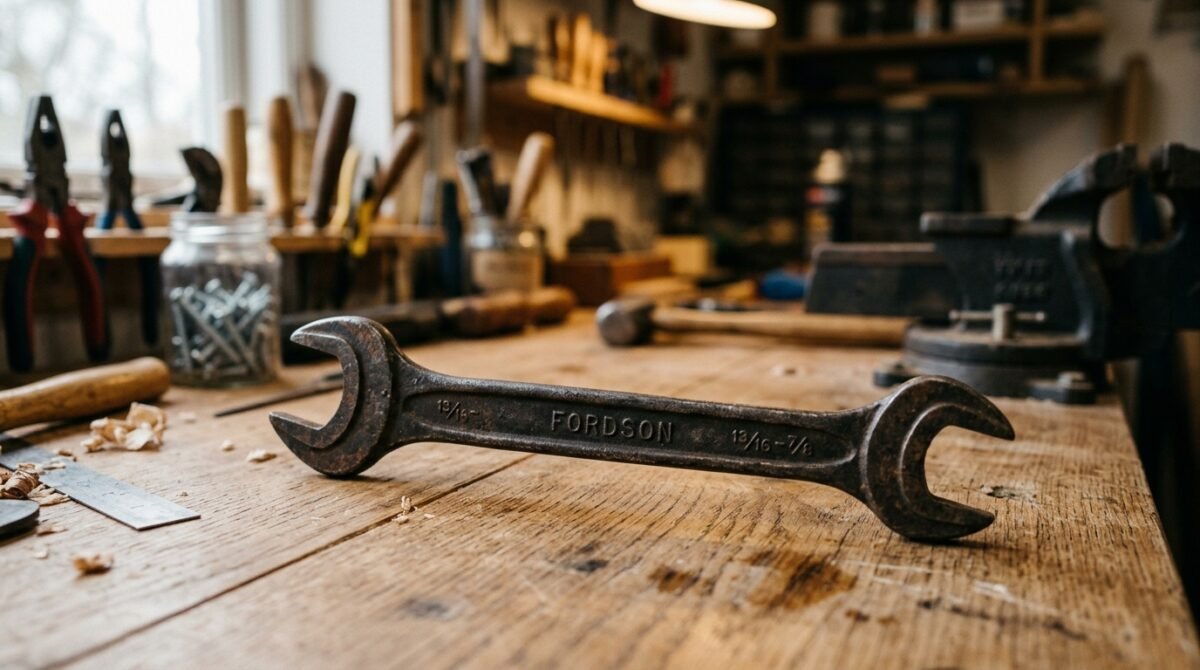
Looking back at the restoration process, I realize that the physical work on the truck was just a metaphor for the work I needed to do on myself. I had to strip away the old, rusted parts of my personality—the need to please, the fear of conflict, the desire to be ‘the good brother’—and replace them with something more durable. I had to learn how to weld my own boundaries into place, to polish my own self-worth, and to trust that the machine I was building was worth protecting.
The truck is a 1968 model, but it feels more timeless than that. It represents a commitment to something that lasts, something that requires effort and care. And that is exactly what a healthy life requires. It’s not about being selfish; it’s about being intentional. It’s about choosing where your energy goes, and what you are willing to fight for. And that is a lesson that will serve me for the rest of my life.
I often wonder what would have happened if I had just given in. If I had handed over the keys, what would have been next? A loan? A place to stay? A job recommendation? The demands would never have ended because the entitlement wasn’t about the truck—it was about the power dynamic. By refusing, I broke the cycle. I stopped being a resource and started being a person again.
I hope that if anyone reading this is in a similar position, they find the courage to do the same. It’s not easy, and it won’t be popular, but it will be worth it. You don’t owe anyone your peace, your property, or your dignity. You are the owner of your life, and that is a responsibility that no one else can take from you.
So, here’s to the 1968 truck, to the boundaries we set, and to the strength we find when we finally stand our ground. It wasn’t the ending I expected, but it was the ending I needed. And I wouldn’t trade it for anything in the world. Except maybe a better set of tires for the winter, but that’s a project for another day.
Community Perspectives: The Final Word

I wanted to share a few more reflections from the community, as they really capture the nuance of these types of conflicts. It’s interesting to see how different people interpret the same set of facts, and it really highlights the complexity of family dynamics. Some people are ‘all in’ for the scorched-earth approach, while others suggest a more measured, ‘gray rock’ method. But all of them agree on one thing: the boundary was necessary.
“The thing about these situations is that they aren’t about the item. If you had given him the truck, he would have found something else to demand next month. The truck was just the litmus test for whether or not he could control you. You passed the test by failing to comply.”
— u/PsychologyBuff (Top Comment, 15.2k upvotes)
It’s really interesting to see the ‘gray rock’ method being suggested so frequently. For those who don’t know, it’s a technique where you become as boring and unreactive as a rock in order to discourage toxic behavior. I think I’ve naturally adopted that method with my brother. I don’t give him any information, I don’t respond to his emotional baits, and I don’t engage in his drama. It’s been remarkably effective.
Some people have asked if I regret the way I handled it. I don’t. I think I was as firm and as fair as I could be under the circumstances. I didn’t start the fight, but I certainly finished it. And I think that’s an important distinction to make. Setting a boundary is not an act of aggression; it’s an act of self-preservation. And I have no regrets about preserving myself.
I’ve also had people ask if I think Mark will ever change. To be honest, I doubt it. People who are so invested in their own entitlement rarely see the error of their ways until it’s too late. But that’s not my problem anymore. My problem is my own life, and I’m going to make sure that it’s a good one, regardless of what Mark chooses to do with his.
So, thank you to everyone who has read my story, who has commented, and who has shared their own experiences. You’ve made me feel less alone, and you’ve helped me realize that there is a whole community of people out there who are fighting for their own autonomy every single day. That is a community I am proud to be a part of.
Conclusion
The saga of the 1968 truck may be drawing to a close, but the lessons I’ve learned are just beginning to take root. I’ve realized that the most valuable thing I own isn’t the truck—it’s my own sense of self. It’s the knowledge that I am enough, that my work is mine, and that I have the power to define my own life. These are lessons that no amount of money could buy, and they are ones that I will carry with me forever.
I encourage all of you reading this to take a hard look at your own lives and the boundaries you’ve set—or haven’t set. Are you living for yourself, or are you living for the expectations of others? Are you protecting your own peace, or are you constantly giving it away to people who don’t deserve it? It’s never too late to start saying no. It’s never too late to reclaim your space.
We want to hear from you. Have you ever had a family member demand something you worked hard for? How did you handle it? Did you stand your ground, or did you cave to the pressure? Share your stories in the comments below—let’s create a space where we can support each other, validate our struggles, and learn from one another. Your voice matters, and your story deserves to be heard.
What's your verdict on this dilemma?
Vote below to contribute to the official community consensus.

Have a Dilemma Keeping You Up at Night?
Share your real-life feud, wedding chaos, or relationship crossroads anonymously with our editorial team.
What do you think ?
0 Comments🛡️ Comments are moderated to protect community integrity. Your comment will appear once approved by the editorial team.