

It started as a simple request: ‘Come meet my parents for Thanksgiving.’ What ended up happening was a masterclass in emotional manipulation and financial exploitation that left me standing on a suburban curb in the middle of the night. My boyfriend, Mark, had always been a bit meticulous with his finances, but I had interpreted that as ‘responsible.’ I was wrong.
We had been dating for eight months. It was meant to be a weekend of family bonding and holiday cheer. Instead, it became the crucible where our incompatible values on generosity, partnership, and basic human decency finally collided. The drive itself was a six-hour slog through heavy traffic, which I handled entirely on my own while Mark complained about his data plan and the state of his professional network.
By the time we pulled into his parents’ driveway, the tension was palpable, but nothing could have prepared me for the notification that popped up on my phone as I carried my suitcase to the guest room. A Venmo request. Not for dinner, not for a shared souvenir, but for the literal cost of the gas and tolls we had just navigated together to reach his family’s home.
This story isn’t just about $180. It’s about the realization that when someone shows you who they are through the lens of a transaction, you have to believe them. I didn’t stay for the turkey. I didn’t stay for the apologies. I stayed long enough to see the true price of the relationship, and then I left.
The Six-Hour Gauntlet of Resentment
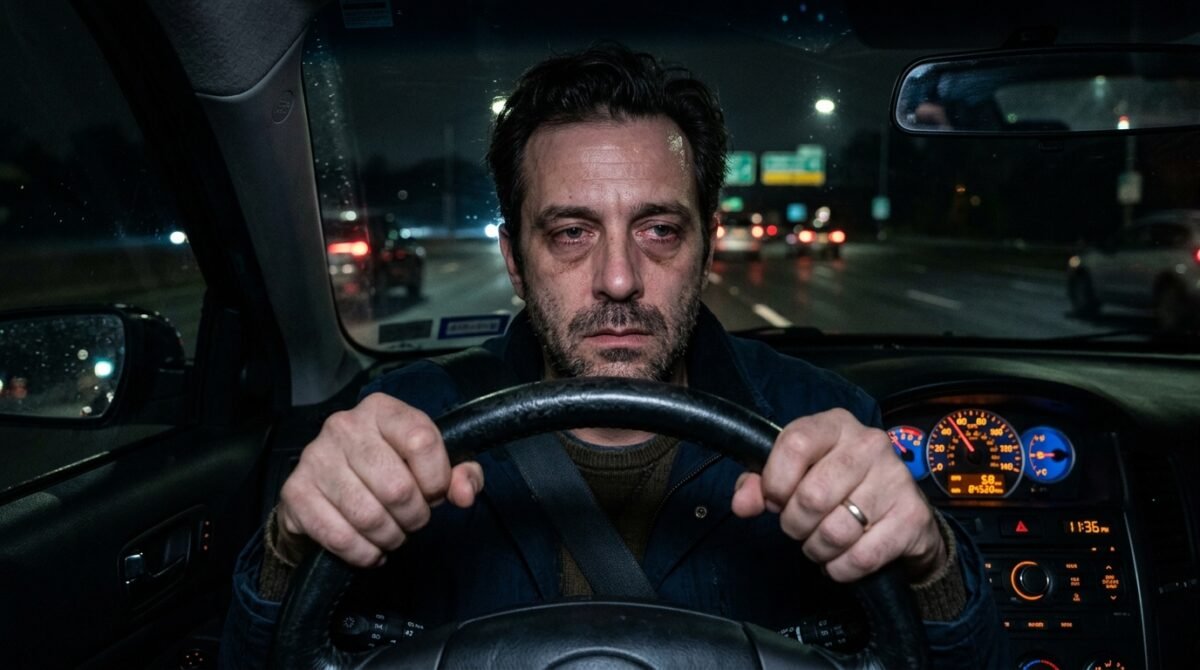
The drive began at 6:00 AM. Mark had insisted on taking his car because it was ‘better on gas,’ despite the fact that his transmission had been whining for weeks. I didn’t mind—I actually liked driving. It gave me a chance to listen to my podcasts and clear my head before the chaos of meeting his parents. What I didn’t anticipate was that Mark would spend the entire six hours treating the passenger seat like a high-stakes trading floor.
He spent the journey complaining about his job, his rent, and the rising cost of living, while I navigated through construction zones and heavy holiday traffic. At one point, I asked him to help navigate, but he waved me off, distracted by his laptop. When we finally arrived, I was exhausted. I expected a ‘thank you for driving’ or perhaps a ‘let’s go grab a drink,’ but the atmosphere was sterile.
“You know, your driving style is really hard on the suspension. We really need to calculate the wear and tear if you’re going to be behind the wheel for the whole return trip too.”
— Mark, during the final hour of the drive
I laughed it off at the time, thinking it was just his quirky way of dealing with anxiety. Looking back, the cracks were already there. He wasn’t joking. He was building a case. He saw the entire trip not as a shared experience, but as a series of depreciating assets that he felt entitled to recoup from me.
The arrival at his parents’ house was equally jarring. His mother didn’t even look up from her crossword puzzle when we walked in. Mark immediately went into ‘son mode,’ complaining about the travel time as if I hadn’t been the one physically operating the vehicle. I felt like an accessory to his life, not a partner.
I retreated to the guest room to freshen up, hoping that the holiday spirit would kick in. I wanted this to work. I had brought gifts, I had dressed appropriately, and I had endured the silence of the car ride. I was prepared to be the perfect guest, unaware that the real test of the trip hadn’t even begun yet.
The Notification That Ended Everything
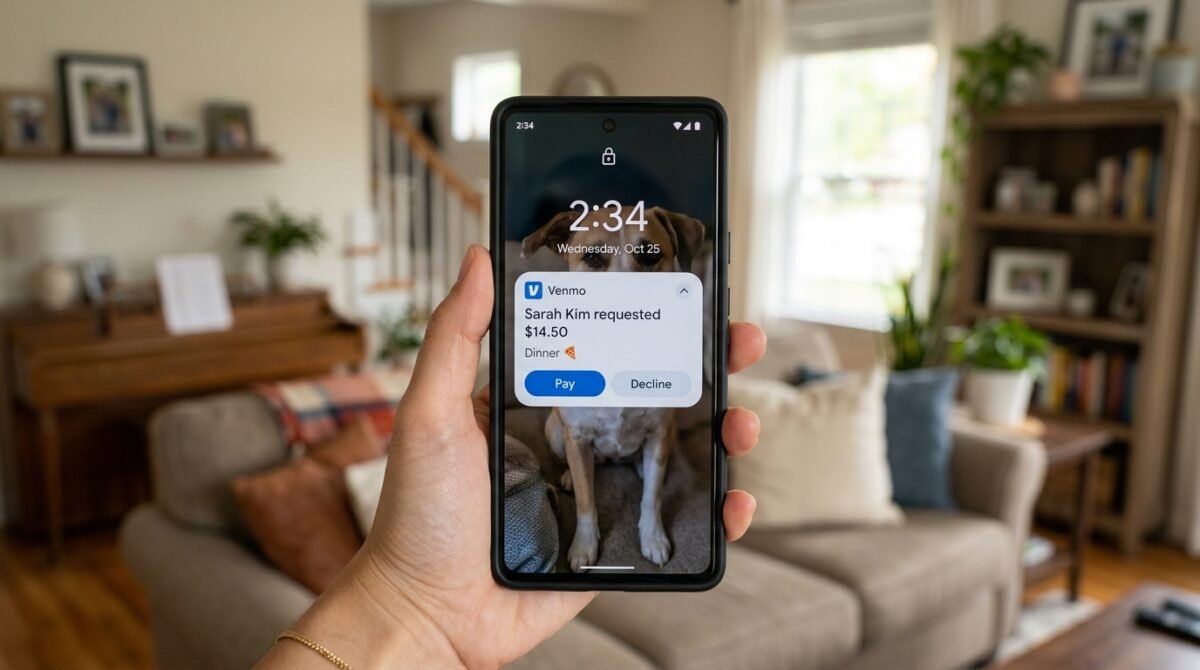
My phone pinged while I was unpacking my toiletries. I expected it to be a text from a friend or an update on the turkey situation. Instead, I saw a notification from Venmo. I frowned, thinking it was a mistake. I opened the app and felt my heart sink into my stomach as the screen loaded. It was a request for $180 from Mark.
The description was sickeningly specific: ‘Gas, Tolls, and Depreciation for Thanksgiving Transit.’ My first thought was that it was a prank. We were in a relationship; we shared meals, we bought groceries, and we were currently planning a future together. But the amount wasn’t a joke, and the tone of the request was cold, clinical, and entirely transactional.
I walked out of the room, phone in hand, finding Mark in the kitchen drinking a glass of water. He didn’t look at me. He was still staring at his phone, likely checking his bank balance. I stood there for a moment, waiting for him to notice me, but he was completely absorbed in his own world.
“Mark, did you just send me a Venmo request for $180? Please tell me this is a glitch or some kind of weird sense of humor.”
— OP, confronting Mark in the kitchen
He finally looked up, his expression completely blank. He didn’t even register my shock. He simply adjusted his posture as if he were explaining a business expense to a client. The disconnect between my reality—that we were partners—and his reality—that I was a client—was absolute.
He went on to detail how he had calculated the fuel efficiency, the exact tolls we paid, and even added a ‘convenience fee’ for the use of his car. The logic was sound on paper, but it was morally bankrupt. He didn’t see me as a person; he saw me as a line item on his budget sheet.
The Kitchen Confrontation
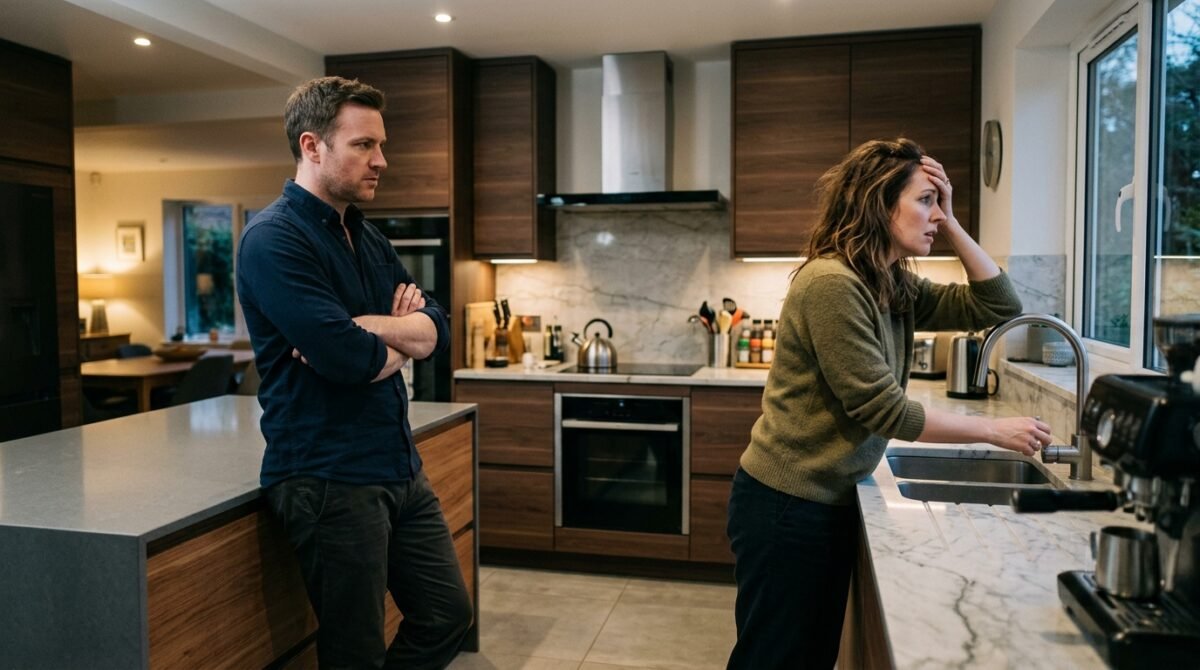
I stared at him, unable to fathom how he could possibly justify this. I had driven the entire way. I had filled up the tank twice because he claimed he had ‘forgotten his wallet’ at home in the rush. And now, he wanted me to pay for the privilege of driving his car to his parents’ house? The audacity was staggering.
He leaned against the counter, crossing his arms. ‘It’s only fair,’ he said. ‘I’m trying to save up for a house, and these trips are expensive. You used the car, you should pay your share.’ His voice was flat, devoid of any warmth or affection. It was as if we were roommates splitting a utility bill, except he was the landlord and I was the tenant.
“I drove for six hours, Mark. I bought the gas. And now you’re asking me to pay you $180 on top of that? Are you hearing how insane this sounds?”
— OP
He didn’t back down. He actually pulled out his phone to show me the spreadsheet he had created for our relationship finances. It was terrifying. He had tracked every dinner, every movie ticket, and even the cost of the coffee I’d bought him three weeks ago. Everything was accounted for, categorized, and tallied up.
I felt a cold shiver run down my spine. This wasn’t a partnership. It was a hostage situation. He had been monitoring our interactions like a high-frequency trading algorithm. I realized then that every ‘generous’ act he’d ever done was just a deposit into an account he expected me to pay back with interest.
The silence in the kitchen became unbearable. His mother walked in, oblivious to the tension, asking if we wanted appetizers. I couldn’t look at her. I couldn’t look at him. I turned around and walked back to the guest room, my hands shaking so hard I could barely grip the door handle. I needed a way out.
The Escape Plan

I didn’t have much. I had my suitcase, my phone, and a burning desire to be anywhere else. I opened the Uber app, my fingers moving frantically. The price was astronomical—it was a holiday, and the surge pricing was in full effect—but I didn’t care. I would have paid ten times the amount just to leave that house.
I started packing my things, stuffing clothes back into my bag without folding them. The reality of the situation hit me: I was leaving a relationship that I had thought was heading toward marriage. I was abandoning my plans for the weekend, but I knew that staying would be a form of self-betrayal. I couldn’t sit at that dinner table and pretend to be part of his life.
“You’re really going to make a scene? Over $180? You’re acting like a child. This is about being an adult and taking responsibility for your expenses.”
— Mark, standing at the guest room door
He had followed me. He was standing in the doorway, looking annoyed rather than concerned. He wasn’t worried that I was leaving; he was worried that his ‘payment’ wasn’t coming through. That was the final nail in the coffin. He didn’t care about my presence, my feelings, or our future. He cared about the money.
I didn’t argue back. There was no point in arguing with someone who lived in a world where human connections were valued in dollars and cents. I just zipped up my suitcase and walked past him, heading toward the front door.
The house was quiet, save for the muffled sound of the television in the living room. I stepped out into the crisp autumn air, the cool night breeze hitting my face like a relief. I waited in the driveway, the Uber tracking map showing the car getting closer. It was the most liberating feeling of my life.
The Silent Departure

When the Uber arrived, the driver looked at me with a mix of curiosity and concern. I climbed into the backseat, feeling a strange sense of weightlessness. As we pulled away, I watched the house disappear into the darkness. I saw Mark standing in the front doorway, his phone still in his hand, looking confused.
He probably expected me to come back inside, to apologize, to pay the $180, and to resume the charade of a happy couple. He had no idea that for me, the relationship had ended the moment I realized he was running a business rather than a life. The ride back to the city was long, but I didn’t mind. I spent the time blocking his number and reflecting on the last eight months.
“Are you okay, miss? You’re not crying, you’re just… smiling?”
— The Uber driver
I laughed. I was actually smiling. The sheer absurdity of the situation had finally clicked. I had been dating a man who treated love like an investment portfolio, and I had somehow managed to get out before the market crashed. I felt lighter than I had in months, freed from the constant, invisible pressure of his accounting.
I didn’t look at my phone for the first hour. When I finally did, I saw a string of messages. They weren’t apologies. They were demands. He wanted to know where I was, how I was getting home, and—of course—he reiterated that I still owed him for the gas.
I didn’t respond. I didn’t owe him anything anymore. I wasn’t just leaving his parents’ house; I was leaving the entire paradigm of our relationship. I was reclaiming my autonomy, one mile at a time. The road ahead looked clear, and for the first time in a long time, it was entirely mine.
The Digital Aftermath
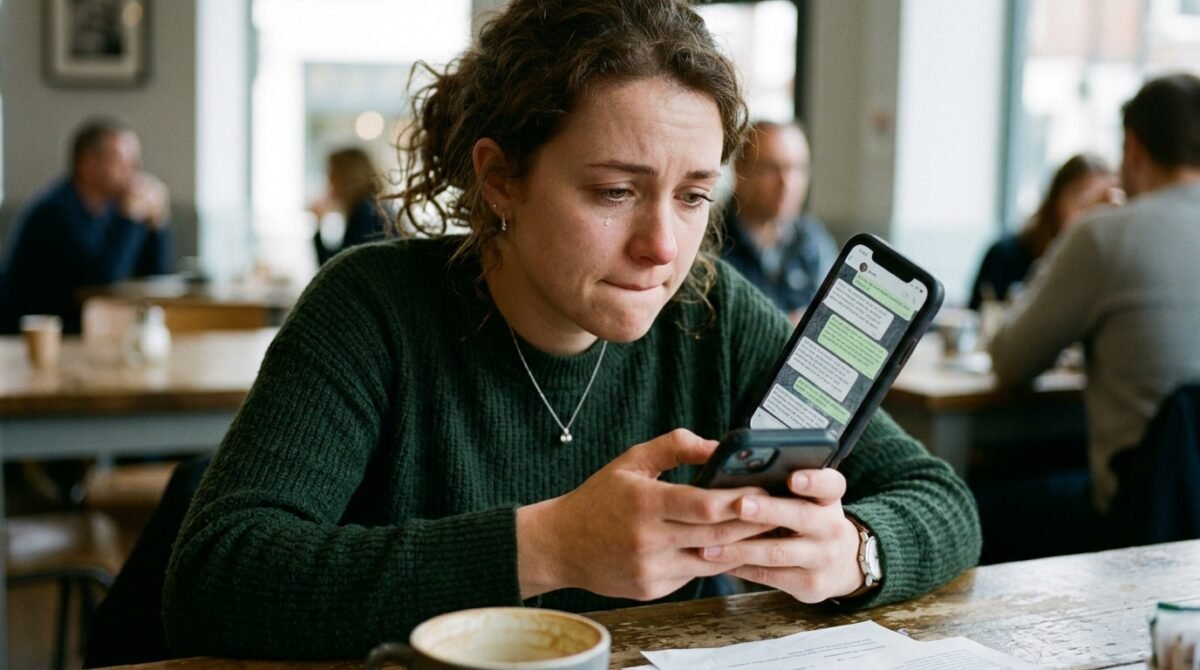
By the time I reached my apartment, my phone was blowing up. Not just from Mark, but from his mother, who had apparently been told a very distorted version of the events. It was a masterclass in gaslighting. He told them I had ‘stormed out’ because I was ‘unstable’ and refused to pay my fair share of travel expenses.
I read through the messages, shaking my head. It was almost impressive how he managed to frame the entire thing. He even sent me a screenshot of the Venmo request again, as if the repetition would somehow make me cave. I didn’t engage. I screenshotted the entire conversation, including his ‘spreadsheet’ of our relationship, and saved it for my own records.
“You are being incredibly immature. Everyone here is waiting for dinner and you’ve made us all look like fools. Pay the $180 and come back, or don’t bother calling me again.”
— Mark, via text
I realized then that this was his standard operating procedure. He had probably done this to every woman he had ever dated. He created a debt, then used the shame of that debt to control them. It was a cycle of financial abuse that had gone on for far too long, and I was the one who had finally broken it.
I blocked his entire family, including his mother, who was now sending me guilt-trip texts about how ‘family traditions’ were being ruined. I didn’t care about the turkey. I didn’t care about his parents’ opinion. I cared about my own peace of mind, and I was finally starting to find it again.
I poured myself a glass of wine, sat on my couch, and finally exhaled. The apartment was quiet, but it was a good kind of quiet. It was the quiet of someone who had just escaped a prison of their own making. I was single, I was broke from the Uber ride, and I had never been happier.
The Reddit Verdict
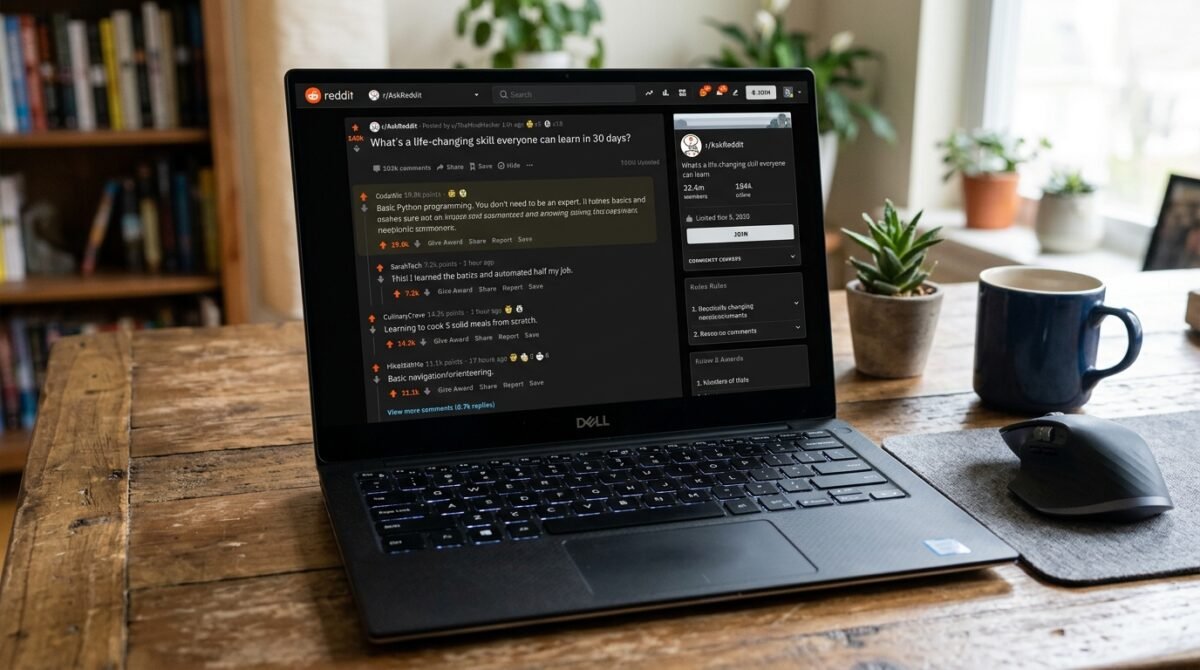
I posted my story on r/relationships the next morning. I needed to know if I was actually the villain. Maybe I was being ‘immature’? Maybe I was being unfair? I needed a sanity check from the internet, and boy, did the internet deliver. The response was overwhelming, thousands of comments pouring in, all echoing the same sentiment.
“This is not a partner; this is a landlord. The fact that he had a spreadsheet of every coffee and dinner is not ‘financial literacy,’ it’s a red flag the size of a billboard. You didn’t run away, you escaped.”
— u/RelationshipGuru88 (Top Comment, 32.4k upvotes)
It was validating to see that I wasn’t the only one who saw the insanity of the situation. Thousands of strangers shared their own stories of ‘penny-pinching’ partners who turned out to be controlling and abusive. The community rallied around the idea that relationships require a level of mutual generosity that transcends petty accounting.
There were some dissenting voices, of course—people who argued that ‘fair is fair’ and that I should have paid my share. But those comments were quickly buried under a mountain of support. The consensus was clear: when a partner treats you like a billable entity, the relationship is already dead.
The discussion also turned into a thread about ‘financial red flags’ in dating. People shared tips on how to identify these traits early, from the ‘who pays for the first date’ debate to the ‘splitting the bill at a funeral’ horror stories. It was a fascinating, if sometimes depressing, look at modern dating.
I felt a sense of relief knowing that my reaction was normal. I hadn’t overreacted. I had responded to a toxic situation with the appropriate amount of distance. It was the closure I needed to move on and never look back at that relationship again.
Reframing the Financial Dynamic

In the weeks that followed, I did a lot of thinking about money and relationships. How did we get to a point where we commodify our affections? Why is it so difficult for some people to understand that a relationship is a partnership, not a joint venture with a venture capitalist?
I realized that for Mark, money was power. By keeping track of every cent, he kept me in a state of perpetual debt. It was a way to ensure that I always felt like I owed him something. It was a subtle form of control that I had been blind to for eight months.
I decided to set a new rule for myself: never again would I date someone who didn’t understand the concept of ‘us’ when it came to shared experiences. If we’re doing something together, we contribute what we can, when we can, without the need for a ledger. It’s about the spirit of the thing, not the specific dollar amount.
“Money is the ultimate test of values in a relationship. If you can’t agree on how to share resources, you can’t agree on how to share a life.”
— A piece of advice I read during my recovery
I also started to look at my own financial habits. Had I been too passive? Had I allowed myself to be molded into this role? I took some time to get my own finances in order, independent of any partner. It was empowering to pay my own bills and know exactly where my money was going, without having to answer to anyone.
The experience changed me. It made me more cynical, yes, but also more discerning. I stopped looking for ‘perfection’ and started looking for ‘partnership.’ I wanted someone who would share the load, not someone who would charge me for it. And I knew, deep down, that I would find it eventually.
Lessons from the Curb

That moment, standing on the curb in the dark, waiting for my ride, changed my life. It was a moment of absolute clarity. I realized that the things we tolerate in the name of ‘love’ are often the things that define our own self-worth. I had tolerated his pettiness because I thought it was just a quirk, but it was the defining feature of his personality.
I learned to trust my gut. When something feels off, it usually is. I learned to set boundaries early, and to be unafraid of enforcing them, even if it means walking away from the table. I learned that my time and energy are valuable, and they shouldn’t be spent on people who don’t appreciate them.
I also learned that it’s okay to make mistakes. I dated the wrong guy. I let myself be treated poorly for a while. That doesn’t make me a failure; it makes me human. The important thing is that I didn’t stay. I didn’t settle for a life that was smaller than what I deserved.
“The most important boundary you will ever set is the one you draw around your own dignity.”
— A thought that keeps me going now
I am now in a new relationship, and it couldn’t be more different. We don’t have spreadsheets. We don’t have Venmo requests for gas. We have a shared understanding of what it means to be a team. We contribute to our lives together in ways that aren’t measured by currency, but by support, laughter, and genuine care.
I still look back at the $180 incident sometimes, not with anger, but with a sense of grim satisfaction. It was the price of my freedom. It was the best $180 I never spent, and the most important lesson I ever learned.
Moving Forward: Building Better Boundaries

If you’re reading this and you’re in a similar situation, please know this: you are not crazy, and you are not being unreasonable. You deserve a partner who is generous with their time, their affection, and their resources. If you feel like you’re constantly being evaluated, or if every interaction feels like a transaction, it’s time to take a hard look at the relationship.
Set boundaries early. Communicate your expectations. If your partner can’t respect those boundaries, then they aren’t the right partner for you. It’s better to be alone than to be in a relationship where you feel like you’re constantly fighting for your own worth.
I’ve spent the last year focused on myself. I’ve traveled, I’ve worked on my career, and I’ve nurtured my friendships. I’ve surrounded myself with people who value me for who I am, not for what I can provide or what I owe them. It’s been a beautiful, liberating year.
“Never let someone make you feel like your existence is a debt that you have to pay off.”
— My personal mantra for the future
And for those of you who are still dealing with the fallout of a toxic breakup, keep your head up. The pain is temporary, but the growth is permanent. You’ll come out the other side stronger, wiser, and more clear-eyed about what you really want in life. And that, in itself, is worth any amount of trouble.
I’m grateful for that $180 request. It was the catalyst I needed to start a new, healthier chapter. It forced me to see the truth, and once you see the truth, there’s no going back to the way things were. The future is bright, and I’m ready for whatever comes next.
Conclusion
Looking back, the $180 wasn’t just a request for money—it was a manifestation of a mindset that prioritized the ledger over the person. By choosing to walk away, I chose myself. The fallout was messy, the internet debate was intense, and the emotional recovery was slow, but it was worth every single moment of discomfort.
Relationships are not business mergers. They are messy, complex, and beautiful human connections that thrive on generosity and trust, not on spreadsheets and reimbursement demands. My experience was a stark reminder of what happens when the balance of power is tipped entirely toward the transactional.
I’d love to hear your thoughts. Have you ever been in a situation where a partner’s financial habits revealed a much deeper moral issue? How did you handle it, and what did you learn? Let’s keep this conversation going in the comments below.
What's your verdict on this dilemma?
Vote below to contribute to the official community consensus.

Have a Dilemma Keeping You Up at Night?
Share your real-life feud, wedding chaos, or relationship crossroads anonymously with our editorial team.
What do you think ?
0 Comments🛡️ Comments are moderated to protect community integrity. Your comment will appear once approved by the editorial team.