

Birthdays are supposed to be simple affairs—a celebration of another year, a few good friends, and the comfort of familiar company. For my 27th, I wanted nothing more than a low-key afternoon in my backyard. No themes, no dress codes, just burgers on the grill and cold drinks. I had been planning this for weeks, specifically keeping the vibe ‘backyard casual’ to ensure everyone felt relaxed and unburdened by the pressures of modern social events.
However, what began as a tranquil celebration spiraled into an exhausting display of misplaced entitlement. My best friend, Sarah, arrived at the party looking like she had just stepped off a high-fashion runway. Her hair was perfectly sculpted, a complex, high-maintenance updo that clearly cost a fortune. I didn’t think much of it until the end of the evening, when she pulled me aside, not to offer a birthday wish, but to hand me a crumpled receipt from a high-end salon.
The dilemma here wasn’t just about the money; it was about the audacity. Sarah argued that because she felt ‘out of place’ and ‘overdressed’ due to the casual nature of my party, the resulting expense of her transformation should be my burden to carry. It was a moment of profound cognitive dissonance. How does one justify offloading the cost of their own aesthetic choices onto the host of a backyard barbecue?
As I stood there under the string lights, the laughter of other guests fading into the background, I realized that this wasn’t an isolated incident. It was the culmination of years of quiet concessions and blurred boundaries. Sarah had always pushed the envelope, but this felt different—a blatant violation of social decorum that left me questioning the very foundation of our decade-long friendship.
This is the story of how a $300 hairstyle became the catalyst for a total reevaluation of what it means to be a friend. It is a tale of shifting expectations, the sting of betrayal, and the harsh reality of setting boundaries with those we love the most. It is also a mirror, reflecting the way we allow entitlement to creep into our lives until we are forced to draw a line in the sand.
The Setup: A Casual Afternoon Under the Sun
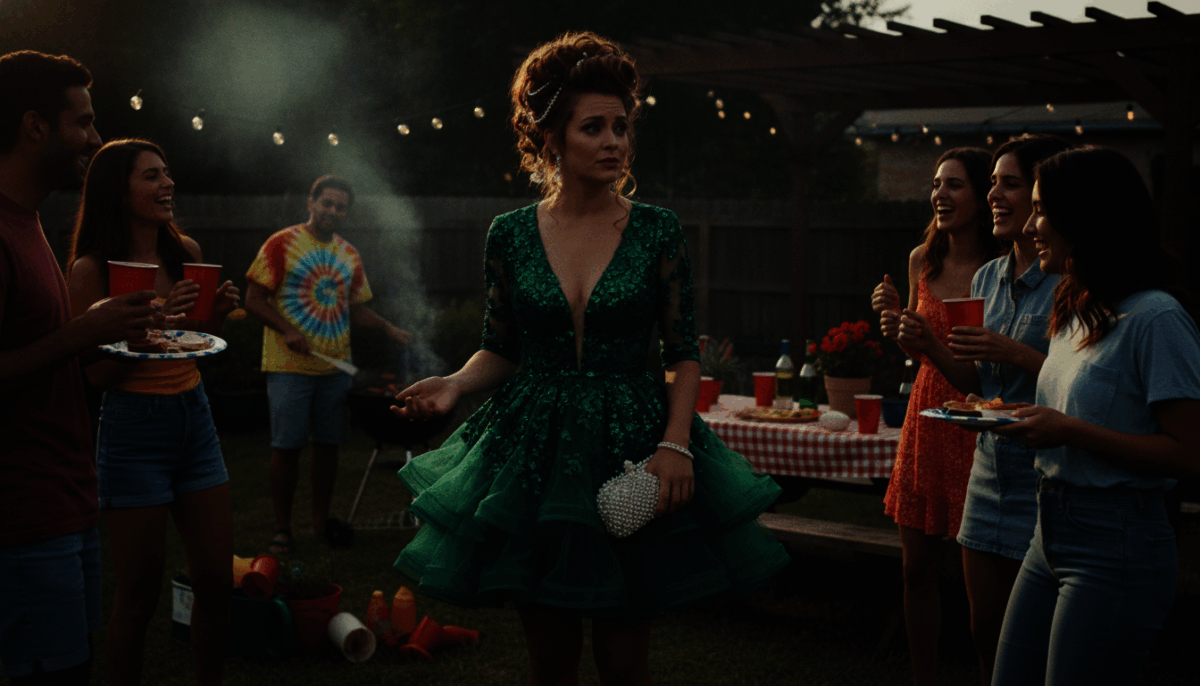
I had been very clear in my invitations. ‘Backyard barbecue, casual attire, just bring your appetite,’ I had texted to the group chat. I wanted to avoid the stress of party planning that usually accompanies birthdays. Sarah was the first to RSVP, expressing her excitement. ‘I’m so ready for a chill day, I’ve been so stressed lately,’ she had replied, which I took as a sign she was on the same page.
The day of the party was perfect—sunny, mid-70s, and smelling of charcoal and cut grass. I spent the morning setting up folding chairs and stringing lights. I wasn’t looking for perfection; I was looking for warmth. My other friends arrived in sundresses, shorts, and sandals. It was the epitome of a low-stakes gathering where everyone felt comfortable being themselves.
Sarah arrived two hours late. When she walked through the gate, the conversation actually dipped. She looked like she was heading to a black-tie gala. Her dress was shimmering silk, and her hair—my god, the hair. It was a towering, architectural masterpiece of curls and pins that looked like it required an engineering degree and a small mortgage to achieve.
I greeted her with a hug, trying to ignore the absurdity of her appearance. She immediately complained about the heat, dabbing at her neck with an expensive silk handkerchief. ‘I had to go straight to the salon after work,’ she said, as if that explained the disconnect. I just smiled, offered her a drink, and tried to move the party along, unaware of the storm brewing in her mind.
“I love your dress, Sarah! But are you sure you’re comfortable? It’s getting pretty humid out here.”
— Me, trying to be polite while she sweated in silk.
She looked at me, eyes narrowing slightly as she adjusted a pin in her hair. ‘It was a long process,’ she remarked, not answering my question. ‘But I suppose I had to look presentable, even if the venue didn’t require it.’ I let it slide, assuming she was just venting her own insecurity. Little did I know, she was already calculating the bill.
The $300 Reveal at the Bottom of a Beer Cooler

The party began to wind down around 8:00 PM. People were helping me clear the plastic plates and dispose of empty cans. Sarah had been unusually quiet for the last hour, hovering near the food table and checking her phone incessantly. As I turned to thank the last of my guests, she finally made her move, approaching me with a look of practiced solemnity.
She didn’t lead with a ‘Happy Birthday.’ She didn’t thank me for the food. Instead, she pulled a slip of paper from her clutch and held it out like a legal subpoena. ‘I need to talk to you about this,’ she said, her voice dropping to a serious, conspiratorial tone that felt completely out of place at a backyard barbecue.
I took the paper. It was a receipt for $300 from a high-end salon downtown. I blinked, confused. ‘Sarah, what is this? Did you leave something at the salon?’ I honestly thought she was asking me to help her track down a lost item. Her face hardened, and that’s when the absurdity truly landed.
She explained, with a level of confidence that was frankly chilling, that she had gone to that specific salon because she believed my party would be a more formal affair, despite my multiple messages to the contrary. Because she ended up feeling ’embarrassed’ and ‘overdressed’—a situation she laid entirely at my feet—she felt I owed her the cost of the hair styling to ‘compensate for the social discomfort’ I had caused her.
“You said it was a party, and I dressed for a party. If you wanted a barbecue, you should have specified that it was a ‘come in your pajamas’ event. I shouldn’t have to lose $300 because you didn’t manage your guests’ expectations.”
— Sarah, articulating her logic with chilling seriousness.
I stood there, the receipt fluttering slightly in the evening breeze. I couldn’t decide whether to laugh or cry. The sheer audacity of suggesting that my choice to host a casual barbecue in my own yard made me liable for her luxury salon habit was staggering. It wasn’t just a request; it was an ultimatum.
The Group Chat Explosion
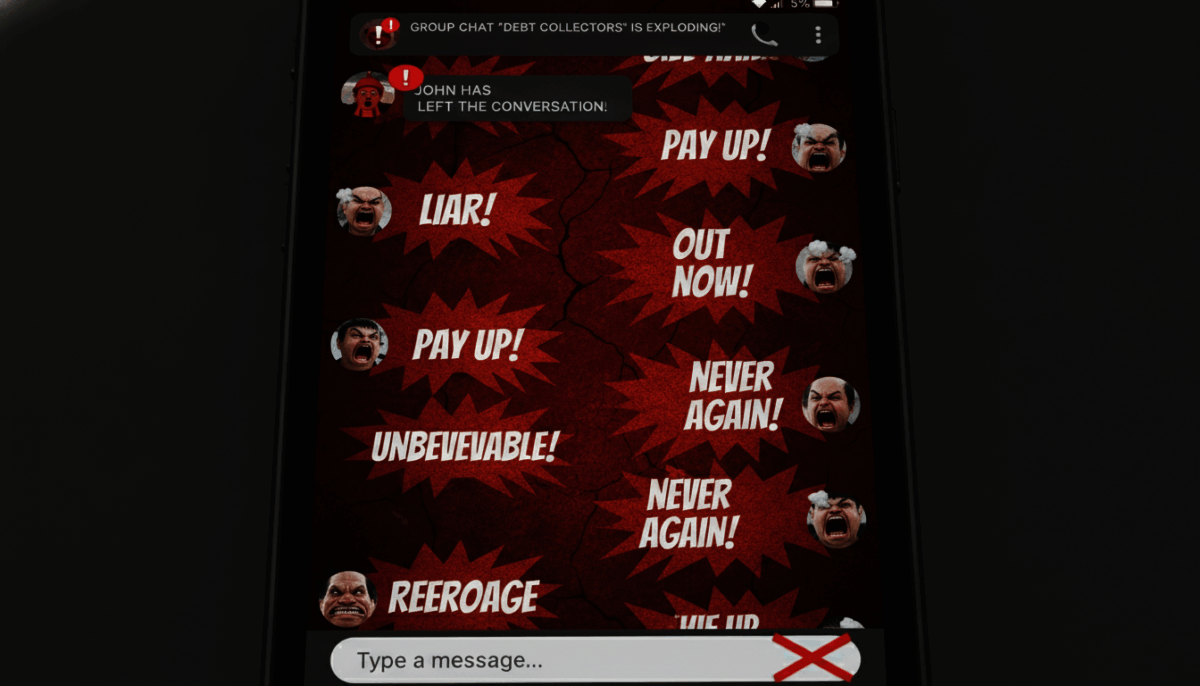
I didn’t answer her immediately. I told her I needed a minute to process, which led to her storming out of the backyard in a huff. I thought that was the end of it, but the real drama was just beginning. By the time I walked back inside, my phone was buzzing uncontrollably. Sarah had taken our disagreement to the group chat—a chat that included mutual friends, some of whom hadn’t even been at the party.
She framed the narrative carefully, painting herself as the victim of my ‘deception.’ She claimed that she had spent her rent money on a look she didn’t get to use properly because I had lied about the ‘vibe’ of the event. She was looking for validation, and for a few minutes, she actually got it from people who didn’t know the full story.
“Hey guys, honestly feeling really hurt. Spent a fortune to look nice for [OP]’s party only to find out it was a total casual grill-out. It’s not about the money, it’s about the lack of consideration for her friends. I think it’s only fair she covers the cost since she misled us.”
— Sarah, sent to our group chat of 12 people.
The chat exploded. People were confused, asking what happened. I didn’t want to engage in a public spectacle, but I had to defend myself. I sent a screenshot of the initial invite, where it explicitly stated ‘casual backyard barbecue.’ The tide turned almost immediately. Even Sarah’s own sister, who was in the group, jumped in to tell her she was being completely unreasonable.
The irony was that Sarah had ignored the invite details entirely because she wanted to ‘flex’ on Instagram. She had planned this look for days, not for my party, but for her own vanity. When the reality of the casual party didn’t fit the ‘content’ she wanted to create, she decided I was the one who needed to pay for the mismatch. The group chat quickly devolved into a mess of screenshots, accusations, and eventually, Sarah leaving the group in a blaze of digital glory.
The Anatomy of Entitlement

After the group chat incident, I sat down to really think about our friendship. How did we get here? I realized that Sarah had been doing this for years in smaller ways. It was the ‘can you pay for my coffee, I left my wallet’ that never got paid back. It was the ‘can I borrow your dress’ that ended up with a stain I had to pay to clean.
She always operated on the assumption that her needs were the default and everyone else existed to facilitate them. I had been an enabler for so long that I didn’t even recognize the pattern. I felt used, not just for the money, but for my time and my emotional energy. Every outing with Sarah felt like a negotiation where I was always on the losing end.
I looked back at photos from the last two years. Every time we went out, she was the one in the center of the frame, the one with the most expensive outfit, the one demanding the most attention. I was always the supporting character, the one holding the purse or taking the photos. This $300 incident wasn’t an anomaly; it was the inevitable conclusion of a friendship built on an uneven foundation.
I started documenting these instances. It wasn’t about being petty; it was about clarity. I needed to see the pattern to break it. I realized that my desire to keep the peace had been interpreted by her as a weakness, a green light to push further and further. The party was just the final, most expensive straw.
The emotional toll was significant. I felt guilty for being angry, which was the most confusing part. I felt like I was failing as a friend because I wouldn’t pay her bill. I had to remind myself, over and over, that a friend wouldn’t put another friend in this position. That realization was the first step toward my own recovery from this toxic dynamic.
The ‘Helpful’ Intervention of Mutual Friends

A few days later, I was approached by a mutual friend, Jessica, who wanted to ‘mediate.’ She meant well, but she was definitely taking Sarah’s side, suggesting that I just ‘pay it to keep the peace.’ The idea that I should pay $300 to a friend to make her stop being angry at me for my own party choices was absurd to everyone I actually respected.
Jessica argued that Sarah was having a ‘hard time’ and that I should be the ‘bigger person.’ I asked Jessica if she would pay $300 for a hairstyle she didn’t choose just because someone else was upset. She hesitated, and then conceded that she probably wouldn’t. ‘But you guys have been friends for so long,’ she insisted. That, to me, was the worst argument of all.
Friendship is not a sunk-cost fallacy. Just because you have been friends for a long time doesn’t mean you have to tolerate being treated with disrespect. I told Jessica that my friendship with Sarah wasn’t a transaction. If it was, the bill was already way past due, and Sarah owed me a lot more than $300 in wasted energy and emotional support.
“I’m not paying for her poor judgment, Jessica. If she wants to look like a movie star at a barbecue, that’s her choice. But she doesn’t get to send me the invoice for her vanity.”
— My response to the mediation attempt.
The conversation ended with Jessica being visibly uncomfortable. She realized, perhaps for the first time, that I wasn’t going to fold. I wasn’t going to apologize for hosting a party in my own home, and I wasn’t going to pay for someone else’s ego-driven mistakes. It was the first time I felt genuinely empowered in this whole situation.
The Fallout: No-Contact and the Silence That Followed

After the failed mediation, the silence was deafening. Sarah didn’t apologize, and I didn’t reach out. I realized that I had nothing left to say. The friendship had been a one-way street for far too long, and I was finally ready to close the road. I blocked her on social media and on my phone, not out of spite, but out of necessity.
The first few days were the hardest. I kept waiting for a text, or an email, or for her to show up at my door. My phone felt heavy in my pocket, a constant reminder of the bridge I had just burned. But as the days turned into weeks, the silence began to feel less like a void and more like peace.
I had time to focus on myself. I spent my weekends doing things I actually enjoyed, without the pressure of having to look a certain way or be at a certain place to please Sarah. I reconnected with friends I had pushed to the periphery because they didn’t ‘fit’ into the Sarah-centric world I had been living in.
The freedom was intoxicating. I realized that I hadn’t been an individual in my own life for years; I was just a supporting character in Sarah’s drama. Removing that weight allowed me to breathe properly for the first time in a long time. I wasn’t missing her; I was mourning the version of her I thought existed.
There were moments of doubt, of course. I wondered if I had overreacted, if I could have handled it with more grace. But then I remembered the receipt, the way she had shoved it at me, the way she had used the group chat to try to humiliate me into compliance. No, I hadn’t overreacted. I had simply reacted to a boundary violation that had finally crossed the line into madness.
Reddit Weighs In: The Verdict of the Internet

When I finally posted my story on a popular forum, I was prepared for the worst. I expected to be called selfish, or petty, or to have people tell me I should have just paid the money. Instead, the response was overwhelming. Thousands of people from all over the world told me that I was right to stand my ground.
The top comments weren’t just validating; they were insightful. People shared their own stories of ‘friendship vampires’ who expected their friends to pay for their lifestyle choices. It was a global community of people who were tired of being taken advantage of, and my story became a focal point for their shared frustrations.
“NTA. This is classic gaslighting. She dressed for the event she wanted, not the event you invited her to, and she wants you to subsidize her fantasy. Block her and don’t look back. You aren’t losing a friend; you’re losing a liability.”
— u/ReasonableObserver (22.5k upvotes)
The sheer volume of support was shocking. It made me realize that I wasn’t alone in this. There are so many people who struggle with boundaries because they are afraid of being seen as the ‘bad guy.’ Reading those comments, I felt like a weight had been lifted. The Internet, for all its faults, had given me the perspective I needed to see that I was not the villain of this story.
Some users even shared legal perspectives, pointing out that no contract existed for her hair service, and that she was essentially trying to commit a form of social fraud. It was a bit extreme, but it highlighted the absurdity of her demand. The consensus was clear: Sarah’s sense of entitlement was a her problem, not a me problem.
The most touching responses were from people who had gone through similar breakups and had come out the other side stronger. They told me that losing a toxic friend is the best form of self-care. It was exactly what I needed to hear to solidify my decision to move on permanently.
Reflecting on the Investment of Time and Money

Looking back at the financial side of things, it wasn’t just the $300. It was the cumulative cost of years spent trying to keep up with Sarah. I calculated that I had spent thousands over the years on gifts, dinners, and events that she planned, always expecting me to contribute, always expecting me to be the one to pay for the ‘extras.’
This realization was a harsh wake-up call about my own financial habits. I had been using money as a way to maintain the relationship, a form of ‘friendship insurance.’ But that insurance never paid out; it only demanded more premiums. I was funding a lifestyle I didn’t even enjoy.
I started a new budget, one that didn’t include ‘subsidizing Sarah’s ego.’ The extra money in my account wasn’t just savings; it was a symbol of my regained autonomy. I started putting that money into my own experiences—a weekend trip I had been putting off, a new hobby I wanted to try. It felt like I was investing in myself for the first time in years.
The lesson here is profound. When you allow people to take from you—whether it’s money, time, or emotional energy—you teach them that you have no value outside of what you can provide for them. By saying no to the $300, I wasn’t just saving money; I was reclaiming my value.
I still see the receipt in my mind sometimes, but it doesn’t sting anymore. It’s just a piece of paper, a reminder of the moment I chose myself over the comfort of a toxic status quo. It was the most expensive, and yet the most valuable, lesson I’ve ever learned about the nature of friendship.
The Aftermath: Moving Forward with Clearer Boundaries

Today, my life is significantly quieter, and I am much happier for it. I have set clearer boundaries with everyone in my life, not just Sarah. I am more vocal about my expectations for gatherings, and I don’t apologize for my choices. If someone wants to be offended by a casual backyard party, they are welcome to stay home.
I have learned that true friends don’t ask you to pay for their poor choices. They don’t use you as a scapegoat for their own insecurities. They are happy to just spend time with you, whether you’re dressed to the nines or sitting in your pajamas eating leftovers.
I occasionally hear news about Sarah through mutual friends. She is still doing the same things, still posting the same curated photos, still looking for the next person to foot the bill for her lifestyle. It doesn’t make me angry anymore; it makes me sad for her. She is trapped in a cycle of needing external validation that she will never be able to fill.
I am in a much better place. I have found friends who appreciate me for who I am, not for what I can pay for or what I can do for them. We have ‘potlucks’ now, where everyone brings a dish, and no one is worried about looking like a runway model. It’s the kind of environment I always wanted, and I’m finally living it.
If you are in a similar situation, if you are being pushed to pay for someone else’s entitlement, let my story be your sign. It is okay to say no. It is okay to walk away. Your worth is not defined by how much you can give to people who don’t appreciate you. Stand your ground, and you might find that the best part of your life starts the moment you say ‘no.’
The Final Verdict: Why No Means No

Ultimately, the $300 wasn’t the issue; the lack of respect was. In any healthy relationship, there is a mutual understanding of boundaries. When those boundaries are crossed, it’s not a misunderstanding; it’s a choice. Sarah chose to prioritize her own vanity over our friendship, and she expected me to pay the price for that choice.
I have processed the anger, the betrayal, and the confusion. I have accepted that the person I thought I knew was perhaps never the person I needed her to be. This wasn’t a sudden explosion; it was a slow burn that finally caught fire. And in that fire, I was able to burn away the expectations that were holding me back.
If I could give advice to anyone facing a similar dilemma, it would be this: Trust your gut. If a request feels wrong, if it feels like you’re being manipulated or taken advantage of, it’s because you are. You don’t owe anyone an explanation for why you won’t fund their lifestyle. A simple ‘no’ is a complete sentence.
The Reddit community and my real-life friends who supported me taught me that you don’t have to be a ‘people pleaser’ to be a good person. You can set boundaries and still be kind, generous, and caring. But those boundaries are the fence that keeps your own garden healthy. Without them, you’re just an open field, and eventually, people will walk all over you.
So, here is to the backyard barbecues, the casual gatherings, and the friends who appreciate them for exactly what they are. Here is to the strength to say ‘no,’ and the peace that comes with knowing you’ve done the right thing for yourself. It was a hard lesson to learn, but I wouldn’t trade it for anything.
Conclusion
The story of the $300 hairstyle is more than just a viral anecdote about a bad friend. It is a fundamental lesson in self-respect. We often allow people to dictate the terms of our lives because we are afraid of the consequences of standing up for ourselves. But as I discovered, the consequence of standing your ground is often far less painful than the cost of staying silent.
I have moved on, and I am in a space where my boundaries are respected and my values are shared. I no longer feel the need to justify my choices to those who don’t have my best interests at heart. The lesson is simple: choose friends who cherish you for your presence, not for your utility.
I invite you to share your thoughts. Have you ever been in a position where a ‘friend’ demanded you pay for their poor choices? How did you handle the entitlement? Let’s discuss below—is it ever okay to ask a friend to pay for your expenses, or is this a hard line that should never be crossed? Share your experiences in the comments.
What's your verdict on this dilemma?
Vote below to contribute to the official community consensus.

Have a Dilemma Keeping You Up at Night?
Share your real-life feud, wedding chaos, or relationship crossroads anonymously with our editorial team.
What do you think ?
0 Comments🛡️ Comments are moderated to protect community integrity. Your comment will appear once approved by the editorial team.