

When you reach a decade of marriage, you expect the milestones to be marked by memories—the trips you took, the hard times you survived, and the quiet moments that defined your partnership. My tenth anniversary was supposed to be exactly that: a celebration of a decade spent building a life with Mark. We had reservations at the city’s most exclusive French bistro, a place we had talked about visiting since our engagement. I spent weeks picking out the perfect dress and thinking about the speech I wanted to give, reflecting on how far we had come from our humble, broke-college-student beginnings.
But the evening took a turn before the appetizers even arrived. Mark had left his phone on the table while he went to the restroom, and when a notification pinged—a cloud sync alert from an app I didn’t recognize—my thumb moved on instinct. I expected a generic update, perhaps a photo storage notification. Instead, I opened a file that would effectively dismantle ten years of shared history in less than sixty seconds. It was a spreadsheet, meticulously color-coded and itemized, titled ‘Household Liability and Consumption Ratio.’
As I scrolled through the rows, my breath hitched. There it was: every date, every meal, and every dollar amount attributed to me, alongside a calculated ‘net loss’ for the household. Mark wasn’t just tracking expenses; he was auditing our marriage as if it were a failing business venture where I was the primary liability. The shock didn’t hit all at once; it arrived in waves of cold, calculated realization that the man sitting across from me hadn’t been my partner, but my accountant.
This wasn’t just about money; it was about the fundamental way he viewed me. Every birthday dinner, every grocery run, and every shared bottle of wine had been logged, dated, and criticized. I felt the warmth of the restaurant drain away, replaced by a clarity so sharp it was painful. I knew then that I couldn’t finish the meal, let alone the marriage. I had to understand the scale of what I had been living with, and more importantly, I had to find a way out.
The Digital Ledger of Our Life
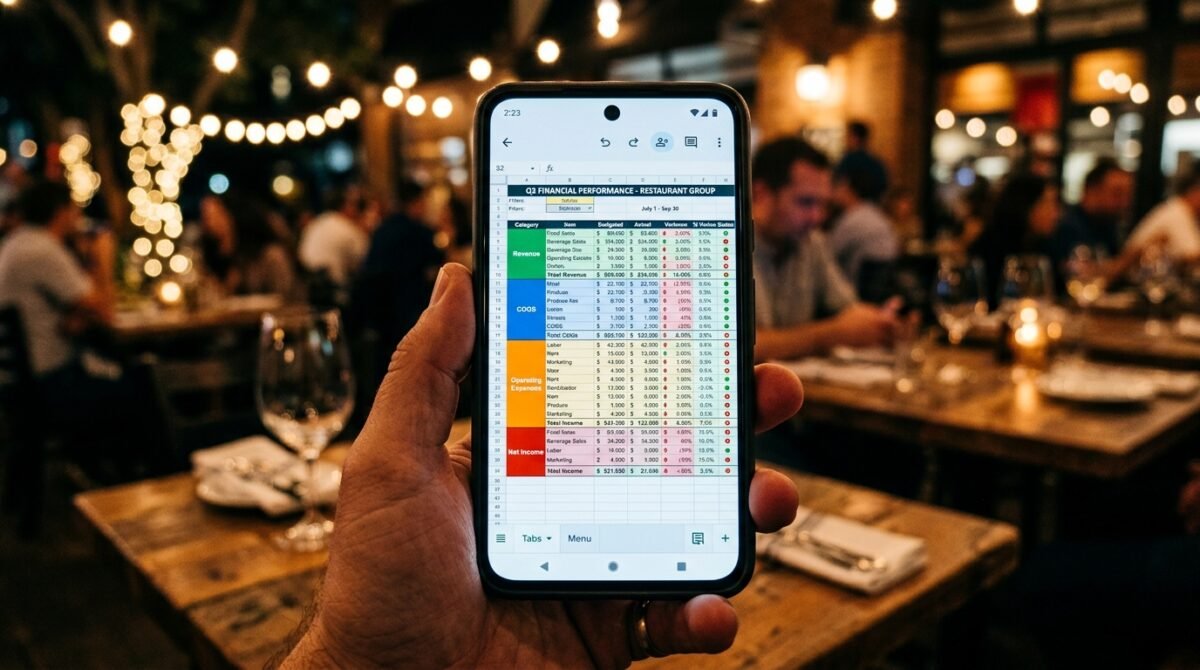
The spreadsheet was a marvel of passive-aggressive accounting. As I swiped through the tabs, I saw sub-headers for ‘Variable Entertainment Costs’ and ‘Excessive Dining Frequency.’ My heart hammered against my ribs, each beat echoing the cold data on the screen. It wasn’t just that he was tracking the money; he was adding commentary notes to specific cells. One entry for a dinner on our third anniversary read: ‘Ordered appetizer despite previous agreement to skip. – $24.00 loss.’
I felt a sickening sense of vertigo. I looked toward the restroom, half-expecting him to walk out and see me staring at his phone, but the room seemed to stretch out into a blur. I read through the last six months of data. There were entries for ‘Coffee Run: Over budget by $1.50’ and ‘Takeout Surcharge: Non-essential.’ He had been grading my daily existence through the lens of a spreadsheet, and according to his math, I was consistently failing.
The sheer detail was the most disturbing part. He had calculated my ‘return on investment’ for various household appliances I had purchased. The coffee maker, the new curtains, the replacement vacuum—each item was categorized, depreciated, and then marked with a red highlight if he disapproved of the purchase. It was a digital record of resentment, stored in the cloud for his convenience, ready to be pulled up during the next inevitable argument about the budget.
I looked at the total tally at the bottom of the column. It wasn’t just a budget; it was a weapon. He had been preparing for a day of reckoning, a moment where he could present me with a ‘debit’ that proved my worthlessness as a financial partner. I realized then that our entire marriage had been under a microscope that I didn’t even know existed. I was playing a game of love, while he was playing a game of ledger-based control.
The waiter approached the table, menu in hand, smiling brightly. I realized I was trembling. I had to act normal, but the air in my lungs felt like glass. I pushed the phone back toward his side of the table, my hands ice-cold. When he finally returned, he sat down with a smug, satisfied expression, completely unaware that the foundation of our life had just collapsed beneath him.
The Confrontation Over the Appetizers

Mark sat down, adjusted his napkin, and scanned the menu with the ease of a man who believed everything was perfectly in order. He had no idea what he had left behind on his phone. I watched him, searching for the man I thought I knew—the one who claimed to love me and support our family. All I saw was a stranger who had been keeping score for a decade.
“You look a bit pale, honey. Are you not feeling the bistro vibe? I told you, this place is expensive, but it’s our anniversary. I’ve budgeted for it,” he said, flashing a tight, rehearsed smile.
I looked at him, my voice dangerously steady. I didn’t want to scream; I wanted him to understand the gravity of what he had done. “I saw your phone, Mark. I saw the spreadsheet. I saw the ‘Liability and Consumption’ tab.” The color drained from his face instantly. The smugness evaporated, replaced by a flash of genuine panic that quickly hardened into defensiveness.
“You had no right to look at my phone,” he snapped, his voice barely above a whisper, his eyes darting around the table to see if anyone was listening. “That is private property. You don’t understand how the household finances work, and I was just trying to keep us on track. You’re always spending without thinking, and I needed to visualize the data.”
I laughed, a sharp, bitter sound that caused the couple at the next table to glance over. “Visualize the data? Mark, you were tracking my every bite of food for years. You were calculating the ‘net loss’ of our third anniversary dinner. Do you have any idea how insane that is? Do you think of me as your wife, or as a line item in a quarterly report that you need to optimize?”
He leaned in, his face tight with irritation. “It’s about responsibility! You have no concept of long-term savings. If I don’t track these things, we’ll never reach our retirement goals. You’re lucky I’m the one who handles the logistics, or we’d be living in debt.” His arrogance was breathtaking. He truly believed that his cruelty was a virtue, a necessary burden he had to carry for the good of the family.
I stood up, grabbing my purse. I didn’t care about the scene anymore. I didn’t care about the reservation, the expensive meal, or the ten years of history. The man in front of me was a hollow shell of a human being, blinded by his own need for control. I knew that if I stayed for another minute, I would lose my mind. I had to leave, and I had to leave now.
The Walkout and the Silence

I walked out of the restaurant without a word. The evening air felt incredibly refreshing compared to the suffocating atmosphere inside the bistro. I could hear Mark calling after me, his voice a mix of indignation and genuine confusion—not because he realized he had hurt me, but because he was losing his audience. He didn’t follow me out, likely worried about the scene it would cause or the bill that was already mounting.
I got into my car and sat there for a long time, my hands gripping the steering wheel so hard my knuckles turned white. My phone started vibrating incessantly. Text after text flooded in, each one a testament to his warped priorities. He wasn’t apologizing; he was complaining about the wasted reservation fee and the social embarrassment I had caused. The realization hit me then: he valued the money and the reputation more than the person he was married to.
“You are being completely irrational. You walked out on our anniversary dinner because of a personal finance tool? You’re acting like a child. Get back here right now, you’re embarrassing me in front of everyone we know.”
— Mark (Text Message, 8:42 PM)
I didn’t respond. Instead, I drove to my sister’s house, my mind racing. I felt like I was waking up from a decade-long coma. Every disagreement we had ever had about money, every time he made me feel guilty for buying a small treat or a gift for a friend, it all clicked into place. It wasn’t about the budget; it was about keeping me in a state of constant financial insecurity so I would never question his authority.
The house was dark when I arrived, but Sarah was awake, waiting for me. She didn’t ask questions; she just opened the door and pulled me into a hug. I broke down then, the reality of the situation finally shattering my composure. I had spent ten years trying to be the perfect partner to a man who was auditing me in his spare time. I felt foolish, betrayed, and liberated all at once.
Over the next few hours, I explained everything. I told her about the spreadsheet, the annotations, and the way he had turned our home into a hostile workspace. Sarah, who had never particularly liked him, sat in stunned silence. She had seen the signs, she said, but she never imagined it was this methodical. By the time the sun began to rise, I had made my decision. There was no going back to that house, and there was certainly no going back to him.
The Morning After the Storm

The next morning, the reality of the situation began to set in. My phone was a battlefield of missed calls and increasingly frantic texts from Mark. He had moved from anger to a bizarre form of bargaining, claiming that if I just returned, we could ‘talk it out’ and he would ‘delete the spreadsheet.’ It was as if he thought the issue was the tool itself, rather than the mindset that created it.
“I don’t understand what the big deal is. I deleted the file. Can you please just come home? The kids are asking where you are, and I don’t know what to tell them. You’re blowing this completely out of proportion.”
— Mark (Text Message, 7:15 AM)
I looked at the message and felt nothing. No anger, no sadness—just a cold, hard resolve. I wasn’t going back. I started the process of contacting a lawyer, my heart heavy but steady. I realized that my financial independence, which he had been trying to suppress for years, was now my only way out. I needed to document everything before he had the chance to wipe his devices or hide assets.
I went back to the house while he was at work, accompanied by a police escort, just to be safe. It was surreal to walk through the rooms we had decorated together, knowing that to him, every piece of furniture was just a line item on his ledger. I packed my essentials and the kids’ things, trying to stay detached. He had tried to turn our home into a prison of his own making, and now, I was finally breaking the bars.
The neighbors watched from their windows, whispering, but I didn’t care. I felt like I was shedding a skin I had outgrown years ago. I left a note on the kitchen counter—not an explanation, because he wouldn’t understand it—but a statement. I was done. I was taking the kids to Sarah’s, and he would hear from my attorney. It was the most empowering moment of my life.
As I drove away, I looked back at the house one last time. It looked exactly the same as it had yesterday, but it felt entirely different to me now. It was a space I had shared with a calculator in human form. I knew the coming months would be a battle, but for the first time in ten years, I wasn’t worried about the cost. I was worried about my future, and for that, there was no price tag.
The Internet Weighs In
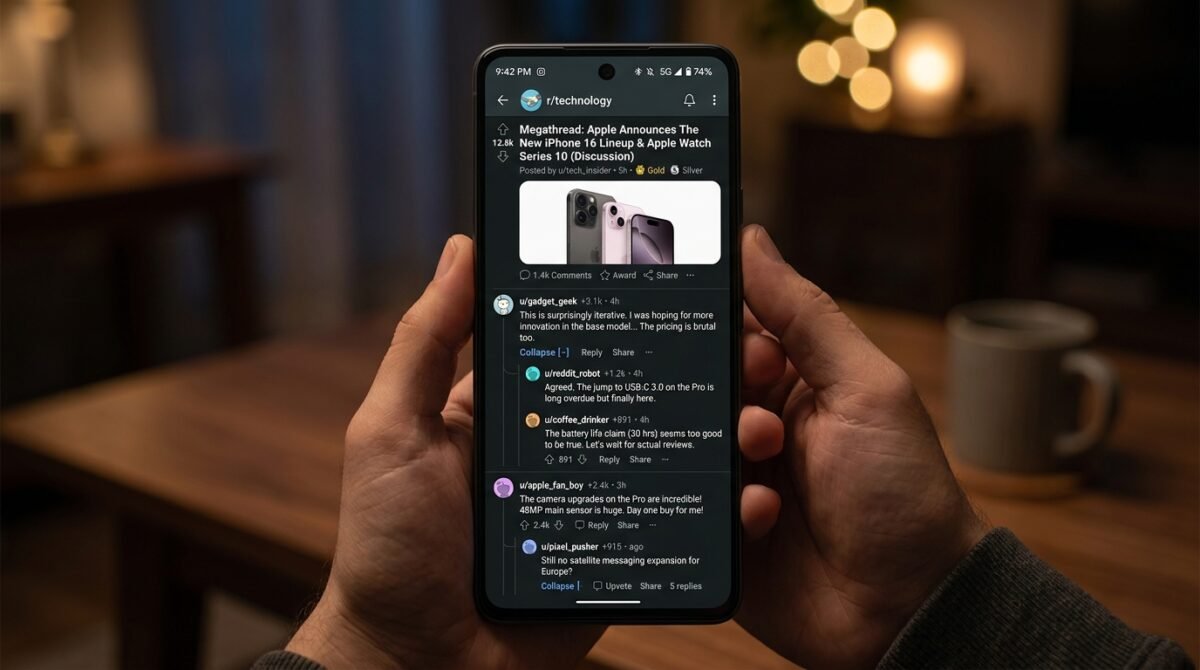
When I finally posted my story on a popular forum, I expected some backlash, but I was unprepared for the sheer volume of support—and the terrifying resonance with other women who had lived through similar financial abuse. My inbox exploded with messages from people who had discovered their own ‘spreadsheets,’ ‘secret accounts,’ and ‘behavioral audits.’ It turned out, this was a common tactic for controlling partners.
“This is text-book financial abuse. He wasn’t budgeting for your future; he was quantifying your existence to keep you feeling small and dependent. Good for you for walking out. Do not, under any circumstances, go back to him.”
— u/FinancialTruthSeeker (Top Comment, 32.5k upvotes)
The community support was overwhelming. People shared tips on how to protect my assets, how to handle the inevitable legal battle, and how to recover from the gaslighting. I realized that I wasn’t alone, and that my experience, while horrific, was something that could help others recognize the signs before it was too late. I spent days reading through the comments, feeling a strange sense of validation that I hadn’t received from Mark in years.
However, there were also the dissenters. Some commenters, likely people who shared Mark’s worldview, argued that he was just ‘financially responsible’ and that I was overreacting. They claimed that in a marriage, everything should be transparent, and that I was the one who was wrong for ‘snooping’ on his private device. It was a fascinating look into how people justify control as ‘responsibility’ and ‘transparency.’
“I don’t see the issue here. My wife and I track every single cent we spend. If you want a successful marriage, you have to treat your finances like a business. You were clearly hiding your spending habits if he felt the need to track them so closely.”
— u/LogicAndNumbers (Downvoted, -12.4k upvotes)
Reading those comments only solidified my resolve. The way those people prioritized the ‘business’ of marriage over the human element was exactly the mindset I was trying to escape. They saw no problem in treating a spouse as a liability. I realized that the internet community was a mirror for the same power dynamics I had been fighting, and I was glad to be on the side of those who valued human dignity over the bottom line.
The Legal Tangle Begins

The legal proceedings were as cold and calculated as Mark’s spreadsheet. He tried to hide assets, claiming that the ‘household ledger’ proved that I had been reckless with our money and that he deserved a larger share of the marital estate. It was a transparent attempt to punish me for leaving, to make sure I started my new life with as little as possible. My lawyer, fortunately, was a shark.
We subpoenaed his devices. When the forensic team analyzed his cloud storage, they found not just one spreadsheet, but years of them—dating back to before we were even married. He had been tracking ‘potential partners’ and their ‘financial viability’ long before he met me. It was a sickening revelation that he hadn’t just been auditing our marriage; he had been auditing his life as a series of investments. The judge was not impressed.
During the deposition, Mark tried to maintain his composure, insisting that he was just a ‘naturally organized person’ who liked to keep records. When my attorney presented the notes about ‘excessive dining’ and ‘non-essential purchases,’ the entire room went silent. Mark’s face went from pale to a deep, embarrassed red. The myth of his ‘financial responsibility’ was crumbling under the weight of his own documented obsession.
“Mr. Miller, did you, or did you not, categorize your wife’s medical expenses as ‘unplanned liability’ in your 2022 ledger? Yes or no?”
— The Attorney (Deposition Transcript)
He couldn’t answer. He just sat there, looking at the floor. The judge looked at him with something bordering on pity, which was perhaps the most humiliating thing of all. I felt a sense of closure wash over me. The legal battle wasn’t about the money anymore; it was about the truth. It was about forcing him to see, in a court of law, that his ‘accounting’ was nothing more than a manifestation of his own deep-seated insecurity and need for control.
The settlement was fair, though it felt like a pittance compared to the decade of my life I had lost. I didn’t care about the amount; I cared about the clean break. I walked out of that courtroom with my children and my future, leaving behind the man who had tried to turn my existence into a math equation. It was the hardest thing I’d ever done, but it was also the most necessary.
Reclaiming My Financial Identity

Post-divorce, the process of rebuilding was slow but incredibly satisfying. For the first time in a decade, I didn’t have to justify a single purchase. I could buy a coffee, order a book, or take the kids out for dinner without fear of an ‘audit’ or a lecture on my ‘consumption ratio.’ It was a small freedom, but it felt like I was learning how to breathe again.
I started attending financial literacy workshops, not because I was irresponsible, but because I wanted to reclaim my understanding of money on my own terms. I learned how to manage my own investments, how to build a savings plan that reflected my goals, and how to define my value through my own accomplishments, not through a spreadsheet controlled by someone else. It was empowering to see my bank account grow without the anxiety of being judged.
The children, too, were healing. They had seen the tension, the arguments, and the coldness of their father, and they were finally starting to relax. We had our own little traditions now—Friday pizza nights, Saturday library trips, and Sunday morning pancakes—all without the fear of a ‘cost-benefit analysis.’ We were creating a new, healthy normal, one where we were loved for who we were, not what we cost.
I often think about that spreadsheet. It feels like a relic from a different life, a strange, dark artifact of a man who was so afraid of life that he tried to quantify it. I don’t harbor anger toward him anymore; I feel something closer to indifference. He is still out there, probably still updating his ledgers, still looking for a partner who will fit into his neat little rows and columns. I hope, for the sake of whoever comes next, that he finally finds the help he needs.
As for me, I’m doing fine. More than fine, actually. I’m thriving. I’ve started my own small business, and every dollar I earn is mine—to spend, to save, or to give away. It’s a beautiful thing, having agency over your own life. And the best part? I don’t have to report to anyone. No spreadsheets, no audits, no justifications. Just me and my future, written in my own words.
Conclusion
Looking back at the tenth anniversary that changed everything, I realize that it wasn’t the end of my life, but the beginning. We are often told that marriage requires compromise, but there is a line between healthy negotiation and the systematic erasure of a partner’s autonomy. I crossed that line every single day for ten years, thinking it was love, only to discover it was a cage built from numbers.
If you find yourself in a situation where your partner is tracking, auditing, or controlling your financial life to the point where you feel like an employee rather than a spouse, please know that you are not alone. There is a way out, and there is a life on the other side that is worth fighting for. Trust your instincts; if something feels wrong, it likely is. Don’t let anyone turn your life into a balance sheet.
I’d love to hear your thoughts on this. Have you ever discovered a hidden side of your partner that completely changed how you viewed your relationship? How did you handle it? Let’s discuss in the comments below.
What's your verdict on this dilemma?
Vote below to contribute to the official community consensus.

Have a Dilemma Keeping You Up at Night?
Share your real-life feud, wedding chaos, or relationship crossroads anonymously with our editorial team.
What do you think ?
0 Comments🛡️ Comments are moderated to protect community integrity. Your comment will appear once approved by the editorial team.