

Marriage is built on transparency, especially when it comes to the life you are building together. For the past five years, my husband Mark and I have managed our finances as a team. We saved for a home, planned for our future, and operated under a ‘no secrets’ policy that I believed was ironclad. But as they say, the things we don’t see are often the ones that hurt the most. It wasn’t until a routine audit of our tax filings that the foundation of my life began to crack.
It started with a discrepancy—a recurring, suspicious debit entry that I had overlooked for months, assuming it was some automated insurance payment or a service fee I hadn’t properly categorized. When I finally sat down to look at the bank statements, the truth hit me with the force of a physical blow. A steady, monthly outflow of $1,500 was being transferred to a woman named ‘Sarah,’ a person Mark had occasionally referred to as his ‘childhood best friend’ from back home.
We weren’t wealthy, but we were comfortable. That $1,500 represented a significant chunk of our monthly surplus. It was money meant for our retirement fund, our travel plans, and our safety net. Seeing that money vanish into the pockets of another woman—without a single word to me—felt like a profound violation of our partnership. My heart raced, my hands trembled, and in that moment, the woman who had trusted him implicitly died, replaced by someone who needed to protect her future at all costs.
I didn’t confront him immediately. I needed to know the scope of this betrayal first. I began digging into our history, tracing the dates back to when he started the payments. It turned out this wasn’t a sudden mistake; it was a long-term, calculated pattern of deceit that spanned nearly two years. As I stared at the screen, the reality of what this money meant—and who it was actually supporting—started to sink in, turning my initial shock into a cold, hard resolve.
The Discovery of the Recurring Debit

It was a rainy Tuesday when I decided to organize our digital finances. Mark was at the gym, and I had the house to myself. As I scrolled through our joint account’s transaction history, I noticed a recurring transfer labeled ‘Transfer to S. Miller.’ I had previously ignored it, thinking it might be a shared utility or a forgotten subscription, but today, something felt off. I clicked on the transfer details, and the name ‘Sarah Miller’ appeared, accompanied by an address I didn’t recognize.
I pulled up our tax documents from the last two years. My eyes darted across the rows of figures, my breath hitching as I realized that this wasn’t just a one-time thing. It was a consistent, monthly drain of $1,500. I did the math in my head: $18,000 a year. Over two years, that was $36,000. My mind spun. Why would my husband be sending that kind of money to someone I’d only met once at a wedding three years ago?
I felt a sudden, sharp pain in my chest. I tried to reason with myself. Maybe it was a loan? Maybe she was a business partner? But the lack of communication, the complete silence on his part about this expense, spoke volumes. I felt the familiar weight of our shared life—the mortgage, the savings, the plans—being undermined by a secret I had no idea existed. I wasn’t angry yet; I was terrified.
I opened our old bank statements, checking the balance history. The payments started exactly three months after Mark got his promotion. It felt tactical, as if he waited for his income to rise so I wouldn’t notice the dent in our monthly budget. I felt sick, physically nauseous, as I looked at the totals. I kept asking myself, ‘What else don’t I know?’
“I wasn’t just looking at numbers on a screen. I was looking at the price tag of my own blind trust.”
The Confrontation in the Living Room

When Mark finally walked through the door, he was whistling, completely oblivious to the chaos currently unfolding in my mind. He dropped his gym bag in the hallway and walked into the kitchen, looking for a snack. I was already sitting at the island, the laptop open, the bank statement clearly visible. I didn’t say a word as he walked by, but I saw his eyes flicker toward the screen. The change in his expression was instantaneous.
“What are you looking at?” he asked, his voice dropping an octave as he moved closer. I turned the laptop toward him and pointed to the transactions. “I want you to tell me who Sarah Miller is, and why we’ve been sending her $1,500 a month for two years,” I said, my voice eerily calm. I felt like I was watching someone else play this scene out.
Mark’s face drained of color. He tried to laugh it off, but the sound was hollow, desperate. “Oh, that? Babe, that’s just a misunderstanding. She’s an old friend from back home, she’s been going through a rough patch, and I was just helping her out.” The ease with which he lied made my blood run cold. It wasn’t an explanation; it was a manipulation.
“A rough patch for two years?” I challenged. “You didn’t think to tell me you were sending our savings to your ‘friend’ for twenty-four months? We are saving for a house, Mark. We are planning a family. How could you justify this?” The air in the room felt heavy, suffocating. I realized then that he didn’t care about our goals as much as he cared about his own secret obligations.
“You didn’t just spend our money, Mark. You spent my trust. That is not something you can just apologize for.”
The Decision to Freeze the Assets

The argument lasted until three in the morning. He kept insisting that it was ‘his money’ because he earned more, a statement that infuriated me more than the betrayal itself. By the time the sun started to rise, I had reached a breaking point. I knew that if I didn’t act, he would find a way to justify this behavior forever. I grabbed my purse, waited for him to fall into an exhausted sleep, and drove to the bank the second they opened.
I spoke to a bank manager, explaining the situation with as much composure as I could muster. I told them there was suspicious activity and that I needed to protect our shared assets from further unauthorized withdrawals. Because it was a joint account, I had every right to restrict access. I requested a freeze, moved my portion of the savings into a private account, and changed the passwords on all our shared banking portals.
When I returned home, the house felt different. It felt like a fortress. I knew that by freezing the account, I was officially declaring war, but I was tired of being the only person playing by the rules. I sat down with a cup of coffee and waited for him to wake up. I was no longer the naive wife who would just accept a ‘sorry’ and move on. I was a partner who had been pushed to the edge, and I was finally fighting back.
I realized then that this was about power. He thought he could control our finances and hide his life because he deemed himself the ‘provider.’ By taking that control away, I was reclaiming my agency. The silence in the house was deafening, but for the first time in years, I felt like I could breathe. I had done what I needed to do, and I was ready for whatever fallout followed.
The Midnight Text Message Explosion

The aftermath hit the next morning. My phone wouldn’t stop buzzing. Mark had clearly tried to use his card for something—likely a coffee or gas—and realized it was declined. Then, the messages started pouring in, not just from Mark, but from his mother and even an unknown number that I presumed was Sarah. The level of entitlement was staggering. They weren’t asking why; they were demanding that I ‘fix the mistake.’
I sat on the couch and watched the messages pile up. It was a display of audacity that left me speechless. Mark’s texts were defensive, filled with anger that I would ’embarrass him’ in public. His mother called me a ‘controlling, petty woman’ who didn’t understand the bond of ‘true friendship.’ It was clear that they had all known about this arrangement, and they had all been complicit in keeping it from me.
“You need to unlock that account right now. You are acting like a child and ruining a good person’s life over a small misunderstanding. Be reasonable!”
— Mark (Text Message)
I didn’t respond. I didn’t need to explain myself to people who had spent two years lying to my face. I just kept my phone on silent. I watched as the messages shifted from angry to panicked. They realized that this wasn’t just a temporary glitch; it was a permanent barrier I had erected. The realization that they could no longer access our money was the ultimate wake-up call for them, and I was finally the one in control.
Reddit Weighs In: The Community Verdict

I posted my story on a popular relationship forum late that night, needing an objective perspective. I was worried that perhaps I had overreacted, that maybe I was being too harsh by cutting him off completely. The response was immediate and overwhelming. Thousands of people reached out, most of them validating my decision and highlighting the severity of financial infidelity. It was the reassurance I desperately needed.
The community was brutal, but it was the kind of brutal honesty I needed to hear. They pointed out that financial infidelity is often a symptom of deeper issues—that Mark didn’t respect me enough to be honest. The consensus was clear: I was in the right to protect my assets. Many readers shared their own stories of financial betrayal, and reading those, I realized I wasn’t alone in this nightmare.
“Financial infidelity is just as damaging as an affair. He was prioritizing another woman over your marriage and your future. Freezing the account was the only logical step. Stay strong and consult a lawyer.”
— u/JusticeForOP (Top Comment, 45k upvotes)
The support was validating. It helped me realize that my feelings of anger and betrayal were not ‘petty.’ They were the natural reaction to a major breach of trust. The forum gave me the strength to look at the next steps—divorce, therapy, or whatever else was required—with a clearer head. I wasn’t just a victim anymore; I was a person taking charge of her life.
The In-Person Confrontation

Mark came home late, his face red with fury. He didn’t even say hello; he stormed straight into the living room, ready to explode. ‘How could you do this to me? Do you know how humiliating that was? The clerk looked at me like I was a fraud!’ He was pacing, his hands waving in the air. I just sat there, watching him. I felt no fear, only a strange, detached pity for the man I used to love.
“I did it because you left me no choice,” I said firmly. “We are going to have a conversation, and you are going to tell me exactly what your relationship with Sarah is, and why she needs our money. If you lie to me once more, the next thing you see won’t be a frozen account—it will be divorce papers.” The silence that followed was heavy, but I didn’t back down. I was the one setting the terms now.
He stopped pacing and looked at me, really looked at me. For the first time, he saw that the woman he had relied on to keep the peace was gone. He started to stammer, trying to deflect, but I held up my hand. “No more excuses. Just the truth. If you can’t give me that, then we have nothing left to talk about.” I had never felt more powerful.
He finally broke down, admitting that Sarah was an ex-girlfriend who had fallen on hard times after a divorce, and he felt ‘guilty’ for how they had ended things. He had convinced himself that by helping her, he was making amends. The pathetic nature of his excuse was almost as painful as the betrayal itself. He had been chasing the ghost of his past at the expense of our future.
The Realization of Manipulative Patterns

As he spoke, the full extent of his manipulation became clear. It wasn’t just about the money; it was about the lies he told to keep his guilt at bay. He had been gaslighting me for two years, making me feel crazy whenever I questioned his ‘long hours’ or his ‘extra expenses.’ I realized that every time I had asked him about our savings, he had skillfully diverted the conversation, making me feel bad for wanting to save more.
I looked at him and saw a stranger. All the memories of our happy times together suddenly felt tainted. Was it all a lie? Had he been prioritizing her the entire time? The thought made me recoil. I realized that my marriage had been a house of cards, and one small breeze of truth had been enough to knock it all down. I felt a deep, profound sadness, not for the money, but for the loss of the reality I thought I was living.
He kept trying to touch me, to apologize, to ‘make it better.’ I pushed his hand away. “You can’t fix this with an apology, Mark. You’ve been living a double life. You’ve been putting someone else before us for years. That’s not a mistake you make once—that’s a choice you make every single day.” I stood up and walked away, needing to be alone to process the absolute devastation of it all.
The realization of how much I had sacrificed for someone who didn’t respect me was the hardest pill to swallow. I had worked double shifts, I had cut back on my own needs, all while he was funneling our money to an ex. The anger began to return, hotter and sharper than before. I wasn’t going to let this slide. I deserved better than this. I deserved to be someone’s priority, not an afterthought.
The Legal and Financial Re-evaluation
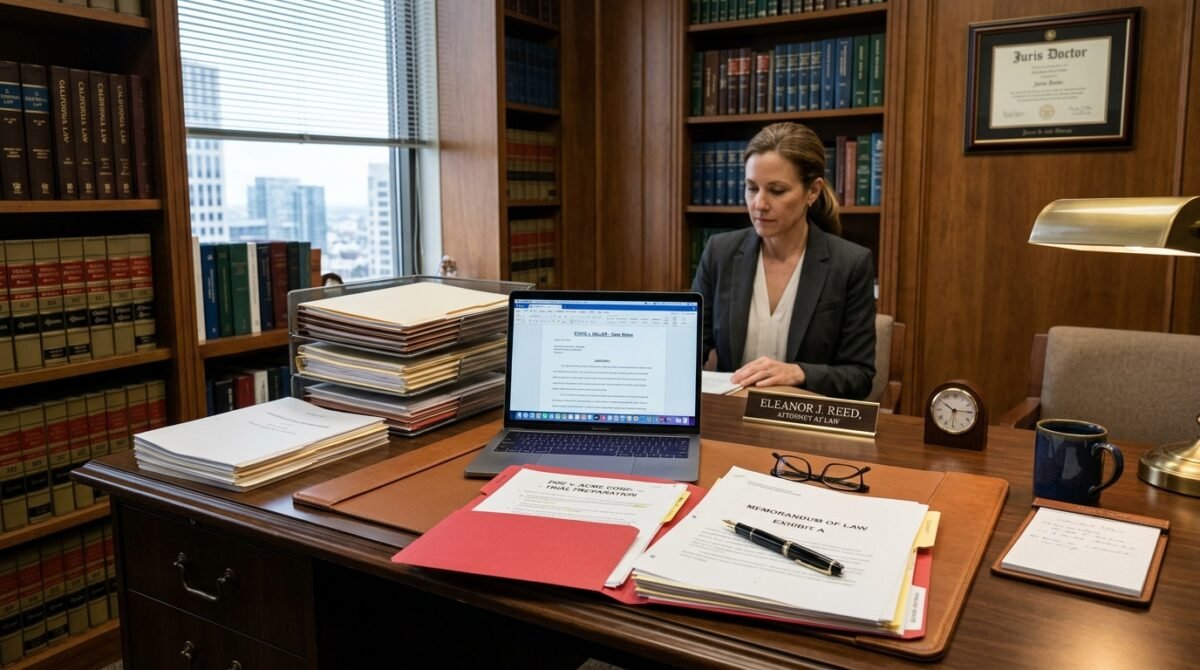
I knew I couldn’t handle this alone. I contacted a divorce attorney the next day. I needed to know exactly where I stood financially. If I was going to leave, I needed to ensure I was protected. My attorney was surprised by the situation, noting that financial infidelity is becoming a more common reason for divorce. We spent hours going over the accounts, tracing every single cent that had left our joint pool.
The process was grueling. I had to face the reality that our assets were tied up, and untangling them would be a long, drawn-out battle. But knowing that I was doing the right thing for my own future made it bearable. I started setting up my own separate accounts, gathering my documents, and preparing for a life on my own. It felt like I was waking up from a long, confusing dream.
Mark tried to fight me on it, claiming that ‘we were still married’ and that I had no right to take those steps. But his threats fell on deaf ears. I had heard enough of his words. I was done with the rhetoric. I was done with the manipulation. I was finally taking action, and for the first time in years, I felt like the architect of my own life. It was a terrifying, exhilarating feeling.
My attorney told me that I had a strong case for alimony and division of assets, especially given the history of the hidden payments. Knowing that I had the law on my side made me feel even more secure in my decision to leave. I wasn’t just walking away from a marriage; I was walking away from a lie. I was reclaiming my life, one step at a time, and I wasn’t going to look back.
The Final Breaking Point

The final straw came when I found out he had taken out a small loan in my name to continue the payments to Sarah after I froze the joint account. That was the moment I knew there was no going back. I wasn’t just dealing with a husband who lied; I was dealing with someone who was willing to ruin my credit and my future to protect his own secrets. I filed for divorce the very next morning.
When I told him, he didn’t cry. He didn’t beg. He just looked at me, and for a second, I saw his true colors—an angry, entitled man who felt victimized by the consequences of his own actions. ‘You’re really going to throw everything away over this?’ he asked, his voice dripping with contempt. I looked at him and felt nothing but relief. The weight of the marriage was finally lifting off my shoulders.
I packed my bags that afternoon, leaving everything that wasn’t legally mine. I didn’t care about the furniture or the trinkets. I only cared about my freedom. As I walked out the door for the last time, the sun was shining, and for the first time in a long time, the world felt open, vast, and full of possibility. I was leaving the pain behind, and I was stepping into a new chapter.
The silence in the house as I left was profound. It wasn’t the heavy, oppressive silence of our marriage; it was the quiet potential of a fresh start. I knew the road ahead wouldn’t be easy, that there would be legal battles and emotional healing to do, but I was ready. I was done with the lies, and I was done with being someone else’s pawn. I was finally, truly free.
The Aftermath: Moving Forward

It has been six months since I left. The divorce is still ongoing, but I’ve moved into a small apartment of my own, and it is the most beautiful place I have ever lived. It’s quiet, it’s mine, and there are no secrets hidden in the drawers or the bank statements. I’ve started therapy, and I’m slowly rebuilding my trust in myself and the world. It’s a slow process, but it’s a necessary one.
I still get occasional calls from his family, but I’ve blocked them all. I have no interest in their drama or their justifications for his behavior. I’ve learned that the people who enable bad behavior are just as toxic as those who commit it. I’ve surrounded myself with friends who support my growth and who value my honesty, and that has made all the difference in my recovery.
Sometimes, I look back at the bank statements and the memories, and I feel a pang of sadness for the time I lost. But then I remind myself that those years were the tuition for the life I’m building now. I learned how to stand up for myself, how to recognize the signs of manipulation, and how to value my own worth. I wouldn’t trade that knowledge for anything, even if it cost me years of my life.
I am stronger now, more resilient than I ever was before. I know that I can handle the hardest challenges that life throws at me, and I know that I will never again settle for anything less than complete, radical transparency in my relationships. I am the hero of my own story now, and I’m looking forward to writing the next chapter on my own terms. The future is bright, and for the first time, it belongs to me.
Conclusion
My journey from a blind, trusting wife to a woman who reclaimed her autonomy was not easy. It required me to face uncomfortable truths about my marriage, my husband, and my own willingness to overlook red flags in the name of peace. Financial infidelity is a silent killer of relationships, and the lesson I learned is that money is never just money—it is a mirror of the trust and values shared between partners.
If you find yourself in a situation where your partner is hiding major expenses or lying about shared finances, do not wait for them to change. Protect your assets, consult with professionals, and prioritize your own security. You are not being petty by asking for transparency; you are being responsible for your future.
I invite you to share your thoughts in the comments below. Have you ever experienced financial betrayal, and how did you handle it? Do you believe, like I do, that financial secrets are just as damaging as an affair? Let’s keep the conversation going and support one another in our pursuit of honest, healthy relationships.
What's your verdict on this dilemma?
Vote below to contribute to the official community consensus.

Have a Dilemma Keeping You Up at Night?
Share your real-life feud, wedding chaos, or relationship crossroads anonymously with our editorial team.
What do you think ?
0 Comments🛡️ Comments are moderated to protect community integrity. Your comment will appear once approved by the editorial team.