
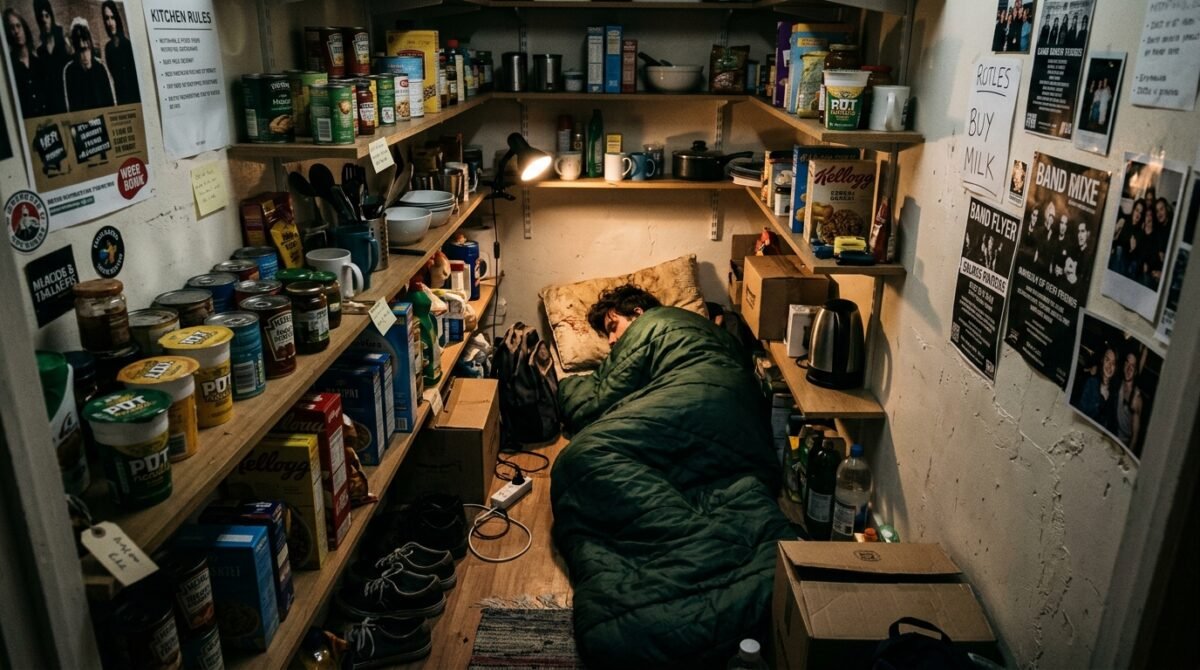
When the housing office assigned Chloe as my roommate, I thought I had hit the jackpot. She was quiet, kept to herself, and spent most of her weekends away visiting family. Our room in the East Wing of campus was modest, but it had a surprisingly deep walk-in pantry that the previous tenants had used to store extra snacks and winter gear. For the first two months, life was manageable—a standard, slightly cluttered college experience defined by late-night study sessions and shared coffee runs. I had no reason to suspect that my living space was being exploited for a profit-making scheme.
The first sign that something was wrong was the noise. It wasn’t the usual roommate-related sounds; it was the soft, rhythmic rustling of a sleeping bag being unrolled at 2:00 AM, long after the dorm quiet hours had begun. At first, I assumed Chloe was hosting a friend, but the frequency became alarming. Every Tuesday and Thursday, she would usher someone into the pantry, exchange a whispered word, and then return to her bed, leaving the door slightly ajar to provide ventilation.
I tried to convince myself that I was being paranoid. Maybe she was helping a friend in a housing crisis? Maybe it was a one-off favor? But the sheer brazenness of the situation started to weigh on me. My personal belongings—my winter coat, my boxes of pasta, my spare toiletries—were being shoved aside to make room for strangers. The moral dilemma wasn’t just about the lack of privacy; it was about the safety violation and the absolute audacity of turning a university-funded room into a rental unit.
The breaking point came when I stumbled upon a Venmo notification on her phone, which she had accidentally left unlocked while she went to the communal shower. The transaction wasn’t for pizza or textbook fees; it was labeled ‘Pantry Suite – 2 nights’ for $120. That was the moment my confusion turned into cold, calculated anger. I wasn’t just living with a roommate anymore; I was living with a landlord who was exploiting our shared space to fleece desperate students.
Choosing to report her felt like a betrayal of the ‘roommate code,’ but staying silent felt like complicity in a serious housing violation. I had to decide: protect a roommate who had no respect for my space, or protect the integrity of the housing agreement and my own peace of mind. I chose the latter, but I had no idea the fallout would be this explosive.
The Tuesday Night Intruder
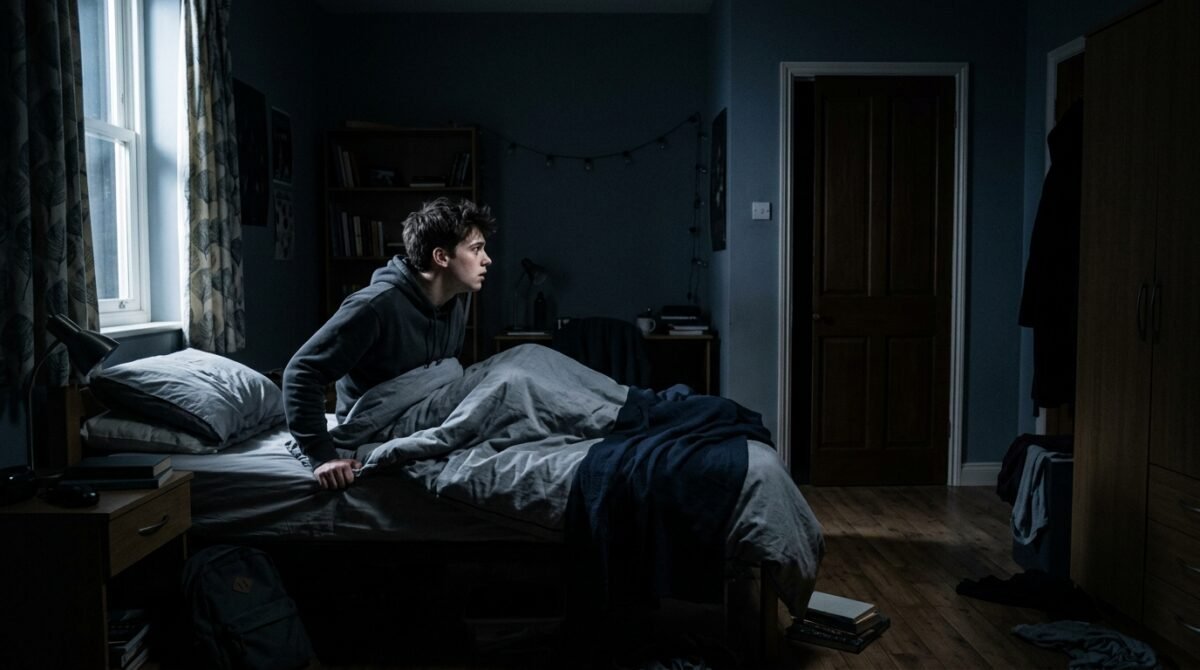
It started as a subtle annoyance. Every Tuesday, I would notice my things shifted on the shelves. A box of crackers moved to the top rack, my winter boots pushed into the corner of the small walk-in pantry. I thought it was just Chloe being disorganized, but the pattern became too consistent. I started staying awake, my book propped up, watching the shadows under the pantry door.
At exactly 1:15 AM, the door clicked open. A figure—a girl I didn’t recognize—slipped inside with a backpack. Chloe stood by the door, acting as a lookout, before closing it gently. It wasn’t a sleepover; it was a transaction. I felt a surge of adrenaline, my heart pounding in my chest as I realized the scale of the deception. This wasn’t a friend in need; this was an enterprise.
The next morning, I confronted her. She was sipping her coffee, looking entirely unbothered. I asked her point-blank who the girl was and why she was sleeping in our pantry. She laughed it off, suggesting I was overreacting and that it was ‘just a temporary favor’ for a girl who had lost her keys. But the way she avoided eye contact told a completely different story.
“You’re really going to make this a thing? It’s a pantry, not a bedroom. I’m just helping someone out. Don’t be so sensitive about a few square feet of storage space.”
— Chloe, defending her actions
I told her it was a fire hazard and a massive violation of our housing contract, but she just rolled her eyes. The entitlement was staggering. She didn’t see the room as our shared home; she saw it as an asset to be leveraged. That afternoon, I started documenting everything—the dates, the times, and the frantic whispers behind the pantry door. I knew I needed evidence before I could approach the Resident Assistant.
The tension in the room became thick enough to cut with a knife. She stopped talking to me, opting for passive-aggressive notes left on the fridge or loud music played at odd hours. I felt like an intruder in my own home, trapped in a cold war with someone who viewed our living space as a business incubator. I wasn’t just dealing with a messy roommate anymore; I was dealing with a person who lacked the fundamental moral compass required for communal living.
The Discovery of the Digital Ledger

The realization that this wasn’t an isolated incident hit me like a physical blow. After I saw the Venmo notification, I began to look for more evidence. It wasn’t hard. Chloe was arrogant enough to keep a notes app document titled ‘Rentals’ on her shared laptop, which I accidentally accessed while looking for a document for our shared class assignment. It was a complete schedule of payments.
The ledger was shocking. She had different rates for weeknights, weekends, and ’emergency’ rentals. She had been doing this for months, charging various students for the privilege of sleeping in our pantry. The total amount she had pocketed was in the thousands of dollars, far exceeding our semester rent. She was making a profit on our university housing, and I was the one paying for the utilities that kept her ‘guests’ comfortable.
I took screenshots of everything. My hands were shaking as I clicked through the entries. Some of the names were people I recognized from our floor—girls who I thought were just struggling with their own housing situations, but were actually being exploited by my roommate. The depth of the manipulation was staggering. She had built an entire ecosystem of exploitation right under the nose of the university administration.
“I can’t believe you looked at my computer! That is a massive breach of privacy! You have no right to snoop through my personal files!”
— Chloe, upon realizing I found the ledger
When she returned and realized I had been on her laptop, the facade finally shattered. She didn’t apologize. Instead, she turned the tables, accusing me of being a stalker and an invader of her privacy. She threatened to report me to the dean for ‘harassing’ her. The gaslighting was immediate and intense. She wanted me to feel like the villain, even though she was the one running an illegal sublet operation.
I realized then that there was no reasoning with her. She lived in a world where she was the exception to every rule, and anyone who challenged her was an enemy. I didn’t argue back. I simply walked out of the room, closed the door behind me, and headed straight for the Resident Assistant’s office. The time for confrontation was over; it was time for action.
An Unexpected Audience at the RA Office
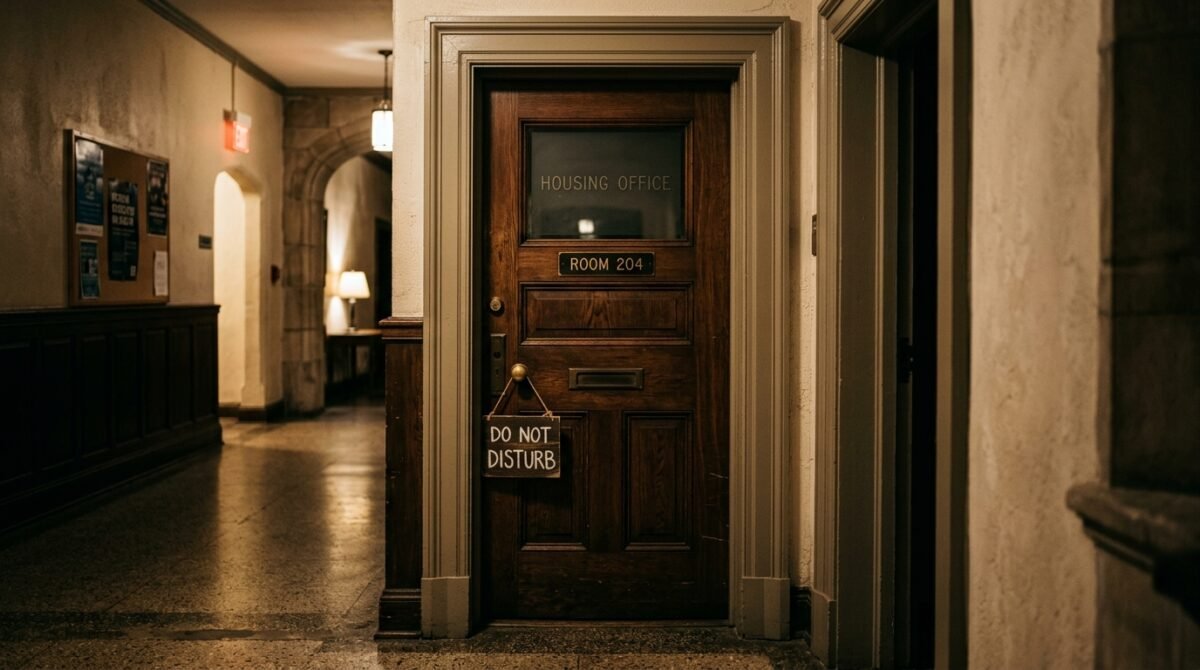
When I arrived at the RA office, I wasn’t just met by a student worker; I was met by the head of our dormitory housing council. I laid out the evidence—the logs, the Venmo screenshots, and the detailed timeline of when the ‘guests’ arrived and departed. The RA’s face went from professional indifference to pure, unadulterated shock. He had clearly never seen a case of ‘dorm room entrepreneurship’ quite like this.
The meeting lasted nearly an hour. They took my information seriously, immediately pulling up our housing agreement. The clauses regarding subletting and unauthorized overnight guests were clear. By charging money, Chloe hadn’t just violated a dorm rule; she had breached the legal terms of her contract with the university. The risk she had placed us all in—not to mention the liability—was a nightmare for the administration.
As I walked back to my dorm, I felt a sense of relief, but also a lingering dread. I knew that once they intervened, the fallout would be loud and public. Chloe wouldn’t go down without a fight. She was the type of person who would rather burn the entire building down than admit she was wrong. I prepared myself for the inevitable blow-up, knowing that my living situation was about to change irrevocably.
“We appreciate you coming forward. This is a severe breach of housing policy. Please stay in the common room; we are heading up to your unit right now to conduct an inspection.”
— The Resident Assistant, during our meeting
The walk back was agonizing. I watched as three housing officials walked past me toward our building. I stayed in the lobby, watching through the glass doors as they entered the elevator. I knew the moment they knocked on that door, my life as a normal student would be over. The privacy of my room, the relative peace of my study space—all of it was about to be dismantled by the consequences of my roommate’s greed.
I waited for nearly an hour. When the door finally opened, I saw Chloe being escorted out by security, her face a mask of fury and humiliation. She didn’t look at me. She didn’t say a word. She just kept walking, her belongings trailing behind her in a haphazard collection of bags. The pantry saga was officially over, but the aftermath had only just begun.
The Aftermath of the Forced Eviction
The following days were a blur of paperwork and awkward encounters. The university didn’t just evict Chloe; they launched an investigation into the entire floor, trying to see if other rooms had been turned into illicit hostels. I became the pariah of the dorm almost overnight. To the students who didn’t know the full story, I was the ‘snitch’ who got a student kicked out during the middle of the semester.
Chloe’s friends, who clearly didn’t know about the money she was making, painted a picture of a girl who was just trying to help her classmates, and I was the cold-hearted roommate who couldn’t stand a little kindness. The rumors started spreading. People whispered as I walked through the common areas. I was accused of being jealous, petty, and spiteful. The social pressure was immense, but I held onto my truth.
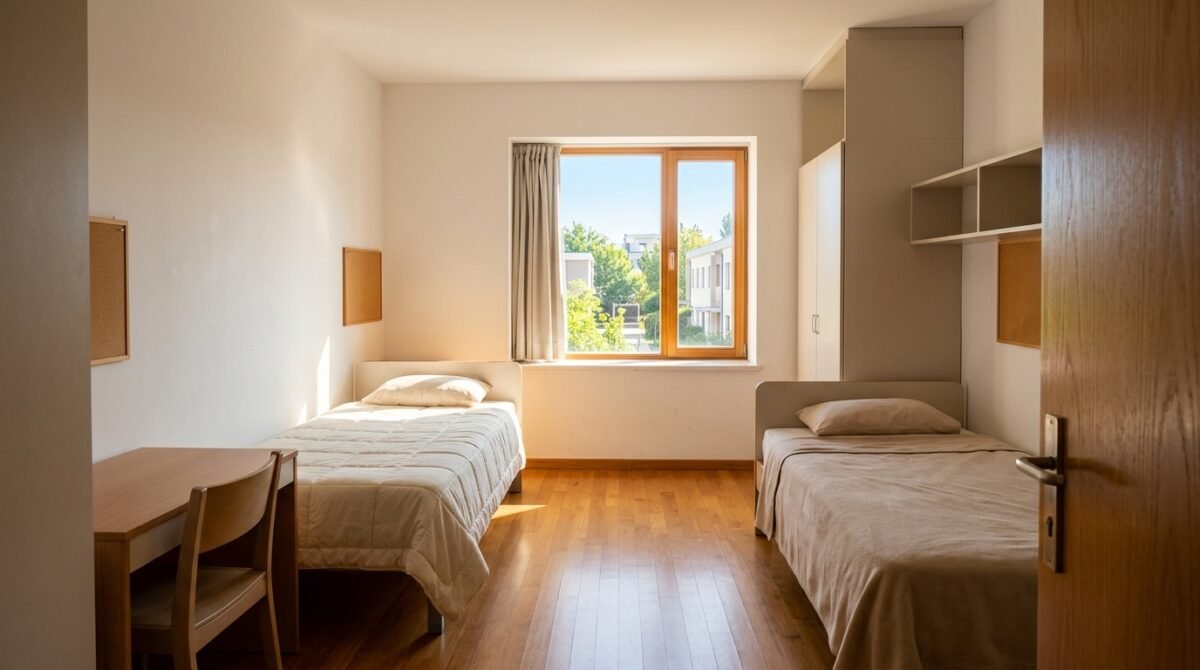
I received dozens of messages. Most were from strangers asking if I was the ‘pantry girl’—a nickname that felt both absurd and hurtful. I had to shut down my social media accounts just to escape the barrage of notifications. The university, to their credit, moved me to a single room on the other side of campus, which gave me the space I needed to breathe and process what had happened.
“You seriously ruined her life over a few nights in a pantry? You have no idea what she was going through. She was trying to help people who didn’t have housing. You’re a monster.”
— A text message from one of Chloe’s friends
The isolation was hard, but it was better than the stress of living with a ticking time bomb. I spent my nights studying in my new, quiet, empty room, realizing how much energy I had spent just trying to survive my own living situation. The experience taught me a hard lesson about boundaries and the importance of speaking up, even when it’s unpopular.
Looking back, I don’t regret it. The safety of the building, the legal obligations of the university, and my own mental health were more important than a roommate’s desire for extra cash. But the social cost was real. I had to learn how to stand tall in the face of judgment, knowing that while some people saw me as a villain, I was simply the one who refused to participate in a lie.
Voices from the Internet: The Reddit Debate
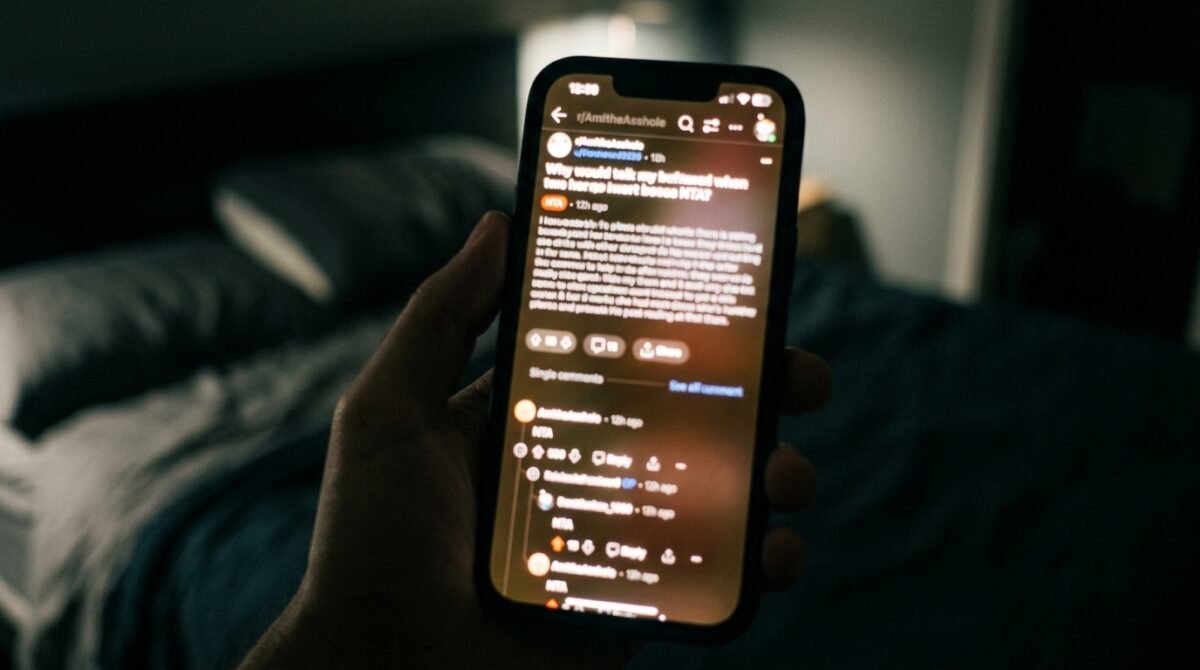
When I finally posted my story to a popular subreddit, I expected a mix of reactions, but I wasn’t prepared for the sheer volume of support and vitriol. The post went viral within hours, garnering tens of thousands of upvotes and thousands of comments. The internet was truly divided on whether I had acted as a hero or a snitch.
One camp argued that I had done the right thing, citing the severe safety and legal implications of running an illegal sublet in a university dorm. They pointed out that if a fire had occurred or if one of the ‘guests’ had stolen something, the university would have been held liable, and our living situation would have been even more precarious. To them, my actions were a necessary intervention.
The other camp was much more cynical. They argued that even if the behavior was wrong, reporting it was a ‘nuclear option.’ Some suggested I should have tried to work out a compromise, or at least talked to the guests themselves before going to the housing office. They labeled me as someone who enjoyed the power of getting someone in trouble, regardless of the consequences.
“NTA. Your roommate wasn’t ‘helping people out’; she was running a business in a space she didn’t own. The safety risks alone are enough to justify the report. You did the right thing.”
— u/CampusSafetyAdvocate (Top Comment, 32.4k upvotes)
The debate was intense. I found myself reading comments at 3:00 AM, feeling a strange mix of validation and exhaustion. It was a digital trial by fire, and every possible perspective was represented in the thread. It forced me to re-examine my own motivations. Had I been too quick to go to the RA? Could I have handled it differently?
Ultimately, the consensus started to shift toward my side. People began sharing their own stories of nightmare roommates and the realization that ‘dorm life’ sometimes requires boundaries that aren’t for the faint of heart. The support helped me realize that while the social cost was high, I had protected myself and the university community from a situation that could have ended in a much worse way.
The Legal and Financial Consequences

The university’s response went far beyond just kicking Chloe out. They held a hearing to determine if she would be expelled for the unauthorized use of university property. The financial aspect was the most complex part—the school wanted to recover the money she had made, arguing that it rightfully belonged to the university’s housing fund, as it was earned on their property.
Chloe’s parents got involved, and the situation turned into a legal battle of sorts. Her defense was that she was providing a service, but the university was unmoved. They argued that she had essentially turned a school resource into a commercial enterprise, which was a direct violation of her student code of conduct. The potential for expulsion hung over her head for weeks.
I was called in as a witness multiple times. Each meeting was grueling, as I had to recount the details of the pantry arrangement over and over. I had to prove that I didn’t participate, that I didn’t receive any of the money, and that I had reported her as soon as I realized the extent of the operation. It was a draining process that made me feel like I was on trial as well.
“We are investigating the full extent of the operation. Your cooperation has been essential. Please be prepared for further questions as we look into the potential tax and legal implications of these transactions.”
— A letter from the University Dean of Students
The stress of the legal proceedings started to take a toll on my grades. I had to consult with a student legal aid office to ensure I wasn’t being implicated in any way. It was a nightmare. I came to college to study, not to become a central character in a university-wide scandal. I learned that bureaucracy is slow, tedious, and entirely unforgiving.
In the end, Chloe was not expelled, but she was permanently barred from university housing and received a heavy fine. It was a compromise that satisfied the university but left Chloe bitter and looking for someone to blame. She blamed me for the fine, for the loss of her housing, and for ‘ruining her reputation.’ I realized then that she would never take responsibility for her own actions.
Reflections on Privacy and Boundaries

Looking back, the entire experience served as a brutal introduction to the reality of adult relationships. In a dorm, you are forced into proximity with someone you didn’t choose, and you have to navigate the tension between being a good roommate and protecting your own interests. I learned that sometimes, being a ‘good person’ means setting firm boundaries, even if it makes you unpopular.
The pantry incident taught me that people will often try to push your limits to see what they can get away with. If you don’t push back early, the behavior only escalates. I had been too lenient in the beginning, allowing her to store things in the pantry, which opened the door for her to take over the space entirely. I realized that my own lack of boundaries had inadvertently facilitated her scheme.
I’ve become much more cautious since then. I don’t share my space as freely, and I am far more observant of the people I live with. I also learned the importance of documenting everything when things start to feel off. If I hadn’t kept those logs and screenshots, the university might never have taken my claims seriously. Being organized was my saving grace.
“I thought I was being a good roommate by staying out of her business, but I realize now that silence is just another form of participation. I will never stay quiet when my boundaries are being violated again.”
— My personal journal entry after the incident
The social cost of being the person who reports a problem is high, but the cost of living with the consequences of a situation you didn’t create is higher. I lost a few friends in the process, but I gained a deeper sense of self-respect. I learned that my integrity is worth more than the approval of people who would rather see the rules broken than see a wrong made right.
I am now in a different living arrangement, and I’ve never been happier. The peace of mind that comes with living in a space where I know exactly what is happening behind every closed door is worth more than words can describe. I have finally moved past the ‘pantry girl’ stigma, and I am focused on my studies and my future, leaving the drama behind.
The Lesson of the Rental Economy

What happened to me wasn’t just a dorm room squabble; it was a symptom of a larger problem. The ‘hustle culture’ that permeates college campuses encourages students to find any way to make a quick buck, often at the expense of others. Chloe thought she was being smart, being an ‘entrepreneur,’ but she was really just exploiting the basic need for housing among her peers.
The way she justified it to herself was the most fascinating part. She viewed the pantry as an underutilized asset. She didn’t see the safety concerns or the fairness of the situation; she saw a revenue stream. That perspective is, unfortunately, common in a world that prizes profit over people. It’s a mentality that justifies anything as long as the math works out in the end.
I think the reason this story went viral is because it touches on the fear we all have of not being able to control our own environments. We all want to feel safe where we sleep. When someone violates that sense of safety, it strikes a chord. People are tired of feeling like their personal space is being invaded, whether it’s by technology, coworkers, or in this case, a greedy roommate.
“When you normalize the commodification of every square inch of space, you lose the ability to have a genuine home. We need to remember that some things should remain private, and some spaces should remain sacred.”
— An anonymous comment from the Reddit thread
I hope that if anyone else is in a similar situation, they don’t feel the need to suffer in silence. The pressure to be ‘chill’ or ‘easygoing’ is often used as a weapon to keep people from speaking up about genuine grievances. Don’t let someone else’s definition of ‘cool’ stop you from standing up for what is right and what is yours.
The rental economy has a place, but not in a shared dorm room. There are rules and ethical considerations that keep our society functioning, and when those are ignored for personal gain, there should be consequences. I’m glad I held the line, even if it meant being the person that everyone was talking about for a few weeks.
Moving Forward: My Life Today

Today, I am in my senior year, and I have moved off-campus to an apartment where I live alone. It’s a luxury, I know, but after the pantry scandal, it was a necessary step for my mental health. I’ve found a group of friends who respect boundaries and understand the importance of mutual respect in living arrangements.
I still occasionally hear whispers when someone brings up the ‘pantry girl’ story, but it doesn’t bother me anymore. I own my actions. I reported a violation, I protected my living space, and I stood by my decision. The drama is a part of my college history, but it no longer defines who I am or what I do every day.
I’ve learned that life is about more than just dealing with the conflicts that come our way; it’s about how we choose to respond to them. I could have stayed silent, I could have moved out quietly, or I could have tried to negotiate with Chloe. But I made the choice that felt true to my values, and that is what matters most in the end.
“You are not defined by the conflict someone else brought into your life. You are defined by how you chose to walk through it and what you learned on the other side.”
— A piece of advice from my therapist
If you are struggling with a difficult roommate, my best advice is to talk early, set clear boundaries, and if those are ignored, don’t be afraid to use the resources provided to you. You are not a ‘snitch’ for expecting a standard of living that you pay for and that you are entitled to under your contract.
I’m looking forward to graduation and the next chapter of my life. I’ve learned more about myself in these last few years than I ever could have in a classroom. I’ve learned that I am resilient, that I am capable of standing up for myself, and that I deserve a space where I can truly be at home.
Conclusion
Reflecting on this ordeal, it is clear that the conflict wasn’t just about a pantry—it was about respect, integrity, and the fundamental human need for a safe space to call home. My journey from a confused roommate to a whistleblower was fraught with difficulty, but it ultimately led to a stronger sense of self and a better understanding of the value of boundaries.
The internet community, with all its debates and differing perspectives, helped me realize that I wasn’t alone in facing these challenges. It sparked a necessary conversation about the pressures of modern college life and the dangers of allowing ambition to override our sense of right and wrong. I hope that sharing this story can serve as a reminder to others that their voice matters, and that they have the right to stand up for their peace of mind.
How about you? Have you ever had to draw a line in the sand with a friend or roommate, only to face the social consequences? Do you believe there is ever a scenario where ‘hustle culture’ justifies breaking the rules, or should there be zero tolerance for this type of exploitation? Let me know your thoughts in the comments below—I’d love to hear your experiences.
What's your verdict on this dilemma?
Vote below to contribute to the official community consensus.

Have a Dilemma Keeping You Up at Night?
Share your real-life feud, wedding chaos, or relationship crossroads anonymously with our editorial team.
What do you think ?
0 Comments🛡️ Comments are moderated to protect community integrity. Your comment will appear once approved by the editorial team.