
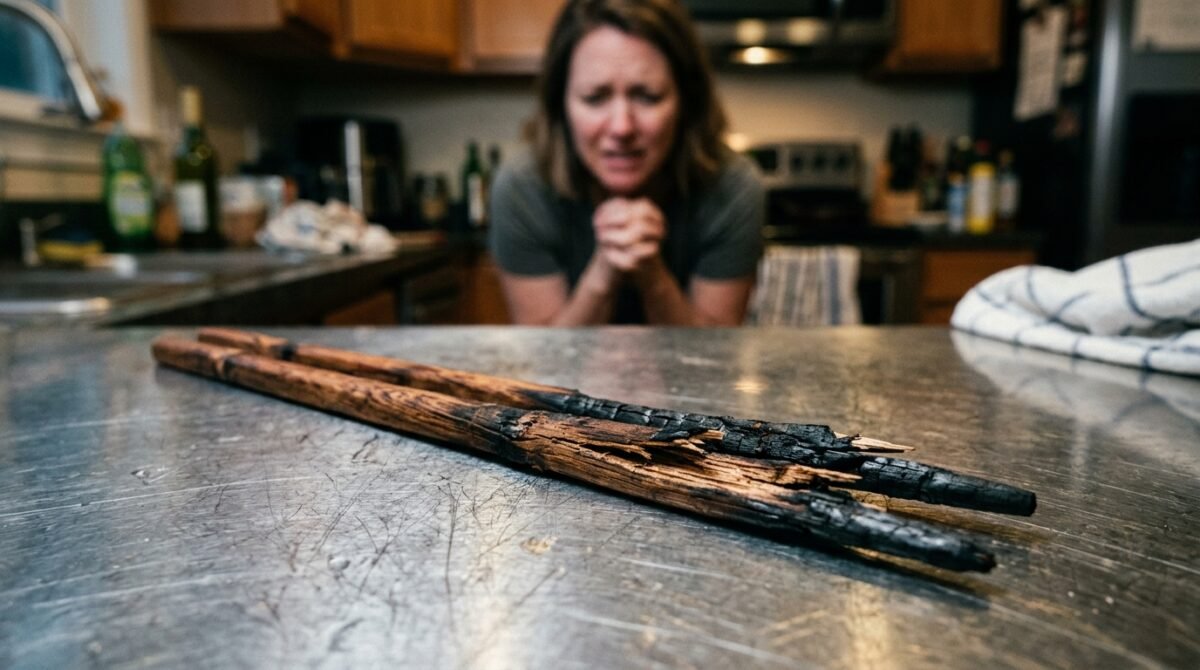
Living with someone else is a crucible of character. It tests your patience, your hygiene standards, and your ability to coexist with someone who thinks ‘communal property’ means ‘everything you own is free game.’ For two years, I lived with Mark, a man whose sense of entitlement was as expansive as his disregard for boundaries. I had warned him repeatedly about my belongings, specifically the heirloom items I kept in a private drawer in the kitchen.
The issue wasn’t just the chopsticks. They were a gift from my grandfather, hand-carved from rare mahogany in the 1950s, featuring intricate, hand-painted gold leaf inlay that had survived decades of careful hand-washing and oiling. They were functional art. To Mark, however, they were just sticks that didn’t match the cheap plastic set he bought on clearance. His refusal to respect the ‘no-touch’ rule had been a point of contention for months, but I never expected the level of sheer, reckless negligence that occurred on that fateful Tuesday.
When I walked into the kitchen and heard the rhythmic, violent clattering of the dishwasher, I didn’t think much of it until I smelled the distinct, acrid scent of burning wood and melting lacquer. I rushed to the unit, pried it open mid-cycle, and saw my legacy—my history—floating in a pool of hot, soapy water, the wood warped into grotesque, unusable shapes and the gold leaf peeled away into the drain filter.
This wasn’t an accident. It was the result of a persistent, arrogant belief that nothing I owned mattered more than his convenience. The confrontation that followed wasn’t just about kitchenware; it was about the fundamental erosion of respect in a home that was supposed to be a sanctuary. When he laughed it off, telling me to ‘get over it’ and buy some new ones at the dollar store, I knew that logic had failed. It was time for the law to step in.
The Inevitable Collision of Wills

The tension had been bubbling under the surface for months. It started with the ‘borrowing’ of my high-end coffee beans, which escalated into the unauthorized use of my professional-grade chef’s knife, which he used to pry open paint cans. Every time I confronted him, Mark would offer a shrug and a dismissive comment, framing my protective nature as ‘uptight’ or ‘snobbish.’ He seemed to take personal offense that I had items he couldn’t afford or didn’t appreciate.
I had established a clear boundary: the kitchen was shared, but the top-left drawer was mine. It held the items that were either expensive or sentimental. I had explained the history of the chopsticks, the care they required, and the specific danger posed by heat and detergents. Mark had nodded, but his eyes always glazed over, a tell-tale sign that he was just waiting for me to stop talking so he could go back to his own life.
On that Tuesday, the environment felt particularly hostile. Mark had been complaining about a ‘lack of clean silverware’ despite the dishwasher sitting full of clean dishes that he refused to unload. He had decided, in his infinite laziness, to just shove everything he could find into the machine rather than spend five minutes hand-washing his own bowls.
“I don’t get why you’re so obsessed with these stupid sticks. They’re just wood. Everything belongs in the dishwasher if you want it clean, and I’m not going to sit here and scrub forks like a peasant because you have weird hoarding issues.”
— Mark, during our previous argument
I didn’t realize until it was too late that he had cleared out my private drawer entirely. He had convinced himself that by forcing my hand, he was ‘teaching me’ a lesson about accessibility. He didn’t just ruin the chopsticks; he threw in a set of hand-blown glass stirrers as well. The lack of remorse was the most shocking part. He stood there, leaning against the counter, eating a microwave burrito while I pulled the wreckage from the steam-filled dishwasher.
The Text That Sealed His Fate
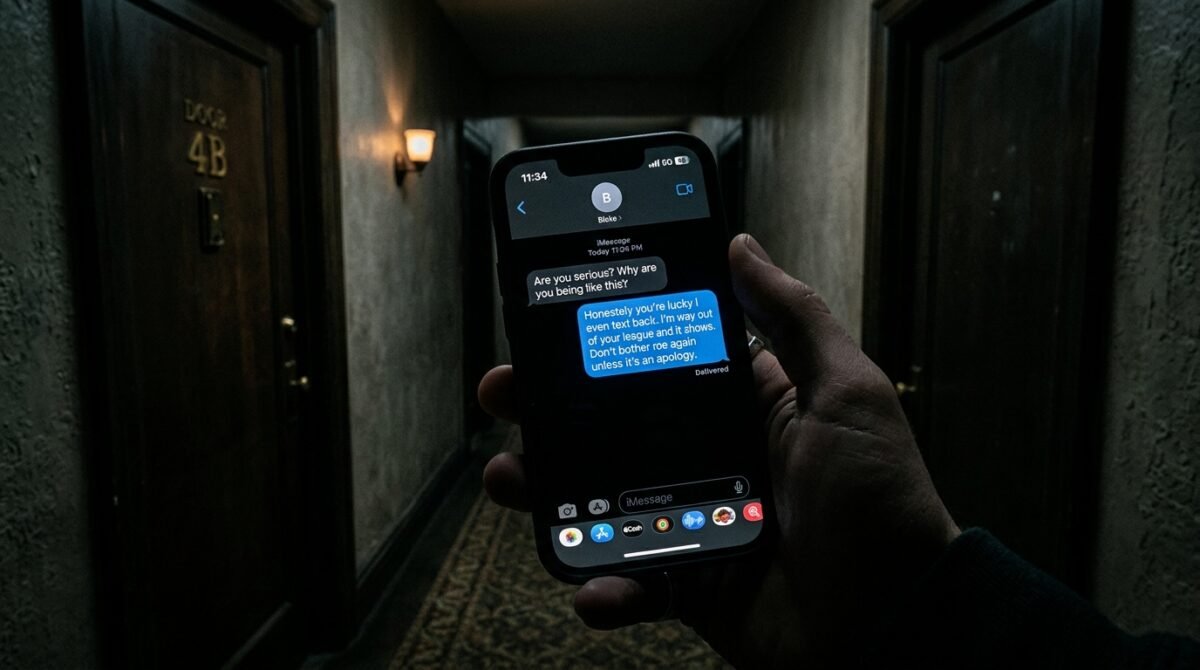
After the initial shock, I retreated to my room to assess the damage. The chopsticks were beyond repair, the mahogany split down the center and the gold leaf entirely dissolved. I sent him a calm, albeit furious, text message asking him to acknowledge that he had violated my property and to discuss how he planned to make it right. His response was chillingly dismissive.
“I’m not paying for your hobby collection. If you leave stuff in the kitchen, it gets washed. That’s how a house works. Stop acting like you’re royalty just because your grandpa gave you some wood scraps. If you want to sue me for $5, go ahead, but you’ll look like an idiot.”
— Leaked Text from Mark to OP
That text was the smoking gun. It proved intent. He didn’t just accidentally load them; he knew they were mine and he knew I didn’t want them in the machine. He did it specifically to spite me. I took screenshots, backed them up to the cloud, and printed them out. I also reached out to an appraiser I knew from a local antique shop who had valued the set years ago for insurance purposes.
The valuation was sobering. Because of the age, the provenance, and the rarity of the inlay work, the set was valued at $3,200. I realized then that this wasn’t just a petty roommate squabble anymore. This was a significant financial loss caused by a direct act of vandalism. I stopped speaking to Mark entirely, communicating only through written notes regarding household logistics, while I prepared the filing for small claims court.
The silence in the apartment was deafening. Mark seemed confused by my lack of yelling. He had expected an emotional outburst, a dramatic screaming match he could play off as ‘hysteria.’ Instead, he got cold, clinical silence. It unnerved him. He began leaving passive-aggressive notes of his own, questioning why I was acting so ‘weird’ and demanding that I start talking to him again.
The Legal Filing and the Paper Trail
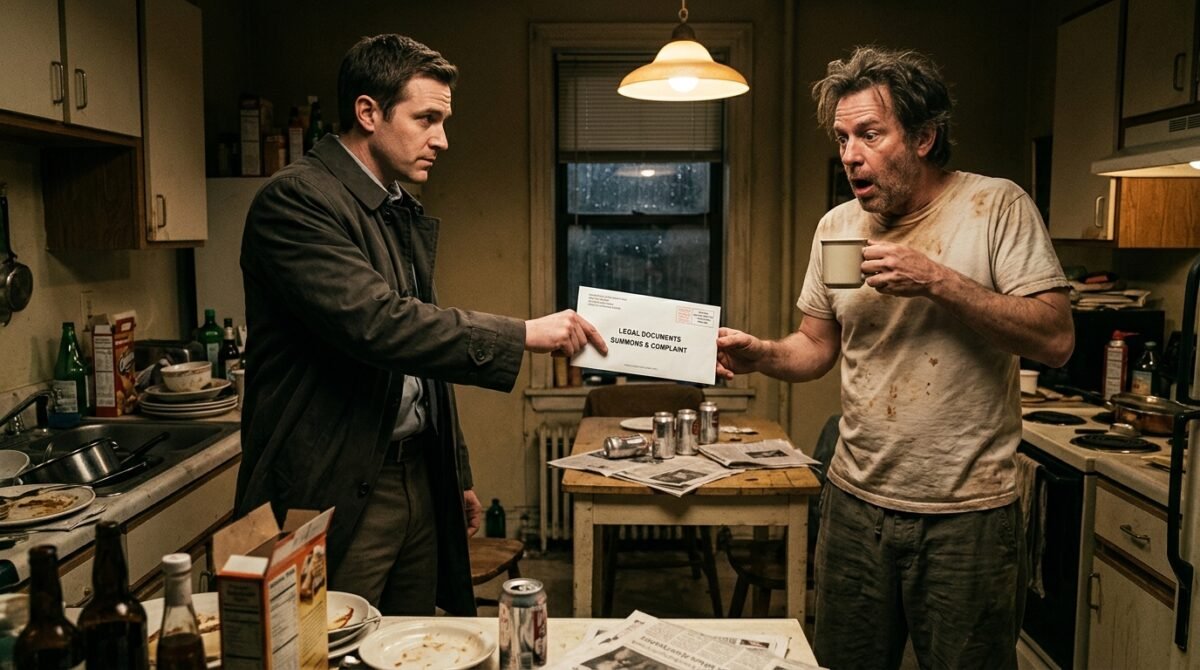
Filing in small claims court was surprisingly straightforward. I had my documentation: the appraisal, the photos of the ruined items, the text messages, and even a copy of our original roommate agreement where I had stipulated that communal areas were shared but personal property was strictly off-limits. I was surprised at how much satisfaction I felt just paying the filing fee.
When the process server showed up at our apartment, Mark was genuinely shocked. He had assumed my talk of ‘legal action’ was just a bluff. When he was handed the papers, he turned pale. The reality of a court summons, with the potential for a judgment that could affect his credit score, finally punctured his bubble of entitlement.
He tried to negotiate. He knocked on my door late that night, his tone entirely different—meek, apologetic, and desperate. He offered to buy me ‘a new pair of chopsticks’ from Amazon. I didn’t even open the door. I told him through the wood that all communication from this point forward would be recorded for the court.
“Look, I’m sorry, okay? I didn’t know they were worth that much. I thought you were just being dramatic. Can’t we just drop this? I’ll buy you a nice set, I promise. Please, I can’t afford to have a judgment against me.”
— Mark, through the bedroom door
I didn’t budge. The damage was done, not just to the chopsticks, but to the trust that makes living together possible. I had already started looking for a new place to live, even if it meant breaking the lease. Being under the same roof as someone who viewed my boundaries as suggestions was no longer an option.
The Day in Court: A Lesson in Accountability
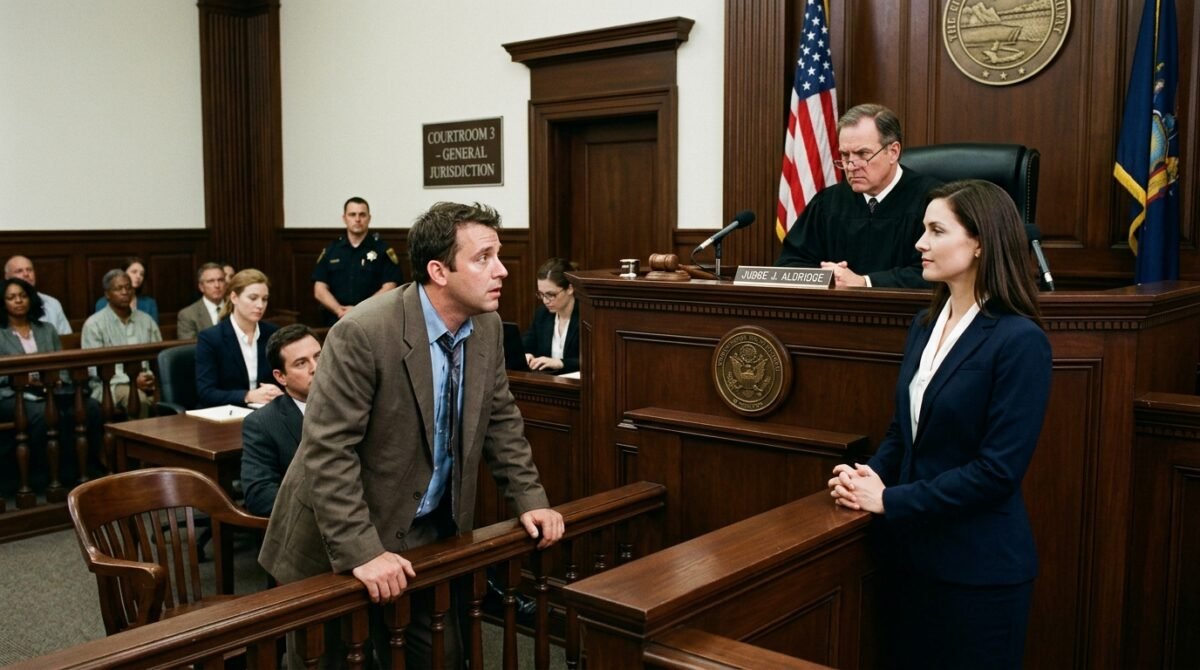
The courtroom was smaller and less intimidating than I had imagined. It felt more like a boardroom with a judge presiding over a dispute between two neighbors. Mark arrived wearing a suit that was clearly too big for him, trying to play the part of a ‘misunderstood youth.’ I wore business casual, kept my files organized, and spoke only when spoken to.
When it was my turn to speak, I laid out the facts. I didn’t get emotional. I didn’t bring up the coffee beans or the knife. I focused solely on the destruction of the property and the evidence that he knew exactly what he was doing. The judge, a stern woman with a sharp eye for detail, listened intently to every word.
Mark’s defense was abysmal. He tried to claim that the chopsticks were ‘trash’ he found in the drawer and that he was just ‘cleaning up.’ When the judge asked him if he had been told the items were private, he stuttered. When the judge read his own text message aloud—the one where he explicitly insulted the value of the items—the look on his face was priceless.
“Mr. Miller, the text you sent clearly indicates you were aware of the claimant’s request for these items to be kept separate. Regardless of your opinion on their value, you do not have the right to destroy the property of another person because you find it inconvenient. The law is not concerned with your aesthetic preferences.”
— The presiding Judge
The judgment was swift. He was ordered to pay the full appraised value, plus court costs. He was visibly shaken, his face turning a shade of red that I’ll never forget. He tried to argue for a payment plan, but the judge told him that was a matter for him and the collections agency if he didn’t pay in full within thirty days.
The Fallout and the Final Move

The weeks following the court date were the most awkward of my life. We were still roommates, technically, until my lease expired, but we were living in a state of total, cold-war isolation. Mark wouldn’t look at me. He stopped using the kitchen entirely, opting for takeout every single night. The apartment felt like a tomb.
I kept to myself, packing my belongings one by one, ensuring that every single item I owned was accounted for. I moved into a new studio apartment the moment I could. I didn’t even say goodbye to him. I just left the keys on the counter and walked out the door. The feeling of freedom was overwhelming.
I eventually received the payment, though it took a nudge from a collections agency once the thirty-day window passed. He had to sell his gaming console to cover it, which gave me a grim sense of satisfaction. It wasn’t about the money—I had already donated the settlement to a local arts charity—it was about the principle.
He sent me one final text the day I moved out. It wasn’t an apology. It was a rant about how I had ‘ruined his life’ over some ‘stupid sticks.’ I blocked his number immediately. I didn’t need to read any more of his self-pity. The chapter was closed, and I had learned a valuable lesson about the importance of being unapologetic when it comes to defending your boundaries.
Community Reaction: Was I Too Harsh?

I posted about the experience on a popular legal advice subreddit, wanting to see if I was actually the villain. The response was overwhelming. Thousands of people weighed in, and the consensus was not what I expected. Most people were firmly on my side, citing horror stories of their own roommates destroying property.
“This isn’t about chopsticks. It’s about a total lack of respect for personal autonomy. If he can’t respect a drawer, he can’t respect a person. You did the right thing by taking him to court. It’s the only language people like that understand.”
— u/LegalEagle88 (Top Comment, 32.1k upvotes)
There were, of course, the contrarians. Some argued that I was ‘overreacting’ or that suing a roommate was a ‘nuclear option’ that destroyed any chance of reconciliation. But I hadn’t wanted to reconcile. I wanted justice. The internet, in its infinite wisdom, seemed to recognize that boundaries are not negotiable and that consequences are the only way to teach a lesson to someone who refuses to learn.
Seeing the support from thousands of strangers was validating. It confirmed that my frustration wasn’t a product of me being ‘uptight’ or ‘snobbish.’ It was a normal, healthy reaction to someone who was actively violating my space. The debate in the comments section turned into a massive thread about roommate horror stories, proving that this wasn’t an isolated incident.
The Psychological Toll of Entitlement

Looking back, the most draining part wasn’t the court case—it was the gaslighting. Mark had spent months making me feel like I was the problem. He made me question if I was actually being too protective, if I was being a ‘bad’ roommate for keeping things private. It took the court ruling to finally silence that internal voice of doubt.
Living with an entitled person is a form of psychological wear and tear. You start to shrink yourself to avoid conflict. You stop using your own things. You stop hosting guests. You start walking on eggshells in your own home. Realizing that I had the power to stop that cycle, to set a hard limit, and to enforce it through the proper channels, was a turning point for my own self-esteem.
I’ve since moved in with a friend who understands boundaries implicitly. We have a shared pantry, but we have a clear understanding of what is communal and what is personal. It’s not a big deal, and it’s not a source of tension. It’s just living. The difference is night and day, and I realize now how much I had been suppressing my own needs just to keep the peace with a person who didn’t care about my comfort.
Financial Lessons in Small Claims
One thing I learned through this process is that small claims court is a powerful tool for the average person. We often think that legal action is reserved for millionaires or corporations, but the system is designed precisely for these kinds of disputes. If you have clear evidence, documentation, and a legitimate claim, you don’t need a high-priced lawyer to get justice.
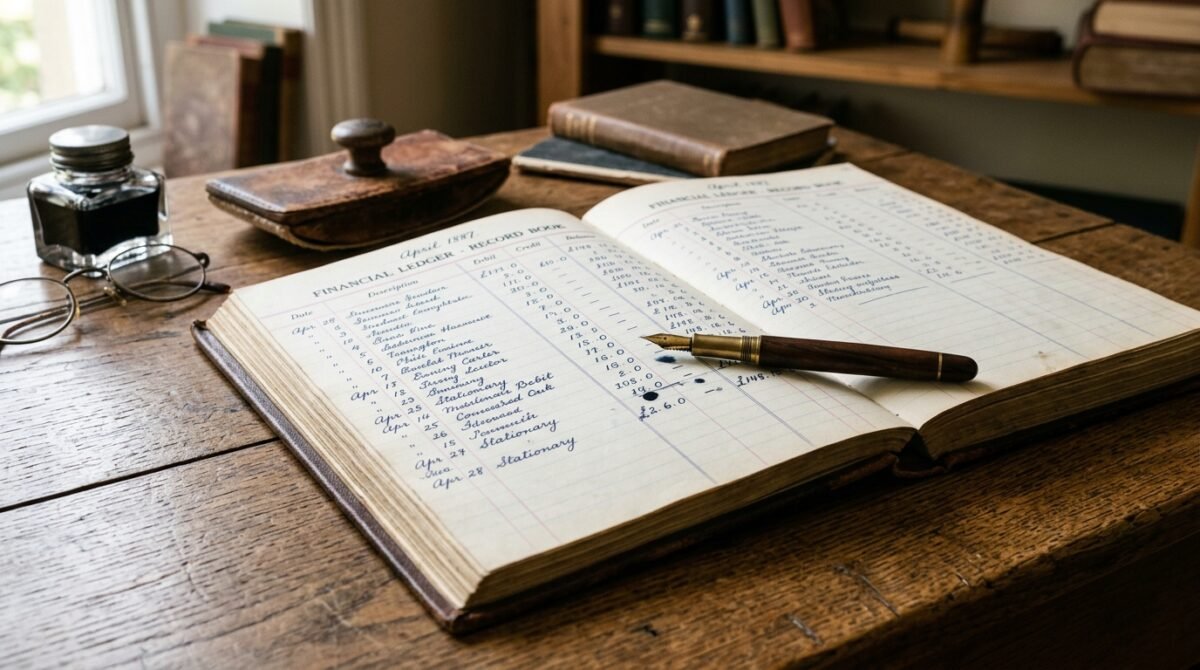
I kept a ledger of every conversation, every text, and every photo. That documentation was the deciding factor. The judge didn’t care about my feelings; she cared about the facts. The fact that he admitted to the destruction in a text message was the nail in his coffin. For anyone else in a similar situation, my advice is simple: Document everything and do not be afraid to use the system.
It’s also important to know the value of your property. If I hadn’t had that appraisal, I would have had a much harder time proving the worth of the chopsticks. People often dismiss antique or sentimental items as ‘worthless’ because they don’t have a modern receipt, but if you have a professional valuation, that is a legitimate financial asset. Don’t let someone bully you into believing that your property doesn’t have value just because they wouldn’t choose to own it themselves.
The Myth of ‘It’s Just a Thing’

Mark’s favorite defense, and the defense of many who break boundaries, was that ‘it’s just a thing.’ This is a classic tactic used to minimize someone’s pain and invalidate their perspective. When someone says this to you, they are essentially saying that your attachment to your own life and history is trivial.
Everything we own carries a weight. Whether it’s an heirloom, a tool you use for work, or even just a piece of furniture you worked hard to afford, these things are part of our identity and our stability. When someone destroys those things, they aren’t just breaking objects; they are attacking your sense of security and your autonomy. It’s not about the chopsticks. It’s about the person who decided they had the right to decide what was valuable in your life.
By the time the case was over, I realized that I had gained more than just the value of the chopsticks. I had reclaimed my own voice. I had stood up for myself in a way that I hadn’t done for a long time. The money was just a byproduct of a much more significant victory: the victory over the fear of being ‘the difficult one.’ I am no longer afraid to be difficult if it means protecting what is mine.
Reflecting on the Silence After the Storm

It has been a year since I moved out, and the air is clear. I don’t think about Mark anymore, and I certainly don’t think about the chopsticks. The anger has dissipated, replaced by a sense of calm and clarity. I learned that you cannot change an entitled person, but you can change how you interact with them—by removing yourself from their orbit entirely.
There were moments, early on, where I wondered if I should have just let it go. Would life have been easier if I had just bought new chopsticks and moved on? Maybe. But I would have lived with the knowledge that I let someone walk all over me. I would have lived with the resentment. Taking him to court was an act of closure.
I hope that Mark learned something, though I doubt it. People like that tend to move on to the next roommate, the next victim of their ‘convenience.’ But that is no longer my concern. My concern is my home, my peace, and the people I choose to share it with. I’ve learned to communicate my boundaries clearly at the start of every lease, and I’ve learned that when those boundaries are ignored, it’s time to find a new door to walk through.
Conclusion
This experience taught me that we are often taught to be ‘polite’ at the expense of our own well-being. We are told to keep the peace, to tolerate the intolerable, and to minimize our own needs to avoid being labeled as ‘dramatic.’ I am here to tell you that it is okay to be dramatic when someone is actively destroying your life and your property.
The aftermath of my lawsuit wasn’t just about recovering funds; it was about reclaiming my peace of mind. Standing in that courtroom and hearing the judge rule in my favor was the loudest silence I’ve ever heard. It was the sound of a boundary being validated by the law of the land.
I want to hear from you. Have you ever had to take drastic measures to deal with an entitled roommate, partner, or family member? What was your ‘final straw,’ and did you feel empowered by taking a stand, or did it feel like too much conflict? Share your stories below—let’s discuss where we draw the line and how we hold onto our dignity in the face of blatant disrespect.
What's your verdict on this dilemma?
Vote below to contribute to the official community consensus.

Have a Dilemma Keeping You Up at Night?
Share your real-life feud, wedding chaos, or relationship crossroads anonymously with our editorial team.
What do you think ?
0 Comments🛡️ Comments are moderated to protect community integrity. Your comment will appear once approved by the editorial team.