
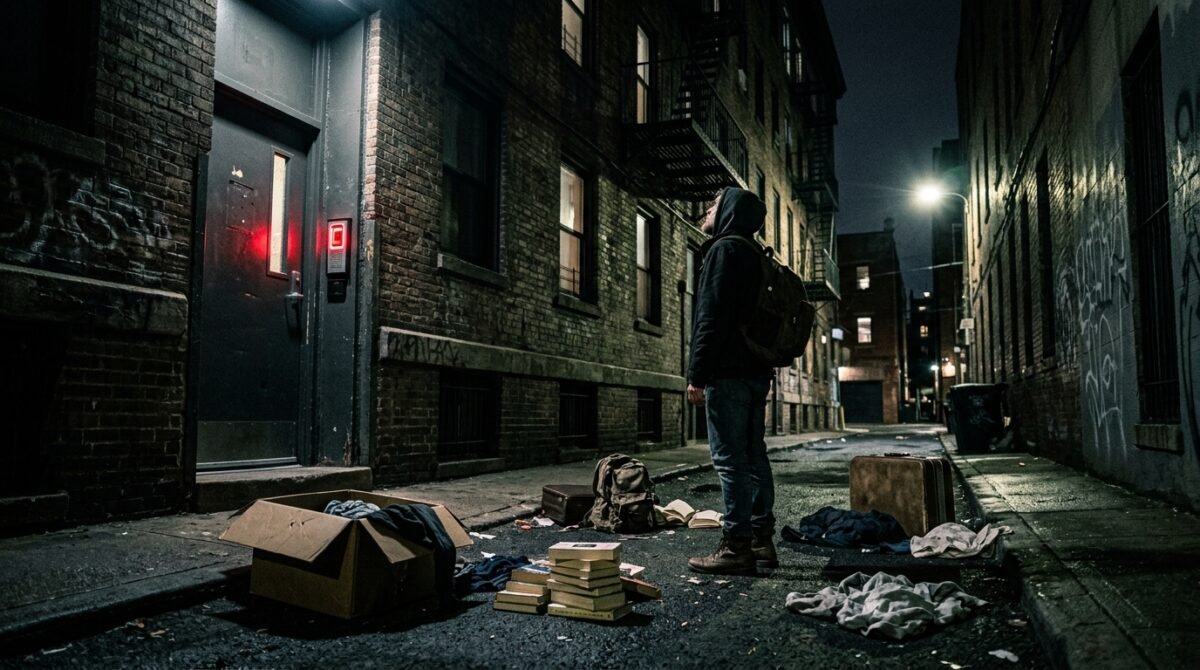
We all have horror stories about roommates. Maybe they don’t do the dishes, or they host loud parties on Tuesday nights, or they ‘borrow’ your expensive skincare products without asking. But nothing could have prepared me for the systematic, cold-blooded erasure of my existence that took place while I was thirty-thousand feet in the air.
I had been living with Sarah for three years. We were friends from college, or so I thought. We shared a lease, a cat, and a mutual understanding that our shared apartment was a sanctuary. I left for an eight-hour flight to London for a project, feeling nothing but excitement for the work ahead. I had no idea that while I was crossing the Atlantic, my home was being dismantled, my locks were being replaced, and my entire life was being relegated to a pile of trash in the damp, unforgiving alleyway behind our building.
The moral dilemma here isn’t just about the legality of a wrongful eviction; it is about the profound betrayal of someone who looked me in the eye and promised to feed my cat while I was gone. It is about the audacity of installing biometric security to essentially hold a living space hostage. The psychological toll of realizing that your ‘home’ is no longer yours, without so much as a warning, is something I am still processing.
This story isn’t just about a bad roommate. It’s about how quickly a stable life can be dismantled when you trust the wrong person with the keys to your kingdom. Over the next twelve chapters, I will take you through the timeline of the most surreal forty-eight hours of my life, the confrontation that followed, and the absolute mess of legal and personal wreckage left in the wake of Sarah’s bizarre power trip.
The Pre-Flight Facade
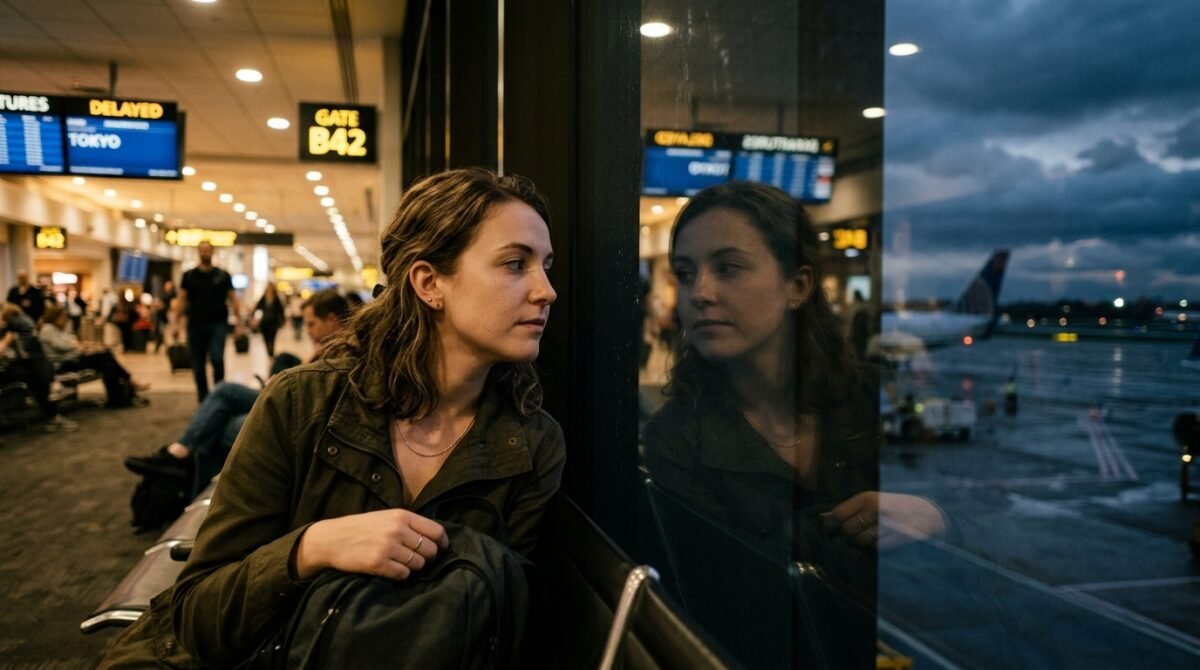
The morning of my flight was entirely unremarkable, which makes the subsequent events even more chilling. Sarah was sitting at the kitchen island, sipping coffee and scrolling through her phone, while I double-checked my passport and suitcase. There was no tension, no argument, and no hint of the storm that was brewing. She even offered to drive me to the airport, an offer I politely declined because I had already booked a car service.
We discussed the logistics of the cat, ‘Mittens,’ and the mail. She was, as always, the picture of the responsible, reliable friend. She even reminded me to make sure I had my charger, acting like the supportive roommate I had known for years. I kissed the cat goodbye, grabbed my luggage, and walked out the door, never suspecting that the click of the lock behind me would be the last time I would ever legally enter that space.
“Don’t worry about a thing, I’ll make sure the place is pristine for when you get back. Just focus on your presentation and kill it in London!”
— Sarah, 6:30 AM before my departure
In hindsight, the signs were there, if I had been looking for them. She had been quieter than usual for about two weeks. There were whispers on the phone, hushed conversations that stopped the moment I entered a room, and a strange defensiveness whenever I asked about the rent split for next month. But I was preoccupied with work and gave her the benefit of the doubt, assuming she was just stressed with her own career.
There was no indication that she had already contacted a locksmith. There was no hint that she had already started packing my bathroom cabinet into black garbage bags while I slept. I left for the airport with a heart full of hope, entirely unaware that my life in that apartment had already been effectively terminated by a woman I trusted with my life.
The flight was long and exhausting. I spent the time preparing for my meetings, completely disconnected from the world. I didn’t check my texts. I didn’t check my social media. I just focused on the task at hand, blissfully ignorant of the fact that my entire world was being dismantled, brick by brick, into the alleyway below our apartment.
The Biometric Wall
When I finally arrived home, exhausted and jet-lagged, the first thing I noticed was that my key wouldn’t fit. I jiggled the lock, thinking maybe I was just tired and misaligned, but the key felt completely blocked. That’s when I looked up. Replacing the standard deadbolt was a sleek, silver, and utterly menacing biometric fingerprint scanner.
I stood there in the hallway, disoriented. I thought I had gone to the wrong floor. I checked the unit number again. It was definitely 4B. My heart began to hammer against my ribs. I pulled out my phone, and for the first time in ten hours, I looked at the notifications. There were no missed calls from Sarah, only a single, cold text message that made my blood run cold.
“Your access has been revoked. I am tired of living with someone who doesn’t respect my boundaries. Your things are in the alley. Do not attempt to contact me or the police.”
— Text message from Sarah, sent at 2:00 PM
I didn’t even process the words initially. My brain couldn’t grasp the reality of it. The idea that someone could just change the locks and throw my possessions away like trash seemed like something out of a low-budget horror film, not my actual life. I banged on the door, my voice echoing in the hallway, but there was no response. It was dead silent.
I felt a wave of nausea. I tried calling her, but it went straight to voicemail. Then, I tried to check our shared banking app, only to find that she had already removed me from the utility accounts and set everything to her name. It was a calculated, surgical extraction of my presence from the apartment. I had been erased in eight hours.
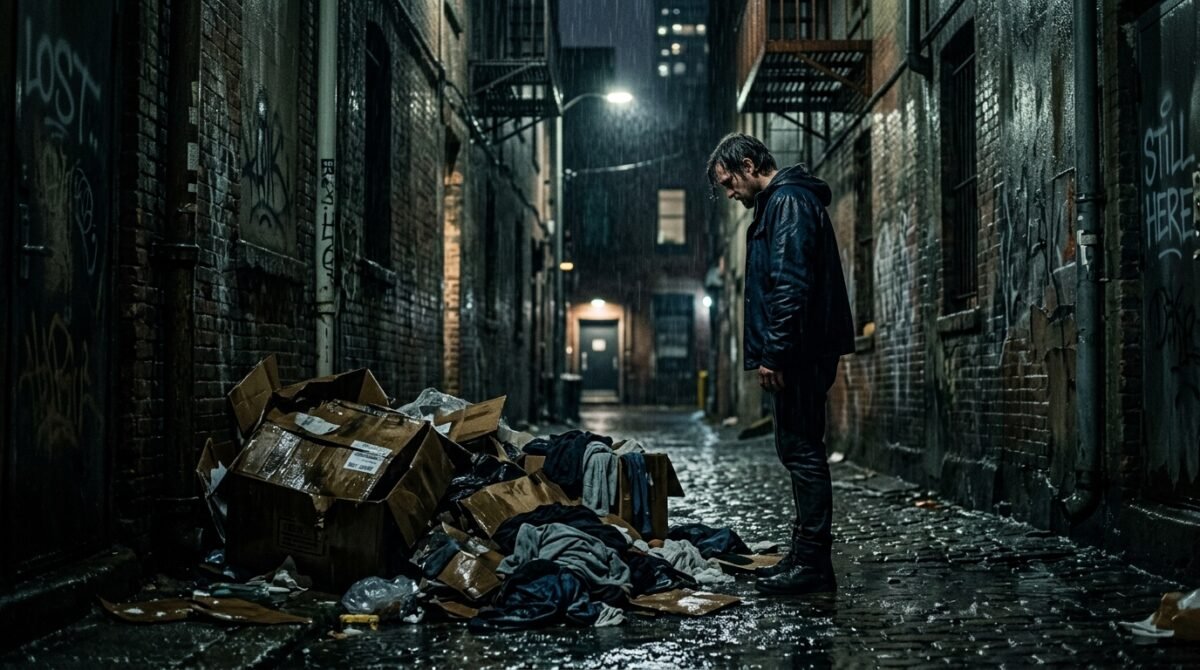
I eventually made my way to the back of the building. The scene that greeted me was soul-crushing. My clothes, my books, my photographs—everything I owned—was piled in a heap near the dumpsters. It was drizzling, and the cardboard boxes were already starting to disintegrate. I stood in the alley, staring at the ruins of my life, feeling an emptiness that I still find hard to describe.
The Descent Into The Alley
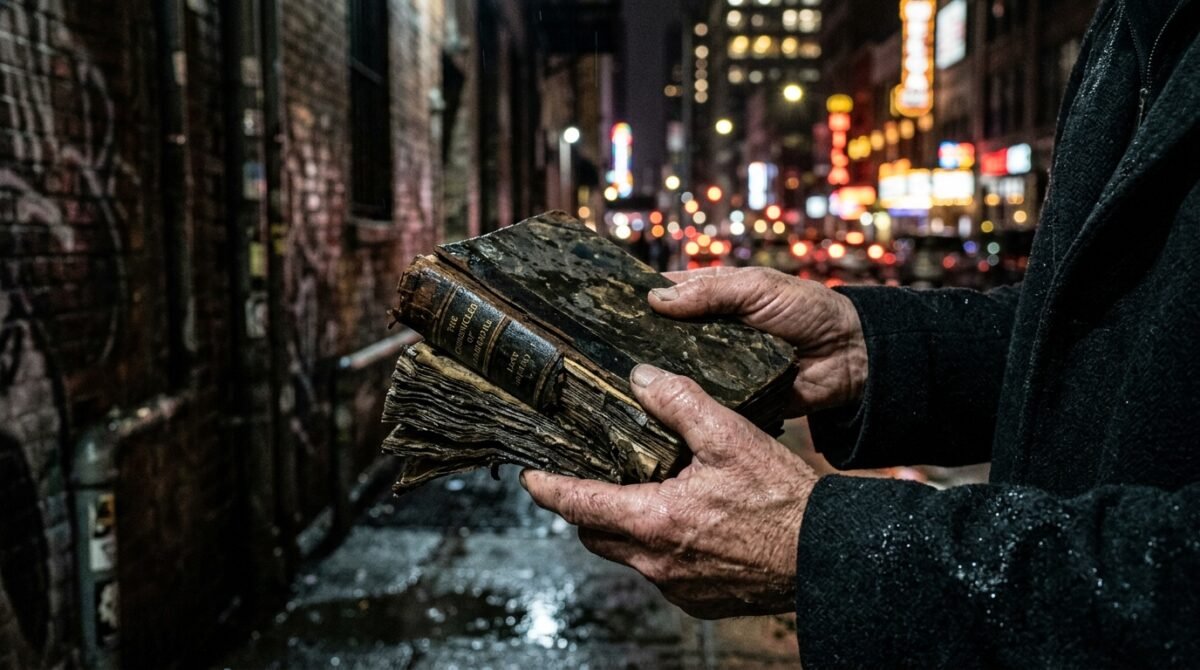
I spent the next three hours frantically trying to salvage what I could from the wet pavement. My laptop was in a bag that had miraculously stayed dry, but my winter coat was soaked through, and my collection of first-edition books—my pride and joy—were ruined by the damp, dark grime of the alley. Every time I picked up an item, I was hit with a new wave of anger and disbelief.
Neighbors started peering out their windows. One of them, an elderly man named Mr. Henderson, came down to see if I was okay. He was the one who told me that Sarah had hired a crew of movers while I was in the air. He said they had been working for hours, laughing and joking as they hauled my bed, my desk, and my personal items out the back door like they were clearing out a storage locker.
“I thought you were moving out, dear. She told the guys you were breaking the lease early because you got a job in London. I didn’t think twice about it.”
— Mr. Henderson, neighbor
I felt sick. The level of deception required to pull this off was staggering. She didn’t just throw me out; she fabricated a narrative to ensure no one would stop her. The sheer audacity of it left me trembling. I wasn’t just losing my home; I was losing my reputation in the building. I was being painted as the irresponsible roommate who just up and left.
I sat on the curb, surrounded by my salvageable belongings, and finally started to cry. It wasn’t just the loss of the items; it was the realization that I had spent years caring for someone who would treat me with such profound cruelty. I was alone, in the dark, with nothing but a few damp bags and a phone that refused to connect to her.
I knew I couldn’t stay there. I started calling friends, trying to find a place to crash, my voice shaking as I explained what had happened. Nobody believed me at first. They thought I was having a mental breakdown. It took an hour of explaining and sending photos of my ruined possessions in the alley for them to finally understand the gravity of the situation.
The Digital Paper Trail
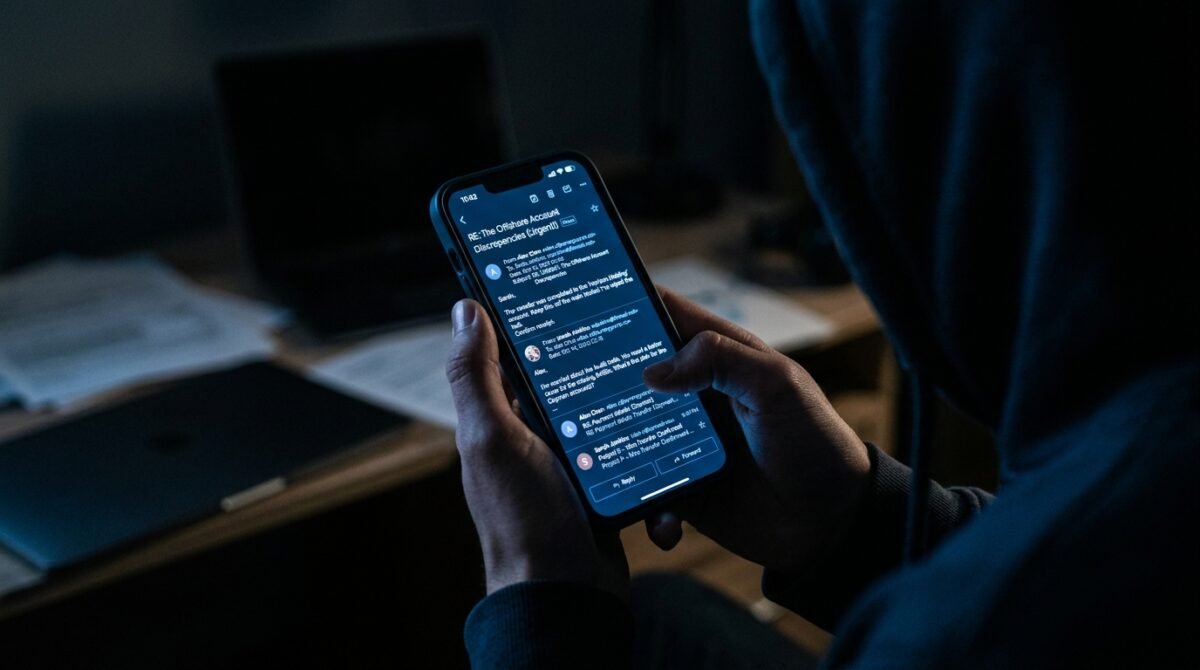
While I was waiting for my friend to pick me up, I decided to dig into the digital archives. I logged into my secondary email and found a string of correspondence between Sarah and a local security firm. She had been planning this for weeks. She had even inquired about ’emergency eviction services’ and ‘biometric security installation’ back in early May.
The receipts were all there. She had paid for the locksmith, the movers, and the security system using a credit card that we technically shared for household expenses. She had essentially used my own money to fund my illegal eviction. The level of premeditation was sickening. It wasn’t a snap decision; it was a campaign.
“I need the locks changed on the 15th at 9 AM sharp. The occupant will be out of the country. Please ensure the installation is silent and fast.”
— Email from Sarah to the security company
I screenshotted everything. Every email, every invoice, every piece of evidence of her financial malfeasance. She thought she was being smart, but she had left a paper trail that would be impossible to erase. I was no longer just sad; I was furious. The betrayal was turning into a cold, hard resolve to see her held accountable.
I also discovered that she had been messaging our landlord, telling him that I had voluntarily vacated the property and that she would be taking over the full lease. She had forged my signature on a lease amendment that I had never even seen. She was committing fraud, and she was doing it with the confidence of someone who thought she would never be caught.
My phone buzzed. It was a message from her, a final parting shot that showed just how delusional she really was. She wasn’t just trying to get rid of me; she was trying to rewrite history to suit her own narrative. I saved the message, knowing it would be crucial for the legal battle that I was now inevitably headed toward.
The Confrontation at the Threshold
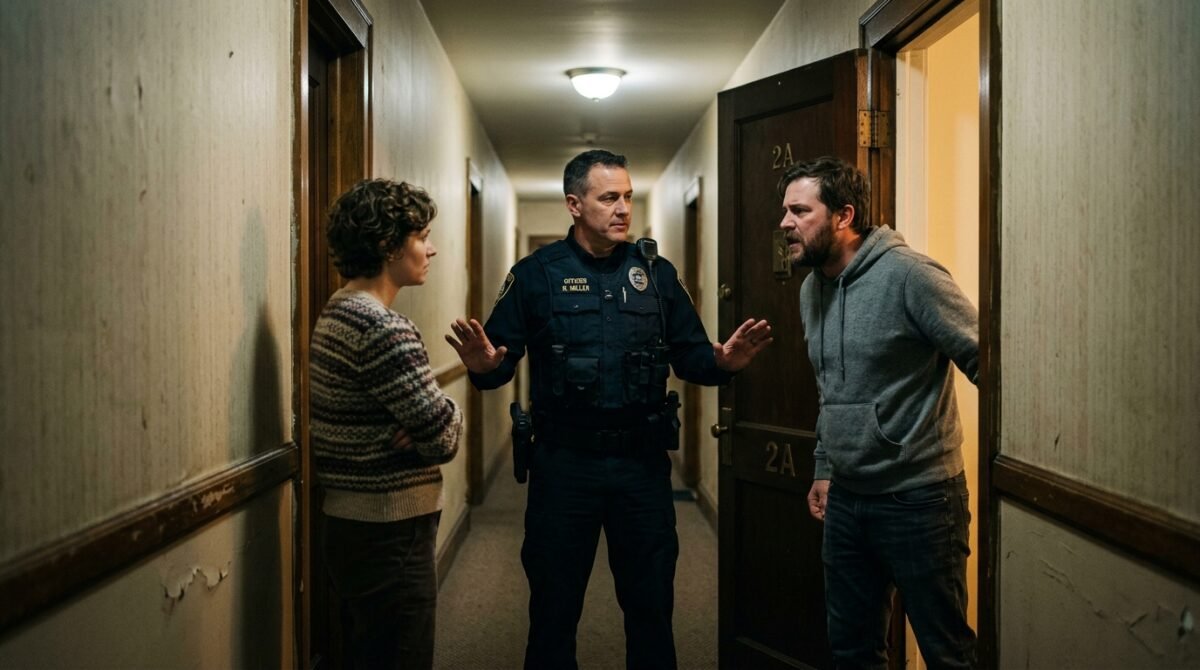
The next morning, I returned to the apartment with a police officer. Sarah finally opened the door, her face a mask of feigned shock and indignation. She looked at the officer and then at me, as if we were the intruders. The gall was breathtaking. She acted like she had no idea why we were there.
The officer explained the situation, noting that she could not legally evict a tenant without a court order, regardless of whose name was on the lease. Sarah interrupted him, claiming that I had abandoned the property and that I was harassing her. She even tried to show him the forged lease, but the officer wasn’t buying it.
“Officer, please. Look at this. She’s been threatening me for months. She left voluntarily! You’re violating my privacy by bringing her back here.”
— Sarah to the responding officer
I felt a surge of adrenaline. I pulled out my phone and showed the officer the emails I had saved. The change in Sarah’s expression was instantaneous. The mask slipped, and for a second, I saw the panic underneath. She realized that I had documentation for everything. She tried to grab my phone, but the officer stepped between us.
We weren’t able to get back in that day. The situation was too volatile, and the police couldn’t force her to open the door without a civil order from a judge. But the officer did make it clear that she was on thin ice. He gave her a stern warning about the illegality of her actions and told her that if she did anything else to interfere with my property, there would be consequences.
As we walked away, Sarah slammed the door shut, the biometric scanner flashing a defiant red. I knew this was just the beginning of a long, drawn-out process. I had my evidence, I had the police report, and I had the resolve to make sure she regretted the day she decided to lock me out of my own life.
The Internet Weighs In

I posted my story on a major subreddit, looking for advice on how to handle the legal ramifications of what Sarah had done. I didn’t expect the response I got. Within two hours, the post had thousands of upvotes and an endless stream of comments from people who were just as outraged as I was. It was validation in its purest form.
The community was incredible. They provided legal advice, pointed out the specific statutes she had violated, and shared similar stories of ‘roommate from hell’ situations. It was the first time I felt like I wasn’t just a victim; I was part of a broader conversation about tenant rights and the abuse of power in shared living situations.
“This is textbook illegal eviction. Do not let this slide. You need a lawyer, yesterday. If you have the evidence of the forged lease, she is looking at criminal fraud charges.”
— u/LegalEagle88 (Top Comment, 15.2k upvotes)
Some of the comments were harsh, telling me I should have seen the signs earlier, but even those were helpful in their own way. They forced me to re-evaluate my own boundaries and how I had allowed myself to be put in this position in the first place. I spent hours reading through the advice, taking notes, and organizing my evidence for the lawyer I had finally contacted.
There were also those who tried to play devil’s advocate, suggesting that maybe there was a misunderstanding, but the community quickly shut them down. The consensus was clear: what Sarah did was calculated, illegal, and morally reprehensible. It was a refreshing change from the gaslighting I had been experiencing from her.
I felt a strange sense of community, a digital support system that helped me get through the darkest days of the fallout. It reminded me that even when someone tries to isolate you and erase you, there is still a world of people who believe in justice and fairness. I started to see a path forward, and it began with holding her accountable.
The Legal Tangle
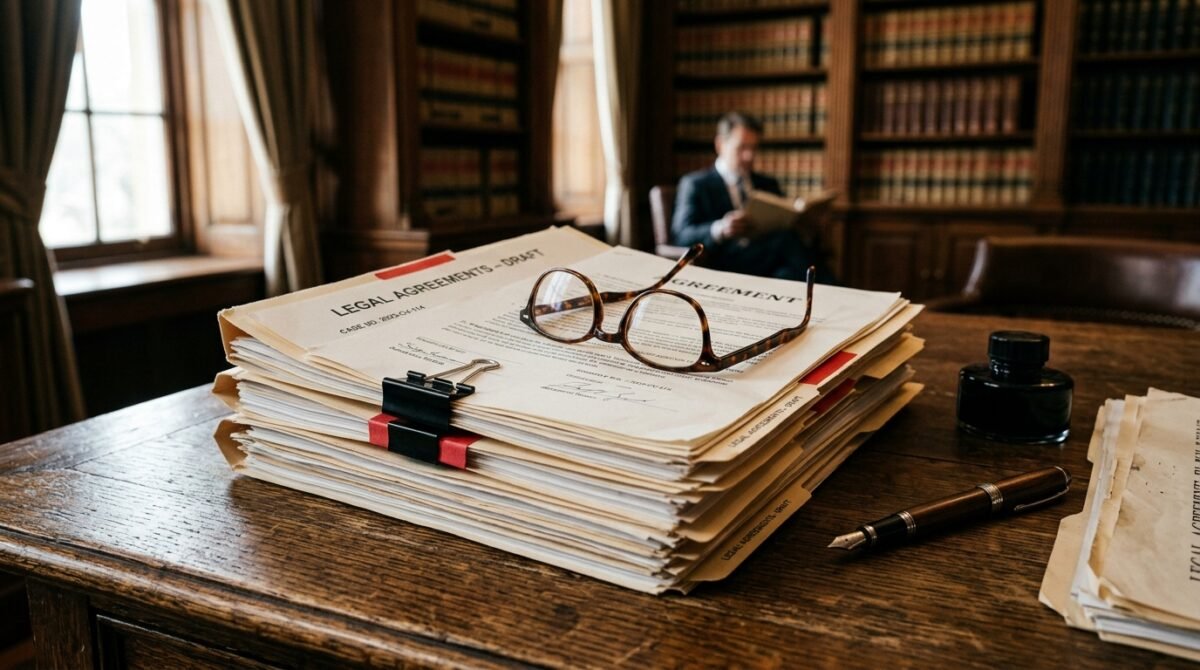
My lawyer, a sharp-witted woman who specialized in tenant-landlord disputes, was disgusted by the paperwork. She had never seen a case of such blatant, documentable fraud. We filed a civil lawsuit against Sarah for illegal eviction, conversion of property, and emotional distress. The sheer volume of evidence we had was our greatest asset.
Sarah’s attitude changed the moment she was served with the papers. The arrogance that had fueled her initial actions vanished, replaced by a desperate, frantic attempt to settle out of court. She tried to contact me directly, sending long, rambling emails full of excuses and half-hearted apologies, but I didn’t respond. I let my lawyer handle everything.
“Look, let’s just talk about this. I was stressed out, I made a mistake. If you drop the lawsuit, I’ll pay for the ruined items and you can have your half of the security deposit back.”
— Email from Sarah, 3:00 AM
I laughed when I read the offer. She thought she could buy her way out of the consequences of her actions. She didn’t understand that for me, this was no longer about the money. It was about the principle, about the fact that she had violated my life so casually and thought she could get away with it because she was ‘stressed.’
The legal process was grueling. There were depositions, document reviews, and endless phone calls. Every step of the way, I was reminded of the trauma of those forty-eight hours, but I was also empowered by the progress we were making. We were slowly, but surely, building a case that would make it impossible for her to walk away unscathed.
I learned so much about the law in those months. I learned that you have rights as a tenant, even if you’re not the one on the primary lease. I learned that documentation is your best friend in any dispute. And most importantly, I learned that you should never, ever trust someone with your home if they show signs of the kind of entitlement Sarah had exhibited.
The Final Reckoning
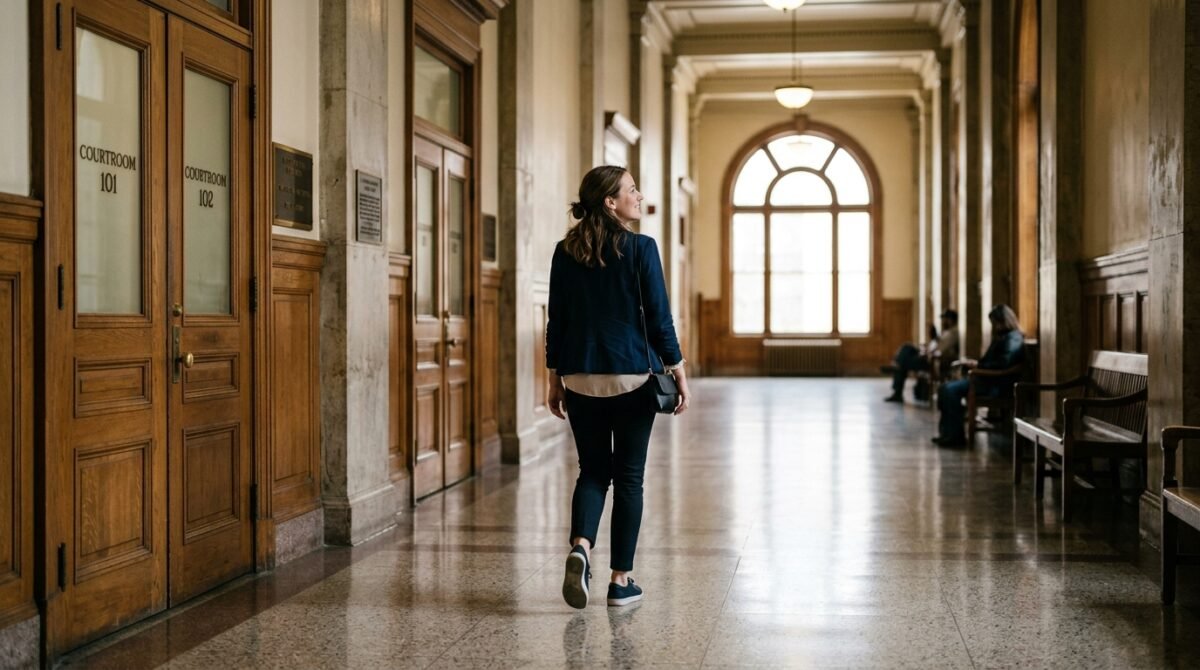
The court day arrived on a rainy Tuesday. Sarah showed up with an expensive-looking lawyer, but the moment the judge saw the evidence of the forgery and the illegal lock change, the tone of the hearing was set. It wasn’t a long trial; the facts were too stark. The judge was visibly unimpressed by her defense, which boiled down to ‘I felt like the apartment should be mine.’
The verdict was a complete victory. The court ordered her to pay damages for my lost possessions, cover my legal fees, and vacate the property immediately. She was also hit with a fine for the fraudulent lease amendment. She stood there, pale and silent, as the judge delivered the ruling, her expression one of utter disbelief.
“Your actions were not only illegal, they were a flagrant disregard for the rights of your roommate. This court does not tolerate such behavior. Judgment for the plaintiff.”
— Judge Miller, ruling from the bench
I didn’t feel a rush of triumph. I just felt relief. The weight that had been on my chest for months finally lifted. I had done it. I had survived the betrayal, the loss, and the legal battle, and I had come out on the other side. The justice system, in this instance, had worked exactly as it was supposed to.
As we left the courtroom, Sarah didn’t even look at me. She just walked out into the rain, a defeated figure. I didn’t say a word. There was nothing left to say. The friendship had been dead for a long time; the trial was just the formal funeral service.
I walked to my car, the air feeling lighter than it had in months. I had my life back, in a sense, and I had a newfound appreciation for the stability I had previously taken for granted. I knew I had a lot of healing to do, but for the first time in a long time, I was ready to move on.
The Long Road to Recovery

The weeks following the trial were a blur of settling into my new apartment and trying to reclaim a sense of normalcy. I found a beautiful, small place that was entirely my own. No roommates, no biometric scanners, just me and my cat. It was heaven. But the psychological impact of the experience lingered in unexpected ways.
I found myself checking the locks on my new door multiple times a day. I felt anxious whenever I had to leave for work, constantly worried that I would come back to find my belongings in the street again. It was a trauma response, I knew, and it would take time to work through. I started seeing a therapist to process the betrayal and the sense of violation I had experienced.
“You need to be patient with yourself. What happened wasn’t just a move; it was a traumatic event. It’s normal to feel hyper-vigilant right now.”
— My therapist, during our third session
I also started reconnecting with the friends I had neglected during the ordeal. They were supportive, listening to my stories and helping me rebuild my life. It was a reminder that while I had lost a ‘friend’ in Sarah, I had gained a deeper appreciation for the people who truly had my back.
I started small, buying new furniture, filling the apartment with things that made me happy. I avoided anything that reminded me of my time with Sarah. I wanted a fresh start, a clean slate. I was rebuilding my life from the ground up, and this time, I was doing it on my own terms.
It wasn’t easy. There were days when I still felt the anger bubbling up, or the sadness of what had been lost. But I was moving forward, step by step. I was learning to trust again, not just in others, but in myself and my ability to handle whatever life threw my way.
Lessons From The Abyss

Looking back, the experience taught me more about boundaries and human nature than I ever wanted to learn. I learned that you don’t really know someone until you see how they treat you when they think they can get away with hurting you. I learned that trust is a fragile thing, and it should be earned, not given away freely.
I also learned the importance of protecting oneself, both legally and financially. I will never again share a bank account with a roommate, and I will always, always have a paper trail for any agreements we make. It’s not about being cynical; it’s about being prepared. It’s about ensuring that your life is secure, no matter what happens.
“Never trust someone with the keys to your life if they’ve never shown you they respect the boundaries of your heart.”
— A piece of advice I wrote in my journal
I hope that by sharing this story, I can help someone else avoid the nightmare I went through. I hope it encourages people to pay attention to the red flags, to speak up for their rights, and to remember that they are worth more than the treatment they receive from a toxic person. It’s a hard lesson, but it’s a valuable one.
I’m in a good place now. I’m happy, I’m secure, and I’m surrounded by people who love and respect me. I’ve left the past behind, and I’m looking forward to the future with a sense of optimism that I never thought I would regain after that day in the alley.
I’ve moved on, but I’ll never forget. And I hope, in some small way, that Sarah hasn’t forgotten either, and that she’s learned as much from this experience as I have. Though, given her personality, I doubt it. But that’s okay. Her life is no longer my business, and that is the greatest victory of all.
Conclusion
The story of what happened to me still feels surreal, like a fever dream I had a long time ago. It’s a reminder of how quickly our lives can turn upside down and how important it is to have a support system that can help us through the storm. I survived, I learned, and I moved on. But the questions remain: How many people have been through similar experiences? Why do we often ignore the warning signs until it’s too late?
I want to hear from you. Have you ever had a roommate situation go so horribly wrong? What are the boundaries you’ve set since then to protect yourself? Let’s talk about it in the comments below. Your experiences might help someone else avoid the same fate, or at least help us all feel a little less alone in the craziness of human relationships.
Poll: If you were in my position, what would have been your first move after seeing the biometric lock? A) File a police report immediately, B) Confront the roommate in person, C) Get a lawyer and start documenting evidence, D) Just leave and cut ties.
What's your verdict on this dilemma?
Vote below to contribute to the official community consensus.

Have a Dilemma Keeping You Up at Night?
Share your real-life feud, wedding chaos, or relationship crossroads anonymously with our editorial team.
What do you think ?
0 Comments🛡️ Comments are moderated to protect community integrity. Your comment will appear once approved by the editorial team.