
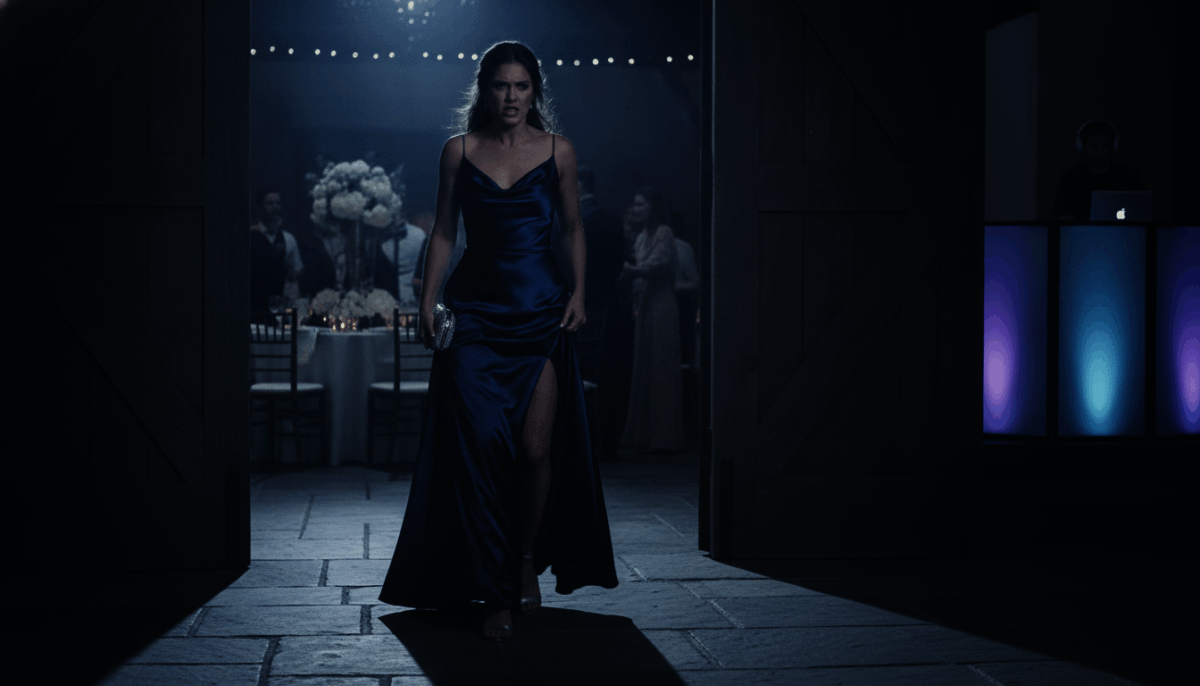
When you agree to be the maid of honor for your younger sister, you expect a certain level of stress. You prepare for the dress fittings, the spreadsheet management, and the inevitable emotional meltdowns that come with high-stakes nuptials. What you do not prepare for is a calculated betrayal that brings the ghost of your past into the very center of your present, all under the guise of ‘bringing the family together.’
My sister, Clara, has always been the golden child of our family. She operates on a frequency of entitlement that most people would find suffocating, but which I had spent the better part of a decade navigating with careful, soft-spoken diplomacy. I thought our relationship was in a good place—until the day of the rehearsal dinner.
The venue was an exquisite, sun-drenched vineyard estate, the kind of place that smells like expensive roses and unearned privilege. I had arrived early to ensure the logistics were perfect, my phone buzzing incessantly with demands from the wedding planner. I was focused, professional, and entirely unaware that my world was about to be upended by a single, poorly hidden contract.
Finding out that Clara had not only hired my ex, Mark, as the wedding DJ but had actively kept his identity from me for months was a blow that left me breathless. Mark wasn’t just ‘an ex’; he was the man who had ghosted me after three years, leaving me to pick up the pieces of my shattered self-esteem in an apartment we used to share. To see his name on the vendor list, paired with the ‘surprise’ note, was the final straw.
I didn’t scream. I didn’t cause a scene in the traditional sense. I simply walked out, leaving the rehearsal dinner—and my sister’s demands—in the rearview mirror. Now, my phone is a warzone of vitriol from family members who claim I’ve committed the cardinal sin of the wedding season: making the day about me.
The Vendor List That Tasted Like Betrayal
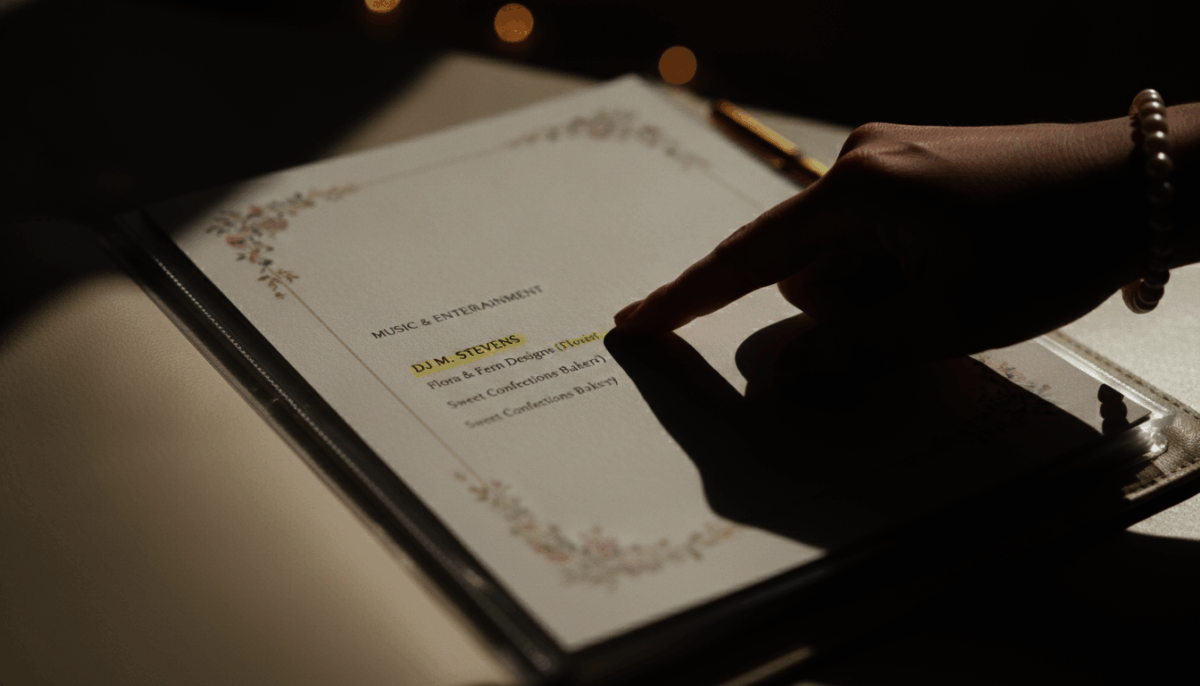
It started with a clipboard. The wedding coordinator, a woman named Sarah with an efficient smile and tired eyes, had left her binder unattended on the mahogany table while she went to check on the floral arrangements. I was merely looking for the timeline of the ceremony to ensure my toast was perfectly timed.
As I flipped through the pages, my eyes landed on the ‘Entertainment’ section. The name ‘DJ M. Stevens’ stood out immediately. My heart skipped a beat, a cold sensation washing over my skin. I knew that name. I knew those initials. I knew the specific, obnoxious font he used on his business cards.
I pulled my phone out and scrolled through my archived messages from two years ago. There it was: Mark Stevens. The same man who told me he wasn’t ‘ready for commitment’ while he was secretly seeing a girl from his CrossFit gym. Seeing his name attached to my sister’s wedding wasn’t just a coincidence; it was a deliberate act of erasure.
“I couldn’t believe what I was seeing. The name stared back at me like a taunt. I felt like I was being gaslit in real-time, staring at a piece of paper that proved my own sister had been laughing behind my back while I poured my heart into planning her special day.”
I stood there for a long moment, the air in the room feeling suddenly thin. I realized then that Clara hadn’t just hired a vendor; she had curated an experience. She had intentionally brought someone into my life who represented my darkest period of insecurity, and she had done it under the pretense of ‘professionalism.’ The betrayal wasn’t just the DJ; it was the secrecy.
I realized that Clara’s ‘inclusive’ nature was actually a weaponized form of narcissism. She didn’t want a neutral party; she wanted a spectacle. She wanted the drama of having my ex there, potentially hoping to see me squirm, or perhaps just not caring at all because my comfort was never on her priority list. The realization was sickeningly clear: to Clara, I wasn’t a sister; I was a prop in her wedding play.
The Confrontation in the Conservatory

I didn’t wait for the rehearsal to start. I tracked Clara down in the conservatory, where she was busy critiquing the lighting with her fiancé, Tom. She looked radiant, unaware that her carefully constructed narrative was about to fall apart. When I approached her, I kept my voice steady, despite the trembling in my hands.
‘Clara,’ I said, holding up the binder page. ‘We need to talk about your DJ.’ She looked at me, her smile faltering only slightly, as if she were annoyed by the interruption. ‘Oh, you found the surprise? I wanted to wait until the reception!’ she chirped, oblivious to the storm brewing in my eyes.
I held the paper out so she could see the name. ‘Mark? You hired Mark? After everything he did to me? After I sat on your couch and cried for three months straight while you told me I was better off without him?’ Her expression shifted from annoyance to a practiced, dismissive pout.
“‘Don’t be so dramatic,’ Clara sighed, rolling her eyes. ‘He’s a professional, and he’s the best DJ in the city. It’s my wedding, not a therapy session for your past grievances. Can’t you just be an adult for one night?’”
Her words felt like a physical slap. The lack of remorse, the instant pivot to making me the problem—it was classic Clara. She didn’t see a person in pain; she saw an inconvenience. She saw a bridge that needed to be crossed, and if I got burned in the process, that was simply collateral damage for her ‘perfect’ day.
‘It’s not about being an adult, Clara. It’s about respect,’ I said, my voice rising just enough to draw a few curious glances from the bridesmaids. ‘You knew. You knew exactly who he was, and you kept it from me. You invited a man who treated me like garbage to stand on a stage and play music at your wedding. That isn’t a professional choice; that’s a cruelty.’
The Immediate Exit

The moment I realized that she wasn’t going to apologize, the decision became simple. I didn’t need to argue. I didn’t need to beg for her to understand. The power dynamic that had governed our lives since childhood dissolved in that instant. I turned on my heel and walked out of the conservatory, past the confused bridesmaids, and straight toward the exit.
‘Where are you going?’ Clara shouted after me, her voice losing its composed, bride-to-be elegance. ‘The rehearsal is about to start! You’re the maid of honor! You can’t just walk out!’ I didn’t look back. I didn’t feel the need to justify myself. The silence I left behind was the loudest thing I had ever said to her.
I walked to my car, my heels clicking sharply against the cobblestone path. The air outside was cool, a sharp contrast to the stifling atmosphere inside the venue. I felt a strange sense of liberation, a weight lifting off my shoulders that I hadn’t realized I was carrying until it was gone. I wasn’t just leaving a rehearsal; I was leaving behind the expectation that I would always be the one to sacrifice my dignity for her comfort.
“I didn’t slam the door. I didn’t scream. I just got in my car, turned on the ignition, and drove. For the first time in years, the silence in the car wasn’t lonely. It was peaceful.”
My phone began to light up almost immediately. Texts from my mother, texts from Clara, texts from the bridesmaids. All of them were variations of the same theme: ‘You’re being selfish,’ ‘Think about how this looks,’ ‘Come back and finish what you started.’ I didn’t read them. I muted the notifications and kept driving.
I went home and did something I hadn’t done in a long time: I made a cup of tea, sat on my couch, and turned off my phone completely. The reality of what I had done began to sink in, but instead of the panic I expected, I felt a deep, resonant calm. I was done.
The Group Chat Explosion
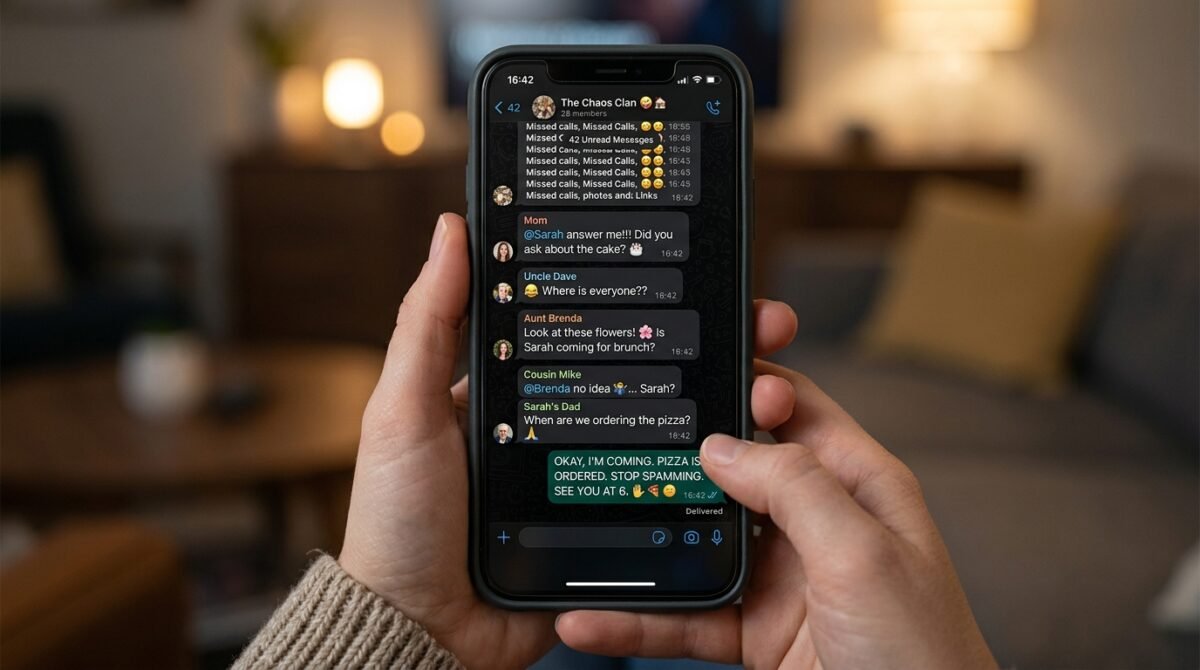
When I finally turned my phone back on the next morning, the carnage was impressive. The family group chat, which had been silent for weeks, was now a scrolling feed of insults, gaslighting, and attempts at forced reconciliation. My sister had clearly been busy painting me as the villain of the century.
My mother had sent a series of voice notes, her tone shifting from ‘disappointed’ to ‘you need to apologize immediately.’ The bridesmaids were chiming in with their own opinions, mostly centered around the fact that I had left them to manage the logistics. It was a masterclass in deflection.
“Mom: ‘Clara is a wreck. She’s crying in her room and the florist is waiting on you. How could you be so petty over a DJ? It’s just music, for heaven’s sake!’”— Family Group Chat
I took a screenshot of the message and stared at it. ‘Just music.’ That was the narrative they were pushing. If they reduced the betrayal to a simple professional choice, they could frame me as the irrational, emotional mess. It was the same tactic they had used when we were children, whenever Clara broke something of mine and blamed me for having it out in the open.
I decided, for the first time, not to respond with excuses. I didn’t explain the pain Mark had caused. I didn’t explain why his presence felt like a violation. I simply replied to the entire group: ‘I am not attending the wedding. I have been treated with a lack of respect that I am no longer willing to tolerate. Please do not contact me regarding this again.’
The silence that followed my message was immediate and heavy. It wasn’t the kind of silence that suggests agreement; it was the kind that suggests shock. They weren’t used to me setting boundaries, and they certainly weren’t used to those boundaries being final. The rest of the day was a frantic, desperate attempt by my family to break down the walls I had built.
The Reddit Verdict: Echoes of the Internet
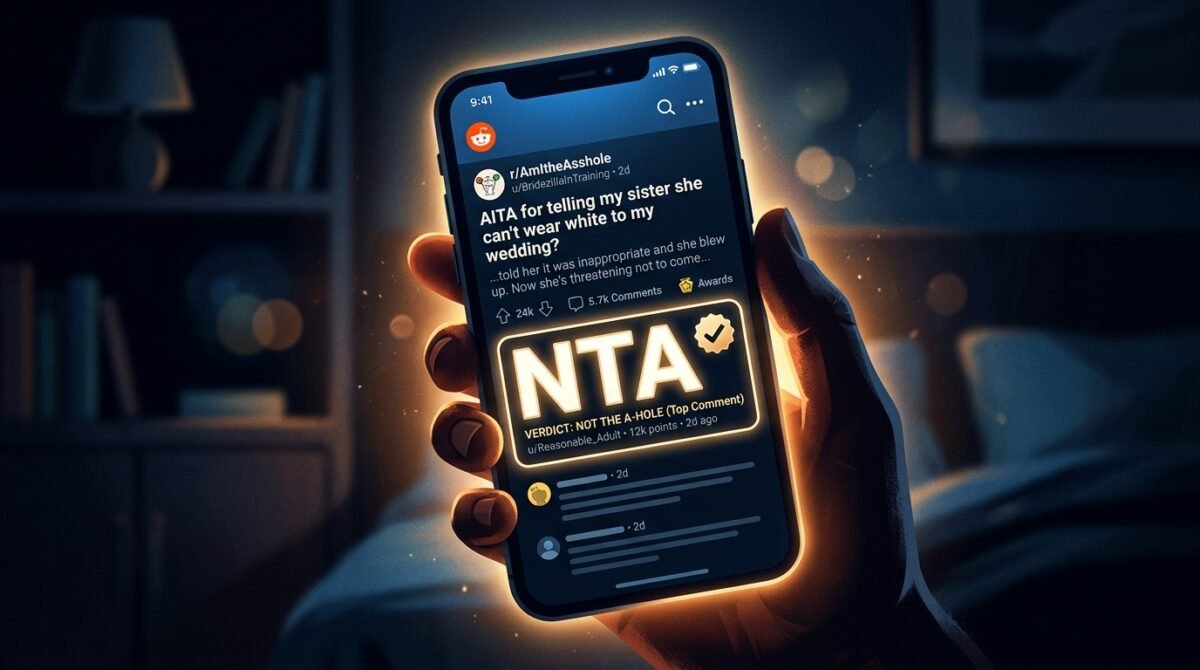
I turned to the internet to see if I was truly the monster they claimed I was. I posted my story, keeping the names anonymous, and braced myself for the judgment. Within hours, the post had blown up, with thousands of people chiming in from across the globe. The validation was both surprising and overwhelming.
“This isn’t about the music, OP. This is about your sister deliberately inviting your abuser—because that’s what a guy who ghosts you and causes that much trauma is—into a space where you are supposed to be vulnerable. She didn’t just hire a DJ; she set a trap. NTA (Not The Asshole) a million times over.”— u/SoundAdviceQueen (Top Comment, 32.4k upvotes)
Other comments were just as supportive. They pointed out the dynamics of the ‘golden child’ and the ‘scapegoat’ that I had been living with for my entire life. It was like reading a biography of my own experiences, written by strangers who saw the patterns I had been too close to notice for years.
However, there were dissenting voices. Some people argued that I should have been the ‘bigger person’ and that family weddings require sacrifice. Those comments felt like echoes of my mother’s voice, and for a moment, the old guilt flared up. But then, I looked at the sheer volume of support from people who didn’t know me, and the guilt began to fade.
“ESH (Everyone Sucks Here). You should have just ignored him and done your job as Maid of Honor. You walked out on your sister’s biggest day because of your own baggage. That is incredibly selfish.”— u/WeddingPurist (Downvoted, -15.2k upvotes)
The community, as a whole, was overwhelmingly on my side. They saw what my family refused to acknowledge: that this was never about a wedding. It was about the systemic disregard for my feelings that had culminated in a singular, act of public humiliation. Seeing the situation from an outside perspective made me realize that I hadn’t ruined anything; I had simply stopped participating in my own exploitation.
The Legal and Emotional Fallout

The repercussions didn’t stay in the digital realm. A few days later, my father called. He didn’t ask how I was; he asked if I realized how much money was being lost because of my departure. Apparently, the venue had a non-refundable deposit for the entertainment, and Clara was demanding that I cover the cost of a new DJ.
The sheer audacity left me speechless. They were asking me to pay for the privilege of being disrespected? I told my father that I would not be paying a dime. If Clara wanted the luxury of an ‘exclusive’ DJ who just happened to be my ex, she could pay for the consequences of that decision herself. I hung up on him, the sound of his sputtering voice fading into a dial tone.
It was then that I realized the financial tether was the last string they had to pull. By cutting that string, I was officially untethered. It was a terrifying feeling, but also an incredibly empowering one. I spent the next few days clearing my personal belongings out of the storage unit I shared with my parents, ensuring that I had no physical ties left to their control.
“‘You think you’re so smart, don’t you?’ my father had hissed over the phone. ‘You’re destroying this family over a petty grudge.’ I told him that the family was already destroyed; I was just the one finally acknowledging the rubble.”
I started seeing a therapist to help process the guilt and the anger. She helped me realize that the ‘rehearsal’ wasn’t just a rehearsal for a wedding; it was the final, failed rehearsal of my life as a secondary character in Clara’s story. I wasn’t just leaving a wedding; I was reclaiming my autonomy, one small, uncomfortable boundary at a time.
The fallout continued, with various aunts and cousins calling me to ‘hear my side’ while actually just trying to guilt-trip me into returning. I blocked them all, one by one. It was a ruthless process, but for the first time, I felt like I was the one holding the pen for my own narrative.
The Wedding Day From Afar

On the day of the wedding, I stayed home. I went for a long hike in the hills, the kind of place where the silence is natural and unforced. I spent the day turning off my phone, focusing on the simple, tactile joys of life: the crunch of the gravel under my boots, the smell of pine, the warmth of the sun on my face.
I wondered, briefly, what was happening. Was Mark playing the song he used to play for me? Was Clara looking for me, expecting me to show up at the last minute and apologize? The thought crossed my mind, but it felt distant, like a scene from a movie I had already seen and decided I didn’t like. I wasn’t there, and I didn’t care to be.
By the end of the day, I had a dozen missed calls and hundreds of texts. My sister’s friend had posted a video of the reception on Instagram, and there he was: Mark, behind the DJ booth, smiling, looking entirely too comfortable. The sight didn’t hurt. It just confirmed that I had made the right choice.
“I saw the video of the reception. It looked like any other wedding, filled with forced smiles and overpriced champagne. But there was a look on Clara’s face in the background of one shot—a look of genuine confusion. She really expected me to be there. She really thought I would tolerate anything for her.”
I realized that for Clara, the world would always be a stage where she was the lead, and everyone else was a set piece. And if a set piece decided to walk off stage, she would just find a replacement. It wasn’t a tragedy; it was a character flaw. And I was no longer interested in trying to fix it.
I felt a deep sense of relief. The wedding was over, the drama had reached its peak, and I was still standing. I was still me. I hadn’t been erased. In fact, by leaving, I had asserted my existence in a way that I never had before. I was no longer just the ‘helpful sister’; I was the one who could say no.
Reflections on the Aftermath

A month has passed since the wedding. I haven’t spoken to Clara. My parents have sent a few emails, which I’ve archived without reading. I’m starting to build a life that feels like it belongs to me, one that isn’t dictated by the needs or the manipulations of my family. It’s a quiet life, but it’s a healthy one.
I’ve learned that setting boundaries is a form of self-love. It’s not about being ‘petty’ or ‘difficult’; it’s about protecting your peace from those who have no regard for it. The people who call you selfish for setting boundaries are usually the ones who benefit the most from you not having them. I’ve realized that I don’t need to justify my existence or my choices to anyone, least of all to people who have spent years making me feel small.
I’m still working through the anger. Sometimes it hits me in waves, especially when I think about the years I spent trying to win approval that was never going to be freely given. But the anger is different now. It’s not the sharp, jagged pain of betrayal; it’s the dull, fading ache of healing. It’s a reminder that I’m worth more than the way I was treated.
“The hardest part wasn’t leaving. The hardest part was realizing that the person I was leaving behind—the sister who loved me—was a person who never really existed. It was all a performance, and I was the only one who didn’t know the script.”
I’ve reconnected with old friends, people who value me for who I am rather than what I can do for them. I’m focusing on my career, my hobbies, and the simple, everyday joys of being an adult. I’m not ‘the sister who ruined the wedding’ anymore; I’m just someone who chose to prioritize her own mental health over a social performance.
If you’re in a position where you’re being asked to sacrifice your dignity for someone else’s ‘big day,’ remember: you are not a prop. You are a person. And you have the right to walk away from any table where you aren’t being treated with the respect you deserve.
The Lessons in the Rubble

Looking back, the most shocking thing wasn’t the DJ, or the secret, or even the family backlash. It was the realization of how easily I had fallen back into the pattern of ‘the reliable sister.’ I had spent so long building up the capacity to handle Clara’s chaos that I had become blind to the fact that I was the one fueling it. My reliability had become my own trap.
I learned that sometimes, the only way to win a game is to stop playing entirely. The drama, the gaslighting, the ‘family honor’—it’s all part of a system designed to keep people like me in line. By choosing to walk away, I didn’t destroy the family; I destroyed the power structure that was holding me down. And that is a distinction that my family will never understand.
My advice to anyone facing a similar situation is simple: trust your gut. If a situation feels like a betrayal, it is. If you feel like your boundaries are being crossed, they are. You don’t need a committee of family members to validate your pain before you are allowed to walk away. You have the inherent right to your own life.
“You don’t owe anyone your presence if that presence comes at the cost of your self-respect. Some bridges are meant to burn so you can see the path you’re supposed to take.”
I’ve started a new journal, not for venting about the past, but for documenting my future. I’m writing down the things I love, the goals I want to reach, and the people I want to spend my time with. It’s a small, quiet act of rebellion, but it’s the most important thing I’ve ever done. I am finally the author of my own story.
The wedding is now just a memory, a blip on the radar of my life. The impact it had on me was profound, but it wasn’t the end of the world. It was the beginning of a new one. And for the first time, I’m excited to see what happens next, without any rehearsal required.
Community Analysis: Why We Can’t Look Away

It’s clear that this story struck a nerve because it touches on something almost everyone has experienced: the pressure to maintain family harmony at the expense of one’s own well-being. The ‘wedding industrial complex’ often demands that we put aside our trauma and our boundaries to ensure that the bride has her ‘perfect day.’ But what happens when that ‘perfect day’ is built on someone else’s pain?
The internet’s response highlights a shifting cultural tide. People are no longer willing to accept that family ties override the right to be treated with dignity. The ‘toxic family’ narrative is becoming more prevalent because people are finally starting to speak up about the patterns that have kept them silent for generations. It’s a, ‘I’m not crazy, they are’ moment for so many.
“‘I went through the exact same thing with my brother’s wedding. My mother told me to get over it. I walked out and haven’t spoken to them in three years. My life is so much better. You did the right thing.’ 4.2k upvotes.”— u/BreakingCycles
The debate about whether the protagonist ‘ruined’ the wedding is also telling. It reveals how society often prioritizes the performative nature of weddings over the genuine relationships that are supposed to be celebrated. If a wedding is so fragile that one person’s absence—or one person’s refusal to accept mistreatment—can ‘ruin’ it, then perhaps the wedding was never really about love to begin with.
This story is a reminder that we are all responsible for the environments we create. Whether it’s a wedding, a workplace, or a family dinner, we have the power to decide what behavior we will tolerate. And sometimes, the most powerful thing we can do is simply leave. The silence we leave behind is a testament to the fact that we are no longer willing to be a part of a broken system.
Conclusion
Walking out of that rehearsal was the hardest thing I’ve ever done, but it was also the most liberating. I learned that my worth is not determined by my sister’s opinion, my parents’ demands, or the expectations of a wedding industry that prioritizes aesthetics over human feelings. I am a person with agency, and I am finally, truly free.
What about you? Have you ever had to choose your own mental health over a family obligation, even when it meant being the ‘villain’ in someone else’s story? How did you handle the fallout, and what did you learn about your own boundaries in the process? Join the conversation in the comments below—I’d love to hear your experiences.
What's your verdict on this dilemma?
Vote below to contribute to the official community consensus.

Have a Dilemma Keeping You Up at Night?
Share your real-life feud, wedding chaos, or relationship crossroads anonymously with our editorial team.
What do you think ?
0 Comments🛡️ Comments are moderated to protect community integrity. Your comment will appear once approved by the editorial team.