
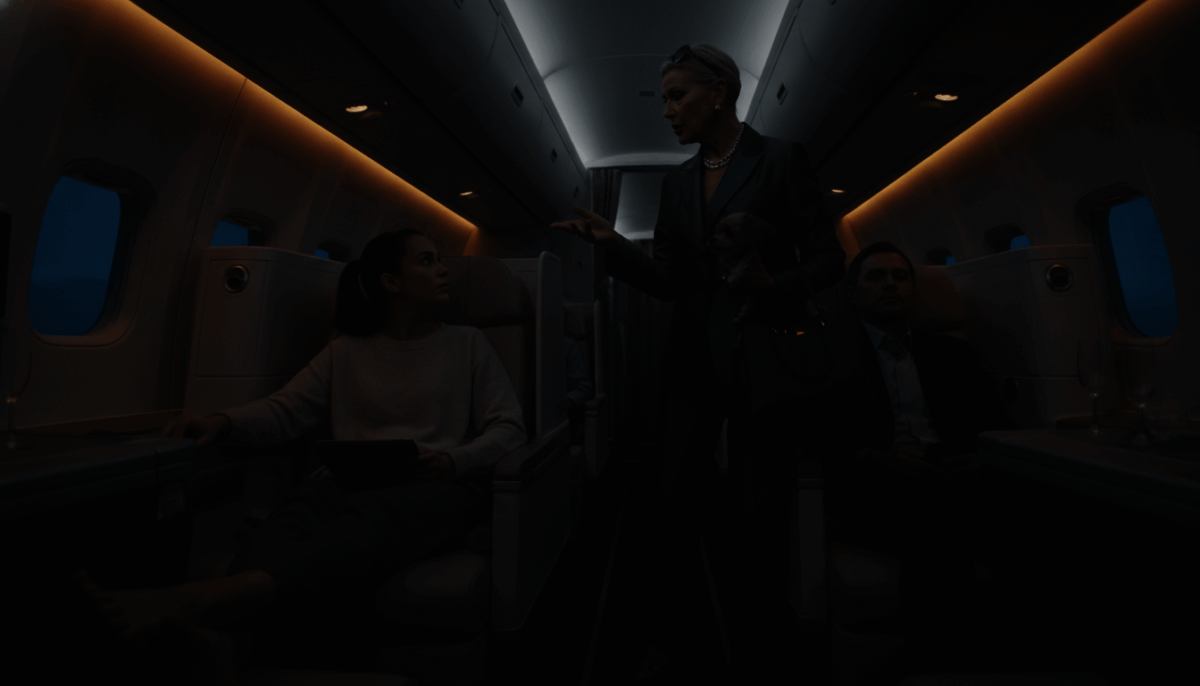
When you book a fourteen-hour flight, the seat you choose isn’t just a piece of upholstery; it is a sanctuary. It is an investment in your sanity, a buffer against the physical toll of long-haul travel, and, quite often, a reward for the grind of a demanding career. For months, I had been looking forward to my trip to Tokyo. I had saved my miles, splurged on the upgrade, and curated my entertainment list with surgical precision. It was supposed to be the ultimate reset before a high-pressure business cycle. I never imagined that this tranquil vision would dissolve into a chaotic, public spectacle before the plane even pushed back from the gate.
My mother-in-law, Susan, has always operated under the unspoken assumption that the world is a buffet prepared for her consumption. Over the years, I have navigated her passive-aggressive critiques of my home, my career, and my marriage with the grace of a diplomat. But when she approached me at the boarding gate, her eyes fixed not on me, but on the boarding pass tucked into my clear plastic sleeve, the mask finally slipped. She didn’t want a conversation; she wanted my seat.
What followed was a masterclass in entitlement. It wasn’t just about the legroom or the champagne; it was about the power dynamic that had been festering for years. She assumed that because she was the matriarch, my comfort was negotiable. She expected me to retreat to row 42, squeezed between a crying infant and a lavatory door, so she could stretch out and watch movies in comfort. The audacity was staggering, and for the first time in our relationship, I chose to stop being the ‘accommodating daughter-in-law’ and started being the person who valued their own peace.
This is the story of that flight, the fallout that shook our entire family, and the realization that sometimes, saying ‘no’ is the most liberating thing you can do. It’s a story about the intersection of family obligation and personal autonomy, and why some boundaries are worth burning bridges over. As I sat in seat 2A, watching her storm toward the back of the plane, I realized this wasn’t just a flight—it was a turning point.
The Pre-Flight Ambush at Gate 42

The boarding area at the international terminal was buzzing with the frantic energy of a long-haul departure. I stood near the priority boarding lane, checking my phone one last time before committing to the digital abyss. Susan appeared out of the crowd, looking far more composed than I felt, given that she had only arrived at the airport forty minutes before departure. She looked at my boarding pass, her eyebrows arching into a perfect, judgmental V.
“Oh, you’re in 2A?” she asked, her voice dripping with that specific brand of feigned innocence she reserved for moments when she wanted something. “That’s marvelous. I’m stuck back in economy, row 38. My sciatica has been acting up, and you know how the middle seats just wreck my lower back. Why don’t we just swap? You’re young, you can handle a few hours of discomfort.”
I felt a cold spike of adrenaline. I had paid for that seat with my own hard-earned bonuses, explicitly to avoid the exact exhaustion she was describing. I looked at her, then back at the boarding queue. I knew that if I said yes, it wouldn’t just be this flight; it would be every future interaction where she felt she could demand my better resources for her convenience.
“Susan, I’m sorry you’re having pain, but I specifically booked this seat to ensure I could work and rest on the flight. I won’t be switching.”
The air between us grew thick. She didn’t blink. She simply laughed, a brittle, sharp sound that drew the attention of a nearby gate agent. She clearly expected me to cave under the social pressure of a public setting. When I didn’t, her expression shifted from patronizing to genuinely venomous. She realized that I wasn’t just being difficult; I was being firm.
She muttered something about me being ‘incredibly selfish’ and turned on her heel to walk toward the economy boarding line. I stood there, heart hammering, knowing that the real conflict hadn’t even begun yet. The flight hadn’t even started, and I could already feel the heavy weight of the family group chat waiting for me on the other side of the Atlantic.
The Escalation During Boarding
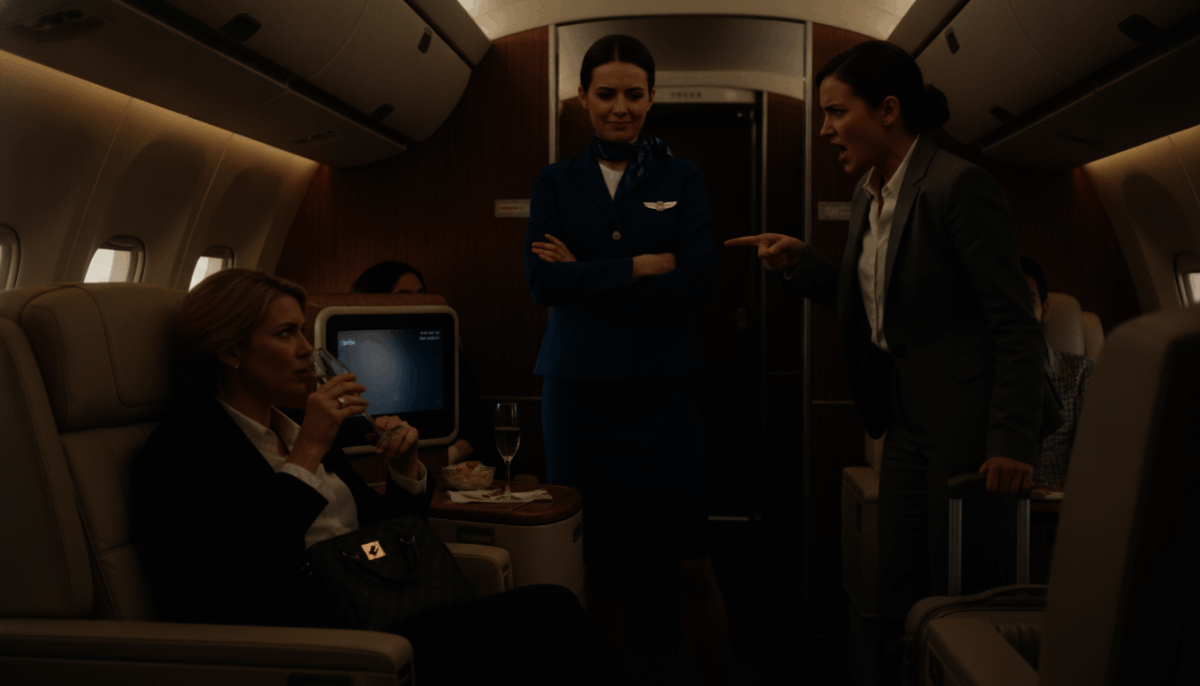
I boarded the plane and settled into my sanctuary, the plush leather seat feeling like a fortress against the world. I had my noise-canceling headphones ready, a book, and a clear plan to ignore the rest of the cabin. But the drama wasn’t done with me. As the cabin began to fill, I felt a shadow looming over my shoulder. It was Susan, and she had brought an flight attendant with her.
The flight attendant looked visibly uncomfortable, caught in the middle of a family power struggle he didn’t understand. Susan pointed at me, her finger trembling slightly. “This is my daughter-in-law. We had a misunderstanding regarding our seating arrangements. She knows I have a medical condition, yet she refuses to accommodate me. Can you move her to the back so I can sit here?”
I looked up at the attendant, my pulse thrumming in my ears. I knew the rules—the seat was mine, paid for, and non-transferable under these circumstances unless I chose to give it up. I stayed calm, keeping my voice level and polite, which only seemed to infuriate Susan further. I explained that I had paid for the seat and was not willing to move to economy for the duration of a fourteen-hour flight.
“I am sorry for the misunderstanding, but my seat is not available for transfer. I have a long work schedule awaiting me upon arrival and I need the rest.”
The attendant, sensing a personal dispute rather than a medical necessity, politely informed Susan that the seat assignment was final and that there were no other first-class seats available to move her to. Susan turned a shade of red I hadn’t seen before. She didn’t scream, but her whispers were loud enough for the entire first-class cabin to hear. She called me heartless, a ‘spoiled millennial,’ and claimed I was weaponizing my money against an elder.
She eventually trudged back to her seat, but the damage was done. The entire cabin was watching. I spent the next hour feeling the stares of my neighbors, the shame washing over me despite knowing I hadn’t done anything wrong. The divide between what she expected of me and what I was willing to provide had never been more starkly illuminated.
The First Wave of Digital Harassment
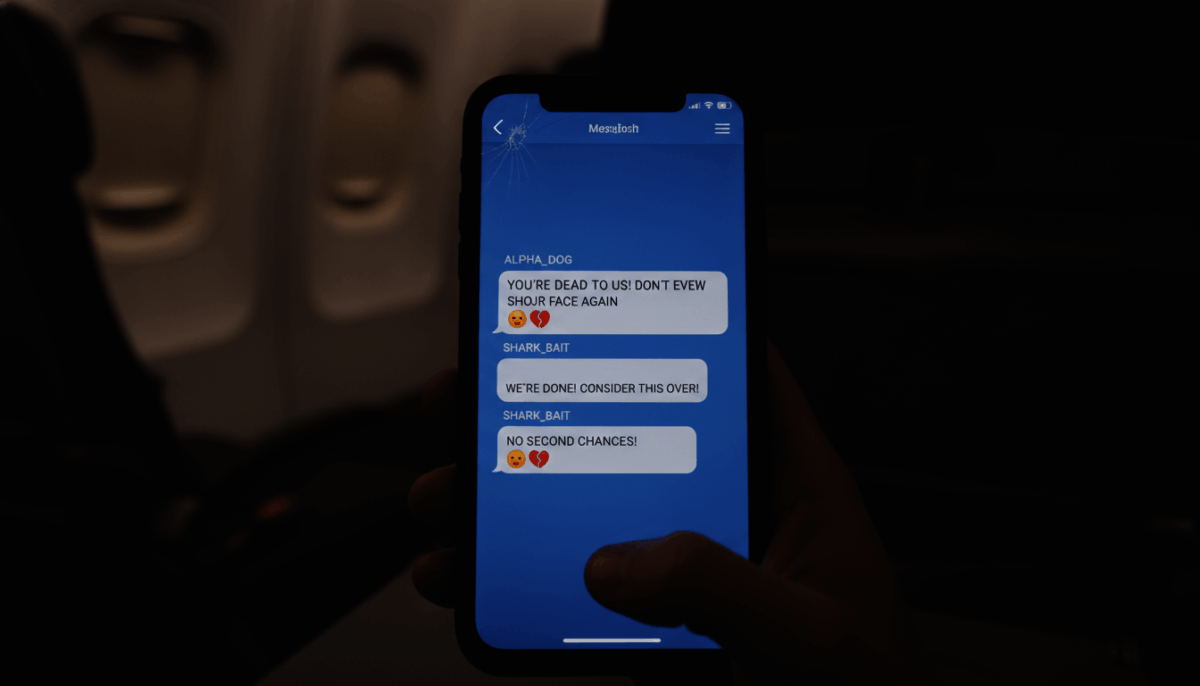
Three hours into the flight, the Wi-Fi connected, and my phone began to vibrate rhythmically on the small table. It was the family group chat, titled ‘The Clan.’ My stomach dropped as I saw the barrage of messages waiting for me. It wasn’t just Susan—my father-in-law and my sister-in-law had already been briefed, and the framing of the story was clearly designed to make me look like the villain of the century.
“I cannot believe you would leave your mother-in-law in economy while you sit in luxury. She is in tears. How can you be so incredibly cold-hearted?”
— Father-in-Law (Family Group Chat)
I read through the messages, my thumbs hovering over the keyboard. They were calling me everything from ‘selfish’ to ‘narcissistic.’ It was a coordinated pile-on, a way to shame me into submission despite the fact that I was thousands of miles away and the ‘crime’ had already occurred. I felt a surge of rage, tempered by the absurdity of the situation. They were acting as if I had stolen bread from her mouth rather than simply keeping the seat I had purchased.
I decided not to respond immediately. I knew that anything I wrote would be screenshotted and shared, twisted into further evidence of my ‘cruelty.’ I watched the movies, drank my wine, and tried to ignore the fact that my own family was currently dismantling my reputation in real-time. It was a bizarre experience, existing in the lap of luxury while being psychologically pelted with accusations.
By the time I reached the fifth hour, the messages had stopped, replaced by a deafening silence that felt even more ominous. They had realized that the tactic wasn’t working. They weren’t getting the reaction they wanted—the apology, the guilt, the subservience. They were faced with the terrifying reality that I was actually going to enjoy my flight, regardless of their disappointment.
The Silent Treatment and the Landing
The rest of the flight was a surreal exercise in avoidance. Every time I had to get up to use the restroom, I prayed I wouldn’t run into Susan in the galley or near the economy section. I felt like a fugitive on my own plane. The luxury of the first-class cabin felt tainted by the knowledge that, just a few rows behind me, a storm was brewing that would greet me the moment I stepped off the tarmac.
I spent the time reflecting on our history. This wasn’t the first time she had tested my boundaries. There were the uninvited visits, the ‘suggestions’ about my work, the subtle jabs at my spending habits. It was always framed as ‘caring’ or ‘advice,’ but it was consistently about control. This flight was just the physical manifestation of a psychological boundary she had been pushing for years.
As we prepared for landing, I felt a strange sense of resolve. I had stood my ground. I hadn’t been rude, I hadn’t raised my voice, and I hadn’t given in. For the first time, I felt like an adult in the relationship rather than a child being scolded. The plane touched down in Tokyo, and I took my time collecting my things, letting the economy class passengers file off first so I could avoid any potential ‘reunion’ in the terminal.
I emerged into the arrivals hall, heart pounding, expecting an ambush. But the airport was crowded and chaotic, and I managed to slip into a taxi without any further confrontations. I checked my phone again—zero new messages from the group chat. They were waiting for me to break, waiting for me to reach out and apologize. They didn’t realize that for me, the distance was exactly what I needed to find my voice.
The Aftermath: A Family Divided

When I finally got back home, the situation hadn’t improved—it had calcified. I was met with a barrage of ‘concerned’ emails from extended family members who had been fed a warped version of the story. I became the talk of the next family dinner, though I conveniently skipped it. It was fascinating to see how a simple travel preference could be turned into a moral failing by people who weren’t even there.
My spouse, who had been on a separate business trip, was caught in the crossfire. They wanted me to just ‘reach out and make peace’ so we could move on. That was the phrase that really stung. Make peace. Which, in their family lexicon, meant ‘apologize for standing up for yourself so we can return to the status quo where my mother gets what she wants.’
“I didn’t do anything wrong, and I won’t apologize for my choices. If she’s upset, that is a reflection of her expectations, not my actions.”
I had a long, difficult conversation with my partner. I explained that this wasn’t about a seat. It was about the fact that Susan had tried to use shame and public humiliation to force me to give up something I had worked for. I told them that if we didn’t set a hard boundary now, this pattern of entitlement would only escalate. I wasn’t going to be the family’s punching bag any longer.
We agreed to go low-contact for a while. It was the hardest decision I’ve ever had to make, but the relief that followed was immense. The constant anxiety of waiting for the next ‘reasonable’ demand began to dissipate. I realized that the price of keeping the peace was far too high, and that true relationships shouldn’t be built on the back of my constant sacrifice.
Voices from the Internet: The Reddit Verdict
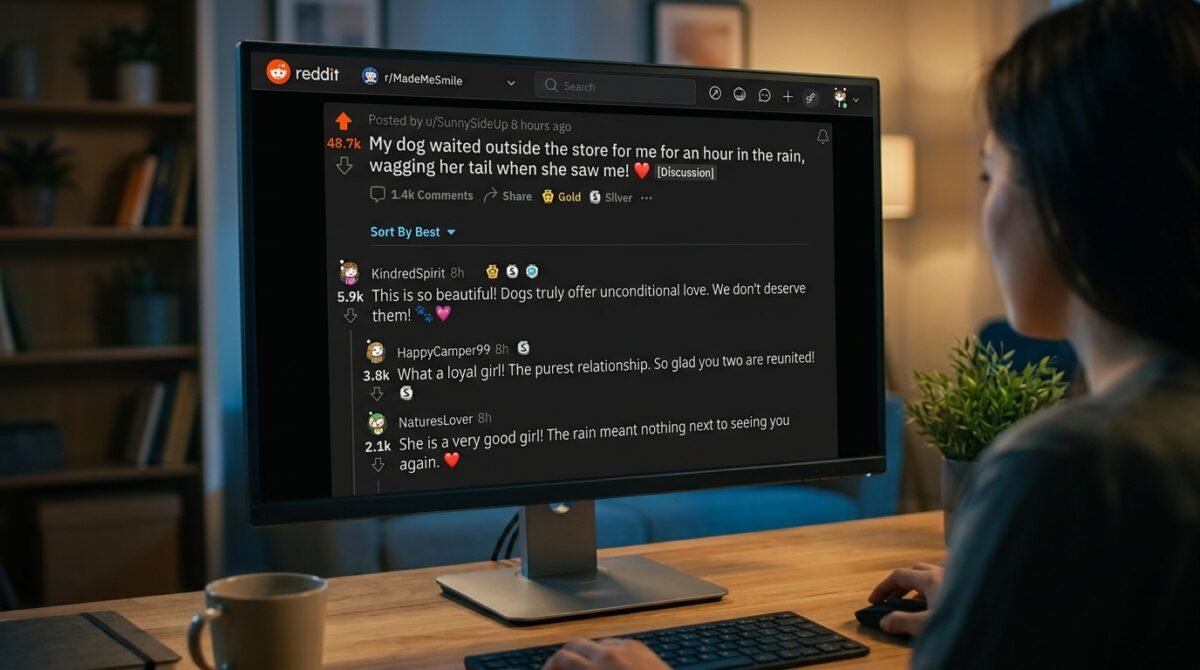
I decided to share my story on a popular forum, expecting a mix of feedback. I was surprised to find that the response was overwhelmingly supportive, with thousands of people sharing their own stories of ‘just-no’ in-laws and travel entitlement. The community acted as a mirror, showing me that what I felt was a legitimate boundary violation, not a petty disagreement.
“You are not a travel agent for your MIL. You paid for a premium experience to manage your own health and work needs. She is a grown woman who could have booked her own upgrade if it mattered that much. NTA.”
— u/TravelBound99 (Top Comment, 18.2k upvotes)
The thread became a hub for people discussing the ‘entitlement tax’—the idea that family members often feel entitled to the fruits of our labor simply because of proximity. It was validating to hear from so many people who had been in my position and had eventually chosen to walk away from the toxicity. It reminded me that I wasn’t alone in this struggle.
There were, of course, the dissenters—the people who argued that ‘family comes first’ and that I should have sacrificed the seat for the sake of harmony. But their arguments were consistently dismantled by the reality of the situation: that ‘harmony’ was just a code word for Susan’s comfort at my expense. The consensus was clear: keep the seat, keep the boundary, and stop apologizing for existing.
The sheer volume of responses helped me process the emotional weight of the event. Seeing my experience through the eyes of thousands of strangers made it feel less like a personal failure and more like a necessary confrontation with a toxic pattern. I learned that the fear of being ‘the bad guy’ is often the primary tool used by manipulators to keep us in line.
Deconstructing the Entitlement Complex

Why do some people believe they have a claim on our resources, our time, and our comfort? Susan’s behavior wasn’t a one-off; it was a symptom of a deeply ingrained belief system. She believed that her age and status gave her a ‘veto’ power over my personal decisions. This wasn’t about the seat; it was about the power to decide which of my needs were ‘valid’ and which were ‘selfish.’
I started reading books on boundaries and toxic family dynamics. I realized that my own habit of people-pleasing had invited this behavior. By always being the one to yield, I had signaled that my boundaries were flexible. Susan wasn’t just being a demanding mother-in-law; she was operating within a framework I had inadvertently helped build. The shift in our dynamic started with me deciding that I was worth the effort of defending.
I began to identify the ‘micro-aggressions’ I had been ignoring for years. The backhanded compliments, the unannounced visits, the way she would make comments about my career whenever I achieved something she hadn’t. It was all part of the same puzzle. The seat on the plane was just the piece that finally didn’t fit, the one that forced me to look at the whole picture.
This realization was painful, but it was also liberating. It meant that I had the power to change things. I didn’t need to change Susan—I couldn’t. I only needed to change how I responded to her. And that change, while it caused a temporary rift, was the only path to a sustainable relationship—or, if necessary, the end of one.
The Financial Breakdown of the Demand

To put things into perspective, let’s look at what was actually being demanded versus what was reality. Susan wasn’t just asking for a seat; she was asking for a significant financial transfer. The difference between her economy ticket and my first-class seat, at the time of booking, was thousands of dollars—a cost she was more than capable of covering herself, but chose not to.
| Category | Susan’s View | The Reality |
|---|---|---|
| Seat Cost | Shared Family Resource | Individual Purchase |
| Priority | Age-based entitlement | First-come, first-served |
| Duty | Sacrifice for family | Boundaries are not selfish |
| Result | I should have moved | I kept the seat I paid for |
When you break it down like this, the absurdity becomes even more glaring. She wasn’t asking for help; she was asking for a handout, disguised as a ‘favor’ she was owed. This table became my mental grounding wire. Whenever I started to feel guilty, I would look at the facts. I wasn’t being ‘cold’; I was being a responsible adult managing my own resources.
The financial aspect was the most overlooked part of the conflict. In family dynamics, people often treat each other’s bank accounts as communal property, especially when it involves luxury items. But the moment you treat it as a professional transaction, the entitlement collapses. I learned to separate ‘family’ from ‘financial independence,’ and it made all the difference in my decision-making process.
If she had asked, ‘Can I pay you to switch seats?’ the conversation might have been different—though I still would have refused. But the fact that she demanded it as a right told me everything I needed to know about how she viewed my autonomy. The money was just a proxy for the respect she didn’t think I deserved.
Learning to Say No Without Guilt

The biggest challenge wasn’t the flight; it was the internal battle against the ‘guilt-tripping’ I had been conditioned to accept. I spent weeks deconstructing why I felt bad for not doing what she wanted. I realized that I had been trained to view ‘no’ as a weapon, rather than a necessary tool for maintaining my own well-being. Learning to say it, and mean it, was a process.
I started practicing in smaller ways. I told my friends no when I didn’t want to go out, I turned down extra projects at work that crossed my boundaries, and I started being honest about my needs in my relationship. It was uncomfortable at first, but with every ‘no,’ I felt a little more like myself. The guilt slowly began to lose its sharp edges, replaced by a sense of calm and self-assurance.
I realized that most people who push boundaries are like bullies—the moment they encounter a wall, they eventually stop trying to push it down. They look for the path of least resistance. By becoming a wall rather than a gate, I changed the entire dynamic of my relationships. I stopped being the person who was always available for others’ convenience and became someone who stood firmly in their own life.
This journey has been one of the most difficult things I’ve done, but I wouldn’t trade it. The, ‘I Refused to Give Up My First-Class Seat’ incident was the catalyst for a much larger transformation. It taught me that I am the only one who can truly value my own time, money, and emotional energy. And that is a lesson worth every bit of the drama that followed.
The Future of Our Relationship

Where are we now? The dust has settled, somewhat. We are still in contact, but it is a guarded, polite version of what it used to be. The uninvited visits have stopped, replaced by scheduled, formal interactions. It isn’t the ‘warm, happy family’ fantasy that society pushes, but it is an honest, sustainable arrangement. And honestly? I prefer it this way.
I no longer feel the need to justify my choices to anyone, least of all to Susan. If we are on a flight together in the future, I know exactly what to expect. She knows that I won’t be moving, and I know that she will likely try to test me again. But the difference is that now, I’m ready. I have the scripts, I have the boundaries, and I have the knowledge that I am not responsible for her comfort.
We have reached a sort of detente. It’s not perfect, and there are still moments of tension, but the explosive, boundary-crossing behavior has significantly decreased. I think she finally realized that pushing me doesn’t lead to the outcome she wants—it only leads to her being shut out. That is a powerful lesson, even if she won’t ever admit to learning it.
For anyone else dealing with a similar situation—whether it’s a mother-in-law, a parent, or a friend who thinks they have a claim on your life—know this: you are allowed to say no. You are allowed to protect your peace. You are allowed to enjoy the things you have worked for. Your life is not a democracy where everyone gets a vote; it’s a kingdom, and you are the queen. Rule it accordingly.
Conclusion
Looking back at that fourteen-hour flight, it’s easy to see it as a simple travel dispute. But it was so much more. It was the moment I stopped being a supporting character in someone else’s drama and started being the protagonist of my own life. It was a confrontation between a culture of entitlement and the reality of earned autonomy.
The fallout was, and remains, a painful memory. Losing the ‘easy’ family dynamic was a price I had to pay, but the gain in self-respect has been worth far more than any seat in a cabin. I hope this story serves as a reminder that your comfort, your hard-earned money, and your boundaries are not negotiable commodities for others to trade.
What about you? Have you ever had to draw a hard line with a family member in a public setting? Or have you been on the other side of an uncomfortable travel demand? Share your thoughts, your ‘just-no’ stories, and your strategies for maintaining boundaries in the comments below. Let’s get a discussion going about how we protect our space in a world that constantly asks us to shrink.
What's your verdict on this dilemma?
Vote below to contribute to the official community consensus.

Have a Dilemma Keeping You Up at Night?
Share your real-life feud, wedding chaos, or relationship crossroads anonymously with our editorial team.
What do you think ?
0 Comments🛡️ Comments are moderated to protect community integrity. Your comment will appear once approved by the editorial team.