
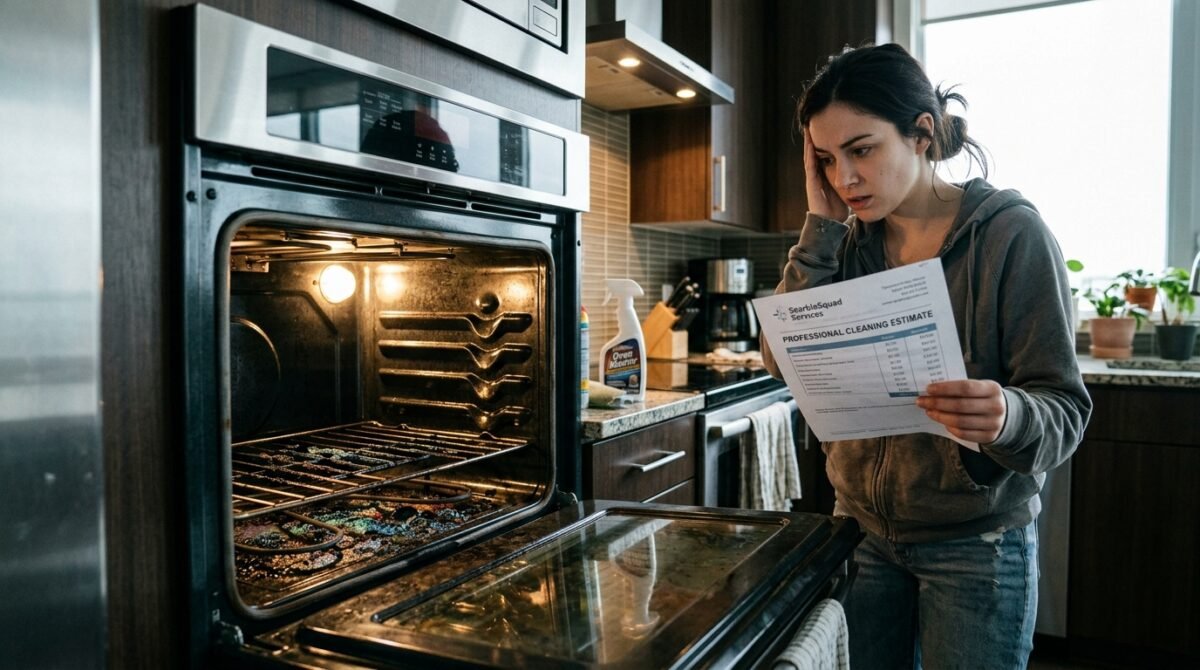
Living with roommates is often described as a trial by fire, but I never expected my lease agreement to involve literal chemical combustion. For years, I navigated the standard roommate hurdles: the unwashed dishes, the passive-aggressive notes about shared milk, and the occasional ‘borrowed’ sweater. These were minor irritants, manageable inconveniences that come with the territory of urban living. However, everything changed when Sarah, a self-proclaimed ‘entrepreneur’ with a penchant for DIY experiments, decided that our communal kitchen was the perfect laboratory for her latest venture.
It started innocuously enough. Sarah began ordering oversized crates of raw materials, claiming she was developing a new line of organic bath salts and candles. I didn’t think much of it until the smell began to change. It wasn’t the sweet, floral scent of lavender or vanilla; it was something sharp, metallic, and deeply suffocating. The kitchen, once a place of nourishment, became a restricted zone. I found myself ordering takeout more often than not, unable to stomach the idea of cooking where such strange, bubbling substances were being processed.
The breaking point wasn’t an argument or a shouting match; it was the visual evidence of a destroyed appliance. I walked into the kitchen on a Tuesday evening, hoping to roast some vegetables, only to find the oven interior coated in a thick, toxic-looking sludge that had hardened into a permanent, crystalline crust. Sarah had been attempting to melt industrial-grade binding powders, ignoring the fact that our oven was designed for sourdough, not industrial manufacturing. The heating element was encased in a substance that smelled like burning plastic and regret.
I realized then that our dynamic had shifted from ‘clashing styles’ to ‘financial liability.’ I didn’t scream. I didn’t beg for her to clean it, because I knew she couldn’t. Instead, I picked up my phone and called our landlord, documenting the destruction of the property. When the lease ended, the conversation about the security deposit wasn’t a request—it was a necessity. I chose to prioritize my financial well-being over the comfort of a friendship that had already evaporated in the fumes of her chemistry experiment.
The Experimental Phase and the First Strange Fumes

At first, it was just the boxes. Brown cardboard shipments piled up in the entryway, each labeled with cryptic shipping codes and warnings about ‘hazardous contents.’ I assumed Sarah was just being her usual dramatic self, chasing another fleeting hobby that would burn out within two weeks. She had gone through phases of pottery, screen-printing, and even home-brewed kombucha, which had left the fridge smelling like a vinegar factory. I was used to the clutter, but this felt different.
The air quality in our apartment began to degrade within a week. I’d wake up feeling a tightness in my chest, a dry cough that felt like I’d swallowed dust. Sarah, meanwhile, was entirely unfazed. She spent hours in the kitchen, her laptop open on the counter, her eyes glued to YouTube tutorials that seemed to involve excessive amounts of stirring and dangerous heating techniques. When I asked her about it, she just brushed me off with a wave of her hand, promising she was on the verge of a ‘breakthrough’ product that would pay our rent for months.
“You have to understand, this isn’t just some hobby. This is proprietary material. If I can get the melting point to stabilize, we won’t have to worry about the apartment rent again. Just bear with me for a few more days.”
— Sarah, responding to my concerns about the chemical odor
I shouldn’t have believed her. I should have been firmer, but the lure of lowered expenses was a powerful drug. I spent most of my time in my room with the window cracked open, ignoring the low-frequency hum of the oven fan running for hours on end. I told myself it was a temporary sacrifice for a potential shared win. Looking back, that was the first crack in the foundation of our living arrangement. I was valuing the possibility of financial gain over the safety of my own lungs and the integrity of our home.
The kitchen started to take on a strange patina. The stainless steel surfaces, usually gleaming, became dull and sticky. I noticed a fine, grey powder settling on the window sills and the top of the refrigerator. It was as if our kitchen was being slowly entombed in the dust of Sarah’s ambition. I kept cleaning it, thinking I was just being a good roommate, but the accumulation was faster than my scrubbing. I was fighting a losing battle against a production line I never signed up to host.
The Afternoon the Oven Stopped Being an Oven
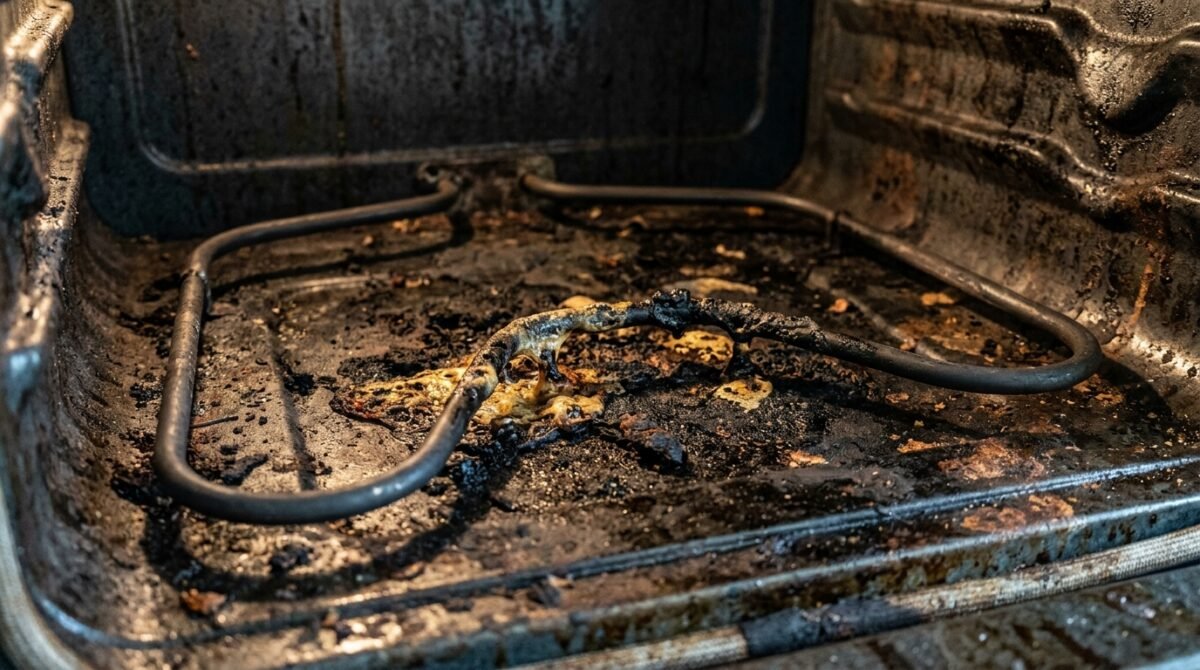
The day the oven finally surrendered was a quiet Tuesday. I had come home early from work, looking forward to a simple meal. I walked into the kitchen and was immediately hit by a wall of acrid, chemical heat. The air was so thick it felt like I was walking through a swamp. The stove’s control panel was flickering, and the oven door was slightly ajar, propped open by a heavy, metal spatula that had clearly been used to scrape at the interior.
I peered inside and felt my blood run cold. The bottom of the oven was completely obliterated. A pool of molten, grey sludge had leaked out of the containers Sarah had been using, coating the heating element and dripping into the crevices of the door seals. As it cooled, the substance had hardened into a jagged, glass-like mess that looked like something out of a geological nightmare. It was fused to the enamel. There was no way this was coming off with soap and water; it was essentially part of the appliance now.
“I don’t know why it did that! It was supposed to liquefy and then set, but the temperature control on this old stove must be busted. It didn’t handle the chemical reaction properly.”
— Sarah, when confronted with the ruined appliance
Sarah didn’t even look guilty. She looked annoyed, as if the oven had betrayed her rather than the other way around. Her frustration wasn’t aimed at the mess she’d made, but at the ‘inconvenience’ of not being able to continue her work. She was already talking about buying a heating plate or an industrial hot plate, completely ignoring the fact that our lease specifically forbade using the kitchen for commercial manufacturing.
I stood there, paralyzed by the sheer absurdity of the situation. I had paid my half of the deposit for this apartment, and my half of that money was currently being held hostage by a ruined stove. The realization hit me then: this wasn’t just a roommate disagreement. This was a breach of our lease. If the landlord found out, we would both be held responsible, or worse, evicted. I was no longer just dealing with a messy roommate; I was dealing with a liability.
The Midnight Group Chat and the Deflection
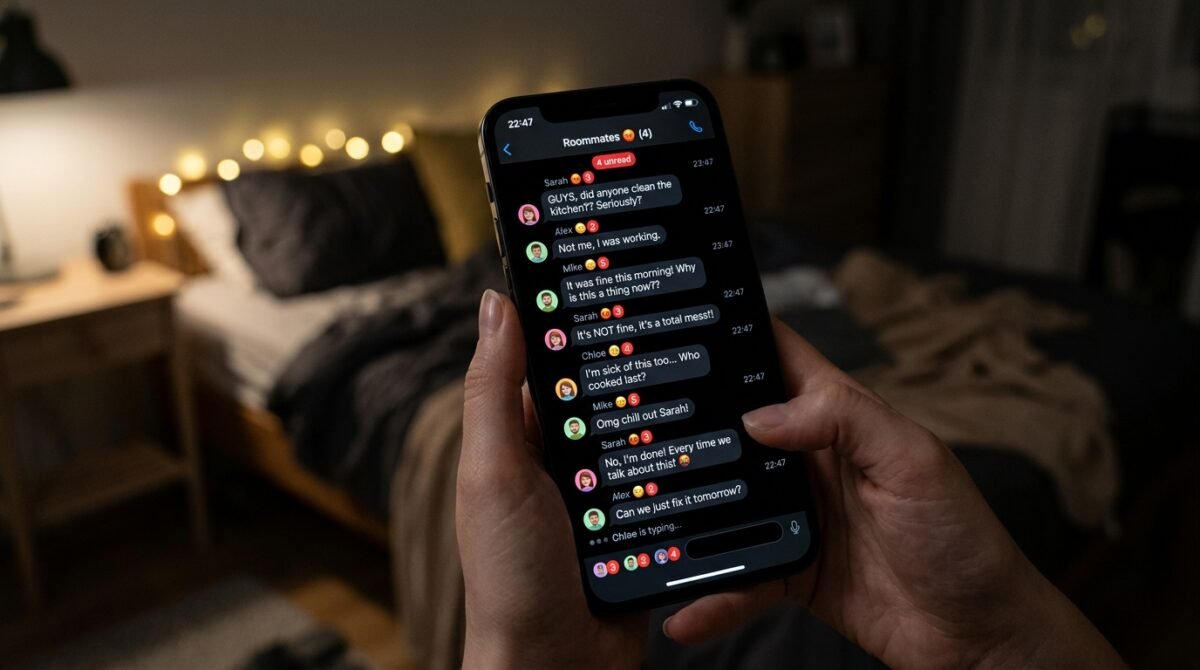
That night, I retreated to my room and sent a message to our shared group chat, which included our other roommate, Mark, who had been out of town for the week. I needed to document the state of the kitchen, not just for my own sanity, but for the inevitable landlord inspection. I took photos—high-resolution, damning evidence of the crusty, burnt interior. I sent them to the group, adding a short, direct message asking for a plan to address the damage before the lease inspection.
“Hey Sarah, I’ve documented the damage to the oven. Given that this was caused by your commercial experiments, we need to talk about how this gets fixed. I’m not paying for a replacement when I was never told this was happening.”
— Text message sent to the house group chat
Sarah’s response was immediate and defensive. She tried to frame it as a ‘shared household expense,’ arguing that since we all lived there, the kitchen maintenance was a collective responsibility. She even tried to drag Mark into it, implying that his usage of the oven for frozen pizzas had contributed to the wear and tear. It was a classic deflection tactic, one I wasn’t about to fall for. I knew the difference between a pizza stain and a chemical burn.
The argument escalated quickly. Sarah started sending long paragraphs about how I was ‘unsupportive of her dreams’ and ‘being petty about a piece of hardware.’ It was gaslighting of the highest order. She really believed that her ambition entitled her to destroy communal property. Mark, bless his heart, jumped into the chat and shut it down immediately, siding with the logic of the situation rather than the emotional weight of Sarah’s manipulation.
By 2:00 AM, the phone was buzzing incessantly. I eventually muted the chat, staring at the ceiling in the dark. I felt a strange sense of detachment. The anger had faded, replaced by a cold, hard resolve. I wasn’t going to fight her about the ‘dream’ anymore. I was going to fight her about the contract. The lease was my shield, and the security deposit was the battlefield. If she wanted to play entrepreneur, she could learn the cost of overhead, specifically the cost of a new stove.
The Landlord’s Inspection: Truth vs. Rationalization
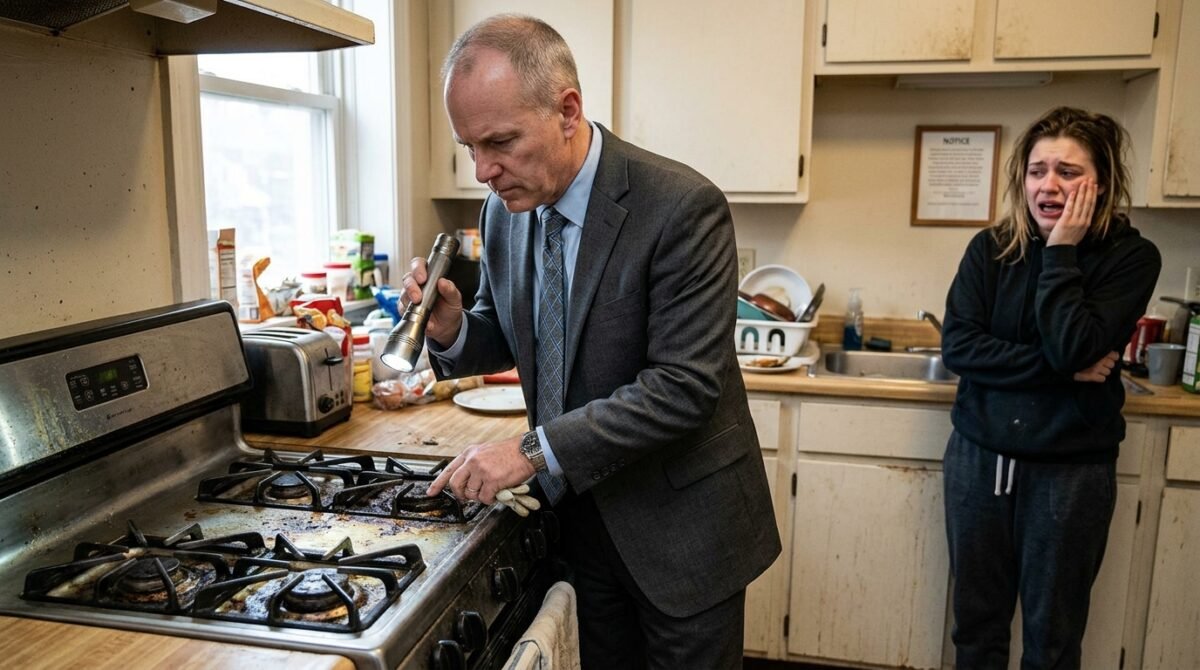
I didn’t wait for Sarah to ‘handle’ the repair. The next morning, I called our property manager, Mr. Henderson, and requested a mid-lease inspection. I framed it as a safety concern, citing the toxic fumes and the potential fire hazard of the ruined oven. When Mr. Henderson arrived, he didn’t even need to look closely to realize the extent of the damage. He pulled the oven door down, took one look at the fused, crystalline mess, and his face turned a shade of pale I haven’t seen since.
“This isn’t grease, is it?” he asked, his voice low and dangerous. I shook my head, keeping my distance. He spent the next twenty minutes taking his own photos, his phone camera clicking with a methodical, rhythmic sound that felt like the tolling of a bell. Sarah tried to intervene, spinning a tale about a ‘recipe gone wrong,’ but Mr. Henderson wasn’t a man who suffered fools. He had seen everything in his twenty years of property management, and he knew exactly what industrial chemical damage looked like.
“This is a violation of the lease terms regarding commercial activity and property damage. I will be billing the cost of a full stove replacement directly against the security deposit. If you have any objections, you can take it up with our legal department.”
— Mr. Henderson, the property manager, delivering the verdict
Sarah turned to me, her eyes wide with shock. She had expected me to fold, to perhaps offer to split the cost or help her clean it. The look of betrayal on her face was almost laughable. She hadn’t considered that her actions had consequences that extended beyond our apartment. She thought she was untouchable, that her ‘business’ gave her immunity from basic tenant responsibilities. Watching the reality of the situation hit her was a cathartic experience I hadn’t realized I needed.
Once the landlord left, the kitchen felt deathly quiet. Sarah was fuming, pacing the floor and muttering about ‘unfair business practices’ and ‘landlord greed.’ She didn’t seem to grasp that it was her own choices that had led us to this moment. The stove was already being scheduled for removal. The fact that I had essentially orchestrated her financial penalty wasn’t lost on her, and for the first time in our time living together, she looked at me with genuine, unadulterated fear. She realized I was no longer a person she could manipulate.
The Fallout: Financial Realities of a Failed Business
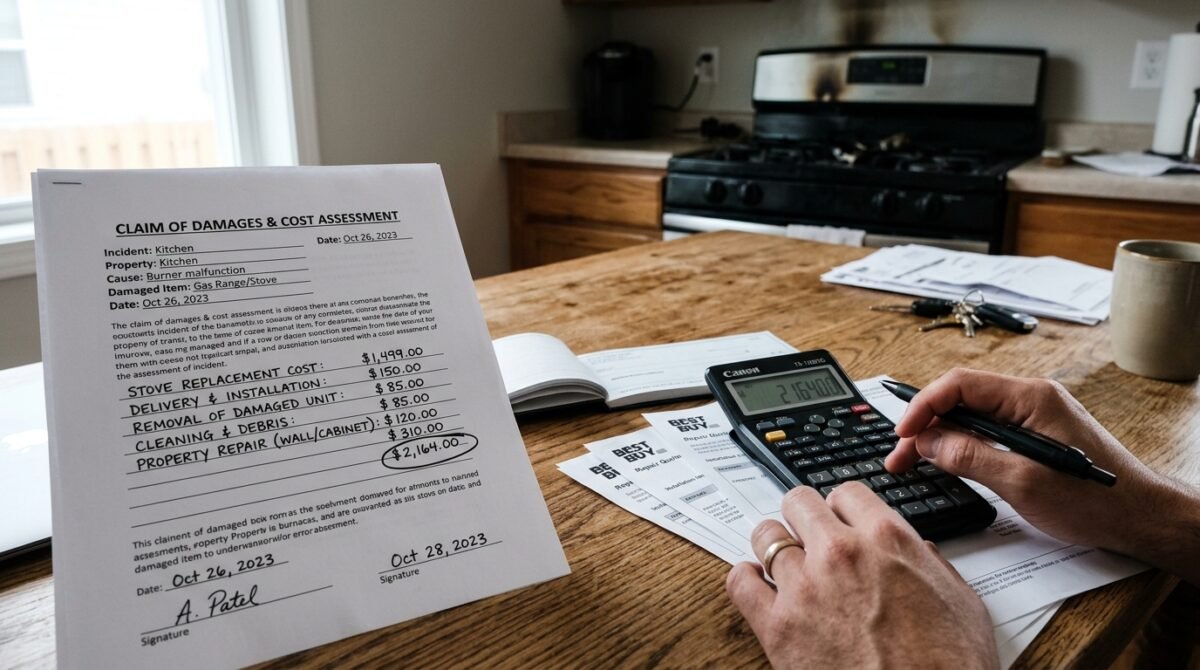
The next few weeks were a study in icy silence. The new stove arrived, a shiny, stainless steel model that felt like a trophy of the war we’d just fought. The cost had been deducted from the initial security deposit, which meant that when we eventually moved out, Sarah’s portion of the return was essentially zero. She was furious, of course. She tried to demand that I compensate her, claiming that I had ‘forced’ the landlord’s hand by reporting the damage.
I sat her down at the kitchen table—the same table where she had once laid out her chemical vials—and laid out the math. I showed her the lease, the clause about commercial use, and the estimate for the stove replacement. It wasn’t an argument; it was a breakdown of costs. I didn’t raise my voice. I didn’t call her names. I just presented the cold, hard facts of the financial damage she had caused. She didn’t have a rebuttal. She just sat there, deflated, realizing that her ‘business’ had cost her more than it had ever made.
“You’re really going to let them take my deposit? That money was for my next place! I needed that to secure my deposit elsewhere!”
— Sarah, realizing the consequences of the deposit deduction
I told her, quite calmly, that the deposit was for protecting the landlord’s property, and she had destroyed it. It was a teachable moment, though I doubted she was learning anything other than how to be a victim. She tried to tell me that I had ‘betrayed’ her, that as roommates, we were supposed to be on the same team. I countered that a team doesn’t torch the kitchen and then expect the other players to cover the repair bill. The conversation ended with her storming off to her room, leaving me to contemplate the silence.
The financial impact was real. She had to scramble to find extra shifts at her second job, and the ‘business’ was officially shuttered. I watched her pack away the crates of raw materials, the shame of her failure finally beginning to set in. It wasn’t satisfying in the way I thought it would be; it was just sad. But it was also necessary. I had regained control over my home and my living situation, even if the price was the complete dissolution of my relationship with the person I had shared a fridge with for two years.
Community Perspectives: The Reddit Verdict

When I finally posted about this on a popular subreddit, I expected a mix of responses. I wanted to see if I had been too harsh, or if I was justified in my actions. The response was overwhelming. Within hours, the thread had thousands of comments, a mixture of support, condemnation, and shared stories of roommate nightmares. The consensus, however, was surprisingly clear: I was in the right. The sheer insanity of melting industrial chemicals in a residential oven had triggered a collective response of disbelief.
“NTA. You didn’t ‘have’ the landlord deduct the deposit. Her actions caused the damage, and the landlord reacted to the damage. You just didn’t lie for her. There’s a huge difference.”
— u/RoommateRelief (Top Comment, 18.2k upvotes)
Many users shared their own horror stories of roommates with ‘side hustles’ that involved fire, hazardous materials, or excessive noise. It made me feel less isolated, realizing that this was a common archetype of a bad roommate—the ‘entrepreneur’ who lacks the basic respect for shared spaces. I read through threads of people who had been evicted because of their roommates’ foolishness, and I felt a sense of relief that I had acted before things reached that level.
There were, of course, the contrarians who argued that I should have handled it ‘in-house’ rather than involving the landlord. They claimed that reporting her was a ‘nuclear option’ that destroyed the friendship. My response to that was simple: the friendship was destroyed the moment she risked our housing for a pipe dream. You don’t get to demand loyalty from someone whose security you’ve actively endangered. The internet seemed to agree, with most people pointing out that friendship requires mutual respect, which was clearly absent.
The thread became a repository of advice on how to handle similar situations in the future. I learned about renter’s insurance, the importance of documenting everything, and why it’s crucial to have a clear, written agreement about what is and isn’t allowed in shared areas. It was a masterclass in boundary setting. I went from being a passive, conflict-averse roommate to someone who understood the value of clear communication and firm consequences. The community helped me validate that my anger was not only justified but necessary.
The Slow Unraveling of the Living Arrangement
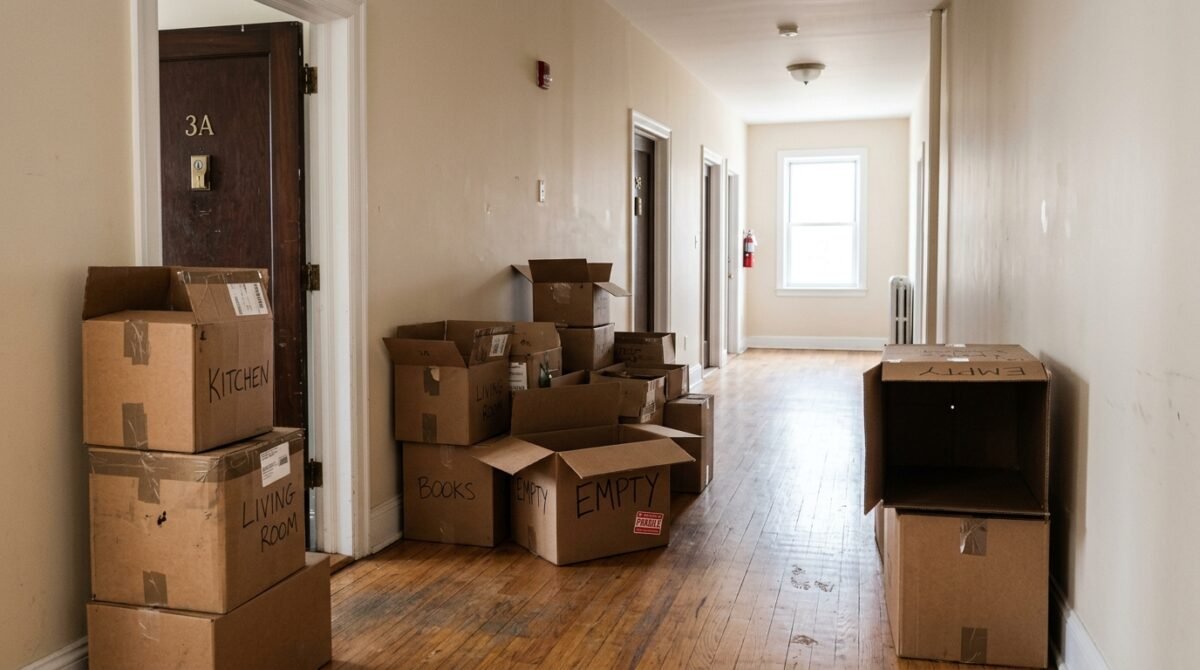
After the deposit incident, the apartment felt different. The tension was thick enough to cut with a knife. We moved like ghosts in our own home, avoiding eye contact and keeping our interactions to the absolute minimum. I knew it was time to leave, but my lease wasn’t up for another four months. Those months were the longest of my life. Every time I walked into the kitchen, I was reminded of the burnt stove and the toxic air, a constant reminder of the breach of trust.
Sarah tried to make amends, but it was all performative. She would leave small, expensive gifts on the counter—a candle, a box of chocolates—as if that would compensate for the damage and the stress. I didn’t accept them. I kept them, then eventually donated them. I couldn’t be bought off with small tokens. The damage went deeper than the appliance; it was about the fundamental incompatibility of our values. I valued stability and respect; she valued her own agenda above all else.
“I just wish you could see that I was trying to build something. Why does it have to be about the money? Can’t we just move past this and be friends again?”
— Sarah, attempting a reconciliation that felt hollow
I told her, calmly, that we couldn’t be friends because she had proven that she didn’t view me as an equal partner in our living arrangement. I told her that friendship requires trust, and she had burned that trust along with the oven. She didn’t like that answer, but she didn’t have the audacity to argue with it. She knew, deep down, that she had been the architect of our apartment’s descent into chaos. There was no going back to how things were.
Eventually, the end of the lease arrived. I was the first one out, moving into a small, quiet place of my own. I didn’t look back as I carried my boxes down the stairs. I felt a lightness in my chest that I hadn’t felt in years. The experience had been grueling, but it had also been a catalyst for growth. I learned what I wouldn’t tolerate, what I needed in a living space, and most importantly, how to advocate for myself in the face of blatant disrespect.
Lessons Learned: Establishing Non-Negotiable Boundaries

Looking back, the most important lesson I learned was the value of setting boundaries early. If I had intervened when the first boxes arrived, if I had spoken up when the first strange smells filled the apartment, I might have prevented the stove disaster entirely. I had allowed myself to be a bystander in my own life, hoping that the problem would resolve itself. It never does. Passive tolerance is just an invitation for others to push further.
I also learned the importance of documentation. Taking those photos, keeping records of the conversations, and getting the property manager involved early were the steps that protected me. Without them, it would have been my word against hers, and given her skill at manipulation, she might have convinced the landlord that the damage was somehow my fault. The evidence was the equalizer. It turned a messy emotional conflict into a clear-cut case of lease violation.
“Boundaries aren’t just for protecting your space; they are for protecting your sanity. If you don’t enforce them, you’re essentially giving everyone else permission to walk all over you.”
— A piece of advice I read in a self-help book shortly after moving out
I’ve since become much more proactive in vetting potential roommates. I ask about their habits, their hobbies, and their understanding of shared space. I don’t apologize for being ‘difficult’ about the rules; I view it as being responsible. A home should be a sanctuary, not a battleground. If someone thinks I’m too strict, that’s a clear sign that they aren’t the right person for me to share a living space with.
The experience changed how I interact with people in general. I’m less likely to let things slide, more willing to address issues head-on. It’s a liberating feeling, knowing that I have the power to say ‘no’ and that I don’t have to sacrifice my well-being for the sake of keeping the peace. The story of the melted stove is a cautionary tale, but it’s also a story of reclamation. I reclaimed my peace, my finances, and my sense of self.
The Aftermath: Where I Am Now

It’s been over a year since I moved out of that apartment. I live alone now, and it is glorious. There are no mysterious smells, no crates of hazardous material in the hallway, and the kitchen is always exactly as I left it. I cook whatever I want, whenever I want, and I never have to worry about whether someone else’s ‘side hustle’ is going to compromise my living situation. It’s a simple life, but it’s a life built on respect and peace.
I haven’t spoken to Sarah since the day I moved out. I occasionally see her updates on social media, but I scroll past them without a second thought. She’s still chasing her dreams, or whatever it is she’s calling them these days. That’s her journey, and I wish her well, from a very safe distance. I’m focused on my own path, my own goals, and my own version of success. I’ve realized that my worth isn’t defined by my ability to ‘support’ others at my own expense.
“I learned that being alone isn’t the same as being lonely. Sometimes, being alone is the only way to really be yourself again.”
— A thought I wrote in my journal after six months of living on my own
I sometimes wonder what would have happened if I had been more confrontational from the start. Would we still be friends? Would the apartment still be a mess? It doesn’t matter. What matters is that I survived the ordeal and came out the other side stronger. I’ve learned to trust my instincts, and when my gut tells me something is wrong, I listen. I don’t wait for permission to protect myself.
If you’re reading this and you’re in a situation that feels like it’s slowly spiraling out of control, take this as your sign. You don’t have to wait for the stove to melt before you act. You deserve to live in a place where you feel safe, respected, and at peace. Don’t be afraid to set boundaries, don’t be afraid to involve the authorities if necessary, and definitely don’t be afraid to put yourself first. You are the most important person in your own story.
Reflecting on the ‘Roommate’ Dynamic

Living with others is a social contract that often goes unwritten. We assume that people know the basics: clean up after yourself, respect communal space, and don’t turn the kitchen into a hazardous waste site. But when those basic expectations are violated, the contract is broken. The biggest mistake we make is assuming that the other person shares our values. When I moved in with Sarah, I assumed we were both looking for a stable, comfortable home. I was wrong. She was looking for a launchpad for her ambitions.
The tragedy of the situation was that we could have had a great living arrangement if she had just been honest. If she had come to me and said, ‘I want to try this project, can we figure out a safe way to do it?’, we might have found a solution. But the secrecy, the deflection, and the eventual destruction were the result of a lack of communication. It made me realize that transparency is the most important component of a healthy living situation. If you can’t be honest about what you’re doing, you shouldn’t be doing it in a shared space.
“A good roommate isn’t someone who never makes a mess. A good roommate is someone who takes responsibility for the mess they make, and respects the space they share with others.”
— My concluding thought on roommate etiquette
I’ve also come to appreciate the importance of having a clear exit strategy. No one enters a lease thinking they’ll need to break it, but life is unpredictable. Knowing my rights as a tenant, understanding the lease terms, and having a plan for financial autonomy were the things that saved me. I didn’t rely on anyone else to save me; I relied on the systems and the knowledge I had built for myself. That’s a lesson that extends far beyond roommate drama.
So, the next time you feel like you’re being taken advantage of, or you feel the pressure to keep the peace at the expense of your own well-being, remember the story of the stove. It wasn’t about the appliance. It was about the power to define the terms of your own life. When you stop worrying about being ‘nice’ and start focusing on being ‘fair’ to yourself, everything changes. You don’t have to be the martyr of your own home. You can just be the person who lives there.
Conclusion
Looking back, the destruction of that stove was a catalyst for a much-needed transformation. I walked away with my financial integrity intact and a renewed sense of confidence in my ability to handle life’s unexpected challenges. It wasn’t just about a kitchen appliance; it was about reclaiming my autonomy in a world that often demands we sacrifice our boundaries for the sake of others.
As I move forward, I carry the lesson that self-advocacy is not an act of aggression, but an act of preservation. By holding others accountable, we aren’t being petty; we are reinforcing the values that keep communities and friendships healthy. I’ve realized that my peace of mind is worth more than any short-term comfort provided by a tenuous friendship.
What about you? Have you ever had to draw a line in the sand with a roommate or a friend, only to have them call you unreasonable for it? Did you stand your ground, or did you cave to the social pressure? Let’s discuss in the comments—share your own stories of boundary-setting, disastrous roommates, or the moment you finally realized you had to put yourself first. Your stories might just be the encouragement someone else needs to stand up for their own peace.
What's your verdict on this dilemma?
Vote below to contribute to the official community consensus.

Have a Dilemma Keeping You Up at Night?
Share your real-life feud, wedding chaos, or relationship crossroads anonymously with our editorial team.
What do you think ?
0 Comments🛡️ Comments are moderated to protect community integrity. Your comment will appear once approved by the editorial team.