
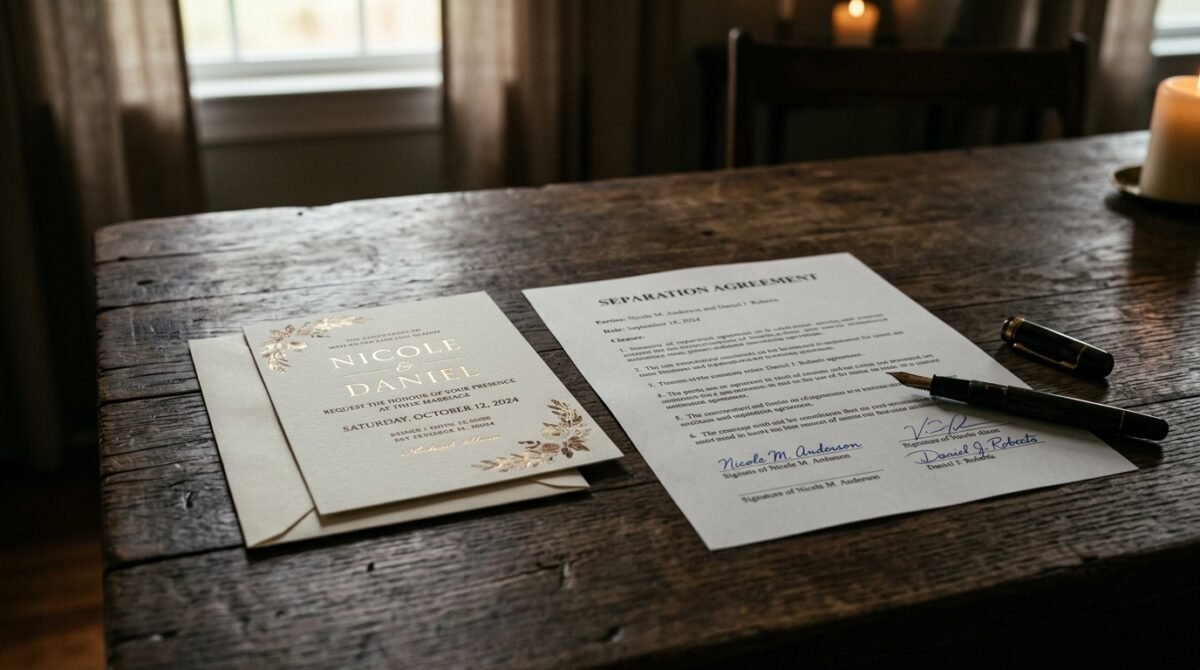
They say that wedding planning is the ultimate stress test for a relationship, but no one prepares you for the moment your partner treats your future like a liability. For three years, Mark and I were the couple everyone envied: we traveled, we supported each other, and we were counting down the days until our walk down the aisle. I had always been transparent about my ambitions—specifically, my dream of obtaining a Master’s degree in International Relations to pivot my career path.
Mark was always seemingly supportive, or so I thought. He would nod during dinner conversations about graduate programs, smile when I looked at course descriptions, and even joke about being the spouse of a scholar. However, as the wedding date loomed closer, a strange, possessive shift occurred. The support began to feel conditional. The jokes stopped being lighthearted and started sounding like warnings.
The catalyst for the unraveling was a document placed on our kitchen island on a rainy Tuesday evening. It wasn’t a wedding vendor contract, and it wasn’t a guest list update. It was a formal, lawyer-drafted memorandum titled ‘Marital Expectations and Career Prioritization.’ Inside, the language was cold, transactional, and explicitly demanded that I forfeit my right to pursue graduate studies for the next decade to ‘maintain household stability.’
Stunned, I looked up from the paper to see Mark standing there with an expression of cold, calculated expectation. He wasn’t joking. He truly believed that by signing this, I would be securing our future. Instead, he had just ensured that there would be no future to speak of. This is the story of how I chose my own potential over a false promise of security.
The Tuesday Night Ambush
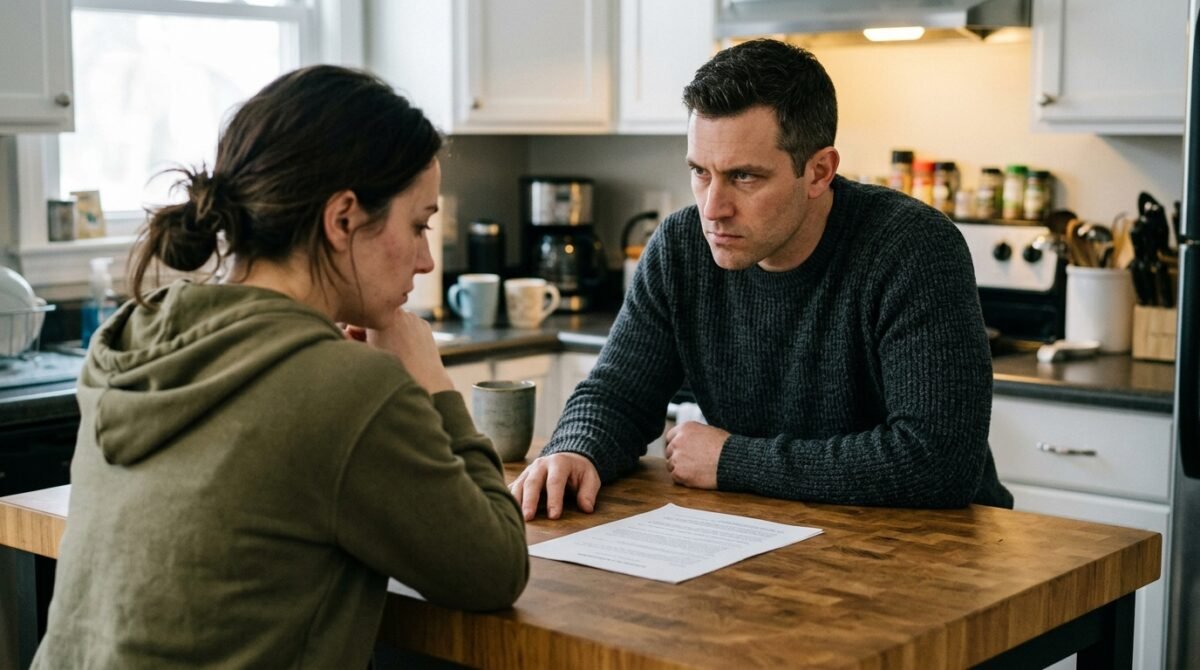
It was a Tuesday, the kind of mundane evening that usually ended with takeout and a show. I had come home from work exhausted, thinking about my upcoming application deadlines. Mark was already home, sitting at the kitchen island, his laptop pushed aside to make room for a thick manila envelope. He looked unusually serious, his posture rigid.
I asked him what was wrong, assuming perhaps there was a deposit issue with the venue or a problem with the caterer. Instead, he slid the envelope across the granite countertop. When I opened it, the weight of the paper felt heavier than it should have. It was a formal agreement, drafted by a family friend who happened to be an attorney, outlining ‘limitations on professional development’ to ‘ensure domestic harmony.’
I read through the clauses, my heart hammering against my ribs. It stated that I was prohibited from enrolling in any academic programs that would take away from my ‘availability to the household’ and that any deviation would result in a financial penalty to cover my ‘loss of contribution’ to our shared life. I couldn’t breathe. I looked up at him, waiting for the punchline, waiting for him to tell me it was a sick prank.
“Mark, what is this? Did you actually pay someone to write this trash? I’ve been talking about this degree for years. We agreed on this. Why on earth would you think this is acceptable?”
He didn’t flinch. He just leaned back, crossing his arms with an air of superiority. He explained that my studies would be ‘too expensive’ and ’emotionally taxing’ on our future, and that if I wanted to be his wife, I had to be fully committed to his vision of our life. It was a declaration of ownership, not a partnership.
The Facade of Supportive Partner
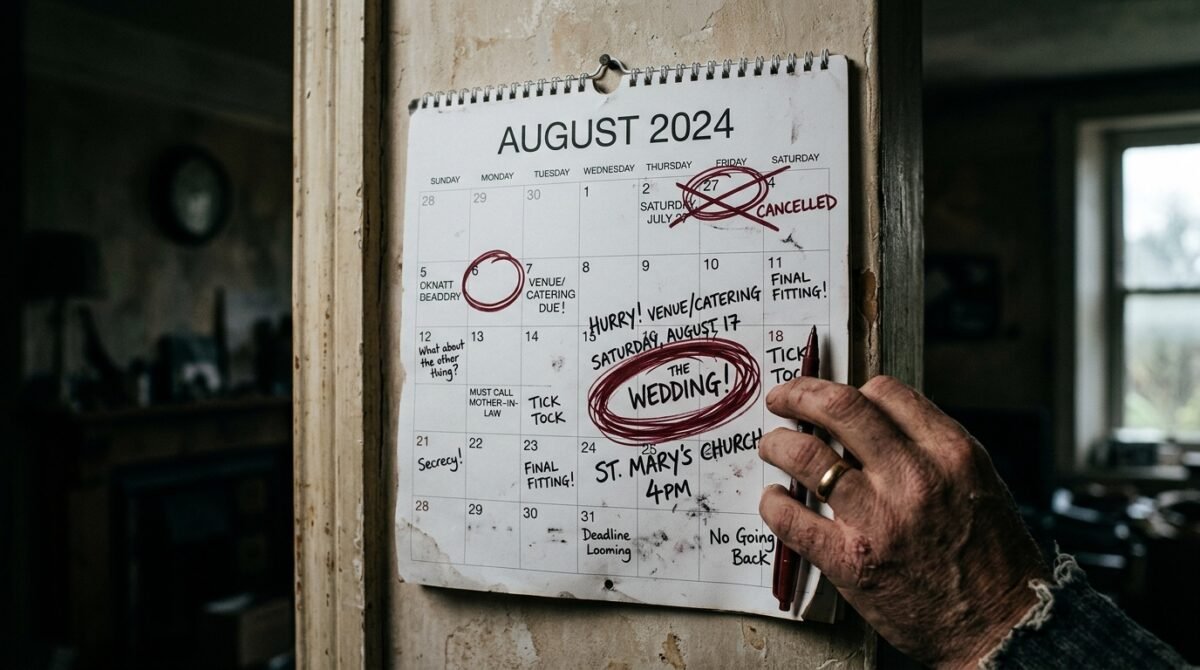
Looking back, the signs were there. For months, Mark had been subtly undermining my confidence. When I mentioned networking events, he would claim he needed me home to ‘prep for the wedding.’ When I discussed budget savings for tuition, he would mention how ‘optimistic’ I was, implying that my goals were unrealistic or unnecessary given his own successful career in sales.
He had spent years curating an image of the perfect, supportive fiancé. He attended my work functions and toasted to my future successes, all while quietly building a mental cage around me. It was a masterclass in gaslighting. He convinced me that my ambitions were merely ‘hobbies’ and that his career was the ‘foundation of the family,’ despite us both working full-time.
I realized then that he never respected my professional identity. To him, I was an accessory—a woman who would look good in photos but would never challenge his domestic authority. He wanted a wife who existed solely within his orbit, someone who would never have the intellectual or financial independence to walk away from his demands.
I spent that night in the guest room, rereading the document until the words blurred. The sheer audacity of it was staggering. He had treated our engagement like a merger where he was the sole shareholder, attempting to sign away my autonomy before the ring was even officially on my finger for life. My love for him began to evaporate, replaced by a cold, sharp clarity.
The Midnight Group Chat Leak
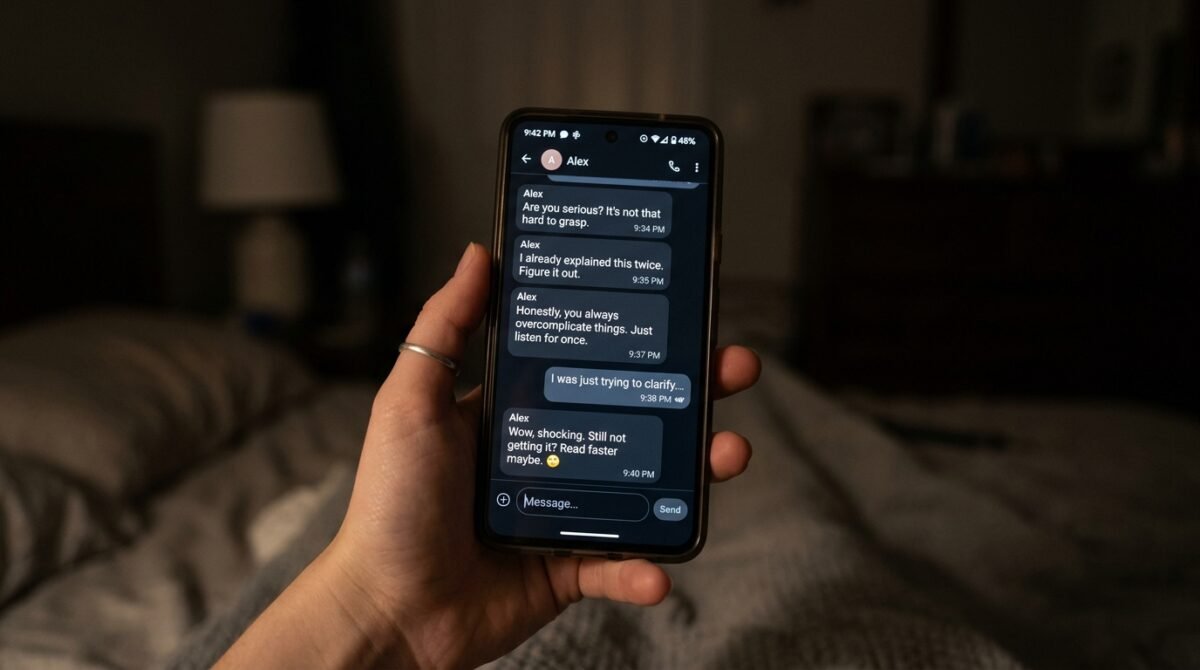
The next day, I didn’t go to work. I stayed in the house while he was out, waiting for clarity. In my emotional stupor, I happened to be logged into our shared family tablet, and a notification popped up from his ‘Brothers Group.’ It wasn’t just a casual chat; it was a discussion about how he had finally ‘locked me down’ with the contract.
“Finally got her to look at the paperwork. She’s being stubborn, but once she realizes she has no other options, she’ll sign. My old man said the same thing—keep the women busy with the house, and they won’t dream of leaving. Wedding is still on, just need to manage the transition.”
— Mark, in his brothers’ group chat
I read the entire thread. They were laughing about my ‘silly little ambitions’ and betting on how long it would take before I ‘gave up the ghost’ of my career. The betrayal was absolute. It wasn’t just Mark; it was his entire support system echoing the same misogynistic values. They viewed me as an object to be managed.
I took screenshots of everything. My hands weren’t shaking anymore; they were steady with a terrifying resolve. I packed a single suitcase while he was out. I didn’t leave a note. I simply left his ‘contract’ on the kitchen island with a red line drawn through the entire thing. I checked into a hotel, turned off my phone, and started the process of canceling everything.
The Venue Manager’s Confusion

Canceling a wedding is an administrative nightmare, but it is also strangely cathartic. When I called our venue coordinator, there was a heavy silence on the other end. She had spent months helping me plan the perfect floral arrangements and seating charts. Now, I was calling to tell her that the ceremony was off.
She was professional, but clearly shocked. She tried to offer a moment of ‘cooling off’ time, assuming it was just a bout of cold feet. I had to be firm. I didn’t want to explain the contract; I just told her that our values were fundamentally incompatible and that there was no way the wedding was moving forward. The weight lifted from my shoulders with every vendor I called.
I spent the afternoon calling the florist, the caterer, and the photographer. Some were sympathetic, some were annoyed, and some asked if Mark knew. I told them that Mark would know soon enough, as he was currently coming home to an empty house. The financial cost was high, but it was a pittance compared to the cost of a lifetime of resentment.
I felt a strange sense of mourning, not for the man I thought I knew, but for the time I had wasted. I had poured so much into a vision that was never real. By the time I finished the last call, the sun was setting, and I felt more free than I had in three years. I was finally breathing for myself again.
The Inevitable Confrontation

Mark didn’t take the disappearance well. He blew up my phone for hours, oscillating between confusion, rage, and eventually, a pathetic attempt at ‘explaining’ his perspective. He showed up at the hotel lobby, demanding to see me, his face red with a mixture of entitlement and genuine disbelief.
“You’re throwing away our entire life over a piece of paper? It was just a safeguard! You’re being irrational and emotional. Come home right now, or we are done for good. Think about what this does to our families!”
I walked down to the lobby, not to reconcile, but to finalize the end. I didn’t let him speak. I told him I had seen the group chat, and I told him that I was no longer interested in being a project to be managed. I handed him his engagement ring—the diamond he had picked out, the one that now felt like a symbol of a down payment on my soul.
His face fell when I mentioned the texts. The mask of the ‘aggrieved fiancé’ slipped, replaced by the look of a man who had lost his leverage. He tried to backtrack, claiming it was just ‘locker room talk’ and that I was ‘taking it out of context.’ I didn’t care. The context was his heart, and it was empty of respect for me.
I left him standing in the lobby. He tried to follow, but the hotel security was already aware of the situation. I walked back to my room, locked the door, and didn’t look back. It was the most difficult, yet most empowering, walk of my entire life. The relationship was dead, and I was the one who had pulled the plug.
The Fallout with the In-Laws

The aftermath was a storm of accusations. His mother called me, weeping about ‘the embarrassment’ and ‘the wasted money,’ as if my autonomy was less valuable than a venue deposit. She accused me of being ‘unstable’ and said that I had ruined her son’s life. It was clear where Mark learned his sense of entitlement.
I didn’t argue. I didn’t defend myself. I simply blocked their numbers one by one. There was no point in trying to explain my reasoning to people who believed that a woman’s primary role was to facilitate their son’s comfort. I was the villain in their narrative, and I was perfectly comfortable with that role if it meant I was free.
My own family, however, was a different story. At first, they were hesitant, worried that I had acted too rashly. But once I showed my parents the contract and the text messages, their tune changed rapidly. My father was livid, and my mother cried, not because the wedding was off, but because she saw how close I had come to signing away my future.
They supported my decision to move into a studio apartment. They helped me pack the last of my things from our shared home while Mark was at work. It was a chaotic, painful, and necessary process of deconstructing the life we had built together. Every box I taped shut felt like closing a chapter of a book I never should have started reading.
The Reddit Community Weighs In
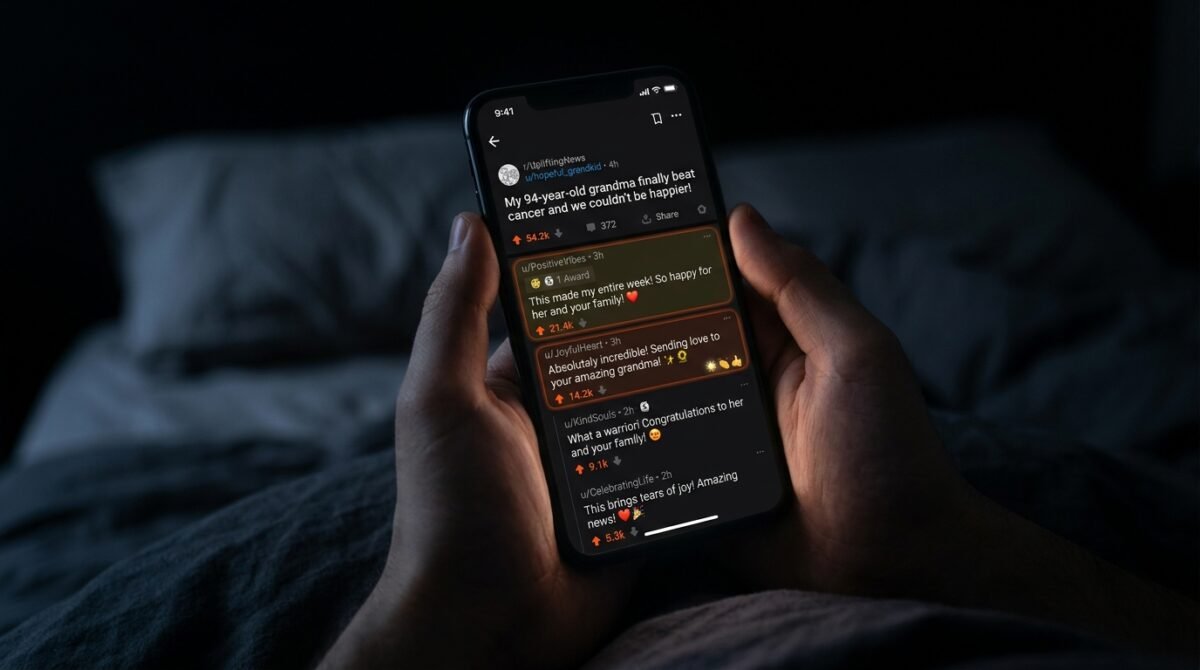
I posted my story on a popular forum, expecting to be told I was overreacting. I needed a gut check. Instead, the response was overwhelming. Thousands of people validated my choice, sharing stories of their own ‘control-freak’ exes and the red flags they had missed. The community support was the final piece of the puzzle I needed to feel sane again.
“OP, you didn’t just dodge a bullet; you dodged a nuclear warhead. That contract wasn’t a marriage proposal; it was a bill of sale. A partner who demands you stifle your ambition is a partner who fears your growth. Never look back.”
— u/ResilientReader (Top Comment, 32.5k upvotes)
“The group chat is the smoking gun here. This wasn’t a one-time ‘mistake’ by Mark; it’s a worldview. He and his brothers view women as assets to be managed. You saved yourself decades of misery. NTA (Not The Asshole).”
— u/LegalEagleEye (15.2k upvotes)
Reading these comments, I realized that I wasn’t alone. There were so many others who had felt that same pressure to shrink themselves to fit into a partner’s life. The validation helped me realize that the gaslighting I had endured was real, and that my reaction wasn’t ‘hysterical’ or ‘irrational’—it was a survival instinct.
I started receiving direct messages from women who had been in similar situations, some who had signed the ‘contract’ and were now living in regret. Hearing their stories made me even more certain of my decision. I had lost a wedding, but I had saved my life. I was going to be an International Relations scholar after all, and no one would ever have the power to stop me again.
Finding My Path Forward

Six months later, I am enrolled in my Master’s program. The coursework is demanding, the readings are dense, and the pressure is real—but it is *my* pressure. I am not doing this for a husband or a household; I am doing this for myself. The intellectual challenge is exactly what I needed to heal.
I still see Mark sometimes in town, usually from a distance. We don’t speak. I hear through mutual acquaintances that he is still ‘baffled’ by the whole thing, still telling people that I was the one who ‘broke’ the relationship. Let him tell his story. I am busy writing mine, and it has nothing to do with him.
My life is smaller now, in terms of ‘stuff,’ but it is infinitely larger in terms of possibilities. I have my own apartment, my own routine, and my own ambitions. I am no longer waiting for permission to be who I am. I learned that the most important contract I will ever sign is the one I make with myself—to never settle for anything less than equality.
I have started a blog to discuss the importance of financial and professional autonomy in relationships. It’s been amazing to see how many people are in similar situations, afraid to speak up. If my story can help even one person realize that they don’t have to sacrifice their dreams for a partner, then every tear, every dollar lost on the wedding, and every moment of pain was worth it.
Reflecting on the Red Flags

When I look back, the red flags weren’t just red; they were neon lights. The way he would dismiss my opinions, the way he would ‘jokingly’ criticize my career choices, the way he would subtly try to isolate me from friends who challenged his views. I had excused them all as ‘personality differences’ or ‘growing pains.’ I was wrong.
True love doesn’t demand sacrifice of your identity. It doesn’t ask you to trade your potential for security. It encourages you to grow, even if that growth makes you more independent. Mark wanted a mirror, not a partner. He wanted someone to reflect his successes, not someone to build their own.
I’ve learned to trust my gut. When something feels off, when a conversation leaves you feeling diminished instead of uplifted, that is your intuition telling you that something is fundamentally wrong. I wish I had listened to that inner voice much earlier, but I am grateful that I listened before the papers were legally signed.
Moving forward, I know what I deserve. I am not looking for a ‘provider’ or a ‘protector.’ I am looking for an equal. I am looking for someone who celebrates my drive as much as I celebrate theirs. Anything less than that is just not worth the emotional or intellectual energy.
The Final Lesson Learned

The wedding industry is designed to make you feel like the ceremony is the most important day of your life, but it’s not. The marriage is. And a marriage built on a foundation of control and inequality is not a life—it’s a sentence. I am thankful every single day that I canceled the ceremony. It was the best decision I ever made.
If you take one thing away from my story, let it be this: you are allowed to change your mind. Even if the deposits are paid, even if the invitations are sent, even if the family is involved. You never owe anyone your future, your autonomy, or your dreams. The cost of leaving is always lower than the cost of staying in a cage.
I am starting to date again, very slowly. The first thing I look for now is how a partner reacts to my ambitions. Does he ask questions? Is he curious? Does he support me? When I see that glint of pride in their eyes instead of fear, I know I’m in the right place. I am not afraid to be ‘too much’ anymore.
I am exactly the amount I am supposed to be. And that is enough. For anyone out there reading this and feeling trapped, know that there is a way out. There is a world of potential waiting for you outside of the expectations of others. You have the power to write your own ending, and it starts with the courage to say no.
Conclusion
My life today is a testament to the fact that you can always hit the reset button. The contract Mark gave me was meant to be the end of my story, but it became the beginning of my freedom. I hope that by sharing this, I can encourage others to examine their own relationships for those subtle, corrosive demands that masquerade as ‘domestic stability.’
We need to stop normalizing the idea that one partner’s career or personal growth should be sacrificed for the other’s comfort. True partnership is a balance of two individuals, not the absorption of one into another. I am now pursuing my Master’s with a level of focus I never could have achieved if I had been trying to appease a partner who saw me as an obstacle.
What about you? Have you ever had to draw a hard line in a relationship when your personal goals were at stake? Did you find the strength to walk away, or did you make compromises you regret? I’d love to hear your experiences in the comments below—let’s talk about the boundaries that keep us human.
What's your verdict on this dilemma?
Vote below to contribute to the official community consensus.

Have a Dilemma Keeping You Up at Night?
Share your real-life feud, wedding chaos, or relationship crossroads anonymously with our editorial team.
What do you think ?
0 Comments🛡️ Comments are moderated to protect community integrity. Your comment will appear once approved by the editorial team.