
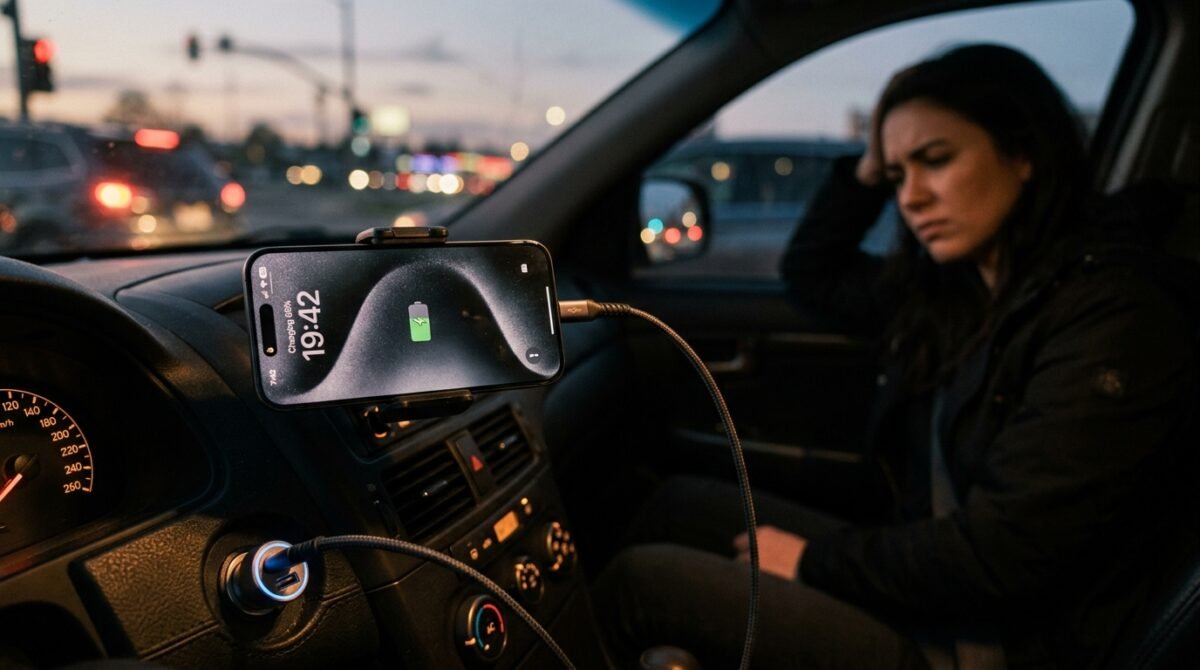
We live in an era where ‘splitting the bill’ has become the cornerstone of modern dating, but what happens when the logic of fiscal responsibility crosses the threshold into the absurd? My name is Sarah, and until last Tuesday, I was in a relationship with a man who viewed his bank account not just as a repository of funds, but as a weapon of control.
Mark was never the ‘gift-giving’ type, which I had written off as him being practical. He preferred experiences, or so he said, but even those were meticulously accounted for. I didn’t realize the depth of his penny-pinching until I found myself sitting in his pristine sedan, watching him calculate the cost of a three-mile drive to the grocery store. I thought it was a quirk, perhaps a manifestation of his stress at work, but the day he handed me an itemized ‘service fee’ invoice for my phone usage, the mask didn’t just slip—it shattered.
The dilemma here isn’t just about the three dollars he claimed I ‘stole’ from his alternator’s efficiency; it is about the dehumanization that occurs when every interaction is commodified. How do you respond when the person who promised to love you treats your presence like a utility service that needs to be metered? This is the story of the day I realized that some people are so focused on the pennies that they lose everything of actual value.
I chose to walk away not because of the money, but because of the chilling realization that my partner didn’t see a human being in the passenger seat—he saw a mobile drain on his resources. The confrontation that ensued wasn’t just about a charging cable; it was the final, messy explosion of a relationship built on the foundation of resentment and meticulous, heartless accounting.
The Morning Commute That Cost Me A Fortune
It was a Tuesday morning, the kind of gray, drizzly day that makes you crave the comfort of a heater and a charged battery. I had forgotten to plug my phone in overnight, a simple human error that should have been trivial. Mark, ever the stickler for efficiency, was already idling in the driveway as I scrambled into his car, clutching my device like a lifeline.
“Do you have a cable?” I asked, breathless. He didn’t look at me, his eyes focused on the dashboard screen as he navigated the GPS. He pulled a thick, braided cable from his console, plugged it into the USB-C port, and handed it to me without a word. I felt a pang of guilt for my forgetfulness, but the relief of seeing that 1% battery tick up to 2% was overwhelming.
The drive was silent, save for the rhythmic swish of the windshield wipers. I spent the time catching up on work emails, unaware that Mark was silently monitoring the draw on his car’s electrical system. When we finally pulled into the parking lot of my office, I went to unplug the device, but he held up a hand, his face uncharacteristically stern.
“Hold on, Sarah. Before you hop out, we need to settle the energy usage. You’ve been tethered for forty-five minutes. That’s a significant pull on the alternator.”
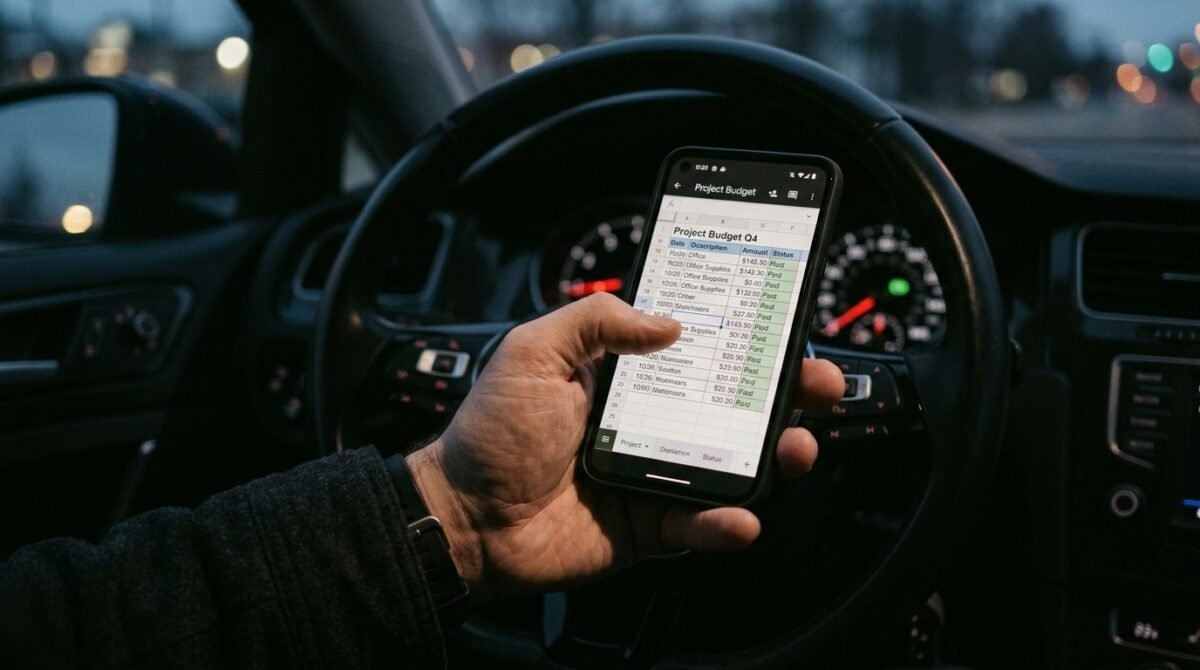
I laughed. I actually laughed out loud, thinking it was a dry, sarcastic joke about his obsession with vehicle maintenance. But when I looked at his eyes, there was no mirth. There was only the cold, clinical focus of a man calculating depreciation. He pulled out his phone, opened a spreadsheet app, and typed in a few figures. My blood ran cold as the realization hit me: he was serious.
The Itemized Invoice From The Passenger Seat

“Here,” he said, turning the phone screen toward me. It was a digital invoice. Under ‘Services Rendered,’ it listed: ‘Mobile Device Charging (45 mins).’ Beside it, a calculation: $0.42 for electrical load, $1.50 for ‘wear and tear’ on the charging port, and a $2.00 administrative ‘processing fee.’ My jaw dropped.
I looked from the screen to his face. He looked pleased, as if he had successfully managed a business transaction. “Are you actually billing me?” I whispered, my voice shaking with a mix of disbelief and rising anger. He adjusted his glasses and leaned back, his posture defensive yet smug. He actually believed he was in the right.
“It’s about accountability, Sarah,” he explained, his tone condescending. “I pay for the gas, the insurance, and the vehicle maintenance. Why should I subsidize your poor planning? If you want to use the resources of this car, you pay for them. It’s fair.” I felt like I was in a nightmare. This was the same man who told me he loved me three weeks ago while we were at dinner—a dinner I ended up paying for because he ‘forgot’ his wallet at home.
“You forgot your wallet at our anniversary dinner. I paid $120 for your steak and wine. Did you add that to your spreadsheet, or does the ‘service fee’ only apply to my phone?”
His face darkened. He didn’t like being reminded of his own hypocrisy. He muttered something about how that was ‘different’ because it was a shared romantic experience, but the damage was done. The absurdity of it all was suffocating. I sat there, trapped in a car with a man who had effectively put a price tag on my existence, realizing that every single ‘shared’ moment we had ever had was likely being logged in his little app somewhere.
Unraveling The Ledger Of A Toxic Romance

As I sat in that car, memories of our past six months began to take on a sinister new hue. The times he insisted we take his car instead of mine because ‘it was more fuel-efficient’ weren’t about gas prices—they were about keeping a tally. The ’emergency’ funds he made me contribute to when we moved in together? I realized then I hadn’t seen a bank statement for that account in months.
I looked at the invoice again. $3.92. The audacity of placing a dollar amount on my comfort, on my basic necessity, made me want to scream. I thought about the hundreds of hours I had spent listening to his complaints about his job, the emotional labor I had provided for free, and how he had never once offered to ‘pay’ me back for the therapy-style sessions I provided while he vented.
“You’re really going to charge me for this?” I asked one last time, wanting to give him the benefit of the doubt, wanting him to say it was a prank. He just tapped the screen. “I’ve already sent the request via Venmo. Please clear it by end of day. I like to keep my accounts reconciled by Tuesday night.”
“This isn’t about the money, Sarah. It’s about the principle. When you stop taking things for granted, you’ll find that relationships actually become much more sustainable.”
Sustainable. He actually used that word. He thought that by nickel-and-diming me, he was creating a ‘sustainable’ dynamic. I looked at the charging cable, pulled it from the port, and coiled it neatly. I felt a strange sense of calm wash over me. The rage had dissipated, replaced by the crystal-clear realization that I was done. I didn’t say a word. I just opened the door and stepped out.
The Group Chat Explosion
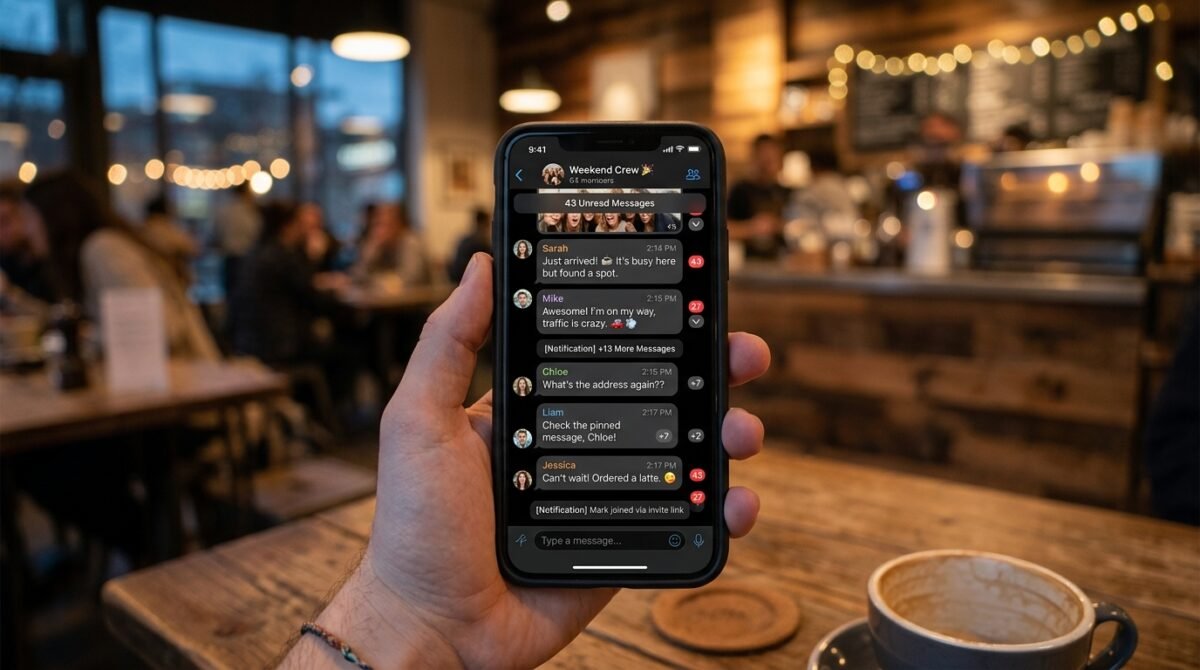
I didn’t go to work that morning. I walked into the nearest coffee shop, sat down, and started typing. I didn’t want to explain myself to him, but I needed to vent to our mutual friend group. They had always thought he was ‘thrifty,’ but they didn’t know the extent of his madness. I took a screenshot of the Venmo request and the spreadsheet snippet and sent it to our group chat.
“Hey everyone. Just wanted to share the latest update on my relationship. Mark just invoiced me for charging my phone in his car. I think it’s time to call it quits. Thoughts?”
— Sent in the ‘Weekend Warriors’ Group Chat
The replies were instantaneous. My phone started pinging so rapidly it felt like it was vibrating out of my hand. The shock, the horror, and the humor of it all collided in a stream of texts that validated every single one of my internal fears. Even his closest friends were floored by the level of pettiness.
One friend, Dave, sent a message that made me laugh for the first time all day: ‘I knew he was cheap, but I didn’t know he was a human utility company.’ Another friend, Jessica, asked if I had paid it yet. I told her I hadn’t, and I never would. The support was overwhelming, but underneath it all, I felt a deep, gnawing sadness for the time I had wasted on someone so profoundly broken.
Mark eventually realized what was happening when he started getting messages from his own friends. He tried to call me—six times in ten minutes. I silenced the phone and put it face down on the table. For the first time, I wasn’t worried about the battery. I was finally, blissfully, disconnected from his demands. The group chat was turning into a roast, and while it was cathartic, it also highlighted how many red flags I had ignored in the name of ‘making it work.’
The Confrontation At The Apartment

I knew he would be home by 6:00 PM. I went back to our apartment to grab my essentials. I had decided that I wouldn’t drag this out. I had my bags packed and a friend waiting in the car outside. When Mark walked through the door, he looked frantic, his face flushed with a mix of anger and confusion. He didn’t expect me to be leaving; he expected me to be groveling.
“What is this?” he demanded, gesturing to my suitcase. “You’re making a scene because I value financial transparency? You’re acting like a child, Sarah. Grow up.” He stood in the doorway, blocking my exit, his body language aggressive. I didn’t cower. I stood my ground, looking him dead in the eye, feeling an unfamiliar sense of power.
“I’m not acting like a child, Mark. I’m acting like a person who realized she’s dating an accountant, not a partner. I’m done with the ledger. I’m done with the invoices. I’m done with you.”
He scoffed, pacing the room. “You’re overreacting. It was a joke! A point to make about our budget. You’re blowing this out of proportion, just like you do with everything else.” The gaslighting was so predictable it was almost sad. He couldn’t even admit he was wrong; he had to frame my reaction as the problem.
I didn’t argue. I didn’t bring up the past, the dinner bills, or the emotional labor. I just walked past him, my suitcase hitting his ankle as I exited. “Keep the four dollars, Mark,” I said, not looking back. “Consider it my final payment for the privilege of never having to deal with you again.”
The Internet Weighs In

I posted the full story on a popular subreddit later that night. I didn’t expect the response I got. Within three hours, the post had reached the front page. Thousands of people commented, shared, and debated the nuances of financial boundaries in relationships. It was a bizarre, surreal experience to see my life turned into a viral debate.
“NTA. This isn’t just about the money; it’s about control. He’s training you to feel indebted to him for basic necessities. Run and don’t look back. You aren’t losing a boyfriend; you’re losing an anchor.”
— u/RelationshipGuru88 (Top Comment, 42.1k upvotes)
Other comments were just as supportive. People shared their own horror stories of partners who charged for gas, electricity, or even time spent together. It was a sobering reminder that I wasn’t alone, but it also made me realize how common this type of ‘financial abuse’ actually is. Some people tried to play devil’s advocate, suggesting he might be ‘neurodivergent’ or ‘on the spectrum,’ but most agreed that regardless of the cause, the behavior was toxic.
I spent the night reading through the comments, finding comfort in the collective outrage. It felt like the entire world was slapping me on the back and saying, ‘You did the right thing.’ The validation was exactly what I needed to stop doubting my decision. I realized that my ‘overreaction’ was actually a perfectly rational response to an irrational situation.
The thread continued for days, even after I stopped checking it. People started tagging their own partners in the comments, asking, ‘Are you going to charge me for charging my phone, too?’ The humor provided a much-needed release, turning a painful personal trauma into a cautionary tale that hopefully saved at least one other person from a similar fate.
The Financial Breakdown Of A Dead Relationship

I decided to put together a little ‘reconciliation’ for myself, just to see the true cost of the relationship. I looked back through my bank statements for the last six months and categorized every ‘shared’ expense. It was eye-opening. I realized that while I had been paying for half of everything, he had been ‘offsetting’ his costs by charging me for ‘service fees’ and ‘maintenance’ that never actually occurred.
| Category | My Contribution | Mark’s ‘Invoice’ Claims |
|---|---|---|
| Groceries | $2,400 | $0 (Claims he ‘shops smart’) |
| Gas/Car Usage | $600 | $1,200 (Including ‘wear and tear’) |
| Utilities | $900 | $300 (Markup for ‘admin’) |
The table didn’t lie. I had been subsidizing his life while he was nickel-and-diming mine. It was a level of manipulation that I hadn’t even fully grasped until I saw the numbers laid out in black and white. It wasn’t just a quirk; it was a systematic exploitation of my trust. Seeing the data helped me move past the ‘maybe he really is just practical’ phase of my grief.
I shared this breakdown in an update to my post. The community was stunned. The sheer audacity of the math he used to justify his behavior was, to many, the most infuriating part of the whole story. I felt a sense of closure seeing it all calculated. The math that had defined our relationship now served as the final evidence of why it had to end.
I realized then that my ‘investment’ in the relationship had been a total loss, but the ‘return’ was my freedom. I stopped looking at the bank statements and closed the file. I didn’t need to be right, and I didn’t need him to understand. I just needed to be away from the ledger-filled life he had created for us.
The Aftermath: Finding My Own Charge

Life after Mark has been surprisingly quiet. I moved into a smaller, cheaper apartment, and I’ve been focusing on myself. I don’t have to worry about ‘usage fees’ or ‘maintenance charges’ when I use my own appliances. It’s the little things that feel like a luxury now—leaving the lights on when I read, keeping my phone plugged in as long as I want, and knowing that nobody is tracking my consumption.
I’ve started dating again, but the red flags are much easier to spot now. The first time a guy suggested we split the cost of a movie ticket down to the cent, I thanked him for the date and walked out. I know my worth now, and I know that a relationship should be about shared burdens, not a balance sheet. I’ve learned to set boundaries early and firmly.
My friends still laugh about the ‘invoice’ story, but it’s become a legend in our circle. We call it ‘The Mark Tax.’ Every time one of us is treated poorly, we remind each other that at least we aren’t being charged for phone charging. It’s a dark humor, but it helps. We’ve all become more aware of the subtle ways people try to assert control.
I often wonder if Mark ever found someone else to charge. I suspect he’s still out there, with his spreadsheet and his sense of ‘fairness,’ looking for a partner who will put up with his insanity. But that’s no longer my concern. My life is my own again, and for the first time in a long time, I feel fully charged—and I didn’t have to pay a single penny to anyone for it.
The Psychology Of The Penny-Pincher

I did some reading on the psychology behind this kind of behavior. It’s fascinating, in a deeply disturbing way. Experts suggest that people who commodify their relationships often do so as a defense mechanism. They feel a lack of control in other areas of their lives, so they exert absolute control over their environment and their partners. It’s a way to feel superior, to make themselves the ‘rational’ ones in a chaotic world.
Mark wasn’t just cheap; he was insecure. He needed to feel like he was winning, and the only way he knew how to win was by ‘optimizing’ his relationship. It wasn’t about the money at all. The money was just a tool to keep me off-balance, to keep me questioning myself, and to ensure that I was always seeking his approval for the ‘value’ I brought to his life.
Understanding this didn’t make me miss him, but it helped me process the ending. It wasn’t a failure on my part. I couldn’t have ‘fixed’ him, because his behavior was serving a function for him. He needed a victim, and I happened to be the one who stood there long enough to become one. That realization was the final piece of the puzzle.
I’ve reached a point where I can look back at the relationship with a detached, analytical lens. I see the patterns, the manipulation, and the slow erosion of my own confidence. But more importantly, I see the strength I found in walking away. I didn’t just dump a boyfriend; I dumped a worldview that didn’t serve me. I am finally, truly, moving forward.
Final Reflections On Boundaries
The biggest lesson I’ve learned is that ‘fairness’ in a relationship is not an accounting exercise. It’s a feeling of mutual respect and generosity. When you start tracking the little things, you lose sight of the big picture. Love is inherently inefficient, and that’s what makes it beautiful. You can’t budget for a partner’s comfort, and you shouldn’t try.
Setting boundaries is the most important part of any relationship. I should have set a boundary the first time he complained about the grocery bill. I should have spoken up when he made the first ‘joke’ about money. But I stayed silent, hoping it would get better. Silence is often mistaken for consent, and in my case, it was mistaken for permission to control me.
I hope that anyone reading this who feels like their partner is ‘nickel-and-diming’ them takes a moment to pause and ask themselves: ‘What is this really about?’ If you find yourself apologizing for basic human needs, it’s time to reevaluate. You deserve better than a partner who treats you like an expense on their balance sheet.
Thank you to the Reddit community for being the sounding board I needed. You helped me reclaim my agency and my voice. The story of the phone charger invoice is just a small chapter in my life now, but it’s a chapter that taught me how to write the rest of the book on my own terms.
Conclusion
Looking back, the absurdity of the $3.92 invoice feels like a gift. It was the blunt, undeniable evidence I needed to see that the relationship was not only broken but fundamentally toxic. We often wait for a ‘big’ betrayal—cheating, lying, or physical harm—before we feel justified in leaving. But sometimes, the most profound betrayals happen in the smallest, most mundane moments, where someone chips away at your dignity under the guise of ‘logic.’
I’ve learned that life is too short to be with someone who views you as a line item in their budget. I am currently thriving, enjoying a life where my phone is charged whenever I need it, and my peace of mind is never subject to a service fee. To those of you still navigating the murky waters of ‘shared finances’ with a partner who keeps a ledger, take this as your sign: you are not a utility, and you don’t owe anyone a penny for being yourself.
Community Poll: Have you ever been in a relationship where money was used as a tool for control? Share your ‘The Mark Tax’ story in the comments below—let’s see who had the most ridiculous financial demand in the history of bad dating.
What's your verdict on this dilemma?
Vote below to contribute to the official community consensus.

Have a Dilemma Keeping You Up at Night?
Share your real-life feud, wedding chaos, or relationship crossroads anonymously with our editorial team.
What do you think ?
0 Comments🛡️ Comments are moderated to protect community integrity. Your comment will appear once approved by the editorial team.