
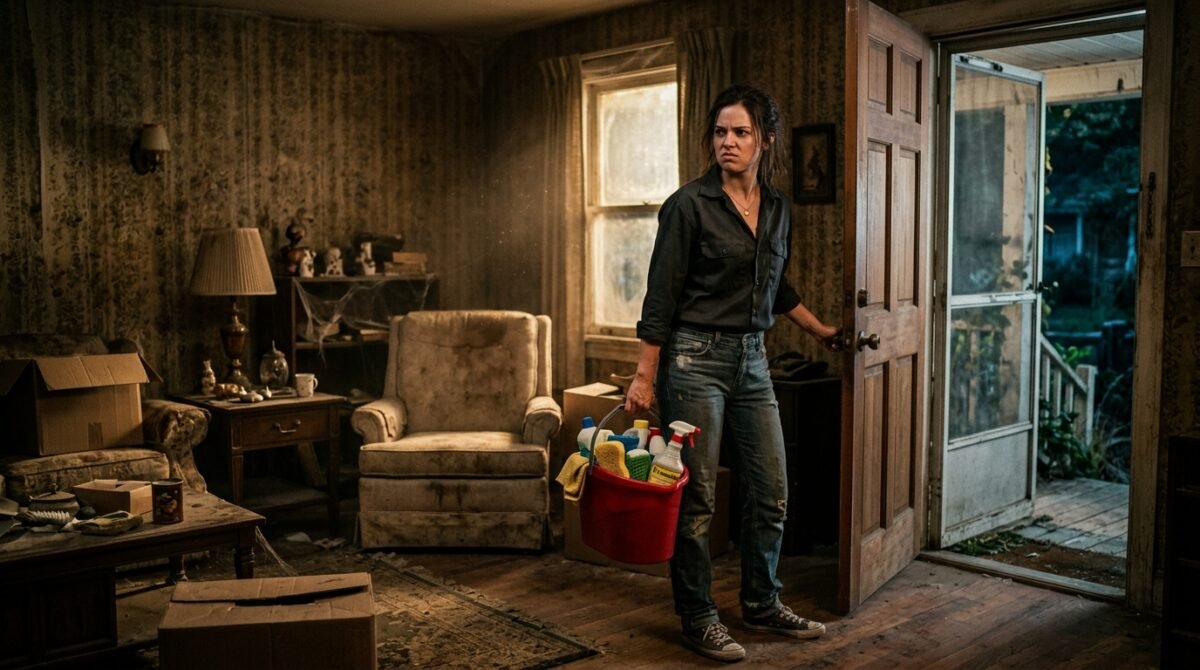
When Mark first invited me to meet his parents at his childhood home, I was nervous but excited. We had been dating for eight months, and while he was occasionally prone to ‘man-child’ tendencies, I generally attributed it to his high-pressure job in finance. I pictured a warm Sunday lunch, perhaps some wine, and the chance to finally connect with the people who raised the man I thought I loved. I spent the morning preparing a thoughtful gift for his mother and dressing in something that struck the perfect balance between ‘respectful guest’ and ‘authentic self.’
However, the reality of the situation took a sharp, dark turn before we even pulled into the driveway. As we neared his parents’ home—a large, neglected property that had clearly seen better days—Mark casually mentioned that his mother was ‘very particular’ about cleanliness. I assumed he meant I should be on my best behavior. I was wrong. It wasn’t about my behavior. It was about my labor. He had arrived at the house two hours early to find it in a state of disarray, and instead of cleaning it himself, he decided that I would be the designated maid for the afternoon.
The moral dilemma began when he handed me a bottle of industrial-strength degreaser and a roll of paper towels. The expectation wasn’t a request; it was a mandate. He expected me, a guest who had never set foot in the house, to spend my afternoon scrubbing nicotine-stained baseboards and vacuuming years of accumulated dust so that his parents wouldn’t think he was ‘a mess.’ The total disregard for my time, my dignity, and the very concept of a guest-host relationship was staggering.
This story isn’t just about a cleaning chore. It is about the subtle ways entitlement creeps into a relationship and how one moment of clarity can change everything. As I stood in that musty hallway, holding a rag I didn’t want, I realized that I wasn’t just being asked to clean a house; I was being auditioned for the role of a subservient partner. And that was a role I had no intention of playing. Here is how it all unfolded, the explosive confrontation that followed, and the aftermath that shocked his entire family.
The Two-Hour Pre-Meeting Ultimatum

We pulled up to the driveway, and immediately, Mark’s demeanor shifted from ‘excited boyfriend’ to ‘stressed project manager.’ The house was an older colonial, surrounded by overgrown hedges and the distinct scent of damp wood. Mark didn’t reach for my hand to help me out of the car; he reached into the back seat and pulled out a box of cleaning supplies. He looked at me with an expression of pure, unadulterated expectation, as if I had already agreed to this in some previous, secret contract.
He gestured toward the front door with a dismissive wave. ‘My mom is a hawk, you know that. If she sees dust on the mantle or grime in the kitchen, she’ll spend the whole lunch critiquing me. I need you to knock out the kitchen and the formal living room while I go handle the basement. We have exactly ninety minutes before they get here. Let’s move.’
I stood frozen, my heels sinking into the uneven gravel of the driveway. I had spent the last two hours getting ready, and now I was being told that my contribution to this ‘meeting’ was manual labor. It wasn’t that I was above cleaning—I value a tidy home—but the audacity of assigning me chores in a house I was visiting for the first time felt like a massive violation of social norms. I looked at the bucket, then at him, feeling my pulse quicken with a mix of disbelief and rising anger.
“Are you joking, Mark? You’re asking me to be your housekeeper before I even say hello to your mother? This isn’t a shared home. I’m a guest.”
He scoffed, adjusting his shirt as if my protest was a minor, annoying inconvenience he hadn’t planned for. ‘It’s not about being a housekeeper, Sarah. It’s about being a team. If you want to impress them, you show them you care about the family. Besides, I’ve been busy with work all week. Just do the baseboards and the kitchen counters. Don’t make this a bigger deal than it is.’
The term ‘team’ hung in the air, hollow and manipulative. He wasn’t asking for help; he was delegating his own responsibility to avoid the judgment of his parents. The power dynamic felt suddenly, painfully transparent. I wasn’t his partner; I was a tool to be used to maintain his image. My initial nervousness about meeting his parents evaporated, replaced by a cold, sharp clarity that told me I was in the wrong place with the wrong person.
The Escalation in the Kitchen

I followed him inside, mostly out of sheer shock. The interior was worse than the exterior. Layers of dust coated every surface, and the kitchen smelled of old grease and neglect. It was a space that hadn’t seen a deep clean in years, let alone a quick wipe-down. Mark immediately disappeared toward the basement, leaving me alone in the kitchen with a stack of paper towels and a bucket of degreaser that smelled like a chemical plant.
I picked up a paper towel, feeling the grit under my fingers, and felt a wave of nausea. Why was I here? I thought about the text messages he had sent earlier that week—the ones where he talked about how ‘perfect’ his parents were and how much they would love me. Apparently, their love was conditional on my ability to perform manual labor. I started to scrub a section of the counter, but the stain was stubborn, ancient. It was then that I heard his mother’s voice ringing in my head, imagining her walking in and seeing me in an apron, wondering why their son’s girlfriend was cleaning their house.
The phone in my pocket buzzed. It was a text from his mother, sent to him but clearly intended for me, since he had added me to their family ‘coordination’ thread earlier that morning. The screen lit up with a message that made my blood run cold. It was a list of expectations for the ‘new girl’ to ensure the lunch went smoothly, including specific instructions on how to set the table and what kind of tea to serve.
“Mark, make sure she knows to use the silver polish on the candelabras before we arrive. We can’t have the place looking like a frat house. Also, remind her to change the hand towels in the guest bath.”
— Future Mother-in-Law (Family Group Chat)
I stared at the screen, my thumb hovering over the reply button. The sheer entitlement was breathtaking. It wasn’t just Mark; it was a generational expectation of subservience. They viewed his partners as temporary labor, people to be deployed and then discarded when the work was done. I looked around the room, at the grime, the mess, and the reality of what my future would look like if I stayed.
I dropped the rag into the bucket with a loud splash that echoed in the quiet house. I wasn’t just a guest; I was being groomed for a life of domestic servitude disguised as ‘family contribution.’ The realization wasn’t just insulting; it was clarifying. I didn’t owe these people anything, and I certainly didn’t owe Mark the energy to hide his own lack of maturity. I decided right then that the cleaning was over.
The Confrontation in the Hallway
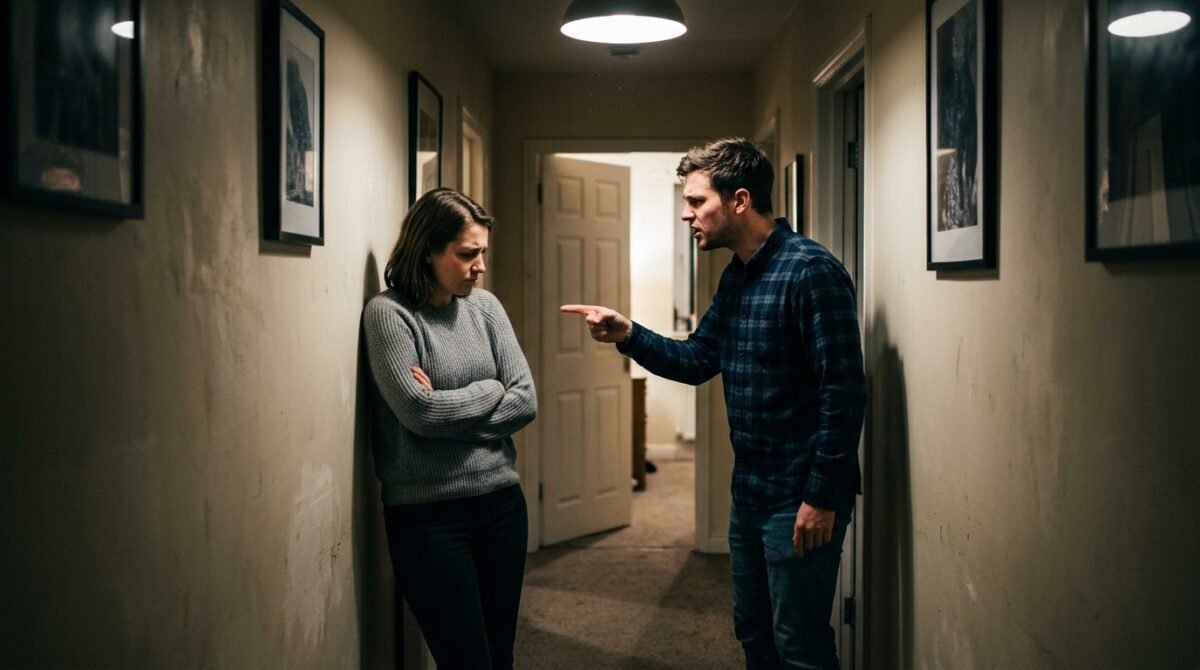
I walked out of the kitchen and found Mark in the living room, wiping down a bookshelf with a frantic energy. He looked at me, noticed the rag was gone, and his eyes narrowed. He didn’t ask how it was going; he asked why I had stopped. His voice was tight, thin, and entirely devoid of the warmth he usually reserved for when he wanted something. The dynamic was completely exposed—he was the boss, I was the employee, and the interview was going poorly.
“The kitchen is done,” I lied, though it was barely touched. “And I’m not doing the rest. This isn’t what I signed up for, Mark. I came here to meet your parents, not to deep-clean their estate. If you’re so worried about what they think, you should have started cleaning this place a week ago, not two hours before they arrive.”
He stood up slowly, dusting his hands off on his pants. He looked at me like I was a malfunctioning appliance. “You’re making a scene for no reason. It’s a simple favor. Everyone helps out. If you can’t handle a little bit of teamwork, how do you expect to handle a real life together? This is what relationships are—you do things you don’t want to do because you care about the person.”
“No, Mark. Relationships are about mutual respect. You didn’t ask for my help; you assigned me a chore list. There’s a massive difference. You treat your life like a series of tasks to be delegated to women, and I’m done being the person you delegate to.”
He laughed, a sharp, patronizing sound that grated against my nerves. “You’re being dramatic. My parents are pulling up in twenty minutes. If you want to walk out, go ahead, but don’t expect me to come after you. I have a family to host, and I don’t have time for your little protest.”
That was the moment. The final thread holding us together snapped. I looked at him, realizing he didn’t see me as an equal, a partner, or even a person with individual needs. I was a prop in his performance for his parents. I didn’t say another word. I didn’t argue, I didn’t cry, and I didn’t try to explain my side of the story anymore. I simply turned around and walked toward the front door.
Walking Away from the Performance

The walk to my car felt like a scene from a movie where the protagonist finally regains their agency. The air outside was cool and crisp, a stark contrast to the stifling, chemical-scented air inside the house. I could hear Mark calling out something from the porch, his voice a mix of indignation and genuine shock. He didn’t think I would actually leave. He thought the threat of his parents’ arrival would keep me in line, chained to the mop bucket.
I reached my car, unlocked it, and slid into the driver’s seat. My hands were shaking, not from fear, but from the adrenaline of the last hour. I looked at the house one last time. It looked small, pathetic, and filled with a history of expectations I had no interest in repeating. I started the engine, pulled out of the driveway, and didn’t look in the rearview mirror. I drove for miles, feeling the weight of the last eight months lifting with every rotation of the wheels.
My phone began to vibrate incessantly in the cup holder. First, it was a call from Mark. Then another. Then a text. The messages came in waves, a frantic attempt to regain control. He didn’t apologize for the cleaning; he apologized for the ‘miscommunication’ and told me that his parents were already pulling into the neighborhood. He was panicking about how he would explain my absence.
“Where are you? My parents are turning the corner. This is insane! Get back here right now. How am I supposed to explain why you’re not here? Just come back and hide in the kitchen for twenty minutes!”
— Text from Mark
I read the message and felt a grim sense of satisfaction. His primary concern wasn’t my feelings, my safety, or our relationship; it was the optics of the situation. He was worried about his parents’ opinion, not about the fact that his girlfriend had just walked out on him. I blocked his number, then blocked his parents’ number, and finally, I felt the peace of total disconnection.
I stopped at a cafe, bought a coffee, and sat by the window, watching the world move by. I wasn’t just free from the chore; I was free from the expectation of being ‘the perfect girl’ for a man who didn’t respect me. I felt like I had dodged a bullet, a life-altering bullet that would have landed me in a cycle of cleaning up his messes—both literal and metaphorical—for years to come.
The Aftermath and the Family Chat
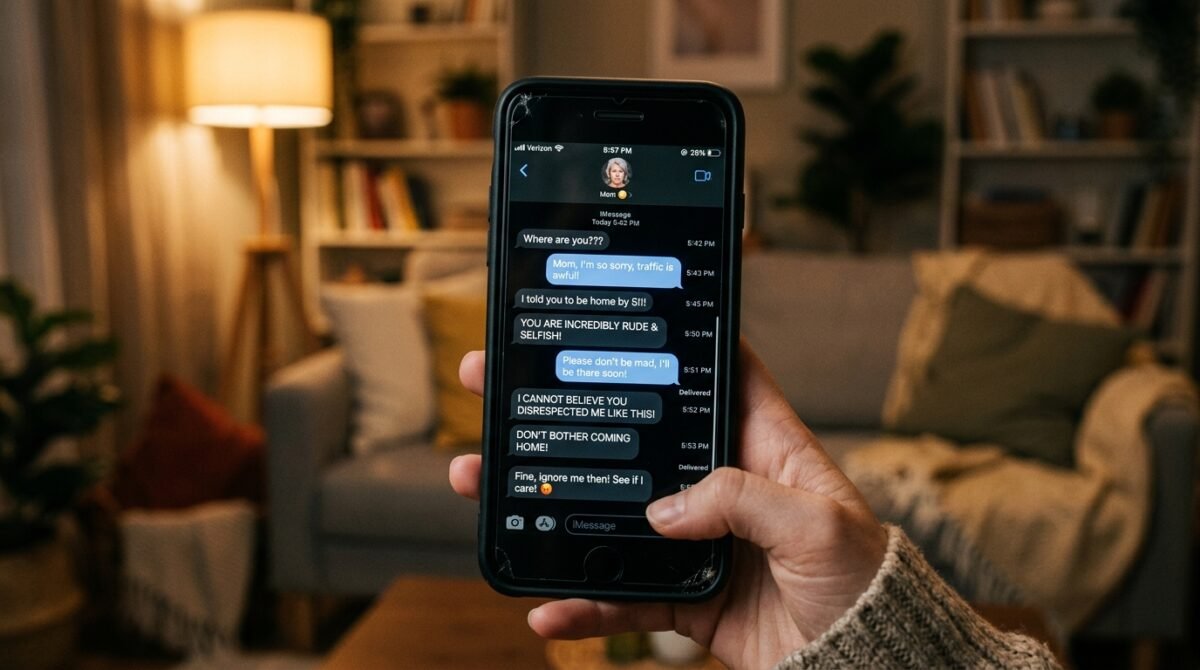
When I finally arrived home, I sat down and looked at the family group chat one last time before deleting it. The messages were a goldmine of entitlement. His mother was furious that I wasn’t there, and his father was chiming in about how ‘modern women have no sense of duty.’ They were discussing me as if I were a piece of equipment that had failed to function, a vacuum cleaner that had broken down before the guests arrived.
I saw a message from Mark trying to spin the narrative, telling them that I was ‘stressed’ and ‘unstable’ because I couldn’t handle the pressure. It was the classic gaslighting technique—blaming the woman for the failure of the man to act like an adult. I screen-shotted the whole thread, just in case I ever needed a reminder of why I left, and then I deleted the thread entirely. The silence that followed was the most beautiful sound I had heard all day.
The next day, I didn’t hear from him. I didn’t expect to. He was busy dealing with the fallout of his own making, trying to explain to his mother why the house still smelled like dust and why the silver hadn’t been polished. I imagined the lunch—a stiff, uncomfortable affair where the resentment of his parents was directed squarely at him, and where he, for once, had no one to blame but himself.
“She’s clearly not the one. A partner who can’t handle a little bit of help around the house isn’t a partner at all. You’re better off finding someone who understands what family means.”
— Text from Mark’s Mother
I realized then that they weren’t just disappointed; they were relieved. They wanted a daughter-in-law who would serve them, and I clearly wasn’t going to be that person. I had saved us all the trouble of a future divorce, or worse, a lifetime of unhappy compromise. I was the villain in their story, but the hero in my own. And that, I decided, was a trade-off I was more than happy to make.
The following week was quiet. I went to work, hung out with my friends, and didn’t mention the breakup to anyone except my closest confidant. I didn’t need validation; I had my own conviction. I knew that I had set a boundary, and for the first time in a long time, I felt like the owner of my own life. I wasn’t a maid, I wasn’t an assistant, and I certainly wasn’t a prop.
Reddit Weighs In: The Verdict of the Internet

I posted my story on a popular relationship forum, needing a sanity check. I expected a mix of opinions, perhaps some people telling me I was being too sensitive or that I should have just done the cleaning to ‘keep the peace.’ I was surprised, and deeply moved, by the overwhelming support I received from the community. It seemed I wasn’t alone in having dealt with partners who viewed their spouses as domestic help.
The comments poured in by the thousands. People shared their own stories of being asked to do menial labor for partners’ families, of being ‘tested’ by overbearing in-laws, and of the moment they finally decided enough was enough. It was a chorus of voices from people who had been exactly where I was, and who had all come to the same conclusion: your time and dignity are not for sale.
“You didn’t just walk away from a cleaning chore; you walked away from a lifetime of being treated like a second-class citizen in your own relationship. Good on you for having the self-respect to leave when the red flags were waving. NTA.”
— u/RelationshipAdvocate (Top Comment, 28.5k upvotes)
“The fact that he didn’t even apologize or try to help you, but instead doubled down on the ‘teamwork’ manipulation, shows he’s a lost cause. He didn’t want a partner; he wanted a maid. You made the right call.”
— u/ClearSight (12.2k upvotes)
There were a few contrarians, of course, suggesting that I should have just helped out to avoid conflict. But the vast majority of the community recognized the issue for what it was: a fundamental lack of respect. The story became a touchstone for conversations about the ‘invisible labor’ women are expected to perform, and the ways in which societal expectations of gender roles are still deeply embedded in our relationships.
The reaction confirmed my own feelings. I wasn’t being ‘dramatic.’ I was setting a standard for how I wanted to be treated, and it was a standard that my ex-boyfriend was never going to meet. The community gave me the validation I didn’t know I needed, turning my personal trauma into a shared lesson about the importance of boundaries in the face of entitlement.
Reflecting on the ‘Teamwork’ Myth

The term ‘teamwork’ is often used as a weapon in relationships, particularly when one person wants to force another to do something they don’t want to do. It’s a way of making selfishness sound like selflessness. By framing the cleaning as ‘teamwork,’ Mark was trying to leverage my desire for a healthy, cooperative relationship against me. He knew that I wanted to be a supportive partner, and he weaponized that desire to get what he wanted.
I reflected on how often this had happened in the past. The small things—me always being the one to plan the trips, me always being the one to handle the emotional labor of his career, me always being the one to make sure our social life was active. It had been happening all along, hidden in plain sight, masked by the idea that we were a ‘team.’ But a team implies two people working together toward a shared goal, not one person working for the benefit of the other.
I realized that I had been doing the heavy lifting in our relationship for months, just like I was expected to do the heavy lifting in his parents’ house. It was a pattern of behavior that I had ignored because I wanted to believe in the potential of the relationship. But potential is a dangerous thing; it blinds you to reality, and it keeps you stuck in a cycle of hope that is never rewarded.
“True teamwork isn’t about one person sacrificing their autonomy for the convenience of the other. It’s about two people supporting each other toward a shared, mutually beneficial future. If you’re the only one sacrificing, you’re not a teammate; you’re a servant.”
This realization was the most painful part of the process. I hadn’t just lost a boyfriend; I had lost the illusion of a relationship that I had invested so much of myself into. But the pain was necessary. It was the price I paid for my freedom, and it was a price I was willing to pay again if it meant finding someone who actually saw me as a person.
I made a promise to myself that in my future relationships, I would be much more careful about how the term ‘teamwork’ was defined. I would watch for the signs of imbalance, the subtle ways that ‘we’ becomes ‘you,’ and I would speak up immediately. No more being the silent partner in the name of peace; no more being the maid in the name of love.
The Lessons Learned from the Drive Away

Looking back, the drive away from that house was the best thing I could have done for myself. It was the moment I chose my own dignity over the comfort of a relationship that wasn’t working. It taught me that I am capable of setting boundaries, even when it feels like the whole world is pushing against me. It taught me that my time is valuable and that I don’t have to apologize for protecting it.
The incident also taught me the importance of being observant early on in a relationship. I had seen signs of his entitlement before—the way he expected me to always pick up the check or the way he disregarded my plans for his own schedule—but I had chosen to ignore them. I had seen them as ‘quirks’ instead of indicators of a deeper, more systemic problem. Now, I know better.
I also learned about the power of support systems. Having my friends and the online community behind me made all the difference. It reminded me that there are people out there who value respect, equality, and kindness, and that I don’t have to settle for anything less. It gave me the confidence to move forward, to keep dating, and to find someone who actually deserves my time.
“The most important boundary you can ever set is the one between your dignity and the people who want to tear it down. It’s a hard line to draw, but it’s the only one that keeps you whole.”
I am in a much better place now. I’ve met someone who actually values my input, who respects my time, and who sees our relationship as a true partnership. We don’t have ‘cleaning days’ where one person works and the other watches; we have lives where we support each other in whatever we do. It’s a completely different dynamic, and it’s one that I cherish every day.
The lesson of the scrubbing incident is simple but profound: if someone expects you to work for their approval, they are not your partner; they are your employer. And you, as the employee, always have the right to quit. Don’t be afraid to walk away when the demands of a relationship start to feel like a job you never applied for.
The Final Word on Boundaries

If you are reading this and you recognize yourself in my story, I want you to know one thing: you are not alone, and you are not wrong for wanting more. It is not ‘dramatic’ to want to be treated with respect. It is not ‘unreasonable’ to expect your time to be valued. And it is certainly not ‘ungrateful’ to refuse to do the labor of someone else’s life.
Boundaries are the foundation of any healthy relationship. Without them, we are just drifting, trying to accommodate the needs of others while our own needs go unmet. By saying ‘no,’ we aren’t just protecting ourselves; we are teaching others how to treat us. And if they can’t or won’t respect those boundaries, then they aren’t the right people for us.
It takes courage to walk away from a situation that feels comfortable or familiar, even when it’s toxic. But the rewards of doing so are immeasurable. You gain your self-respect, you gain your agency, and you gain the space to find the kind of love that actually makes you feel whole. So don’t be afraid to set your boundaries, even if it means leaving a house full of dust behind you.
“The right people will never ask you to compromise your dignity for their comfort. If you have to sacrifice your self-worth to be loved, that’s not love; it’s a transaction.”
I hope that my story helps at least one person realize that they don’t have to settle for less than they deserve. It’s a hard lesson, and it often comes at the cost of a relationship, but it’s a lesson that pays for itself a thousand times over. Keep standing your ground, keep protecting your time, and never, ever forget your own worth.
As for Mark? I heard he’s still looking for someone to help him clean his parents’ house. I hope he finds someone, but I know for a fact it won’t be me. And that is perfectly fine. I have a life to live, and I’m much too busy living it to worry about his baseboards.
Conclusion
My journey from being the ‘perfect girlfriend’ expected to scrub someone else’s mess to being a person who knows her worth was not an easy one. It required me to face the uncomfortable truth that the person I loved did not respect me. It forced me to acknowledge that ‘teamwork’ was being used as a tool for control, and it demanded that I take a stand for my own dignity.
The takeaway from this isn’t just about cleaning; it’s about the fundamental respect that must exist in any relationship. If you are ever faced with an expectation that feels like an obligation, if you feel like you are being used rather than supported, or if you feel like your needs are being disregarded for the benefit of someone else, take a step back. Ask yourself why you are there, and whether the person you are with sees you as an equal partner or as a resource to be used.
I am stronger, happier, and more confident than I have ever been. Walking away from that house was the best thing I ever did for my future. I invite you to share your own experiences. Have you ever been pushed to a breaking point where you realized you had to walk away? What were the red flags you missed, or the boundaries you finally decided to draw? Let’s talk about it in the comments below.
What's your verdict on this dilemma?
Vote below to contribute to the official community consensus.

Have a Dilemma Keeping You Up at Night?
Share your real-life feud, wedding chaos, or relationship crossroads anonymously with our editorial team.
What do you think ?
0 Comments🛡️ Comments are moderated to protect community integrity. Your comment will appear once approved by the editorial team.