
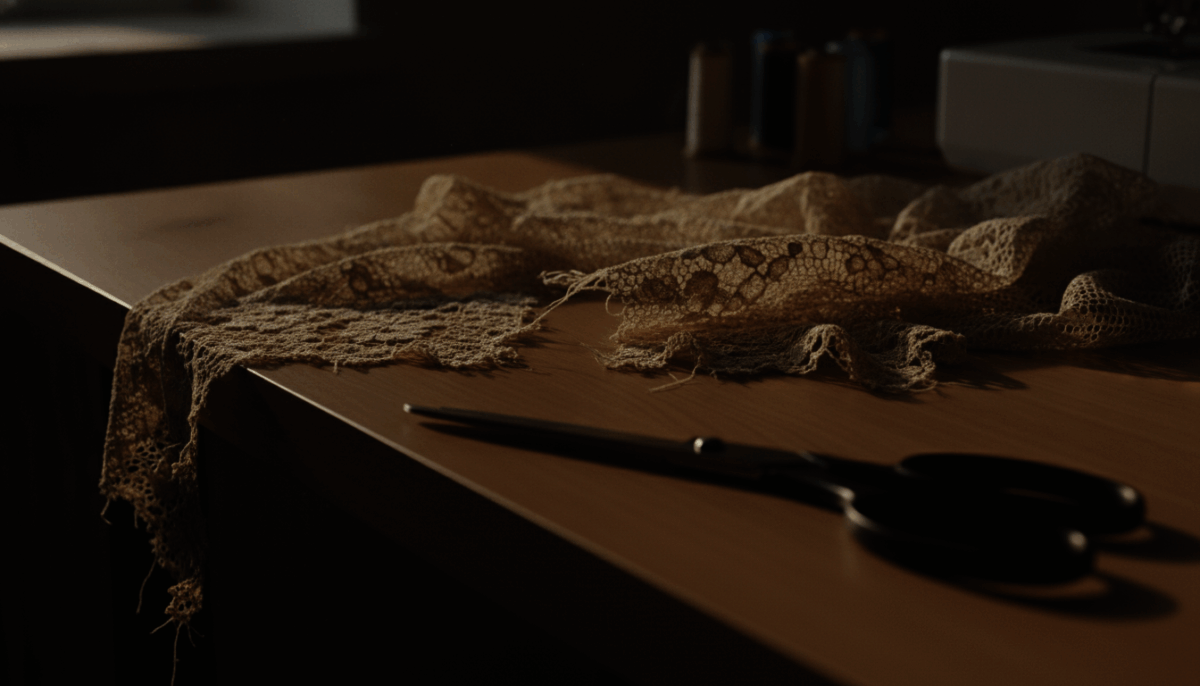
Inheritance is rarely just about the items themselves; it is about the physical manifestation of memories, the tactile connection to those who came before us, and the weight of legacy. My grandmother, Eleanor, was a woman of quiet strength who survived the hardship of the mid-20th century. Her most prized possession was her wedding veil—a hand-lace masterpiece she had painstakingly preserved for seven decades. It was the centerpiece of our family lore, intended to be a touchstone for the future.
When she passed, the executor of the estate handed the veil to me, knowing I was the only one who truly understood its provenance. My sister, Clara, had always been the golden child, the one who viewed life as a series of aesthetic opportunities rather than a continuum of history. She never cared for the lace or the woman who wore it; she only cared for what she could extract from the world to feed her own vanity.
The violation didn’t happen overnight. It was a slow, agonizing process of entitlement that I failed to recognize until it was far too late. I trusted her with my home when I was away on business, believing that blood was thicker than the petty grievances we had harbored growing up. That was my first and final mistake.
What followed was a confrontation that shattered the foundation of our family. This is not just a story about a ruined piece of fabric; it is a story about the moment I realized that some people, no matter how closely they are related to you, are fundamentally incapable of respecting your soul. This is how I cut the cord that kept me tied to a person who traded seventy years of my history for a night of fleeting attention.
The Preservation Room and the False Promise of Respect

I kept the veil in a climate-controlled glass display case in my home office. It wasn’t just a piece of cloth; it was seventy years of history preserved in delicate, ivory thread. Every time I looked at it, I saw Eleanor’s face, the way she spoke about her wedding day, and the solemn promise I made to her that I would ensure it remained intact for future generations.
Clara had always mocked my attachment to it. She called it a ‘musty antique’ and a ‘dust collector.’ When I had to leave for a month-long trip to finalize a project in London, I was terrified to leave my house, but Clara, who was between apartments, begged to house-sit. She promised, with a sincerity that I now realize was purely performative, to respect my space and my things.
I remember the conversation vividly, standing in my hallway, checking the locks twice. I explicitly told her that the office was off-limits. I didn’t want the risk of a spill or a mishap. She laughed, her eyes darting toward the office door as she gave me a hug. I should have known then that the hunger in her gaze wasn’t for comfort, but for acquisition.
“Just stay out of the office, Clara. That’s the only rule. The veil is fragile, and it’s non-negotiable. Please, just treat my home like a home and not a showroom.”
— My parting words to Clara
She agreed, of course. She was the picture of the helpful sister, watering plants and keeping the place tidy. I flew across the Atlantic with a heavy heart, but I convinced myself I was overreacting. After all, she was my sister. We shared the same grandmother. Surely, even she understood the sanctity of the object.
Looking back, I see the warning signs I chose to ignore. The subtle comments about how ‘vintage is back in fashion’ and how ‘a little tailoring can do wonders for an old piece.’ I dismissed these as simple stylistic interests. I was so blinded by my desire for familial closeness that I completely ignored the predator hiding in my own bloodline.
The Instagram Notification That Stopped My Heart

I was sitting in a cafe in Covent Garden when the notification popped up. It was an Instagram tag. My heart skipped a beat, then plummeted into my stomach. It was a photo of Clara at a high-end gala, wearing a ‘bespoke’ cocktail dress that looked suspiciously familiar.
My breath hitched as I zoomed in. The bodice, the delicate, intricate embroidery of the lace—it was the veil. It had been chopped, gathered, and sewn onto a cheap, silk-blend slip dress. The long, elegant train was gone, replaced by a jagged hemline that looked like it had been cut with kitchen scissors.
I felt a physical wave of nausea wash over me. I tried to call her, but she didn’t pick up. I sent a flurry of messages, my fingers trembling so hard I could barely type. The horror of what she had done wasn’t just in the destruction of the lace; it was the utter, casual disrespect for everything it represented.
“Are you wearing grandmother’s veil? Tell me that isn’t the veil. Please tell me you found a replica somewhere. CLARA, ANSWER THE PHONE.”
— The first of many desperate messages
She didn’t answer for three hours. When she finally did, her tone was infuriatingly casual, as if she had just borrowed a shirt without asking. She told me I was ‘overreacting’ and that the lace was ‘doing nothing’ sitting in a box when it could be ‘celebrated’ in public.
I was shaking in the middle of a crowded street in London. People were looking at me, but I didn’t care. I felt like a piece of my own history had been vivisected, ripped apart, and paraded around for the approval of shallow socialites. The rage that followed was cold, precise, and absolute.
The Confrontation Upon My Return

I landed at 6:00 AM, skipping sleep, straight to my house. I didn’t even drop my bags. Clara was still in bed, looking peaceful, the dress hanging over a chair in the living room like a trophy of war. I walked in, and the sight of it in person was ten times worse than the photo.
The lace was fraying at the edges. There were stains, probably from wine or sweat. I woke her up with the sound of the front door slamming shut. She emerged, rubbing her eyes, looking annoyed that her sleep had been interrupted. She looked at me, then at the dress, and then back at me, with a smug, defiant expression.
“Don’t look at me like that. It’s just fabric, and honestly? It looks a thousand times better now than it did before. You should be thanking me for making it relevant again.”
— Clara’s response to my discovery
I didn’t scream. I didn’t cry. I felt a strange sense of clarity, like a surgeon preparing for an amputation. I walked over to the chair, picked up the dress, and felt the cheap fabric against the ruined antique lace. It was the most heartbreaking thing I had ever touched.
She kept talking about how she received ‘so many compliments’ and how everyone thought it was a vintage find. She thought she was being clever, stylish, and bold. She had no concept of the grief she had caused. She didn’t see an heirloom; she saw a resource to be exploited for her own social capital.
I told her to leave. I gave her ten minutes to pack her things and get out of my life. She laughed, thinking it was a performance, but as I started dialing our mother, the color drained from her face. That was the first time she realized that the rules of our relationship had fundamentally shifted.
The Family Group Chat Explosion

By noon, the entire extended family knew. I hadn’t even intended to broadcast it, but I needed support, and I needed my mother to know why Clara was no longer welcome at any family gatherings I attended. The group chat went from a mundane discussion about holiday plans to a battlefield within minutes.
Aunt Sarah and Uncle Mark were horrified. They were the ones who had been there when grandmother handed me the veil. They knew exactly what it meant. But then, the defenders crawled out of the woodwork. Cousins who hadn’t seen the veil, who didn’t care about history, started chiming in with the ‘it’s just a material object’ defense.
“It’s a beautiful dress, Clara. Don’t let your sister’s obsession with hoarding ‘antiques’ make you feel bad. You really have an eye for style.”
— A cousin’s enabling comment in the family chat
I felt a wave of isolation. How could they not see? How could they prioritize a fashion choice over the dignity of a woman who had passed away? I realized then that I wasn’t just fighting Clara; I was fighting a culture of trivialization that permeated my entire family.
I typed out a long, detailed explanation of the veil’s history. I included photos of grandmother wearing it in 1954 and the state of it now. I didn’t hold back. I laid it all out, the betrayal of trust, the theft, and the arrogance. The silence that followed was deafening, but it was the silence of people choosing sides, not the silence of understanding.
I didn’t care about the family drama anymore. I cared about the fact that the heirloom was gone. I realized that my family was willing to overlook the destruction of our heritage if it meant they didn’t have to deal with the discomfort of conflict. That was the moment I started to detach.
The Legal Threat and the Reality Check
I consulted a lawyer, not because I wanted to sue my sister—though the thought had crossed my mind—but because I wanted to know where I stood. Could I recover damages? Could I force her to pay for restoration? The answer was a cold, hard ‘no’ based on the sentimental value of the item.
The lawyer explained that in the eyes of the law, the veil was a piece of personal property. Unless I could prove it had significant monetary value—which, while it did, was hard to quantify without an appraisal—any claim would be a long, expensive, and ultimately draining process. It was a reality check that brought me back to earth.
I realized that the law could not fix what was broken. The law could not restore the seventy-year-old lace or the trust that had been burned to the ground. My lawyer suggested that the best course of action was to cut ties and move on, as continuing to engage would only serve to perpetuate the cycle of pain.
“You’re looking for justice in a system that only understands value in terms of dollars. If you want peace, you have to find it yourself. Don’t let her cost you any more of your life than she already has.”
— My lawyer’s advice
I took that advice to heart. I stopped trying to make them understand. I stopped fighting the enablers in the family group chat. I went silent. The lack of response from me clearly frustrated Clara, who was used to being the center of attention, whether through praise or drama.
I spent that weekend in my office, looking at the empty display case. It was a haunting void, but it was also a clean slate. I had to decide who I was without that anchor to the past, and more importantly, what kind of person I wanted to be moving forward—a person who held onto broken things, or someone who made a clean break.
The Reddit Trial: Seeking Validation

I turned to the internet. I needed to know if I was crazy. Was I truly overreacting? I posted the story on a popular forum, detailing the destruction of the veil, the breach of trust, and the family fallout. I expected a mix of responses, but the sheer volume of support was overwhelming.
The thread exploded. Thousands of people commented, sharing their own stories of family betrayals and the importance of boundaries. It wasn’t just about the veil anymore; it was about the fundamental right to protect one’s own property and mental health.
“NTA. Your sister didn’t just ‘make a dress.’ She took a piece of your history and destroyed it because she didn’t value you or your grandmother. Cut her out, stay no contact, and don’t look back. You aren’t losing family; you’re losing a toxic presence.”
— u/FamilyDramaSurvivor (Top Comment, 32.4k upvotes)
There were, of course, the dissenters. People who thought I was being ‘petty’ and ‘harsh’ for cutting her off over a ‘piece of old fabric.’ It was interesting to see how the morality of the situation shifted depending on the person’s own relationship with their family history. It solidified my resolve.
The validation helped. It helped me realize that my anger wasn’t an irrational outburst, but a measured response to a violation of trust. I wasn’t the bad guy for protecting my boundaries; I was the victim of a selfish act that had no remorse behind it.
I spent hours reading the comments, realizing that I was not alone in this kind of struggle. There were thousands of people who had been forced to prune their family trees to save their own sanity. I felt a strange sense of community, a digital support system that understood what my real-world family could not.
The Silent Dinner Table
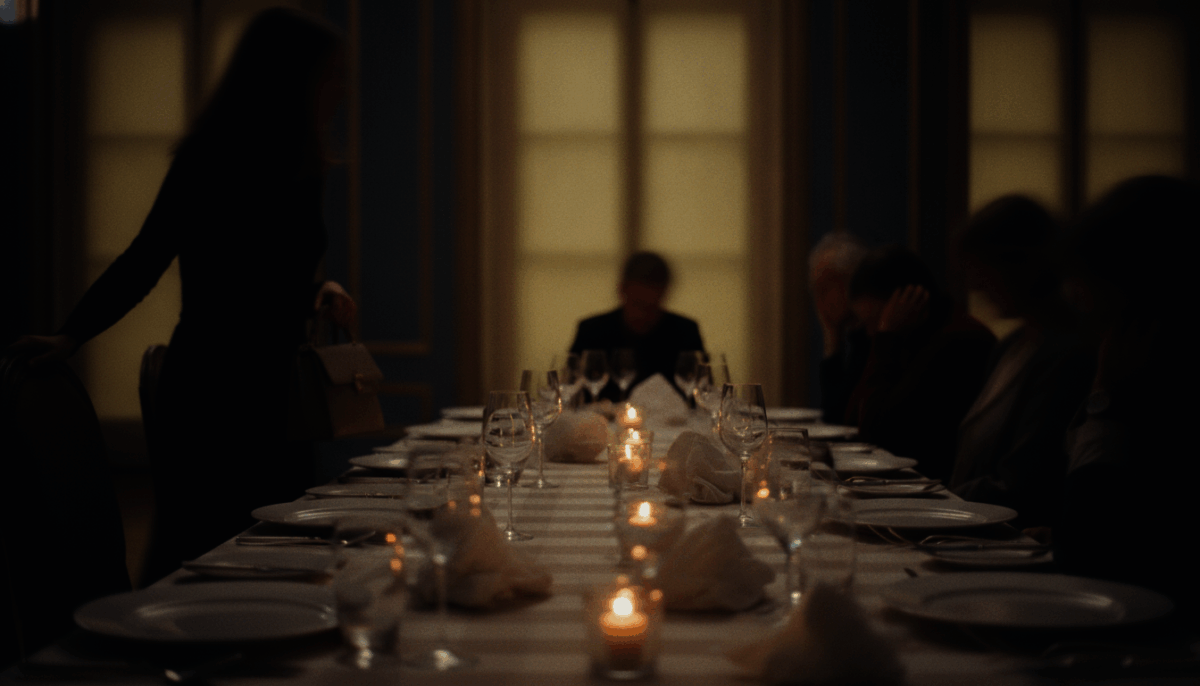
A month later, there was a family gathering. I debated going. Part of me wanted to stay away, but another part wanted to stand my ground. I decided to go, but with one condition: Clara would not be there. My parents, desperate to keep the peace, tried to manipulate the situation, but I was firm.
The dinner was tense. My mother kept trying to bring up the ‘misunderstanding,’ trying to brush it under the rug. She wanted us to ‘talk it out’ and ‘move past it.’ I sat there, listening, and realized that she was just as responsible as Clara—she had enabled this behavior for years.
“Mom, it’s not a misunderstanding. It’s a destruction. She took something that wasn’t hers, ruined it, and lied about it. That’s not a mistake. That’s a character flaw. And I’m done discussing it.”
— My response to my mother at the dinner table
The table went silent. The clinking of silverware stopped. It was the most awkward silence I had ever experienced, but it was also the most powerful. For the first time, I wasn’t the one apologizing for the tension. I was the one setting the standard for how I would be treated.
I left early. I didn’t say goodbye to anyone. I walked out into the cool air, feeling a weight lift off my shoulders. I had finally stopped playing the role of the ‘reasonable one’ who had to swallow their pride to keep the peace. It was incredibly liberating.
That night, I realized that I wasn’t just cutting out Clara; I was cutting out the version of myself that had allowed these people to dictate the terms of my life. I was reclaiming my agency, one small, uncomfortable decision at a time.
The Finality of No Contact

I changed my locks. I blocked her on every platform. I told my parents that I would not be attending any event where she was invited, and I meant it. It wasn’t about punishment; it was about preservation. I couldn’t risk my peace of mind for people who didn’t respect my boundaries.
Clara tried to reach out through friends, through letters, through grand, performative gestures of ‘apology’ that were really just attempts to justify her actions. ‘I didn’t mean to hurt you,’ she wrote in a letter I burned without opening. ‘I just wanted to feel pretty.’
It wasn’t about me. It was never about me. It was about her need to be the center of attention at any cost. That realization made the no-contact easy. When you see someone’s actions for what they truly are, the emotional pull of the relationship loses its power.
“I don’t want your apology. I want the history you stole, but I know I’ll never get it. The best thing you can do for me now is to leave me alone, permanently.”
— The final message I sent, right before blocking her for good
I started attending therapy to process the grief. It wasn’t just for the veil; it was for the realization that I didn’t have the family I thought I had. I was mourning the loss of the image of a supportive, loving, and respectful family unit.
It was a difficult process, but it was necessary. I learned that you don’t owe anyone access to your life, regardless of their bloodline. You owe it to yourself to surround yourself with people who value you and your history, not those who treat you like a resource.
The Aftermath: Moving Forward

I am in a much better place now. I have found new ways to honor grandmother’s memory—not through physical objects, but through the values she taught me. I have taken up sewing myself, learning the craft she loved, and I find a strange, cathartic peace in the repetition of the thread.
My relationship with my parents is distant, but it is calm. I have established firm boundaries, and I no longer engage in the drama they try to invite me into. I have found a new, chosen family—friends who value my history and respect the things I hold dear.
I still think about the veil sometimes. I think about the lace that is now probably sitting in a dumpster somewhere, or perhaps stuffed into a drawer in some apartment. But I don’t feel the same rage anymore. I feel a sadness for what was lost, but more than that, I feel a pride in how I handled it.
“You can’t control what people take from you, but you can control what you give them access to in the future. I chose to close the door.”
— My reflection on the experience
I have learned that the people who tell you to ‘just get over it’ are usually the ones who would do the same thing if they had the chance. They don’t want you to have boundaries because it makes them reflect on their own lack of them. I am content being the ‘difficult’ one if it means I am the protected one.
I look forward to the future now, without the shadow of my sister’s entitlement looming over it. I am the architect of my own life, and I am careful about who I allow inside the walls I have built. It is a quiet life, but it is a peaceful one.
The Community’s Last Word
The discussions on the various platforms have continued for months. People keep reaching out to share their support and their own stories. It’s become a small, accidental movement of people taking back their agency from toxic family members. The consensus remains overwhelming: you made the right call.
Some have even started sharing stories of their own heirlooms and how they’ve protected them. It’s heartwarming to see that there are so many people who truly understand the value of history. The veil may be gone, but the lesson it taught has reached more people than I ever expected.
“The veil was just the trigger. The real issue was a lifetime of boundary stomping. You didn’t just save your sanity; you showed everyone that there are consequences to disrespect. Don’t ever feel guilty for choosing yourself.”
— u/BoundariesMatter (15.2k upvotes)
I appreciate every single comment, even the ones that disagreed with me. They forced me to refine my arguments and strengthen my resolve. I am grateful for the perspective, but even more grateful for the affirmation that my feelings were valid. I am no longer looking for permission to be angry.
This entire experience has been a masterclass in self-worth. I’ve realized that I am not responsible for other people’s happiness or their need for attention. I am responsible for my own growth, my own integrity, and my own peace. That is a lesson I will carry for the rest of my life.
I’m finally at a point where I can talk about this without the initial visceral reaction. It’s become a story of survival, of growth, and of the importance of holding on to what truly matters. And what matters, I have learned, is not the object, but the dignity behind it.
Conclusion
The destruction of my grandmother’s veil was a tragedy, but it was also a catalyst. It forced me to look at the cracks in my family foundation that I had spent years ignoring. It taught me that while we cannot choose our blood, we can choose our company, and we can choose the standards by which we live. I have found peace in my distance, and I have found strength in my silence.
I would love to hear your thoughts on this. Have you ever had to draw a hard line with a family member who refused to respect your boundaries? Did you find that cutting them off was as liberating as it was painful, or do you still struggle with the fallout of that decision? Let’s talk in the comments below.
What's your verdict on this dilemma?
Vote below to contribute to the official community consensus.

Have a Dilemma Keeping You Up at Night?
Share your real-life feud, wedding chaos, or relationship crossroads anonymously with our editorial team.
What do you think ?
0 Comments🛡️ Comments are moderated to protect community integrity. Your comment will appear once approved by the editorial team.