

When I got engaged to my now-husband, Mark, I expected the typical stressors: seating charts, catering dilemmas, and the occasional passive-aggressive remark about my choice of centerpieces. What I did not anticipate was a cold, calculated campaign of social engineering orchestrated by my mother-in-law, Linda. She had always been a woman of rigid traditions and unspoken rules, but the mask truly slipped the moment we began discussing the logistics of the wedding wardrobe.
My mother, Sarah, is a woman of immense grace who has supported me through every hurdle in my life. When she was diagnosed with a minor health scare two years ago, I promised myself that our shared milestones—especially my wedding—would be sacred. I had invited her to every major appointment, including the initial bridal dress selection. It was a bonding experience we had dreamed about since I was a child. The joy in her eyes when I stepped into the store was worth more than any designer label.
However, Linda viewed my mother’s presence as a threat to her own status. She wanted to be the matriarchal figure guiding the ship, and she viewed the inclusion of my mom as an unnecessary complication in the hierarchy of the event. She started by making small, pointed comments about ‘traditional etiquette’ and ‘the groom’s side needing to lead the process,’ but it quickly escalated from annoying suggestions to direct, malicious interference that shattered the peace of my engagement.
The breaking point occurred three weeks before the final fitting. I had paid for a custom-tailored dress for Linda—a gesture of goodwill intended to bridge the gap and make her feel like part of the family. Little did I know, she was using her access to the wedding planning software and our boutique contact list to systematically erase my mother from the most important day of our lives. The resulting conflict wasn’t just about a dress; it was about the fundamental right to choose who stands by your side.
The Fabricated Schedule and the Silenced Invitation

The deception began with a seemingly innocuous email. I received a notification from the bridal salon confirming a ‘change in the primary guest list’ for my final fitting. My heart dropped as I read the line stating that my mother had been removed from the attendee list, replaced by Linda and her sister. I immediately called the salon, my hands shaking so violently I almost dropped my phone. The consultant was apologetic but adamant: they had received a call from a woman claiming to be me, requesting the change to ensure ‘an intimate, family-focused session.’
I sat in my living room for nearly an hour, processing the sheer audacity of the move. Linda hadn’t just requested an invite; she had impersonated me to commit a social assault on my relationship with my mother. I reached out to Mark, but he was at work and dismissive, claiming it was likely a misunderstanding or a clerical error at the salon. He didn’t want to believe that his mother was capable of such calculated malice, and his hesitation only fueled my growing sense of isolation.
Later that evening, I saw the truth on my mother’s face. She didn’t scream or demand an apology; she just looked sad. She told me she had received a text from Linda ‘informing’ her that the shop had hit capacity constraints and that it would be best if she stepped aside to avoid ‘unnecessary crowding.’ The manipulation was so polished that my mother had actually apologized to Linda for potentially causing a stir. The sight of my mother shrinking herself to appease my future mother-in-law broke something inside me.
“I just wanted to make sure the day was perfect for you, and I didn’t want to be the reason for any friction between you and Linda. I’ll stay home, dear. It really doesn’t matter.”
— My Mother, unaware of the actual sabotage
I realized then that if I didn’t act, this cycle would continue throughout the wedding. If she could erase my mother from a fitting, she could rewrite my entire wedding day. I needed to send a message that was impossible to misinterpret, and I needed to do it while the dress was still in her possession. The custom gown I had purchased for her was a four-figure investment, a gesture of love that she had just proven she didn’t deserve.
The $4,000 Lesson in Boundaries

I didn’t call Linda. I didn’t send a long, rambling text explaining why her actions were hurtful. Instead, I drove to the bridal salon the next morning. I had the order receipt in my hand and a resolve I hadn’t possessed before. I walked up to the counter, explained the situation to the manager—who was rightfully horrified by the identity theft—and requested a total cancellation of the secondary garment order. The manager, seeing the distress I was under, agreed to waive the restocking fees once I explained the harassment.
With the refund processed, I sent a simple, cold message to Linda. I wanted her to feel the weight of her actions. I didn’t want to engage in a back-and-forth; I wanted to end the power dynamic she had established. I sent the message while sitting in my car in the parking lot, watching the sun hit the storefront. The silence that followed was heavy, almost suffocating, but it was the silence of a barrier being erected.
“Linda, I am aware that you impersonated me to remove my mother from my fitting. Because of this, I have canceled the custom gown you were meant to wear at the wedding. You are no longer on the list for professional styling, and you will need to find your own attire. Do not contact me.”
— My text to Linda
The response was almost immediate. My phone started vibrating with a series of frantic, indignant messages. She wasn’t sorry; she was furious that I had ’embarrassed’ her. She tried to frame it as a misunderstanding, then as a joke, and finally as an attack on her standing in the family. She didn’t realize that the money was irrelevant—it was the consequence that mattered. The dynamic had shifted; I was no longer the daughter-in-law seeking approval, but the woman setting a non-negotiable boundary.
I went home and blocked her number, then did the same for her sister who had been looped into the scheme. Mark came home that night to a house that felt like a fortress. When he asked why his mother was crying and accusing me of ‘ruining the wedding,’ I simply handed him the records from the salon. For the first time, he saw the printout of the appointment changes. The realization hit him like a physical blow. He wasn’t just defending his mother anymore; he was forced to reconcile with the reality of her behavior.
The Fallout: When the Family Group Chat Explodes
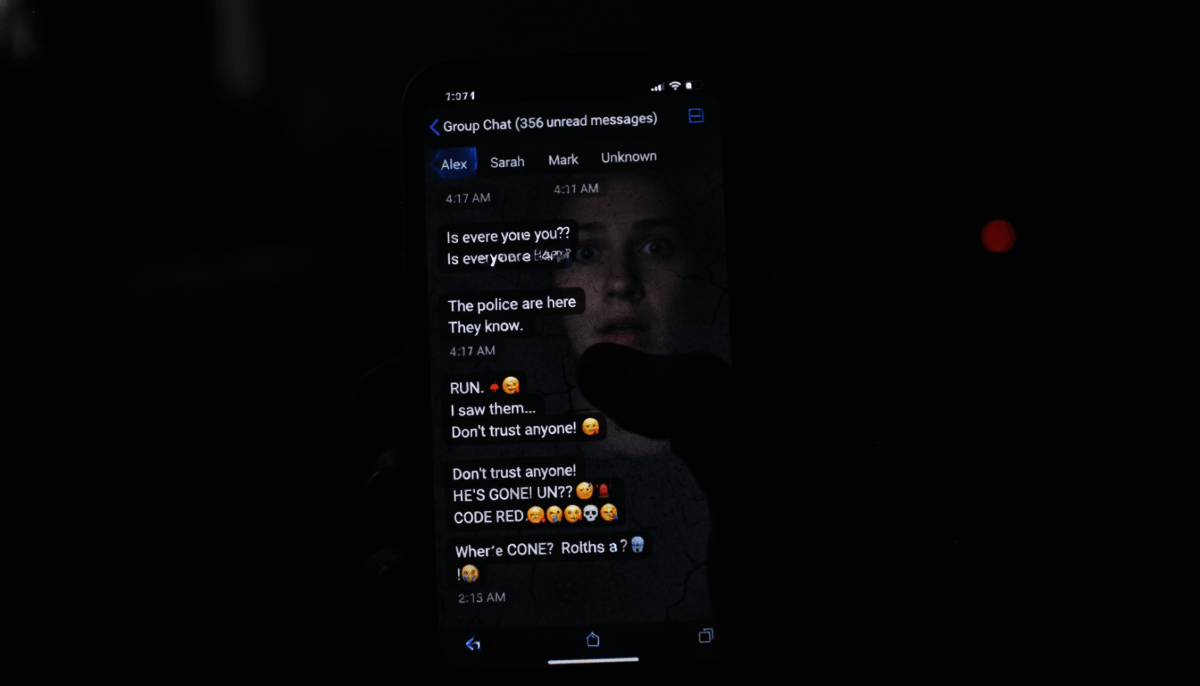
The fallout was swift and spectacular. Linda didn’t take the rejection quietly. She took to the family group chat—the one that included aunts, cousins, and distant relatives—and painted a narrative where I was an unhinged, controlling bride who had ‘uninvited’ her for no reason. She conveniently left out the impersonation and the exclusion of my mother. Suddenly, my phone was blowing up with messages from people I barely knew, demanding to know why I was being so ‘difficult’ and ‘hostile.’
I kept my cool. I didn’t argue with them. I simply shared a screenshot of the salon’s email confirmation regarding the guest list change, accompanied by a very brief summary of what happened. I didn’t need to be aggressive; the truth was devastating enough. The silence in the group chat was instantaneous. The cousins who had been ready to defend Linda suddenly realized they were being used as pawns in a petty, manufactured drama. It was the moment the tide turned against her.
“I don’t think you understand, OP. You’re making a scene and it’s going to ruin the whole family dynamic. Can’t you just get over it for the sake of the wedding?”
— My Aunt-in-law, attempting to mediate
The pressure to ‘keep the peace’ was immense. I received calls from my husband’s uncle, his father, and even a family friend. They all used the same language: ‘for the sake of the day,’ ‘be the bigger person,’ ‘it’s just a dress.’ They were essentially telling me that my boundaries were less important than their convenience. My refusal to budge made me the villain in their eyes, but it made me a hero in my own. I realized that ‘peace’ in this family was just another word for ‘submission.’
By the end of the day, I had left the group chat entirely. I didn’t say goodbye. I just exited. The sheer relief of being removed from the constant pinging of notifications was worth more than the approval of a dozen strangers. Mark, to his credit, finally stood up and told his mother that he would not tolerate her bullying me or my mother. He told her that if she couldn’t respect the boundaries we set, she wasn’t invited to the wedding at all. That was the final, nuclear option we had been building toward for months.
Reddit Weighs In: The Community Verdict

I turned to the internet for a gut check, wondering if I had truly gone too far. The response was overwhelming. Within hours of posting my story, the thread had thousands of comments, and the consensus was not just supportive—it was ferocious. People from all over the world validated the idea that weddings are not the stage for a power grab by in-laws. The community rallied around the idea that ‘no’ is a complete sentence and that boundaries must be protected with fire.
The comments weren’t just ‘NTA’ (Not The Asshole). They were tactical advice, personal anecdotes, and deep psychological insights into why people like Linda behave the way they do. Many users pointed out that her attempt to exclude my mother wasn’t an accident; it was a test. If I had let it slide, she would have pushed for more, eventually taking over the entire planning process. The community helped me realize that by canceling the dress, I hadn’t ruined the wedding; I had saved it from being hijacked.
“You didn’t just cancel a dress, you drew a line in the sand. If she’s the type to impersonate you to exclude your mom, she would have done something even more public and humiliating at the wedding itself. NTA, and honestly, you should consider uninviting her entirely if she doesn’t apologize.”
— u/WeddingDefensePro (Top Comment, 32.4k upvotes)
Others brought up the financial aspect, noting that my refund was a perfectly rational response to a breach of contract. A few users even shared their own stories of ’boutique sabotage,’ revealing that bridal store drama is more common than I thought. Reading these stories made me feel less alone. I wasn’t the ‘crazy bride’; I was just the first person in this family who refused to let Linda treat me like a prop in her personal theater.
The most eye-opening comments came from those who had gone no-contact with toxic in-laws. They described the ‘fog’ of trying to appease people who would never be satisfied. They warned me that the manipulation wouldn’t stop with the dress, and they were right. The weeks that followed showed me exactly how deep the entitlement went. Every time I stood firm, Linda would escalate, but every time she escalated, she looked more foolish to the rest of the family. The internet provided me with the armor I needed to finish the job.
The Inevitable Confrontation: When the Mask Fell
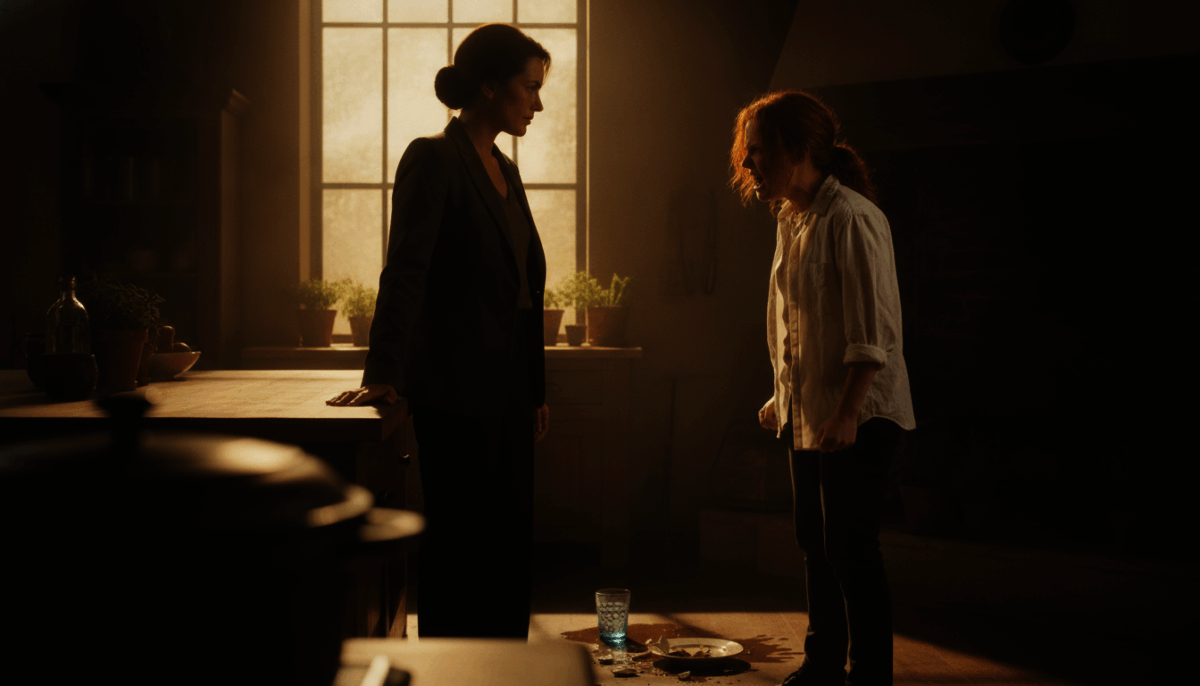
Three days before the wedding, Linda showed up at our house unannounced. She didn’t call, she didn’t text; she just arrived at 7:00 AM with a bag of clothes, acting as if nothing had happened. She walked into our kitchen while I was making coffee, looking at me with a pained, ‘forgive and forget’ expression that made my blood run cold. She had decided that the drama was over because she had decided to forgive me for my ‘impulsive outburst.’
I didn’t offer her coffee. I didn’t even say hello. I simply walked over to the door and opened it, signaling that she was not welcome. She began to cry, a performative, shaky sob that I knew was designed to make me feel guilty. She started talking about how ‘the family’ was suffering because of our fight and how ‘unreasonable’ I was being. I watched her, really watched her, and saw how pathetic the whole display was. She was a woman who had lost her power and was desperately trying to claw it back with manufactured tears.
“I am here to fix this. We can just move past this, I’ve already bought a new dress, and I’m sure you’re ready to stop this petty nonsense before the guests arrive.”
— Linda, during her unexpected morning visit
Mark came down the stairs, saw his mother, and stopped dead in his tracks. He didn’t even have to say a word. He just stood behind me, his presence a silent wall. When Linda realized that Mark wasn’t going to take her side, her face shifted from sorrow to pure, cold rage. She realized the game was up. She wasn’t just losing the argument; she was losing her son’s blind loyalty. That was the moment her mask completely fell off.
She started screaming. It wasn’t a ladylike disagreement; it was a vitriolic rant about how I was ‘poisoning’ her son and how I would never be part of ‘her’ family. She threw insults at my mother, at me, and at our relationship. She called us names that I wouldn’t repeat in polite company. It was the most liberating experience of my life, because in that moment, I knew for a fact that I was doing the right thing. She had outed herself as the toxic element, and the chaos she created only served to solidify our decision to exclude her from the ceremony.
The Decision That Saved My Wedding

After the screaming match, Mark and I sat on the back porch in silence for a long time. The house felt lighter, almost as if the air had been cleared. We talked about everything—his mother’s history, the way she had always controlled him, and the way I had been trying to navigate a minefield that I didn’t even build. We made the final decision right then and there: Linda would not be attending the wedding. It wasn’t a punishment; it was a necessity for our own mental health.
We sent a formal, cold email to her and the rest of the family explaining that due to her behavior, she was uninvited. We didn’t leave room for negotiation. We didn’t offer to talk it out. We simply stated the facts: her actions were unacceptable, and we were prioritizing our peace. The fallout was immediate, with more angry phone calls and texts, but we stayed the course. We turned off our phones, booked a spa weekend for ourselves, and just breathed.
My mother was the only person we told about the decision, and she cried—not in sadness, but in relief. She had been worried for months that my day would be ruined by the tension. She felt guilty for being the catalyst, but I reminded her that she was the victim, not the cause. We spent that weekend planning the wedding we actually wanted, without the fear of someone lurking in the background, trying to sabotage the details.
“I am so proud of you for doing what you needed to do. Don’t let anyone tell you that you’re being unkind. You are being protective, and that is a beautiful thing.”
— My Mother, supporting my decision
The days leading up to the wedding were the most peaceful of my entire life. We spent our time with the people who truly mattered—friends who supported us, family who respected our boundaries, and each other. We didn’t have to worry about seating charts for people we didn’t want, or whether someone was going to make a scene during the vows. We finally had the wedding we had been dreaming of, minus the one person who would have done anything to stop it.
A Wedding Day Without Shadows
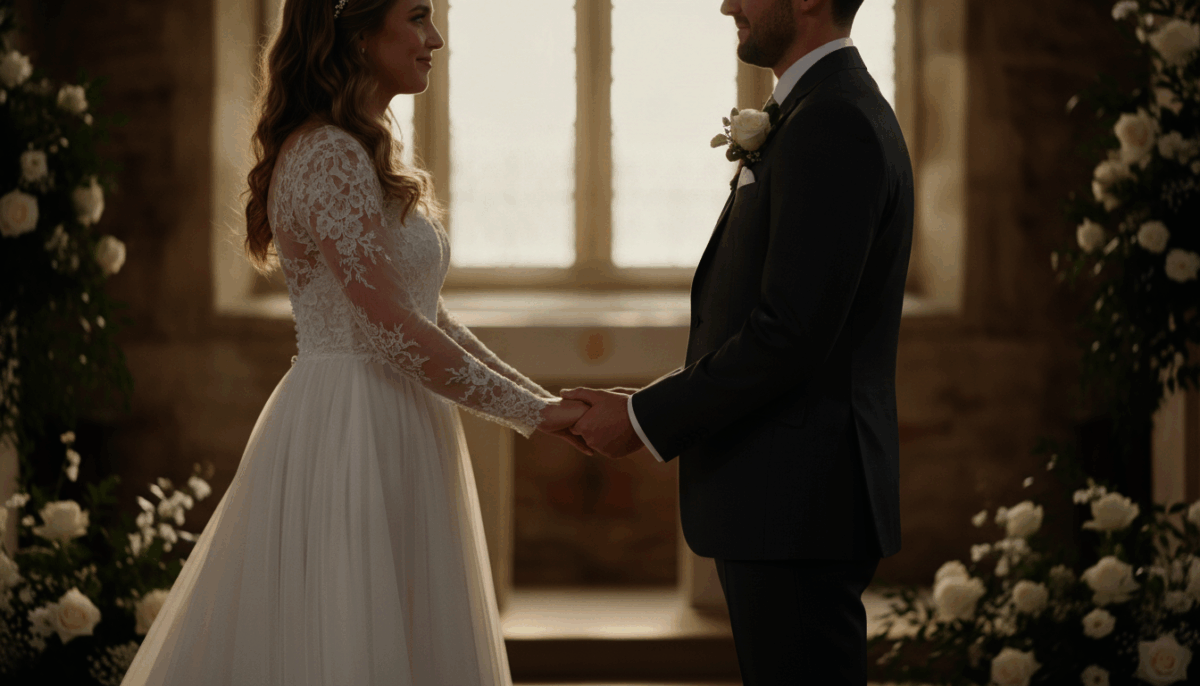
When the morning of the wedding finally arrived, there was no anxiety. No frantic texts, no surprise guests, no drama. Just the excitement of finally starting our lives together. The dress I wore was not the one Linda had tried to control; it was the one I had chosen because I loved it. When my mother walked into the bridal suite to help me with my veil, there were no tears of stress—only tears of joy. We were finally free.
The ceremony was beautiful. We had our closest friends and family, and the atmosphere was one of genuine love and support. I saw the relief in my husband’s eyes throughout the day. He wasn’t looking over his shoulder, waiting for his mother to cause a scene. He was entirely present, entirely ours. It was the best wedding I could have possibly imagined, precisely because we had the courage to cut out the rot before it could spread.
We later heard from relatives that Linda had stayed home, telling everyone she was ‘too heartbroken’ to attend. Some people felt bad for her, but most were just relieved that the day had passed without incident. The drama she had tried so hard to create never manifested, and in the end, her absence was a gift. It allowed us to focus on the people who were actually there to celebrate us, not the people who were there to manage us.
“You know, I don’t think I’ve ever seen him look this happy. It’s like he finally realized he didn’t have to carry that weight anymore.”
— A guest at the wedding, commenting on Mark’s demeanor
We didn’t look back. We didn’t reach out to apologize or to explain. We were too busy starting our new life together. The lesson was clear: boundaries are not something you ask for; they are something you enforce. And sometimes, enforcing those boundaries means losing people who were never really on your side in the first place.
The Aftermath: Learning to Live Boundary-First

It has been six months since the wedding, and we are still in no-contact with Linda. It wasn’t easy at first. There were moments of guilt, moments of wondering if we should have handled things differently. But every time I think about reaching out, I remember the feeling of the morning she showed up at our house unannounced, or the way she tried to erase my mother from my life. That memory is enough to keep me strong.
We have learned that our marriage is much stronger for having gone through this fire. We communicate better, we trust each other more, and we have a shared understanding of what it means to be a team. We are no longer afraid to say ‘no’ to family demands that feel invasive. We have built a life that is truly our own, and the peace that comes with that is worth every sacrifice we made.
My mother and I are closer than ever. We share a bond that no amount of manipulation could ever break, and I am so grateful that I had the strength to protect that. We have established new traditions, new ways of spending time together, and we are finally free from the shadow of the past. It wasn’t the wedding journey we expected, but it was the one we needed to find our own voices.
“Boundaries aren’t about being mean. They’re about being honest about what you can and cannot tolerate. Don’t apologize for keeping your life sane.”
— My own internal reflection
We are looking forward to our future with a sense of optimism that we didn’t have before. We know that if we can handle the chaos of a wedding sabotage, we can handle anything life throws at us. We are no longer living for other people’s approval, and that is the greatest freedom of all.
Reflecting on the Cost of Conflict

People often ask me if I regret the way I handled it. They ask if I would have done things differently—if I would have been ‘nicer’ or ‘more accommodating.’ I tell them the same thing every time: I did exactly what I had to do. You cannot compromise with someone who views your life as their own personal property. You cannot be ‘nice’ to someone who is actively working to undermine your most important relationships.
The conflict was not of my choosing. It was forced upon me, and I responded with the only tool that actually works: clear, decisive action. Did I lose relationships? Yes. But were those relationships ever healthy to begin with? I don’t think so. I lost people who were more concerned with their own comfort than my happiness, and in the grand scheme of things, that is a price I am more than happy to pay.
The financial cost of the wedding was high, but the emotional cost of letting her win would have been much higher. I am not talking about the price of a dress; I am talking about the price of my self-respect. I am talking about the price of my mother’s feelings, my husband’s sanity, and our future as a couple. I would pay that price ten times over to ensure that we are living in a home that is safe, healthy, and entirely our own.
“Sometimes the most radical act of love is protecting your own space from those who would tear it down.”
— Final thought from a reader
I hope that my story helps other people who are struggling with toxic in-laws. I hope they see that they don’t have to play by the rules that someone else set for them. I hope they see that they have the right to be happy, to be respected, and to be the protagonists in their own lives. It’s not easy, and it won’t always be pretty, but it is always, always worth it.
Final Thoughts: A Call to the Community

I want to thank the community for their support. Without the encouragement of people who have been through similar situations, I don’t think I would have had the strength to stand my ground. Your stories, your advice, and your shared experiences made all the difference. It’s easy to feel like you’re the only one dealing with these issues, but I now know that I am part of a larger movement of people who are choosing to prioritize their own well-being.
We are all in this together, and by sharing our stories, we make it easier for the next person to speak up, to set a boundary, and to walk away from toxic situations. I would love to hear your thoughts on this. Have you ever had to draw a line in the sand with an in-law? How did you handle it? What was the hardest part of the process, and what did you learn?
Let’s keep the conversation going. Share your stories in the comments below. Let’s support each other in being the best versions of ourselves, and let’s remind each other that no one has the right to treat us as anything less than the people we truly are. I’m looking forward to reading your perspectives and learning from your experiences.
“If you’ve dealt with a toxic in-law, you know the weight of the pressure to ‘just be nice.’ Tell us your story in the comments. Let’s build a space where our boundaries are respected.”
— The Call to Action
Thank you for reading my story. It’s been a long journey, but I’m finally at a place where I can look back and see it for what it truly was: the beginning of a life where I am the one in charge of my own story. And that is exactly where I plan to stay.
Conclusion
In the end, my decision to cancel the gown wasn’t an act of cruelty; it was an act of preservation. By removing the physical symbol of the obligation I felt toward my mother-in-law, I cleared the air for a wedding that was centered on love, respect, and shared values. The fallout was difficult and painful, but it revealed the true colors of those around us and allowed Mark and me to begin our marriage with a foundation of honesty and firm boundaries.
We are now living in a space of quiet, steady peace. We have learned that the opinions of others, no matter how loud, cannot compete with the reality of our own happiness. If this story resonates with you, know that you are not alone in your struggle against entitlement and manipulation. Your boundaries are valid, your feelings matter, and you deserve a life free from the suffocating expectations of others. What would you have done if you were in my shoes? Would you have held onto the ‘tradition’ of the gown, or would you have done exactly what I did? Let us know in the comments below.
What's your verdict on this dilemma?
Vote below to contribute to the official community consensus.

Have a Dilemma Keeping You Up at Night?
Share your real-life feud, wedding chaos, or relationship crossroads anonymously with our editorial team.
What do you think ?
0 Comments🛡️ Comments are moderated to protect community integrity. Your comment will appear once approved by the editorial team.