
Marriage is supposed to be a partnership, a shared journey toward common goals. For years, my husband, Mark, and I had been scrimping and saving to build a down payment for our first home. We lived in a cramped apartment, drove cars that were held together by duct tape and hope, and meticulously tracked every penny. I walked three miles to my office every single day, rain or shine, to save on gas and parking fees, a sacrifice I made willingly because I believed in the vision we had built together.
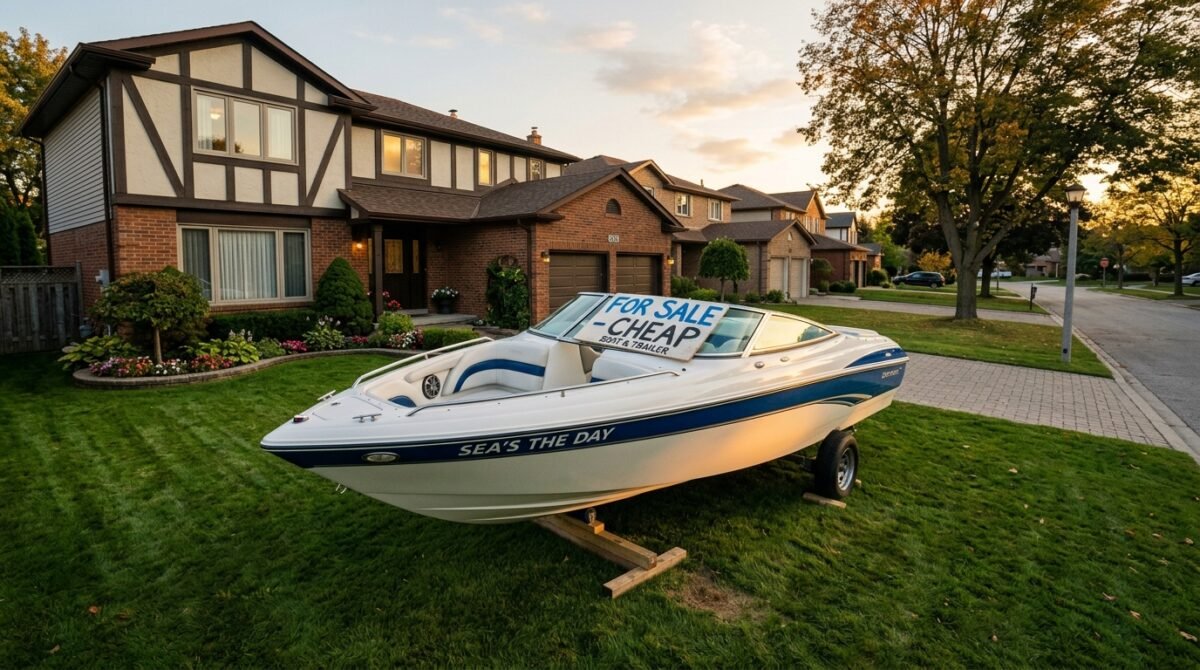
Then, everything changed in a single, impulsive, and devastating afternoon. I came home from a grueling ten-hour shift, my feet aching and my coat soaked through from a sudden autumn downpour, only to find our driveway blocked by a massive trailer. Perched atop it was a gleaming, state-of-the-art luxury speedboat. It wasn’t just a boat; it was the physical manifestation of my hard work, sacrificed dreams, and thousands of miles walked, all converted into fiberglass and chrome.
The betrayal wasn’t just in the purchase; it was in the total disregard for the life we had painstakingly constructed. Mark didn’t consult me. He didn’t even mention that he was considering it. He simply drained our joint savings account—money I had been carefully monitoring for our future—and committed us to monthly payments that would trap us in that apartment for another decade. When I asked him why, his answer was a flippant, ‘I deserved a win.’ That was the moment something inside me shattered.
I realized then that we were no longer partners. We were roommates, and I was the one subsidizing his mid-life crisis. The anger that followed wasn’t a hot, fleeting temper; it was a cold, calculated resolve. If he wanted to prioritize a luxury item over our basic mobility and shared future, I would ensure that his prized possession became the most visible, and eventually, the most regrettable purchase of his life.
This is the story of how I stopped being the martyr in my own marriage and how I decided to let the neighborhood—and the internet—know exactly what happens when you treat your partner like an accessory to your own selfishness. It started with a lawn, a boat, and a sign that changed everything.
The Morning Routine of a Silent Martyr

For two years, my day began at 5:30 AM. While Mark slept in, enjoying the relative luxury of our apartment, I was already lacing up my sneakers. The walk to the office was exactly 3.2 miles. It was a route I knew by heart: the cracked sidewalk on Elm, the shortcut through the park where the sprinklers were always too aggressive, and the final stretch past the industrial district where the air smelled faintly of ozone and burnt coffee.
I didn’t mind the walk initially. It was my time to listen to podcasts, to plan our future, to envision the garden I would plant when we finally bought our house. But as the months turned into years, the physical toll began to weigh on me. My knees ached, my shoes wore out faster than I could replace them, and the social isolation of my morning trek began to feel less like ‘exercise’ and more like ‘penance.’ I was walking so we could afford a home; Mark was just walking to the fridge.
One morning, I arrived at the office soaked from a light drizzle, my hair a frizzy mess, only to see Mark pull into the parking lot in his aging sedan, which he insisted he needed for his ‘client meetings.’ It was the first crack in my resolve. He had the car, he had the comfort, and he had the audacity to ask me why I looked so tired when I walked through the door. I began to keep a private ledger of our expenses, a silent rebellion against the gaslighting I was enduring.
“Are you still doing that walk thing? It seems so dramatic. Just take an Uber if it’s raining, Sarah. Don’t be a martyr,” Mark had told me over dinner the night before the boat arrived.
I realized then that he viewed my sacrifice not as a contribution to our household, but as a personal choice that annoyed him because it made him feel guilty. He didn’t want me to stop walking; he just wanted me to stop being visible about it. My silence was his comfort, and I had been providing it for far too long. Little did I know, he was planning something that would make my daily three-mile trek look like a casual stroll in the park.
The $40,000 Surprise in the Driveway
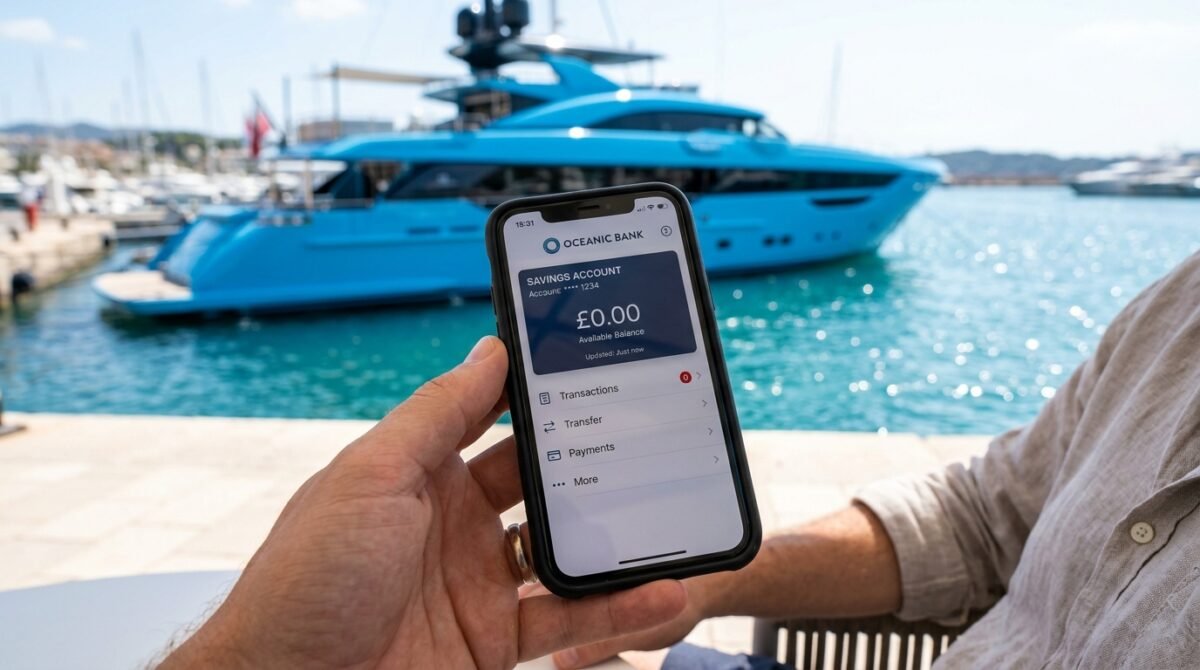
I knew something was wrong the moment I turned the corner onto our street. The usual quiet was replaced by the low, guttural rumble of a heavy-duty truck idling near our curb. A massive, shiny, blue-and-white speedboat was parked across our driveway, effectively blocking any chance of me getting into the garage. I walked up, my heart sinking, and saw Mark standing there with a man in a polo shirt, shaking hands. He looked like he had just won the lottery.
When he saw me, his smile didn’t falter. He walked over, beaming, and wrapped an arm around my shoulder. ‘Surprise! Meet the Sea Empress,’ he said, gesturing to the boat. ‘I got a deal of a lifetime on this. It’s a 2022 model, barely used. I figured we’ve been working so hard lately, we needed something to actually enjoy our weekends. No more sitting around the apartment, right?’
I couldn’t breathe. I stared at the boat, then at the ‘Sold’ sign on the trailer, then at Mark. ‘Mark,’ I whispered, my voice trembling. ‘The house fund. Where did the money come from? We had forty thousand saved. This isn’t… this isn’t possible.’
He waved his hand dismissively, his eyes glittering with excitement. ‘The savings account was just sitting there, Sarah. It was doing nothing. This is an investment in our happiness. Besides, I took out a small loan for the rest. It’s only a few hundred a month. We won’t even notice it. Think of the lake trips! Think of the memories!’
The reality hit me with the force of a physical blow. He hadn’t just dipped into the savings; he had emptied them. The dream of the house, the backyard, the stability—it was all floating on a trailer in the middle of our driveway. I turned around and walked back down the street without saying a word, my legs shaking so hard I could barely stand. I didn’t cry. I just walked.
The Kitchen Table Confrontation
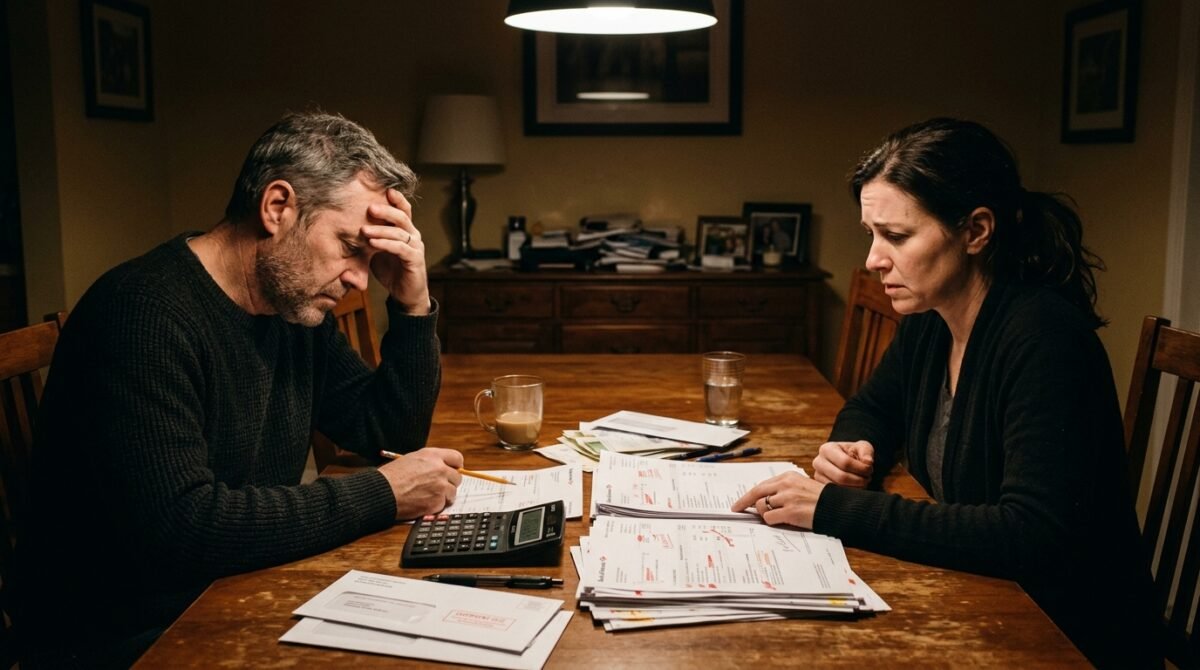
Dinner that night was a masterclass in performative normalcy. Mark was talking about lake access and water skis as if he hadn’t just torpedoed our entire financial future. I sat across from him, my hands gripping my glass of water so tight my knuckles turned white. Every time he spoke, I heard the sound of the ‘house fund’ evaporating into the ether of his ego.
Finally, I couldn’t take it anymore. I set my fork down with a loud clatter against the ceramic plate. ‘Mark,’ I said, my voice eerily calm. ‘You realize that boat is going to cost us the house. We aren’t going to have a down payment for at least five more years now. Do you even care that I walk to work every day so we can save money? Do you even know how many miles I’ve walked to build that account?’
“Oh, stop it with the math, Sarah. You’re always so obsessed with numbers. Life isn’t a spreadsheet. You’ll thank me when we’re out on the water this summer. You’re being incredibly ungrateful right now.” — Mark
The accusation of being ungrateful was the final straw. It wasn’t about the boat anymore; it was about the fundamental disrespect he had for my contributions. He saw my labor—my three-mile walks, my packed lunches, my overtime hours—as something that belonged to him, something he was entitled to leverage whenever he felt bored or needed a status symbol. I looked at him, and for the first time, I didn’t see a partner. I saw a stranger.
I stood up, walked to the counter, and grabbed the bank statement I had printed out earlier that afternoon. I tossed it onto the table. It was covered in red ink—my own annotations of where every dollar had gone. ‘This is our life, Mark,’ I said. ‘And you just traded it for a toy. If you want this boat so badly, you can have it. But you aren’t having our future.’
The Midnight Pivot
I didn’t sleep that night. I laid in bed, staring at the ceiling, listening to Mark snore in the other room. He was already dreaming of himself as a boat captain, while I was calculating the logistics of how to get that monstrosity off my property. I knew I couldn’t force him to sell it—it was in his name, bought with money he claimed was ‘ours’ but held in an account that—to my horror—I had let him keep as the primary holder for ‘convenience’ purposes. But the land? The land was ours, jointly.
I opened my laptop and started researching the local laws. I found a loophole. The homeowners’ association regulations in our suburban neighborhood strictly prohibited ‘recreational vehicles or watercraft’ from being stored in front yards for more than 24 hours. The boat had been there for six. I had until the next afternoon to figure out my next move. I wasn’t going to just report him to the HOA; that was too easy. I wanted him to feel the weight of his decision.
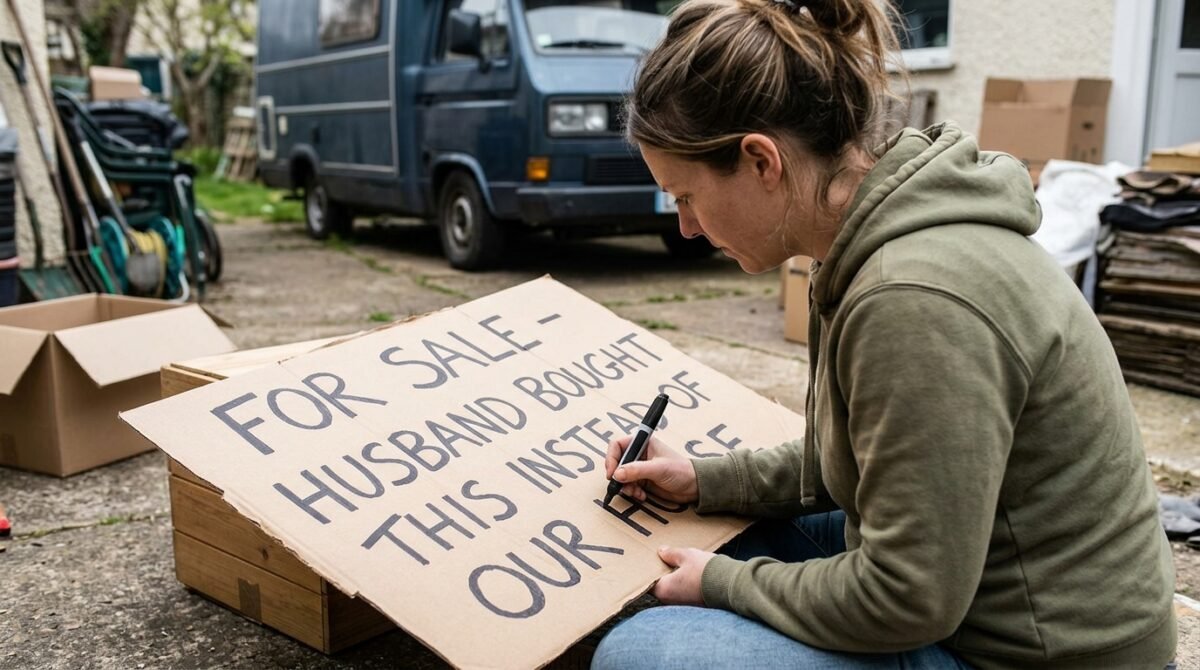
At 3:00 AM, I got out of bed and went to the garage. I found a stack of cardboard boxes and a thick black marker. I spent the next hour carefully crafting a sign. It wasn’t a standard ‘For Sale’ sign. It was a manifesto. It listed the boat, the ‘low price,’ and a contact number—his, not mine. Then, I added a line that would make the neighbors stop and stare: ‘Husband bought this instead of our house. Must go today.’
I felt a strange sense of liberation as I taped the sign to the side of the boat. It was petty, yes. It was vindictive, absolutely. But it was also the first time I had taken control of my own narrative. I wasn’t the wife who walked three miles to work anymore. I was the woman who had finally decided to stop financing her own oppression. I went back to sleep for the first time in days, dreaming not of houses, but of empty driveways.
The Morning the Neighborhood Woke Up
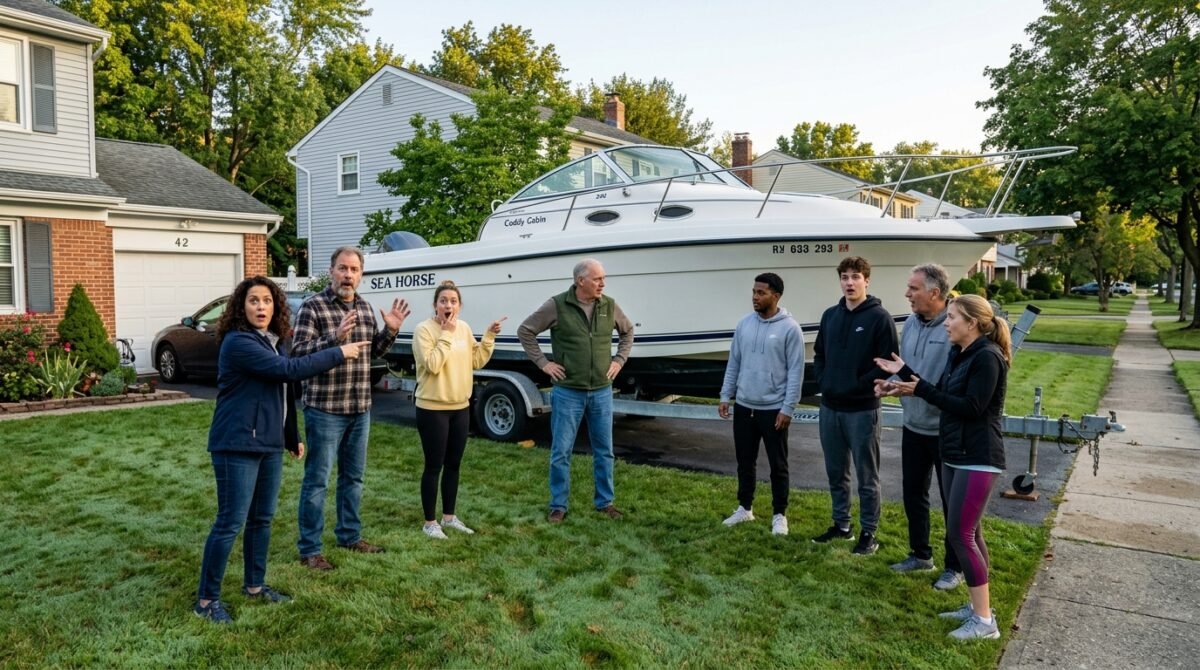
I woke up to the sound of laughter. Not the pleasant, morning-coffee-on-the-porch kind of laughter, but the stifled, gossiping kind that carries over fences. I walked to the window and pulled back the curtain. Our front yard was a spectacle. Three of the neighbors were standing near the boat, reading the sign I had attached. One of them, Mrs. Higgins, was pointing at the boat and then at our front door, her eyes wide with what looked like a mix of shock and amusement.
I didn’t rush out. I took my time. I showered, I dressed for work, and I laced up my sneakers. I grabbed my bag and walked out the front door, right past the boat, right past the neighbors. Mark was inside, still asleep, completely oblivious to the fact that his private indulgence had just become a public scandal. I walked past the neighbors with a polite nod, feeling the weight of their gaze on my back.
“Is that for real, Sarah? He really bought that thing instead of a house?” Mrs. Higgins asked as I walked by. I just smiled. “Everything is for sale, Mrs. Higgins. Even priorities.”
By the time I reached the end of the block, my phone started buzzing. It was a text from Mark. Then another. Then a call. He had finally woken up and seen the crowd. He was furious. His texts were a stream of profanity and demands to take the sign down. I didn’t answer. I just kept walking. The three miles to work had never felt lighter. I wasn’t walking for a house anymore. I was walking for myself.
The notification center on my phone was blowing up. People were taking pictures of the boat and the sign. By the time I reached my office, the photo was already on our local community Facebook page. The comments were coming in thick and fast. I felt a surge of adrenaline, a rush of energy I hadn’t felt in years. The secret was out, and for the first time, I wasn’t the one carrying the shame.
The Digital Firestorm
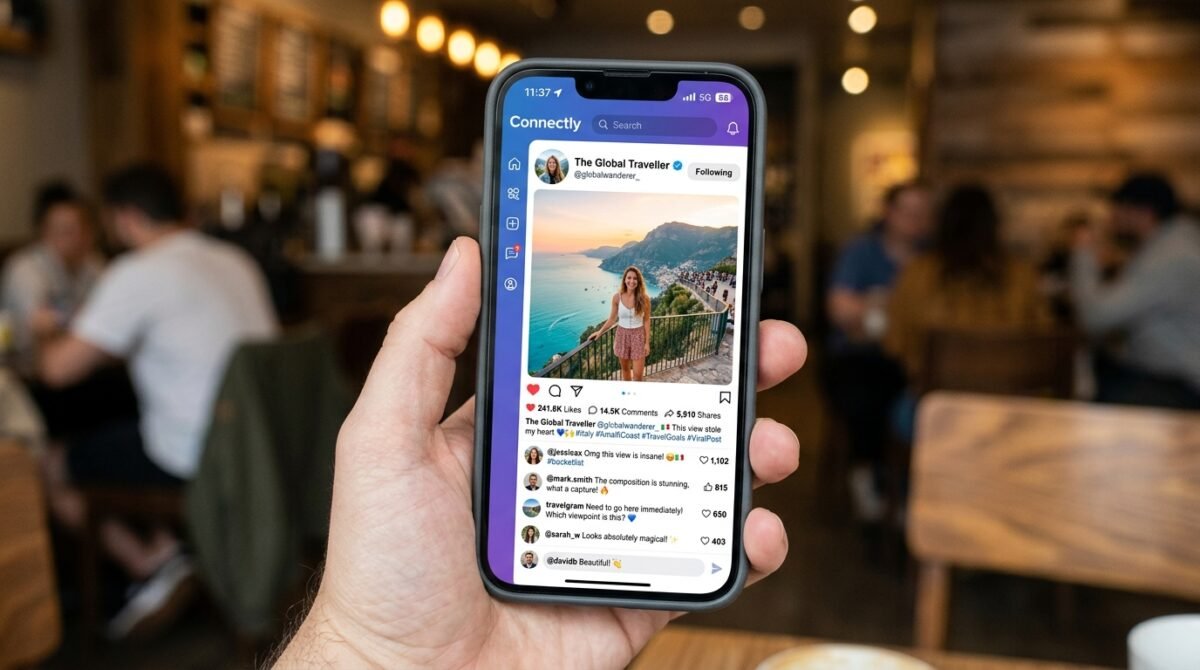
I checked my phone during my lunch break. The post had been shared over two thousand times. The local news had picked it up as a ‘human interest’ story about ‘financial infidelity in the modern age.’ The comments section was a battlefield, with people taking sides and dissecting every aspect of our marriage. I read through them, feeling a strange detachment as if I were reading about a fictional couple.
“NTA. If he can afford a boat, he can afford to get a divorce. This isn’t just about the boat; it’s about the lack of respect for his partner’s hard work. Good for her for publicly shaming him.” — u/FinancialFreedomSeeker (Top Comment, 18.2k upvotes)
There were people who thought I had gone too far, calling me ‘petty’ and ‘unhinged.’ They argued that marriage required communication and that public shaming was a ‘nuclear option’ that would destroy any chance of reconciliation. But as I read those comments, I realized that I didn’t want reconciliation. I wanted an exit. I wanted to be free of the man who thought my exhaustion was a fair price to pay for his weekend hobby.
Other comments were from people who had been through similar situations. They shared stories of hidden debts, secret purchases, and the slow, agonizing realization that they were the only ones invested in the marriage. Their stories were the ones that made me cry. I realized that my situation wasn’t an anomaly; it was a symptom of a larger, more pervasive issue in how couples manage money and power. I wasn’t just standing up for myself; I was standing up for everyone who had been forced to walk while their partner bought a boat.
I started replying to a few of them, keeping my identity anonymous but sharing the details of the ‘house fund’ and the daily three-mile walk. The support I received was overwhelming. It confirmed what I already knew: I had made the right decision. The boat was a catalyst, not the cause. The cause was years of accumulated neglect, and the boat was just the final, visible marker of our divorce.
The Confrontation of the Century

When I got home that evening, the scene was entirely different. The boat was still there, but the crowd was gone. Mark was waiting for me on the porch. He looked tired, defeated, and, for the first time, truly angry. The facade of the ‘cool boat owner’ had completely collapsed. He didn’t say a word as I walked up the driveway, his eyes tracking my every move.
I stepped onto the porch and leaned against the railing. ‘Are you going to move it, or are you waiting for the city to fine us?’ I asked, my voice steady. He looked at me, his face twisting into a mask of frustration. ‘You ruined everything, Sarah. You turned our personal business into a joke. The neighbors are laughing at me. My coworkers are asking if I’m broke. Do you have any idea what you’ve done?’
“I didn’t ruin anything, Mark. You did that the moment you decided your boat was more important than our home. If you didn’t want people to know you were a selfish partner, you shouldn’t have acted like one.” — Me
He scoffed, pacing the small space of the porch. ‘It was an investment! It has resale value! You’re just acting like this because you’ve always resented me for having a car. You want to see me fail, that’s what this is about.’ His words were so delusional, so disconnected from the reality of our situation, that I almost laughed. He genuinely believed that I was the villain in this story.
I didn’t bother arguing. I just walked past him, opened the door, and went inside. I went to our bedroom, packed a bag, and walked back out. I told him I was staying with my sister for a few days. He tried to stop me, but I didn’t even look back. I got into my car—yes, the one I had been denied the use of—and drove away. I left him there with his boat, his pride, and his empty house.
The Legal Reality Check

The next few days were a blur of lawyers, bank statements, and the cold, hard reality of separation. I learned that because the boat was in his name, it was legally his asset—but so was the debt he had taken out to purchase it. I also learned that because I had been the one contributing the majority of our living expenses, I had a strong case for alimony and a division of assets that would favor me, given his reckless financial behavior.
My lawyer was fascinated by the ‘boat incident.’ She told me that while it was unconventional, it provided a clear, documented timeline of his financial irresponsibility. We had the receipts, the bank statements, and the evidence of the boat purchase. It was a slam-dunk case for showing that he had dissipated marital funds without my consent. The ‘For Sale’ sign, while seemingly impulsive, had actually created a paper trail that proved my lack of involvement in his financial decisions.
Mark tried to fight it. He wanted to claim that the money he used was ‘gifted’ or that I had known about the purchase all along. But the evidence told a different story. I had emails, texts, and even a recorded conversation where he admitted he hadn’t told me because he knew I would say no. He had dug his own grave, and he had done it with a smile on his face.
“He really thought he could just gaslight me into believing the house fund was his to spend. He didn’t count on the fact that I had every receipt for every cent I had saved over the last five years.” — My journal entry during the separation process.
The legal process was grueling, but it was also empowering. For the first time, I wasn’t just ‘the wife.’ I was a litigant, a person with rights, a person who had been wronged and was finally going to get what she was owed. The house fund was gone, but the lesson I learned was worth more than any down payment. I was no longer a martyr. I was a survivor.
The Quiet Aftermath

Three months later, the house was sold, the boat was long gone, and I was sitting in a small, cozy apartment of my own. It wasn’t the house I had dreamed of, but it was mine. I didn’t have a boat, and I didn’t have a husband, but I had something much better: peace. I walked to work every day, but not because I had to save for a dream that wasn’t mine. I walked because I enjoyed the fresh air, the solitude, and the feeling of my own strength.
Mark eventually moved back in with his parents. The boat had sold for less than half of what he paid for it, and the debt he had taken out hung over him like a dark cloud. I didn’t gloat. I didn’t check his social media. I simply moved on. I had learned that the only person you can truly rely on is yourself, and that any partnership that requires you to sacrifice your basic needs is not a partnership at all.
My friends often ask me if I regret the sign. If I regret the public humiliation. If I would do it all over again. My answer is always the same: I regret that I waited so long. I regret that I stayed as long as I did. But I don’t regret the moment I finally decided to put myself first. The sign was just the manifestation of my self-respect, and that is something I will never regret.
“I learned that life is too short to walk three miles to work for someone who would rather buy a boat than a future with you. I’m finally running, and I’ve never felt better.” — My reflection on my new life.
I still see the neighborhood sometimes. People still remember ‘the boat lady.’ But they don’t look at me with pity anymore. They look at me with a strange kind of respect. I wasn’t the victim who let her husband walk all over her; I was the one who stood up and refused to be ignored. And that, in the end, was the most important lesson of all.
The Lesson for the Modern Partner

Reflecting on everything, I realize that the most dangerous thing in a relationship is the slow, quiet erosion of boundaries. It starts with small things: ‘I’ll just handle the finances this month,’ or ‘Don’t worry about the big purchases, I’ll take care of it.’ Before you know it, you’re living in a reality that you didn’t help create, and your partner is making decisions that affect your entire future without your input.
If there is one thing I want people to take away from this, it’s that financial independence is not optional. You should never, ever give up control of your own financial future to someone else, regardless of how much you trust them. Marriage is about compromise, yes, but it is also about transparency. If you can’t be open about your spending, your savings, and your goals, then you aren’t in a partnership; you’re in a hostage situation.
I also want to address the ‘public shaming’ aspect of my story. People will always say that you should take the ‘high road.’ They will tell you that being petty makes you just as bad as the person who wronged you. But I disagree. The ‘high road’ is often just a path for people who want to keep the status quo at the expense of your own dignity. Sometimes, you need to make a scene to be heard. Sometimes, you need to be the person who parks the boat on the lawn to get the attention you deserve.
“The high road is overrated when your partner is driving the car off a cliff. Sometimes, you have to stop the car, even if you have to block the driveway to do it.” — My final piece of advice.
I am a better person for having gone through this. I am stronger, I am smarter, and I am more aware of my own worth. I don’t need a boat to feel successful, and I don’t need a husband to feel complete. I have my own life, my own savings, and my own way of getting to work. And that, to me, is the ultimate success story.
Conclusion
Looking back at the chaotic, painful, and ultimately liberating experience, I am struck by how quickly life can turn from a dream into a nightmare, and then into something entirely new. We often cling to relationships out of a sense of obligation or fear of the unknown, but sometimes, the unknown is exactly where we need to be. By choosing to prioritize my own dignity over the comfort of a failing marriage, I wasn’t losing a partner; I was gaining my life back.
The internet reaction—the thousands of comments, the debates, and the shared stories—reminded me that I was never truly alone. Everyone has a limit. Everyone has a point where they decide that they have had enough. Whether it’s a boat in the driveway or a thousand small betrayals over the years, we all have to decide what we are willing to accept. For me, the answer was ‘no more.’
I hope my story serves as a reminder that your voice matters, your labor matters, and your future is yours alone. Don’t be afraid to stand up for yourself, even if it means making a scene. Because at the end of the day, the only person you have to answer to is the one you see in the mirror. And when you finally do that, make sure you’re proud of what you see.
What about you? Have you ever had to make a drastic, public move to reclaim your boundaries, or have you ever felt like you were subsidizing someone else’s mid-life crisis? Share your thoughts and stories in the comments below—let’s keep the conversation going.
What's your verdict on this dilemma?
Vote below to contribute to the official community consensus.

Have a Dilemma Keeping You Up at Night?
Share your real-life feud, wedding chaos, or relationship crossroads anonymously with our editorial team.
What do you think ?
0 Comments🛡️ Comments are moderated to protect community integrity. Your comment will appear once approved by the editorial team.