
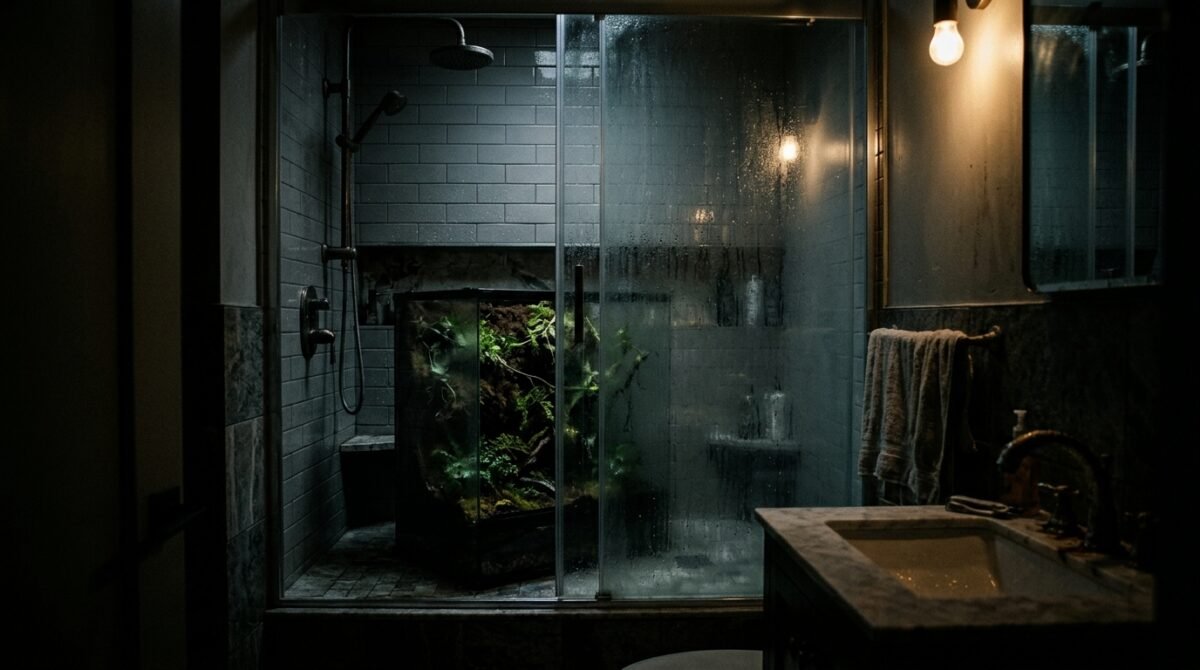
When I signed the lease for this luxury two-bedroom apartment, the biggest concern I had was splitting the utility bills and agreeing on a cleaning schedule. I thought I knew Mark—we had been acquaintances through college, and he seemed like a standard, if slightly quirky, guy who liked hiking and the occasional video game. I never imagined that within six months, I would be standing in my own living room with a phone in one hand and a set of bolt cutters in the other, contemplating the absolute collapse of my personal safety.
It started with a single, small enclosure in the corner of the master bathroom. Mark claimed it was a rescue gecko, something harmless and quiet. I didn’t mind; I’m an animal lover, and I thought it was a sweet gesture on his part. But the “rescue” operation quickly expanded. Soon, the counter space disappeared beneath plastic bins, heat lamps, and complex filtration systems. The humidity in the room became unbearable, a thick, swampy air that made the mirrors constantly fog up. I was effectively evicted from my own en-suite bathroom, forced to use the guest half-bath down the hall.
The moral dilemma reached a fever pitch when I found a laminated sign on the bathroom door: ‘DO NOT ENTER – SENSITIVE HABITAT.’ I had to know what was in there. Peering through a sliver of the door frame, I didn’t see a gecko. I saw a coiled, emerald-scaled serpent with pupils that seemed to follow my every move, and a massive monitor lizard pacing aggressively against the glass. The realization hit me like a physical blow: I was living with a man who was keeping dangerous, potentially lethal, exotic animals in a shared apartment complex, and he had absolutely no permits for them.
This wasn’t just a matter of cleanliness or shared space anymore; it was a matter of life and death. The air in our apartment felt heavy with the weight of this secret, and the tension between us grew until the silence became deafening. I knew that if I confronted him, he would gaslight me, call me dramatic, or promise to move them out tomorrow—promises he had already broken a dozen times. I realized that the only way to reclaim my home was to take drastic, irrevocable action before someone got hurt.
I chose to document everything, every scale, every hiss, and every broken boundary. I spent three sleepless nights researching local wildlife laws and municipal ordinances. I wasn’t just planning a confrontation; I was planning an extraction. By the time I picked up the phone to call animal control, I had already decided that the locks on our keypad were going to be changed. The friendship was over, the lease was compromised, and my peace of mind had been held hostage for far too long.
The Slow Creep of the Reptile Sanctuary
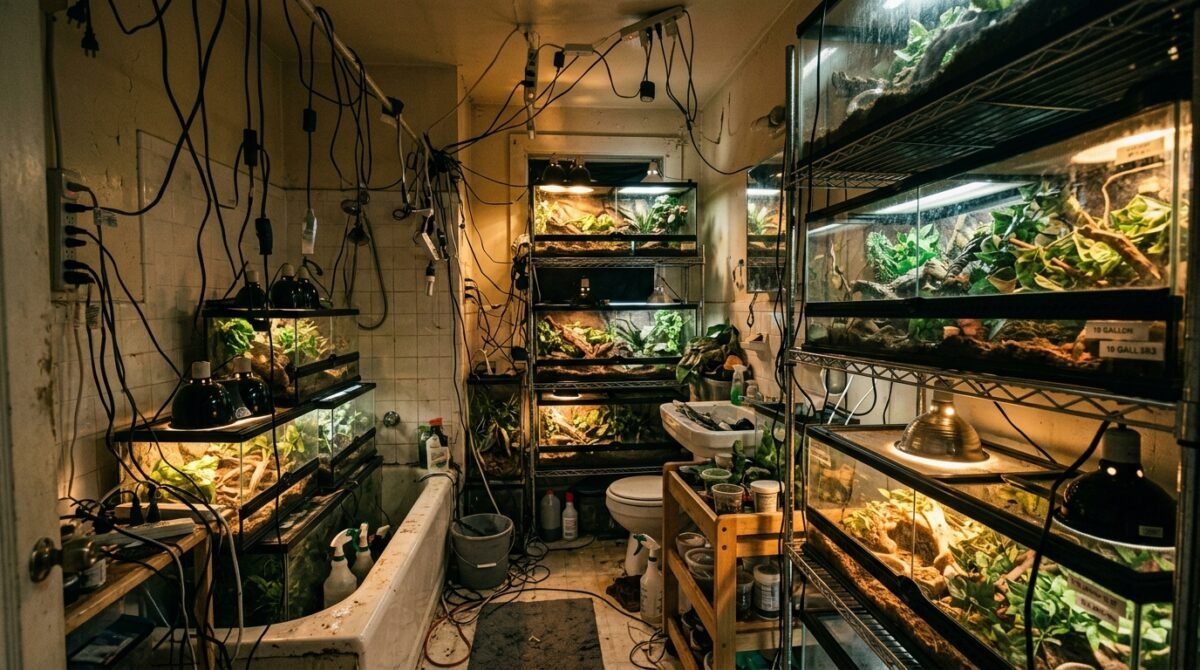
The transformation of our master bathroom was subtle at first. It began with a singular heat mat placed on the vanity, which I barely noticed during my morning routine. Mark told me he was helping a friend ‘foster’ a sick reptile for a week, and being the empathetic roommate, I agreed without hesitation. I should have checked the lease agreement clause regarding pets, but I trusted him. That trust proved to be the most expensive mistake of my life.
Within two weeks, the foster gecko was joined by two more tanks. Then came the crickets—thousands of them, chirping at all hours of the night. The smell was the first real indicator that something was fundamentally wrong. It was a musky, earthy scent that permeated the towels and even my clothes hanging in the nearby closet. When I asked Mark about the smell, he dismissed it as ‘part of the ecosystem maintenance.’ He was acting erratic, spending hours in the bathroom with the door locked, talking to the animals in low, hushed tones.
“Mark, I can’t even brush my teeth without stepping over bags of substrate. The bathroom is for both of us, not for your side-hustle. When are these going back to your friend?”
— Me, during the first confrontation
Mark’s response was immediate and defensive. He claimed he was doing important conservation work, that the animals were endangered, and that he was basically a saint for taking them in. He turned the conversation around on me, calling me ‘insensitive’ and ‘unsupportive’ of his ‘life mission.’ I walked away feeling like the villain, even though I was the one paying half the rent and losing access to my own bathroom.
The density of the equipment continued to grow. He installed industrial-grade UV lighting that caused the power to flicker in the hallway, and he tapped into the main sink supply to run a drip system for the tanks. It was a complete disaster waiting to happen. The humidity levels were so high that the paint on the walls started to bubble and peel. I realized then that this was never about ‘fostering’; this was an obsession that had spiraled completely out of control.
The Moment of Terrifying Discovery
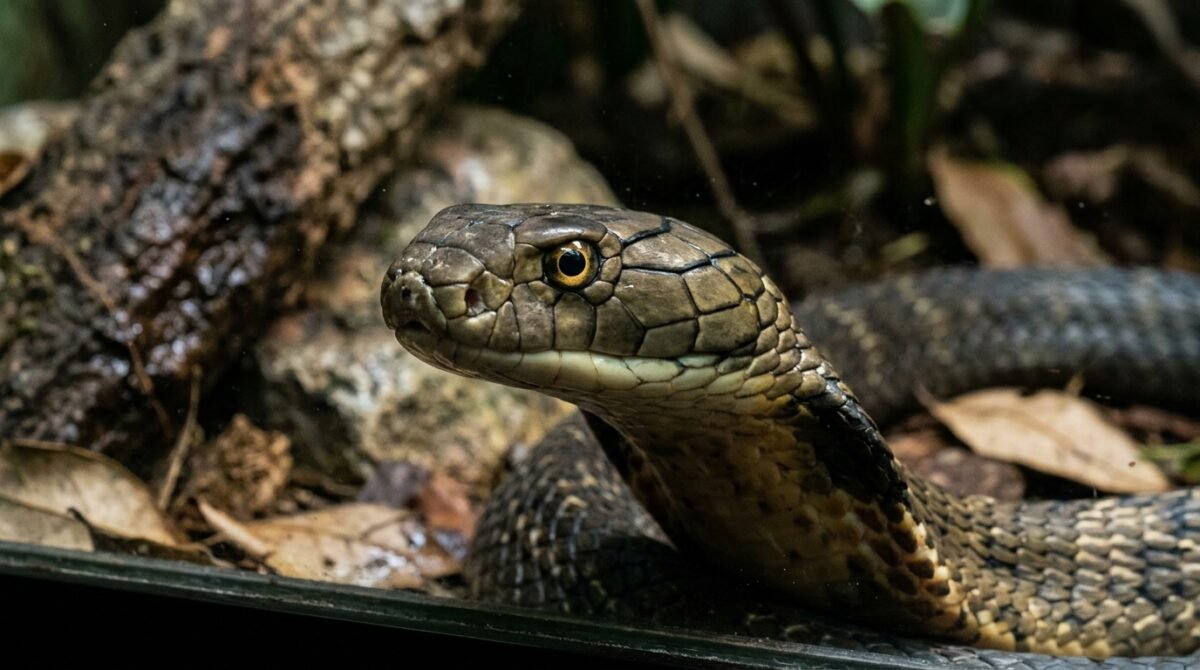
The breaking point occurred on a Tuesday evening when I came home early from work to find the master bathroom door left ajar. I hadn’t planned on looking inside, but the sight of a large, thick-bodied snake stretched across the vanity caught my eye. It wasn’t a gecko. It was a viper, its head triangular and alert, flicking its tongue toward the door. My heart stopped. I didn’t know what kind of snake it was, but the sheer size and the predatory stillness were enough to trigger every primal fear in my brain.
I backed away slowly, my hands trembling as I reached for my phone. I didn’t confront him this time. I knew that if I did, he would just move the snake to a different spot or hide it better. Instead, I took a photograph. I captured the snake and the massive monitor lizard in the shower, and then I took a video of the entire room, showing the sheer scale of his illegal menagerie. I was physically shaking as I walked out of the apartment to clear my head.
“I know what’s in there, Mark. I saw the viper. You need to get them out by tomorrow or I’m calling the landlord. This is insane and completely illegal.”
— My text message to Mark
He didn’t respond for hours. When he finally did, his tone was terrifyingly calm. He told me that I was ‘overreacting’ and that the snake was ‘de-venomed’—a claim I knew was likely a lie or, worse, a dangerous gamble if he was doing it himself. He told me that I didn’t understand the ‘specialized care’ these animals required and that they were ‘perfectly safe’ if I just left them alone. I sat in a coffee shop, staring at his text, realizing that he had completely lost touch with reality.
The realization settled in that I couldn’t trust him to manage the situation safely. If that snake escaped, it wasn’t just his life; it was mine, and potentially the lives of our neighbors. I felt the walls of the apartment closing in on me. I had to get out, but I couldn’t just move; I was on the hook for the lease. I needed a way to force his hand, and that meant bringing in the authorities.
The Municipal Animal Control Intervention
I didn’t call the police; I knew they wouldn’t know how to handle a private collection of exotic reptiles. I called the municipal wildlife and animal control office directly. I provided the video evidence, the address, and the details about the lack of permits. The officer on the other end was professional but stern. He told me that keeping venomous animals in a residential apartment was a major violation of city bylaws and posed a significant public safety risk.
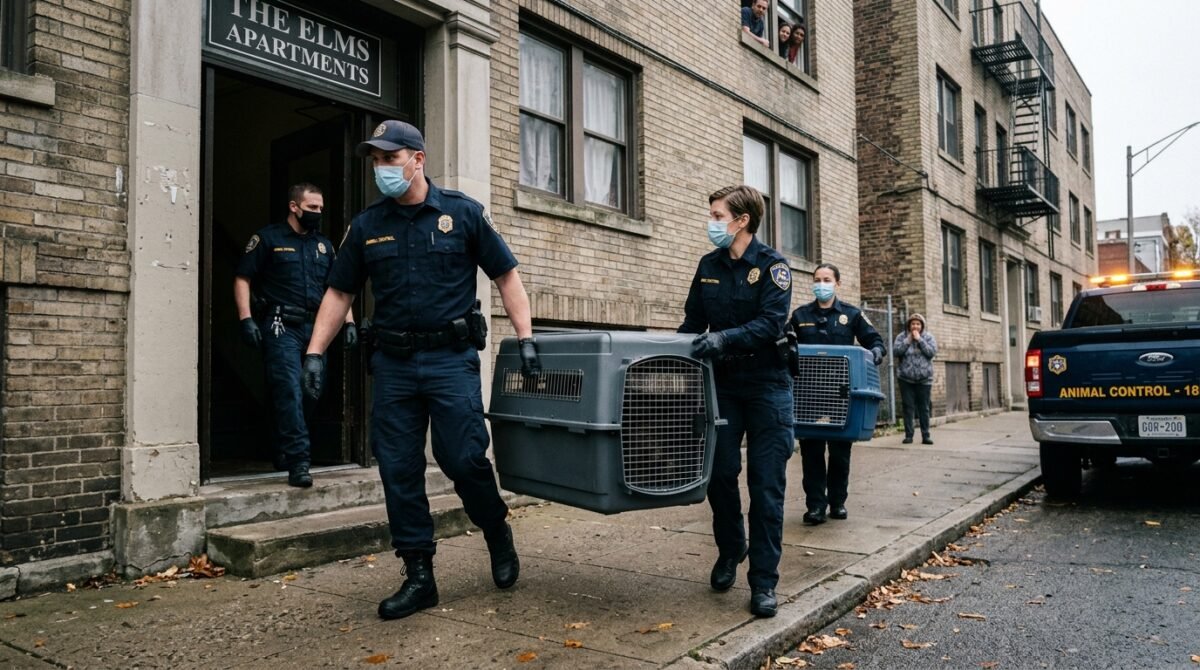
The day of the inspection was a whirlwind of anxiety. I told Mark I was going to be out of the house for most of the day, but I stayed in the neighborhood, watching from my car. The animal control team arrived in a marked truck, two officers in heavy-duty gear. I watched as they walked up to the building, and my heart raced. I had given them a spare key to the front door, which I had retrieved earlier that morning under the guise of ‘cleaning’ the entryway.
“We have a report of dangerous, exotic wildlife being housed at this address without a permit. Please open the door or we will be forced to enter under warrant.”
— Animal Control Officer to Mark
I could hear the shouting from the street. Mark was screaming, claiming his rights were being violated, that his animals were his family. The officers remained calm, executing their duties with mechanical precision. I watched as they emerged ten minutes later, carrying large, secure crates. They had found the viper, the monitor lizard, and three other smaller, venomous snakes that I hadn’t even known existed. The look on Mark’s face as he was led out in handcuffs was one I will never forget.
The apartment was declared unsafe for habitation due to the biohazard of the reptile waste and the potential presence of escaped pests. I felt a strange sense of relief, but also profound exhaustion. I had nuked my living situation, but I had also potentially saved lives. As the truck pulled away, I realized that I had to go back inside and lock everything down. I didn’t want him coming back here, not while he was in such a volatile state.
Changing the Keypad and the Fallout
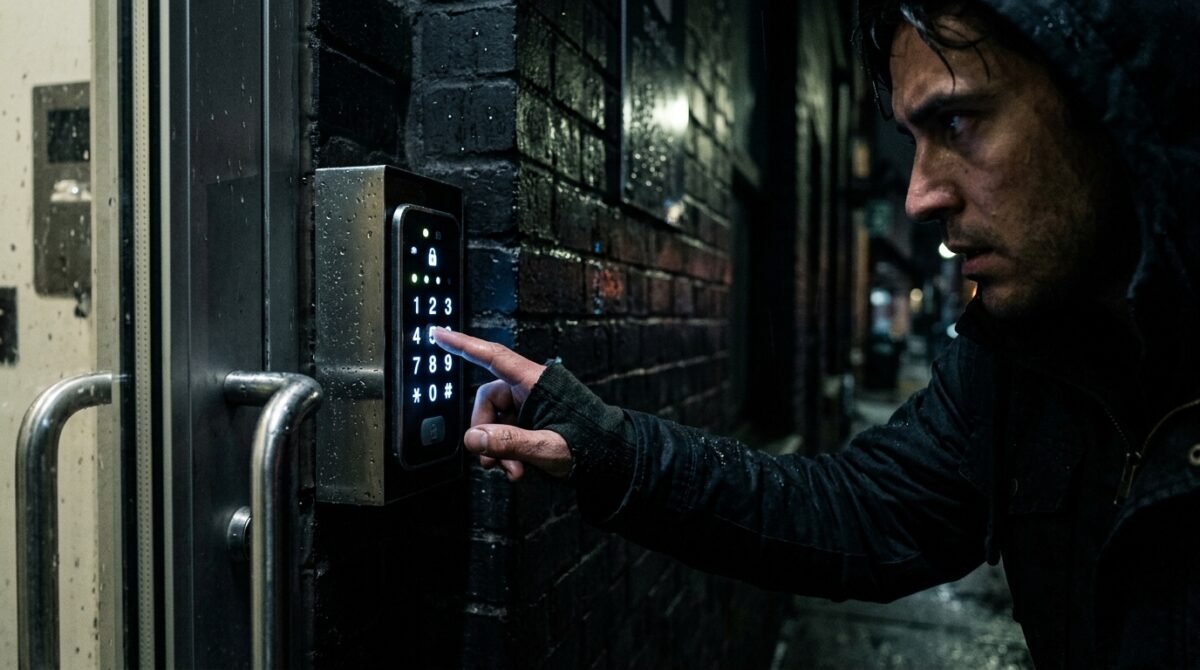
I knew Mark would be out on bail or released quickly, and I knew he would head straight back to the apartment to gather his things—or worse, to confront me. Before he could return, I contacted the property manager, explained the situation with the police report, and obtained authorization to change the electronic keypad access code. I felt like a spy in my own home, punching in the new sequence, my fingers trembling against the plastic buttons.
The silence in the apartment after they left was deafening. The bathroom still smelled like wet earth, and the empty terrariums looked like skeletons of a project that had consumed a human being. I spent the next six hours scrubbing the walls with bleach, trying to erase the memory of the vipers and the monitor lizard. I felt a deep, profound sense of violation. My sanctuary had been turned into a snake pit, and I was just now coming to terms with the reality of it.
“I am at the door. Why isn’t the code working? Open the door, you absolute traitor. You ruined everything. You had no right!”
— Mark, via text message, 8:00 PM
I didn’t respond. I kept the lights low and stayed in the living room, watching the security camera I had set up in the hallway. I saw him pacing back and forth, pounding on the door, then leaving, only to return an hour later with a duffel bag. It was harrowing. I realized then that he wasn’t just angry; he was delusional. He genuinely believed that what he was doing was noble and that I was the one who had committed an unforgivable act of betrayal.
I spent the night with a kitchen knife tucked under my pillow, not sleeping, just listening to the hum of the refrigerator. Every creak of the floorboards sounded like a serpent slithering, a testament to the lingering trauma of the past few weeks. I knew I couldn’t stay here long-term, but for tonight, the lock was holding, and that was enough. The aftermath of my decision was just beginning, and I braced myself for the legal nightmare that was sure to follow.
The Digital Firestorm
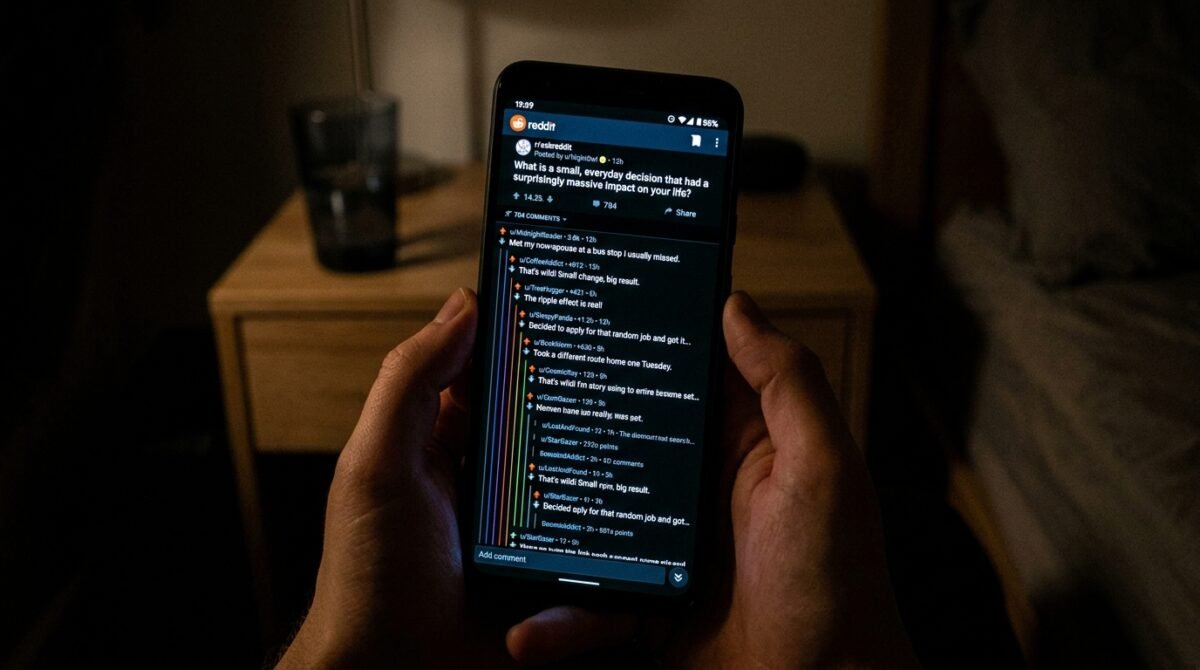
By the next morning, Mark had already taken to social media to smear my reputation. He posted in several local community groups, framing me as a heartless animal killer who destroyed a ‘rescue center’ for pets. He left out the fact that they were venomous, illegal, and poorly kept. The backlash was immediate. I started receiving messages from people I barely knew, accusing me of cruelty, calling me names, and even threatening my safety.
I knew I had to control the narrative. I didn’t want to engage in a public mud-slinging match, but I couldn’t let his lies stand. I wrote a single, factual post on a local subreddit, describing exactly what had happened, including the mention of the venomous snakes and the hazardous living conditions. I attached a redacted copy of the animal control report to verify my claims. The response was immediate and overwhelming, but in the opposite direction of what Mark had expected.
“If anyone needs context on the ‘reptile rescue’ post going around, the truth is that the roommate was housing unpermitted venomous snakes in a shared bathroom. Animal Control confirmed it. Don’t believe the lies.”
— My Reddit post, which went viral within hours
The community quickly turned on him. People were horrified by the idea of living with venomous snakes, and the discussion shifted from animal rights to basic public safety and tenant responsibilities. I felt a wave of validation wash over me as the comments rolled in. It wasn’t about winning an argument; it was about the truth being recognized. Mark stopped posting, realizing that he had lost the court of public opinion.
Despite the internet support, the personal anxiety remained. I felt like the walls of the apartment were still stained with the presence of those animals. I had to figure out a way to break the lease legally, or at the very least, sublet the room to someone who wouldn’t try to turn the bathroom into an Amazonian jungle. The process was daunting, but for the first time in months, I felt like I had the upper hand.
The Legal Tangle and The Lease Break
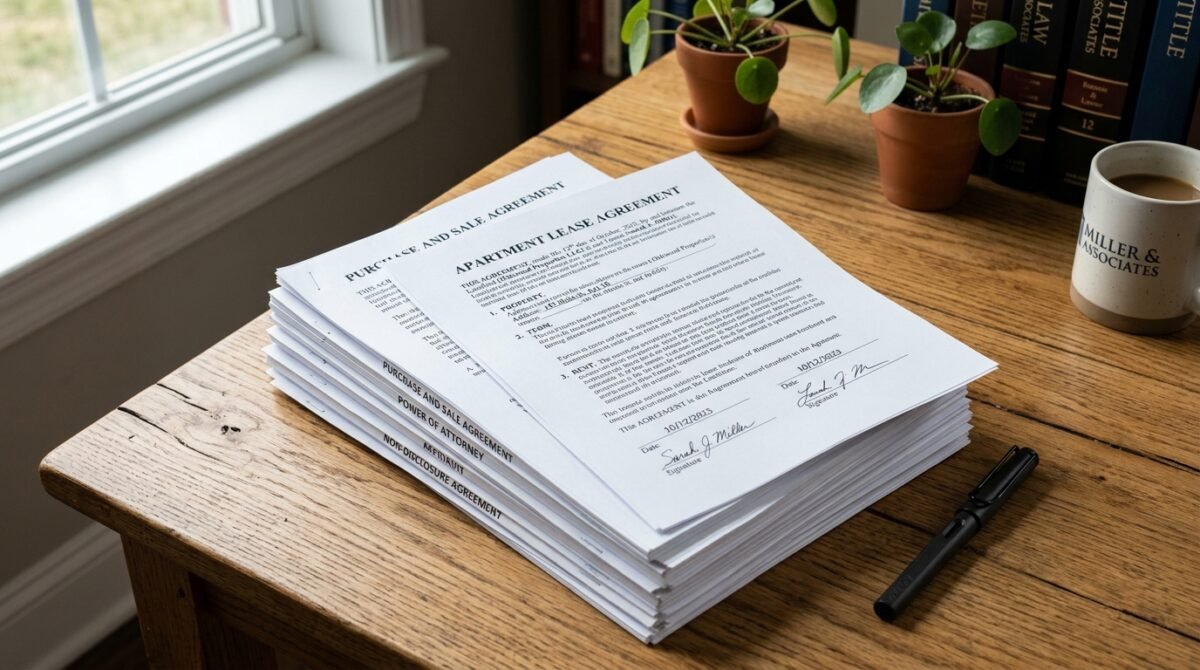
Navigating the legal fallout was perhaps more exhausting than the discovery itself. My landlord was furious, not just at Mark, but at the potential liability the entire incident had created for the building. They were threatening to evict both of us, which was a nightmare scenario. I had to prove that I was not complicit, that I had acted as soon as I realized the severity of the situation, and that I was the one who initiated the call to authorities.
I spent an entire day with a lawyer, going over the lease agreement and the correspondence between Mark and me. The lawyer was shocked by the audacity of the situation. He helped me draft a formal letter to the property management company, detailing the timeline of events and providing evidence that I had attempted to resolve the issue informally before escalating to municipal animal control. It was a tedious process, but it was necessary to protect my credit and my reputation.
“We have reviewed your evidence, and given the nature of the safety violations caused by your roommate, we are willing to offer a mutual lease termination provided you move out by the end of the month.”
— Email from Property Management
That email was the best news I had received in months. It was a ticket out of the nightmare. I spent the next two weeks frantically packing, trying to get rid of every item that had been in that bathroom. I threw away towels, shower curtains, and even some of my own toiletries. I wanted a fresh start, a clean slate. I didn’t care about the money I was losing; I just wanted to be free of the association.
Mark tried to contact me multiple times during this period, but I blocked him on every platform. I left his belongings in a pile in the hallway, as per the legal instructions I received. I didn’t want any more interactions. Every time the elevator dinged, my heart would leap into my throat, fearing it was him returning to exact revenge. The fear was irrational, but it was real. I was a prisoner in my own home, counting down the days until I could finally leave.
Community Reactions: The Reddit Debate
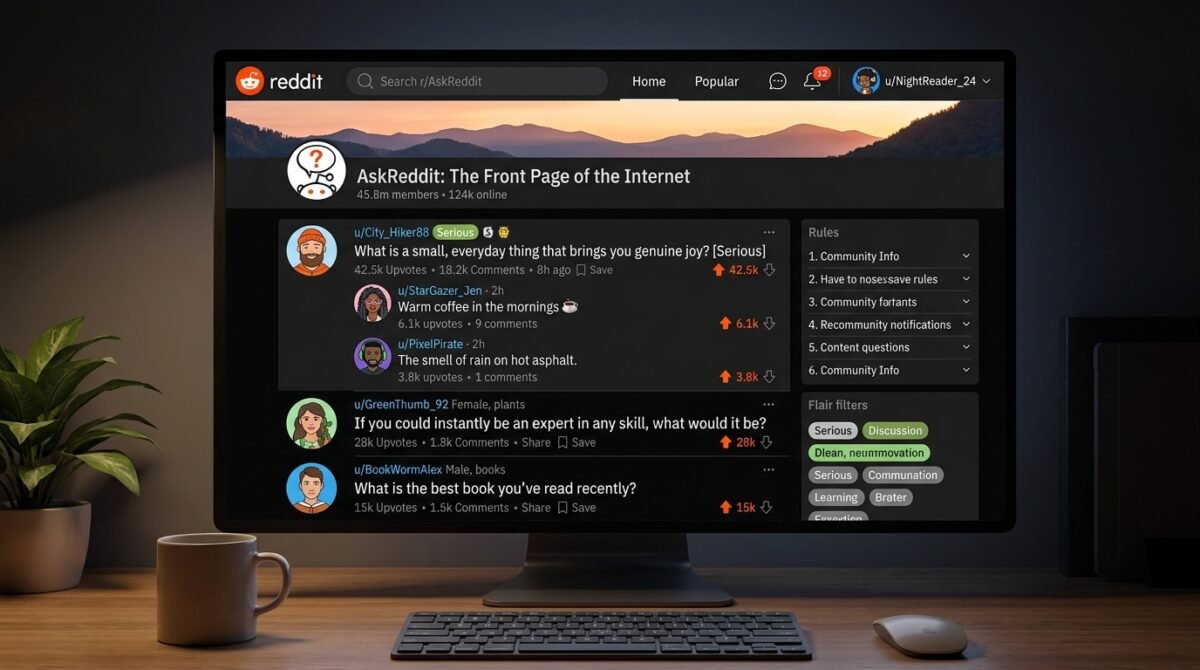
The Reddit thread I started continued to grow, attracting thousands of comments from all over the world. The discourse was fascinating—a mix of legal advice, shock, and personal anecdotes about bad roommates. Many people were on my side, calling me a hero for stopping what could have been a fatal accident. Others were more nuanced, debating the ethics of exotic pet ownership and the importance of professional training.
“NTA. You literally saved lives. People underestimate how fast a venomous snake can strike, and keeping them in a shared space is sociopathic. You did the right thing.”
— u/ReptileExpert99 (Top Comment, 15.2k upvotes)
Some commenters argued that I should have confronted him sooner, or that I should have tried to work with him to find a better location for the animals. These comments were fewer and far between, usually met with swift rebuttals from people who pointed out that Mark had clearly demonstrated a lack of respect for boundaries or safety. It was interesting to see how the internet analyzed my moral dilemma in real-time.
“ESH. He’s obviously the worse one, but you let this go on for months. You should have called animal control the moment you saw the first sign of neglect. Your hesitation put you both in danger.”
— u/RealistRoomie (Controversial Comment, 2.1k upvotes)
The ‘ESH’ (Everyone Sucks Here) crowd provided a sobering perspective that I actually appreciated. It forced me to look at my own passivity. Why did I wait? Why did I try to be nice when my safety was at risk? It was a lesson in setting boundaries that I would carry with me for the rest of my life. The digital community became a sounding board for my own growth, helping me process the trauma through the lens of collective experience.
I eventually stopped checking the thread, as the notifications became overwhelming. But the fact that so many people felt invested in the outcome was strangely comforting. It reminded me that I wasn’t alone in this, and that there are people out there who value safety and respect as much as I do. The story had become a cautionary tale for thousands of people, and I felt a small sense of pride in that.
The Final Move-Out
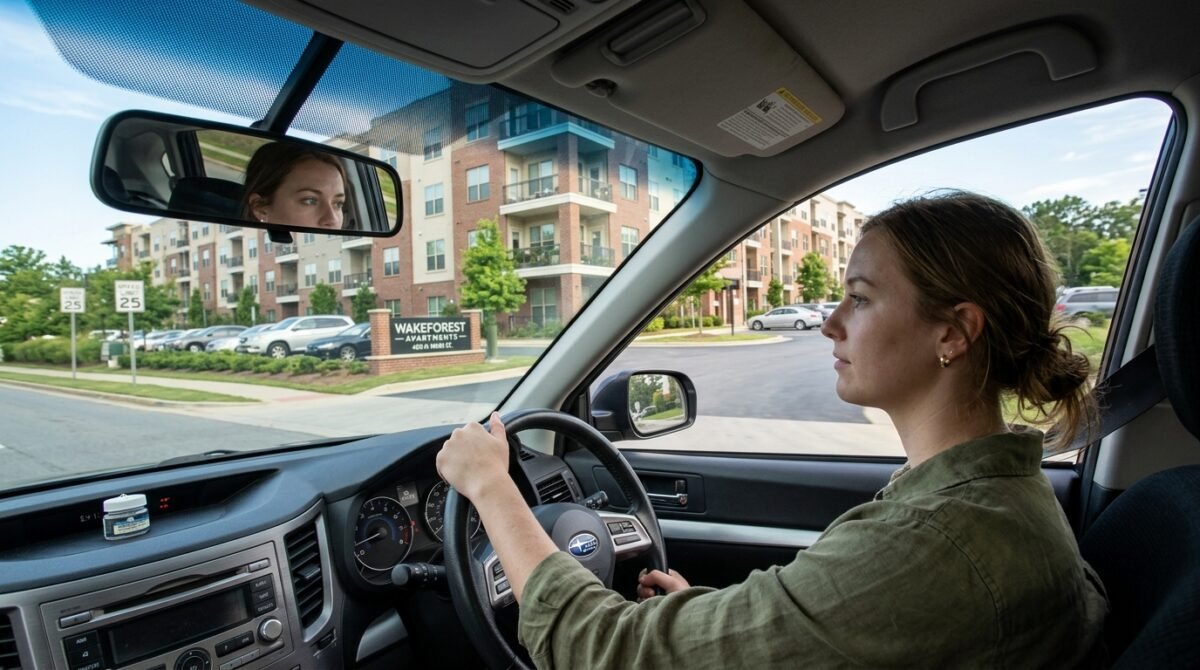
The day I moved out was one of the coldest of the year. I hired professional movers, refusing to let any of my friends help me because I didn’t want them anywhere near the apartment. I watched as they packed my boxes, moving with efficiency. The apartment felt empty, stripped of its life and its danger. I took one last look at the bathroom, now clean, bleached, and devoid of life, and felt an immense weight lift off my chest.
I returned the keys to the management office and sighed as I handed them over. I was finally done. I drove to my new place, a small, quiet studio where I lived alone. No roommates, no shared bathrooms, and absolutely no pets except for a goldfish that I knew wasn’t going to surprise me in the middle of the night. It felt like freedom, pure and simple.
“I’m sorry it ended this way. I just wanted to build something special. You never understood the beauty of what I was creating.”
— A final, handwritten note found on my car windshield
Finding that note on my windshield made my blood run cold. He still didn’t get it. He still thought what he was doing was a beautiful, misunderstood project. It confirmed that I had made the right decision. There was no reasoning with someone who viewed a living space as his personal jungle at the expense of others. I threw the note in the trash without reading it again and drove away, never looking back.
I spent the first night in my new apartment just sitting on the floor, listening to the silence. It was a beautiful, mundane silence. No chirping crickets, no rustling scales, no shouting matches. I was safe. I was at peace. The nightmare was over, and I was ready to start living my life again, one boundary at a time.
Lessons Learned in Boundary Enforcement

Looking back at the entire ordeal, the biggest lesson I learned was the importance of immediate boundary enforcement. I had allowed myself to be a ‘nice’ roommate at the cost of my own mental and physical well-being. I thought that by being flexible, I was being a good person, but in reality, I was enabling behavior that was fundamentally unsafe. I had to learn that ‘no’ is a complete sentence and that boundaries are not negotiable.
I also realized that I needed to be more careful about who I live with. I had prioritized the convenience of the location and the low rent over the compatibility and the character of my roommate. I didn’t do a background check, I didn’t ask enough questions, and I didn’t pay attention to the red flags until it was almost too late. In the future, I will always prioritize my gut feeling over a lease agreement.
“Setting boundaries isn’t about being mean; it’s about preserving your own sanity and safety. Never feel guilty for putting yourself first when someone else is trampling on your life.”
— Advice from my therapist during the recovery process
The recovery process took time. I had nightmares for months about snakes and reptiles. I found myself checking every corner of any new room I entered. It was a form of PTSD that I hadn’t expected, but with the help of therapy, I was able to move past it. I learned that it’s okay to be vulnerable, and it’s okay to ask for help when things get out of hand.
I’m sharing this story not for the clicks or the drama, but because I want others to know that they don’t have to tolerate a living environment that makes them feel unsafe. If you are in a situation where your roommate is violating your rights, you have the power to take action. You don’t have to be a martyr for the sake of a friendship or a lease. Your safety is worth more than any social contract.
Where I Am Today

It has been over a year since I moved out, and I’m in a much better place. I’m living in a quiet, independent apartment, and I’ve never been happier. I still think about the experience from time to time—usually when I see a reptile at a zoo—but the fear is gone. It’s been replaced by a quiet sense of triumph. I stood up for myself when it mattered most, and I survived to tell the tale.
Mark, as far as I know, is still facing legal consequences for his actions. He was fined, his animals were confiscated, and he lost his right to keep exotic pets in the city. I don’t feel any malice toward him; I just feel pity. He lived in a world of his own making, and it cost him everything. I hope he finds the help he clearly needs, but I know that it won’t be with me.
“You’ve come so far since the incident. It’s amazing how much one bad situation can teach you about your own strength.”
— My sister, during a recent conversation
I’ve become much more confident in my daily life, too. I find it easier to say no to things that don’t serve me, and I’m much more attuned to the people I let into my inner circle. The ordeal, as terrifying as it was, became a catalyst for personal growth. I’m not the same person I was when I signed that lease, and in many ways, I’m grateful for that.
So, to anyone reading this who is currently dealing with a nightmare roommate or a living situation that doesn’t feel right: listen to your gut. Do the research, document everything, and don’t be afraid to pull the trigger on the changes you need to make. You deserve a home that feels like a sanctuary, not a cage. Don’t settle for anything less.
Conclusion
My experience is a stark reminder that we often allow toxic situations to fester because we are afraid of being the ‘problem.’ We rationalize, we negotiate, and we accommodate, all while our own peace of mind slowly erodes. The reality is that true boundaries are the foundation of any healthy relationship, and when those boundaries are repeatedly violated, silence is no longer an option.
Ultimately, I chose my safety over a flawed social arrangement. It wasn’t an easy choice, and it certainly wasn’t without its challenges, but it was the only one that allowed me to reclaim my life. The snakes, the lizards, and the broken trust are now just a memory, a strange chapter in my life that taught me more about resilience than I ever wanted to know.
I invite you to share your own experiences in the comments below. Have you ever had a roommate situation that spiraled out of control? What was the moment you realized it was time to leave? Let’s discuss how we can better support each other in maintaining healthy, safe living environments. Your stories might just be the encouragement someone else needs to make their own stand.
What's your verdict on this dilemma?
Vote below to contribute to the official community consensus.

Have a Dilemma Keeping You Up at Night?
Share your real-life feud, wedding chaos, or relationship crossroads anonymously with our editorial team.
What do you think ?
0 Comments🛡️ Comments are moderated to protect community integrity. Your comment will appear once approved by the editorial team.