
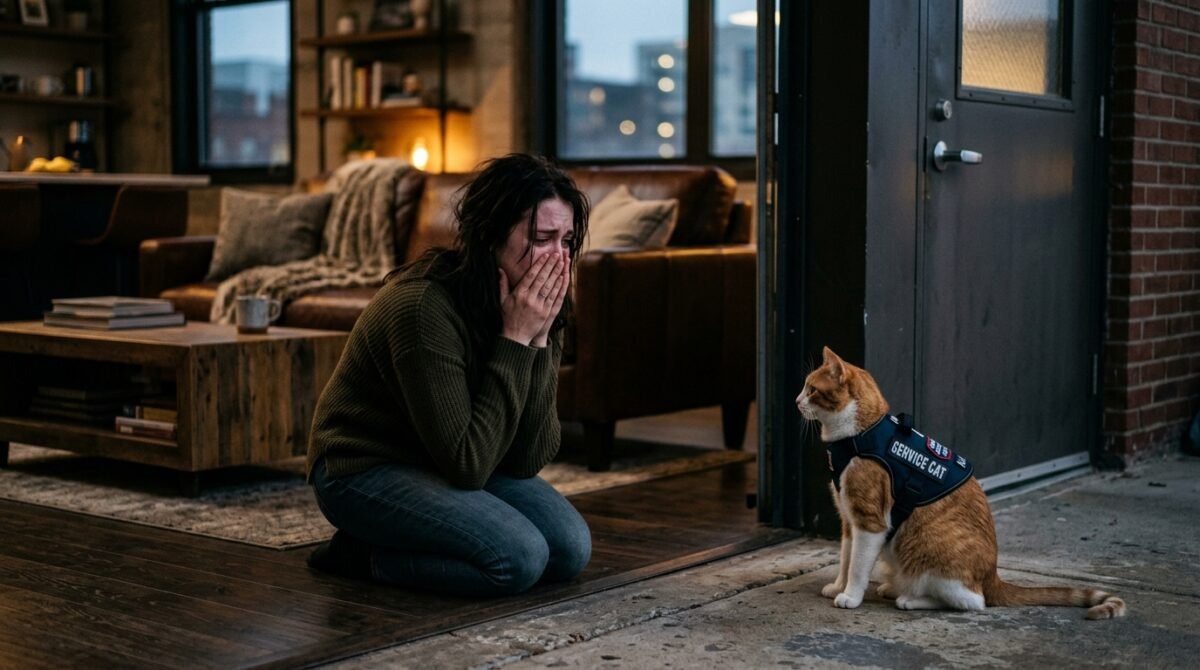
Living with Type 1 diabetes is a constant, invisible labor. For years, I managed with monitors and alarms, but the constant nocturnal lows were destroying my health. Then came Barnaby. He wasn’t just a pet; he was a certified Diabetic Alert Cat, a feline with an uncanny, life-saving ability to smell the chemical shift in my breath when my blood sugar plummeted. He was my heartbeat’s bodyguard, trained to wake me at 3:00 AM if my glucose levels dropped into the danger zone. My husband, Mark, knew this when we married. Or so I thought.
The trouble began the moment the delivery truck pulled up to the driveway. Mark had been obsessed with the ‘aesthetic’ of our home for months, dismissing my concerns about practical living as ‘clutter.’ When the Italian leather sectional arrived—an obscenely expensive piece that looked like it belonged in a museum rather than a home with a cat—the atmosphere in our house shifted. It became a temple to interior design, and I, along with my medical needs, became an inconvenience to that vision.
It wasn’t a slow build; it was an ultimatum. Mark claimed the cat’s ‘claw potential’ was too great a risk for his new status symbol. I tried to explain that Barnaby wasn’t a regular cat—he was a medical device, a vital member of my healthcare team. But Mark’s eyes had already glazed over, fixed on the sheen of the leather. He didn’t see a life-saving companion; he saw a potential scratch on his premium investment.
The night he locked Barnaby in the garage was the night I realized that my husband didn’t value my survival as much as he valued his comfort. As I lay in bed, listening to Barnaby’s faint, distressed meowing through the wall, I realized the silence in the room was deafening. My monitor wasn’t enough. I needed my partner in health, and I had realized that the man lying next to me had become the biggest threat to my well-being.
What followed was not a dramatic shouting match, but a cold, calculated dismantling of a life we had built together. I didn’t scream. I didn’t beg. I packed a bag, I found a rental, and I made a decision that would leave him sitting on his precious leather couch in an empty house. This is the story of how I chose my life over a man who put a sofa before my pulse.
The Arrival of the $4,000 Leather Altar

The couch was more than furniture; it was a monolith. It took up two-thirds of our living room, a sprawling, caramel-colored beast that Mark had spent three months scouting. When I told him the cat would likely jump on it, he laughed—a cold, dismissive sound that I should have recognized as the first warning sign. I reminded him that Barnaby had a specific, trained routine that included patrolling the living space, a routine that kept me safe while I slept.
Mark insisted on ‘professional training’ for the cat, as if Barnaby were a puppy who hadn’t already passed his medical certification. He brought home sprays, covers, and a firm, angry tone that made me uncomfortable. ‘It’s a cat, Sarah. We have to train it to respect the furniture, or it has to go,’ he said, not looking at me, but at the way the sunlight hit the leather grain.
“I didn’t buy this house to have it shredded by a creature that smells like litter. Either the cat stays off the furniture, or the cat finds a new place to sleep. My comfort is just as important as your medical stats.”
— Mark, during the first confrontation
I felt a chill run down my spine. This wasn’t about a scratch; it was about control. The cat was a living, breathing entity that Mark felt he could dictate to, just as he tried to dictate the decor. He treated my medical necessity as an annoyance, a flaw in the design of his perfect domestic life. I found myself apologizing for the cat’s existence, even though Barnaby had saved me from a coma three separate times in the past year alone.
He started closing doors. Rooms that were once open to us were suddenly ‘off-limits.’ He moved the scratching posts into the basement, effectively limiting Barnaby’s range. The cat, sensing the tension, started becoming anxious, and an anxious cat is a cat that looks for comfort—usually on the sofa. I saw the look of pure, unadulterated rage in Mark’s eyes the first time he found a single, microscopic thread pulled from the upholstery.
I tried to mediate. I bought expensive, heavy-duty covers. I groomed Barnaby daily. I kept the cat’s nails trimmed short. But nothing was enough. The goalpost kept moving. It wasn’t about the sofa anymore; it was about the fact that I was prioritizing something that wasn’t under his total control. I was a passenger in his life, and my medical needs were a detour he no longer wanted to take.
Looking back, I see the pattern. He wanted a magazine-spread life, and my chronic illness—and the cat that helped me manage it—were the ugly, messy edges that needed to be trimmed away. I was so blinded by the idea that we were a team that I didn’t see him preparing for a solo life where I was merely an accessory to his aesthetic vision.
The 3:00 AM Garage Lockdown

It happened on a Tuesday night. I was exhausted from work, and after a quick dinner, I fell into a deep sleep. I was woken up not by Barnaby’s gentle nudging against my neck, but by the heavy, thudding sound of the garage door closing from the inside. I jumped up, heart pounding, and realized the room was eerily silent. My blood sugar monitor was buzzing, but I was disoriented.
I ran downstairs, my breath catching in my throat. Mark was sitting on the couch, drinking wine, his face illuminated by the glow of the TV. When I asked where the cat was, he didn’t even turn around. He pointed a thumb toward the heavy steel door leading to the garage. My blood ran cold. The garage was unheated, cold, and dark.
“I found him on the back cushion. I’m not having it anymore, Sarah. He’s going to spend the night out there until he learns that the living room is a no-fly zone. Don’t look at me like that. He’s a cat. He’ll survive a few hours of discipline.”
— Mark, moments after banishing the cat
I didn’t say a word. I walked straight to the garage, shivering as I opened the door. Barnaby was huddled in a corner, his fur puffed out, terrified. I scooped him up, his little heart hammering against my chest. As I carried him into the laundry room, I felt a shift in my own heart. The anger I had been suppressing for months turned into a cold, sharp resolve. This wasn’t about the couch. This was about my autonomy and the safety of my support animal.
I didn’t bring Barnaby back into the living room. I set up a bed for him in the guest room, locked the door, and went to bed. I didn’t say a word to Mark. The silence that night was different—it was the sound of a bridge burning. I lay in the dark, staring at the ceiling, thinking about the fragility of my health and the even greater fragility of my trust in the man beside me.
Mark followed me to the bedroom, complaining about the ‘drama.’ He tried to touch my arm, but I recoiled as if he had burned me. He didn’t understand. To him, this was a minor domestic dispute. To me, he had just proven that he was willing to compromise my safety for the sake of a piece of furniture. That realization was the final nail in the coffin of our relationship.
I stayed awake until dawn. I wasn’t crying; I was planning. I looked at the bank accounts on my phone, checking the savings we held separately. I looked at the lease documents for a small apartment in the city that I had been keeping an eye on ‘just in case.’ The ‘just in case’ had arrived, and it was time to act.
The Silent Departure

The next morning, Mark left for work, assuming I was still the submissive wife who would eventually ‘get over it.’ I waited until his car turned the corner, then I started moving. I didn’t pack everything—just the essentials, my documents, my medical supplies, and Barnaby. I packed the cat’s carrier, his food, and his favorite toys. I was methodical, focused, and completely devoid of emotion.
I had already signed the digital lease for a quiet, one-bedroom apartment near the clinic. It wasn’t fancy. It wasn’t the designer home Mark wanted. But it was safe, and it was mine. I left a note on the kitchen counter, right on top of the pristine, untouched leather couch. It wasn’t a long letter. It didn’t need to be.
“You wanted your house to be a museum. Congratulations, you’ve succeeded. It’s empty. Barnaby is my medical support, and you made it clear that your couch matters more than my health. I’m done. Do not call me.”
— The note left on the leather couch
I took the spare key and left it on the kitchen island. I didn’t take any of the furniture we had bought together. I walked out with nothing but my life-saving cat and the clothes on my back. As I drove away, I felt lighter than I had in years. The weight of his expectations, his constant critiques, and his obsession with appearances vanished with every mile I put between us.
When I arrived at the new apartment, it was bare. There was nothing on the walls and no expensive rugs on the floor. I sat on the floor with Barnaby, who immediately climbed into my lap and began purring. He smelled the stress on me, and for the first time in months, we were both calm. I had no furniture, no plan for the weekend, and a mountain of legal paperwork ahead of me, but I had my health, and I had my companion.
The phone started buzzing an hour later. I didn’t look at it. I knew it was Mark, and I knew exactly what he would say. He would talk about the ‘inconvenience,’ the ‘irrationality’ of my exit, and, of course, the ‘damage’ to the house. I turned the phone off and put it in a drawer. I was out. I was free. I was finally breathing again.
My sister came over that evening with a pizza and a blow-up mattress. She didn’t ask questions; she just held me while I cried. She told me I did the right thing. ‘He never deserved you, Sarah,’ she said, her voice steady. ‘He wanted a doll, and you refused to play the part.’ That night, I slept for twelve hours straight, and Barnaby didn’t leave my side once.
The Family Group Chat Explosion
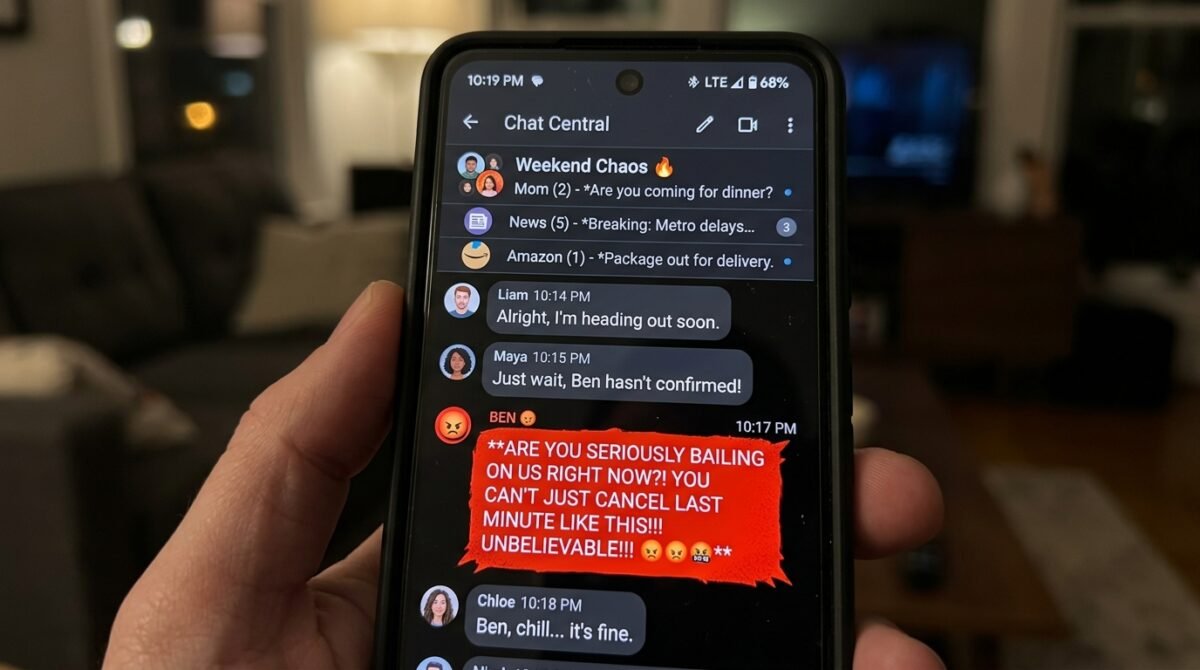
Two days later, I turned my phone back on. The notifications were a waterfall of anger, confusion, and condescension. Mark had obviously gone to his family, painting me as the ‘unstable’ wife who had abandoned him over a ‘cat issue.’ His mother, his sisters, and even his distant cousins had all chimed in, demanding I apologize and return to ‘fix’ the marriage.
“Sarah, this is ridiculous. It’s just a cat. Mark worked so hard for that house and the furniture. You’re being incredibly selfish. Come home and stop this tantrum before you ruin everything.”
— Mark’s mother, in the family group chat
I didn’t answer them individually. I typed out a single, definitive message and sent it to the group. I laid out the medical reality—that Barnaby was not a ‘pet,’ but a certified service animal. I explained the incident with the garage, the threats to my health, and the fact that my husband had prioritized an object over my survival. I didn’t use flowery language; I used the raw, cold truth.
The response was immediate. The group chat went silent for a few minutes before the tide started to turn. Some of the cousins, who had always felt intimidated by Mark’s perfectionism, started to privately message me. They revealed that Mark had been complaining about me for months—not about the cat, but about how I ‘didn’t fit the image’ he wanted to project. He had been looking for a reason to find fault with me, and the couch was just his chosen battlefield.
It wasn’t just the family; even his friends were divided. Some of the guys took his side, calling me a ‘drama queen,’ but others were horrified that he would lock a living creature in a garage in the middle of the night. The divide was stark, reflecting the values we all held. Mark’s ego was so large that he hadn’t realized that by exposing my ‘defiance,’ he had exposed his own cruelty.
I stayed out of the petty back-and-forth. I blocked the people who chose to harass me and kept the door open for those who truly wanted to know why I left. It was a litmus test for my social circle, and I was surprised by who stayed and who left. I lost a few ‘friends,’ but I gained a deeper appreciation for the people who actually cared about my life and safety.
By the end of the week, the group chat was a graveyard. Mark had stopped texting, realizing that his narrative wasn’t holding water. He had tried to spin it as a pet-owner dispute, but the ‘medical service animal’ detail was something he couldn’t spin away. People understood the difference between a pet and a medical necessity, and his reputation for being the ‘perfect husband’ was beginning to crack.
The Legal Reality Check

A week later, my lawyer reached out. Mark was threatening to sue for ‘damages’ to the house and was demanding that I pay for the ‘professional cleaning’ of the leather. He was acting as if I had burned the house down. It was almost laughable. He was so detached from reality that he thought he could leverage financial threats to get me back into his orbit.
I met with my attorney, a sharp woman who had dealt with cases like this before. She listened to the story, looked at the medical documentation for Barnaby, and laughed at Mark’s threats. ‘He has no case,’ she said, tapping her pen on the desk. ‘In fact, by locking your medical equipment—which is what your cat is legally classified as—in a freezing garage, he might have opened himself up to a much larger problem than a leather couch.’
“He wants to talk about damages? Let’s talk about the emotional distress and the potential medical endangerment. If he wants to take this to court, he’s going to have to explain to a judge why he put your life at risk for a sofa.”
— My lawyer, reviewing the potential lawsuit
The realization hit me: I was the one who had the leverage. Mark had been so focused on his own sense of entitlement that he failed to see the legal consequences of his actions. He was trying to bully me, not realizing that I was now armed with the truth and a legal team that understood exactly what he was doing. The ‘damages’ to the couch were nothing compared to the liability he had created for himself.
I told my lawyer to stand firm. I wasn’t going to pay for anything. I wasn’t going to negotiate the return of any property. I wanted a clean break. The thought of losing money for a sofa that had been the catalyst for my divorce felt like a final insult, and I refused to entertain it. If he wanted to spend his money on legal fees to pursue a lost cause, that was his choice.
The tension during those weeks was unbearable. I waited for the paperwork, dreading the next step, but it never came. I think deep down, Mark knew that if this went to a courtroom, he would be the one losing. He didn’t want the world to know the truth about his priorities. He wanted to maintain his image, and that image was incompatible with the truth of our marriage.
Eventually, the legal threats fizzled out. He stopped calling, stopped emailing, and stopped trying to reach me through family. The silence was the greatest victory I could have asked for. I was officially single, officially independent, and officially out of his reach. The leather couch was his, and he could sit on it until the end of time for all I cared.
The Reddit Trial: A Community Verdict
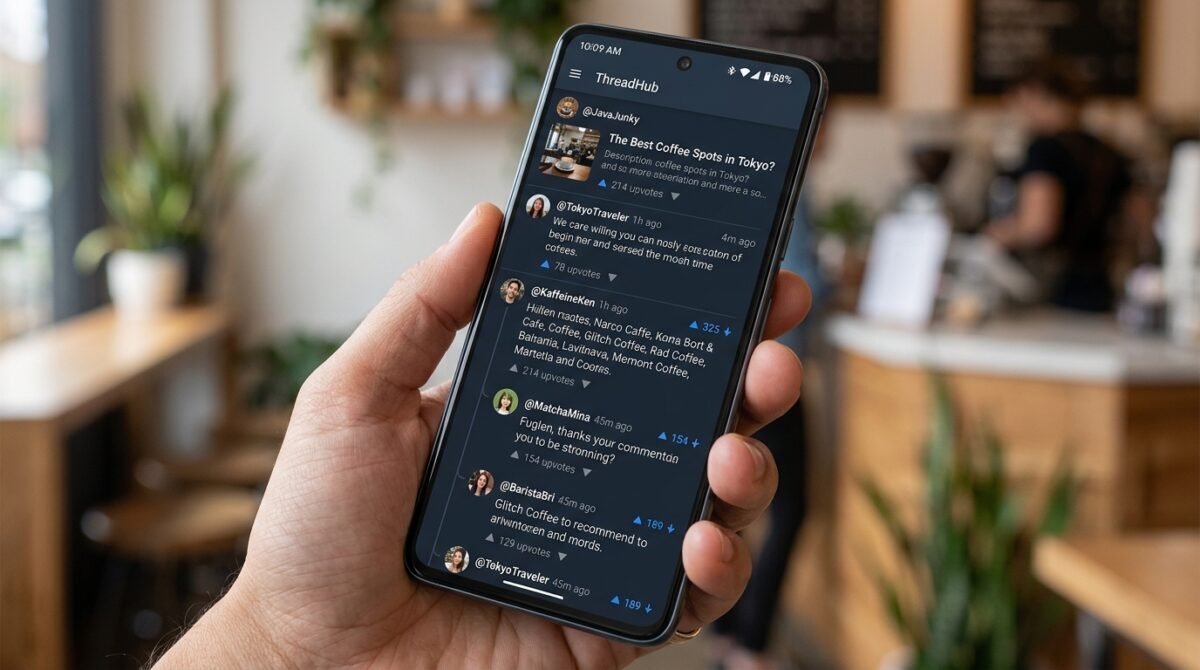
I finally posted my story on a popular forum, needing to know if I was truly the villain as Mark’s family had suggested. I expected a mix of responses, but I wasn’t prepared for the sheer volume of support. The internet, for all its toxicity, can sometimes be a place of raw, unvarnished truth. The verdict was swift, unanimous, and validating.
“NTA. Your husband didn’t just ‘banish a cat.’ He banished your medical equipment. He put your life in danger for a piece of furniture. That isn’t just a disagreement; it’s an act of domestic abuse. Don’t look back.”
— u/SupportiveHuman (Top Comment, 32.5k upvotes)
The comments sections were filled with stories of people who had been through similar situations—partners who prioritized things over people, spouses who minimized medical needs, and the slow, agonizing realization that they were being gaslit. It was as if I had opened a floodgate. Thousands of people shared their experiences, and I realized that my situation wasn’t an isolated incident; it was a common, insidious form of control.
Some users pointed out the financial aspect, analyzing why Mark was so attached to the couch. ‘It’s a power move,’ one user wrote. ‘He controls the environment, he controls the furniture, he controls you. When you took control of your own life by leaving, he lost his ability to manipulate the space.’ It was a psychological breakdown that made so much sense of his irrational behavior.
There were a few contrarians, of course. ‘Maybe you should have just trained the cat better,’ one user commented, but they were quickly drowned out by thousands of others who explained that service animals are not ‘pets’ to be trained like a common housecat. The educational aspect of the thread was profound, and I felt proud for standing up for the rights of service animal owners.
The support I received gave me the strength to stop second-guessing my decisions. For weeks, I had wondered if I had been too harsh, if I had overreacted, if I should have tried ‘one more time.’ The collective wisdom of thousands of strangers proved that I hadn’t overreacted—I had reacted exactly as I should have to save my own life.
I kept the thread active for a few days, answering questions and thanking people for their kindness. It was the closure I needed. I didn’t need Mark’s apology. I didn’t need his justification. I had the validation of thousands of people who saw the situation for exactly what it was. I was done with the drama, and I was ready to move on.
Finding My Rhythm Alone
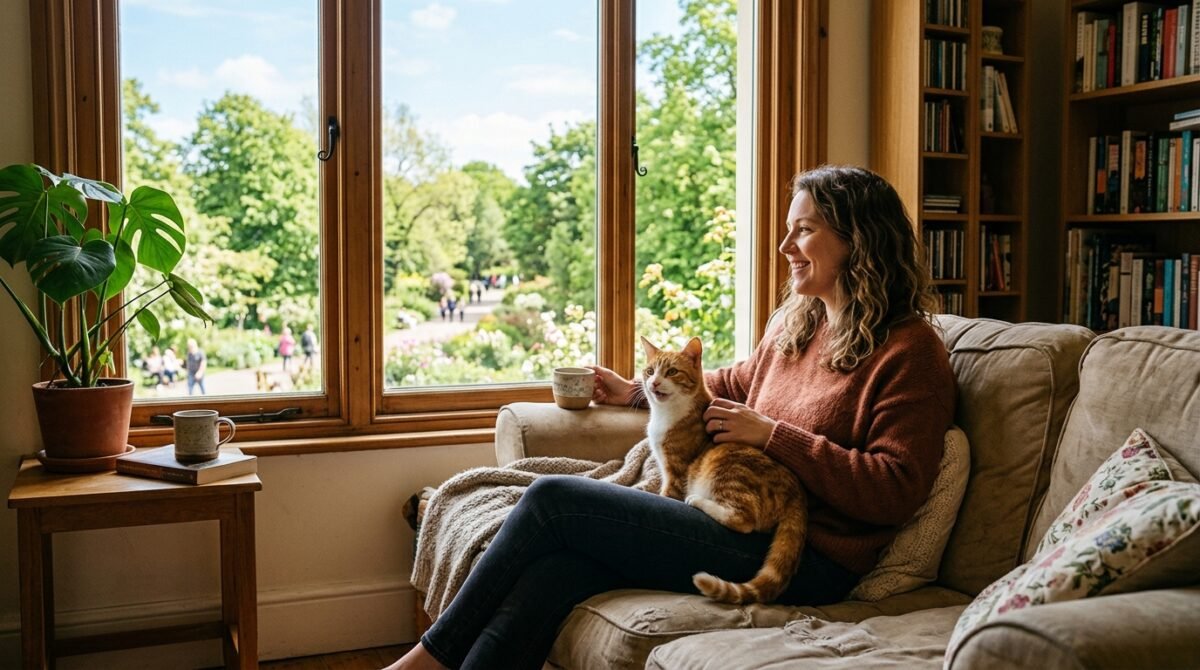
Life in the new apartment settled into a rhythm. It was small, but it was mine. I bought a second-hand sofa—one that was comfortable, cheap, and easily replaceable. Barnaby loved it. He would jump on the cushions, scratch the fabric, and chase his toys, and I never felt that flash of panic. I realized that my home was meant to be a place of comfort, not a showroom for a life I didn’t want.
My health improved dramatically. Without the stress of walking on eggshells, my blood sugar levels stabilized. Barnaby was once again an active, vibrant part of my life, his alerts becoming more accurate and less frequent as my own stress levels plummeted. We took long walks in the park, sat in the sun, and enjoyed the quiet of our new, unpretentious existence.
I started dating again, but very slowly. I was hyper-aware of red flags now. I looked for people who understood boundaries, who respected my needs, and who didn’t prioritize aesthetics over humanity. I found that I was much more confident, much more assertive, and much less willing to compromise on the things that mattered. I had learned the hard way that ‘partnership’ means nothing if you’re alone in the relationship.
The memory of the couch still makes me laugh—a bitter, hollow laugh. It was such a ridiculous, expensive, and fragile symbol of my former life. I often wonder if he still sits there, admiring the leather, waiting for a wife who isn’t coming back. I hope he’s happy. I hope the leather is as pristine as he wanted. And I hope, somewhere deep down, he realizes what he gave up for it.
I am stronger now. I am healthier. And most importantly, I am free. I have realized that the most important thing I can ever own is my own autonomy. No amount of money, no piece of furniture, and no status symbol is worth the sacrifice of my own happiness and safety. And I have a cat who taught me that, every single day.
The Final Echo: Looking Back

Years have passed since that day. I look back at the photos of our old living room, and I don’t see a beautiful house anymore. I see a prison. I see the carefully placed cushions, the perfectly angled lamps, and the cold, uninviting leather couch. I see a version of myself that was so desperate to please that she had forgotten how to exist. It’s a haunting image, but a necessary one.
Mark eventually moved on. I heard through the grapevine that he’s remarried to someone who ‘appreciates’ his taste. I wonder if they have a cat. I wonder if they have furniture that requires constant policing. It doesn’t matter. He was a chapter in my life, a difficult, painful, and enlightening chapter, but he is not the story. The story is about me—and Barnaby.
I’ve kept in touch with some of the people from the Reddit thread. We still message occasionally, sharing updates on our lives and celebrating the boundaries we’ve set in our own relationships. It’s a small, digital support group, but it’s real. It’s a testament to the fact that we are never truly alone when we stand up for ourselves.
My health is the best it’s ever been. Barnaby is an old man now, his coat a bit thinner, his jumps a bit less frequent, but his alerts are as sharp as ever. We are a team, through and through. We survived the couch, we survived the divorce, and we survived the fallout. We are the architects of our own peace.
If you’re reading this, and you’re in a situation where you feel like you’re losing yourself for the sake of someone else’s comfort, listen to your gut. It’s the most powerful tool you have. Don’t wait for a breakdown. Don’t wait for a sign. Just leave. The world on the other side of that door is bigger, brighter, and much, much more comfortable than any leather couch could ever be.
Reflections on Control and Care

When I think about the psychology of the situation, I realize that Mark wasn’t just obsessed with furniture; he was obsessed with the idea of a ‘perfect’ life. In his mind, anything that introduced entropy—like a cat, or a chronic illness, or a partner who had their own needs—was a failure. He wanted to curate a existence that was predictable and controllable.
But life is inherently messy. That’s the beauty of it. When we try to stifle the mess, we lose the life. Barnaby was the embodiment of the mess—the fur, the claws, the sudden medical alerts—but he was also the embodiment of the care. Mark couldn’t understand that the mess and the care were the same thing. He wanted the care without the mess, which is a fundamental misunderstanding of love.
I’ve learned that true partnership isn’t about maintaining an aesthetic. It’s about being there for each other in the ugliest, most vulnerable moments. It’s about the 3:00 AM wake-up calls, the messy hair, the medical supplies, and the compromises that aren’t about furniture, but about survival. That’s the kind of partnership I have now, and I wouldn’t trade it for all the leather in the world.
The lesson here is simple but difficult to practice: your value as a person is not defined by how well you fit into someone else’s vision of a perfect home. You are not a piece of decor. You are the occupant, the owner, and the soul of your own life. Never let anyone convince you otherwise, no matter how shiny or expensive their furniture is.
Ultimately, I am grateful for the couch. It was the instrument that broke the illusion. It forced me to look at the reality of my situation, and it gave me the final push I needed to walk away. It was a catalyst for my transformation, and I suppose, in a way, I owe it a debt of gratitude. But I’m never buying leather ever again.
Moving Forward Together
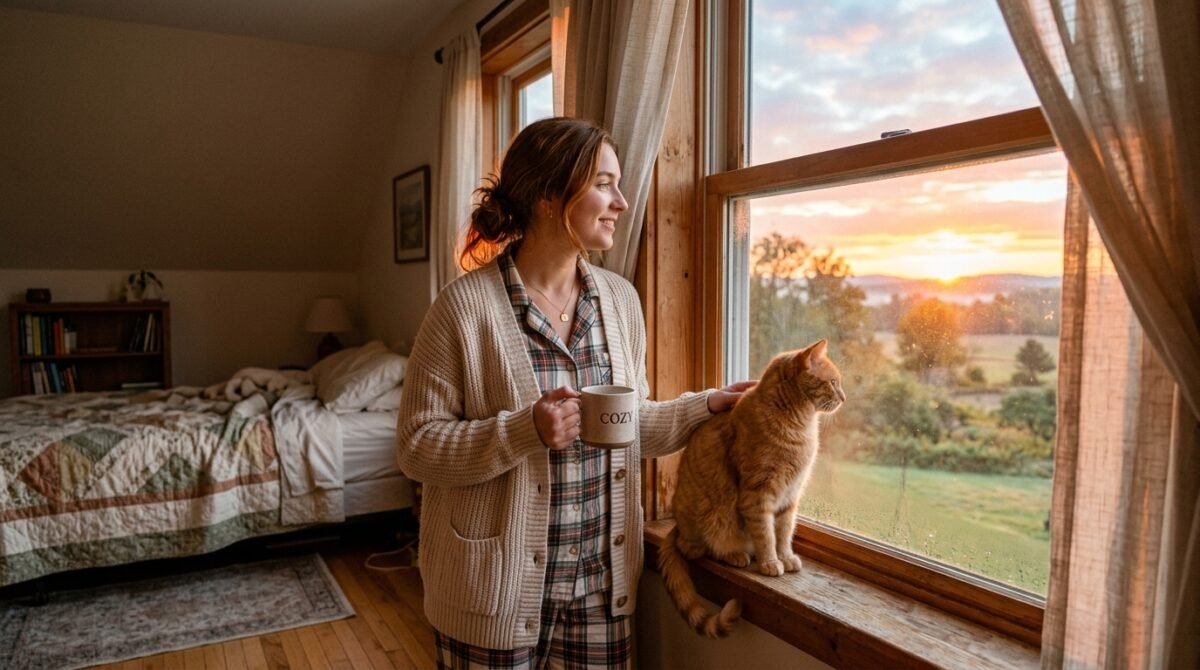
Today, my life is quiet, but it is deeply, profoundly mine. I don’t have to apologize for my cat. I don’t have to worry about my medical equipment. I don’t have to fear the consequences of a scratch on a sofa. I wake up in a house that smells like coffee and warmth, not chemicals and expensive polish.
I’ve started volunteering at a local animal shelter, helping other families understand the importance of medical support animals. I share my story, not to gain sympathy, but to educate and empower. If one person reads my story and realizes that they deserve to be safe, then all the drama, all the pain, and all the stress will have been worth it.
Barnaby is the guest of honor in my home. He has his favorite spots, his favorite toys, and all the love he could ever want. He is a happy, healthy, and incredibly spoiled cat, and he deserves every bit of it. He is a reminder that we can survive, we can adapt, and we can find joy in the face of adversity.
I hope that my journey can inspire others to prioritize their well-being above all else. Life is too short to spend it on someone else’s terms. We owe it to ourselves to seek the life we deserve—a life that is safe, a life that is ours, and a life that is filled with the things that truly matter.
And to anyone who is currently sitting on a pristine, expensive couch while their heart is breaking: you have the power to leave. You have the power to create a home that is yours. The door is right there. All you have to do is turn the handle.
Conclusion
My journey from a restrictive, high-end marriage to a life of freedom and self-care was the most difficult, yet rewarding, path I’ve ever taken. It forced me to choose between a life of external perfection and internal peace. By choosing my health and my service animal, I reclaimed my identity. This story is a testament to the fact that no material object is worth the degradation of your safety, and true love will never ask you to compromise your medical needs.
The community reaction to this story has been both overwhelming and heartwarming. It has shown me that thousands of others have walked this same path—the path of realizing that you are being minimized for the sake of someone else’s vanity. It’s a reminder that we are stronger together, and that sharing our stories is the first step toward breaking the cycle of control.
What about you? Have you ever had to choose between a partner’s demands and your own fundamental well-being? Did you stay, or did you make the hard choice to leave? Join the discussion below and share your own experiences with boundaries, relationships, and the realization that sometimes, you just have to walk away.
What's your verdict on this dilemma?
Vote below to contribute to the official community consensus.

Have a Dilemma Keeping You Up at Night?
Share your real-life feud, wedding chaos, or relationship crossroads anonymously with our editorial team.
What do you think ?
0 Comments🛡️ Comments are moderated to protect community integrity. Your comment will appear once approved by the editorial team.