
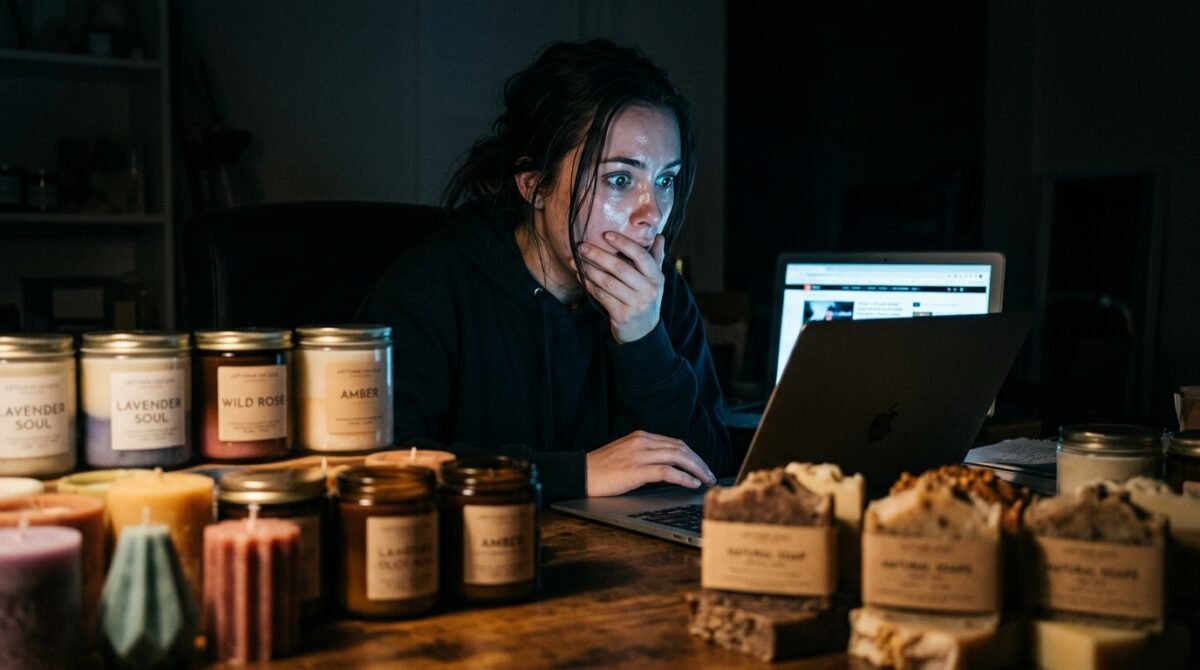
They say you shouldn’t mix business with pleasure, but when you have a creative soul, your friends are often the first ones to champion your work. For three years, I poured my life into ‘Luna & Leaf,’ an Etsy shop specializing in hand-poured, botanical-infused aromatherapy candles. It started in my tiny kitchen, and eventually, it became a stable source of income that allowed me to quit my retail job. Sarah, my best friend since sophomore year of college, was my biggest cheerleader. She helped me wrap packages during the holiday rush, she gave me feedback on scent profiles, and she knew exactly where I sourced my organic soy wax.
I trusted her with everything. I even shared my profit margins and my SEO strategies because I viewed her as family. When Sarah mentioned she was looking for a ‘creative outlet’ to help with her mounting student debt, I didn’t think twice. I offered to help her brainstorm ideas, never suspecting that she was quietly taking notes on my entire business model. The betrayal didn’t happen overnight; it was a slow, calculated theft of my identity as an artist.
It wasn’t until a customer sent me a message asking why my products were suddenly appearing in a shop called ‘Serene Scents’ at a lower price point that the floor dropped out from under me. I clicked the link, and my heart stopped. Every single design, every product photo, and even my specific ‘customer thank you’ insert card wording had been ripped off. It wasn’t just inspiration; it was a digital carbon copy.
The moral dilemma here wasn’t about whether she was wrong—she clearly was—but whether I could survive the loss of my best friend while simultaneously fighting for the survival of my business. The following months were a blur of tears, legal consultations, and a bridge burning so bright it could be seen from space. This is the story of how ‘Luna & Leaf’ defended its crown, and why I chose the law over a decade of friendship.
The Discovery of the Digital Carbon Copy
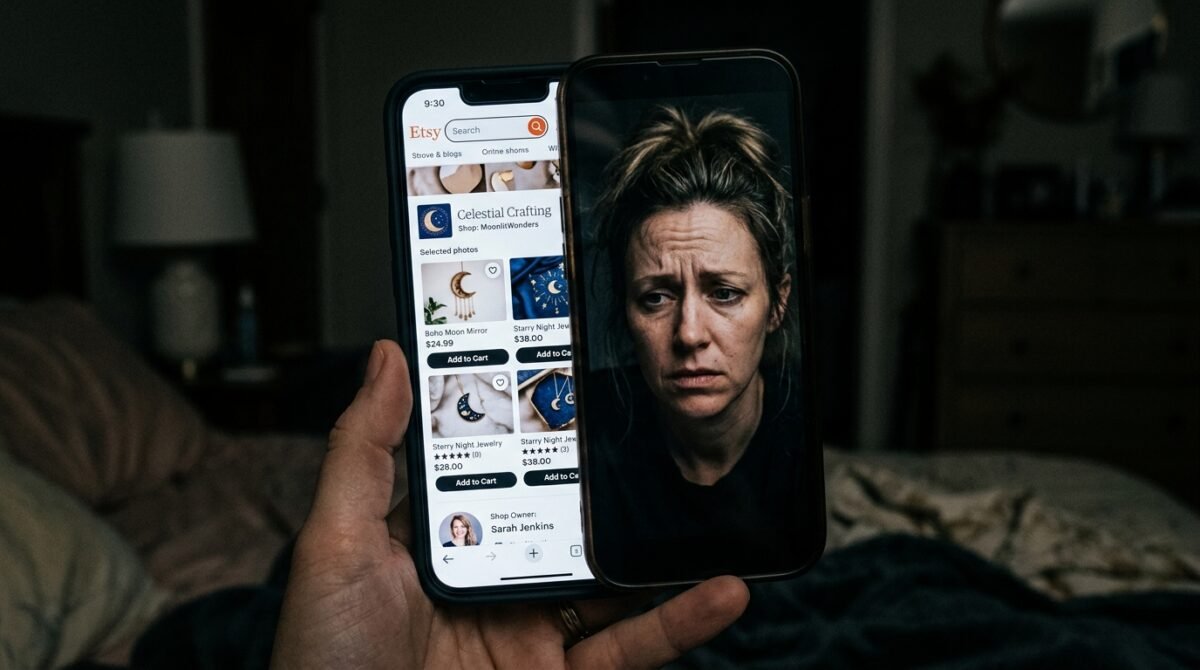
It was a rainy Tuesday when the first notification popped up on my phone. A regular customer, who had been with me since my first month on Etsy, sent me a screenshot of a product listing. At first glance, I thought she was asking if I had expanded or opened a secondary shop. I laughed, thinking, ‘Oh, did someone steal my photos?’
When I navigated to the link, I didn’t find a generic scraper site. I found a shop that looked exactly like mine. The aesthetic was a perfect mirror, down to the specific font choice for the labels and the exact photography style I had spent thousands of dollars perfecting. My breath hitched as I clicked through the catalog. There was my ‘Midnight Jasmine’ candle, listed as ‘Starlight Bloom.’ My ‘Cedarwood Haven’ was now ‘Forest Mist.’
“Hey, I think someone is literally copying your entire shop? I almost bought this thinking it was your new line, but then I noticed the seller name was different. Is this you?”
— Message from Customer, 10:14 AM
I spent the next hour hyperventilating in my studio. I started comparing my listings side-by-side with her shop. The ingredients were identical. The descriptions were paraphrased just enough to evade basic automated detection, but the underlying structure was undeniably mine. Even the specific, idiosyncratic typos I had made in my early ‘about me’ section were echoed in her shop’s bio.
I felt a cold, sharp pain in my chest. It wasn’t just the money; it was the violation. This was my craft. This was my blood, sweat, and tears. I called Sarah immediately, assuming there was a massive misunderstanding. Maybe she had hired a consultant who was using my work as a ‘template’? I wanted to give her the benefit of the doubt, but my gut was already screaming the truth.
Sarah didn’t pick up. She sent a text three hours later that was suspiciously calm. ‘Hey! So busy with the new launch, will call you later tonight!’ That was it. No mention of the shop, no mention of the similarities. Just an announcement of her ‘new venture.’ That was the moment I realized this wasn’t a mistake. It was a hostile takeover.
The Confrontation That Wasn’t a Conversation
I didn’t wait for her call. I drove to her apartment that evening with my laptop in my bag. I wasn’t there to scream; I was there for answers. When she opened the door, she looked surprised, but not guilty. She invited me in, acting as if nothing had changed, offering me tea and talking about her day as if she hadn’t just spent the last three months pilfering my intellectual property.
I sat on her sofa and put my laptop on the coffee table. I opened my store and then opened hers. ‘Sarah, what is this?’ I asked, my voice trembling. She looked at the screens, sipped her tea, and shrugged. ‘It’s a business, Maya. Everyone uses inspiration. I liked your vibe, and I knew I could do it better. Besides, it’s just candles. You don’t own the concept of wax and essential oils.’
“You didn’t just ‘like my vibe,’ Sarah. You took my sourcing list, you used my photography, and you literally copied the descriptions I wrote while sitting at my kitchen table. This is theft.”
— Me to Sarah
She laughed then, a cold, dismissive sound that I didn’t recognize. She told me that I was being ‘gatekeeper-y’ and that I should be ‘flattered’ that she wanted to emulate my success. She claimed that she had ‘rebranded’ the products enough to make them her own. It was gaslighting of the highest order, designed to make me feel small and territorial for protecting my livelihood.
I told her I wanted her to take the shop down. I told her I would give her a week to liquidate the inventory and close the page. She stood up and told me that I wasn’t the boss of her. She said that if I kept pushing, she would tell everyone in our friend group that I was being a ‘jealous, toxic person’ who couldn’t stand to see a friend succeed. I left that house knowing that the friendship was officially dead.
The ride home was silent. I didn’t cry. I felt a strange, cold clarity. The person I had trusted with my life was a predator. She hadn’t just stolen my products; she had been planning this for months while smiling at my dinner table. I knew then that I wouldn’t be asking nicely again. It was time for a professional to handle the situation.
The Certified Letter of No Return
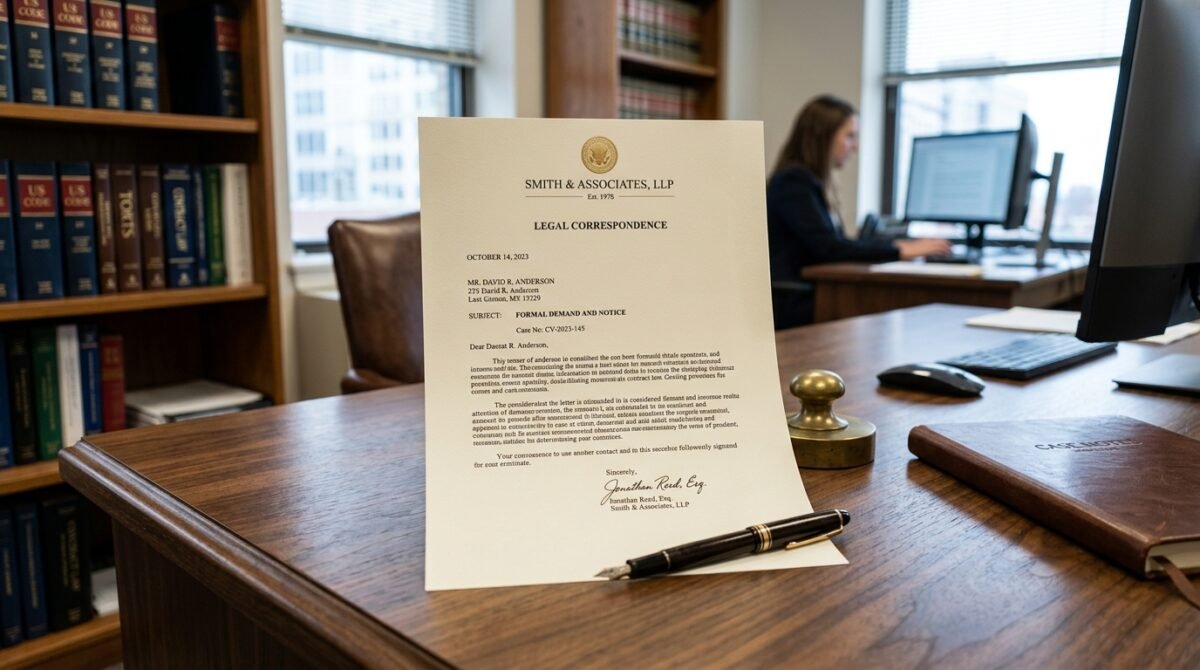
I spent the next forty-eight hours researching intellectual property law for small businesses. I realized that my photography and written descriptions were copyrighted the moment I created them. My logo was trademarked. I wasn’t just a disgruntled friend; I was a business owner with a legitimate legal claim. I reached out to a small business attorney who specialized in Etsy disputes.
The lawyer was blunt. She looked at the evidence and said, ‘This is a slam dunk. We send a formal cease-and-desist letter, we file a DMCA takedown request with Etsy for the stolen images, and we put her on notice that any further infringement will result in a lawsuit for damages.’ It cost me $800 to get the paperwork drafted, but it was the best money I ever spent.
When the certified letter arrived at her door, the dynamic shifted entirely. I didn’t hear from Sarah, but I saw the effects immediately. Within twenty-four hours, the product photos—the ones she had stolen from my shop—vanished. She had replaced them with grainy, poorly lit photos of her own, which looked nothing like the high-quality images she had initially poached.
“I hope you’re happy. You just ruined my side hustle over a few pictures. You were always so obsessed with being ‘perfect’ that you couldn’t just let me have a little win.”
— Text message from Sarah, 2:00 AM
I didn’t respond. I kept the screenshots of that text message as evidence for my attorney. Her admission that she had stolen the pictures was gold. I watched as her shop ratings plummeted. Without my tried-and-true supply chain, her candles were tunneling, cracking, and arriving with bad scent throws. Her customers were leaving scathing reviews. It was painful to watch the brand I loved being dragged through the mud, but I had to let her fail on her own terms.
My friends started reaching out, confused. Sarah had told them a curated version of the story where I was ‘bullying’ her for starting a business. I had to decide how much to share. I chose to be transparent. I shared the side-by-side comparisons of our listings. The evidence spoke for itself. The ‘bullying’ narrative evaporated overnight.
The Fallout in the Friend Group
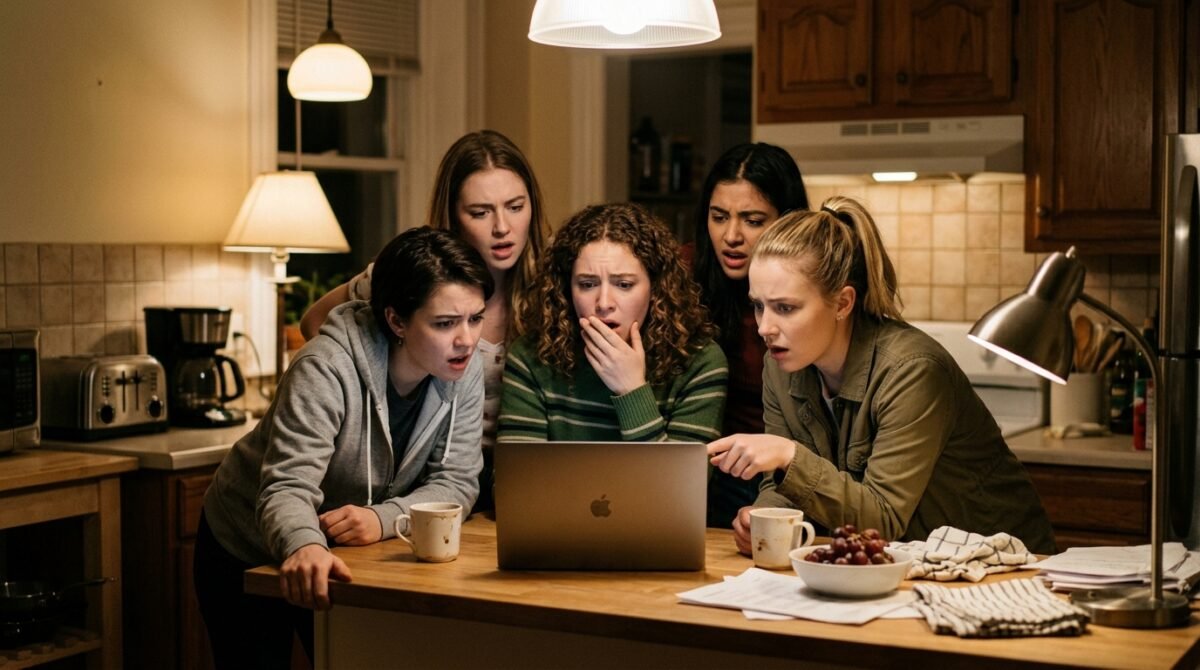
The social aftermath was more difficult than the legal battle. We had been part of a tight-knit group of five women for years. When Sarah started painting me as the villain, two of them—the ones who weren’t particularly close to me—bought her story. They felt that I was overreacting and that ‘friends should support friends, not sue them.’
I held a small gathering at my apartment. I didn’t make a speech; I just left my laptop open on the kitchen island with the side-by-side comparisons loaded. I told them, ‘I don’t expect you to pick sides, but I do expect you to know the truth. She didn’t just start a business; she stole my livelihood.’
The reaction was immediate. One friend, who was also a graphic designer, looked at the images and physically recoiled. ‘Maya, these aren’t just similar. She traced your logo. She literally traced your font work.’ That moment of validation was enough to turn the tide. The group realized that this wasn’t about jealousy; it was about integrity.
“I honestly can’t believe she thought she could get away with it. Using your exact sourcing list is just… it’s malicious. She didn’t just want a business; she wanted yours.”
— Comment from my friend, Elena
Sarah found herself isolated. She tried to double down on the ‘Maya is a toxic bully’ angle on social media, but without the physical evidence to back it up, she just looked bitter. She eventually deleted her shop and moved to a city three hours away. It was for the best. I needed the space to rebuild my own brand without looking over my shoulder.
I learned a lot about the people in my life during those months. The friends who stood by me didn’t just do it because they liked me; they did it because they valued the hard work I put into my life. I stopped sharing my profit margins and my strategies with anyone, even those I trusted. It was a hard lesson to learn, but a necessary one.
Rebuilding the Brand and Trust

With the legal drama settled, I had to focus on ‘Luna & Leaf.’ My brand had taken a hit because of the association with her cheap, faulty products. Customers were confusing us, and my search rankings had dipped because of the duplicate content. I had to pivot. I launched a new collection, focused on ‘Transparency and Craft,’ highlighting the sourcing and the handmade nature of every single item.
I started doing live videos on Instagram showing my process from start to finish. I showed the wax being melted, the wicks being centered, and the botanical drying process. It was a way to reclaim my narrative and prove that my work was authentic and original. The response was overwhelming. People loved the behind-the-scenes content.
I also invested in professional SEO and had my branding refreshed. I needed a new look that was distinct enough that no one could ever mistake my shop for someone else’s. It was an expensive endeavor, but it was worth it. I needed to move forward, away from the shadow of the theft and into a new chapter of growth.
“I used to think that being open about my business success was a sign of a good friendship. Now I realize that true friends want you to succeed, but they don’t expect a map to your treasure chest.”
— My internal monologue, written in my journal
I felt lighter than I had in years. The weight of the secret, the weight of the betrayal, and the weight of the legal battle were all finally gone. I wasn’t just a candlemaker anymore; I was a business owner who knew how to protect her assets. I had gone through the fire and come out the other side stronger.
My shop eventually hit record numbers. The customers who had been confused by the copycat shop came back, and they became my most loyal advocates. They were the ones who reported the copycat shop to Etsy, and they were the ones who left glowing reviews about my authenticity. I was lucky to have them.
The Reddit Community Weighs In

A few months later, I decided to post a redacted version of my story on a popular subreddit to see if I had been too harsh. I was nervous. I thought people might call me out for being too ‘corporate’ or ‘unforgiving.’ The response was the exact opposite. Within hours, the post had thousands of upvotes and hundreds of comments supporting my decision to sue.
People shared their own stories of friends stealing business ideas, creative designs, and even clients. It was a cathartic experience to realize I wasn’t alone. The consensus was overwhelming: Intellectual property theft isn’t ‘friendship,’ and protecting your business isn’t ‘being a bully.’ It’s standard practice.
“NTA. She wasn’t just a friend ‘starting a business.’ She was a thief who used your trust to bypass the hard work of building a brand. You did the right thing by protecting yourself. She’s lucky you didn’t sue for damages.”
— u/BusinessOwner99 (Top Comment, 32.1k upvotes)
There were a few people who argued that I should have talked to her first, but when I explained that I *did* talk to her and she refused, the comments shifted to calling her a ‘narcissist’ and a ‘parasite.’ It was validating to hear the community echo what my gut had told me from the start. I wasn’t the one who destroyed the friendship; she had destroyed it the moment she decided to steal from me.
The discussion also moved toward the legal side of things. People shared tips on how to protect designs, how to file for trademarks, and how to handle DMCA takedowns. It was an educational resource that I wished I had known about before the theft happened. I felt like I was contributing something to the community by sharing my pain.
Reading the comments didn’t change what happened, but it helped me move on. It confirmed that I had made the right choice. Sometimes, you have to be the bad guy in someone else’s story to be the hero in your own. I stopped checking the thread after the first few days, but the support gave me the final push I needed to let go of the anger.
Lessons Learned in the School of Hard Knocks

If I could go back and change one thing, it would be the lack of boundaries. I treated Sarah like a sister, not a business partner. I was too open with my proprietary information, and I didn’t see the signs of her resentment building up. I thought our history was a shield, but in reality, it was just a blind spot.
I now have a strict ‘no business talk’ rule with friends who aren’t involved in my company. If they have questions about entrepreneurship, I point them to books or online courses, not my own internal files. It’s not about being cold; it’s about being professional. The people who truly care about you won’t ask you to compromise your success for their convenience.
I also learned the importance of documenting everything. From the start of a business, you need to have a paper trail. You need to register your trademarks, keep your source lists secure, and maintain a record of your original creations. If you don’t take your business seriously, no one else will. It’s a harsh lesson, but a vital one for any entrepreneur.
“Never mistake kindness for weakness. You can be a supportive friend and still set firm boundaries. If they try to cross them, they aren’t your friend, they’re just an opportunist.”
— My note to self, written on my office wall
I don’t regret the cease-and-desist letter. It was the moment I stopped being a victim and started being a business owner. I learned that my work has value, and I have the right to defend that value. If the price of that protection was a friendship, then so be it. It was a friendship built on sand anyway.
I feel more confident now than I ever did before. I know that I can handle the worst-case scenario and come out stronger. My business is thriving, my boundaries are firm, and I’m surrounded by people who support me for who I am, not for what I can give them. It’s a good place to be.
The Final Goodbye and Moving On

It has been a year since the incident. I haven’t heard from Sarah, and I haven’t looked at her social media. I’ve moved on, and my shop has reached heights I never imagined possible. We’ve expanded into wholesale, and I’m currently working on a line of seasonal products that are completely original, protected by design patents. The fear of theft is still there, but it’s managed.
I occasionally think about the times we had before the business. I miss the friend I thought she was, but I’ve realized that the person she became was always there. The business just brought it to the surface. It was a test, and she failed it. I’m just grateful that I had the courage to see the situation for what it was and act accordingly.
I think the most important thing I gained from this was the realization that I am enough. I don’t need to share my success or my secrets to be loved. My value is in my talent, my hard work, and my integrity. Those are the things that no one can steal, no matter how hard they try to copy my products or my style.
“Success is the best revenge, but moving on is the best medicine. I don’t care about what she’s doing anymore. I only care about what I’m creating.”
— Me, reflecting on my journey
I want to encourage anyone going through a similar situation to not be afraid to stand up for yourself. It’s scary to confront someone you care about, and it’s even scarier to take legal action, but it’s the only way to save what you’ve built. You are the architect of your own life, and you have the right to keep the blueprints safe.
I’m looking forward to the future now. I have big plans for the next year, and I’m excited to share them with my customers. The drama is behind me, and the path ahead is clear. I’m finally doing what I love, on my own terms, and that is a success that no one can take away from me.
Reflecting on the Legal Reality
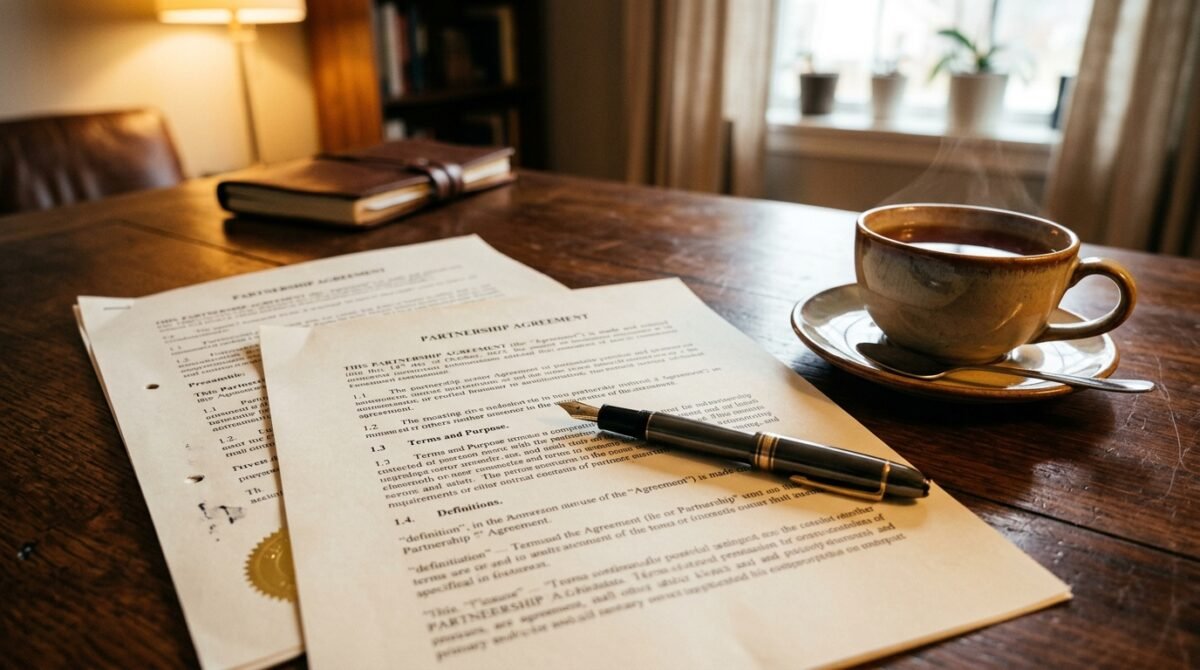
Looking back, the legal process was not nearly as intimidating as I initially thought. Once I had the lawyer, the weight was lifted. It was a matter of procedure and evidence. Etsy has a very clear IP infringement policy, and by following it properly, I was able to get results. I wish I had known that the law was on my side from the start, instead of wasting time hoping for a moral awakening that was never going to happen.
I learned that intellectual property is a serious asset. Your brand name, your logo, your product descriptions, and your photos are all pieces of your business puzzle. When someone takes them, they aren’t just ‘inspired’; they are diluting your brand and stealing your sales. Protecting those assets is not just about being petty; it’s about business survival.
I also realized how important it is to have an attorney. You can try to do it yourself, but a formal letter from a lawyer carries a weight that a personal message simply doesn’t. It signals that you are prepared to escalate if necessary, and in most cases, that is enough to stop the theft. It’s an investment in your business that pays dividends in peace of mind.
“Don’t be afraid to engage professional help. Sometimes a formal letter is the only thing that separates a hobby from a protected business.”
— My lawyer, during our final consultation
I encourage every creative entrepreneur to look into basic IP law. Know your rights. Know what you can and cannot protect. It’s not as boring as it sounds, and it could save you thousands of dollars and months of heartache. Knowledge is power, and in this case, it was the power I needed to take back control of my life.
I’m grateful for the process, as difficult as it was. It taught me things I never would have learned otherwise. It made me a better business owner, a stronger person, and a more discerning friend. I’m ready for whatever comes next, and I know I have the tools to handle it.
Final Thoughts on Boundary Setting

If there is one thing I want anyone reading this to take away, it’s that boundaries are not negotiable. In any relationship—friendship, family, or business—you have to define your lines. And when someone crosses them, you have to be ready to defend them. It’s not about being mean; it’s about respect.
I thought that by being ‘accommodating,’ I was being a good friend. I was wrong. I was being a doormat. By allowing her to take advantage of me, I was enabling her bad behavior and damaging my own self-respect. It took a major confrontation to realize that, but it was a realization that changed everything.
I’m a better person today because I set those boundaries. I’m a better friend to the people who deserve it, and I’m a better business owner because I know the value of what I’ve built. I’m no longer afraid to say ‘no,’ and I’m no longer afraid to protect what is mine. That is a freedom I wouldn’t trade for anything.
“Boundaries aren’t walls; they’re gates. You decide who gets to come in and what they get to see. Don’t leave your gate wide open for just anyone.”
— A quote I found that perfectly captured my experience
I’m proud of the person I’ve become. I’m proud of my business, and I’m proud of the way I handled a situation that could have destroyed me. I didn’t let the bitterness take root. I took the action, I learned the lesson, and I moved on. And that is the biggest victory of all.
Thank you for letting me share my story. It’s been a healing journey, and I hope it helps anyone else who is going through a similar struggle. Remember, your work is yours, and you have every right to protect it.
Conclusion
The story of my friendship with Sarah is a cautionary tale, but it’s also a story of resilience. We are taught to value loyalty above all else, but we aren’t taught what to do when that loyalty is weaponized against us. Protecting your livelihood is not a betrayal; it is a fundamental right. Losing a friend is painful, but losing your self-respect and your vision is far worse.
As I stand here today, ‘Luna & Leaf’ is thriving, and I have surrounded myself with people who celebrate my success rather than trying to replicate it. I’ve learned that the right people will always support your growth, and the wrong people will only ever look for ways to benefit from your effort. The legal battle was hard, but it was the catalyst I needed to claim my identity as a professional and a creator.
Now, I turn it over to you. Have you ever had a friend or family member cross a professional boundary, and how did you handle it? Did you prioritize the relationship, or did you prioritize your business? Let’s discuss in the comments below.
Reader Poll: If a friend stole your business idea, would you: (A) Try to talk it out and share the profits, (B) Cut them off immediately and seek legal counsel, or (C) Try to move on and pretend it never happened?
What's your verdict on this dilemma?
Vote below to contribute to the official community consensus.

Have a Dilemma Keeping You Up at Night?
Share your real-life feud, wedding chaos, or relationship crossroads anonymously with our editorial team.
What do you think ?
0 Comments🛡️ Comments are moderated to protect community integrity. Your comment will appear once approved by the editorial team.