
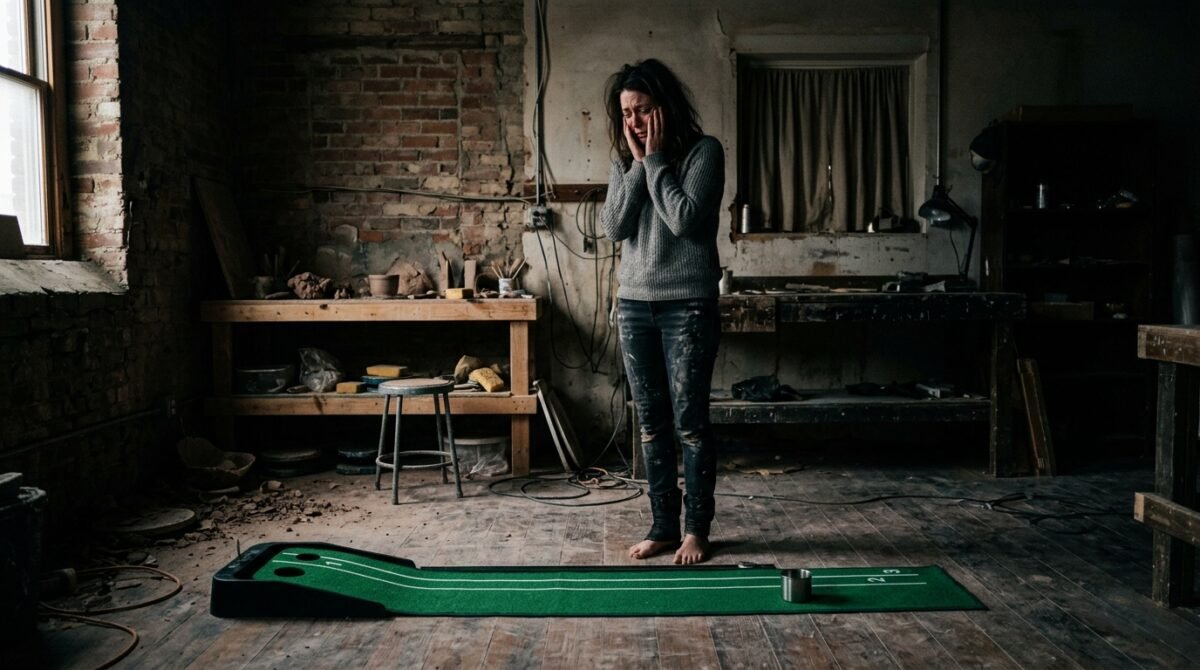
I have spent the last seven years of my life building ‘Clay & Hearth,’ my small business. My studio, located in the finished basement of our home, was my sanctuary. It housed two Shimpo Whisper pottery wheels—pieces of equipment that cost me over $3,000 each—along with professional-grade clay bodies, custom glazes, and years of finished work waiting for market dates. It wasn’t just a hobby; it was how I contributed to our mortgage, paid for our vacations, and maintained my sanity amidst a chaotic life.
My husband, Mark, has always had a complicated relationship with my work. He didn’t mind the income, but he loathed the ‘mess.’ He complained about the occasional clay dust, the noise of the wheels, and the fact that my studio occupied the largest room in the lower level. I had always assumed our boundaries were clear: this was my workspace, my investment, and my career. I was wrong.
Last Thursday, I returned home from a week-long ceramics workshop in Vermont, buzzing with inspiration and ready to dive back into my commissions. As I walked down the basement stairs, expecting the familiar hum of the dehumidifier and the earthy scent of drying clay, I was met with silence. The room was different. The shelves were bare. The wheels were gone.
In their place, centered perfectly on the floor where my workstation had been, was a neon-green, plastic indoor putting green with a small, motorized ball-return mechanism. Mark was standing there, holding a putter, beaming at me as if he had just surprised me with a vacation to the Maldives. My world didn’t just stop; it fractured into a thousand shards of disbelief.
This isn’t just a story about a missing piece of furniture. It is a story about the systematic dismissal of a woman’s professional identity, the audacity of entitled partners who view shared spaces as their own playground, and the harrowing realization that the person you married might not respect you at all. Welcome to the aftermath of the most expensive game of golf I’ve ever been forced to witness.
The Silence in the Basement

When I reached the bottom step, my heart skipped a beat. The industrial lighting I’d installed for my detailed glazing work was off. I flipped the switch, expecting the room to glow, but the space felt cavernous and cold. The shelves that had held my finished pieces—delicate, hand-thrown vases that were already promised to clients—were empty. My heart plummeted into my stomach. I assumed we had been robbed.
I spun around, my breath catching in my throat, and that’s when I saw the putting green. It was an eyesore. Cheap, neon-green plastic turf rolled out over my carefully swept concrete floor. Mark was there, dressed in his golfing attire, looking incredibly satisfied with himself. He didn’t notice the look of absolute horror on my face at first; he was busy lining up a putt.
“Surprise!” he exclaimed, his voice echoing off the bare walls. “I know you’ve been stressed about the business, so I decided to make this space actually usable. We can host the guys for drinks and games now. No more dust, no more mess, just a clean, functional entertainment room. I even got rid of that old junk to make it happen.”
“Mark, where are my wheels? Where is the inventory from the shelves? Everything in this room was worth thousands of dollars. Tell me you didn’t touch my equipment.”
He laughed, a dismissive sound that made my skin crawl. He gestured to the putting green with his club. “Don’t be dramatic. I donated the wheels to that thrift shop on 5th Street. They were heavy, clunky, and taking up my office space. You haven’t been using them for a week anyway. I did you a favor, babe. You need a break.”
I stood there, frozen. The betrayal wasn’t just in the loss of the money—though that was staggering—it was the profound, casual arrogance of a man who decided, without a single conversation, that my livelihood was ‘junk’ to be discarded. I looked at the motorized golf ball return, clicking rhythmically, and I realized he had been planning this for months.
The Thrift Shop Receipt Incident
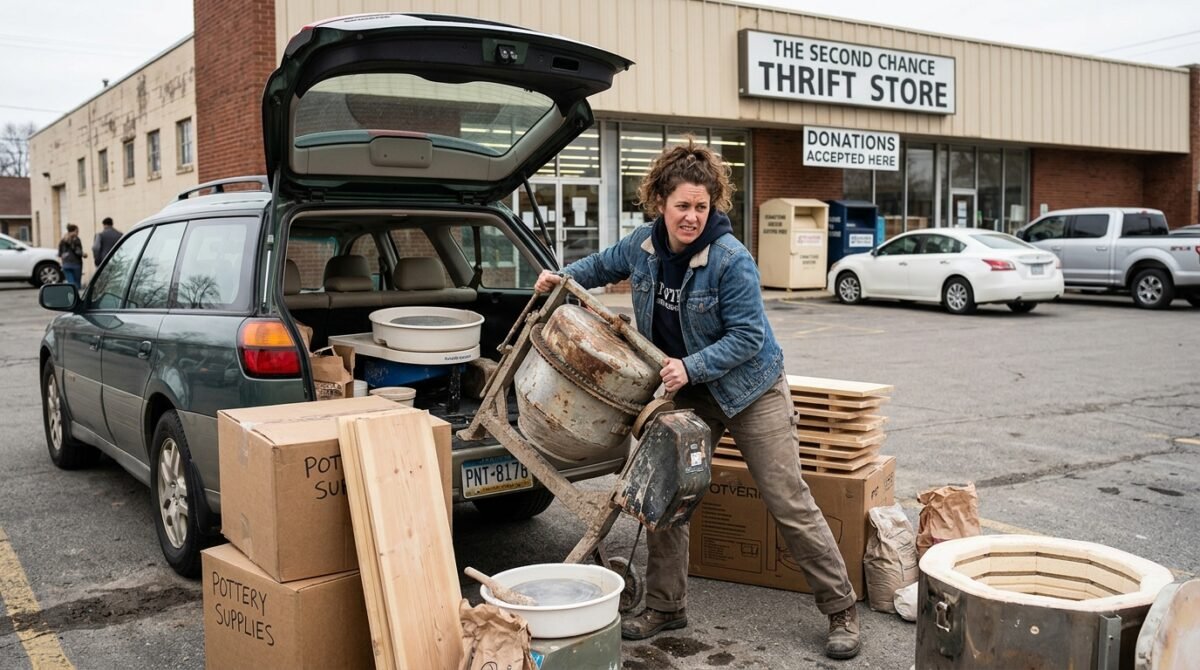
I didn’t wait for him to finish his explanation. I grabbed my car keys, my hands trembling so hard I could barely grip the fob. I didn’t care about the putting green, or his surprise, or his excuses. I drove to the local thrift shop in a blind fury. I walked into the store, ignoring the volunteers, and marched straight to the back where they keep the furniture and housewares.
There, sitting in the dust, were my Shimpo wheels. They were already marked with low, pathetic price tags. A man was currently inspecting one of them, looking at the foot pedal with confusion. I didn’t care about being polite. I walked up to the counter and demanded the manager. I had the original receipts on my phone, and I was ready to burn the place down to get my property back.
“I am the owner of these items. They were donated without my consent by my husband. I have the receipts, I have the insurance documentation, and I will be filing a police report for theft if they aren’t released to me immediately.”
The manager, a startled woman in her sixties, looked at me and then at the receipt. She had clearly been told a sob story by Mark when he dropped them off—something about ‘getting rid of clutter’ and ‘wife’s forgotten hobby.’ She looked at the heavy, professional-grade equipment and then at the tiny price tag she had put on them. The look of guilt on her face was almost as satisfying as the sound of the wheels being loaded back into my trunk.
When I got home, the house felt different. It wasn’t my home anymore; it was a battleground. I spent two hours hauling the wheels back into the garage, refusing to even look at the basement. I sat in my car, staring at the closed garage door, trying to process how my husband of five years could look at something I loved, something that paid our bills, and see trash.
The Confrontation at the Dinner Table

Dinner that night was silent, heavy, and suffocating. Mark sat at the head of the table, looking smugly at his plate, waiting for me to apologize for ‘making a scene’ at the shop. He had expected me to be relieved that he cleared the space. He had expected me to be grateful for the ‘upgrade.’ He didn’t realize that I had spent the entire afternoon documenting every single missing piece of inventory.
I placed my phone on the table. On the screen was a detailed spreadsheet of the equipment, the custom glazes, and the commission pieces he had ‘donated’—many of which were one-of-a-kind and irreplaceable. I didn’t yell. I didn’t scream. I spoke with a quiet, icy precision that I knew unnerved him more than any outburst would have.
“Mark, let’s talk about the five thousand dollars of equipment you stole from me. And then let’s talk about the three thousand dollars in pending client commissions that you threw in a dumpster.”
He looked up, his jaw tightening. “Oh, don’t start with the money. It’s always about money with you. I thought we were a team. I wanted to build a space where we could actually spend time together, and you’re turning it into a forensic audit. It’s just pottery, Sarah. It’s just dirt and mud. You can make more.”
I watched him take a bite of his food, his casual disregard for my career boiling over. He truly believed that my work was a whim. He viewed the years of practice, the technical skill, and the financial independence I had cultivated as nothing more than a cute little distraction. That was the moment I realized the marriage was already over, regardless of what happened in the basement.
The Group Chat Exposure

The next morning, I found the evidence. Mark had left his iPad open on the kitchen island. A notification pinged—it was a group chat titled ‘Man Cave Project.’ I didn’t intend to snoop, but the sheer audacity of the name made me click. I saw months of planning, photos of my studio being dismantled, and messages that made my stomach turn.
“She’s finally out of town for that workshop. Getting rid of the wheels today. If she complains, I’ll tell her it’s for the ‘future of our marriage’ or some other garbage. She’ll get over it.”
— Mark (Group Chat: Man Cave Project)
It wasn’t just a spontaneous act of thoughtlessness; it was a calculated, premeditated attack on my boundaries. His friends were cheering him on, offering advice on how to ‘handle’ my inevitable anger. One friend even suggested telling me that I was ‘being hysterical’ to make me question my own reaction. That was the final nail in the coffin.
I read through the messages while my coffee went cold. They talked about my business as if it were a joke. They laughed about how I would ‘find a new hobby’ once I realized the wheels were gone. The disrespect wasn’t just from Mark; it was a systemic devaluation of my life’s work by his entire circle. I took screenshots of every single message, documenting the intent, the timing, and the malice.
When Mark walked into the kitchen, he saw me holding the iPad. He didn’t look guilty. He looked annoyed that he had been caught. He grabbed the device from my hand, his face flushing red. “You have no right to look at my private messages. You’re invading my privacy, Sarah. This is why I wanted to change the house—everything feels like it’s being monitored by you.”
The Financial Ultimatum

I contacted a lawyer that afternoon. I wasn’t interested in salvaging the ‘Man Cave.’ I wanted my business protected. My lawyer informed me that because we were married, the equipment might be considered ‘marital property,’ but the intentional destruction and disposal of a business asset was a serious legal issue. I had the inventory logs, the sales records, and now, the incriminating text messages.
Mark came home to find me packing my bags. He watched from the doorway, his posture relaxed, clearly believing this was just another argument that would end with me conceding. He didn’t seem to understand that the dynamic had shifted. I wasn’t asking for permission anymore; I was executing a plan. I had already secured a storage unit for my equipment.
“Where are you going? You’re acting like this is the end of the world over some pots and pans. You need to grow up and realize that the house is for both of us.”
I looked at him, feeling a strange sense of clarity. “I’m not leaving because of the pots, Mark. I’m leaving because I realized you don’t respect me, my work, or my contributions to this family. You didn’t just ‘tidy up.’ You attempted to destroy my career because it was inconvenient for your golf game. We are done.”
He laughed, a sharp, patronizing sound. “You’ll be back in three days. You have nowhere else to go that has the space for your little pottery obsession.” He still didn’t get it. He thought I was bluffing, that I was just another ’emotional’ wife overreacting to a minor change. He had no idea that I had already put a deposit on a small studio space downtown.
The Reddit Verdict

I posted about the situation on a throwaway account, desperate for a reality check. I needed to know if I was truly the ‘hysterical’ person he claimed I was. The response was immediate and overwhelming. Thousands of people commented, validating my anger and pointing out the red flags that I had been ignoring for years.
“This is not a ‘hobby’ issue. This is a control issue. Your husband systematically dismantled your professional income stream because he wanted to play golf. This is financial abuse, plain and simple. Do not go back, and do not apologize for standing up for your career.”
— u/LegalEagle99 (Top Comment, 32.5k upvotes)
Another user noted, “The fact that he had a group chat to plan this shows he knew it was wrong and wanted to ensure he had backup for his gaslighting. He didn’t just do it; he engineered a way to make you feel crazy for being upset. Run, don’t walk.” Reading these comments, I felt the last remnants of my doubt dissolve. It wasn’t me. It was him.
The community support was a lifeline I hadn’t expected. They provided advice on how to handle the legal separation of assets, how to document the remaining damage, and how to maintain my mental health while going through such a traumatic disruption. It made me realize that my reality was shared by many, and that I didn’t have to suffer in silence.
I kept the thread updated for a while, sharing how I moved my wheels and my inventory. The support helped me stay focused when I felt like breaking down. I realized that my business was a legitimate success, and that I was capable of thriving without the person who felt the need to ‘clean up’ my life to make space for himself.
The Lawyers Get Involved
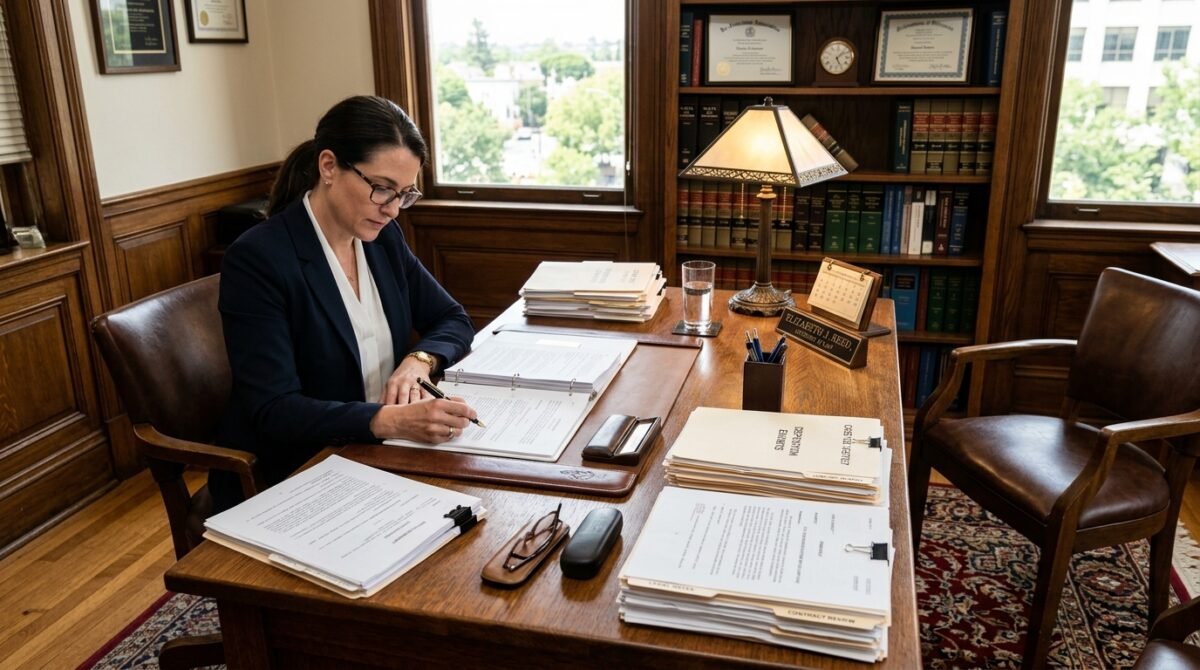
When the formal separation papers arrived at his office, Mark’s attitude shifted from smug to panicked. He suddenly wanted to ‘talk.’ He claimed he was just ‘trying to be spontaneous’ and that he didn’t realize how much the equipment meant to me. He even offered to buy me *new* wheels, as if the problem were merely the cost of the hardware.
My lawyer handled the communication. We had documented the loss of income from the cancelled commissions, the cost of moving and storing the equipment, and the loss of the physical workspace. It became a business litigation issue rather than a marriage dispute. He didn’t like that one bit. He wanted to keep it private, ‘between us,’ which was exactly what I refused to do.
“I don’t want to talk to you directly, Mark. Everything goes through my lawyer now. You made your choice when you decided to throw away my livelihood for a putting green. Now, you’ll have to deal with the financial consequences.”
The realization that I was no longer an easy target seemed to finally sink in. He started calling my friends, my mother, anyone he could reach, painting me as the villain who was ‘tearing the family apart over a few pottery wheels.’ It was desperate, and it made him look even worse. My support system saw right through his lies.
I felt a deep sense of relief every time he tried to reach out and failed. The silence on my end was a boundary I had never set before, and it was incredibly empowering. I was no longer trying to explain myself to someone who was committed to misunderstanding me. I was just moving forward.
The Move to the New Studio

Moving into my own studio space was the most emotional day of my life. It was a small, light-filled room in an old industrial building. It smelled of coffee and kiln fire, and it was entirely mine. No one could tell me to clean it up, no one could call my work ‘dirt,’ and no one could decide to donate my tools. It was a blank slate.
I set up my wheels, centered them exactly where I wanted them, and spent hours just listening to the hum of the motor. It was a beautiful, familiar sound that represented my independence. I realized that the house I shared with Mark was a cage, and the basement was just a smaller, more restrictive box within it. Here, I had room to breathe.
My clients were incredibly supportive when I explained the delay. I didn’t give them the full dramatic story, just a professional update about a ‘workspace transition.’ Many of them actually bought extra pieces when they heard I was setting up a new studio. It was a reminder that my work had value to others, even if my husband didn’t see it.
“I am so excited to see your new work, Sarah. Don’t let anything get in the way of your talent. Your pottery is the heart of my living room.”
— A long-term client
I felt a sense of peace that I hadn’t known for years. I was working harder than ever, but it didn’t feel like labor. It felt like reclaiming a part of myself that I had almost lost to a man who wanted a golf buddy more than he wanted a partner.
The Final Settlement

The divorce proceedings were finalized six months later. It was a long, draining process, but it was worth every cent. I got to keep my equipment, my business assets, and a fair share of our joint accounts. Mark, on the other hand, had to deal with the public embarrassment of his ‘man cave’ project failing, and the financial hit of the legal fees.
We didn’t speak during the final meeting. He looked older, tired, and honestly, a bit pathetic. He kept trying to catch my eye, but I was focused on the mediator. I had nothing left to say to him. The anger had burned itself out, replaced by a cold, hard indifference. I had successfully detached my life from his.
“I hope you enjoy your putting green, Mark. I hear they’re great for playing alone.”
As I walked out of the building, I took a deep breath of fresh air. I was single, I was a business owner, and I was free. I didn’t look back. I had my wheels, my career, and my future. And most importantly, I had the peace of knowing that I would never again be with someone who didn’t respect who I was.
The lessons were hard-won, but they were invaluable. I learned the importance of keeping my finances separate, the necessity of absolute transparency in professional boundaries, and the reality that if someone shows you they don’t value your work, you should believe them the first time.
Reflecting on the ‘Hobby’ Narrative

Looking back at the whole ordeal, I’m struck by how often society treats women’s work—especially creative work—as a ‘hobby.’ If a man has a professional woodshop in the basement, it’s a ‘craftsman’s workshop.’ If a woman has a professional pottery studio, it’s ‘messy’ or a ‘distraction.’ This systemic bias was the root of Mark’s behavior, and it’s something we need to talk about more.
I’ve met so many women since this happened who have shared similar stories. They’ve had their art supplies thrown out, their writing desks turned into junk drawers, or their studio spaces co-opted for their partner’s ‘convenience.’ It’s a form of soft erasure, and it happens more often than we realize. It’s time to stop letting people minimize our work.
My advice to anyone facing a similar situation is to document everything. Treat your creative business with the same seriousness you would a corporate job. Have separate bank accounts, keep rigorous inventory logs, and never, ever let someone else dictate the space or time you need to succeed. You are not being difficult; you are being professional.
I’m doing great now. My business is thriving, and I’ve found a partner who actually values my work—who even bought me a new, upgraded kiln as a gift. It’s a night-and-day difference. I learned that you don’t have to settle for someone who wants to shrink your world just to make theirs feel bigger.
Conclusion
The story of the stolen pottery wheels is, at its heart, about the struggle for respect in a relationship. When we enter into a partnership, we trust our spouses to honor the things that make us who we are. When that trust is broken—when someone decides that your professional identity is just a ‘hobby’ they can toss aside—it’s not just a minor disagreement. It’s a fundamental betrayal.
I am grateful for the outcome, even if the path was painful. I learned that I am capable of standing up for myself, of navigating legal systems, and of building a life that is entirely my own. I hope that my story encourages others to recognize the signs of devaluation early and to protect the work that they love.
What about you? Have you ever had a partner or family member dismiss your professional passion or personal space as a ‘minor hobby’? How did you handle it, and what did it teach you about your own boundaries? Let’s talk about it in the comments below.
What's your verdict on this dilemma?
Vote below to contribute to the official community consensus.

Have a Dilemma Keeping You Up at Night?
Share your real-life feud, wedding chaos, or relationship crossroads anonymously with our editorial team.
What do you think ?
0 Comments🛡️ Comments are moderated to protect community integrity. Your comment will appear once approved by the editorial team.