
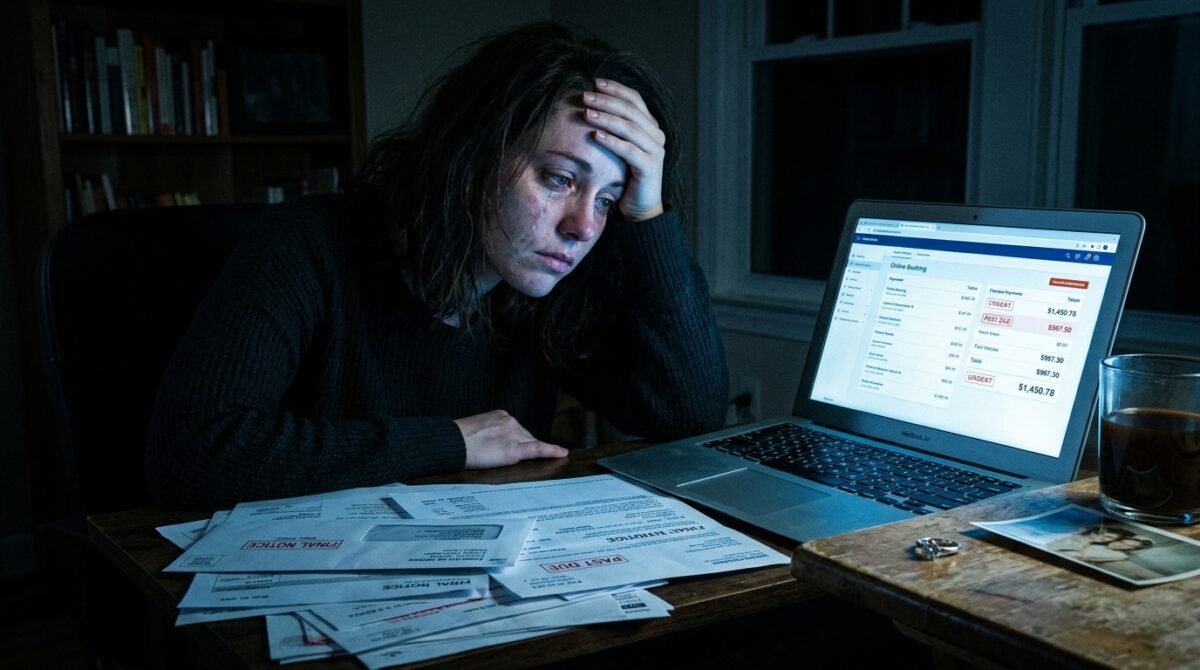
When you are three weeks away from walking down the aisle, your life is supposed to be a whirlwind of final seating chart adjustments, cake tasting confirmations, and the soft, humming anxiety of impending domestic bliss. I was living that life, or so I thought. My fiancé, Mark, was the man who had promised to be my partner in everything—the co-signer on our future, the person who would help me navigate the complexities of building a life together. We had spent two years planning a day that felt like the culmination of everything we had worked for.
But the cracks in the foundation were not invisible; I had just chosen to look the other way. There were the odd missed payments that Mark brushed off as ‘bank glitches,’ the late-night stress that he claimed was just high-pressure work, and the occasional, unexplained absence during weekends. I attributed these things to the normal jitters of a man about to commit his life to someone. I trusted him. That trust was the greatest, and perhaps most expensive, mistake of my adult life.
The revelation did not come with a dramatic confession or a tearful sit-down at the kitchen table. It came in the form of a forgotten envelope tucked behind the vanity in our shared apartment. It was a notice from a lending agency, marked ‘Final Warning.’ Curiosity, sharp and cold, overcame me. I opened it, and as I read the numbers, the world began to tilt on its axis. My heart hammered against my ribs like a trapped bird as I realized the scale of the deception.
I spent the next six hours diving into every digital corner of our finances I could access. What I found was not just a lapse in judgment; it was a systematic, calculated betrayal. $95,000. That was the figure that stared back at me in bold, black ink. It was gone, lost to offshore betting sites and high-stakes poker apps I didn’t even know existed. The down payment for our house, the wedding vendor deposits, the emergency fund—it was all gone.
Sitting in the quiet of our living room, surrounded by the remnants of our wedding planning—a half-finished guest book, a stack of menus—I realized that the man I was going to marry didn’t exist. The man I was marrying was a stranger who had been betting away our future while holding my hand. This is the story of how I broke the silence, dismantled the wedding, and fought to reclaim my dignity from the wreckage of a lie.
The Envelope Behind the Vanity
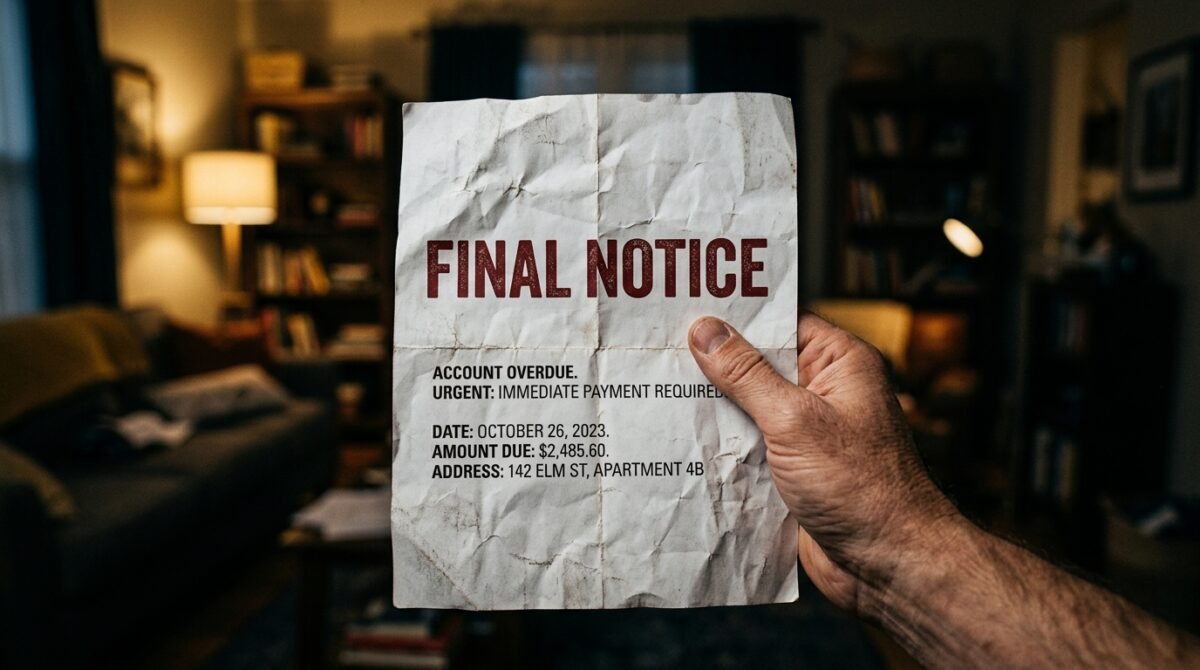
It was a mundane Tuesday night when I found the envelope. I was cleaning, trying to organize the chaos that precedes a wedding, when I dropped my earring behind the heavy oak vanity. As I reached into the dark, dusty crevice, my fingers brushed against a thick, heavy envelope. It wasn’t addressed to me, but it was addressed to our address, and the logo in the corner—a private lending firm I had never heard of—sent a jolt of ice through my veins.
I stood up, the earring forgotten on the floor. I didn’t open it immediately. I stared at it, the paper feeling heavy in my hands as if it were weighed down by the secrets inside. My gut told me to put it back, to walk away, to let Mark handle his own mail. But the nagging doubt that had been building for months—the missed mortgage payments, the ‘error’ emails from our bank—pushed me to tear the seal.
The letter was a demand for immediate payment. It outlined a series of defaults on a personal loan, the original principal being $60,000, with interest and late fees ballooning it to nearly $95,000. I sank onto the floor, my legs suddenly unable to hold my weight. I looked at the dates. These transactions had been happening for eighteen months. Every time he told me he was working late, every time he said he needed to ‘clear his head’ at a bar, he was actually sinking deeper into this black hole.
“I just need you to trust me. The bank is going through a merger and everything is showing up as negative for a few days. It’s nothing, babe, I promise.”
— Mark, during a conversation two weeks prior
I remembered that conversation vividly. He had been so calm, so reassuring. He had even kissed my forehead and told me I was ‘worrying over pennies’ when I asked about the alert on our joint savings account. The sheer audacity of his performance hit me harder than the dollar amount. How long could he have kept this up after we were married? Would we have woken up to an eviction notice on our honeymoon?
My hands were shaking as I pulled out my phone. I didn’t call him. Instead, I opened our joint bank portal. I had never felt the need to monitor his personal accounts before, but the access was there, left open on his laptop. I navigated to the transaction history and began to filter by category. ‘Entertainment,’ ‘Gaming,’ ‘Wire Transfer.’ The list went on for pages, a digital trail of blood leading straight to our financial ruin.
The Midnight Confrontation
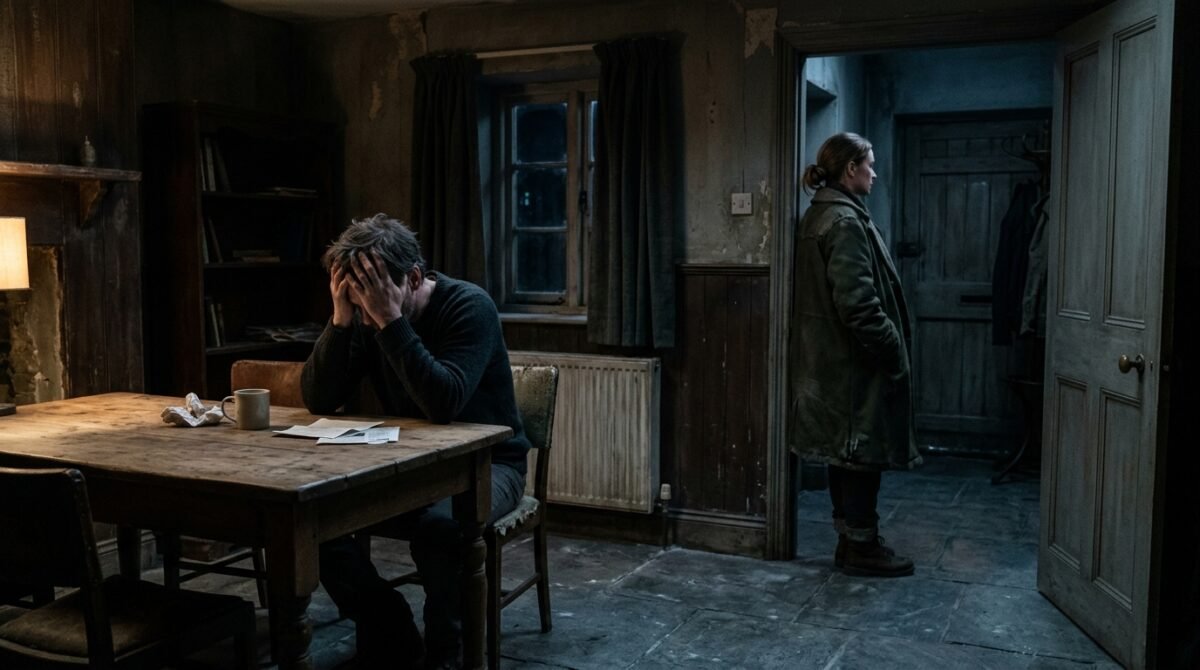
When the front door finally clicked open at 1:00 AM, I didn’t move. I was sitting at the dining room table, the laptop still open, the printed statements laid out in a circle around me. I had a glass of water, but I hadn’t touched it. The house was silent, save for the hum of the refrigerator. Mark walked in, humming to himself, loosening his tie, clearly expecting me to be asleep.
He stopped dead when he saw me. He didn’t even have to look at the papers to know that the game was up. The way his shoulders dropped, the way he suddenly seemed to shrink—it was the posture of a man who had been caught, not the posture of a man who was surprised. He tried to laugh it off, a nervous, jagged sound that died in the air between us.
“What are you doing? Why are you sitting in the dark like this? You’re going to scare me to death, honestly.”
— Mark, walking into the living room
“Sit down, Mark. Don’t you dare walk past me. Don’t you dare act like this is a normal Tuesday. I found the notice. I found the accounts. I know about the ninety-five thousand dollars.”
— OP
He didn’t try to deny it. He didn’t even try to lie. He just collapsed into the chair opposite me, his head in his hands. He started rambling about a ‘rough patch’ that turned into a ‘chase,’ the classic addict’s narrative. He talked about how he thought he could win it back, how he had a ‘system’ that was supposed to clear the debt before the wedding. He was crying, but it wasn’t the crying of a repentant partner; it was the crying of a child who had been caught stealing from the cookie jar.
I watched him, and for the first time in two years, I didn’t feel love. I didn’t feel empathy. I felt a cold, clinical detachment. I was looking at a stranger. I thought about the venue we had booked, the thousands of dollars in non-refundable deposits, the dress hanging in my closet—a dress I had paid for with my own bonus money. It all felt like a costume for a play I no longer wanted to perform.
He started pleading with me, telling me that if we just pushed the wedding back, he could get a loan from his parents, or maybe we could consolidate our debts. He was already planning how to use me to fix his mess. That was the moment I knew. I wasn’t his partner; I was his lifeline, and he was ready to drown me to save himself. I stood up, walked into the bedroom, and closed the door. I didn’t sleep that night.
The Dismantling of the Wedding
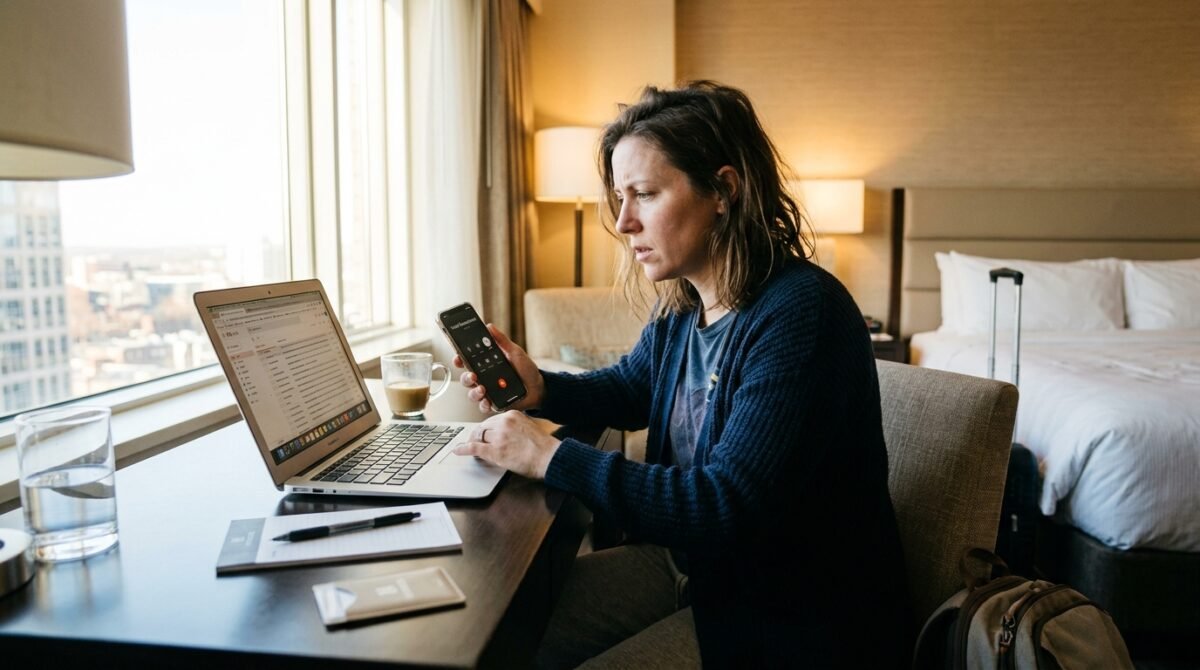
The next morning, the reality of the situation set in with a brutal, administrative coldness. I woke up at 6:00 AM, packed a small bag, and went to a hotel. I didn’t tell him where I was going. I just needed to be away from the smell of his cologne, the sight of his belongings, and the suffocating weight of his presence. My first call wasn’t to a friend, but to a lawyer.
The legal advice was blunt: do not pay a cent of his debt. If we were married, my assets would be at risk. Even engaged, I had to ensure that no ‘joint’ responsibility could be pinned on me. I spent the next three days in a flurry of phone calls. I contacted the venue, the florist, the caterer, and the photographer. The cancellation fees were astronomical, but they were nothing compared to the lifetime of debt I would have inherited.
My mother was the first person I told. She didn’t scream or cry. She just asked, ‘Are you safe?’ When I told her yes, she said, ‘Then leave the rest to me.’ She handled the difficult conversations with our extended family. She told them that the wedding was off due to ‘irreconcilable differences.’ She didn’t mention the gambling. She protected my dignity even when I couldn’t protect my own heart.
“You need to come home. This isn’t just about money, it’s about the fact that he was hiding a life from you. A wedding is a start, not a finish line, and you don’t start a race on a broken road.”
— My mother, on the phone
The hardest part was the friends. We had a group chat with our closest circle, people who were supposed to be in our wedding party. I had to send the message. I couldn’t bring myself to say it out loud. I typed it out, deleted it, and retyped it, my fingers numb. It had to be final. It had to be clear so there would be no questions, no ‘are you sure’ calls.
“Hey everyone. I’m really sorry to have to do this over text, but Mark and I have called off the wedding. Please respect our privacy and do not contact me for details. I’m taking some time for myself.”
— My message to the bridal party group chat
The responses were a mix of shock, concern, and the occasional intrusive question. But I blocked the chat. I didn’t want to hear about how ‘great’ Mark was or how ‘every couple goes through things.’ This wasn’t a disagreement about the color of the napkins. This was a fundamental breach of every promise we had ever made to each other.
The Family Group Chat Explosion
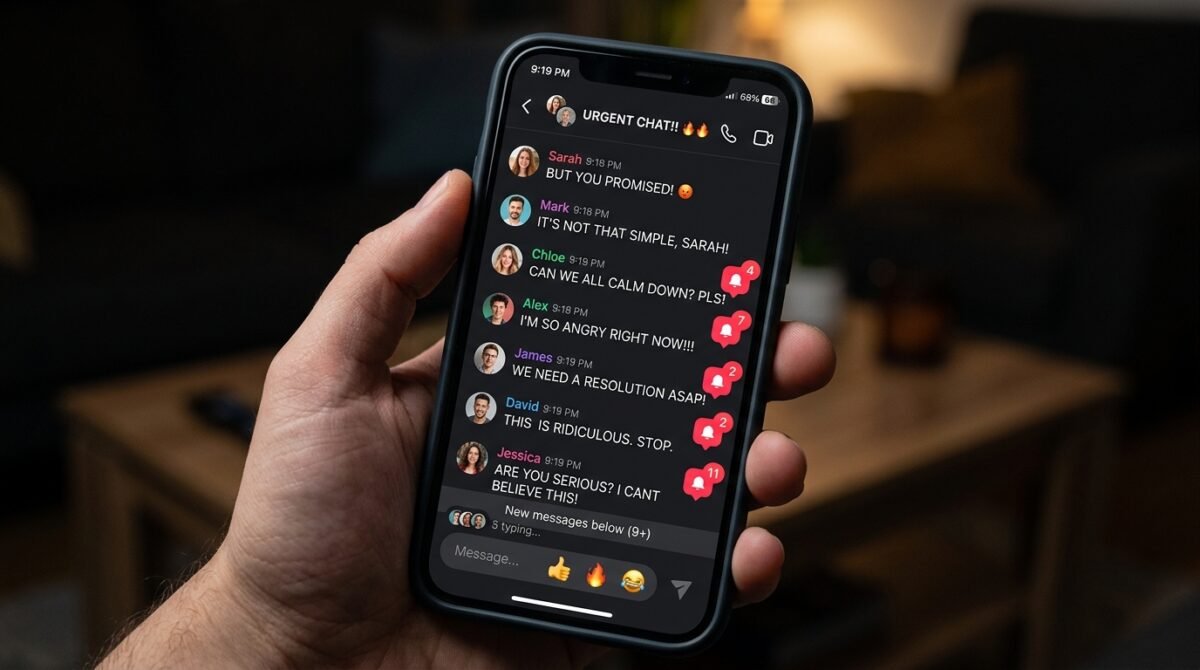
Two days after I left, the peace I had cultivated was shattered by a notification on my phone. It was the family group chat—the one that included Mark’s mother, his brother, and his sister. Apparently, Mark had told them his own version of the story, painting himself as the victim of a ‘sudden change of heart’ on my part. He didn’t mention the $95,000. He just said I had ‘given up on him’ when he was ‘stressed.’
His mother, a woman who had always been polite but distant, took the lead. She sent a flurry of messages, accusing me of being cold, heartless, and manipulative. She claimed that ‘all relationships have their ups and downs’ and that I was ‘abandoning a man in his time of need.’ The audacity was breathtaking. I sat there, reading the messages, and realized that his deceit wasn’t just a personal failing; it was a family trait. They had probably known, or at least suspected, and had chosen to keep the secret.
“I don’t think you realize how much Mark has been suffering. To walk away three weeks before the wedding is just cruel. You’re throwing away a life together because you’re scared of a little hardship?”
— Mark’s mother, in the family group chat
“‘A little hardship’ is ninety-five thousand dollars of secret gambling debt. If you want to support him, feel free to pay it off yourself. Don’t expect me to be the one to fund his addiction.”
— My reply to the group chat
The silence that followed my reply was deafening. I had dropped the truth like a bomb, and it had vaporized their narrative. I didn’t wait for them to apologize. I didn’t wait for them to defend themselves. I left the group chat immediately. My phone stopped buzzing for a few minutes, then started again with messages from his sister, but I had already blocked the entire family. I wasn’t going to be part of their cycle of enabling anymore.
The rush of adrenaline was intense. For the first time in my life, I felt like I had taken control of my own narrative. I wasn’t the ‘abandoning fiancée’; I was the woman who had saved herself from a sinking ship. The shame that I had been carrying—the shame of a ‘failed’ wedding—evaporated, replaced by a cold, hard sense of vindication. I was done being the polite, supportive partner. I was now just a woman looking out for her own survival.
The $1,400 Restaurant Bill Left on the Table
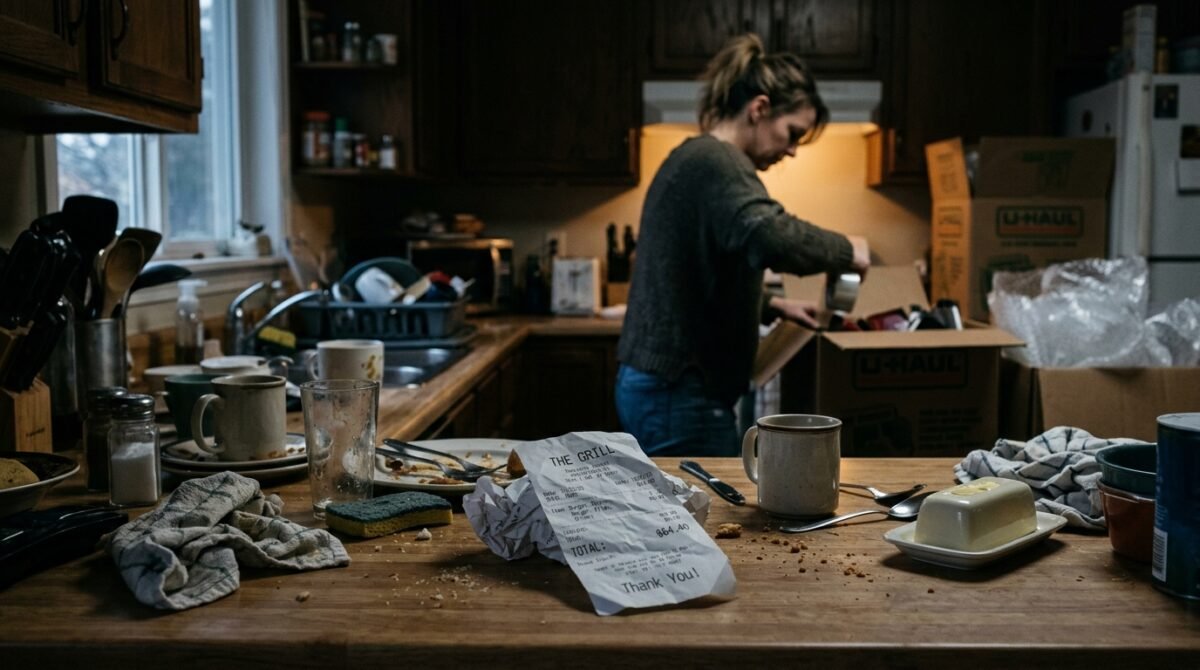
A week after the breakup, I had to return to the apartment to retrieve my things. I arranged for a neutral third party—my brother—to be there with me. I wasn’t going to be alone with Mark again. As we walked through the door, the apartment felt like a tomb. All the wedding-related items were gone, but the emptiness in the rooms felt heavier than the clutter had been. Mark was there, looking disheveled, surrounded by takeout containers and empty coffee cups.
He tried to talk, to apologize, to tell me about a ‘new plan’ he had to get out of the debt. I didn’t listen. I just started packing. As I was cleaning out the drawer in the kitchen, I found a receipt from a high-end restaurant from three days ago—the day after I left. It was a bill for $1,400. A celebration? A drowning of sorrows? It didn’t matter. The fact that he was still spending like this, even when the walls were closing in, told me everything I needed to know about his recovery.
“You’re still spending money like this, Mark? You’re in a hole that you can’t dig your way out of, and you’re still eating at places like this? You have no remorse. You only have regret that you got caught.”
— Me, holding up the receipt
He didn’t have an answer. He just looked at the receipt, then at me, and finally looked away. That look—the lack of shame—was the final nail in the coffin of our relationship. It wasn’t just that he was an addict; it was that he was a person who didn’t respect me enough to be honest, even when the truth was staring us both in the face. He hadn’t changed, and he wasn’t going to change.
As I packed my books and my clothes, I found a box of cards that guests had sent for our upcoming ‘shower.’ I opened one, read the well-wishes for our ‘long and happy life together,’ and threw it in the trash. It felt like a cleansing ritual. Every item I packed away was a piece of my old life that I was reclaiming. By the time we left, the apartment was half-empty, and so was my heart, but for the first time in weeks, it was light.
The Reality Check: Reddit Weighs In

I didn’t tell my story on Reddit to get validation, but I needed to know if I was crazy. I posted under a throwaway account, outlining the debt, the secret gambling, and the family’s reaction. The response was overwhelming. Thousands of people, many of them complete strangers, validated my decision in ways my friends hadn’t been able to. They saw the pattern, they saw the danger, and they saw the strength it took to walk away.
“You didn’t cancel a wedding. You canceled a disaster. That debt is just the tip of the iceberg. If you had married him, you would be paying for his mistakes for the rest of your life. You saved yourself.”
— u/FinanceExpert_88 (Top Comment, 32.5k upvotes)
Reading through the comments was like reading a roadmap of my own trauma. There were so many women—and men—who had stayed, who had tried to ‘fix’ their partners, and who were now divorced, bankrupt, and miserable. Their stories were my cautionary tales. They didn’t just support me; they gave me the vocabulary to understand what had happened to me. They called it ‘financial infidelity,’ a term that stuck in my mind like a brand.
“The family reaction is the biggest red flag here. They tried to guilt-trip you because they knew you were the only thing keeping him afloat. You were their safety net, not his partner. Good riddance.”
— u/BoundarySetter (15.2k upvotes)
I read every single comment. I spent days just consuming the support, the advice, and the shared grief of others. It made me realize that I wasn’t alone. This wasn’t a unique tragedy; it was a systemic issue of trust and betrayal that so many people were facing. The collective wisdom of the internet became my therapy. It helped me process the anger and move toward a space of objective clarity.
The Financial Fallout

The weeks that followed the breakup were a whirlwind of financial separation. I had to close our joint accounts, notify the bank, and ensure that my credit score remained untarnished. It was a tedious, bureaucratic nightmare. I spent hours on the phone with representatives, explaining the situation, verifying my identity, and ensuring that Mark had no further access to my personal lines of credit. It was a stark reminder of how entwined we had become, and how much work it took to unravel that.
My bank statements became my new obsession. I checked them daily, looking for any unauthorized activity, any lingering ties to his accounts. It felt like I was checking for tumors. Every transaction, every balance, was a testament to my effort to reclaim my autonomy. I felt a strange sense of pride in managing my own finances again, in knowing exactly where my money was and what it was doing.
| Asset | Original Status | Current Status |
|---|---|---|
| Joint Savings | Drained by Mark | Closed |
| Credit Cards | Linked / Risk | Separated / Secured |
| Emergency Fund | Compromised | Restored |
The financial cost of the wedding—the venue, the photographer, the caterer—was a sunk cost, but it was a price I was willing to pay for my freedom. I stopped looking at it as money lost and started looking at it as a ‘freedom tax.’ Every dollar spent on a deposit was a dollar that didn’t go into a marital bank account that he could have drained. It was the cheapest lesson I had ever learned.
I also learned about the importance of ‘financial transparency’ in a way I never had before. I vowed that, in any future relationship, there would be full disclosure. No more ‘bank glitches,’ no more ‘private’ accounts, and no more secrets. I would treat my finances with the same respect I expected my partner to have for our shared future. That was the lesson I would take forward.
Rebuilding My Identity

Once the legal and financial dust settled, I found myself in a strange new world. Who was I, if not ‘Mark’s fiancée’? For two years, my identity had been wrapped up in the wedding, the planning, and the role of the ‘supportive partner.’ Suddenly, those labels were gone. I was just me. And for the first time in a long time, that was enough.
I started doing things I had neglected during the relationship. I returned to my painting, which I had put aside for ‘practical’ projects. I reconnected with friends I had drifted away from because they ‘didn’t get along’ with Mark. I started taking long walks, rediscovering my own city, and simply enjoying the silence of my own company. It was a process of rediscovery that was both terrifying and exhilarating.
I realized that I had changed during the relationship. I had become quieter, more cautious, more willing to compromise on my own needs to keep the peace. I had to peel back those layers, to find the woman I was before I met him. It wasn’t easy. There were days when I felt a pang of loneliness, a moment of doubt where I missed the companionship—even if it was a false one.
“You seem different. You seem like yourself again. Not the person who was always checking her phone to see if Mark had texted.”
— My best friend, over coffee
That observation was the most validating thing I had heard in months. She was right. I wasn’t just ‘myself again’; I was an evolved version. I had faced a crisis and survived. I had made a difficult choice and stood by it. That confidence was something that no one could take away from me. I wasn’t just a survivor of a bad relationship; I was a creator of a new life.
The Final Communication
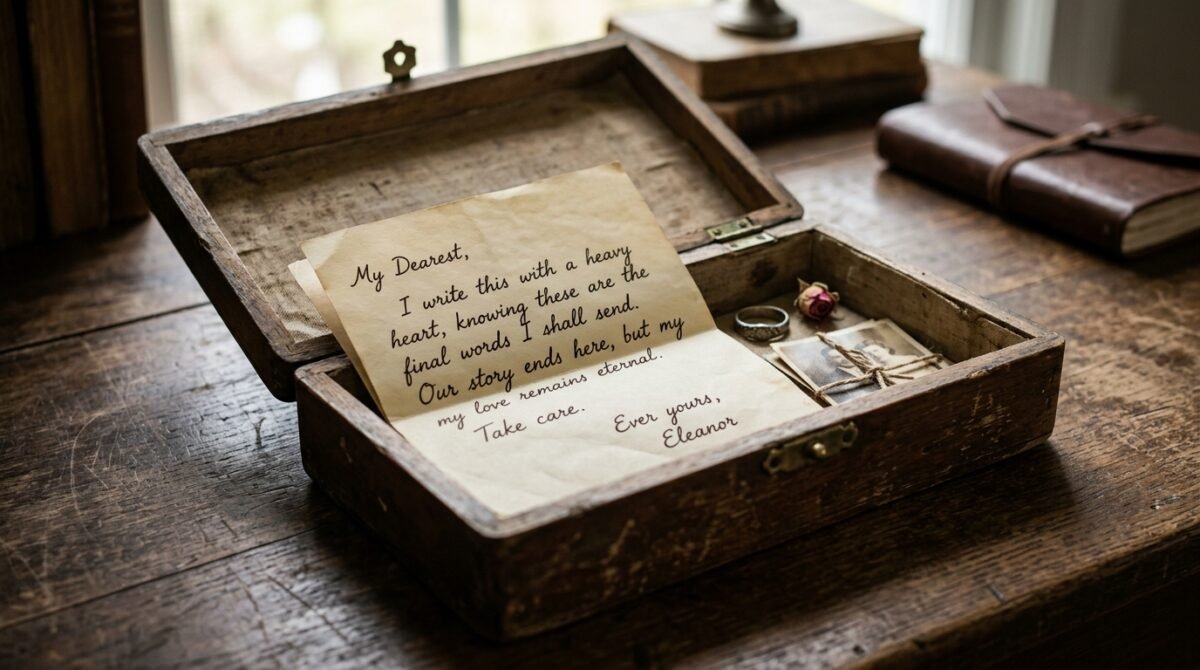
A month later, I received a letter in the mail. It was handwritten, marked ‘Personal and Confidential.’ My heart didn’t race when I saw it. I knew it was from him. I didn’t open it for two days. I just left it on my desk, a relic of a past that was quickly fading. When I finally opened it, I expected an apology, a plea, or perhaps a threat. It was none of those things.
It was a rambling, incoherent letter about how he was ‘trying’ to change, how he was ‘seeing someone’ for his addiction, and how he ‘still loved me.’ He talked about how the house felt empty without me and how he realized his mistakes. He didn’t acknowledge the $95,000, he didn’t offer a plan for repayment, and he didn’t ask for forgiveness in any meaningful way. It was just a desperate attempt to pull me back into his orbit.
“I’m in a program now. It’s hard, but I’m doing it for us. I know you think I didn’t care, but you were my entire world. Please, just give me a chance to talk.”
— Mark, in the letter
I didn’t reply. I didn’t reach out. I didn’t send him a letter back. I put the letter in a box where I kept all the ‘evidence’ of the relationship—the letters, the photos, the memories that no longer served me. One day, I would burn it all. For now, it was just a piece of paper, a testament to a man who didn’t understand that love required honesty, not just emotion.
I felt a strange sense of closure as I closed the box. I wasn’t angry anymore. I was simply done. There was no more ‘us’ to fix. There was only my life, and he was no longer a part of it. I realized that the hardest part of letting go isn’t the goodbye; it’s the realization that the person you’re saying goodbye to was never really there in the first place.
Lessons from the Wreckage

Looking back now, months later, I see the situation with a clarity that was impossible at the time. I learned that trust is a gift, not a default state. I learned that financial secrecy is the ultimate weapon against a healthy relationship. And most importantly, I learned that I am capable of making the hard decision, even when the world tells me it’s ‘too late’ or ‘too difficult.’
I’ve started dating again, very casually, and I’ve found that I have a much lower threshold for nonsense. I don’t look for ‘potential’ anymore; I look for actions. I don’t care about grand gestures; I care about consistency. I don’t care about promises; I care about patterns. It’s a healthier way to live, a more grounded approach that keeps me safe and satisfied.
I often wonder what would have happened if I hadn’t found that envelope. Would I be married now? Would I be sitting in a house I couldn’t afford, with a man I didn’t know? It’s a frightening thought, but it’s one I don’t dwell on. I found the envelope. I did the work. I walked away. That is the only thing that matters now.
“The cost of the wedding was high, but the cost of the marriage would have been infinite. You chose the right price to pay.”
— A friend, during a recent dinner
I would tell anyone in a similar position: listen to your gut. If something feels ‘off’—the finances, the stories, the secrecy—it probably is. Don’t wait for the evidence to be undeniable. Don’t wait for the disaster to happen. Trust yourself enough to walk away, even when it’s scary. You are the architect of your own happiness, and you don’t have to live in a house built on someone else’s lies.
Conclusion
Walking away from a life I had carefully constructed was the hardest thing I’ve ever done, but it was also the most liberating. I learned that I would rather deal with the temporary pain of a broken engagement than the permanent damage of a broken life. My story is a reminder that no amount of planning, no amount of commitment, and no amount of love can compensate for a lack of integrity.
I am now in a place where I feel truly free—financially, emotionally, and physically. I have rebuilt my savings, reclaimed my joy, and most importantly, I have rediscovered the value of my own worth. I didn’t just cancel a wedding; I saved myself from a lifetime of deception, and I have never felt more sure of my future.
What about you? Have you ever had to walk away from a situation, a person, or a dream because the foundation was made of lies? How did you know it was time to leave, and what was the turning point that finally gave you the courage to choose yourself? Let’s talk about it in the comments below—your stories of resilience and boundary-setting are always the most powerful part of this journey.
What's your verdict on this dilemma?
Vote below to contribute to the official community consensus.

Have a Dilemma Keeping You Up at Night?
Share your real-life feud, wedding chaos, or relationship crossroads anonymously with our editorial team.
What do you think ?
0 Comments🛡️ Comments are moderated to protect community integrity. Your comment will appear once approved by the editorial team.