

Living with Jax was always an exercise in patience, but I never expected the situation to spiral into a full-scale commercial enterprise inside our rented two-bedroom apartment. For months, he had been talking about ‘disruptive entrepreneurship’ and ‘side-hustle optimization,’ terms that usually signaled he was about to do something reckless with our security deposit. I tried to maintain a sense of calm, focusing on my career and keeping my own space tidy, but the energy in the apartment had shifted from ‘shared living’ to ‘calculated exploitation.’
It started with small things: an excessive amount of ring lights, a stack of industrial-sized air pumps in the hallway, and a weird obsession with the floor plan. I should have seen the red flags when he started measuring the ceiling height with a laser level, but I was too distracted by my own deadlines to notice the impending doom. The communal sofa—our centerpiece, the place where we debated movies and split pizzas—was the first casualty of his vision.
The moral dilemma hit me when I returned from a weekend trip to find the living room transformed. The sofa was gone, hauled off to who-knows-where, and in its place sat a massive, vinyl-encased, air-filled nightmare. It wasn’t just a toy; it was an industrial-grade inflatable obstacle course that spanned the entire length of the common area. And the worst part? He had already printed out QR codes for an admission fee.
I stood there in the doorway, my bag dropping to the floor with a heavy thud, staring at a strobe light he had installed on the ceiling. The air was thick with the smell of hot plastic and ozone. My home, my sanctuary, had been turned into a pop-up trampoline park for local influencers, and the fire exits were completely blocked by a giant inflatable ‘tunnel of doom.’ I knew then that the polite roommate agreements we had signed were ancient history.
The Morning The Furniture Vanished
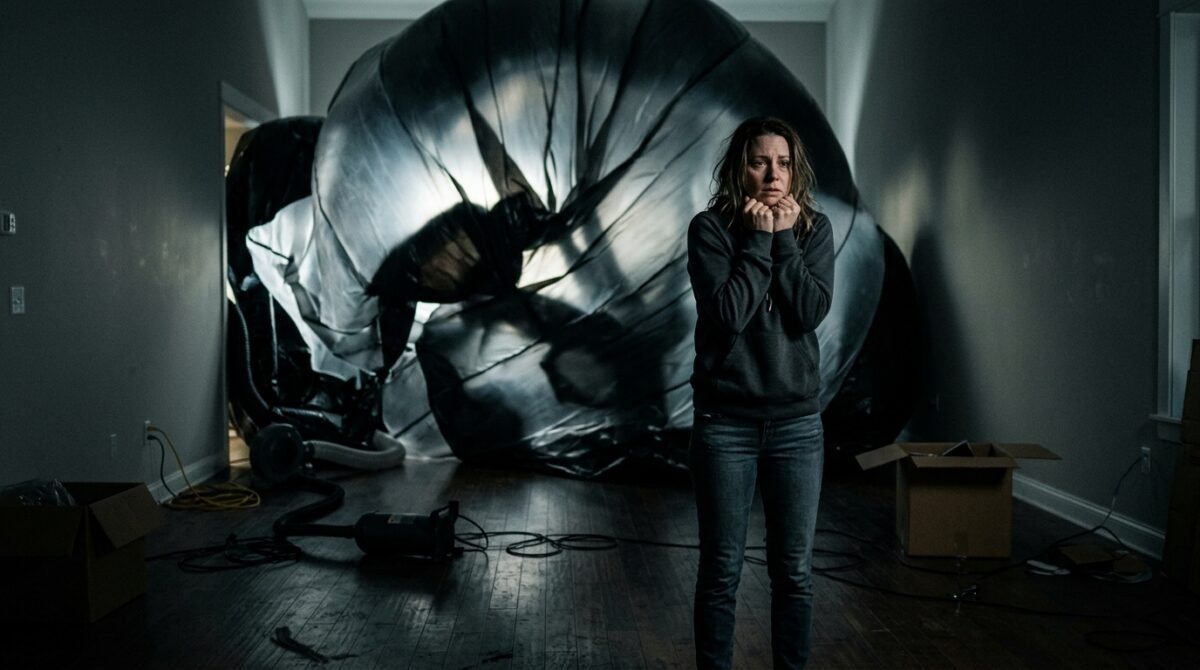
When I walked into the common area that Monday, the silence was deafening. The spot where our deep-seated grey sectional used to sit was now a desolate, dust-covered rectangle of hardwood. I checked my phone, thinking perhaps Jax had simply moved it to the balcony for cleaning, but the group chat was eerily quiet. I walked toward his bedroom door, my heart pounding with a mix of confusion and building rage.
Jax emerged from his room, wearing a headset and looking strangely manic. He didn’t even acknowledge the empty space in the living room. Instead, he gestured toward the hallway, where two delivery men were struggling to haul a massive, deflated mountain of vinyl through the front door. He looked at me with a grin that didn’t reach his eyes, clearly expecting me to be impressed by his ‘visionary’ pivot.
“Where is the couch, Jax? And what on earth is that massive thing currently blocking the entire hallway? We live in a two-bedroom apartment, not a commercial playhouse!”
— Me, confronting the situation
He waved his hand dismissively, his voice dripping with condescending corporate jargon. He told me the couch was ‘an inefficient use of capital’ and that he had sold it on a marketplace app to fund the initial investment for the course. The audacity was breathtaking. He had sold our shared furniture without consulting me, viewing it not as a loss of comfort, but as ‘liquidating an underperforming asset.’ I felt a cold knot of dread form in my stomach as I realized how little he respected our shared life.
The rest of the morning was a blur of frantic activity. Jax was barking orders at the delivery guys, ignoring my protests entirely. He kept insisting that this would ‘change the trajectory of our financial lives’ and that I should be thanking him for ‘disrupting the monotony of our living situation.’ Every time I tried to talk about the lease, he would cut me off, insisting that the landlord wouldn’t even notice the change as long as the rent was paid.
By noon, the apartment felt like a pressurized chamber. The air pump was humming at a decibel level that made my teeth ache. I sat in my room, listening to the plastic groan as it expanded, slowly swallowing the kitchen island and pushing against the walls. It was a physical invasion of my space, a manifestation of his complete lack of boundaries. I knew that if I didn’t act soon, the entire living room would become an unnavigable hazard zone.
The Grand Opening And The First Admission Fee

By Wednesday, the operation was fully functional. Jax had set up a makeshift ‘reception’ desk at the front door, using a folding table he’d stolen from the laundry room. He was wearing a lanyard and had a tablet ready to process payments. I watched from the kitchen—or what was left of it—as he checked in a group of teenagers who had found the ‘experience’ on some obscure social media app. It was surreal, humiliating, and deeply illegal.
The noise was the worst part. Every time someone jumped on the inflatable, the entire floor shook. I couldn’t even make a cup of coffee without feeling like I was on a ship in the middle of a storm. When I tried to confront him during a brief lull, he didn’t even look up from his tablet, instead handing me a flyer that read ‘The Fun Zone: Adventure Awaits!’ as if I were a stranger walking in off the street.
“Jax, this is not happening. There are strangers in our house, it smells like sweaty rubber, and I can’t even get to the fridge. You are going to get us evicted in record time. Take this down immediately.”
— My confrontation in the kitchen
He just laughed, a high-pitched, manic sound that made me shiver. He told me that I was ‘stuck in an old-world mindset’ and that he was making three times our monthly rent in pure profit. He insisted that the liability waivers he had printed off the internet would protect us from any lawsuits. I looked at the ‘waiver,’ which was clearly written in broken English and riddled with typos, and I knew we were one slip-and-fall away from total financial ruin.
The strangers started congregating in our hallway, leaving soda cans and snack wrappers on our doorstep. The neighbors were already whispering; Mrs. Gable from 4C had knocked on our door three times to complain about the thumping sounds that lasted until 2:00 AM. Jax didn’t care. He was too busy counting his ‘revenue’ on his app, completely blinded by the prospect of easy money.
I felt like an alien in my own home. I spent my time barricaded in my room with noise-canceling headphones, trying to ignore the constant cheering and the squeaking of rubber against the ceiling. The power was flickering, likely because the air pump was drawing way too much current, and I was terrified that the whole place was going to blow a fuse or worse. My trust in Jax had been shattered completely, replaced by a cold, hard need for self-preservation.
The Safety Inspection That Never Happened
It became clear that Jax wasn’t going to listen to reason. He had convinced himself that he was a business genius, and any concern I voiced was just ‘jealousy’ or ‘lack of vision.’ On Thursday, I decided to do a proper inspection of the fire exits. What I found was chilling. The inflatable course was literally wedged against the door that led to the fire escape. If there had been a fire, we would have been trapped inside a giant, flammable plastic bubble.
I pulled out my phone and started taking photos. Every angle, every blockage, every frayed extension cord running across the floor. I didn’t tell Jax what I was doing. I just kept clicking, documenting the negligence. I felt a strange sense of calm settling over me as I realized that I wasn’t just observing a disaster anymore; I was preparing to stop it. This wasn’t about being petty; it was about not dying in a fire because my roommate wanted to host a bouncy castle party.
“Look, the exit is wide open. It’s just ‘temporary’ storage. Don’t be such a buzzkill. People love the tunnel feature, and you can’t have a tunnel without a little wall obstruction.”
— Jax, responding to my concerns about the fire escape
His casual dismissal of the life-safety issue was the final straw. He treated the fire escape as a ‘design flaw’ that he was correcting by ‘optimizing the space.’ I realized then that he was completely detached from reality. He wasn’t just greedy; he was dangerous. I went back to my room, locked the door, and opened the local government website to look up the fire code regulations. The fines were massive, and the penalties for operating a business in a residential building without a permit were even worse.
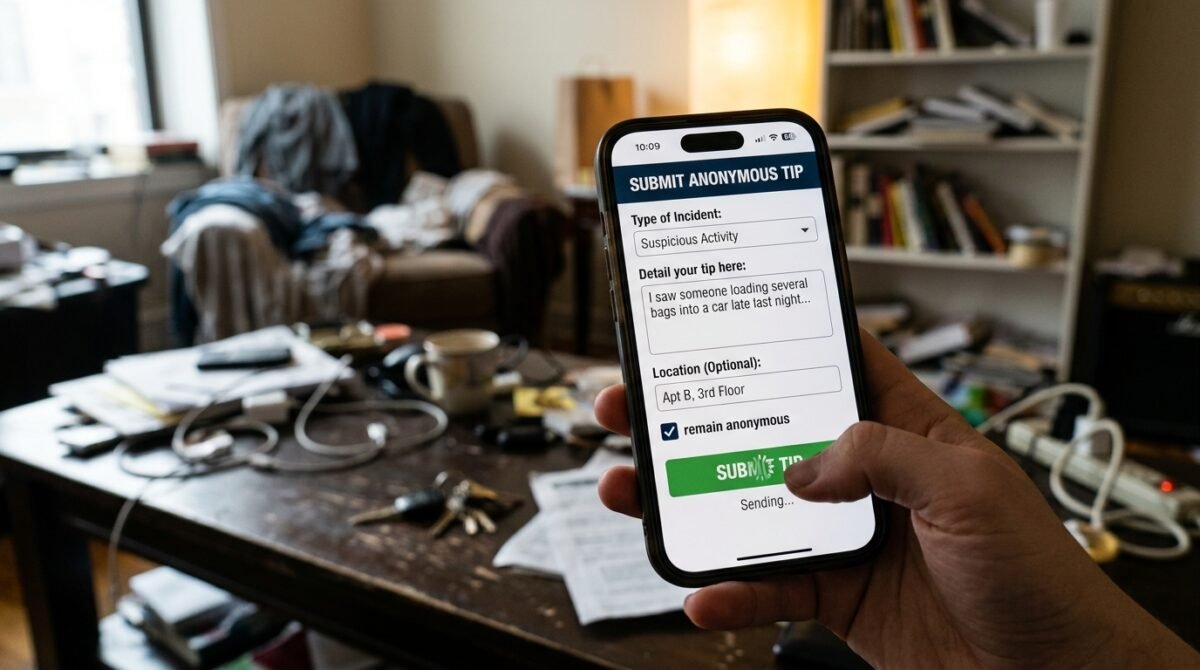
I spent the next hour drafting an anonymous tip to the local fire marshal. I included all the photos, the address, and a brief description of the ‘business’ operating inside. I debated for a long time whether or not to include his name, but ultimately decided to focus on the hazard itself. I wanted the state to shut this down, not just get into a personal squabble that he could talk his way out of.
As I hit ‘send,’ my hands were shaking. I knew that once the authorities arrived, there was no going back. The friendship, the lease, the living arrangement—everything would be incinerated along with his stupid inflatable obstacle course. But as I heard another group of people thumping through the living room, I felt a wave of relief. This was the only way to save my own skin, and I wouldn’t let his insanity take me down with him.
The Day The Fire Marshal Came Calling
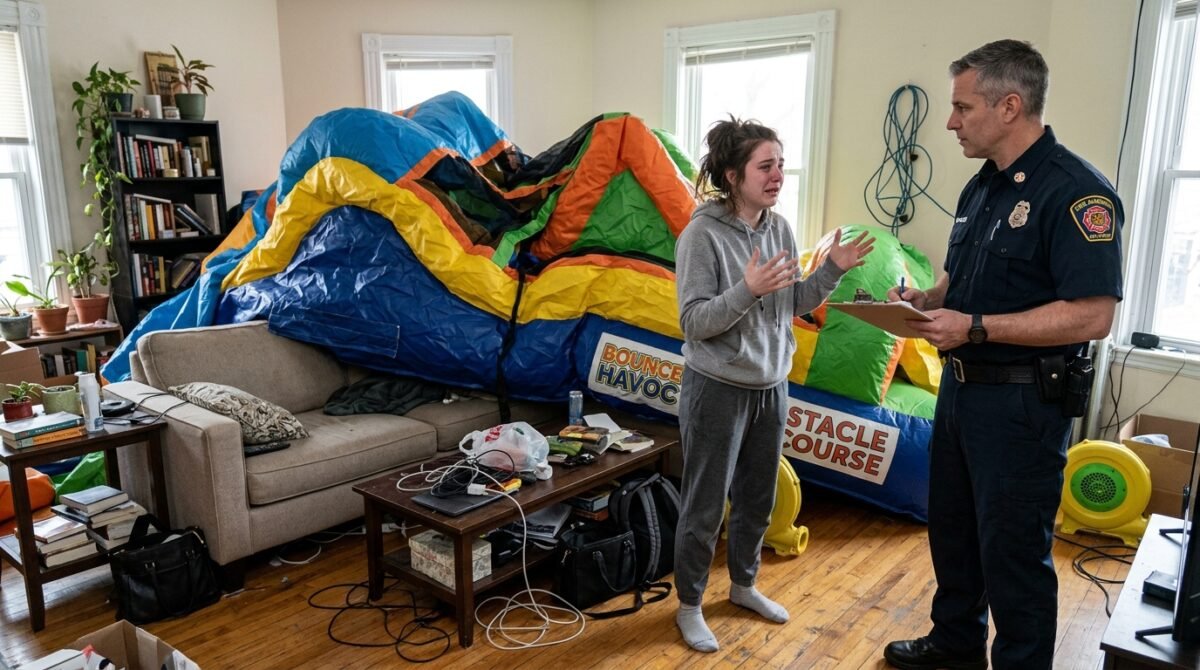
Friday morning started normally, which meant it was absolute chaos. Jax was already setting up a ‘VIP session’ for a group of local influencers. The noise was vibrating through the walls of my bedroom. I was sitting at my desk, trying to work, when I heard a heavy, authoritative knock at the door. It wasn’t the usual rhythmic thumping of the ‘customers’; it was a sharp, military-grade knock that echoed through the entire apartment.
I heard Jax open the door, his voice shifting from a salesman’s pitch to a confused stutter. Through the thin walls, I could hear a gruff, commanding voice asking about the ‘business license’ and the ‘occupancy permit.’ My heart started racing. The moment of truth had arrived, and I found myself holding my breath, listening to every word of the confrontation unfolding just feet away.
“Sir, this is a residential unit. You don’t have a commercial permit, you’re blocking fire exits with flammable material, and you’re drawing illegal levels of power. This entire unit is a fire hazard. Shut it down, now.”
— The Fire Marshal, during the inspection
Jax tried to argue, claiming it was a ‘private event’ and that he was ‘reforming the rental experience,’ but the marshal wasn’t having any of it. I heard the sound of the air pump being unplugged—a long, dying wheeze as the inflatable began to deflate. The cheering in the living room turned into collective groans as the floor suddenly became soft and unsupportive. It was the most beautiful sound I had ever heard.
The marshal was thorough. I heard him testing the smoke alarms, questioning Jax about the electrical wiring, and documenting every violation. Jax was clearly spiraling, his voice rising in panic as the reality of the situation finally hit him. He was being told that he was facing thousands of dollars in fines and an immediate cease-and-desist order. He wasn’t the visionary entrepreneur anymore; he was just a kid caught breaking the law.
When the marshal finally left, the apartment was deathly quiet. The inflatable was a limp, sad pile of vinyl in the center of the room. I stepped out of my bedroom to find Jax sitting on the floor, staring at the ceiling, his lanyard discarded in a pile of snack wrappers. He looked up at me, his eyes wide and panicked. He didn’t say a word, and for once, I didn’t feel the need to say anything either. The silence said everything that needed to be said.
The Fallout And The Eviction Notice
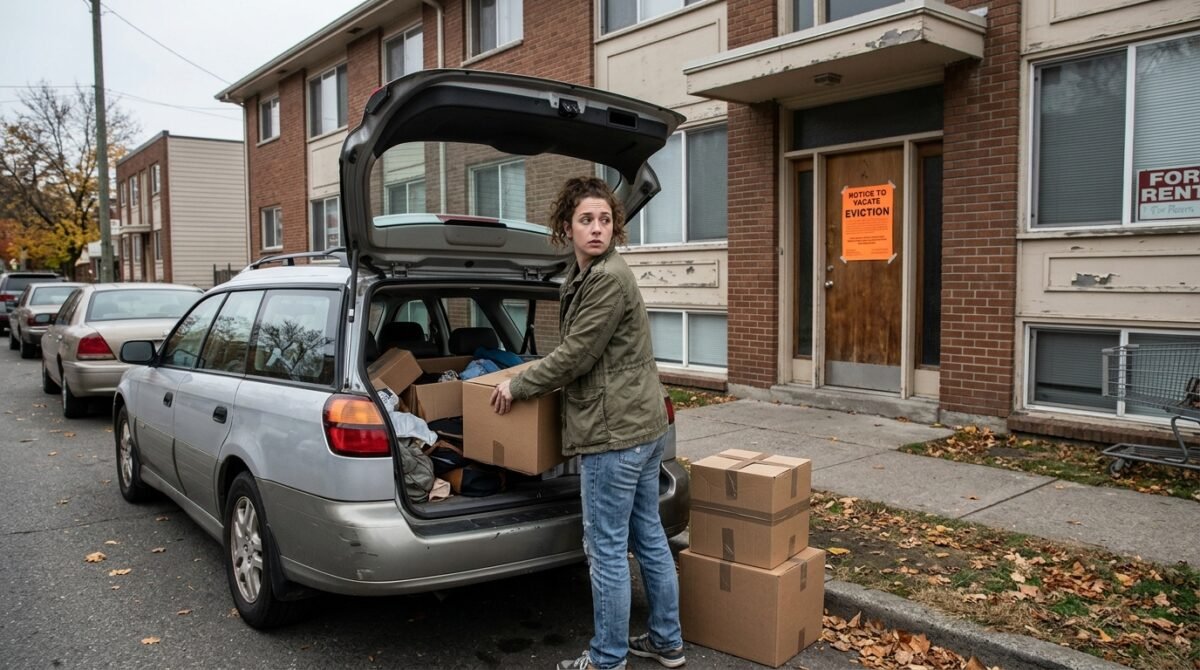
The aftermath was swift and brutal. The landlord received a report from the fire department within hours, and the eviction notice was posted on our door before the end of the day. Jax was still in denial, frantically making calls to lawyers and ‘investors’ who clearly weren’t picking up. He kept trying to blame me, accusing me of sabotaging his ’empire’ because I was ‘too small-minded’ to succeed.
I didn’t engage. I had already started packing my things. I had moved out the majority of my personal belongings while he was busy arguing with the building management. The apartment felt like a tomb now—hollowed out, stripped of its furniture, and marked by the stain of Jax’s hubris. He tried to corner me in the kitchen to ask for a loan to cover his portion of the fines, but I just walked past him without even making eye contact.
“You’re ruining my life! You just couldn’t stand that I was actually making something of myself. You’re the reason I’m going to be blacklisted from every rental agency in the city!”
— Jax, in a final, desperate outburst
I looked at him then, really looked at him, and saw the pathetic reality of his situation. He had sacrificed our home, our friendship, and his own financial stability for a few days of inflated ego and a pile of vinyl. I told him, calmly and clearly, that he had done this to himself. I hadn’t forced him to sell our couch, and I certainly hadn’t forced him to turn our apartment into a death trap. He was solely responsible for his own wreckage.
The move-out process was tense. We didn’t speak as we loaded our separate boxes into separate vehicles. The building manager watched us like a hawk, ensuring that no further damage was done to the property. As I drove away for the last time, I looked at the building, now just a boxy structure against the city skyline, and felt a profound sense of relief. I was out. I was safe. And I was never, ever going to have a roommate again.
Jax eventually ended up living in his car for a few weeks, or so I heard through mutual friends. He tried to start a new ‘venture’ involving high-end drone photography, but it seemed to die out just as quickly as the obstacle course. He had learned nothing, and that was the saddest part of the entire ordeal. Some people are just destined to run in circles, chasing the next big thing while the foundation beneath them rots away.
The Internet Weighs In
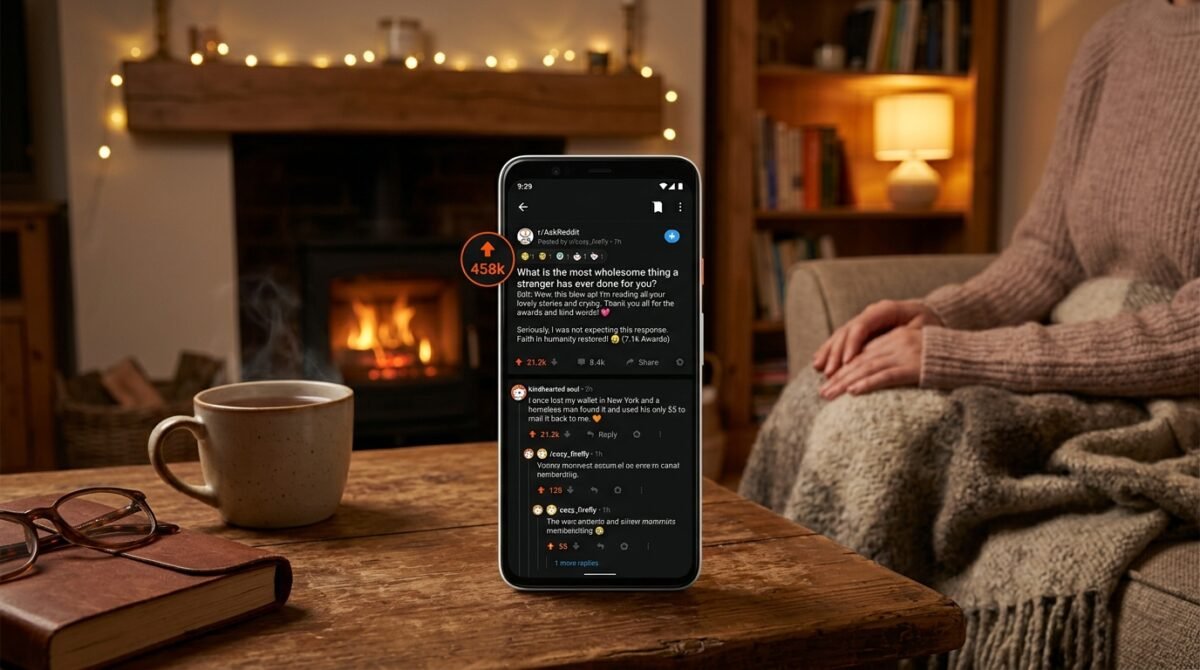
When I finally posted the full story on Reddit, the response was overwhelming. Within hours, the post had reached the front page, thousands of comments flooding in from people who had experienced their own ‘roommate from hell.’ It was cathartic to see the community validate my decision to report the fire hazard, even though I was still feeling a lingering sense of guilt about the destruction of the friendship.
The consensus was clear: Jax was an entitled, dangerous, and delusional person, and I had actually saved him from a potential manslaughter charge. People shared stories about their own roommates, ranging from failed pyramid schemes to literal indoor petting zoos. It made me realize that my experience, while extreme, was part of a larger, weirdly common trend of people losing touch with reality in pursuit of ‘passive income.’
“OP, you didn’t just ‘report a hazard.’ You stopped a potential tragedy. If that thing had caught fire, you would be looking at a completely different kind of post. You saved your life and potentially the lives of others. NTA 100%.”
— u/SafetyFirstPro (Top Comment, 45.2k upvotes)
I spent hours reading the comments, finding comfort in the humor and the brutal honesty of the community. Some people were critical, of course—a few users argued that I should have ‘communicated more’ before reporting him, but they were quickly drowned out by the hundreds of people who pointed out that Jax had stopped communicating the moment he decided to prioritize a bouncy castle over our lease agreement.
The Reddit thread turned into a support group of sorts. People started sharing resources on how to handle difficult roommates and how to protect oneself from legal liability in shared living situations. I felt less alone, less crazy, and much more empowered to set firm boundaries in the future. The validation was exactly what I needed to move on from the chaos of the last few weeks.
I eventually did an update, confirming that I had secured a new, one-bedroom apartment where I could live in peace, without any obstacle courses or ‘entrepreneurial’ roommates. The community support made the transition so much easier. I realized that my voice mattered, and that standing up for my safety and my rights was not just a defensive move—it was a necessary act of self-respect.
The Financial Breakdown

Looking back, I decided to compile the actual cost of the chaos. It was staggering to see the numbers laid out, a clear testament to the fiscal irresponsibility that defined Jax’s venture. I kept a ledger of the damages, the fines, and the loss of our shared assets. It served as a final piece of closure for me, a way to quantify exactly what had been lost in the pursuit of his misguided ‘vision.’
| Category | Initial Value | The Final Outcome |
|---|---|---|
| Shared Sectional Sofa | $1,200 | Sold for $200 by Jax |
| Fire Marshal Fines | $0 | $4,500 levied on lease |
| Cleaning Fees/Repairs | $0 | $1,800 deducted from deposit |
| Legal/Consultation Fees | $0 | $500 in my personal time/effort |
The table speaks for itself. Jax didn’t just fail; he incinerated our credit and our standing with the landlord. The security deposit was completely forfeited, and the fines were split between us, which was the most painful part. I had to pay for his incompetence, a bitter pill to swallow, but I paid it just to wash my hands of the whole affair. I wanted no ties, no debt, and no reason to ever have to talk to him again.
I calculated the total loss to be nearly $8,000, not including the stress and the months of lost sleep. It was a expensive lesson in choosing the right people to live with. I realized that I had been too lenient in the beginning, too willing to overlook the ‘quirks’ and the ‘hustle’ culture that should have been obvious red flags. I promised myself that my next living situation would be vetted with the same intensity as a high-security job interview.
The financial impact was significant, but the peace of mind I gained was priceless. I was no longer living in a house of cards, waiting for the next disaster to strike. I was in control of my own environment, and that was worth every cent I had lost. Jax, on the other hand, was still out there somewhere, likely chasing another ‘get-rich-quick’ scheme while his credit score plummeted to the floor.
The Psychology Of Entitlement

I spent a long time thinking about why Jax did what he did. It wasn’t just a lapse in judgment; it was a profound failure of empathy and a distorted sense of entitlement. He genuinely believed that his desire to succeed justified the displacement of my comfort and safety. He saw the apartment not as a home, but as a resource to be exploited, and he saw me as a barrier to his success rather than a partner in the lease.
This kind of behavior is surprisingly common in the ‘hustle culture’ era. There’s this pervasive idea that if you aren’t constantly monetizing your environment, you’re falling behind. Jax had bought into this completely, to the point where he couldn’t see the real-world consequences of his actions. To him, the inflatable course was a product, and the apartment was a distribution channel. He didn’t see the people living there, the fire hazards, or the violation of our contract.
“Some people view the world as a place to live, while others view it as a place to extract value. Unfortunately, when you live with someone who belongs to the second group, your home quickly stops being a home.”
— A comment from a helpful reader on my thread
It helped me realize that I wasn’t dealing with a ‘bad person’ in the traditional sense, but with someone who had lost their moral compass in favor of a distorted financial goal. It didn’t make his actions any less damaging, but it helped me understand that his behavior wasn’t about me. It was about his own deep-seated insecurity and his desperate need to feel ‘successful’ in the eyes of others.
I learned that boundaries are not just about protecting oneself from others; they are about maintaining one’s own sanity in a world that is increasingly focused on the ‘next big thing.’ I had to learn to say ‘no’ before things escalated, to speak up when something felt wrong, and to walk away when the situation became untenable. It was a hard lesson to learn, but one that I hope will serve me for the rest of my life.
Now, I look at my own living space as a sanctuary, not an asset. I keep it clean, quiet, and safe. I invite people over for dinner, not for admission fees. And when I think about Jax, I don’t feel anger anymore; I feel a sense of pity. He is still out there, chasing ghosts, while I am here, living a life that is actually my own.
Moving Forward And Setting Boundaries

Moving into my new place, I felt like a weight had been lifted off my shoulders. I was finally able to sleep through the night without worrying about the building catching fire or someone jumping on an inflatable obstacle course in the living room. I spent the first week just enjoying the silence, the simple luxury of having a couch that I actually owned and that didn’t double as a ticket-entry portal.
I also took the time to reflect on the boundaries I had failed to set early on. I had let Jax’s ‘hustle’ take over our shared space because I wanted to be the ‘cool,’ supportive roommate. I realize now that being a good roommate doesn’t mean being a doormat. It means having honest, sometimes difficult, conversations about expectations, finances, and the use of common areas. If I had put my foot down when he brought home the first air pump, maybe things would have ended differently.
“Boundaries aren’t walls; they’re doors that you keep closed to keep the chaos out. Never be afraid to be the ‘bad guy’ when your safety is on the line.”
— Advice from my therapist during the transition
I’ve become much more proactive about setting expectations. Whether it’s with a partner, a friend, or in my professional life, I make sure that we are on the same page from the beginning. I no longer feel the need to be the person who goes along with everyone else’s ‘big ideas’ if those ideas compromise my integrity or my peace of mind. It’s a liberating feeling, to finally prioritize myself in a healthy way.
I’ve also started to appreciate the small things more—a quiet Sunday morning, a well-organized closet, the security of a lease that I alone am responsible for. I’ve realized that my home is the one place in the world where I should be completely, 100% comfortable. If a situation threatens that comfort, I know now that I have the power to change it. I am not a victim of my circumstances; I am the author of my own living experience.
The drama with Jax is now just a story I tell, a cautionary tale about the dangers of unchecked ego and the importance of having a backbone. It’s part of my history, but it’s not my future. I’ve moved on, and I am stronger for it. I am no longer the person who waits for a fire marshal to solve their problems; I am the person who sees the smoke and takes action before the house burns down.
Lessons From The Inflatable Disaster

If there is one thing I want people to take away from this story, it’s that your home should never be secondary to someone else’s ‘hustle.’ We live in a culture that pushes us to monetize every waking moment, to turn our lives into brands, and to treat our living spaces as potential revenue streams. It’s a dangerous path, one that can lead to isolation, financial ruin, and the loss of the very peace that home is supposed to provide.
Don’t be afraid to be the one who asks questions. If your roommate or partner is doing something that feels off, trust your gut. Ask for the permits. Ask about the insurance. Ask about the fire exits. Don’t let the fear of being ‘uncool’ or ‘unsupportive’ keep you from speaking the truth. Your safety is worth more than any ‘opportunity’ they are trying to sell you, and your sanity is worth more than any amount of money they claim they can make.
“The most expensive thing you will ever pay for is a lack of boundaries. Guard your peace with the same intensity that you guard your wallet.”
— My own takeaway from this entire experience
I also learned the value of documentation. Without the photos and the evidence I collected, Jax would have easily gaslit me, turning the whole thing around as if I were the one causing the trouble. Document everything. Keep records of your agreements, your payments, and your communications. In a conflict, the truth is often the first thing to be distorted; having a clear, objective record is your best line of defense.
Finally, remember that you are allowed to walk away. You are not obligated to stay in a situation that is toxic or dangerous, even if you have a lease or a friendship on the line. Sometimes, the bravest thing you can do is pack your bags and leave. It might be hard, and it might be expensive, but the cost of staying is usually much higher in the long run.
I’m grateful for the experience, as bizarre as it was. It taught me who I am, what I value, and what I am willing to tolerate. I am more confident, more secure, and more at peace than I have ever been. And I will never, ever look at a bouncy castle the same way again.
Conclusion
My life has returned to a state of calm, but the lessons from the ‘inflatable era’ remain etched in my memory. I’ve realized that personal boundaries are the most effective tool we have for maintaining our own happiness. It wasn’t the obstacle course itself that was the problem; it was the total erasure of my autonomy and the disregard for our safety that defined the entire situation. I had to choose between my comfort and a potentially catastrophic outcome, and I made the right call.
Looking back, I wonder if Jax has finally learned anything from the collapse of his venture. He’s likely still chasing the next big thing, still convinced that he’s just one ‘pivot’ away from success. It’s a sad existence, but it’s his to lead, not mine. I have found my own path forward, and I’m much happier for it. The chaos is a distant memory, replaced by the quiet, steady rhythm of a life I’ve built for myself.
I want to hear from you, dear readers. Have you ever lived with someone who thought they were the next big ‘disruptor’? What is the absolute wildest thing a roommate has ever done in your living space? Do you think I was too harsh, or did I do exactly what needed to be done? Let’s talk about it in the comments below—I’m ready for your stories, your advice, and your perspective on this bizarre chapter of my life.
What's your verdict on this dilemma?
Vote below to contribute to the official community consensus.

Have a Dilemma Keeping You Up at Night?
Share your real-life feud, wedding chaos, or relationship crossroads anonymously with our editorial team.
What do you think ?
0 Comments🛡️ Comments are moderated to protect community integrity. Your comment will appear once approved by the editorial team.