

They say that money is the number one cause of divorce, but nobody ever talks about the slow, insidious erosion of self-respect that happens long before the vows are exchanged. My relationship with Mark had always been a balanced equation—or so I thought. We shared expenses, split the rent, and dreamed of a future that felt like a true partnership. At least, that was the narrative I clung to until the engagement ring slipped onto my finger and, with it, a hidden ledger of unspoken expectations appeared.
It started small—comments about how he was ‘investing’ in our future, and how I should be prepared to ‘offset’ his generosity elsewhere. But when the European vacation we had been planning for months suddenly became my sole financial responsibility because he decided my ring was a ‘payment’ for his future travel expenses, the facade crumbled. I wasn’t just a partner anymore; I was being treated like an acquisition with an ongoing maintenance fee.
The decision to cancel the flights wasn’t made in a fit of rage, but in a moment of chilling clarity. I realized that if I agreed to this, I was signaling that my independence and my boundaries were negotiable items. The following story is a chronicle of how a romantic gesture became the anchor that threatened to drown my financial autonomy and my self-worth.
As I sat in my living room, the tickets pulled up on my laptop, I had to decide: was I going to pay for the privilege of being with someone who equated a piece of jewelry to my freedom, or was I going to walk away from the trip—and potentially the man? This is not just a story about a vacation; it is a story about the true cost of setting boundaries when your partner assumes you are already bought and paid for.
The Diamond-Studded Ultimatum

It was a Tuesday evening when the atmosphere shifted from excitement to transactional coldness. We were finalizing the details of our Italian excursion, a trip we had spent six months saving for. Mark was looking at the itinerary when he suddenly stopped, turned to me, and asked about my credit card details for the final hotel bookings. I was confused, as we had agreed to split the costs 50/50 from our joint vacation fund.
When I reminded him of our savings plan, he laughed—a dry, dismissive sound that I hadn’t heard before. He leaned back, his eyes fixed on the engagement ring he had given me just three weeks prior. He suggested that since he had spent ‘several thousand’ on the ring, it was only fair that I covered the lion’s share of the European trip. The air in the room seemed to evaporate.
“Look, let’s be real. That ring wasn’t cheap. It’s an investment in our future, and it’s only fair that you pick up the tab for this trip to balance out the ledger. I’ve put my share into the ring, now it’s your turn to prove your commitment.”
— Mark, during the heated confrontation
I sat there, stunned into silence. I had never asked for a diamond ring, let alone one that would justify such a bizarre financial demand. To him, the ring wasn’t a symbol of love; it was a down payment on my autonomy. He seemed to view our relationship as a business merger where assets were being calculated in real-time, and I was suddenly the one in debt.
I tried to explain that an engagement ring is a gift, not a debt to be repaid, but he wouldn’t hear it. He doubled down, listing off other ‘contributions’ he claimed to have made, acting as if our life together was a series of receipts he was keeping to present to me during moments of disagreement. The entitlement was staggering, and it made me feel like an object rather than a fiancee.
By the time he went to bed that night, I was still sitting at the kitchen table, staring at my hand. The ring, which once sparkled with promise, now felt heavy and suffocating. It was a golden shackle that he fully intended to leverage whenever he felt like taking a vacation on someone else’s dime.
The Midnight Cancellation

I didn’t sleep that night. I kept replaying the conversation in my head, searching for a misunderstanding, a joke, anything that would make his words sound less predatory. But the more I thought about it, the more clearly I saw the pattern. The subtle jabs about money, the way he constantly brought up his salary compared to mine, and the underlying tone of ‘I provide, therefore I rule.’ It was all there, hidden behind a thin veneer of romantic gestures.
I opened my laptop and navigated to the airline portal. $7,000 was a significant amount of money, a chunk of my emergency fund that I had worked hard to build. For him to suggest I just ‘absorb’ that cost because he spent money on a piece of jewelry was not just insulting; it was a massive red flag regarding our future financial compatibility.
I clicked the ‘Cancel Booking’ button for both tickets. The screen flashed a confirmation, and I felt a wave of relief so intense it brought me to tears. I wasn’t just canceling a flight; I was canceling the narrative that I was someone who could be bought or leveraged. I knew there would be hell to pay when he woke up, but I was ready.
“I don’t think you understand, Mark. You don’t get to buy my compliance. The trip is canceled. You can use your ‘ring money’ for your own vacation if you want to go so badly.”
— My text message to Mark, sent at 3:00 AM
The next morning, the house was silent until he saw the confirmation email on the shared desktop. The explosion that followed was as predictable as it was loud. He stormed into the living room, his face flushed, demanding to know how I could have sabotaged our plans without consulting him. He acted as if he had been wronged, completely ignoring the fact that he was the one who had attempted to extort me.
I stood my ground, my voice calm but firm. I told him that if he wanted a partner who was financially subservient to him, he had chosen the wrong woman. He tried to gaslight me, claiming he was ‘just joking’ or ‘making a point about finances,’ but the look of genuine fury in his eyes told a different story. The deal was off, and for the first time, I felt like the adult in the room.
The Family Group Chat Intervention
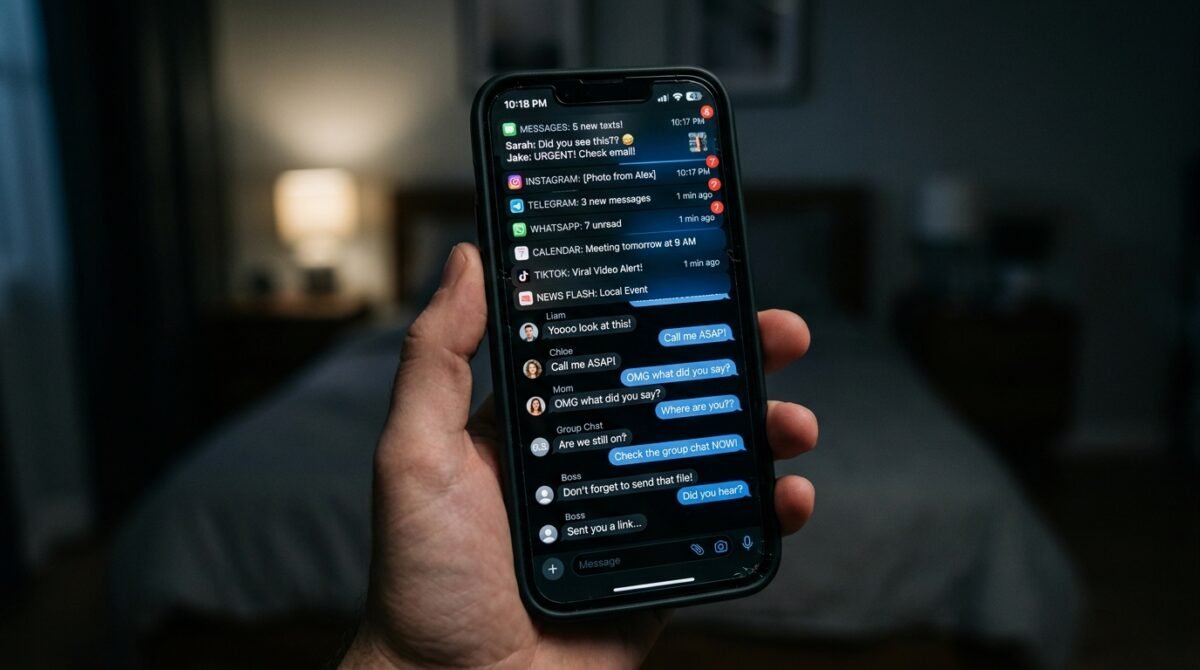
The fallout didn’t stay between us for long. By noon, Mark had messaged his mother and sister, painting me as the ‘irrational’ one who had ruined our once-in-a-lifetime trip. My phone started blowing up with notifications from his family, most of them guilt-tripping me for being ‘selfish’ and ‘unappreciative’ of everything he does for me.
It was a coordinated campaign of emotional manipulation. They were trying to frame the situation in a way that made me look like the villain, conveniently leaving out the part where he demanded I pay $7,000 for a trip as ‘repayment’ for a ring. I felt a surge of indignation. They didn’t know the full story, and they didn’t care to ask.
“OP, you really need to grow up. Mark bought you a beautiful ring and you’re acting like a child over a few plane tickets. This is part of being married—sacrificing for each other.”
— His Mother, in the family group chat
I decided then and there that I wouldn’t defend myself in their group chat. Instead, I took a screenshot of the initial argument—where I had calmly explained my position—and the confirmation email for the refund, and I posted it to my own social media, keeping it vague enough to avoid total doxxing but clear enough for those involved to know exactly what I was talking about. The public exposure was a nuclear option, but I was done playing nice.
Within minutes, the tide began to turn. Some of his family members went quiet, likely realizing that his version of events didn’t quite match the reality of his demand. Others tried to double down, but the truth was out there. It felt incredibly liberating to stop carrying the burden of his secrets and his reputation.
By the evening, the messages had stopped. I think they realized I wasn’t going to be bullied into submission. I spent the rest of the day blocking the most vocal family members, setting clear boundaries that I had previously been too polite to enforce. It was a messy, painful day, but it was the start of my independence.
The Calculated Ledger
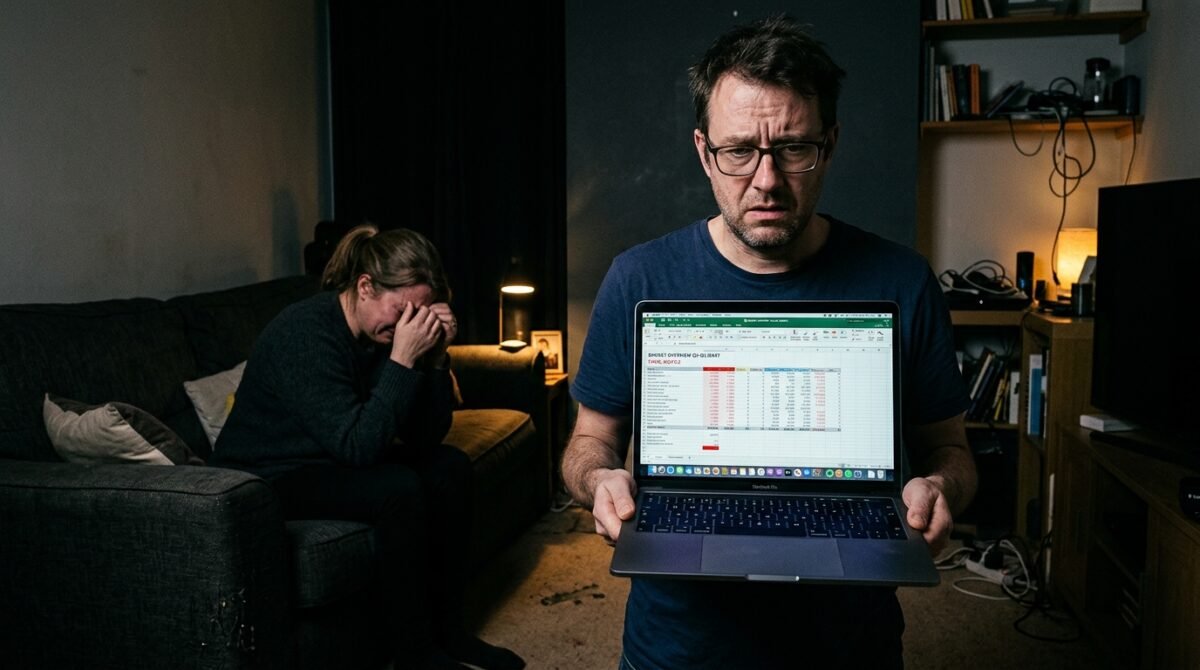
When Mark returned home that evening, the tension was palpable. He didn’t say a word, just went straight to the desk to check the refund status. I sat on the couch, reading a book, completely unbothered. He turned around, his expression shifting from anger to a desperate sort of confusion. He didn’t know how to handle someone who wouldn’t just fold under pressure.
He started pulling out bank statements, trying to prove that he had spent more money on ‘us’ throughout the relationship. He had actually put together a spreadsheet—a literal list of dates, dinners, gifts, and bills, highlighting his contributions. It was the most unromantic thing I had ever seen. He was trying to justify his demand by turning our entire relationship into a balance sheet.
“Look at this! See here? I paid for the weekend in the city, the concert tickets, the dinner in March. You are behind on your share. I was just trying to balance it out. You’re being incredibly petty by canceling that trip.”
— Mark, while gesturing to his spreadsheet
I looked at his spreadsheet and I felt nothing but pity. How could a person think that love was something to be tracked in a ledger? I told him that I would be happy to pay back every single cent he had spent on me if it meant I could walk away with my dignity intact. That shut him up fast. He knew that if I paid him back, there would be nothing left to hold over my head.
He backpedaled, saying he didn’t want the money, he just wanted me to be ‘reasonable.’ I pointed out that ‘reasonable’ to him meant ‘subservient.’ I spent the next hour laying out exactly why his behavior was toxic. I didn’t yell; I just spoke the truth. I told him that if he wanted a partner, he needed to stop looking for an investment.
He spent the night in the spare room. It was the first night of many where the distance between us felt insurmountable. I realized that even if we stayed together, the dynamic would never be the same. The trust had been shattered, and his true character had been laid bare under the guise of financial planning.
The Reddit Trial

I knew I needed perspective, so I turned to the only place where anonymity allowed for brutal honesty. I posted the story to a popular subreddit, leaving out names but including the details of the ‘investment’ argument. Within an hour, the post had blown up. The community didn’t hold back, and their reactions were exactly the validation I needed.
“This man is not looking for a wife; he is looking for an employee with a high deductible. Run. He will continue to ‘audit’ your life until you have nothing left of your own.”
— u/RelationshipGuru, 15.2k upvotes
The thread became a mirror for my own thoughts. People shared their own stories of partners who used money as a weapon. I saw a recurring theme: people who are obsessed with keeping score usually do so because they are trying to hide their own insecurity or lack of genuine affection. The community was overwhelmingly on my side, and it felt like a collective weight being lifted off my shoulders.
Some comments were brutal, calling out his behavior as a form of financial abuse. Seeing it labeled as such made everything click into place. It wasn’t just a disagreement over a trip; it was a power play, and he had lost. The supportive comments gave me the courage to continue setting my boundaries, even when he tried to push back.
I read through thousands of comments, each one reinforcing the same point: I deserved better. I wasn’t crazy, I wasn’t being ‘petty,’ and I certainly wasn’t the one who had destroyed our relationship. He had done that with his spreadsheet and his sense of entitlement.
I felt a deep sense of gratitude toward the strangers who had taken the time to affirm my worth. It’s amazing how a community of strangers can provide more clarity than the person you are actually living with. The thread became my lifeline as I navigated the next few weeks of uncertainty.
The Unannounced 6:00 AM Intrusion

The next morning, the situation escalated. I woke up to the sound of him pacing in the hallway, muttering to himself. I didn’t want to engage, so I stayed in the room, but he eventually knocked on the door, demanding we ‘finish this conversation.’ He didn’t care that it was barely past dawn; he was manic, fueled by his own perceived injustice.
He tried to argue that I had humiliated him in front of his family, that the ‘public’ nature of my post was a betrayal. I reminded him that he had dragged his family into our business first, and that I was simply telling my side of the story. He didn’t want to hear it. He wanted me to apologize for the cancellation and book the tickets again, as if nothing had happened.
“You’ve ruined everything. Everyone thinks I’m some kind of monster now because you couldn’t just pay your share. How are we supposed to get married if you’re going to act like this every time I bring up money?”
— Mark, during the early morning argument
I looked at him, truly looked at him, and realized that I didn’t know who he was. The man I had fallen in love with was a construction, a person I had built up in my head to match the life I thought we were going to lead. The person standing in front of me was a stranger, someone who valued a $7,000 trip over my boundaries and my dignity.
I told him that we weren’t getting married. At least, not while he still viewed our union as a business transaction. He went pale, likely realizing that his leverage—the ring, the house, the ‘shared’ life—wasn’t working the way he thought it would. He had pushed me too far, and I had finally snapped back.
He spent the next hour trying to bargain, promising that he would never bring up the ‘ledger’ again, that he would be more ‘sensitive.’ But the words sounded hollow. He wasn’t sorry for his actions; he was sorry for the consequence. And that was a distinction that I couldn’t ignore.
Why the Sunday Dinner Table Went Silent

The final straw was the Sunday dinner with his parents. They had invited us over, clearly thinking that they could ‘mediate’ the situation. The air was thick with tension the moment we walked in. His mother immediately started in on how we should ‘just put this behind us,’ as if this were a minor spat rather than a fundamental clash of values.
I sat there, listening to them talk around me, as if I weren’t even in the room. They were discussing the logistics of the trip, acting like the cancellation was something I had done for ‘attention.’ Finally, I set my fork down and looked them all in the eye. I told them that the trip was canceled because I refused to be treated as a financial subordinate.
The room went deathly silent. His father looked uncomfortable, shifting in his chair, while his mother’s mouth hung open. Mark looked at the floor, probably wishing he could disappear. I didn’t raise my voice; I just stated the facts. I told them that a relationship based on debts and repayments was not a marriage I wanted to be a part of.
“I am not an investment. I am a partner. If you expect me to pay for your travel because you bought me a ring, then you don’t understand the meaning of the word ‘gift.’ I’m done with the score-keeping.”
— My statement at the dinner table
I stood up, wished them a good evening, and left. I didn’t wait for a response. I walked out the door and into the cool evening air, feeling a sense of peace that I hadn’t felt in months. I knew that walking away meant I was officially ending the engagement, but it was the most liberating thing I had ever done.
I spent the drive home alone, the radio off, just enjoying the silence. For the first time in a long time, the future didn’t look like a series of obligations and payments. It looked like a blank slate, and for that, I was eternally grateful.
The Aftermath and The Ring

The following week was a blur of logistics. I moved my things out while he was at work. I left the ring on the kitchen counter, right on top of his precious spreadsheet. It felt like the only appropriate place for it. I didn’t leave a note, didn’t leave an explanation. The silence spoke for itself.
He tried to call, he tried to text, he even showed up at my new place, but I refused to see him. I wasn’t interested in closure; I had all the closure I needed. He had shown me exactly who he was, and I had made my choice. The relationship was a closed chapter, and I was ready to start the next one.
The financial fallout was minimal. Since I had canceled the trip, I hadn’t lost any money, and I had saved myself from a lifetime of financial abuse. I felt lighter, more focused on my own goals, and significantly more confident in my ability to stand up for myself. The experience had been a crucible, but it had refined me into someone who wouldn’t be swayed by empty promises or manipulative tactics.
“I realized that the ring was never a symbol of love. It was a deposit on my freedom. By giving it back, I reclaimed my autonomy.”
— My final entry in my personal journal
I started traveling again, but on my own terms. I booked a solo trip, paid for it myself, and enjoyed every single moment of it. It was a reminder that I didn’t need a partner to ‘fund’ my life or to ‘justify’ my experiences. I was complete on my own, and that was the greatest lesson I could have ever learned.
Life has a funny way of working out. I am now in a relationship where money is never a weapon, where we discuss finances with transparency and mutual respect. I learned that when someone shows you who they are, you should believe them the first time. I didn’t need a second chance to see that; I just needed the courage to walk away.
Conclusion
Looking back, the $7,000 trip wasn’t the problem—the problem was the underlying expectation that my life was a series of transactions. We often ignore the red flags in the name of ‘love’ or ‘commitment,’ but when those flags start to cost you your self-worth, it is time to reassess everything. My story is a testament to the fact that it is never too late to walk away, even when you are already engaged.
I hope this serves as a reminder to anyone else currently keeping score in their relationship: if you have to measure your love in dollars and cents, you’ve already lost. Financial abuse is subtle, it is quiet, and it is deadly to any relationship. Don’t be afraid to set the boundary, to cancel the trip, and to prioritize your own dignity above all else.
What would you have done if you were in my shoes? Would you have stayed to ‘work through it,’ or would you have walked away the moment the ledger came out? Let’s keep the conversation going in the comments below—I want to hear your stories of boundary-setting and the ‘aha’ moments that changed your life.
What's your verdict on this dilemma?
Vote below to contribute to the official community consensus.

Have a Dilemma Keeping You Up at Night?
Share your real-life feud, wedding chaos, or relationship crossroads anonymously with our editorial team.
What do you think ?
0 Comments🛡️ Comments are moderated to protect community integrity. Your comment will appear once approved by the editorial team.