

Friendships are often tested in the fire of weddings, but rarely do they collapse under the weight of a beach house that was never offered in the first place. My beach house is my sanctuary—a place I purchased with my own savings, meticulously renovated, and guarded against the chaos of large, irresponsible groups. It is a quiet retreat, not a party venue for fourteen screaming bridesmaids fueled by bottomless mimosas and a sense of entitlement that spans the entire eastern seaboard.
When Sarah, my best friend of twelve years, got engaged, I was thrilled for her. I listened to her vent about catering costs, floral arrangements, and the stress of her mother-in-law’s intrusive suggestions. I was the supportive pillar, the listening ear, and the person who helped her narrow down the guest list. I never expected that my support would be weaponized against me, or that my generosity would be treated as an unspoken contract to host her entire wedding entourage for a week-long bachelorette blowout.
The assumption began subtly, with comments about how ‘perfect’ my place would be for a beach weekend, but it quickly escalated into a full-blown demand. She didn’t ask; she informed. She told me the dates, the headcounts, and even suggested I move my own scheduled plans to accommodate her. The audacity was breathtaking, the entitlement absolute, and the disregard for my ownership of the property was a bridge too far.
I am not a confrontational person by nature, but I am a firm believer in boundaries. When the pressure became unbearable, I decided that if I couldn’t have peace in my own home, nobody would—at least, not for free. I took the step of renting the property to a group of strangers for those exact dates, ensuring that the ‘perfect’ venue was no longer available for her chaotic festivities. This is the story of how that decision unraveled a decade-long friendship.
The Subtle Seeds of Uninvited Expectations

It started with a casual mention over brunch three months before the wedding. Sarah was scrolling through her Pinterest board, her eyes bright with the frantic energy of a bride-to-be who had realized just how expensive a destination bachelorette party in the Hamptons would be. She looked at me, a calculated sweetness in her voice, and gestured toward my phone, where I had a screensaver of my beach house porch.
“You know, it’s such a shame that we’re looking at these overpriced rentals,” Sarah remarked, tapping the table. “If we had a place that felt like home, we wouldn’t have to deal with the gross carpets and the hidden cleaning fees. Your place really is the perfect size for fourteen girls. We could save so much on the budget for the actual wedding day.”
I felt a knot form in my stomach. I had always been clear that the house was my private refuge. I had even installed a keyless entry system just so I wouldn’t have to deal with handing out keys to family members, let alone a gaggle of acquaintances I barely knew. I tried to deflect, offering a polite but firm, “It’s really not set up for that many people, Sarah. The septic system alone would throw a fit, and the neighbors are incredibly strict about noise.”
She laughed it off, clearly not taking my resistance as a serious ‘no.’ She pushed further, suggesting that my concerns were just me being ‘overly cautious.’ She spoke as if the house were a community asset, a resource to be shared among friends. The entitlement was subtle, but it was there, bubbling beneath the surface of her ‘best friend’ persona, turning our friendship into a transaction where she was the customer and I was the service provider.
“I just need to confirm if you’re using the house the last weekend of June. I’ve already told the girls it’s a possibility, and they’ve all cleared their calendars. It would be such a huge help to me, and you’d be the MVP of the wedding party.”
— Sarah, via text message
I stared at that message for twenty minutes, my thumbs hovering over the keyboard. She hadn’t even checked with me before making promises to thirteen other people. She had cornered me. The manipulation was textbook, designed to force my hand by creating a social obligation I couldn’t easily wiggle out of without looking like the ‘selfish, stingy friend’ who prioritized her floorboards over her best friend’s once-in-a-lifetime experience.
The Six-Figure Fantasy and My Reality

The irony of Sarah’s request was that she knew exactly how much effort—and money—I had poured into the property. I had spent years renovating the kitchen, replacing the old, weathered siding, and curating a collection of mid-century furniture that cost more than her entire dress. To her, it was just a free luxury Airbnb. To me, it was the physical representation of my career choices, my weekend labor, and my desire for solitude in a world that never stops moving.
When I finally told her, “No, I’m sorry, it’s not available,” the reaction was immediate and hostile. She didn’t accept the boundary. She saw it as an act of betrayal. She called me, her voice shrill with indignation, arguing that friends support each other and that I was being ‘petty’ by holding onto a house for myself when it could be used to celebrate her union.
“I don’t understand what your problem is,” she cried over the phone. “It’s just one weekend. We promise to leave it exactly as we found it. Why are you being so difficult? Is it because you don’t want me to have a nice time? Is that it? Because that’s really showing your true colors, and frankly, I expected more from you.”
I stood my ground, my hands trembling slightly as I held the phone. I explained that it wasn’t about the house itself, but the principle of the matter. I had not been asked; I had been told. I explained that hosting fourteen people, many of whom I didn’t know well, was not something I was comfortable with, regardless of how much I loved her. She didn’t want to hear it. She hung up on me, leaving me with the ringing in my ears and a growing sense of dread.
“Fine. If you want to be that way, be that way. But don’t expect me to keep you in the loop on wedding details if this is how you treat your best friend.”
— Sarah, via phone
The threat was clear. By standing up for my property, I was being demoted in the wedding hierarchy. It was a classic power move, designed to make me feel small and guilty for simply owning something and wanting to keep it for myself. I realized then that my friendship with Sarah had reached a breaking point, and the beach house was simply the catalyst that forced the issue to the surface.
The Strategic Reservation

After the call, I felt a strange sense of clarity. The friendship was already being held hostage by her demands. If I gave in, I would resent her for the rest of my life. If I didn’t give in, she would continue to try and bully me into submission. There had to be a third option—one that put the choice entirely out of my hands while simultaneously preventing her from using the space.
I remembered the vacation rental platform I occasionally used for the off-season. I logged in, bypassed the usual settings, and set the dates for the end of June. The price was high, calculated to cover the cleaning fees and the potential wear and tear of a full house, but the listing was live within minutes. I didn’t tell Sarah, of course. I just waited.
Within forty-eight hours, I had a reservation. A group of professionals from the city were looking for a weekend getaway. They had excellent reviews, and they seemed respectful. I accepted the booking, signed the digital contract, and received the deposit. The house was now legally committed to someone else. I felt a surge of relief that was almost intoxicating. I was no longer the ‘mean friend’; I was simply a business owner who had a prior commitment.
When Sarah texted me again three days later, asking if I had ‘reconsidered,’ I was able to reply with a genuine, albeit cold, sense of finality. ‘I’m sorry, Sarah, but the house is officially booked for those dates. I’ve already signed a contract and accepted a deposit. It’s out of my hands now.’
“Wait, you rented it to strangers? You’d rather have random people in your house than host your own best friend? This is unbelievable. I can’t believe you would go out of your way to block me like this. You’re truly a monster.”
— Sarah, via text
She was furious. She couldn’t understand how I could possibly prioritize a strangers’ booking over her social needs. To her, the fact that I chose ‘strangers’ over her was the ultimate insult. She didn’t see that she had forced my hand. She only saw the refusal to bend to her will. The bridge wasn’t just burned; it was dismantled, plank by plank, by her own entitlement.
The Fallout in the Group Chat
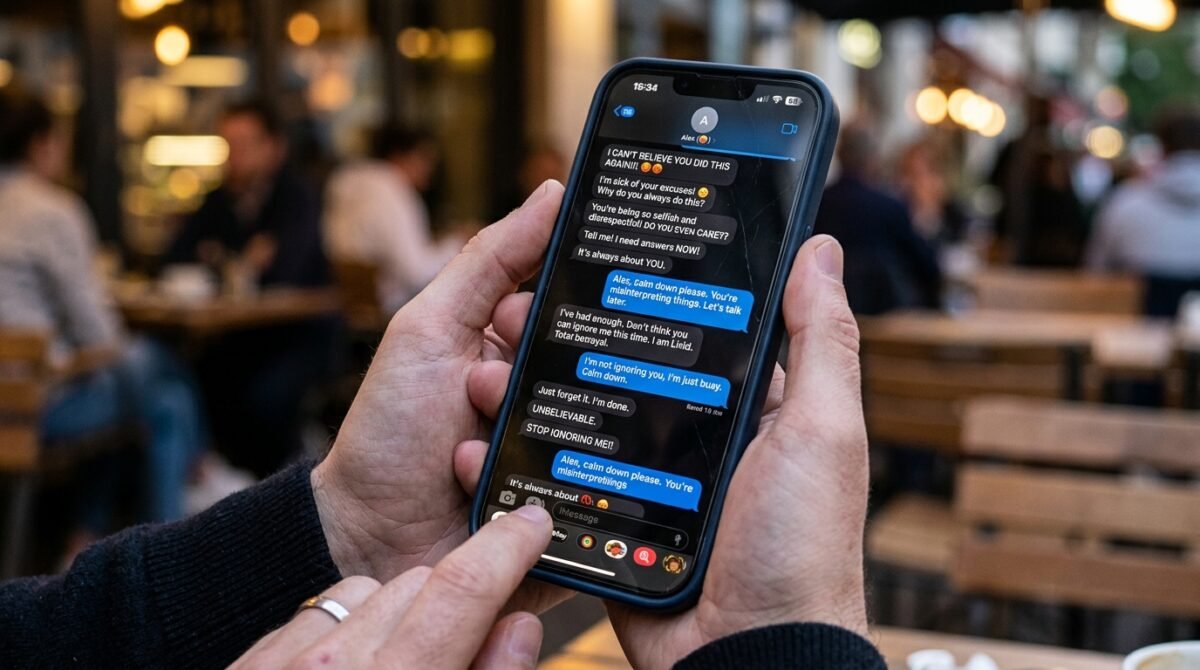
The fallout was swift and brutal. Sarah didn’t keep the news to herself; she took it to the group chat, spinning the narrative to make me look like a malicious, petty person who hated her happiness. I was bombarded with messages from people I barely knew, calling me names, accusing me of sabotaging the bachelorette party, and demanding that I cancel the ‘stranger’ booking immediately.
It was a chaotic barrage of notifications. My phone buzzed incessantly, each message more venomous than the last. They called me ‘toxic,’ ‘controlling,’ and ‘unsupportive.’ I read through the messages, my initial shock fading into a cold, hard detachment. I realized then that none of these people were actually my friends. They were just Sarah’s entourage, and they were echoing her sentiment without ever knowing the truth.
I chose to remain silent. I didn’t defend myself in the chat; there was no point. Anything I said would be twisted and used against me. I simply muted the conversation and watched as the number of unread messages ticked upward, a physical representation of the toxicity I was finally stepping away from. It was liberating to realize that I didn’t owe these people an explanation.
“I just can’t believe she would do this. Does anyone have a backup plan? We’re going to have to scramble to find a place that can hold fourteen people on such short notice. This is completely unacceptable.”
— Member of the wedding party in a group chat
The realization that they were more concerned about the inconvenience of finding a new venue than the state of our friendship was the final nail in the coffin. I blocked Sarah and the group chat, feeling a weight lift from my shoulders that I hadn’t realized I was carrying for years. The beach house, once a source of stress, was now a symbol of my independence.
Reddit’s Verdict: The Community Weighs In

When I finally posted the full story on a popular subreddit, I expected a mix of feedback. I was prepared for the people who would call me ‘the asshole’ for not helping a friend, but I was surprised by the overwhelming support I received. Thousands of people agreed that boundaries are not negotiable and that Sarah’s entitlement was the true issue at hand.
The thread exploded overnight. The comments were a mix of validation, legal advice, and personal stories of similar friendships that had ended over wedding-related drama. Some users pointed out the financial risk of hosting fourteen people, while others focused on the psychological aspect of being ‘the friend who has things’ and how that often invites disrespect.
“NTA. You own a property, not a charity for entitled brides. The fact that she went from ‘can I use your place’ to ‘you’re a monster for renting it out’ shows exactly how she viewed you: as a tool, not a friend. Block, delete, and move on.”
— u/BeachBounder (Top Comment, 28.5k upvotes)
The community support was a validation I hadn’t realized I needed. It was comforting to know that I wasn’t alone in feeling this way. So many others had been in similar positions, where their kindness was interpreted as a weakness. It made me realize that saying ‘no’ isn’t a crime; it’s a necessary part of self-respect.
The Day of the ‘Strangers’ Arrival

The weekend arrived, and I found myself at the beach house early to ensure everything was perfect for my guests. I had stocked the fridge with local delicacies, left a detailed guide for the local area, and ensured the house was sparkling clean. When the guests arrived—a group of four couples—they were kind, respectful, and so appreciative of the space. They were everything Sarah and her entourage were not.
I watched from my own small guest cottage nearby as they settled in. There was no screaming, no demands, no feeling of being taken for granted. They treated the house with the care it deserved. It was the perfect validation of my decision. I had traded a potential nightmare for a peaceful, professional interaction, and I had never felt better about my choices.
The house was silent, save for the sound of the ocean, and for the first time in months, I felt completely at peace. I wasn’t worried about damage, I wasn’t worried about my reputation, and I wasn’t worried about Sarah. I was finally reclaiming my space for myself and those who truly valued it. The house was not a venue for a party; it was a home, and it was being treated as such.
I realized then that the ‘conflict’ hadn’t been a battle for the house; it had been a battle for my own agency. By saying no, I had asserted that my life, my resources, and my time were mine to manage. The strangers were just the final piece of the puzzle, the proof that I could stand my ground and come out the other side unscathed.
The Aftermath: The Wedding Invitation
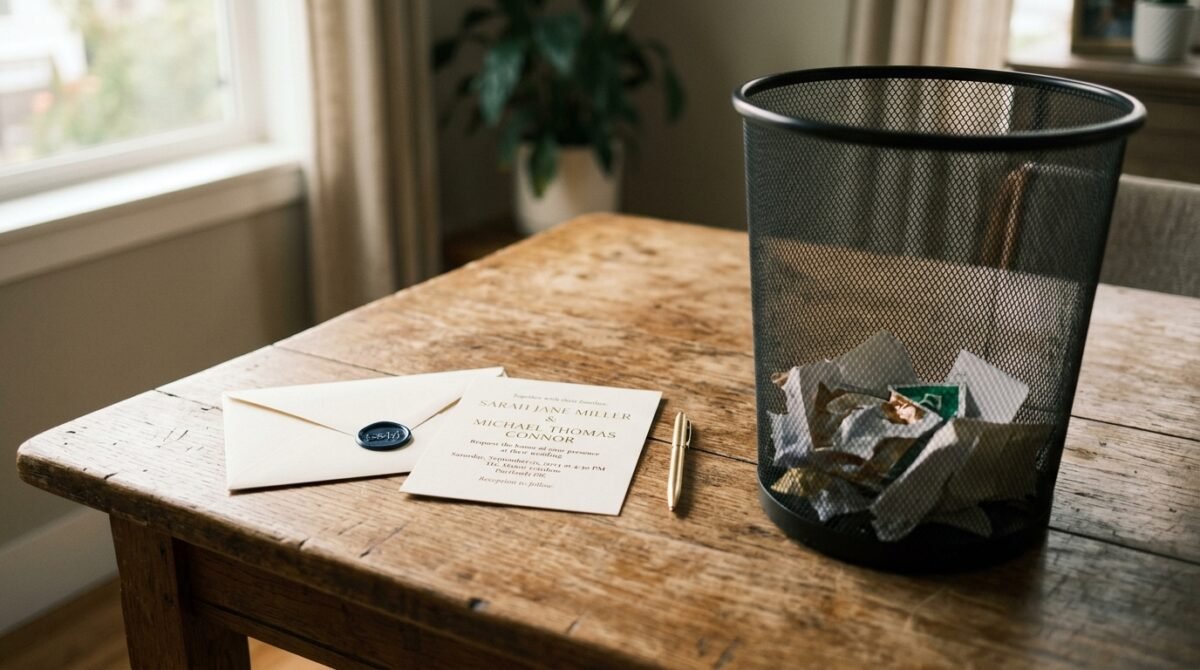
A few weeks later, I received an invitation to the wedding in the mail. It was a formal, elegant card, but it felt cold and disconnected. I looked at it, then at the trash can. I didn’t send an RSVP. I didn’t go. I didn’t even acknowledge receipt. The silence was my final word on the matter. I had moved on, and it was clear that she had, too.
I heard through the grapevine that the bachelorette party had been a disaster. They had ended up in a cramped hotel room in a less-than-ideal location, and the tension between the bridesmaids had been palpable. Sarah was reportedly still talking about my ‘betrayal,’ framing me as the villain in her wedding story. It was a sad, pathetic narrative, but it was one I no longer had to participate in.
I spent that weekend at my beach house, alone, watching the waves roll in. I read a book, drank a glass of wine, and enjoyed the silence. I wasn’t lonely; I was free. I had learned that true friends don’t demand, they don’t manipulate, and they certainly don’t call you a ‘monster’ for having boundaries. It was a lesson well learned, even if it cost me a twelve-year friendship.
I realized that the people who only value you for what you can provide are never really your friends. They are users, and the moment you stop being useful, they turn on you. Learning to recognize this early is a skill I will carry with me for the rest of my life. My beach house is now more than just a property; it is a monument to my own self-worth.
The Financial Reality Check

To put the situation in perspective, I decided to compare the costs. Had I hosted Sarah, the ‘loss’ would have been significant: cleaning, utility spikes, the stress of potential damage, and the loss of my own time. By renting to the group, I had actually made a profit that covered my property taxes for the quarter. It was a stark reminder of the difference between an ‘investment’ and an ‘obligation.’
| Category | Host for Sarah | Rent to Strangers |
|---|---|---|
| Revenue | $0 | $2,800 |
| Cleaning Costs | $400 (My Expense) | $0 (Included in Fee) |
| Stress Levels | High/Extreme | Low |
| Property Risk | High | Low (Professional Guests) |
The numbers were clear. Hosting her would have been a financial and emotional disaster. Renting it out was a smart business move. Sometimes, the most ‘heartless’ thing you can do is the most sensible thing you can do. It’s a hard lesson, but one that I think more people need to learn when it comes to maintaining their boundaries.
Reflecting on Friendship and Boundaries

Looking back, I realize that the signs were always there. Sarah had always had a way of making her needs the center of the universe. I had just been too close to the situation to see it. Our friendship had become one-sided, a dynamic where I was expected to be the ‘supportive friend’ who never asked for anything in return. It was a role I had played for too long.
Setting this boundary was the first time I had ever truly stood up to her, and the result was the end of the friendship. But I have to ask myself: was it really a friendship if the only way to sustain it was to suppress my own needs? A true friendship should be a two-way street, where both parties feel respected and heard. If that isn’t the case, then what are you really holding onto?
I’ve spent a lot of time thinking about what I would do differently. Would I have been firmer earlier? Would I have set clearer expectations? Perhaps. But I think the outcome would have been the same. When you deal with someone who is fundamentally entitled, setting a boundary—no matter how gently—will always be perceived as an attack.
I have no regrets. I learned that my house is my space, my rules are my own, and my friendship is a gift, not a commodity. I am currently in a much better place, surrounded by people who respect my boundaries and value me for who I am, not what I have. It was a difficult transition, but it was worth every ounce of the struggle.
Where I Am Now: Building New Foundations

Today, my life is quiet and fulfilling. I still own the beach house, and I still rent it out occasionally to help with the costs. I’ve become much more selective about who I invite into my inner circle. I no longer feel the need to be the ‘MVP of the wedding party’ or the ‘supportive friend’ who sacrifices her own peace to keep others happy. I’ve learned the power of saying no, and I’ve learned that it’s okay to put myself first.
Sarah is married now, and I haven’t spoken to her in over a year. I don’t follow her on social media, and I don’t ask about her life. It’s a clean break, and for that, I am grateful. I’ve moved on to new hobbies, new connections, and a life that feels more authentic and sustainable. The drama of the beach house is a distant memory, a cautionary tale that I can look back on with a sense of perspective.
If there is one thing I want the readers of this story to take away, it is that you are allowed to be the owner of your own life. You don’t owe anyone your space, your money, or your sanity—especially not in the name of ‘friendship.’ If someone threatens to end a friendship because you established a boundary, let them. A friendship that requires you to sacrifice your well-being is not a friendship worth keeping.
Thank you for listening to my story. It’s been a journey, but I’m stronger for it. And for anyone out there struggling with an entitled friend or family member, just know this: you are not the villain for wanting to keep your own life for yourself. Stick to your guns, stay firm, and remember that your peace is worth more than any party, wedding, or social expectation.
Conclusion
This story has sparked a massive debate in my social circle and online about the nature of friendship and the limits of generosity. Some argue that I should have been more forgiving, given the pressures of wedding planning, while others insist that my boundaries were perfectly reasonable and necessary. I believe that true friendship should be built on mutual respect, and when that respect is absent, the foundation is already crumbling.
Ultimately, I chose to prioritize my own mental and financial well-being over a temporary social obligation. It wasn’t an easy decision, but it was the right one for me. I’ve realized that boundaries are not just about keeping people out; they’re about keeping yourself intact. I hope my experience encourages others to stand up for their own space and their own values, no matter how much pressure they may feel from the people around them.
What do you think? Have you ever had to end a friendship because someone refused to respect your boundaries? Was I too harsh, or did I do exactly what was needed? Share your thoughts and experiences in the comments below—I’m genuinely interested to hear your perspective on this, as it’s a situation that I know far too many people have faced in their own lives.
What's your verdict on this dilemma?
Vote below to contribute to the official community consensus.

Have a Dilemma Keeping You Up at Night?
Share your real-life feud, wedding chaos, or relationship crossroads anonymously with our editorial team.
What do you think ?
0 Comments🛡️ Comments are moderated to protect community integrity. Your comment will appear once approved by the editorial team.