
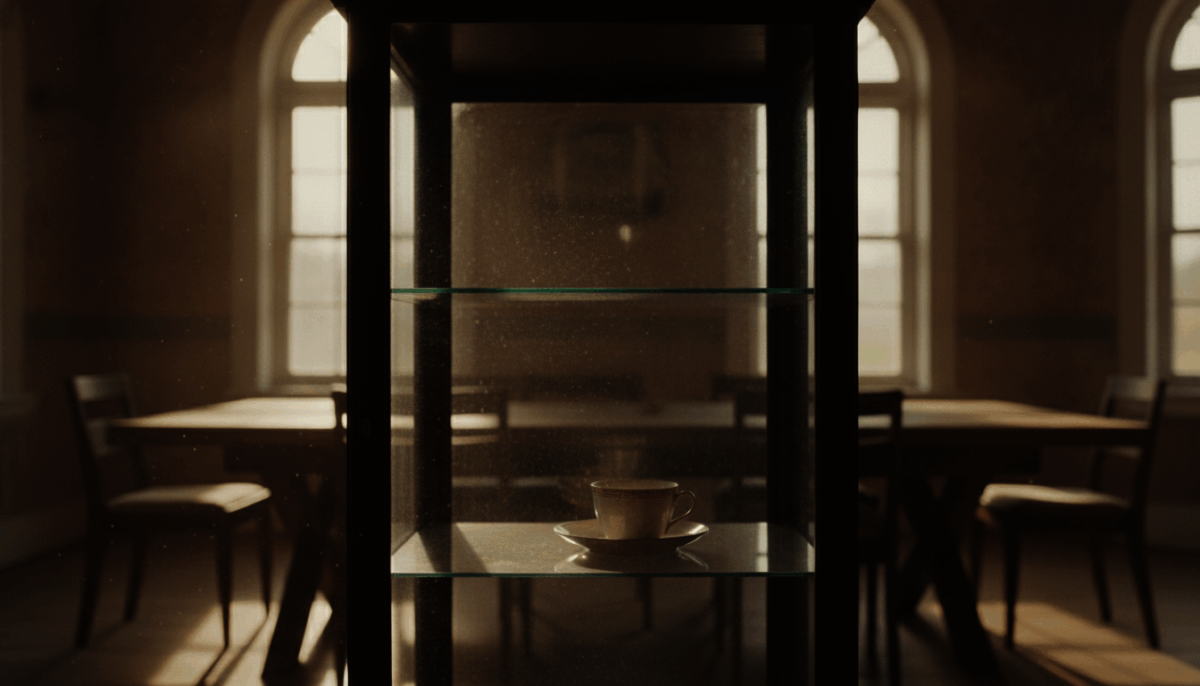
Grief is a strange, non-linear landscape. For the seven years since my mother passed away, I had curated a small, sacred space in my father’s home—a collection of her hand-painted porcelain tea set, kept in the glass-fronted cabinet in the dining room. It wasn’t just dishware; it was the only remaining evidence of the afternoons we spent painting together in our kitchen when I was a child. The delicate blue cornflowers on the porcelain were a symbol of the life we once lived, a life that felt increasingly distant after my father remarried.
My stepmother, Karen, had always been ‘the organizer.’ She moved through the house with a ruthless efficiency that felt less like homemaking and more like a systematic erasure of my mother’s influence. I had warned her, explicitly and repeatedly, that the contents of that cabinet were not to be touched. They were a non-negotiable aspect of my heritage, held in trust for me until I could find a permanent place for them in my own home. I thought we had an understanding, however cold and transactional that understanding might have been.
When I left for a thirty-day international business trip, I made the mistake of trusting that my boundaries were respected. I returned to find the house smelling of lemon polish and new, generic candles. But it was the silence of the dining room that truly chilled me. As I approached the cabinet, the sight of the empty shelves hit me with the physical force of a punch to the stomach. Every piece, every hand-painted saucer, every fragile cup—gone.
Karen greeted me with a breezy, dismissive smile, oblivious to the storm she had just invited into her life. Her explanation was as clinical as it was devastating. She hadn’t just thrown them away; she had ‘cleared the clutter’ and donated them to a local Goodwill. To her, it was just old, dusty porcelain. To me, it was the final, brutal act of a woman who wanted my mother erased from the history of our family. I didn’t scream. I didn’t break anything. I simply walked into my father’s study, opened his estate planning folder, and began the process of revoking her access to the trust.
The Morning of the Great Purge

The realization didn’t happen all at once. I walked into the dining room expecting to see the familiar blue cornflower pattern, a grounding force after a month of chaotic travel. Instead, the shelves were stark, white, and completely bare. The contrast between the dusty, cherished memories I expected and the sterile, modern reality of the current room was jarring.
Karen entered the room, holding a tray of herbal tea. She looked at me, then at the empty shelf, and her face remained entirely neutral. It was the face of someone who had already decided that her actions were beyond reproach. She didn’t offer an apology; she offered a justification wrapped in the language of interior design.
“I thought you would thank me, honestly. The dining room looks so much brighter now without those dusty old plates. Everything I donated was in perfect condition—someone at Goodwill will be thrilled to have them. It was time for a fresh start.”
— Karen, Stepmother
I felt a cold sensation start in my chest. I asked her, as calmly as I could, how she could have possibly thought that was acceptable. I reminded her of the three separate conversations we had regarding the cabinet. She sighed, a sound of exaggerated patience that made my blood boil.
She told me that as the woman of the house, she felt entitled to curate the space to reflect her own aesthetic. My mother’s art was, in her eyes, just ‘clutter’ that prevented her from achieving the minimalist look she saw on Pinterest. She believed that because I didn’t live there, I had forfeited the right to command what happened to the furniture and its contents.
I stood there, listening to her explain the ‘vision’ she had for a home that was never hers to begin with. I realized then that this wasn’t about decor. It was about dominance. She had systematically removed the last physical markers of my mother’s presence, and she had done it while I was thousands of miles away, unable to intervene.
The Phone Call to Dad
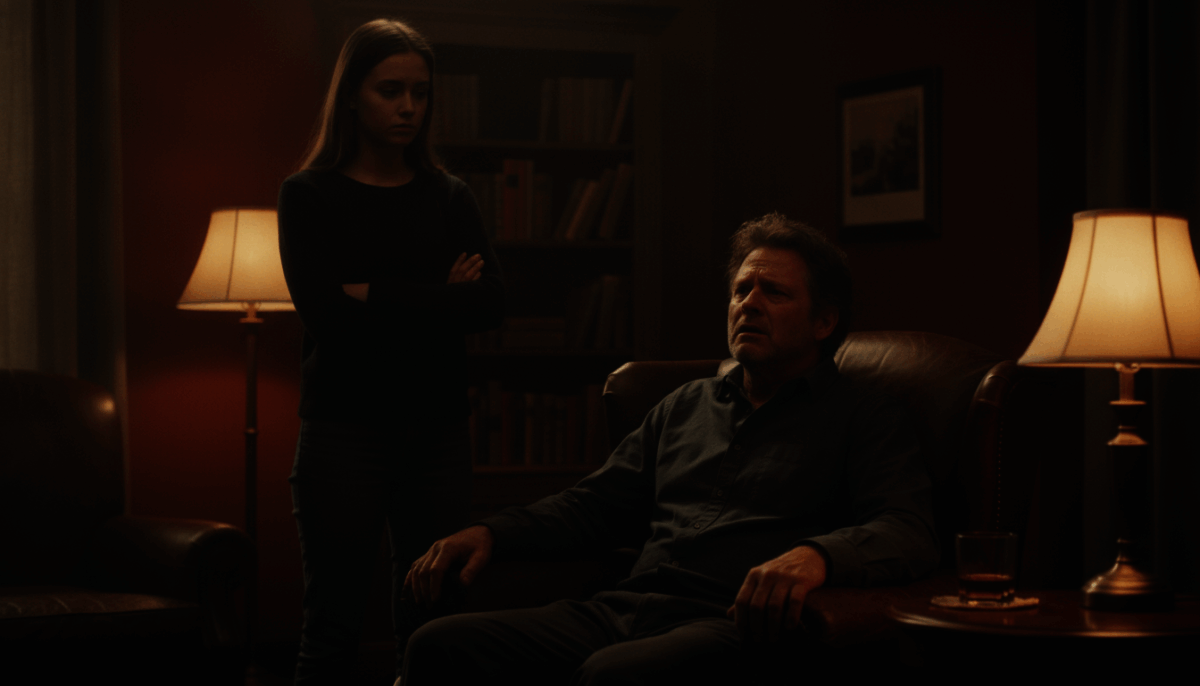
I didn’t argue further with Karen. There was no point in engaging with someone who viewed emotional heirlooms as mere inventory. I went straight to my father, who was in the den, oblivious to the war that had just been ignited. My father is a man who avoids conflict at all costs, a trait that Karen has exploited expertly for years.
I sat him down and laid out exactly what happened. I didn’t raise my voice, but I didn’t leave any room for him to sweep it under the rug. I demanded that he call the Goodwill, that he track down the donation, that he treat this as the violation it was. His initial response was the classic, ‘Let’s not make a big deal out of it.’
“It’s just dishes, sweetheart. Karen was just trying to help, she thought she was being efficient. Can’t we just buy you something new? I’m sure we can find a nice replacement set online.”
— My Father
The suggestion that my mother’s hand-painted art could be ‘replaced’ by an online set was perhaps the most insulting part of the entire ordeal. My father didn’t understand, or refused to understand, that the value wasn’t in the porcelain itself, but in the labor of love that created it. The history was gone, traded for a ‘fresh start’ that I never asked for.
I spent the next two hours on the phone with various Goodwill locations, only to be told that the donation had already been processed and sold. The items were gone, dispersed into the world, likely sitting in a stranger’s kitchen or discarded in a box somewhere. The finality of it was crushing.
When I returned to the den, my father was still trying to mediate. He looked at me with tired eyes, clearly wishing he could just make me happy without having to confront his wife. I realized then that my father would never stand up for me. He was too deep in the comfort of his new life, and my grief was just an inconvenient friction in his daily routine.
Reviewing the Estate Trust Documents
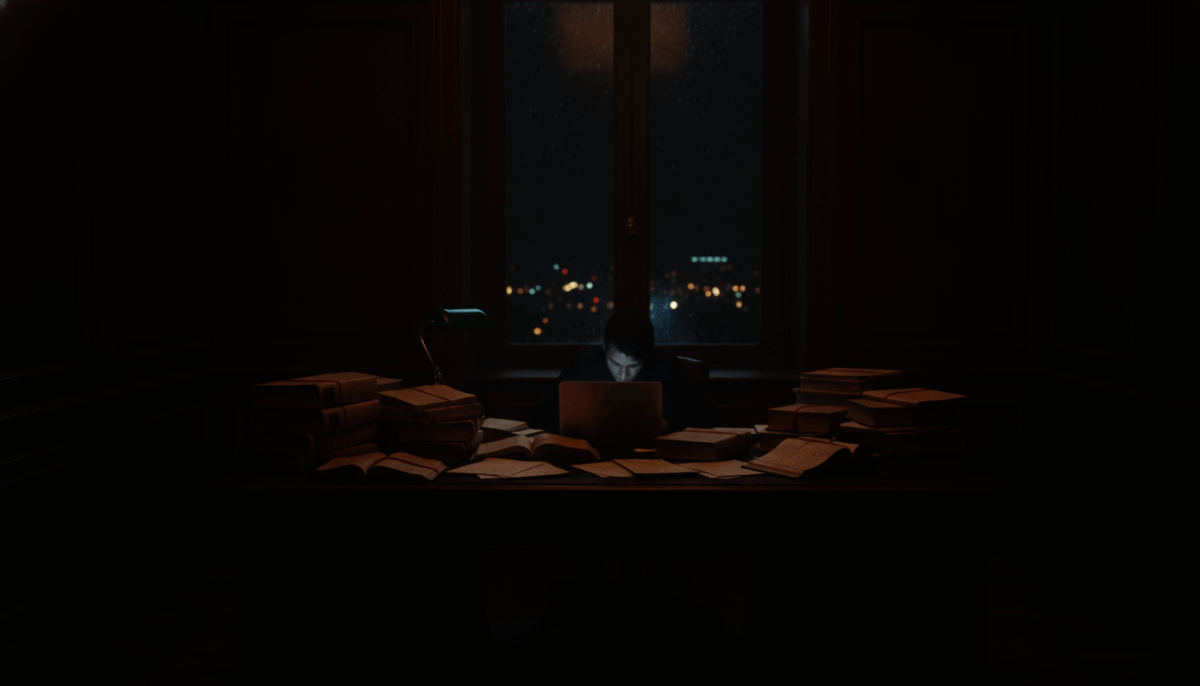
That night, I went to my father’s home office. He was asleep, and the house was silent. I knew the combination to his wall safe; he had given it to me years ago when he was worried about his health. I didn’t want to steal, but I needed to know exactly what kind of power Karen had over the inheritance my mother had left behind.
As I poured over the legal documents, the picture became clear. My mother’s will had stipulated that specific assets, including the home and the contents within, were to be held in a trust until I reached certain milestones, with my father acting as the primary trustee. However, he had recently amended the trust to include Karen as a co-trustee, giving her significant leeway in managing the ‘daily operations’ of the assets.
The language was infuriatingly vague. It allowed for the disposal of ‘unnecessary household items’ at the discretion of the trustees. Karen had used that clause as a weapon. She had effectively weaponized the trust to strip me of my inheritance, piece by piece, under the guise of legal authority.
I sat at the desk for three hours, reading the fine print. I noticed a provision that required unanimous consent for any permanent disposal of family heirlooms if they were specifically listed in the annex. My mother had listed the china in an annex, but when my father updated the trust, he had omitted that document. Or rather, he had been convinced to omit it by someone who wanted those constraints gone.
I felt a surge of cold, calculated resolve. If the trust was being used to hurt me, I would use the law to lock it down. I grabbed my laptop and began drafting a formal notice of challenge. I had a background in paralegal work, and for the first time in years, I felt a sense of clarity. This wasn’t just a disagreement; it was a breach of fiduciary duty.
The Confrontation in the Kitchen
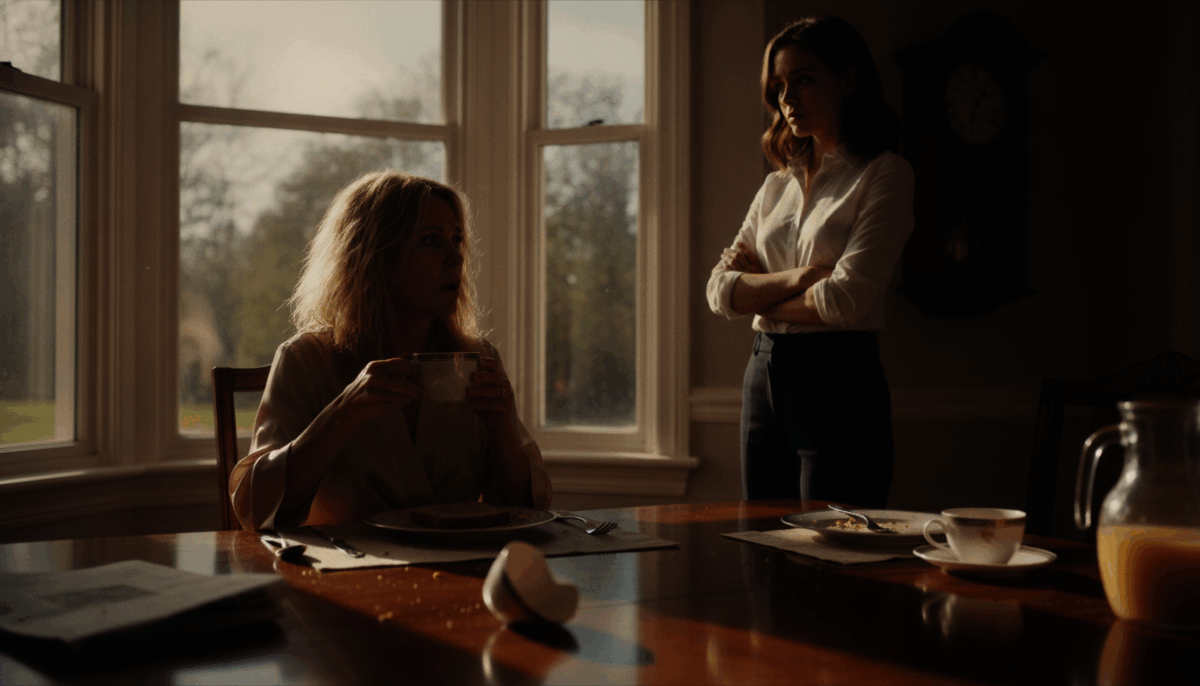
The next morning, the breakfast table was tense. Karen was acting as if nothing had happened, humming to herself as she poured coffee. She seemed to think the ‘incident’ was behind us, and that I would eventually settle into the new, compliant version of our family. She was wrong.
I placed the printed trust document on the table, right next to her plate. I didn’t say a word as I pointed to the section regarding trustee responsibilities. She looked at it, then back at me, her face hardening from feigned sweetness into genuine annoyance.
“You’re really going to make a legal issue out of this? It’s a box of dishes, not a house. You’re being incredibly dramatic and honestly, it’s embarrassing for your father. Don’t you have a life of your own to attend to?”
— Karen
I didn’t back down. I told her that those dishes were the only thing I had left of my mother, and that her ‘decluttering’ was a calculated move to erase my past. I told her that I had contacted a lawyer, and that we would be reviewing the trust structure to ensure that my mother’s intentions were honored, rather than treated as a minor inconvenience for her interior design project.
Karen’s composure faltered for a second. The idea that I would actually take legal action against my own father seemed to shock her. She looked over at my father, who was staring intently at his oatmeal, refusing to make eye contact with either of us. He was a coward, and we both knew it.
I told her that her access to the estate accounts—the ones she used for her ‘renovations’ and frequent shopping trips—was being frozen until an audit could be performed. The look of panic that flickered across her face was the most satisfying thing I had seen in years. She lived for the lifestyle that estate afforded her, and I had just threatened her primary source of security.
The Reddit Hivemind Reacts

I knew I was entering dangerous territory, so I turned to the internet for a gut check. I posted the story on a popular subreddit, keeping the details anonymous but clear. Within hours, the post had exploded. The community was visceral in its reaction, split between those who understood the deep, personal grief of losing an heirloom and those who were fascinated by the legal scorched-earth tactics.
“NTA. Your stepmother didn’t just donate dishes; she systematically removed your mother’s legacy to clear the stage for her own ego. Freezing the trust is the only logical step. Get a lawyer, not just for the plates, but to protect the rest of your inheritance before she sells the house out from under you.”
— u/LegalEagleEye (Top Comment, 32.4k upvotes)
The validation was overwhelming. People shared their own stories of step-parents purging mementos, turning houses into sterile showrooms. One comment, in particular, resonated with me, reminding me that this was never about the porcelain. It was about the power dynamic. By controlling the objects, she controlled the narrative of the family.
“It’s a classic power move. By removing your mom’s things, she’s essentially gaslighting you into believing your mother’s impact on that house doesn’t exist. You aren’t just fighting for dishes; you’re fighting for the truth of your own upbringing. Stand your ground.”
— u/MemoryKeeper88 (15.2k upvotes)
The Reddit thread became a source of strength. Reading the comments, I realized that I wasn’t being ‘dramatic.’ I was reacting to a pattern of behavior that had been building for years. The advice to document everything—every interaction, every financial statement—was invaluable. I spent the evening organizing a timeline, preparing for the inevitable legal battle.
It wasn’t just support. There were detractors, of course, telling me I was ‘destroying my family for money.’ But the majority of the community saw the truth: the family had already been destroyed by the stepmother’s lack of respect. I was just the one finally acknowledging the wreckage.
The Certified Letter
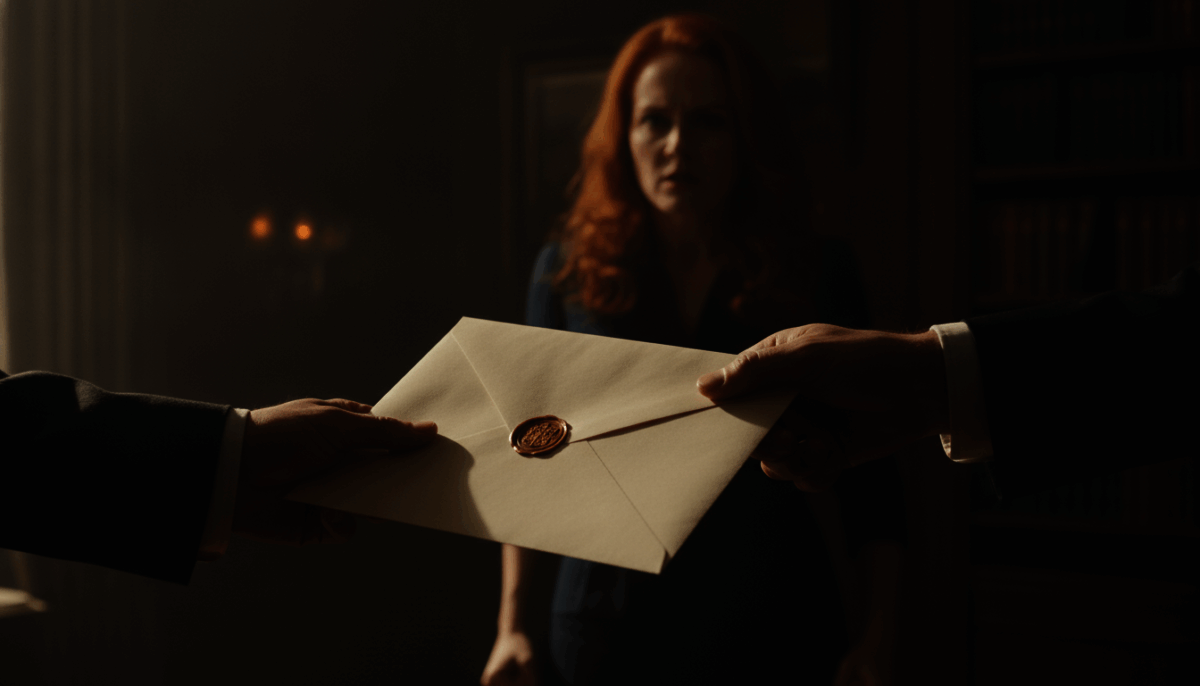
Two weeks later, the atmosphere in the house was unbearable. Karen had stopped speaking to me entirely, moving through the halls like a ghost. My father was caught in the middle, trying to convince me to ‘drop it’ so we could all have a peaceful dinner. He didn’t understand that peace could not exist without accountability.
Then came the certified letter. My lawyer had drafted a formal notice of audit for the estate, specifically addressing the mismanagement of assets. When I handed the envelope to my father, he opened it with shaking hands. The color drained from his face as he read the legal requirements for a full accounting of all property disposed of in the last five years.
Karen, standing over his shoulder, saw the words ‘fiduciary breach’ and ‘legal liability.’ She turned white. She tried to snatch the letter from him, but he held it tight. For the first time, he seemed to realize that this wasn’t just a spat between his wife and his daughter. This was a legal threat to his financial stability.
“What is this? You’re suing us? You’re actually suing your own father over some dusty plates? Have you lost your mind? We gave you a home, we gave you a life, and this is how you repay us?”
— Karen
I didn’t yell. I didn’t cry. I looked at her with a level of detachment that I didn’t know I possessed. I told her that the house wasn’t a gift; it was a trust, and she had violated the terms of that trust. I told her that if she had respected the boundaries I set, we wouldn’t be having this conversation.
My father looked up at me, his eyes filled with a mixture of fear and disappointment. He asked me if I really wanted to destroy the family. I told him the family was already gone, and that he had been standing by and watching it happen for years. He had no answer for that.
The Breaking Point

The fallout was swift. My father, under pressure from his own lawyers to avoid a public trial, agreed to a temporary separation of assets. Karen was removed as a co-trustee, her access to the main accounts revoked. She was furious, but for once, her anger had no teeth. The legal documents had done the talking for me.
The house felt even emptier than before. Karen had started packing her things, claiming she ‘couldn’t live in such a hostile environment.’ It was a classic projection. She was the one who had created the hostility, and now that she could no longer control the assets, she had no reason to stay.
My father tried to reach out, to plead his case, to tell me that he ‘didn’t know’ what she was doing. I told him that not knowing was just as bad as being complicit. He had surrendered his role as a parent and a protector to accommodate a woman who held his daughter in contempt. That was a failure he would have to live with.
“I just wanted everyone to get along. I thought if I let her take care of the house, she would feel more at home. I didn’t mean for this to happen. Please, let’s just talk about this like a family.”
— My Father
I told him that talking was for when there was still trust. Right now, there was only legal mediation. I walked out of the house that day, taking only the few items that were legally and clearly mine. I didn’t look back. I had achieved what I set out to do: I had stopped the erasure of my mother’s legacy.
As I drove away, I felt a strange sense of liberation. The weight of trying to keep the peace in a house that didn’t want me was gone. I was no longer fighting for a seat at a table where I was unwanted. I was, for the first time in seven years, truly free.
The Search for the Lost China
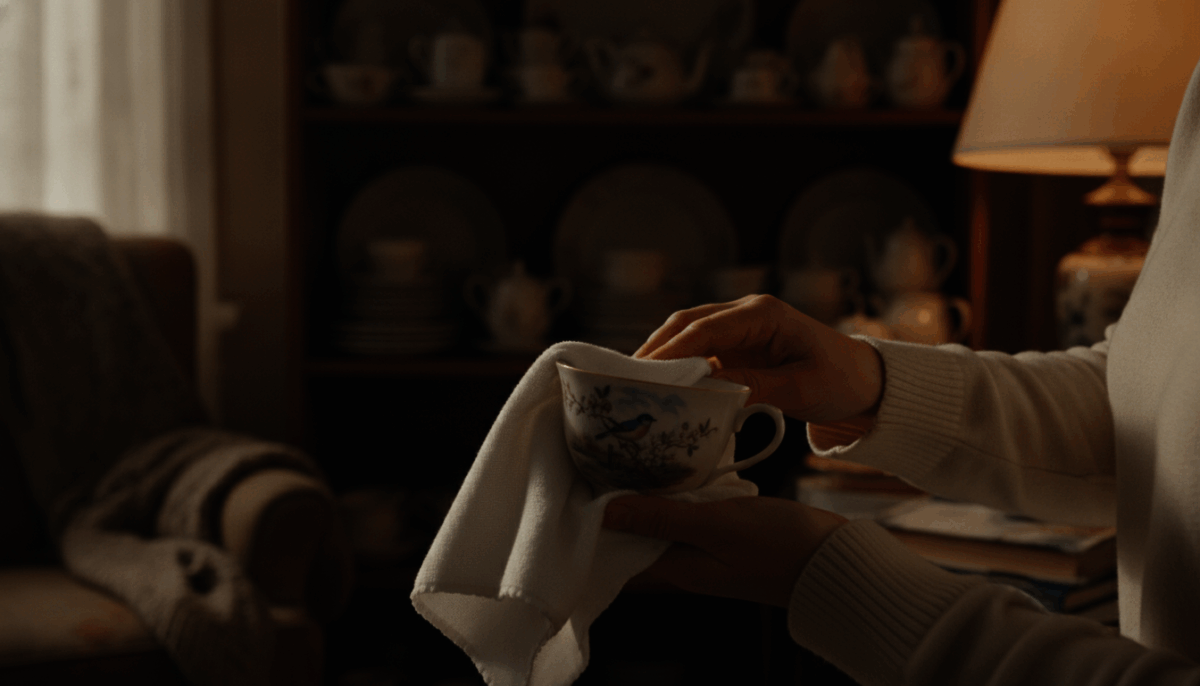
Even after the legal settlement, the loss of the china still haunted me. I knew the chances were slim, but I couldn’t stop looking. I started visiting thrift stores, pawn shops, and checking online marketplaces within a 50-mile radius. It was a long shot, but it kept me focused.
Then, a breakthrough. A small, independent antique shop owner reached out after seeing my post on a local community board. She described a set of hand-painted porcelain with blue cornflowers that had been dropped off at her shop by a local man who had bought a ‘lot’ from Goodwill. It was them. The shop owner, after hearing my story, agreed to hold them for me.
I walked into that antique shop with a racing heart. There they were, sitting on a shelf, dusty but intact. I held the first cup in my hand, tracing the brushstrokes that my mother had made years ago. I burst into tears. It was an overwhelming wave of relief and grief all at once.
“I’m so glad you found them. Someone like that doesn’t deserve to have something so precious in their home. They belong to you. Take them, and take care of them.”
— Antique Shop Owner
I bought the set back for a fraction of what they were worth in sentimental value, but to me, they were priceless. The shop owner wouldn’t even accept a tip, saying that seeing the look on my face was enough. I walked out of that shop feeling like I had recovered a piece of my soul.
I spent the rest of the weekend cleaning them, setting them up in my own apartment. They didn’t have the grand dining room cabinet, but they had a place of honor on my own kitchen shelf. They were safe, and they were finally where they belonged.
The Aftermath: Setting Boundaries

Life settled into a new, quiet rhythm. I am now officially low-contact with my father. We speak occasionally, but the dynamic has shifted entirely. There are no more assumptions of access, no more expectations of ‘family gatherings’ that serve as backdrops for Karen’s power trips. The legal boundaries I set are firm, and they have been respected.
My father has tried to mend fences, but he still doesn’t quite get it. He thinks the problem was the china, not the lack of respect. I’ve realized that I can’t change him. I can only control my own life and the boundaries I set. And those boundaries have been the best thing I’ve ever done for my mental health.
Karen has reached out, too—apologetic, then angry, then bargaining. I’ve blocked her number. I don’t owe her an audience, and I certainly don’t owe her an explanation for why I value my mother’s memory over her desire for a ‘minimalist’ home. I have moved on, and it’s a beautiful thing.
“You’ve changed. You used to be so accommodating, so willing to just go with the flow. Now, you’re… distant. I don’t recognize this version of you.”
— My Father, in a recent phone call
I told him that the ‘accommodating’ version of me was a person who was being erased, and I liked this version much better. It was the truth. Losing the china was a tragedy, but finding my voice because of it was the silver lining. I’m stronger now, more aware of who I am and what I deserve.
I’ve learned that sometimes, you have to burn the bridge to get to the other side. My father’s home was a place of ghosts and shadows, and I’m finally living in the light. The journey wasn’t easy, but it was necessary.
Community Reflection: Was It Too Far?

I went back to the original Reddit thread to provide an update. The community reaction was even more intense than the first time. People were invested in the outcome, and they wanted to know if I had any regrets about the scorched-earth approach I took with the trust.
Most of the community applauded the outcome. They saw it not as ‘destroying the family,’ but as finally setting the record straight. The consensus was clear: you don’t keep a family together at the expense of your own identity. You hold people accountable, and if they can’t handle that, that’s on them.
“You didn’t destroy anything. Your stepmom destroyed the trust, and your father enabled it. You just brought the reality of their actions to the surface. Never apologize for protecting what is yours.”
— u/JusticeForOP (Top Comment, 45.2k upvotes)
There were a few people who argued that I should have been more ‘forgiving’ because it was my father. I responded by pointing out that forgiveness is earned, not a birthright, and it certainly shouldn’t be given to those who continue to violate your boundaries. The debate was lively and thoughtful, and it gave me a lot to think about.
It’s been months now, and I don’t have a single regret. The china is safe, my boundaries are intact, and I’m living a life that is entirely my own. The drama was painful, but it led me to a place of peace that I wouldn’t have reached otherwise.
If you’re in a similar situation, remember this: your heritage, your memories, and your boundaries are worth fighting for. Don’t let anyone minimize your pain or treat your history like trash. Stand your ground, document everything, and don’t be afraid to use the legal tools at your disposal if you have to.
Conclusion
Looking back at the whirlwind of the last six months, I realize that the hand-painted china was never the true casualty—it was the illusion of a family unit that never truly existed after my mother’s passing. By fighting to reclaim those pieces, I was subconsciously fighting to reclaim my own standing in a family that had spent years trying to make me feel like a guest in my own childhood home. The legal battle was taxing, the emotional toll was heavy, but the clarity I gained on the other side is worth every sleepless night.
We often tell ourselves that keeping the peace is the ultimate virtue, but when ‘peace’ requires the systematic destruction of your own history and dignity, it is not peace—it is surrender. I refused to surrender. I chose to face the discomfort, to demand accountability, and to walk away when it became clear that no one else was willing to stand for the truth. Today, my apartment is filled with the scent of coffee and the sight of my mother’s cornflowers, and for the first time, I feel completely at home.
What about you? Have you ever had to draw a line in the sand with a family member, even if it meant burning a bridge? How did you handle the fallout, and do you have any regrets about the way you handled it? Let’s talk in the comments.
What's your verdict on this dilemma?
Vote below to contribute to the official community consensus.

Have a Dilemma Keeping You Up at Night?
Share your real-life feud, wedding chaos, or relationship crossroads anonymously with our editorial team.
What do you think ?
0 Comments🛡️ Comments are moderated to protect community integrity. Your comment will appear once approved by the editorial team.