
Living with a roommate is often a gamble, a delicate dance of shared space and unspoken agreements. For three years, Sarah and I had maintained a relatively harmonious household. We split the bills, we respected the quiet hours, and we generally steered clear of each other’s professional lives. That changed the moment she decided to launch a custom apparel business from the confines of our two-bedroom apartment. I didn’t mind the boxes of t-shirts in the hallway, nor did I complain about the smell of curing ink that occasionally drifted into the living room. I considered myself a supportive friend and an accommodating co-tenant.
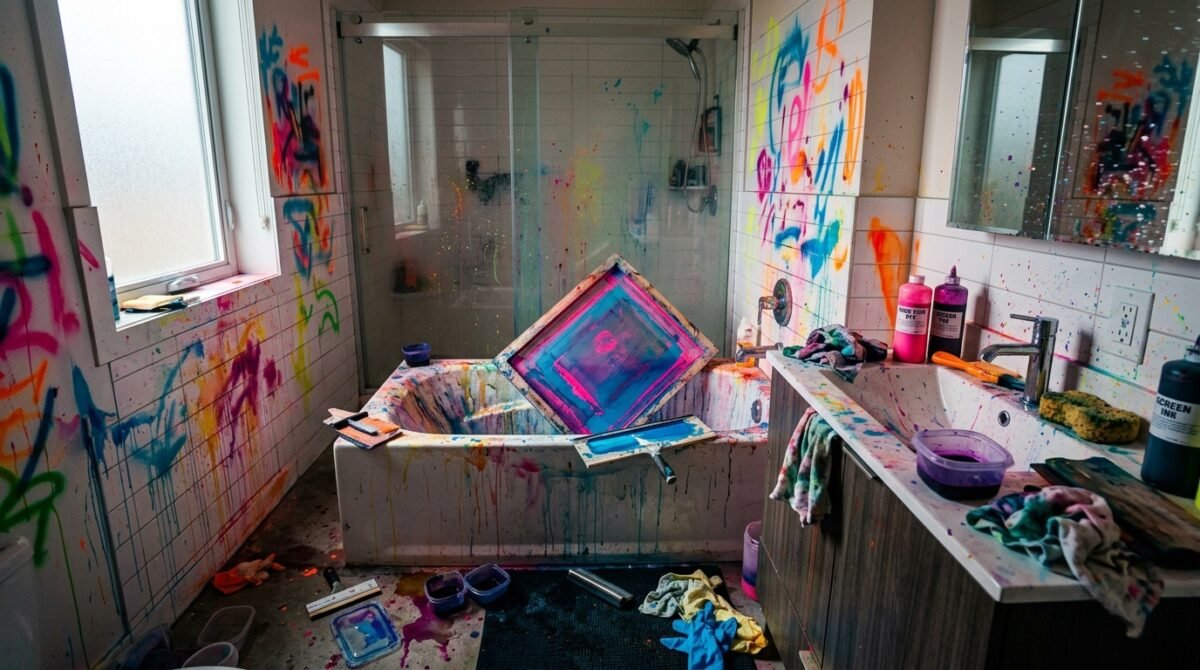
The trouble began on a Tuesday. I had been away on a business trip, leaving Sarah to her own devices for a long weekend. I returned to find the apartment smelling like a chemical plant. When I walked into the bathroom, the sight was enough to stop my heart. The pristine white porcelain of our shared tub was a mosaic of deep magenta, toxic-looking teal, and industrial black. It wasn’t just a spill; it was a full-scale production line. She had been using the tub as a basin for rinsing high-viscosity screen printing dyes, and the sealant had failed, leaving the tub permanently stained.
This wasn’t just a cleaning issue; this was a property damage nightmare. As a tenant, I knew my name was on the lease just as firmly as hers was. If our security deposit was withheld because of this, it was coming out of my pocket too. I spent three hours scrubbing with industrial solvents, only to realize the dye had permeated the glaze of the tub. The realization set in that this was going to be a multi-hundred-dollar repair job, potentially involving professional re-enameling.
The moral dilemma weighed heavily on me. Should I simply demand she pay, or should I be the ‘understanding’ friend who lets it slide? But looking at the ruined tub, I realized that my tolerance had been weaponized against me. I decided then and there that this time, the cost of her artistic ambition would not be subsidized by my financial security. I drafted an invoice, itemized every cent of the potential damages, and prepared for the inevitable confrontation that would follow.
The Morning After the Ink Disaster
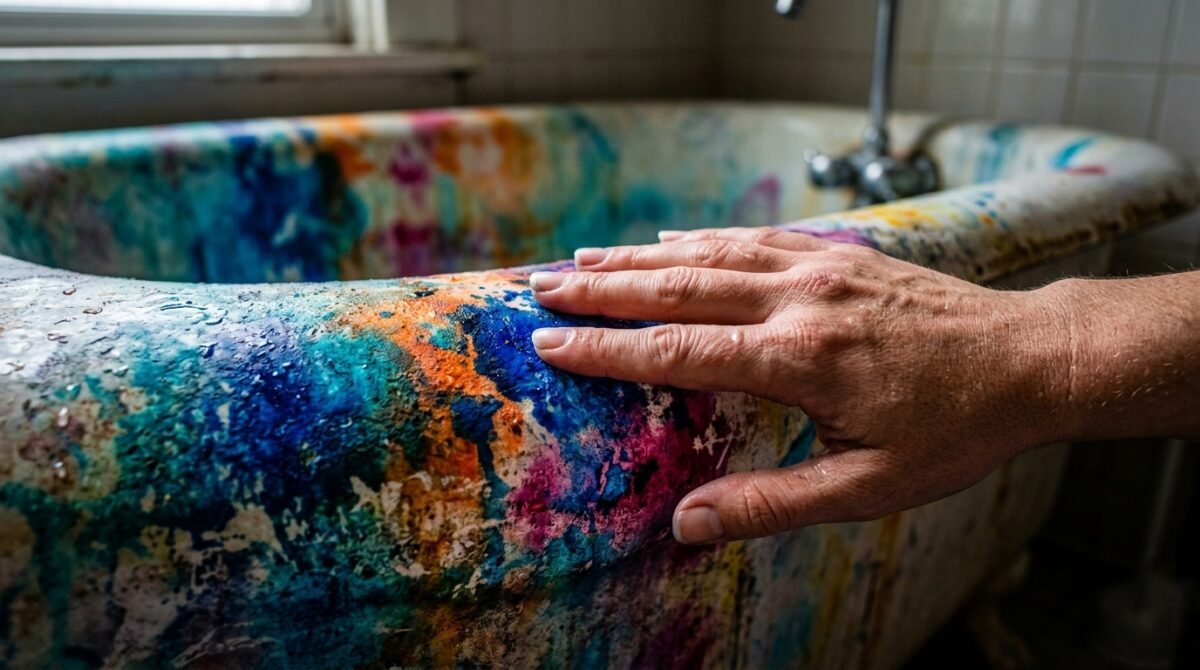
I stood in the bathroom doorway, my suitcase still in my hand, staring at the carnage. It looked like a neon bomb had gone off. Thick, viscous streaks of dye ran down the sides of the bathtub like colorful war paint. The smell was sharp and chemical, stinging my nostrils and making my eyes water. I walked over to the tub and touched the surface, only to find the residue was still slightly tacky, as if she had been working on this just hours before my arrival.
Sarah walked into the bathroom, holding a cup of coffee. She looked at the tub, then at me, and shrugged. ‘Oh, you’re back. Yeah, the drain got a little backed up, but it’s just a bit of pigment. It’ll come out with a little elbow grease, don’t worry about it.’ The sheer casualness of her statement hit me harder than the smell of the ink. She didn’t see a destroyed bathroom; she saw an inconsequential byproduct of her creative process.
I felt a cold, sharp anger rise in my chest. I had worked hard to keep our apartment in good shape, and her dismissal of the damage was insulting. ‘Sarah, this isn’t just a little pigment,’ I replied, my voice dangerously calm. ‘This is industrial grade dye. You’ve ruined the finish of the tub. I’ve already tried scrubbing it, and it’s not budging. This is going to cost a professional to fix.’
“You’re seriously overreacting. It’s an apartment, not a museum. The landlord won’t even notice if we scrub it hard enough.”
— Sarah, dismissive of the damage
The argument escalated quickly. She insisted that my standards were too high, while I insisted that her actions were negligent. I realized then that she had absolutely no intention of taking responsibility. She was convinced that since it was ‘just’ a bathroom, the rules of property maintenance simply didn’t apply to her. I knew right then that if I didn’t act decisively, I would be the one paying the price when we moved out.
The Itemized Invoice of Betrayal

That night, I spent hours researching the cost of bathtub refinishing and professional cleaning services. I wasn’t going to just yell at her; I was going to quantify her lack of consideration. I pulled up a spreadsheet and started listing every cost associated with the ‘project.’ I included not just the repair quote I found online, but the cost of the industrial cleaners I had already purchased and a premium for the time I would spend managing the repair process.
When I presented the printed invoice to her the next morning over breakfast, she laughed. She actually laughed, thinking I was pulling some kind of elaborate prank. When she realized I was serious, the laughter stopped, replaced by a look of genuine indignation. She couldn’t believe I was charging her for living in a shared space. She argued that since we were friends, my attempt to hold her financially accountable was a betrayal of our bond.
I looked at the piece of paper in my hand, then at the girl I had thought was my best friend. ‘Our friendship is based on mutual respect, Sarah. You showed me none when you decided to use our bathroom as a factory. This isn’t about being petty; it’s about covering the security deposit that I, personally, contributed to this lease.’
“I am not paying for this. You are being completely unreasonable. If you want to talk about invoices, let’s talk about the amount of time I spend doing the dishes.”
— Sarah’s deflection attempt
Her deflection was classic—bringing up unrelated household chores to invalidate the financial reality of the situation. I stood my ground. I told her that if the invoice wasn’t paid by the end of the week, I would be notifying the landlord about the structural damage to the bathroom, effectively triggering a professional inspection that would inevitably lead to a deduction from our deposit anyway. The look on her face when she realized I was willing to involve the landlord was priceless.
The Escalation to the Landlord
I didn’t wait for her to pay. I knew she wouldn’t. I drafted a polite but firm email to our property management company, attaching photos of the bathtub. I didn’t frame it as a personal attack; I framed it as a maintenance report. I stated that I had discovered accidental damage to the bathtub finish and was concerned about the long-term integrity of the plumbing due to the chemicals used. I asked for a quote to have it repaired, stating that I wanted to ensure the apartment remained in pristine condition.
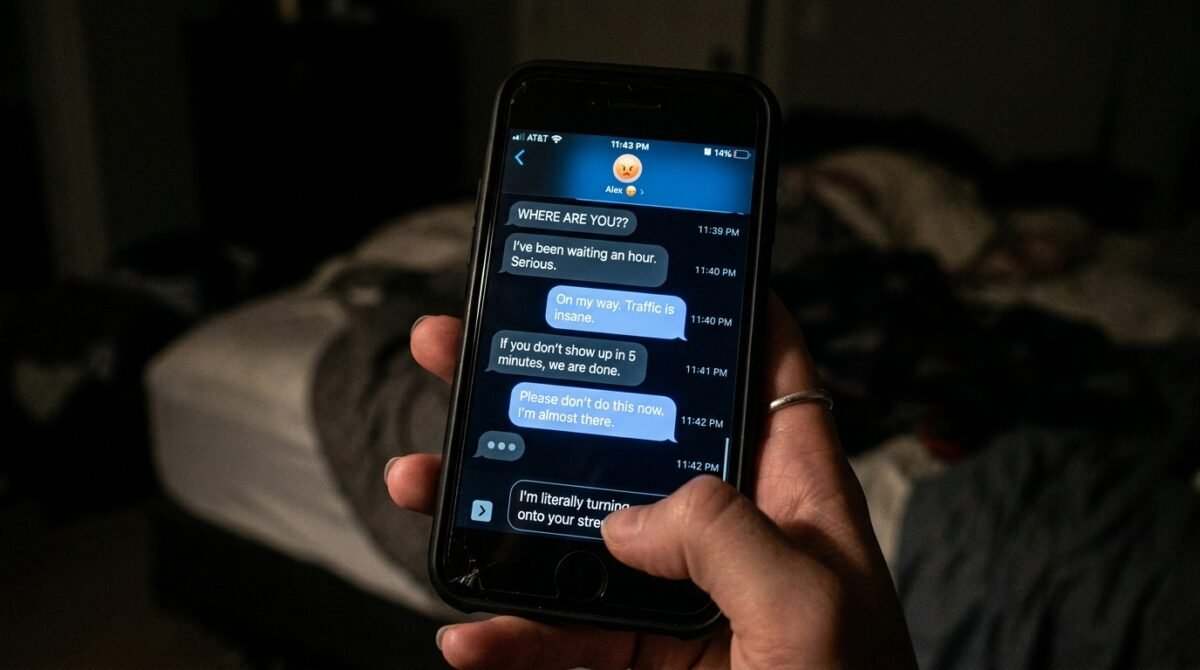
When Sarah found out, she was livid. She screamed at me for ‘snitching’ and ruining her standing with the management company. She claimed that she had a secret ‘fix’ she was working on, but I had already seen the state of the tub—there was no fix. The damage was deep, structural, and ugly. The management company, true to form, scheduled an inspection for the following Monday.
The tension in the apartment became suffocating. We stopped speaking entirely, leaving notes on the fridge instead of talking face-to-face. It was a cold war fought with passive-aggressive sticky notes and slammed doors. I spent the weekend in my room, listening to her pacing in the kitchen, probably trying to scrub the stains with household products that were doing more harm than good.
“You just nuked our reputation. I can’t believe you would choose a bathtub over our friendship. You are a terrible person.”
— A text message from Sarah during the weekend
I didn’t reply to her text. I knew that engaging would only give her ammunition. I had realized that our friendship was already dead; it had died the moment she felt entitled to destroy my living space for her profit. I was just cleaning up the wreckage now, preparing for the final exit from the lease.
The Inspection Day Showdown
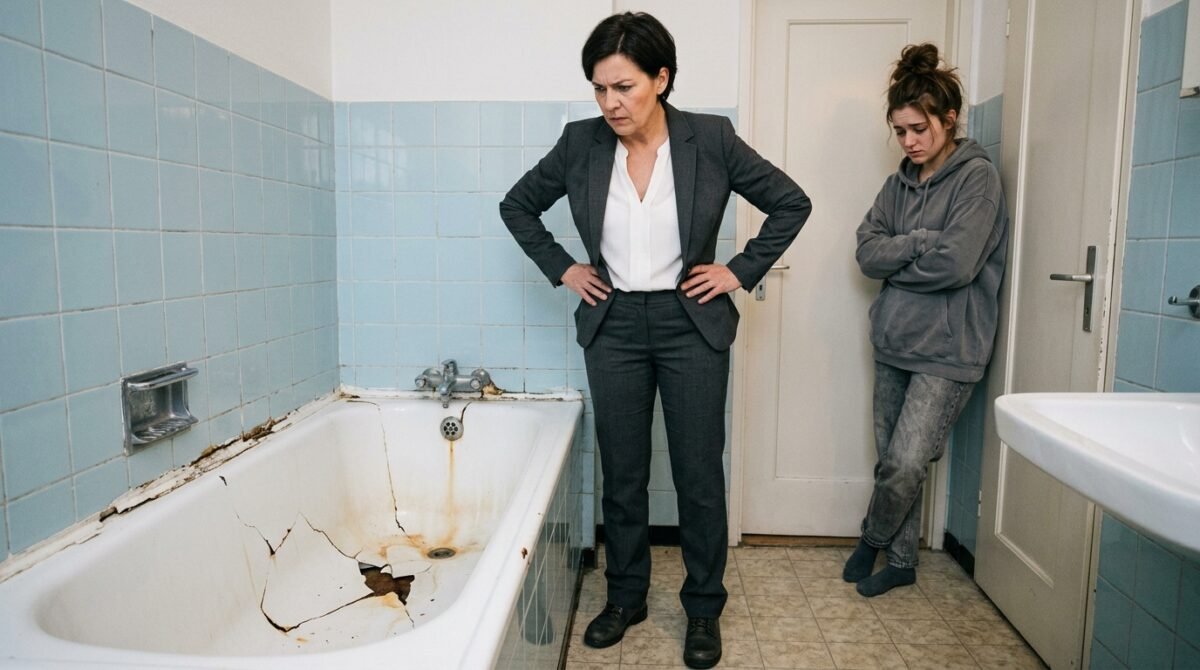
Monday arrived with a sense of dread. The property manager, a no-nonsense woman named Mrs. Higgins, arrived at 10:00 AM sharp. Sarah stood in the hallway, looking frantic, her hair disheveled from a sleepless night of scrubbing. I simply stepped aside and let the manager walk into the bathroom. The silence as Mrs. Higgins inspected the tub was deafening. She ran a gloved finger along the edge, frowned, and pulled out a notebook.
Mrs. Higgins turned to us, her expression grim. ‘I’m not sure what you were doing in here, but this is chemical damage. This isn’t normal wear and tear. This is going to cost at least seven hundred dollars to re-enamel, and that’s if the drain pipes aren’t also corroded.’ Sarah tried to interrupt, starting a long-winded explanation about ‘artistic experimentation’ and ‘water-based pigments,’ but Mrs. Higgins wasn’t having it.
‘The lease is very clear about the use of industrial materials in residential units,’ Mrs. Higgins said, her voice icy. She looked directly at Sarah. ‘This will be deducted from your portion of the security deposit, and if it exceeds that, we will be sending an additional invoice. You have 48 hours to vacate the shared facilities if you can’t adhere to the lease.’
“But it was an accident! I didn’t mean to ruin it!”
— Sarah, pleading with the property manager
Sarah looked defeated. For the first time, she realized that her ‘artistic freedom’ had real-world consequences. I stood by the kitchen island, watching it all unfold, feeling a strange sense of vindication. I wasn’t the villain here; I was the one who had tried to keep the apartment in a condition that would allow us to get our money back. The irony of the situation wasn’t lost on me—Sarah had caused the very financial loss she tried to avoid by refusing to pay the initial invoice.
The Fallout in the Group Chat

By that evening, the story had leaked to our mutual friends. Sarah had posted a long, tearful rant on her social media, painting herself as the victim of an ‘elitist, joy-killing’ roommate. She conveniently left out the part about the industrial dye and the seven-hundred-dollar repair bill. My phone started blowing up with messages from people asking if I was ‘really going to make her homeless’ over a bathtub.
I took a deep breath and decided to set the record straight. I didn’t attack her; I simply posted a single image of the bathtub—the one I had taken before I tried to clean it. I captioned it: ‘This is what seven hundred dollars of damage looks like. It’s not about being elitist; it’s about not destroying property that isn’t yours.’ The response was immediate and overwhelming.
The group chat, which had been buzzing with support for Sarah, suddenly went silent. Then, one by one, our friends began to comment. They were shocked by the sheer extent of the destruction. Even her most ardent supporters had to admit that using a bathtub for industrial chemicals was, at best, incredibly stupid, and at worst, malicious negligence.
“I’m sorry, but you used a shared bathroom for dye? That’s not art, that’s just a hazard. You have to pay for that.”
— A mutual friend in the group chat
It was a turning point. Sarah had counted on the power of the ‘victim narrative’ to guilt me into silence, but the reality of the evidence was too strong to ignore. She had underestimated the fact that adults understand the value of a security deposit. She stopped responding to the group chat entirely, and I began the process of looking for a new place to live, knowing my time in this apartment was coming to an end.
The Financial Reality Check

A week later, the official invoice arrived from the property management company. It was even higher than Mrs. Higgins had predicted. Due to the need for a hazardous materials specialist to clean the drain, the total came to nearly twelve hundred dollars. I received a copy, and Sarah received one. I made sure to send her a message letting her know that I had already paid my half of the security deposit into a separate account, and that the management company would be deducting her half entirely.
She didn’t respond for two days. When she finally did, she was subdued. The reality of having to pay six hundred dollars out of pocket, on top of losing her deposit, had finally sunk in. She asked if there was any way we could work out a payment plan. I told her that the management company handled the billing, not me, and that I was no longer involved in her financial affairs.
I felt a sense of relief. The burden of managing her behavior was finally lifted. For years, I had been the ‘responsible’ one, the one who covered for her when she was short on rent or forgot the bills. This incident had finally broken the pattern. It forced her to face the consequences of her choices, and it forced me to stop being the safety net for someone who didn’t respect me.
“Can we just talk about this? Please? I don’t have that kind of money right now.”
— Sarah, finally reaching out with a plea for help
I realized that even then, she was still trying to use me as her financial cushion. I ignored the message. It was a cold decision, perhaps, but it was a necessary one. If I had helped her, I would have been enabling the same behavior that led to the destruction of the bathroom. I needed to move on, and she needed to learn the hard way that actions have costs.
Moving Out and Starting Over

The final weeks in the apartment were awkward but quiet. I began packing my things, carefully labeling boxes and marking items for storage. Sarah spent most of her time in her room, presumably plotting her next move or trying to salvage what was left of her business. We didn’t talk. The atmosphere in the apartment was neutral, devoid of the earlier tension, but also devoid of any warmth. It was a sterile, professional environment.
Moving day was a blur. I hired movers, and as they carried my last sofa out the door, Sarah didn’t even come out of her room to say goodbye. I didn’t expect her to. I had already made peace with the end of our friendship. I left the keys on the kitchen counter, took a final look at the now-empty, clean apartment, and closed the door behind me for the last time.
I felt a weight lift off my shoulders as I walked down the stairs. For the first time in years, I wouldn’t have to worry about what I would find when I came home. I wouldn’t have to worry about broken dishes, unpaid utilities, or destroyed property. I was moving into a studio apartment—all mine. It was smaller, yes, but it was mine, and it was peaceful.
“I hope you’re happy. You really made my life a living hell this month.”
— A parting note left on the counter by Sarah
I left her note on the counter. I didn’t need to respond. Her words didn’t hurt me because they weren’t true. I hadn’t made her life hell; she had created her own hell through her negligence and lack of accountability. I walked out into the bright afternoon sun, ready to start a new chapter, free from the drama of the past.
Reflecting on the Reddit Verdict

A few months later, I decided to share the story on a popular subreddit. I wanted to see if I had been as heartless as she claimed. I laid out the details clearly: the dye, the damage, the invoice, the landlord’s involvement, and my refusal to help her pay the bill. The response was immediate and overwhelming, with thousands of people weighing in on the situation.
The consensus was clear. The vast majority of people were firmly on my side. They pointed out that roommates who treat shared property like their personal playground are the worst kind of nightmare. Many shared their own stories of similar situations—roommates who damaged floors, stained walls, or ruined appliances, and the common thread was always the same: the person causing the damage rarely sees it as a big deal.
It was validating to hear that I wasn’t just being ‘uptight.’ I had been reasonable. I had given her a chance to pay, and when she didn’t, I took the appropriate steps to protect my own financial standing. The internet, in its own brutal way, confirmed that I had done the right thing. It gave me the final bit of closure I needed to put the whole ordeal behind me.
“NTA. You aren’t her parent, you aren’t her business partner, and you definitely aren’t her insurance policy. She treated the apartment like a workshop, she pays for the workshop repairs.”
— u/RoommateTruthTeller (Top Comment, 32.5k upvotes)
I read through the comments for hours. It was fascinating to see how many people resonated with the struggle of setting boundaries in a friendship. The discourse went beyond just the bathroom; it touched on the broader issue of entitlement and how difficult it can be to transition from ‘friends’ to ‘roommates’ when values don’t align. I learned a lot about myself and my own need to be liked, and how that need had made me susceptible to being taken advantage of.
Lessons in Financial Independence

Looking back, the entire experience was a masterclass in why you should never combine your finances or your living situation with someone who doesn’t share your level of respect for property. I learned that a good friend can be a terrible roommate, and that’s okay. It’s important to separate the two. In the future, I will always be much more cautious about who I sign a lease with, and I’ll be much clearer about boundaries from the very beginning.
I also learned the importance of having a paper trail. If I hadn’t had the photos of the damage and the records of my communications with Sarah and the landlord, things could have gone very differently. Having objective evidence removed the emotion from the situation and turned it into a matter of facts. That made all the difference when it came to holding her accountable.
Most importantly, I learned to value my own peace of mind. I spent so much time worrying about whether I was being ‘mean’ that I ignored the fact that I was being mistreated. I now prioritize my own well-being over the need to avoid conflict. If something isn’t right, I speak up immediately, rather than waiting until it becomes a catastrophe.
“The most expensive lesson you can learn is that you can’t fix someone else’s lack of character with your own patience.”
— A piece of advice I gave myself during the healing process
I am in a much better place now. I live alone, I keep my home the way I like it, and I no longer have to wonder if my bathroom is being used for industrial manufacturing. The incident with Sarah, while stressful at the time, ended up being one of the most formative experiences of my adult life. It taught me exactly who I am and what I will no longer tolerate.
The Final Verdict: Where Are They Now?

It’s been a year since I moved out. I occasionally hear news about Sarah through mutual friends. It seems she’s still struggling to find her footing, both in her business and in her living arrangements. She’s moved through three different apartments in the last year, and none of them seem to work out for very long. It’s a sad pattern, but it’s one that I am no longer a part of.
I, on the other hand, have been thriving. My career is going well, and I have surrounded myself with friends who respect my boundaries and value our shared spaces. I have a clean, quiet, and comfortable home that I am proud of. I no longer feel the need to be the ‘nice’ one at the expense of my own security. I am more confident, more decisive, and much more protective of my personal peace.
I still occasionally look at my bathtub and smile. It’s clean, it’s white, and it’s mine. It’s a small thing, but it’s a daily reminder of how far I’ve come. I’ve realized that the ‘price’ I paid in stress and a bit of money was actually a bargain compared to the cost of staying in a situation that didn’t serve me.
“When you finally stop paying for other people’s mistakes, you realize just how much you can afford to invest in your own happiness.”
— My personal mantra for the new year
I hope that one day Sarah learns the same lessons I did. I hold no ill will toward her anymore; the anger has long since faded, replaced by a sense of indifference. She was a chapter in my life, a difficult one, but a necessary one. And like any difficult chapter, it’s best left behind, so the story can continue on to better things.
Conclusion
The story of the screen-printing disaster is more than just a tale of property damage; it is a profound lesson in the dynamics of boundaries and self-respect. We often fear being labeled as ‘the difficult one’ or ‘the unsupportive friend,’ but as we have explored, silence in the face of blatant disrespect is not friendship—it is an invitation to be taken advantage of. By standing my ground, I did not just save my security deposit; I preserved my self-worth.
Reflecting on this experience, it is clear that financial accountability and mutual respect are the bedrock of any successful living arrangement. When those are compromised, no amount of prior friendship can sustain the relationship. It is okay to walk away from situations that drain you, and it is okay to insist that others be responsible for their own actions.
Now, I leave the floor to you. Have you ever had a roommate who took ‘creative freedom’ a bit too far, or have you ever had to draw a hard line that ended a friendship? Do you think I was too harsh, or was the invoice the only way to handle a situation where respect had long since evaporated? Let’s talk in the comments below.
Poll: What would you have done?
A) I would have forgiven her and split the cost to save the friendship.
B) I would have handled it exactly like OP—invoice and boundaries.
C) I would have moved out immediately without paying a cent more.
D) Other (Tell us your story!)
What's your verdict on this dilemma?
Vote below to contribute to the official community consensus.

Have a Dilemma Keeping You Up at Night?
Share your real-life feud, wedding chaos, or relationship crossroads anonymously with our editorial team.
What do you think ?
0 Comments🛡️ Comments are moderated to protect community integrity. Your comment will appear once approved by the editorial team.