
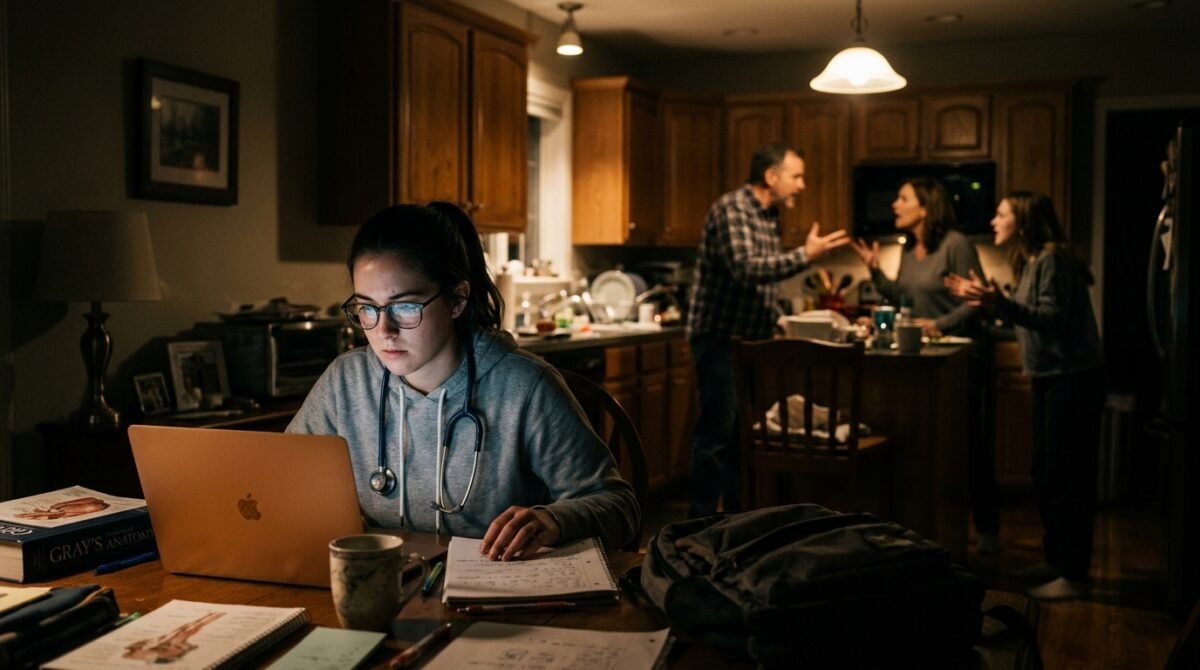
For as long as I can remember, the path to medical school was the only goal I ever allowed myself to pursue. It wasn’t just a career; it was my ticket out of a suffocating family dynamic where everything was measured by how much it could elevate the family brand. My sister, Clara, was always the ‘creative’ one, the golden child who was encouraged to follow her whimsical dreams, no matter the cost. While I spent my teenage years buried in textbooks and volunteering at the local clinic, Clara was gifted start-up funds for hobby after hobby, each one ending in an expensive, quiet failure.
The situation reached a breaking point the week I received my acceptance letter and a full-tuition scholarship to my top-choice medical program. It was supposed to be the proudest moment of my life. Instead, it became the catalyst for a demand so absurd, so fundamentally disconnected from reality, that it felt like an out-of-body experience. My parents didn’t want to celebrate my academic success; they wanted to leverage it.
They sat me down in our living room, the air thick with the scent of lilies and unspoken demands. They explained that Clara’s ’boutique bakery’—a venture that had been bleeding money for eighteen months—needed a massive infusion of capital to survive. Their solution? They wanted me to decline the scholarship, take out massive student loans instead, and funnel the money I would have used for living expenses directly into Clara’s business. They called it an ‘investment in the family future.’
The moral dilemma was stark, but the reality was even sharper. This wasn’t about supporting a sibling; it was about sacrificing my future on the altar of someone else’s vanity project. As the walls closed in, I realized that my family’s love was conditional, tied entirely to my willingness to play the role of the sacrificial lamb. This is the story of how I chose myself, and the absolute chaos that ensued when I dared to say no.
The Tuesday Night Intervention
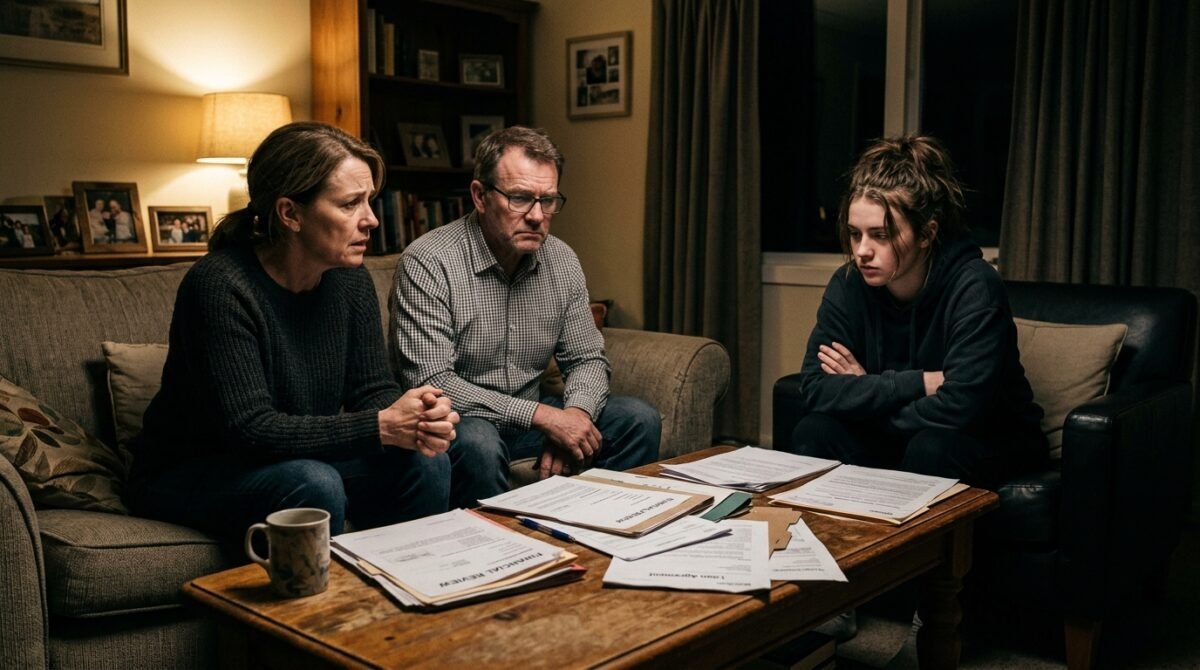
It started on a rainy Tuesday. I had just gotten home from a grueling shift at the hospital where I was doing my pre-med rotations. I was exhausted, covered in the antiseptic scent of the clinic, and looking forward to nothing more than a shower and sleep. My parents were waiting in the living room, their faces etched with a gravity that usually accompanied a death in the family or a major financial ruin. Clara was there too, looking uncharacteristically somber, clutching a folder of printed profit-and-loss statements.
My father cleared his throat, the sound sharp in the quiet house. ‘We’ve been looking at the numbers for the bakery, and it’s at a crossroads,’ he began, avoiding eye contact. ‘Clara has a vision that is finally taking off, but she lacks the liquid capital to secure the high-end ingredients and the storefront renovations required for the next quarter. We’ve exhausted our personal savings, and we need you to bridge the gap.’
I stared at them, completely bewildered. ‘What do you mean, bridge the gap? I’m a student. I have a scholarship that covers my tuition, but I still have to cover rent, books, and living expenses in the city. I don’t have a surplus of cash to give away, especially not for a business that hasn’t turned a profit in nearly two years.’
My mother sighed, her voice dripping with the kind of condescending patience she used when I was a child. ‘You have the scholarship, which means you have the freedom to take out loans for your living expenses. A student loan is low-interest, long-term debt. It’s practically free money compared to the high-interest business loans Clara is looking at. If you take out the maximum amount of federal aid available, you can hand over the excess to the bakery. It’s a temporary measure until she scales up.’
“You are asking me to put myself in tens of thousands of dollars of debt—debt that will haunt me for decades—so that Clara can keep playing house in a professional kitchen?”
— Me, during the initial confrontation
The room went deathly silent. Clara finally looked up, her eyes wide with a mixture of entitlement and genuine confusion, as if she truly couldn’t understand why I was being so difficult. The realization hit me then: they didn’t see my education as a personal achievement. They saw it as a financial resource, a line of credit that was currently being ‘wasted’ on books and hospital rounds.
The Mathematics of Entitlement

Over the next hour, they laid out their plan in agonizing detail. They had calculated exactly how much I could borrow under my financial aid package, right down to the last dollar. They had even drafted a ‘repayment schedule’ that projected the bakery would be profitable within six months. It was a fantasy, a house of cards built on the assumption that I would prioritize their comfort over my own professional stability.
I looked at the documents they had prepared. The numbers were staggering. They were asking me to take out nearly $60,000 in private and federal loans to fund everything from high-end ovens to a decorative floral wall for the bakery’s interior. It was clear that they hadn’t just been planning this for a few days; they had been working on this ‘business strategy’ since I got my acceptance letter.
I pointed out that the bakery was located in a saturated neighborhood, that their pricing was unsustainable, and that the previous year’s losses were massive. My father waved my concerns away as if they were mere trifles. ‘You’re looking at the small picture,’ he insisted. ‘This is about family unity. If Clara succeeds, we all succeed. If you graduate and become a doctor, you won’t even notice the debt payments. It’s an investment in our collective reputation.’
I started to feel physically ill. The thought of starting my medical career with a massive financial anchor, all for a vanity project that had no business model, was infuriating. I told them no, clearly and unequivocally. I told them that I would not be touching my student loans for anything other than my own education. The reaction was immediate and visceral.
“If you can’t support your own family when we are in need, then don’t expect us to be there when you need help or housing during your residency.”
— My Mother, escalating the threat
That was the moment the dynamic shifted. They weren’t just asking; they were threatening to cut me off if I didn’t comply. They wanted to hold my future housing security hostage to force me into funding their daughter’s failed experiment. It was a cold, calculated move, and it made it impossible for me to ever look at them the same way again.
The Midnight Group Chat Leak
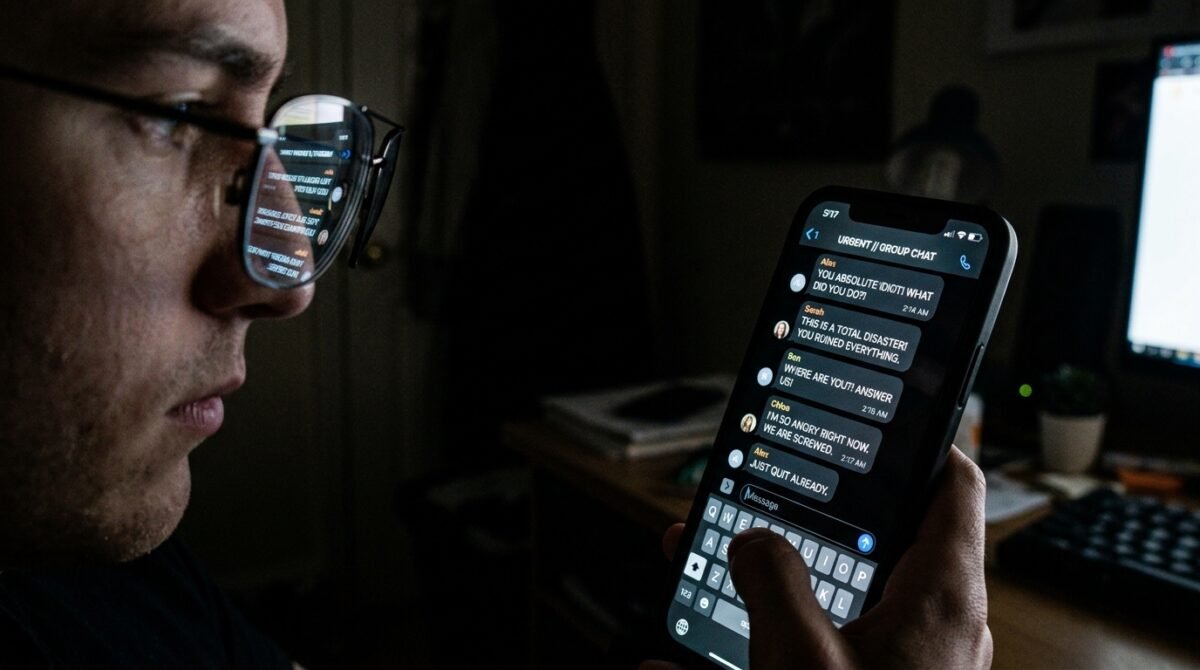
I left the house that night feeling like a stranger in my own home. I went back to my apartment, shaking with adrenaline and anger. I was still logged into the family computer, and I realized I had left my email open. A few hours later, I heard the telltale ‘ping’ of a notification on my phone, which was synced to the family group chat we used for logistics.
Clara had sent a message, believing I was still in the house or at least not paying attention. It was a string of messages that confirmed my worst fears. They weren’t just frustrated; they were plotting. They were discussing ways to contact my scholarship office to see if there was any way to have my ‘funding allocation’ adjusted, or if they could convince the school to pay out a portion of my scholarship directly to me as a stipend that I could then ‘reallocate.’
“We need to make him see that the family comes first. If he refuses, we start telling the extended family that he’s become selfish and elitist since getting into medical school. We need to shame him into compliance.”
— Leaked Message from the Family Group Chat
Reading those words was like being punched in the gut. They weren’t just trying to bully me; they were preparing to run a smear campaign against me to ensure I had no support if I defied them. It was systematic, cruel, and entirely unprovoked. I took screenshots of every single message, documenting the entire plot.
I realized then that this wasn’t just a disagreement about money; it was about power. My parents had always thrived on controlling my narrative, and the fact that I was becoming an independent, high-achieving adult was a threat to their entire system. They didn’t want a doctor in the family; they wanted an employee, a financier, and someone they could keep under their thumb.
I spent the rest of the night securing my financial accounts, changing my passwords, and ensuring that no one could access my school financial records. I felt a strange sense of clarity. The ambiguity was gone. I knew exactly who they were and what they were capable of. I wouldn’t be ‘shamed’ into anything, and I certainly wouldn’t be funding a bakery that was already sinking.
Sunday Dinner of Absolute Silence

I decided to face them at Sunday dinner, not to argue, but to set a firm boundary. I walked in, and the atmosphere was thick with tension. My parents were acting as if nothing had happened, making small talk about the weather and the neighbors, while Clara sat at the head of the table, avoiding my gaze entirely.
I waited until everyone was seated and had their plates full before I spoke. I didn’t raise my voice. I didn’t get angry. I simply stated my position. ‘I read the group chat messages,’ I said, watching their faces crumble as the realization hit them. ‘I know about the plan to lobby the school for my funds, and I know about the smear campaign. I want to be clear: I am not giving a single cent to the bakery. Not now, not ever.’
My father slammed his fork down. ‘You have a lot of nerve, sneaking into our messages and throwing around accusations. We are your parents. We sacrificed for you, and now that you’re about to be a big-shot doctor, you’ve decided you’re too good for us. You’re a disgrace to this family.’
“I am not too good for this family. I am simply not going to set my life on fire to keep your failed business warm. The conversation is over.”
— My response at the dinner table
My mother started crying, talking about how ‘disappointed’ she was in my ‘cold heart.’ It was classic manipulation, a desperate attempt to regain the moral high ground when they had clearly lost it. I didn’t engage. I stood up, put my napkin on the table, and walked out the door. I didn’t say goodbye, and I didn’t look back.
The drive home was quiet, but my mind was racing. I knew this was the start of a long, difficult period. I knew they would call, they would text, and they would try every trick in the book to guilt me. But for the first time in my life, I felt free. I had stood my ground, and the sky hadn’t fallen.
The Fallout and the Smear Campaign

True to their word, the smear campaign began within forty-eight hours. I started receiving calls from extended family members—aunts, uncles, even a few family friends—asking why I was being so ‘unreasonable’ and ‘cruel’ toward my sister. They had obviously been coached, feeding them a version of the story where I was the wealthy, entitled medical student who refused to help his poor, struggling sister.
I didn’t try to defend myself to everyone. It would have been a losing battle. Instead, I sent a simple, standardized message to anyone who reached out: ‘There is a significant misunderstanding regarding my finances and my sister’s business. I am a student on a scholarship and do not have the funds to invest in any commercial ventures. I would appreciate it if you respected my privacy while I focus on my studies.’ It was neutral, firm, and refused to play their game.
Some people bought it. Others, the ones who had known my parents for years, were skeptical. But it didn’t matter. I had stopped caring about the family reputation, because the family reputation was built on lies and exploitation. The more they pushed, the more I pulled away. I blocked my sister’s number after she sent me a series of vitriolic texts calling me a sociopath.
“You are going to regret this. When the bakery fails, it will be because of you. You are the reason we’re losing everything. Don’t ever ask us for anything again.”
— Text from my sister, Clara
It was a dark period. I felt isolated, and the constant badgering from family members took a toll on my mental health. But I leaned on the friends I had made at university—people who had no stake in my family’s drama and who saw me for who I was, not for what I could provide. They kept me grounded, helped me study, and reminded me that I was on a path to a better life.
The most important lesson I learned during this time was that blood is not an excuse for abuse. No one, not even parents, has the right to demand your future to cover their mistakes. The smear campaign eventually died down because, without my active participation in the drama, it was just old news. People got bored. They moved on to other gossip. I just kept my head down and worked.
The Reddit Verdict: A Community Weighs In

I eventually decided to share my story on Reddit, under a throwaway account, just to see if I was losing my mind. I was overwhelmed by the response. Within hours, the thread had thousands of comments, and while there were a few ‘you should help family’ dissenters, the overwhelming majority were firmly on my side. The validation was both jarring and incredibly healing.
“This is financial abuse, plain and simple. Your parents are trying to sabotage your future to fix a problem they created. Do not give them a single cent. You are doing the right thing. Stay the course.”
— u/ScholarshipDefender (Top Comment, 28.5k upvotes)
Reading the comments, I realized that I wasn’t alone. So many people had similar stories—parents who viewed their children as financial assets, siblings who were perpetually bailed out, and the immense pressure to conform to ‘family duty’ at the expense of one’s own well-being. It gave me the strength to maintain the no-contact boundary I had established.
Another commenter pointed out the legal implications. They warned me to double-check my school records and ensure that my financial aid portal was fully locked down. They suggested that I put a ‘password’ on my student account so that my parents couldn’t call the university pretending to be me. It was advice I hadn’t even thought of, but it proved to be crucial.
The community support was a reminder that my reality was valid. I wasn’t being ‘selfish.’ I was being a responsible adult who was protecting his own future. The Reddit thread became a source of strength for me, a place I could go back to whenever I felt the urge to reach out or apologize just to stop the fighting. It was a digital anchor that kept me from drifting back into their orbit.
The most insightful comment came from someone who had been in the exact same position: ‘You are the only one who can change the cycle of your family. If you pay for the bakery, you are reinforcing the idea that your purpose is to serve them. By saying no, you are teaching them that you are a person with autonomy, not a bank. It will be hard, but it is the only way to achieve freedom.’
The Attempted Reconciliation: A Final Door Closes

Six months later, I received a letter in the mail. It was a formal, handwritten note from my mother, apologizing for the ‘misunderstandings’ and inviting me to lunch at a neutral location. It was a classic ‘hoovering’ attempt, designed to pull me back into the fold after they had failed to manipulate me. For a moment, I considered it. Maybe, I thought, they’ve finally realized that I’m not changing my mind and they just want to move forward.
I met them at a quiet restaurant. For the first twenty minutes, it was almost normal. We talked about my classes, the hospital, and the weather. But then, my mother brought it up. ‘We really miss you,’ she said, her voice soft. ‘And we think that if you just helped Clara with a small, interest-free loan, the family could be happy again. It’s not that much money, really.’
The mask slipped so quickly. They hadn’t changed at all. They hadn’t learned a thing. The ‘apology’ was a transaction, a way to open the door to the same demand I had rejected months ago. I looked at my mother and realized that there was no room for a real relationship here. There was only room for a transaction, and I was no longer a party to it.
“I came here hoping for a family, but you’re still just looking for a bank. This is the last time we are having this conversation.”
— My final words to my parents
I left the money for my own lunch on the table and walked out. I didn’t shout, I didn’t cry. I felt a sense of absolute finality. I blocked their numbers permanently that afternoon. I knew that if I left any avenue open, they would continue to exploit it. It was the hardest thing I’d ever done, but it was also the most liberating.
I didn’t look back. I went back to my apartment, I focused on my exams, and I started living my life for me. I stopped worrying about what they would say to the extended family, and I stopped caring about their opinion of me. I was finally, truly, on my own path.
The Bakery’s Inevitable End

A year later, I heard through the grapevine that the bakery had finally shuttered its doors. It was exactly what I had predicted. The debts had become insurmountable, the landlord had evicted them, and the brand was effectively dead. I didn’t feel smug. I didn’t feel ‘I told you so.’ I just felt a deep, profound sadness for the time and money they had wasted on a dream that wasn’t grounded in reality.
I still wonder if they blame me. I imagine them sitting at the kitchen table, talking about how, if I had just given them the money, everything would have been different. It’s a sad story, but it’s not my story. I was an observer to their tragedy, not a participant in it. My life had moved on, and my focus was entirely on the patients I would eventually serve.
My relationship with my sister remains non-existent. She reached out once, asking for a job recommendation, but I declined. I didn’t owe her that. I had to focus on my own career, and I couldn’t risk my reputation on someone who had proven they didn’t respect boundaries. It was a painful choice, but it was the right one.
“You have to learn that you can love someone and still realize that they are dangerous to your own well-being. Sometimes, the best thing you can do for them is to walk away.”
— Advice from my mentor at the hospital
I’ve found peace in the distance. I’ve built a life that is truly mine, a life defined by my own achievements and my own choices. The struggle to get here was immense, but the result is a clarity of purpose that I never could have had if I had stayed in that toxic environment.
I am now in my second year of medical school. I am debt-free, I am thriving, and I am surrounded by people who support me. I have learned that family isn’t just about blood; it’s about the people who show up for you, who respect your boundaries, and who want to see you succeed for your own sake, not for theirs.
Reflecting on the Cost of Independence

Looking back at the entire ordeal, I recognize that the cost of my independence was high. I lost my family. I lost a sense of belonging that I had spent my entire life trying to cultivate. But I gained something even more valuable: a sense of self. I learned that my worth is not tied to my utility, and that I have the right to say no to anyone, no matter who they are.
The lessons I’ve learned in medical school about patient care and empathy have only reinforced the boundaries I drew. I know that I can’t save everyone—that I can’t even save my own family from themselves. I can only provide the best care possible to those who are willing to participate in their own healing. That, I think, is the ultimate lesson of this entire experience.
I am grateful for the struggle. It forced me to grow up faster than I wanted to, but it also forced me to build a foundation that is entirely my own. I am not a product of my family’s expectations; I am a person of my own design. And that, in the end, is the greatest achievement of all.
“The most important thing I learned is that you are the architect of your own future. Don’t let anyone else draw the blueprints.”
— A thought I keep on my mirror
I hope that anyone reading this who is in a similar position knows that they are not alone. It is possible to set boundaries. It is possible to say no. It is possible to thrive, even when the people who are supposed to support you are the ones standing in your way. Your life belongs to you, and no one else has the right to rewrite the story you are meant to live.
Building a New Definition of Home

These days, home is not a place I visit; it’s the community I’ve built in my city. My friends are my family, and we celebrate our successes without conditions and support each other through our failures without judgment. We share meals, we study together, and we push each other to be the best versions of ourselves. It’s a simple life, but it’s a beautiful one.
I still think about my parents sometimes. I wonder if they ever sit down at that kitchen table and regret the way things turned out. I wonder if they realize that they could have had a son who was a doctor and a friend, if they had just been willing to treat me with the respect I deserved. It’s a sad thought, but it’s no longer an agonizing one.
The scars are there, of course. I still have a lingering fear of being asked for money, and I still have a hard time trusting people who seem ‘too’ nice. But I’m working through it, one day at a time, with the help of a therapist who has been instrumental in my healing. I’m learning that trust is earned, and that I don’t have to give it to anyone just because they share my DNA.
“You don’t owe your life to anyone. You don’t owe your success to anyone. You only owe it to yourself to live a life that you are proud of.”
— My therapist, during a session
I’m looking forward to the future with a sense of excitement and clarity. I know there will be more challenges, more decisions, and more moments where I’ll have to stand my ground. But I’m ready. I have the foundation, I have the support, and most importantly, I have myself.
If you are reading this and feeling the weight of your family’s expectations, please know that you are not alone. You have the strength to make your own path, and you have the right to define your own success. Don’t be afraid to walk away from anything that isn’t helping you grow. Your future is waiting, and it’s going to be better than you ever imagined.
Conclusion
This journey has been one of the most difficult and rewarding of my life. Standing up to my family was not just about saving my money; it was about reclaiming my future and my identity. The fallout was severe, but the resulting peace is priceless. Every decision I make now is mine, and every success I achieve is something I have earned on my own terms.
The conversation doesn’t end here, though. I know that many of you have faced similar pressures, or are currently navigating the fine line between family loyalty and personal autonomy. I want to hear your stories. Have you ever had to draw a firm boundary with family to save your future? What was the hardest part of that process, and how do you feel about it today?
Poll: What would you have done in my situation?
1. Cut off contact immediately after the first demand.
2. Tried to negotiate a compromise to keep the peace.
3. Given in just to avoid the drama, regardless of the consequences.
4. Other (Share your story in the comments below!)
Let’s discuss in the comments. Your experiences and insights are what help us all navigate these complex, often heartbreaking family dynamics. Remember, you are not alone, and your boundaries are valid.
What's your verdict on this dilemma?
Vote below to contribute to the official community consensus.

Have a Dilemma Keeping You Up at Night?
Share your real-life feud, wedding chaos, or relationship crossroads anonymously with our editorial team.
What do you think ?
0 Comments🛡️ Comments are moderated to protect community integrity. Your comment will appear once approved by the editorial team.