

Inheritance is supposed to be a bridge between generations, a tangible connection to those who came before us. For my sister, Sarah, it was apparently just a line of credit. When our grandfather passed away, he left behind a singular, precious item: an 18k gold pocket watch that had survived two wars and a lifetime of hard labor. It was never meant to be a commodity; it was a symbol of his integrity.
I was the executor of the estate, but I made the mistake of trusting Sarah with the ‘safekeeping’ of the watch while I was away on a month-long business trip. I returned to find the display case empty, the velvet lining gathering dust, and a brand-new, garish designer bag sitting on her vanity. The betrayal wasn’t just about the money; it was the sheer callousness of treating a man’s life story as an accessory to be traded for temporary status.
The following pages document not just a dispute over an object, but the unraveling of a lifetime of sisterly trust. It is a story of how far one person will go to satisfy their vanity, and how far the other will go to uphold a promise made to the dead. This is the chronicle of the legal war that followed, the family group chat that erupted into flames, and the cold, hard realization that some blood isn’t thicker than greed.
As we navigate the fallout, we look at the psychological toll of entitlement and the often-misunderstood mechanisms of civil litigation. This isn’t just about a watch; it’s about the boundaries we draw when those we love the most decide that our values are negotiable. Join me as I recount the slow, painful process of reclaiming my history and the subsequent legal reckoning that forced a confrontation with reality.
The Empty Velvet Box and the Designer Reveal
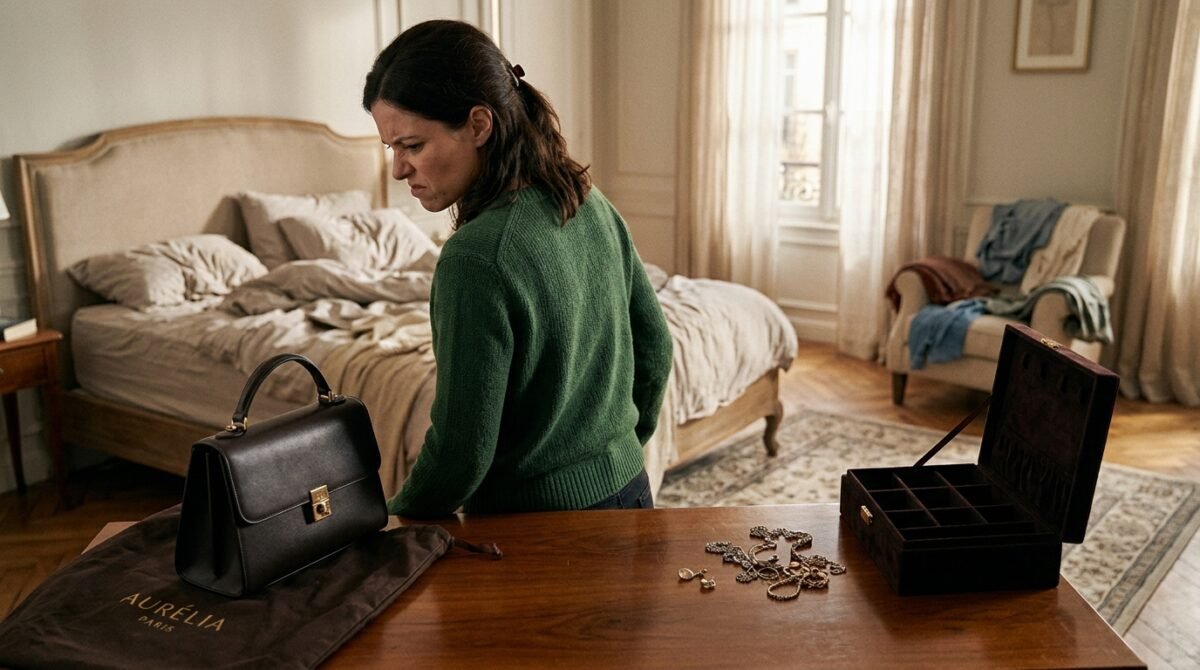
The moment I walked through the door after my trip, I knew something was wrong. The house felt lighter, emptier, and there was an unnatural silence in the living room where I kept the grandfather’s chest. I didn’t even drop my suitcases before walking over to the cabinet. The glass was smudge-free, which was the first red flag, as I had specifically asked Sarah to keep it clean and secured.
I opened the cabinet to see the velvet-lined box sitting there, but it was suspiciously light. When I lifted the lid, the silence of the room became deafening. The 18k gold watch, with its intricate engraving and the faint scent of my grandfather’s tobacco still clinging to the chain, was gone. Panic turned to cold, hard rage within seconds.
I walked upstairs to Sarah’s room. The door was ajar, and there, sitting on her bed like a trophy, was a limited-edition handbag. It was a brand I knew she had been obsessing over for months, a bag that cost exactly what the appraised value of the watch was. The coincidence was not a coincidence; it was a confession.
“Where is the watch, Sarah? Don’t lie to me. I see the bag. I know exactly what you did.”
— Me, confronting my sister for the first time
She didn’t even look guilty. She looked annoyed, as if I were interrupting her morning routine. She smoothed out the fabric of the bag and sighed, rolling her eyes as if I were the one acting irrationally. The detachment was the most chilling part of the entire exchange.
She told me that the watch was ‘just sitting there’ doing nothing, and that she felt like she deserved to enjoy something now instead of waiting for a hypothetical future. She treated the heirloom as if it were a dormant bank account she had finally decided to liquidate for her own benefit.
The Pawn Shop Investigation
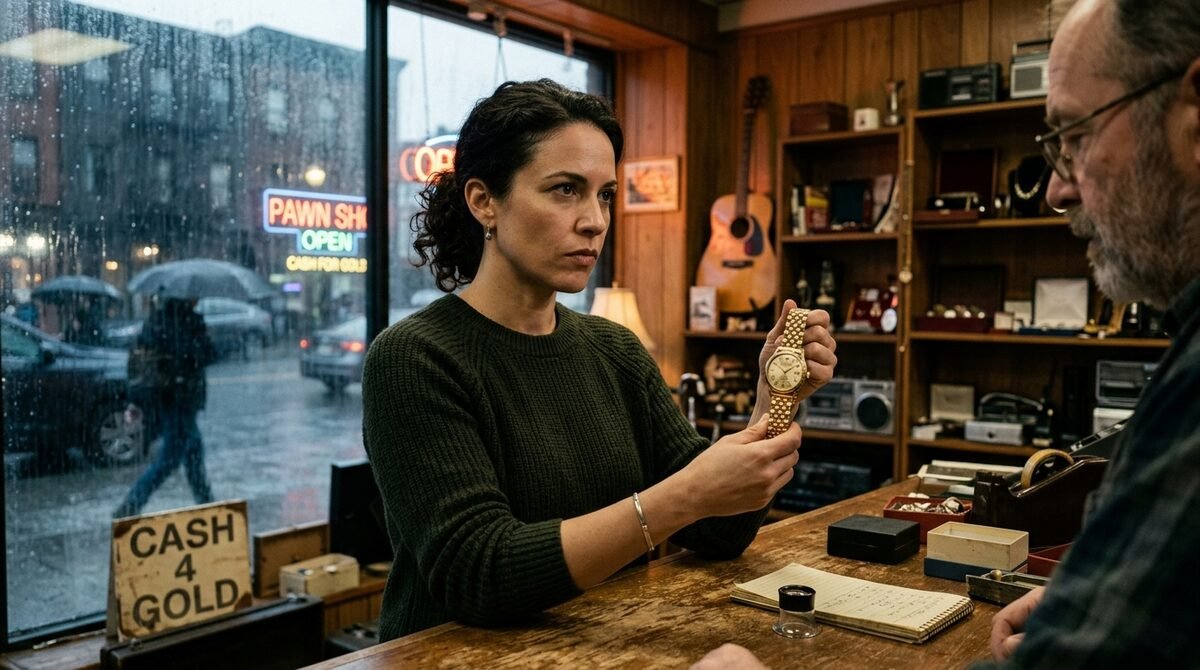
I didn’t waste time on a second argument. I knew exactly where she would have taken it—the high-end pawn shop in the city center that dealt in luxury goods and vintage timepieces. I spent the next three hours driving in the rain, my mind racing through every memory I had of my grandfather teaching me how to wind that watch.
The pawnbroker was hesitant at first, but once I produced the legal documents proving my status as executor and the original appraisal records, he became much more cooperative. He admitted that a young woman had come in earlier that week, desperate to move the piece quickly. He confirmed the transaction, the price, and the exact time it happened.
I didn’t have the cash on hand to buy it back immediately, so I had to make a series of calls. I emptied my emergency fund, leveraged my credit, and pleaded with the shop owner to hold it for me for 24 hours while I secured the financing. The cost was exorbitant, including the shop’s ‘handling fee,’ but to me, the watch was priceless.
“I don’t care what it costs. That watch is family history, not inventory. Give me the total, and I will have it here by tomorrow morning.”
— My promise to the shop owner
When I finally secured the watch, holding that cold gold against my palm, I felt a wave of relief, but it was quickly replaced by a dark, singular focus. I wasn’t going to let this slide. Sarah had broken the law, and she had broken the family, and she needed to understand that actions have consequences.
I walked out of the shop with the watch in a secure case, feeling like a soldier returning from a mission. The battle for the watch was over, but the war for accountability had just begun. My next stop was not home; it was a law office.
The Legal Ultimatum and the Conversion Suit

My lawyer, a sharp-tongued woman who specialized in probate disputes, didn’t hesitate when I told her the story. She explained the concept of ‘conversion’—a legal term for the unauthorized taking or dealing with someone else’s property. In this case, Sarah had no legal right to sell an item that was part of a pending estate.
We drafted a formal demand letter. It wasn’t just asking for the money back for the handbag; it was a demand for the full market value of the watch, the cost of the buy-back, and a stern warning that if she didn’t compensate the estate, we would be filing a civil suit for conversion and breach of fiduciary duty.
When I served her the papers, her reaction was one of pure, unadulterated shock. She had assumed, quite foolishly, that this was just another sibling squabble that would eventually blow over. She didn’t realize that I had already moved past the ‘sibling’ stage and into the ‘litigant’ stage.
“You’re actually suing me? Over a watch? We are family, and you are treating me like a criminal because I wanted something nice for once!”
— Sarah’s reaction to the legal summons
She tried to call my parents, hoping they would intervene and force me to drop the suit. But when my parents saw the paperwork and realized that Sarah had effectively stolen from their own father’s estate, the tide turned. They didn’t support me in my anger, but they certainly didn’t support her in her crime.
The legal process was grueling. We had to document every conversation, every promise, and every text message. Sarah’s attempts to frame this as ‘sharing the inheritance’ fell flat when the judge looked at the records. The legal system, unlike our family dynamics, does not care about feelings; it cares about property rights.
The Family Group Chat Explosion

The family group chat, once a place for birthday wishes and dinner plans, became the epicenter of the fallout. Sarah, in a moment of desperation, posted a rant accusing me of being a cold-hearted tyrant who loved objects more than his own flesh and blood. She spun a narrative where she was the victim of my ‘financial control.’
My cousins, aunts, and uncles jumped in. It was a chaotic mix of people taking sides based on half-truths. Some thought I was being too hard on her, while others were horrified that she had sold a piece of our history for a designer bag. It was the digital equivalent of a public shaming.
“Sarah, you literally sold Grandpa’s legacy for a bag. You don’t get to play the victim here. The watch is back, and the court is involved. Don’t message me again until you’re ready to pay for your actions.”
— My final message in the group chat
I eventually muted the chat. I couldn’t bear to see the back-and-forth, the accusations, and the desperate pleading from Sarah for me to ‘just be a brother.’ She wanted me to be a brother, but she had failed to be a sister. The distinction was critical.
The screenshots of that conversation eventually leaked to my wider social circle, which only added to the drama. It was embarrassing, painful, and necessary. It forced everyone in the family to confront the reality that Sarah had a pattern of entitlement that had finally hit a legal wall.
I kept a log of every message. In the eyes of the law, these were exhibits. In the eyes of my family, these were scars. But they were the truth, and for the first time in years, the truth was actually being laid bare for everyone to see.
The Price of Vanity and the Reality of Debt

Sarah thought she was getting a status symbol; what she actually bought was a mountain of debt. Once the legal fees started piling up and the court ordered her to pay the estate for the conversion, she realized that her ‘luxury’ purchase had cost her almost everything. She was forced to sell the bag—at a significant loss—just to cover the initial legal consultations.
She came to my house one night, trying to play the ‘we’re poor and struggling’ card. She looked disheveled, a far cry from the woman who had walked into the pawn shop with a smug grin. She wanted to apologize, but it felt hollow. It was the apology of someone who was sorry they got caught, not sorry for the betrayal.
I stood my ground. I didn’t let her inside. We talked on the porch, in the cold air. She asked if I could just drop the suit, if we could ‘settle’ it outside of court. I told her that the estate had its own requirements and that I was no longer the one pulling the strings—the law was.
“I’m not doing this to hurt you, Sarah. I’m doing this because you broke the law. If you want to talk about family, we can do that when the watch is compensated and the legal matter is settled.”
— My response to her plea for a settlement
She left in tears, but I didn’t feel the surge of pity I expected. I felt a strange sense of clarity. For years, I had been the one cleaning up her messes, the one covering for her failures, the one who was always there to make sure nothing went wrong. By forcing her to face the consequences, I was finally doing the most loving thing I could do: letting her grow up.
The reality of her situation was harsh. She had ruined her credit, strained her relationship with our parents, and alienated her brother. The watch had been the catalyst, but the decay had been happening for years. The handbag was just the final, visible symptom of a deeper, more corrosive problem.
Reddit Weighs In: The Verdict of the Masses

I decided to post the story on a popular forum, wanting to see if I was truly the villain in this scenario. The response was overwhelming. Thousands of people chimed in, and the consensus was not what my sister had hoped for. The internet, in its brutal, unfiltered way, took my side.
The comments were a mix of validation and horror. People shared their own stories of family betrayal, of heirlooms lost to greed, and of the necessity of setting hard boundaries. It was cathartic to see that I wasn’t alone in this experience. The support I received was a stark contrast to the isolation I felt at home.
“NTA. Your sister stole from the estate. That isn’t a ‘family misunderstanding,’ it’s theft. Don’t let her guilt-trip you into being a doormat. You did the right thing by protecting the legacy.”
— u/JusticeForHeirlooms (Top Comment, 32.1k upvotes)
Others were more clinical, offering legal advice and tips on how to handle the probate process. It was a digital community of experts, strangers, and those who had been through the exact same thing. It reminded me that while family is blood, the rules of ethics and law are universal.
Of course, there were the ‘but she’s your sister’ crowd, but they were quickly drowned out by those who recognized the severity of the act. Reading those comments didn’t change my mind, but it did give me a sense of peace. I wasn’t crazy. I wasn’t being cruel. I was being a steward of something that mattered.
The thread became a viral sensation, a cautionary tale for those who think they can treat family property like their personal playground. It was a reminder that even when things seem private, they are subject to the same moral scrutiny as anything else in the world.
The Courtroom Confrontation

The day of the hearing was surreal. Walking into the courthouse, I felt a weight on my shoulders that had been there for months. Sarah looked terrified. She had no lawyer, thinking she could represent herself and ‘explain’ everything to the judge. The moment she started speaking, the judge silenced her, explaining that this was a matter of civil law, not a therapy session.
My lawyer presented the evidence: the pawn shop records, the text messages, the bank statements. It was an airtight case. The judge didn’t even look at Sarah with sympathy; he looked at her with professional impatience. The law doesn’t have time for familial drama, and that was exactly what I needed.
Sarah tried to claim that the watch was a ‘gift’ to her, but I had the original estate planning documents. Our grandfather had specifically stated that the watch was to remain in the family trust until a specific date or event. He knew her better than any of us, it seemed.
“The respondent has failed to provide any documentation of a gift. The records clearly show the item was part of the estate. Conversion is the only applicable charge here.”
— The judge’s summary to the courtroom
When the verdict came down, it wasn’t a moment of triumph. It was a moment of finality. She was ordered to pay the full value of the watch, the legal fees, and damages for the emotional toll. It was a crippling amount for her, but it was what the law required.
Watching her face fall as the judge read the order was the hardest part. I realized then that while I had won, the version of the family I grew up with was officially dead. The money was just money, but the trust was gone, and no judge could ever order that to be replaced.
The Aftermath: Building New Boundaries

After the trial, the silence in our home was permanent. We stopped speaking. Not out of malice, but out of necessity. I moved the watch to a high-security safe, one that only I have access to. It sits there, tucked away from the world, a silent witness to everything that happened.
I started going to therapy to deal with the guilt of having sued my own sister. It wasn’t an easy process. My therapist helped me realize that I hadn’t destroyed the relationship—I had only reacted to the fact that it was already destroyed. You can’t sue someone who hasn’t already burned the bridge.
My parents tried to mediate, but I refused. I told them that if they wanted to see Sarah, that was fine, but I wouldn’t be part of any ‘reconciliation’ dinners until she took full responsibility, which she had shown no interest in doing. I had to protect my own peace.
“I love you, Mom and Dad, but I can’t be in the same room as her right now. She hasn’t learned her lesson. She’s only sorry she lost the money.”
— My conversation with my parents regarding future family gatherings
I focused on my work and my hobbies. I started building a life that was entirely my own, one where I didn’t have to worry about my possessions or my legacy being liquidated for the sake of someone else’s whims. The freedom that came with that boundary was intoxicating.
I learned that family is not just about blood; it’s about mutual respect. When that respect is gone, the title of ‘sister’ or ‘brother’ is just a word. It doesn’t give anyone the right to hurt you, and it certainly doesn’t give them the right to steal your history.
Lessons in Legacy and Stewardship
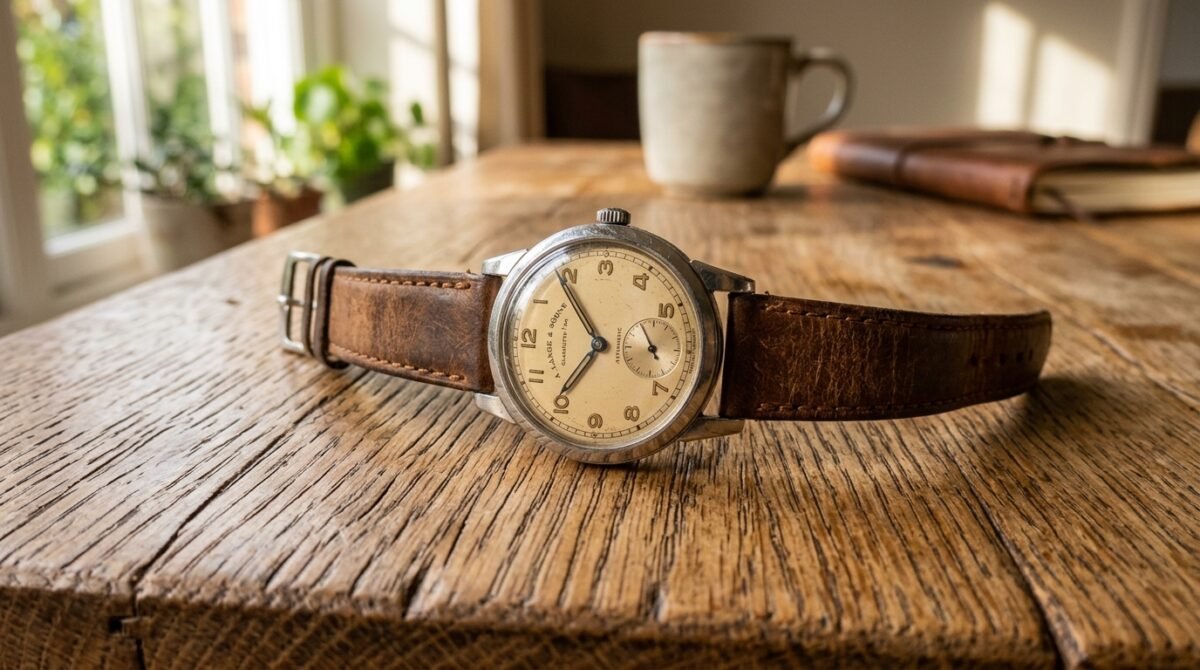
Looking back, I realize that the watch was never the real issue. It was a catalyst for a conversation we should have had years ago. My grandfather left me that watch because he knew I would value it, but he also left me the responsibility of it. He gave me a test, and in a way, I passed it.
I think about the nature of heirlooms. They are anchors in a world that is constantly shifting. They tell us who we are and where we came from. When we treat them as assets, we lose that connection. I hope that one day, I can pass that watch down to someone who understands its weight, not just its gold content.
I’ve realized that being the ‘responsible one’ in the family is a trap if you aren’t careful. You end up enabling the very behavior you despise, thinking that you’re being kind. But true kindness isn’t letting someone get away with murder—or theft. True kindness is holding them to the same standards you hold yourself.
“An heirloom is a burden of history, not a ticket to luxury. If you don’t understand that, you don’t deserve to hold it.”
— A reflection on the true meaning of inheritance
The legal battle cost me a lot of money, but it saved me a lifetime of future betrayals. If I hadn’t stood up now, Sarah would have continued to take, and I would have continued to give. The break was painful, but it was also a clean break. And sometimes, that is the only way to heal.
I am at peace with my decision. I still miss the sister I thought I had, but I have accepted the sister that I actually do have. And that is a powerful realization that has helped me move forward with my life, unencumbered by the past.
The Final Verdict: Moving Forward

As I write this, I have reached a point where the watch is no longer a source of pain, but a source of pride. It is a symbol of my integrity and my commitment to the values I hold dear. The lawsuit is over, the debt has been settled, and the silence has become a comfortable space for me to grow.
I don’t expect Sarah to ever understand, and that’s okay. I don’t need her validation anymore. I have my own, and that is enough. I’ve realized that you don’t need a perfect family to have a perfect life; you just need to be honest with yourself about who you are and what you stand for.
To anyone out there dealing with a similar betrayal, remember: you are not responsible for the actions of others, even if they are your family. You are only responsible for how you respond to them. Don’t let your boundaries be blurred by guilt or the desire to ‘keep the peace’ at the expense of your own values.
“Your legacy is yours to protect. If someone tries to steal your history, you have every right to stand your ground. Don’t apologize for your integrity.”
— My final thoughts for those facing similar family dilemmas
I’m looking forward to the future now. I have a new sense of clarity, a new set of priorities, and a newfound appreciation for the people who truly respect my boundaries. The watch will remain safe, and so will my peace of mind. And that, in the end, is the greatest inheritance of all.
Thank you for listening to my story. It’s been a long journey, but I feel stronger for it. And now, I invite you to share your thoughts. Have you ever had to choose between family and your own integrity? Let’s discuss in the comments below.
Conclusion
This journey has been one of the most difficult of my life, but it has also been one of the most transformative. By standing up for the memory of my grandfather and the integrity of our family legacy, I learned that boundaries are not barriers—they are the foundation of any healthy relationship. If this story has resonated with you, I encourage you to reflect on your own relationships and the values you hold dear.
The debate over family inheritance and the boundaries of ‘shared’ property is as old as time, but in the digital age, it has become even more complex. Do you believe that family members have a right to ‘use’ inheritance as they see fit, or is the duty to preserve history paramount? I invite you to participate in our reader poll and share your experiences in the comments below. Let’s keep the conversation going.
What's your verdict on this dilemma?
Vote below to contribute to the official community consensus.

Have a Dilemma Keeping You Up at Night?
Share your real-life feud, wedding chaos, or relationship crossroads anonymously with our editorial team.
What do you think ?
0 Comments🛡️ Comments are moderated to protect community integrity. Your comment will appear once approved by the editorial team.