
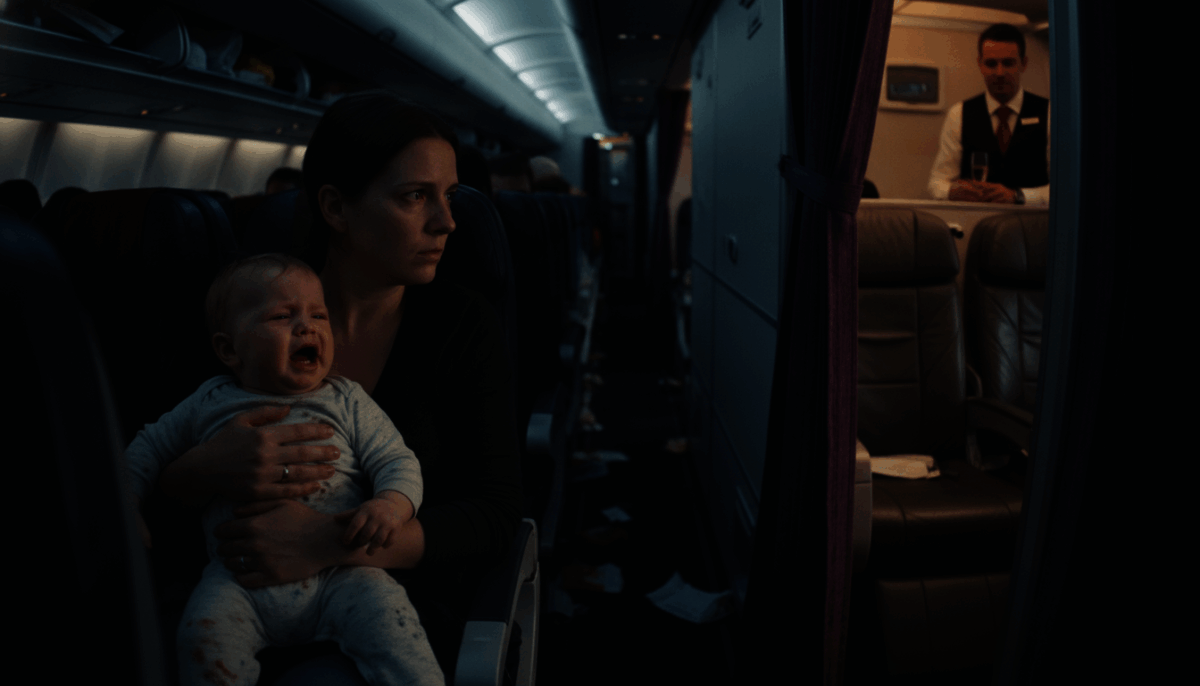
When you marry someone, you envision a partnership. You imagine the ‘for better or worse’ vow applying to the trenches of life—the late-night illnesses, the financial stresses, and, naturally, the logistical chaos of traveling with a young child. Yet, there are moments in a marriage that act as a litmus test for the entire foundation of the relationship. For Sarah, this moment arrived in the form of a confirmation email for a red-eye flight from London to New York.
Her husband, Mark, had been complaining about his workload for months. He spoke of ‘burnout’ and the need for ‘optimal rest’ before his upcoming international business conference. Sarah, empathetic to the pressure he faced, had been juggling the demands of her own part-time career and the relentless, high-energy requirements of their 18-month-old son, Leo. She had assumed that when they finally booked their family trip, they would be in this together.
But the betrayal wasn’t malicious in the way of a hidden affair; it was worse. It was a cold, calculated act of indifference. When Sarah opened the airline booking confirmation on her phone, she felt her blood run cold. Two tickets. One in First Class, row 2, for Mark. One in Economy, row 34, for her and Leo. The justification that followed would become the catalyst for a full-scale domestic implosion that would eventually spill onto the screens of millions of strangers online.
The dilemma is not just about a seat on a plane; it is about the hierarchy of needs within a household. Is the ‘provider’ entitled to comfort at the expense of the ‘caregiver’? Or does parenting demand a shared sacrifice that precludes one spouse from opting out of the misery? As Sarah prepared for the longest night of her life, she knew that this flight wasn’t just taking them across the Atlantic—it was potentially taking her marriage to a point of no return.
The Confirmation Email That Shattered The Peace
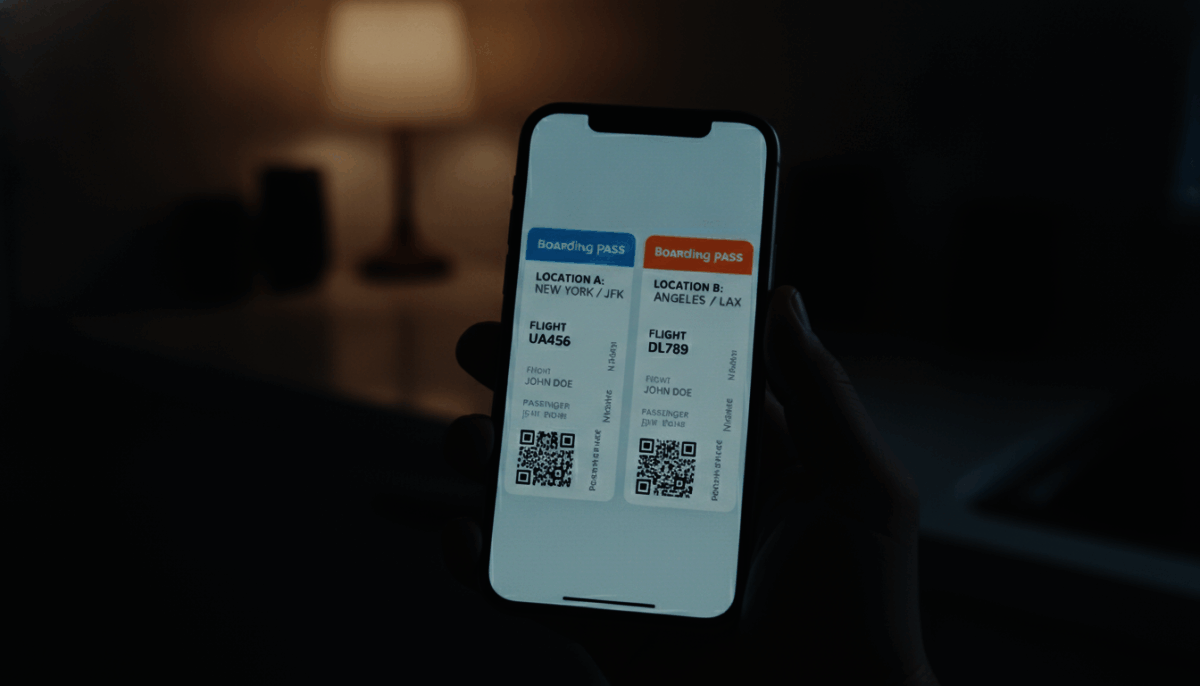
The discovery didn’t happen in a dramatic confrontation; it happened in the quiet of their kitchen while Mark was already asleep. Sarah had been tasked with finalizing the check-in details and downloading the boarding passes. She opened the airline app, expecting to see their seat assignments together—a row of two or three where they could trade off holding Leo.
Instead, her screen displayed a jarring visual discrepancy. Mark’s name was linked to a luxurious lay-flat bed in the forward cabin. Her name, alongside their son’s, was anchored in the back of the plane, near the restrooms, in the middle of a triple-seat configuration. She refreshed the app three times, assuming it was a glitch. Surely, the corporate travel agent had made a mistake.
She didn’t wake him immediately. She walked through the house, the silence feeling suddenly heavy and suffocating. She looked at the nursery, then at the master bedroom where Mark slept soundly, recharging for a trip he clearly felt he deserved to enjoy in isolation. The audacity of the move wasn’t just in the seating; it was in the total lack of consultation. He hadn’t asked her if she would mind; he had simply removed himself from the equation of parenting.
“I just stared at the screen. I felt like the air had been sucked out of the room. It wasn’t just about the seat—it was the realization that in his mind, my time and comfort were worth zero compared to his.”
The resentment started to bubble, a hot, sharp sensation in her chest. She had spent the last year being the ‘default parent.’ She was the one who missed out on sleep, who dealt with the tantrums in public, and who managed the household logistics. This trip was supposed to be a reprieve—a way to get help with Leo during the transition. By booking first class for himself, he wasn’t just buying comfort; he was buying an exemption from his own son.
The Morning Confrontation Over Coffee
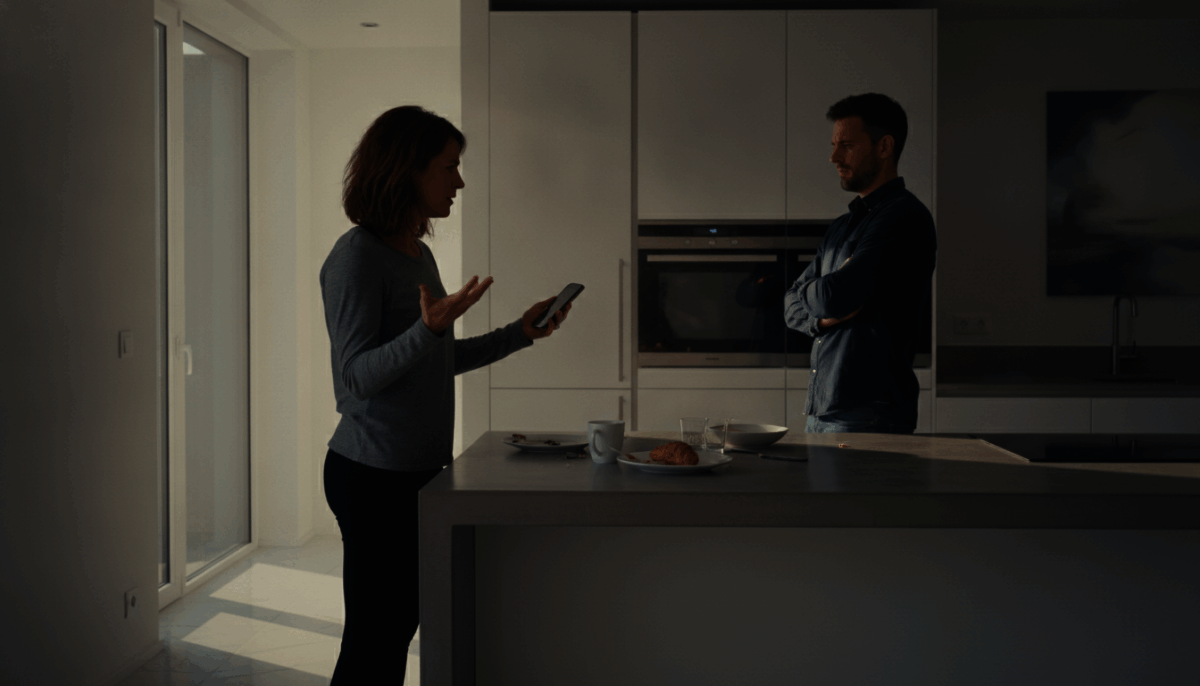
When Mark walked into the kitchen the next morning, he was whistling, clearly satisfied with his ‘efficient’ planning. Sarah stood by the coffee maker, her hands trembling as she held her phone. She didn’t want to scream; she wanted to understand how his brain had rationalized such an blatantly selfish act.
“Mark,” she said, her voice steady but icy. “Why are you in seat 2A and why am I in 34F with a toddler for a seven-hour red-eye?” Mark didn’t even look up from his tablet. He took a sip of his coffee, his expression one of mild annoyance at being interrupted.
“Look, Sarah, I have the board presentation on Monday. If I arrive exhausted, I’ll blow the deal. You’re just going to be sleeping in the back anyway, and let’s be honest, you’re better at handling Leo during the night than I am. It’s a strategic choice for the family.”
Sarah felt the heat rise in her face. The words ‘strategic choice’ stung more than the actual seat assignment. He wasn’t just being selfish; he was framing his laziness as a selfless act for their financial benefit. She challenged him, asking how he could possibly justify abandoning them in the back, but he waved her off, citing the ‘points’ he had used to upgrade himself.
The argument escalated quickly. It wasn’t loud, which somehow made it more terrifying. It was a cold, surgical dismantling of their partnership. He insisted that he was the primary earner and therefore deserved the rest, while she countered that his paycheck didn’t grant him a pass on being a father. By the time he left for work, they were standing on opposite sides of the island, the silence between them thicker than any wall.
The Reality of the Boarding Process
The night of the flight was a sensory nightmare. The terminal was chaotic, and Leo, sensing his mother’s frantic energy, was already on the edge of a breakdown. When they reached the gate, Mark made a point of ‘checking them in’ at the coach line before casually strolling toward the Priority boarding lane with his noise-canceling headphones around his neck.
He didn’t look back to see if she needed help with the stroller, the diaper bag, or the car seat. He just vanished into the luxury cabin, leaving her to navigate the cramped economy aisle. As she shoved their belongings into the overhead bin, a man in the adjacent seat sighed loudly, making it clear he was not interested in being near a toddler.
“I had to ask a stranger to hold Leo for ten seconds while I shoved the diaper bag under the seat. I looked up and saw Mark walking past the window of the first-class cabin, sipping champagne. He didn’t even acknowledge that we were trapped in the back.”
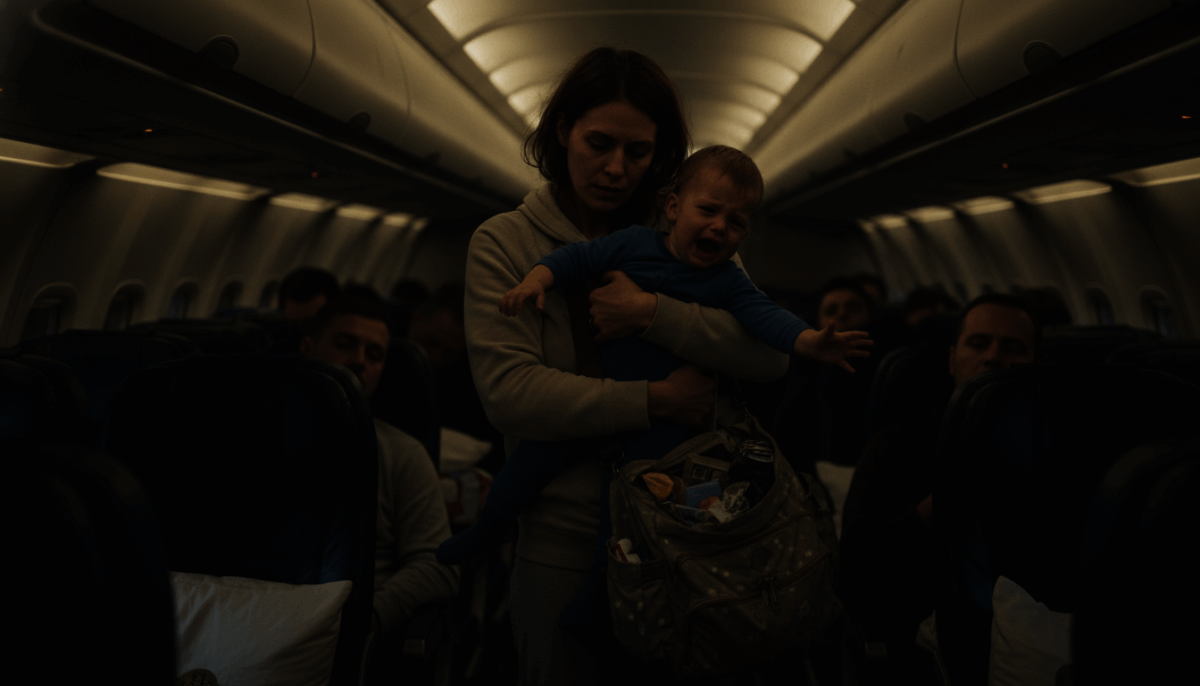
The flight was everything she feared. Leo screamed for the first two hours. The baby monitor app she had brought for peace of mind lay silent on her lap, a constant reminder of the physical distance between her and her husband. Every time the baby wailed, she felt the eyes of the entire row burning into her back, a cocktail of pity and irritation.
She spent the next few hours in a state of hyper-vigilance, walking the narrow aisles, bouncing a heavy toddler in her arms, while the cabin crew offered sympathetic but tired smiles. She was exhausted, humiliated, and utterly alone. The irony that she was surrounded by hundreds of people yet completely isolated was not lost on her.
The In-Flight Text Message Exchange
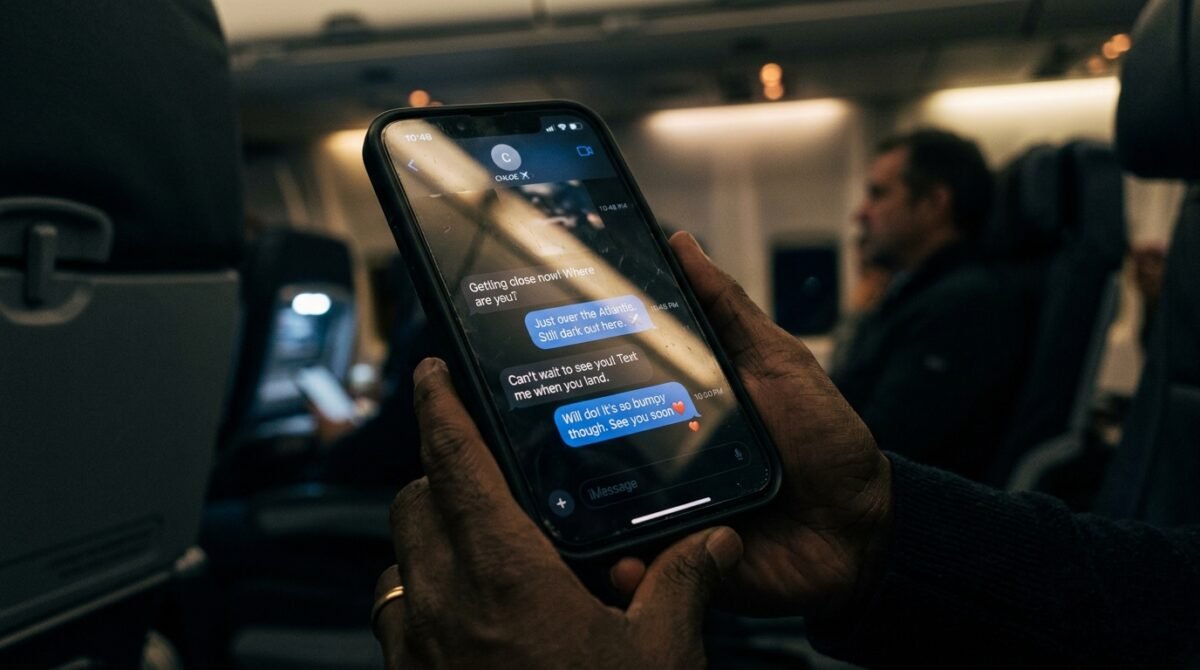
Halfway across the Atlantic, when Leo finally drifted into a fitful sleep on her chest, Sarah pulled out her phone. She felt a desperate need to confront Mark, to make him understand the reality of his choice. She typed a message, her thumbs shaking from fatigue and adrenaline.
“I hope you enjoyed your dinner, because I’m currently holding a screaming toddler in row 34 while everyone stares at me. You chose to be a passenger on this trip, not a father. I am not your travel companion anymore. I’m just an exhausted mother you decided to abandon.”
— Sent at 2:00 AM
The response came three hours later, just before the captain announced the beginning of the descent. It was short, clinical, and devoid of any remorse. He didn’t ask how they were; he didn’t ask if she had managed to get any sleep. He simply defended his decision as if he were an HR representative responding to a complaint.
“Stop being dramatic. I’m landing for a high-stakes meeting. If you’re that stressed, you should have booked the lounge access for yourself. I’ll meet you at baggage claim. Please ensure Leo is dressed properly for the meeting site.”
— Received at 5:00 AM
Sarah deleted the app. There was nothing more to say. The message confirmed that he viewed their family life as a series of tasks to be managed rather than a bond to be nurtured. She sat in the dim light of the cabin, staring at the seat-back screen, feeling the cold realization that her husband didn’t just have a blind spot; he had a heart that wasn’t currently operating in their marriage.
The Silent Arrival and the Public Spectacle
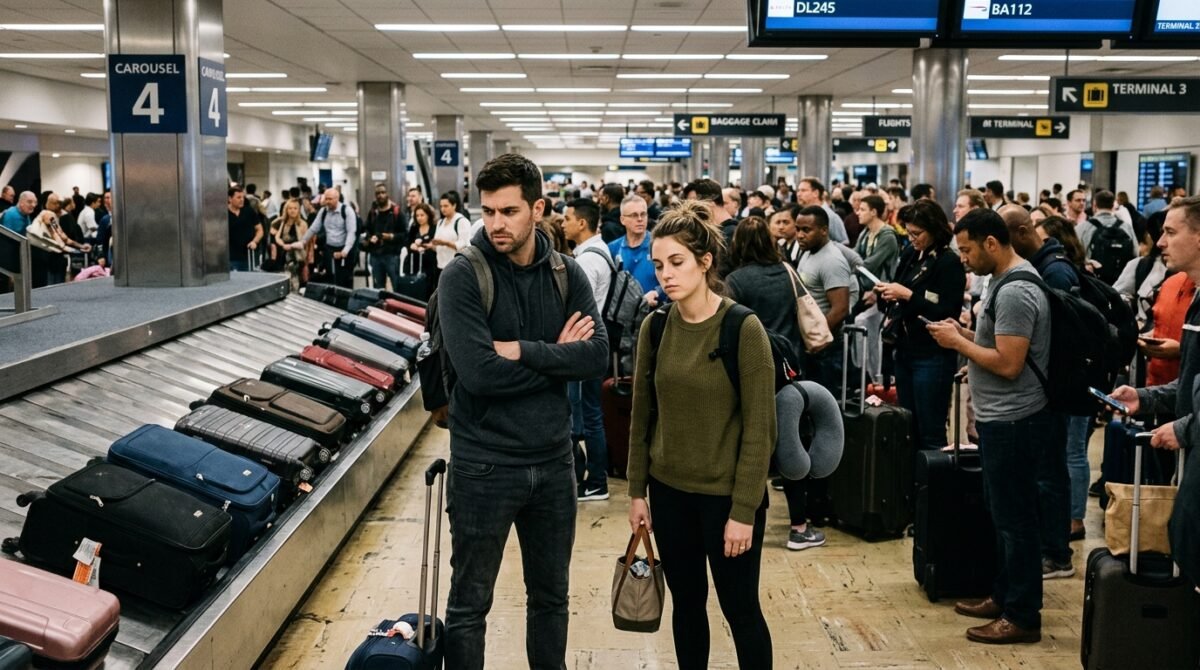
When they finally landed in New York, the stress of the travel reached a breaking point. Sarah was disheveled, covered in spit-up, and vibrating with suppressed rage. She walked to the baggage claim area, bracing herself for the inevitable confrontation. Mark was there, leaning against a pillar, checking his watch as if he had been waiting for a delayed bus rather than his wife and child.
He looked refreshed, showered, and entirely detached from the reality she had just endured. When he saw them, he didn’t rush over to help. He simply walked toward them, adjusting his tie. “You guys look like a mess,” he said, his voice loud enough for the nearby passengers to hear. “Can we hurry up? I have a car waiting and I really need to get to the hotel to prep.”
“I didn’t answer him. I just handed him the car seat and the heaviest bag. He looked at me like I’d slapped him. I told him that if he wanted to act like a business traveler, he could carry the luggage of a business traveler.”
The tension between them was so thick it seemed to draw stares from the other travelers. A few people looked between the pristine, suit-clad man and the frazzled, weary woman struggling with a toddler. It was the moment Sarah realized she didn’t care about appearances anymore. The facade of the ‘perfect, successful couple’ had died somewhere over the Atlantic.
They walked to the waiting car in absolute silence. Mark’s silence was one of annoyance; Sarah’s was one of mourning. She realized that she wasn’t just angry at the flight; she was angry at the cumulative effect of years of being the person who ‘holds it together’ while he climbed the ladder. This wasn’t a one-off error in judgment; it was the inevitable result of a marriage where the roles had become hopelessly lopsided.
The Reddit Community Weighs In
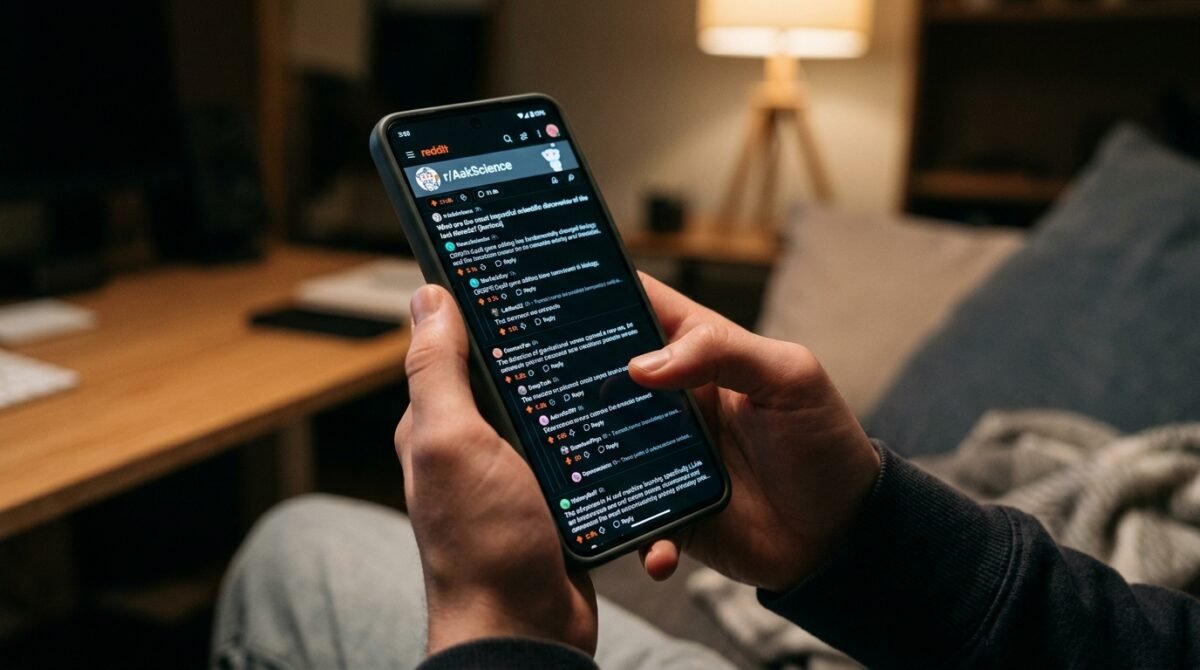
After the trip, unable to sleep and feeling completely gaslit by Mark’s insistence that she was ‘overreacting,’ Sarah took to a popular subreddit to share her story. She didn’t expect the firestorm that followed. Within hours, her post had thousands of comments, all echoing the same sentiment: she was not crazy, and she was certainly not the one in the wrong.
“My husband did this once. I told him if he wanted to live like a single man, he could start paying for his own life like one. We’ve been in therapy for two years. Don’t let him normalize this. It’s a total lack of respect for your role as a partner.”
— u/MomTruths (Top Comment, 32.5k upvotes)
The comments sections became a repository of similar stories. Women shared their own tales of husbands who ‘forgot’ to book seats together, or who prioritized their own rest over the health and sanity of the family. The community didn’t just validate her feelings; they provided a roadmap of the systemic issues she was facing. It wasn’t just about the plane; it was about the power dynamic.
“He views your caregiving as a low-value task that doesn’t warrant support or resources. That is the definition of a toxic partnership. He isn’t ‘tired’ from work; he’s tired of being a father, and he’s using his career as a shield to opt out of the hard parts.”
— u/LegalEagleEye (15.2k upvotes)
Sarah spent the next two days reading through the responses. Some were harsh, some were supportive, and some were deeply analytical. She found comfort in the fact that thousands of people saw exactly what she saw. The gaslighting she had endured at home was being countered by the collective wisdom of strangers who weren’t afraid to call out the entitlement for what it was: a fundamental betrayal of marriage.
The Uncomfortable Dinner at the Hotel

The night before the conference began, they were sitting in the hotel restaurant. Mark had been silent, likely sensing the change in the atmosphere. He had noticed her scrolling through her phone, and he had made several snide comments about her ‘internet friends’ not knowing their ‘real life situation.’ Sarah finally decided that the facade was no longer worth the energy.
“Mark, I posted about the flight,” she said, her voice quiet but firm. He stopped mid-bite, his fork hovering over his steak. He looked at her, his eyes narrowing. “You did what? You aired our private business to strangers for validation? That’s incredibly pathetic, Sarah.”
“It’s not validation, Mark. It’s reality. Thousands of people, many of whom have similar careers to yours, told me that what you did was selfish. They don’t have a stake in our marriage, and they still see it. Why can’t you?”
He laughed, a sharp, dismissive sound. “Because they don’t understand the pressure I’m under. They don’t understand that I need to be at 100% capacity. You’re just a passenger in my career, Sarah. Don’t act like we’re equals when it comes to the impact of our work.”
The words hung in the air, acidic and final. She felt a strange sense of relief, actually. The ambiguity of their relationship was gone. He had finally articulated exactly how he viewed her: as an assistant to his life, a supporting character in his narrative. She stood up, leaving her drink on the table. She wasn’t going to spend another minute trying to convince a man who had already decided that she was invisible.
The Breaking Point in the Hotel Suite
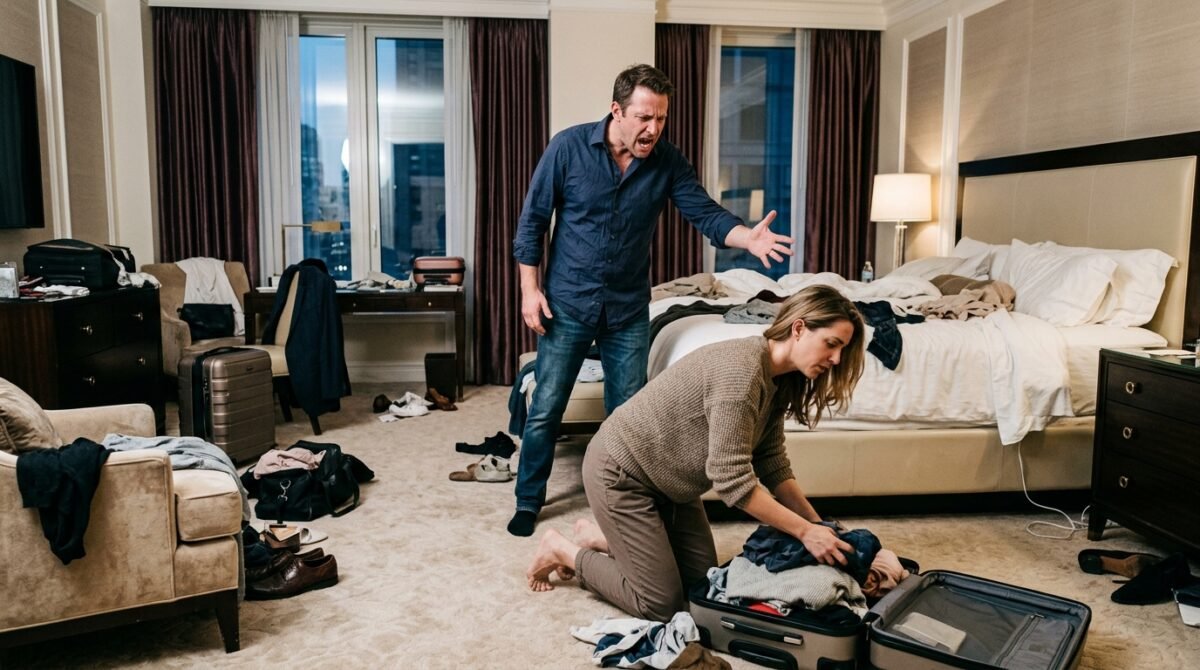
Back in the hotel room, the confrontation turned from cold to explosive. Mark was pacing, his suit jacket discarded, his face red with frustration. He was accusing her of sabotage, of trying to undermine his success by ‘making him look like a villain’ online. Sarah was packing her bag, not for home, but for a separate room.
“I’m not trying to make you look like a villain, Mark. You did that all on your own when you booked that seat,” she shouted. “Do you realize that I haven’t slept more than four hours in a row in months? Do you have any idea how hard it is to manage this child by myself while you play the executive?”
“I am providing! Do you have any idea what it costs to live the way we live? I sacrifice my time, my health, and my peace of mind for you and the kid. The least you can do is support me without making it all about your comfort!”
The absurdity of his claim was staggering. He was ‘sacrificing’ his peace of mind by flying in a lay-flat bed while she dealt with a screaming toddler. The disconnect was so total that she realized there was no point in arguing further. He was trapped in a solipsistic bubble where he was always the hero, no matter how selfish his actions were.
She booked a separate hotel room through an app, her hands steady for the first time in days. She told him she was taking Leo and staying elsewhere until the conference was over. He laughed, telling her she was ‘being a child’ and that she wouldn’t last the night without his credit card. She looked at him with a pity that he would never understand. The marriage wasn’t ending because of a flight; it was ending because of who he had become.
The Legal and Financial Reassessment

The following days were a whirlwind of logistics. Sarah found herself in a quiet hotel room, Leo finally sleeping peacefully in a crib. She spent her time not crying, but planning. She started pulling records, looking at their finances, and realizing the extent to which she had been financially marginalized. It wasn’t just the flight; it was the way their joint accounts were structured, the way he controlled the investments, the way her ‘part-time’ contributions were treated as secondary.
She contacted a family law attorney, just for a consultation. She didn’t want a divorce—not yet—but she wanted to know what her rights were. The lawyer’s questions were clinical and jarring. ‘Does he control the access to the funds?’ ‘Has he ever threatened your financial independence?’ Each question felt like a needle prick to her ego, but they were necessary.
“You’ve been living in a state of financial dependency that he has actively curated. That isn’t a partnership; it’s a power structure. If you want to change the dynamic, you have to reclaim your autonomy, starting with your own accounts.”
She took the advice to heart. She opened a separate account, moved a portion of their shared savings that she was legally entitled to, and began to document every instance of his financial coercion. It was a cold, calculating shift, but it was the only way she could feel safe. She realized that she had been sleepwalking through her own life, and the wake-up call hadn’t been the flight—it had been the moment he decided she didn’t deserve a seat next to him.
She sent him an email with the new arrangement. She told him that upon their return, there would be a formal division of responsibilities, and that she would no longer be the ‘default’ for anything. If he wanted to be the primary earner, he could be the primary parent for the days she was working. The response was a wall of silence, but for the first time, she didn’t care.
The Return Flight: A New Arrangement

The return flight was scheduled for four days later. Mark had expected them to go back to the status quo—him in his comfortable seat, her in the back. But when they reached the airport, Sarah didn’t go to the ticket counter he suggested. She had already changed their tickets. She had used the points from their shared credit card to upgrade herself and Leo to Premium Economy, and she had moved Mark to the very back of the plane.
He looked at the boarding pass she handed him with pure disbelief. “What is this? You expect me to sit in row 40? In the middle seat?” Sarah smiled, a cold, sharp expression that lacked any warmth. “You said it yourself, Mark. You’re a high-stakes executive. You don’t need comfort; you need to arrive at your destination. I’m sure you’ll manage.”
“This is not funny, Sarah. I have a headache, I’m tired, and I need the space. You’re being petty and vindictive.”
She leaned in close, her voice a whisper that carried the weight of everything she had endured. “I’m not being petty, Mark. I’m being efficient. Just like you. I’m optimizing our resources for the people who actually need the rest. I haven’t slept in four days because of your ‘business needs.’ Tonight, you get to experience what you thought I deserved.”
She didn’t wait for his argument. She took Leo and walked toward the gate, her heart pounding with a mix of fear and exhilaration. She had taken control of her own destiny, and for the first time in years, she felt like a person again—not a servant, not a supporting character, but an individual with her own agency. She sat in her seat, buckled her belt, and for the first time on a plane, she actually breathed.
The Aftermath and the New Reality

The flight home was the shortest seven hours of her life. She didn’t check on Mark once. She didn’t look back at row 40. She spent the time playing with Leo, watching movies, and thinking about what her life would look like moving forward. She wasn’t sure if the marriage would survive, and to her surprise, she realized she was okay with that outcome.
When they landed, the dynamic had shifted irrevocably. Mark was silent, exhausted, and clearly humiliated. The experience of the ‘back of the plane’ had stripped him of the arrogance that had sustained his detachment. He looked at her with a mix of anger and, perhaps for the first time, a flicker of genuine fear. He realized that the woman he had treated like an assistant was someone who could, if pushed hard enough, completely dismantle his world.
“We don’t talk about the flight anymore. We don’t talk about the ‘business needs.’ We go to therapy, and for the first time, he’s actually listening. He knows that if he tries to pull that stunt again, he won’t have a wife to return to.”
The therapy sessions were brutal. The therapist, an expert in high-conflict relationships, didn’t let him hide behind his job. She forced him to confront the entitlement that had allowed him to prioritize himself over his family. It was a long, painful process, and there were days when Sarah thought about walking away for good. But for now, they were trying to rebuild.
They established a new set of rules for their household. There was no more ‘default parent.’ Their finances were separated, with a joint account for family expenses that they both contributed to equally. And most importantly, there were no more unilateral decisions. If they were traveling, they were sitting together, or they weren’t traveling at all. The nightmare of that flight had been the spark that burned down their old life, but it had also provided the clearing in which something new could grow.
Conclusion
The story of Sarah and Mark is not just a viral anecdote about a bad flight; it is a profound exploration of the hidden hierarchies that exist within many modern marriages. It highlights the dangerous assumption that one partner’s professional contributions grant them an exemption from the labor of parenthood and the obligations of partnership. When we prioritize external success over internal connection, we risk eroding the very foundation that makes a relationship worth having.
Sarah’s decision to reclaim her agency—both in the air and in her marriage—serves as a powerful reminder that boundaries are not just for others to respect; they are for us to enforce. If you find yourself in a relationship where your needs are consistently treated as secondary, it is time to ask: are you a partner, or are you a bystander in your own life?
We want to hear from you. Have you ever faced a moment in your marriage where you realized the power dynamic was fundamentally skewed? How did you address it, and did it change the trajectory of your relationship? Share your thoughts and experiences in the comments below, and let’s keep this conversation going.
What's your verdict on this dilemma?
Vote below to contribute to the official community consensus.

Have a Dilemma Keeping You Up at Night?
Share your real-life feud, wedding chaos, or relationship crossroads anonymously with our editorial team.
What do you think ?
0 Comments🛡️ Comments are moderated to protect community integrity. Your comment will appear once approved by the editorial team.