
I have always known Mark was a man of eccentric hobbies. Over the past five years of our marriage, our garage has been a revolving door of half-finished projects: a vintage motorcycle that never started, a woodworking lathe he barely used, and enough hobby-grade drone parts to supply a small army. I viewed these as harmless, albeit expensive, outlets for a man who desperately needed a creative escape from his monotonous corporate accounting job. I had even set up a ‘hobby allowance’ in our monthly budget to keep the peace and prevent his spending from bleeding into our mortgage payments.
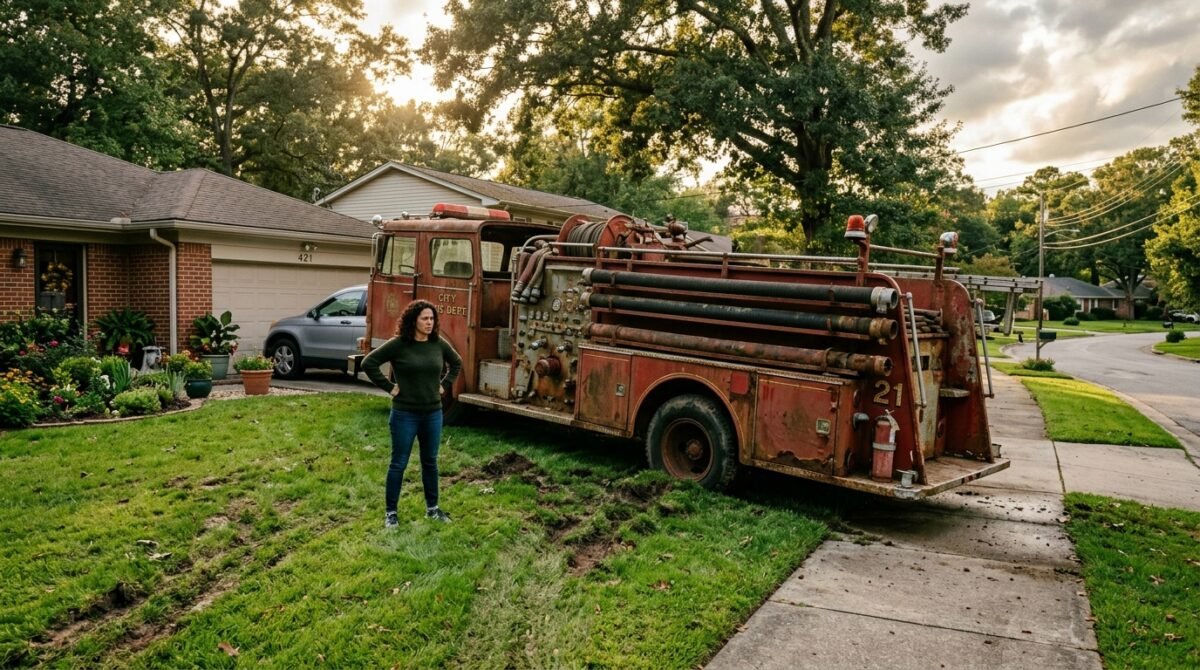
However, the boundaries of my tolerance were shattered on a rainy Tuesday afternoon. I pulled into our driveway, expecting to see his modest sedan. Instead, my view was completely blocked by a towering, hulking mass of dented red steel. It was an out-of-service municipal fire engine, complete with peeling paint, faded department decals, and a siren that looked like it hadn’t wailed in a decade. My heart sank, not just out of shock, but out of a sudden, cold realization of what this meant for our financial future.
I walked inside the house, my shoes heavy with dread, finding Mark standing in the middle of our kitchen, beaming like a child who had just found a new toy in a cereal box. He didn’t even notice the look of absolute fury on my face at first; he was too busy scrolling through a manual on his tablet, his eyes bright with a dangerous, manic energy that I hadn’t seen in years. The air in the room felt thick, suffocating, and charged with the kind of static that precedes a life-altering storm.
When I finally asked the question—how he paid for it—the answer was as simple as it was devastating. He hadn’t used the hobby allowance. He hadn’t even taken a loan. He had systematically drained our shared checking account, the very account we had been using to save for our upcoming IVF treatments and a down payment on a larger home. In a single, reckless click on a government surplus auction site, he had traded our future stability for a piece of heavy machinery that wouldn’t even fit in our garage.
This wasn’t just a mid-life crisis; it was a unilateral decision that stripped me of my agency and our shared dreams. As the silence stretched between us, I knew that the fire engine wasn’t just a vehicle. It was a monument to his disregard for our partnership. This is the story of how our life became a public spectacle, the fallout within our family, and the brutal, often painful, path to realizing that some things in a marriage cannot be repaired once they are driven into the ground.
The Silent Theft of Our Future Dreams

The realization didn’t hit me all at once. It was a slow, agonizing process of logging into our banking portal, my fingers trembling as I refreshed the screen, hoping against hope that the balance was just a glitch. The number stared back at me in bold, black digits that felt like a death knell. We were down to three hundred dollars. The funds for our June IVF consultation, the money we had been squirreling away for two years to afford a nursery remodel—all gone, replaced by a transaction label that simply read: ‘Municipal Asset Liquidation – Surplus Vehicle 402’.
I felt a physical sensation of coldness spreading from my chest to my extremities. I stared at the screen until the letters blurred. Mark had sat across from me at dinner just three nights prior, discussing our plans for the clinic visit as if he were fully invested, all while he was secretly monitoring the auction countdown. The betrayal wasn’t just about the money; it was the calculated, patient deceit required to pull this off without me noticing until the very last second.
“I just thought we needed something that could really do some good, you know? Imagine the road trips, the restoration process. It’s an investment, Sarah. These things hold their value. I’m going to turn it into a camper, a real beast of a machine for us to travel the country in.”
— Mark, moments after I discovered the drain
I couldn’t even formulate a coherent response. The sheer absurdity of the justification was staggering. He spoke about ‘investments’ and ‘road trips’ while our bank account was effectively flatlined. He looked at me with such genuine, unearned excitement that I felt like I was losing my grip on reality. Was he delusional, or did he simply believe that his desires would always override our mutual agreements?
The conversation quickly spiraled. I pointed out the lack of insurance, the maintenance costs, the fact that we don’t have a commercial license, and most importantly, the fact that he never consulted me. His response was to retreat into the defensive, claiming that I was ‘killing his spirit’ and that I never supported his passions. It was a classic deflection, a way to paint himself as the victim of my ‘restrictive’ nature while he was the one actively sabotaging our survival.
I walked out of the kitchen, unable to stand his voice any longer. I went to the guest room and locked the door, feeling the weight of the last five years crashing down on me. The fire engine on the lawn was no longer a vehicle; it was a manifestation of the widening gap between us. I wasn’t just dealing with a financial crisis; I was dealing with a partner who no longer viewed our life as a collaborative endeavor, but as a stage for his own unchecked whims.
The Morning After: Neighbors and Public Shame
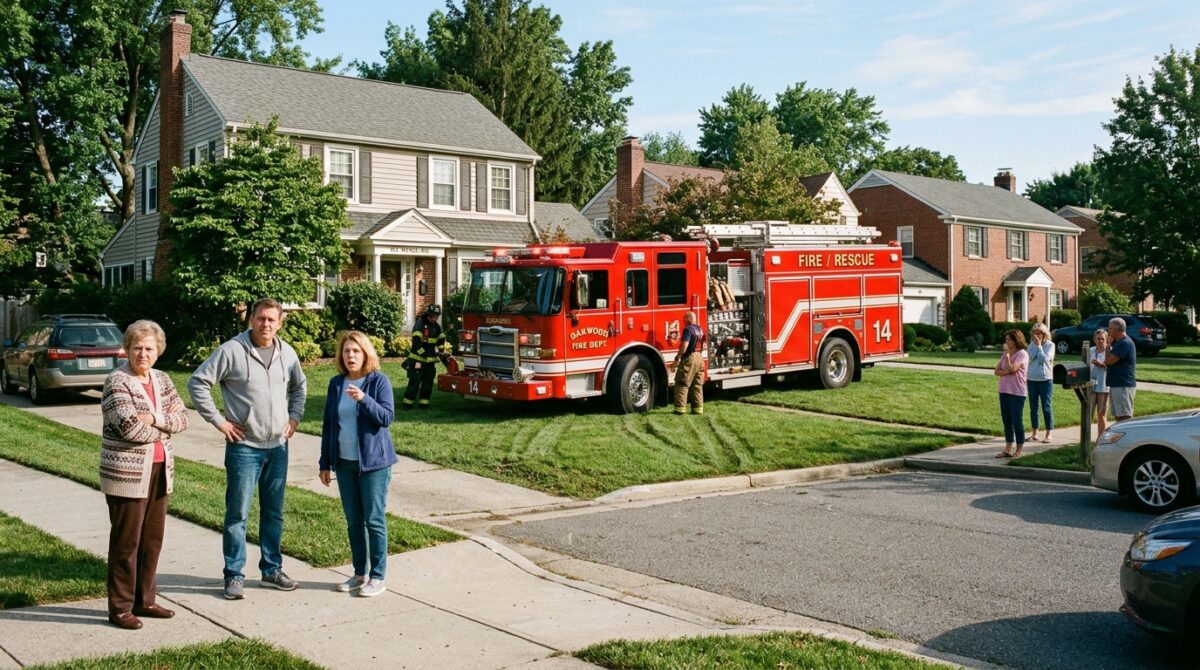
Waking up the next morning didn’t bring the clarity I had hoped for. Instead, it brought the harsh reality of living in a suburban neighborhood where secrets are hard to keep. I heard the chatter before I even reached the front door. Our next-door neighbor, Mrs. Gable, was standing at the edge of our lawn, staring up at the hulking red beast with a look of pure, unadulterated confusion. She looked like she was witnessing an alien landing.
When I stepped outside, she didn’t even offer a polite greeting. She looked at me, then at the fire truck, and then back at me, her eyebrows arched so high they disappeared into her hairline. It was the moment I realized that this wasn’t just a private marriage dispute anymore. It was now a neighborhood spectacle, a piece of local gossip that would be fodder for every backyard barbecue for the next six months.
“Is that… a fire truck, Sarah? Did Mark join the volunteer department, or has he finally lost his mind? It’s blocking the sidewalk, and the city council is going to have a field day with the zoning violations. You know the HOA doesn’t even allow boats in the driveway.”
— Mrs. Gable, our neighbor
I felt a wave of hot, stinging embarrassment. I wanted to scream that I didn’t know, that I was just as horrified, and that the marriage was effectively over. But instead, I just gave a weak, tight-lipped smile and muttered something about ‘a project.’ The humiliation of being the person associated with that monstrosity was suffocating. I felt like the entire world was laughing at us, and for the first time, I couldn’t blame them.
I looked at the truck again. It was dripping some kind of oily fluid onto our driveway, a dark, viscous stain that looked impossible to remove. Mark had clearly moved it from the municipal lot, likely driving it home late at night, reveling in the power of the steering wheel. The thought of him doing that, sneaking around like a teenager with a stolen car, made me realize how little I actually knew about the man I had married.
As the sun climbed higher, the comments started flowing in from the local community Facebook group. Someone had taken a photo of the truck, labeled it ‘#FireTruckDrama,’ and it was already gaining traction. I saw my husband’s name tagged in the comments, and the replies were a mix of mockery, concern, and outright disbelief. My phone became a constant source of anxiety, with pings and notifications alerting me to every new piece of social media ridicule.
The Group Chat That Revealed Everything
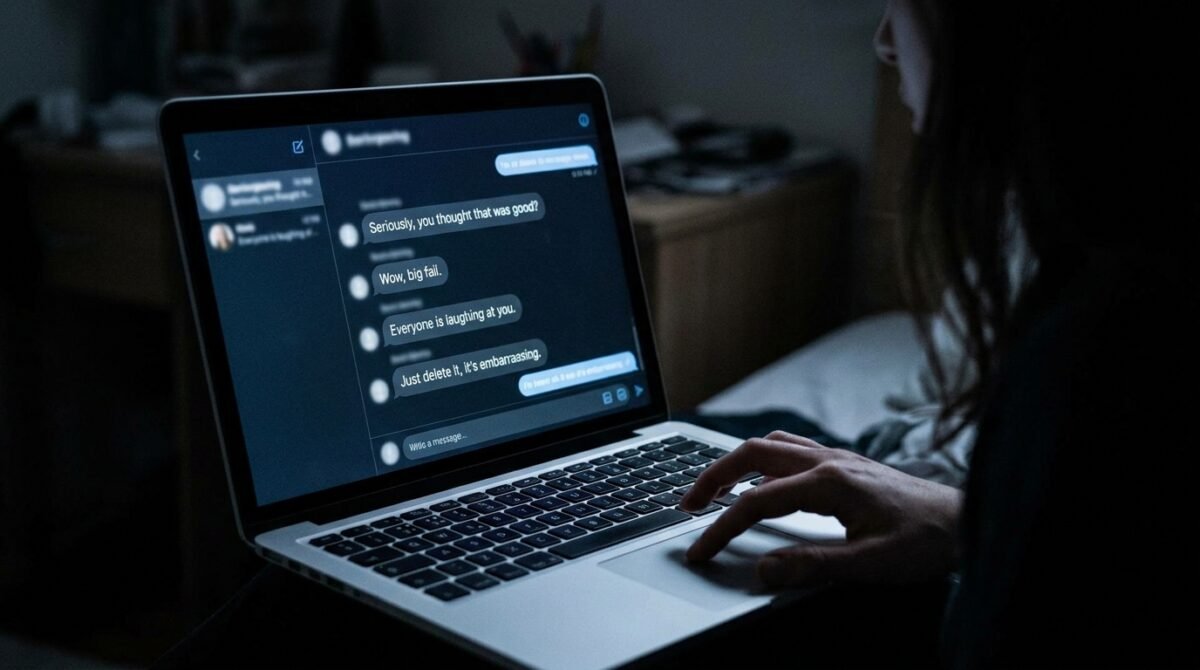
The breaking point wasn’t the truck itself; it was the discovery of a group chat I wasn’t supposed to see. Mark had left his laptop open on the kitchen island while he was out ‘inspecting’ the truck’s water pump. Curiosity is a dangerous thing, but in this instance, it was the only thing that gave me the full picture. A notification popped up from a thread titled ‘The Engine Boys,’ and I couldn’t help myself. I opened it.
What I found was worse than the financial drain. It was a series of messages between Mark and his ‘friends’ dating back months. They weren’t just talking about a cool project; they were planning a ‘lifestyle change’ that didn’t include me. They were talking about converting the truck into a mobile bachelor pad, a place where they could store gear, host parties, and essentially act like they were twenty-two again. There was no mention of IVF, no mention of our home, and definitely no mention of me, except when they referred to me as ‘the ball and chain’ who wouldn’t understand the ‘vision.’
“She’ll get over it once she sees it in action. I told her it’s for travel, that’ll keep her occupied for a few weeks while I finish the interior. By then, the money will be long gone and we’ll be set for the summer. Seriously, just focus on the parts list, boys.”
— A leaked message from the ‘Engine Boys’ group chat
I read the messages twice, then three times, trying to process the sheer audacity. The ‘travel’ excuse was a lie he had crafted specifically to pacify me, a way to keep me quiet while he spent our life savings on his own selfish agenda. He had been planning this for months, meticulously hiding the auction details and laughing about my inevitable reaction with his friends.
The betrayal felt physical, like a sharp blade against my ribs. I realized that my marriage had been a facade for a long time. While I was working extra shifts and cutting coupons to save for a family, he was sitting in his office, plotting how to spend that money on a piece of junk that served no purpose other than to satisfy his ego. The ‘Engine Boys’ were his real priority, and I was merely a source of funding that he had finally exhausted.
I took screenshots of every single message, my hands steady with a cold, clear resolve. This wasn’t just a fight; this was a paper trail. If we were going to divorce, and at this point, the thought felt like a liberation, I would have every shred of evidence I needed to show exactly where the money went and why our finances were in such a state. The grief of losing the dream of our family was still there, but it was being eclipsed by a burning, righteous anger.
Confrontation at the Kitchen Table
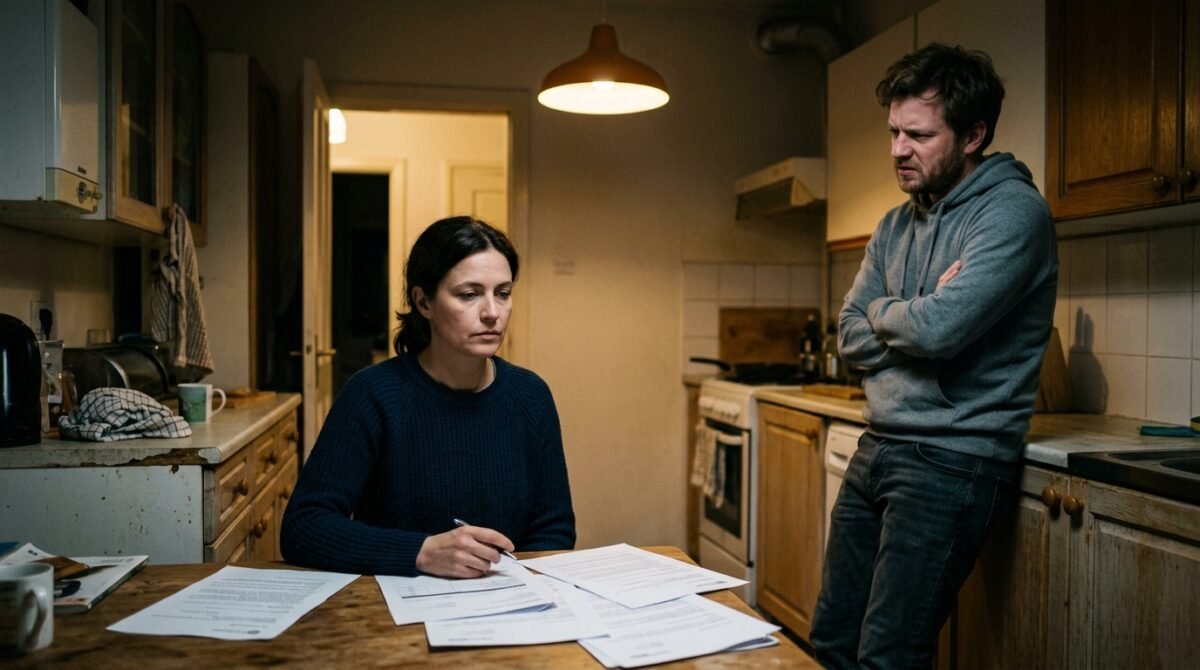
When Mark returned, he was whistling. He had dirt on his forehead and grease on his hands, looking entirely satisfied with his day of labor. He walked straight to the fridge, grabbed a beer, and leaned against the counter, waiting for me to ask about the truck. He expected me to be the nag, the killjoy who would lecture him on safety or cost. He wasn’t prepared for the cold, silent woman sitting at the table with a stack of printed screenshots.
I didn’t say a word as he approached. I just slid the papers across the wood. He glanced at them, his smile faltering, then disappearing entirely. He tried to laugh it off, saying it was just ‘locker room talk,’ but the look in my eyes must have told him that the time for excuses had long passed. The air in the room grew heavy, the silence stretching out until the ticking of the kitchen clock sounded like a countdown.
“’The ball and chain’? Is that really how you see me, Mark? As the person who’s preventing you from living your dream life with your buddies? You didn’t just spend our money, you spent our years of hard work. And you lied to me every single day for months.”
— My confrontation with Mark
He started to pace, his defensiveness turning into aggression. He argued that he was entitled to ‘some happiness,’ as if I had been denying him that the entire time. He brought up his job, his stress, and his feeling of being ‘trapped’ in our domestic life. It was the ultimate gaslighting—making me feel like his financial infidelity was actually my fault because I wasn’t ‘supportive enough.’
I didn’t argue back. I didn’t defend myself. I just listened, watching him dig his own grave with every sentence. He admitted to the full scope of the spending, even revealing that he had taken out a small, high-interest personal loan on the side to cover the shipping costs of the engine, which he hadn’t even told me about yet. He was in deeper than I could have imagined, and he was still trying to justify it as a ‘visionary’ project.
By the end of the night, we weren’t a married couple anymore; we were two strangers negotiating the terms of a disaster. He kept looking at the truck through the window, as if it were a life raft, while I was already mentally packing my bags. The divide was absolute. I realized then that I couldn’t save him from himself, and I certainly couldn’t save our marriage if he was determined to burn it down for a hobby.
The Reddit Verdict: An Internet Firestorm
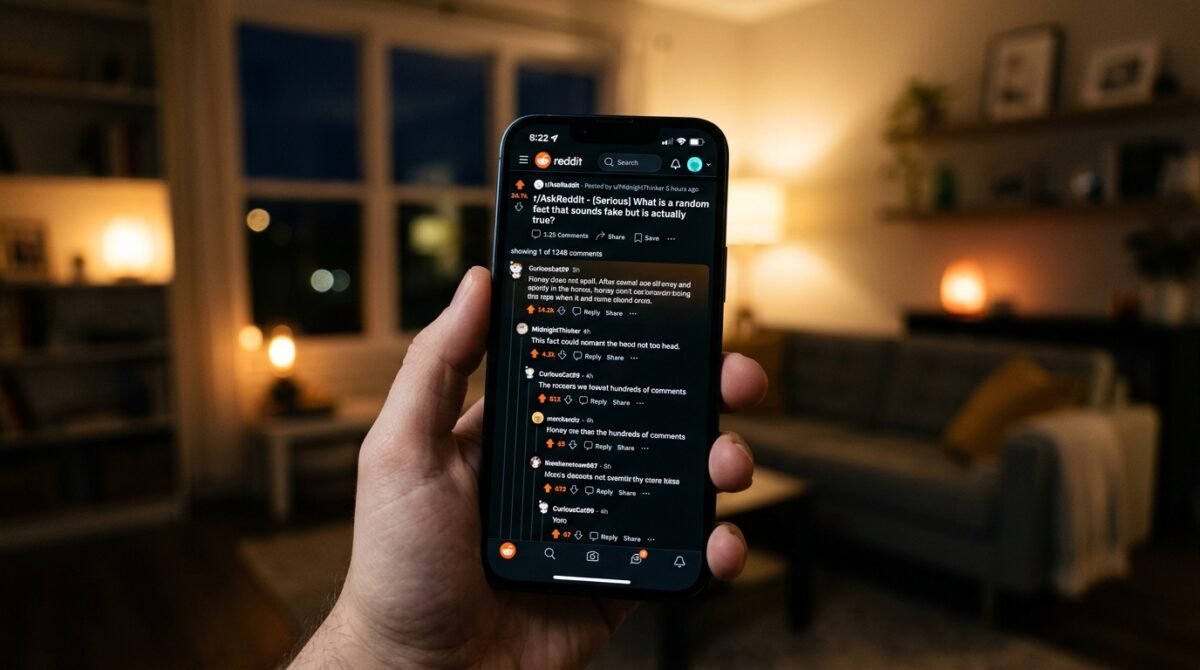
I didn’t know where else to turn, so I posted our story on a popular relationship advice subreddit. I changed a few details to protect our privacy, but the core of the story remained. Within an hour, the upvotes started piling up in the thousands. I sat in the dark of the guest room, watching the comments flood in, a mix of shock, rage, and surprisingly sound advice.
The consensus was overwhelming. Nobody was on his side. People were calling it financial abuse, a term I hadn’t even considered until I saw it written out in a comment from a user who identified as a family law attorney. They told me to freeze our accounts, to talk to a lawyer, and to secure any remaining assets before he could sink us further into debt. The sheer volume of support was validating, even if it didn’t fix the damage.
“This is text-book financial infidelity. The fact that he was conspiring with friends behind your back is the real kicker. He’s checked out of the relationship, and he’s using your shared savings to fund his ‘escape.’ Get out now, and make sure you’re protected in the divorce. He’s proven he’s not a partner.”
— u/DivorceLawyerInTraining (Top Comment, 32.5k upvotes)
Then there were the ‘humorous’ comments, the people who were laughing at the absurdity of the fire truck. ‘At least he can put out the fire of his own marriage,’ one person wrote, which gave me a dark, twisted laugh. It helped to see the absurdity of it all. The internet, in all its chaotic glory, was showing me that I wasn’t the crazy one, that what I was feeling was a completely rational response to a completely irrational situation.
However, there were also those who urged caution. They warned me about the legal complexities of ‘marital property.’ Because he had bought the truck with ‘shared’ funds, it technically belonged to both of us, meaning I might be stuck with half the debt or half the asset if we divorced. The advice started turning into a real-time strategy session, with people recommending specific steps to protect myself from his future financial disasters.
I spent the next three days reading every single comment. It was like a crash course in divorce law and emotional detachment. I realized that my situation wasn’t unique—many others had gone through the same kind of ‘hobby-induced bankruptcy’—but it was mine. And reading the stories of others who had successfully moved on gave me the strength to start the process of ending it.
The Legal Reality Check

The next step was a meeting with a local divorce attorney, a woman who had seen it all. She listened to my story without judgment, her face unreadable as I laid out the timeline of the bank account drain, the unauthorized loan, and the ‘Engine Boys’ group chat. When I finished, she didn’t offer sympathy—she offered a roadmap. She told me exactly what I needed to do to untangle our finances, starting with an immediate separation of our accounts.
We discussed the truck. Legally, it was a ‘marital asset.’ The attorney explained that if I wanted to avoid being held responsible for the debt associated with it, I needed to document everything. She advised me to get an independent appraisal of the ‘asset,’ which she sarcastically pointed out was probably worth less than the scrap metal value, and to prepare for a fight over the debt distribution.
“Your husband has essentially committed financial suicide, and he’s trying to take you down with him. We need to file for a separation of assets immediately, and we need to make sure that any future debt he accrues does not impact your credit. The fire engine is not an asset; it’s a liability. We’ll focus on getting you out of this without carrying his weight.”
— My Divorce Attorney
The meeting was exhausting, but it was the first time I felt a glimmer of hope. For months, I had felt trapped by his decisions, unable to see a way out of the mess he had created. Now, I had a plan. I had a professional in my corner, and I had the legal backing to ensure that my future wouldn’t be tied to a rusted, out-of-service fire truck.
Leaving the office, I felt a strange sense of relief. I wasn’t just a victim of a bad marriage; I was a person taking control of her own life. The emotional weight of the betrayal was still there, but it was becoming a source of motivation. I was going to do this right. I was going to protect my future, even if it meant destroying the last remnants of our life together.
Mark was shocked when he received the notice of the account separation. He tried to call me, then text me, then show up at my parents’ house, but I had already blocked him. The communication had become purely through our attorneys. It was the ultimate boundary, a wall that prevented him from manipulating me any further. The silence was finally my own, and it felt like the first breath of fresh air in years.
The Final Drive: Clearing the Driveway
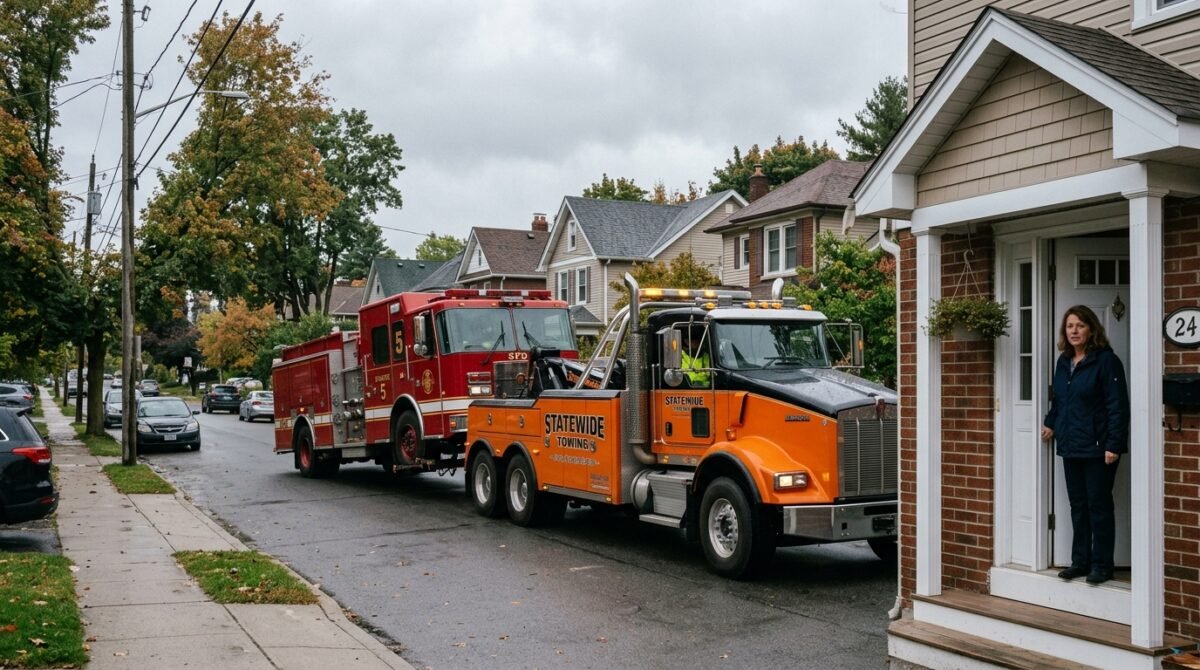
The final act of our marriage took place on a Saturday morning. My attorney had managed to get a court order for the sale of the vehicle to pay back a portion of the debt. It was a humiliating process. A team of appraisers and a tow truck driver arrived at the house, their trucks blocking the street. Neighbors watched from their windows, once again treated to the spectacle of our crumbling marriage.
Mark stood on the porch, watching as the tow truck driver hooked up the massive engine. He looked broken, a shadow of the man who had been beaming with pride just a few weeks prior. He tried to argue with the driver, trying to explain that the engine just needed ‘one more part,’ but nobody was listening. The fire truck, our albatross, was finally being removed from our lives.
“You’re really doing this? You’re going to let them take it away? This was our future, Sarah! You’re throwing away everything we worked for!”
— Mark, as the tow truck hook was being attached
I didn’t answer him. I just watched from the doorway of the house, my bags already packed in my car. The truck groaned as it was pulled onto the flatbed, the sound of metal scraping against metal echoing through the quiet neighborhood. It was a loud, ugly, and final sound. As the tow truck pulled away, leaving nothing but an oil stain on the driveway, the space felt suddenly, and miraculously, empty.
I didn’t feel sadness, only a profound sense of closure. The truck was gone, the debt was being addressed, and the marriage was officially over. I turned to walk back into the house one last time to grab the last few items I had left behind, feeling as light as I had in years. The house that had felt like a prison for the last month suddenly felt like a place I could finally leave.
As I drove away, I didn’t look back. I didn’t care where they took the truck, or what Mark would do next. My focus was entirely on the road ahead. I was moving into a small apartment, starting fresh with nothing but my own income and a newfound sense of independence. The nightmare of the fire engine was behind me, and for the first time in a long time, the future was mine to decide.
Reflecting on the Ruin

Months later, I find myself sitting in a quiet park, watching the sun set over the city. I still think about the fire engine sometimes—not with anger, but with a strange, detached wonder. How did we get there? How did a partnership built on love and shared dreams devolve into a farce involving an antique municipal vehicle? The answer, I realize, isn’t about the truck. It’s about the erosion of trust, the slow, silent death of communication, and the refusal to see a partner for who they really are rather than who we want them to be.
I learned that financial infidelity is one of the most destructive forces in a marriage. It’s not just about money; it’s about respect, agency, and the fundamental promise that we are in this together. When Mark chose to drain our account for his own ‘vision,’ he was effectively telling me that my needs, my future, and my voice were irrelevant. That kind of damage cannot be patched up like a leaky radiator; it requires a complete rebuild from the ground up.
I’ve also learned to forgive myself. For a long time, I blamed myself for not seeing the signs, for being too ‘supportive,’ for not being ‘smart enough’ to prevent the disaster. But I realize now that I couldn’t have stopped him. He was committed to his own path, and any effort I made to intervene would have only been met with more gaslighting and more lies. I did what I could, and when I realized it wasn’t enough, I did what I had to do to survive.
The community support I received, even from strangers on the internet, was a lifeline. It reminded me that I wasn’t alone and that my feelings were valid. The Reddit threads, the legal advice, even the snarky comments—they all played a part in helping me realize that the life I was living wasn’t the life I deserved. I am stronger, wiser, and more cautious now, and I know that I will never again let my financial future be compromised by someone else’s ego.
As I prepare to move into a new chapter of my life, I am grateful for the lessons I learned in the shadow of that fire engine. I have my own savings, my own path, and a clear vision of what a healthy partnership looks like. It’s not about grand gestures or big, flashy ‘projects.’ It’s about trust, transparency, and a mutual commitment to a life that we both want to live. And that, I’ve found, is worth more than any engine in the world.
Where I Stand Today

Today, I am officially divorced. The financial fallout was significant, but manageable, and I’ve been able to rebuild my savings slowly but surely. I still live in that same small apartment, and I’ve developed a love for its simplicity. Every time I walk through the front door, I’m reminded that everything inside it is mine, bought with my own money, and that I don’t have to answer to anyone about how I spend my earnings. It’s a freedom I didn’t know I needed until I had it.
I haven’t spoken to Mark since the day the fire engine was hauled away. I heard through mutual acquaintances that he’s currently trying to flip the truck for parts, which is honestly the most predictable ending to that saga. He’s still chasing his ‘big breaks’ and his ‘projects,’ but he’s doing it without me. And for that, I am profoundly grateful. The weight of his chaos has been lifted, and I finally have the space to breathe.
I’ve started therapy, which has been instrumental in helping me work through the trauma of the betrayal. It’s not just about the money or the truck; it’s about re-learning how to trust, how to set boundaries, and how to value myself in a way that I hadn’t before. It’s a slow process, but I’m making progress. I’m learning that I am not responsible for the actions of others, and that my worth is not defined by the success or failure of a relationship.
I’ve even started a small savings fund for a future trip—a real one, not a pipe dream. It’s not much, but it’s mine. And the next time I make a major life decision, I’ll be making it with the confidence of someone who has survived the worst and come out the other side. I’m not bitter, just wiser. I’ve realized that life is too short to be tied to someone else’s dysfunction, and that the only project I need to focus on is my own happiness.
If there’s one thing I want to share with anyone else going through something similar, it’s this: trust your gut. If something feels wrong, it probably is. If your partner is hiding things, they are probably doing it for a reason. And if you find yourself feeling like you’re the only one keeping the ship afloat, it’s time to find a new boat. You deserve a partner who respects you, supports you, and shares your vision of the future. Don’t settle for anything less than that.
Community Perspectives: Lessons Learned

Looking back at the discussions that followed my post, I am struck by how many people reached out with their own experiences of ‘hobby-driven’ ruin. From spouses who secretly funded their gaming setups with rent money to those who liquidated retirement accounts for failed business ventures, the stories were endless. It became clear that this wasn’t just about a fire engine; it was about a deeper issue of financial transparency in relationships.
Many people suggested that we should have had a ‘financial check-in’ every month, a formal meeting to discuss our savings, our goals, and any potential expenditures. They argued that if we had been forced to be transparent, the hidden spending would have been caught months before the auction. It’s a lesson I’ve taken to heart, and it’s something I will prioritize in any future relationship. Money is the number one cause of divorce for a reason, and it’s time we started talking about it with the seriousness it deserves.
“The fire engine is a metaphor for the entire relationship. He wanted the status, the attention, and the fantasy, but he didn’t want the work of maintaining the reality. You’re lucky he showed his true colors before you brought a child into this chaos. Consider it a very expensive, but valuable, life lesson.”
— u/RelationshipGuru (Top Comment, 15.2k upvotes)
Others brought up the importance of ‘individual autonomy’ within a marriage. They noted that everyone needs a hobby, and everyone needs a bit of independence. But they emphasized that autonomy shouldn’t come at the cost of the relationship’s foundation. It’s about finding the balance between individual growth and shared responsibility, a balance that Mark clearly lacked. It’s a delicate dance, but it’s one that’s necessary for a marriage to survive.
The community also urged me to think about the ‘why.’ Why was he so obsessed with the fire engine? Why was he so disconnected from our reality? Some pointed to his job, others to his insecurity, but they all agreed that his behavior was a symptom of a much larger dissatisfaction with his own life. It wasn’t my responsibility to fix that, but it was my responsibility to protect myself from it. And that, I believe, is the most important lesson of all.
I continue to check the comments on my post occasionally. They remind me of how far I’ve come and how much support I had during the darkest moments of my life. It’s a testament to the power of sharing your story, even when it’s painful. You never know who you might reach, who you might help, or who might help you. I am grateful for the connection, for the perspective, and for the realization that I am not alone.
Conclusion
My journey through the aftermath of the fire engine incident has been a testament to resilience and the pursuit of truth. What began as a financial disaster became a catalyst for self-discovery and the reclamation of my own life. I learned that trust is not a luxury, but a requirement for a healthy partnership. I discovered that I am capable of standing on my own, even when my world is falling apart. And I realized that some things—like a rusted municipal fire engine—are not meant to be salvaged, but rather left behind so that you can move forward.
The moral of this story is not just about the dangers of unchecked spending or the importance of financial transparency. It’s about the courage to leave a situation that no longer serves your well-being. It’s about recognizing that you are the architect of your own future and that you shouldn’t let anyone else’s recklessness determine the foundation of your life. I am moving forward, one step at a time, and I am finally, truly, free.
What about you? Have you ever had a partner whose ‘hobby’ or ‘dream’ destroyed your financial stability? How did you handle the situation? Let me know in the comments below—I’d love to hear your experiences and insights on how you navigated your own path to resolution.
What's your verdict on this dilemma?
Vote below to contribute to the official community consensus.

Have a Dilemma Keeping You Up at Night?
Share your real-life feud, wedding chaos, or relationship crossroads anonymously with our editorial team.
What do you think ?
0 Comments🛡️ Comments are moderated to protect community integrity. Your comment will appear once approved by the editorial team.