
Friendship is often described as a sacred bond, one built on mutual support, shared history, and unconditional understanding. For years, Sarah and I were inseparable—the kind of friends who held each other’s hair back during heartbreak and celebrated every minor triumph with bottles of cheap champagne. We navigated our twenties together, moving through career shifts and apartment leases with a synchronized rhythm that made us feel like an unstoppable team.
However, the shift began when Sarah landed a high-paying role in tech while I remained firmly rooted in the modest earnings of the nonprofit sector. The disparity was manageable at first, until the lifestyle creep set in. Suddenly, casual coffee hangouts became expensive weekend getaways, and spontaneous dinners turned into reservation-only affairs at places where the menu didn’t list prices.
The breaking point arrived in the form of a ‘destination birthday’—a week-long excursion to a coastal resort that was, by all accounts, a luxury endeavor. Despite my deep affection for her, the math simply didn’t add up. After calculating my rent, student loans, and essential living expenses, I made the agonizing decision to decline. I thought I had communicated this with grace and clarity, but I severely underestimated Sarah’s sense of entitlement.
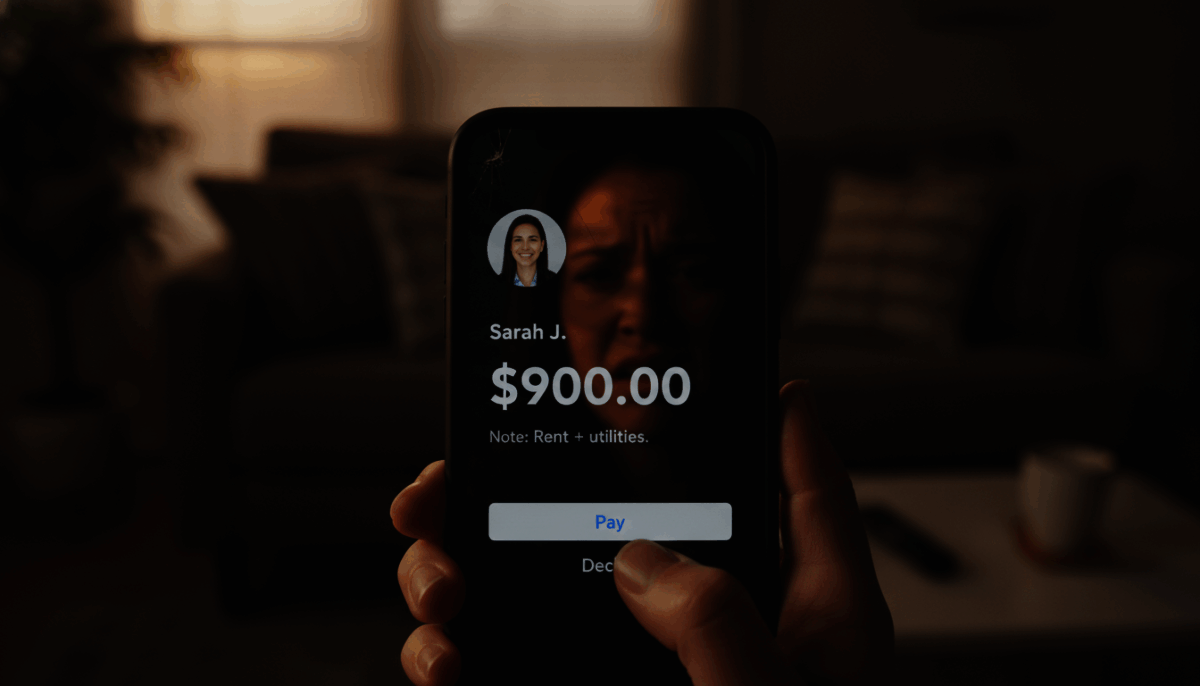
What followed was not a conversation, but a demand. The ping of a Venmo notification on my phone didn’t bring the usual sense of split-bill convenience; instead, it brought a cold, hard invoice for $900 labeled ‘Birthday Trip Flight – Non-Refundable.’ This is the story of how a single notification dismantled a decade of friendship, leading to a public confrontation and a revelation about the people we allow into our lives.
The Initial Pitch and the Subtle Pressure

It started three months before the actual birthday. Sarah sat me down at our favorite brunch spot, her eyes gleaming with the kind of frantic excitement that usually preceded an expensive decision. She laid out the itinerary for a trip to a boutique resort in Tulum, claiming it was the ‘healing experience’ she needed before turning thirty. I listened, my smile feeling tighter with every passing minute as she tallied up the costs in her head.
I tried to drop hints early on. I mentioned that I was saving for a professional certification and that my budget was tighter than it had been in previous years. Sarah, however, lived in a reality where money was merely a tool for curated experiences. She waved off my concerns with the classic ‘it’s once in a lifetime’ argument, ignoring the fact that we had been on three similar ‘once in a lifetime’ trips that year alone.
“Look, if you don’t come, it’s just not going to be the same. I’ve already looked at the group rates, and if we book now, it’s practically a steal. You deserve this, too!”
— Sarah during the initial pitch
I felt the pressure mounting. It wasn’t just a trip; it was a test of loyalty. In her mind, if I couldn’t afford it, I wasn’t prioritizing our friendship. She refused to consider a more modest alternative, insisting that she wanted this specific experience. I went home that night feeling a knot of anxiety in my stomach, knowing that saying no would be treated as an act of betrayal.
I spent two weeks running the numbers. I cut my grocery budget, skipped social events, and looked for overtime shifts, but the total cost—including the flights, the shared villa, and the mandatory ‘adventure packages’—totaled nearly my entire monthly income. The realization that I was being asked to choose between financial stability and a social obligation was both crushing and clarifying.
When I finally told her I couldn’t go, I did it over the phone, hoping my voice would convey the sincerity of my regret. I explained clearly that my bank account simply wouldn’t support the luxury, and that I hoped she understood. There was a long, heavy silence on the other end of the line—a silence that felt sharper than any words she could have spoken.
The Unexpected Ping of a $900 Debt

Three days after our conversation, my phone buzzed with a notification I initially thought was a joke. I was at work, trying to focus on a spreadsheet, when the familiar chime of the Venmo app pulled me out of my concentration. I swiped the notification, expecting to see a request from a roommate for utility splits or perhaps a friend from dinner the night before.
Instead, I saw a request from Sarah for $900. The note attached was chillingly clinical: ‘Non-refundable flight deposit for Tulum trip. Since you backed out, this is your share of the cost.’ My blood ran cold. I hadn’t agreed to the flight. I hadn’t even provided my passport information. I had explicitly said no, and she had somehow felt entitled to book a ticket in my name using her own credit card, expecting me to pick up the tab for her impulsivity.
“You said you were ‘thinking about it’ at the brunch, so I went ahead and booked to secure the lower fare. It’s not my fault you changed your mind later. You owe me this.”
— Text from Sarah following the Venmo request
The audacity was staggering. I stared at the screen, my pulse racing. Was this a test? A manipulation tactic to force me into the trip? I texted her back immediately, my hands trembling as I typed. I told her that I never authorized the purchase and that I would absolutely not be paying for a ticket I didn’t ask for. Her response time was instantaneous, suggesting she had been watching her phone, waiting for my reaction.
She argued that by ‘entertaining’ the idea, I had given her implicit permission. She claimed that the group had already finalized the booking based on the headcounts she provided, and that I was the reason the price had increased for everyone else. It was a classic projection of blame, turning a simple ‘no’ into a financial scandal that she was now pinning squarely on my shoulders.
I felt a strange sense of dissociation. This wasn’t the friend I had known for ten years. This was a stranger hiding behind a screen, using financial warfare as a way to punish me for setting a boundary. I realized then that our friendship had been built on a foundation of me accommodating her, and the moment I stopped, the entire structure started to crumble.
The Escalating War in the Group Chat

The conflict didn’t stay between the two of us for long. Sarah, clearly feeling righteous in her indignation, brought the rest of our mutual friend group into the fold. She shared screenshots of our texts, framing me as the ‘flake’ who ruined the logistics of her dream birthday. The group chat, which had been dormant for weeks, suddenly exploded with notifications.
Friends I had known for years began to chime in, some taking her side with the ‘it’s just money’ argument, while others stayed silent, clearly uncomfortable with the public shaming. One friend, Chloe, messaged me privately to warn me that Sarah was telling people I was ‘jealous’ of her success and that I was trying to sabotage her special day out of spite.
“Guys, I’m literally sitting here in tears because I don’t know how to explain to the airline that one of our party members is just choosing not to show up. It’s so disrespectful to everyone’s time and effort.”
— Sarah in the group chat
I decided to respond to the group chat directly, rather than letting the narrative spin out of control. I laid out the timeline clearly: I had informed Sarah of my financial situation weeks in advance, I had never given consent for a booking, and I certainly hadn’t asked her to front any money on my behalf. I pointed out that treating a friend like a customer who defaulted on a contract was a grotesque way to handle a relationship.
The response was immediate and vitriolic. Sarah jumped on the defensive, claiming that I was ‘twisting the truth’ and that I had been ‘wishy-washy’ about my commitment. It was a gaslighting exercise on a grand scale. People who I thought were my friends were now demanding that I ‘just pay the money’ to keep the peace and move on. They were more concerned with the convenience of the group than the ethics of the situation.
I realized that I was fighting a battle I couldn’t win within that group. They were all accustomed to Sarah’s lifestyle and her whims, and my defiance was an inconvenience they didn’t want to deal with. I decided then and there that this group, and this friendship, had run its course. I didn’t owe them an explanation, and I certainly didn’t owe Sarah $900 for a flight I would never set foot on.
Seeking Counsel from the Internet

Feeling isolated and questioning my own sanity, I turned to the only place that offers unfiltered, often brutal honesty: the internet. I drafted a post for a popular subreddit, laying out the situation in exhaustive detail. I wanted to know if I was truly the villain here, or if I had finally reached a point where the entitlement of others had become intolerable. I hit ‘submit’ and waited.
The response was not just supportive; it was overwhelming. Within an hour, I had hundreds of comments, and within a day, the thread had gone viral. The consensus was loud and clear: I was not the asshole. The validation was a relief, but the sheer number of people sharing similar stories of ‘friendship financial traps’ was both heartening and depressing. It turned out that I wasn’t alone in being manipulated by people who conflate friendship with financial support.
“NTA. This is a classic ‘bold-faced’ manipulation tactic. She booked the ticket in your name without your permission to force your hand, and now she’s playing the victim to force your wallet. Block her on everything and do not pay a cent.”
— u/ReasonableObserver (Top Comment, 32.1k upvotes)
Reading through the comments, I saw my situation reflected back to me in dozens of different versions. There were people who had been sued for ‘shared’ vacation costs, people who had been cut off for setting boundaries, and people who had finally realized that their ‘best friends’ were actually just users. The advice was consistent: stand firm, do not engage, and accept that the friendship was over.
One user pointed out the legal reality of the situation: without my written consent or a signed contract, the airline ticket was her liability, not mine. The ‘non-refundable’ nature of the ticket was a choice she made, not a penalty I was responsible for. That legal perspective gave me the confidence to finally stop checking my phone for her angry messages.
I stopped replying to the group chat. I stopped trying to defend myself to people who clearly didn’t have my best interests at heart. I started to see the situation for what it was: a test of character. I had passed, and Sarah had failed. The friendship wasn’t ‘ruined’ by me—it was revealed to be hollow by her.
The Final Confrontation

Despite my attempts to go no-contact, Sarah showed up at my apartment building two days later. She didn’t call or text; she just buzzed the intercom until I was forced to answer. When I opened the door, I found her standing there, red-eyed and shaking with a mix of fury and what I can only assume was genuine, if misguided, distress. She didn’t look like a successful woman in tech; she looked like a child denied a toy.
She demanded to know why I had ‘trashed’ her on the internet and why I was being so ‘cold’ about the money. She tried to frame the entire trip as something we were doing for *me*, as if a week at a luxury resort was a form of charity she was bestowing upon me. It was absurd, but her conviction in her own narrative was terrifying.
“I put this on my card for you! Do you know how hard it is to cancel things once they’re booked? You’re ruining my birthday! How can you be so selfish after everything I’ve done for you?”
— Sarah to my face
I stood my ground, my voice steady for the first time in weeks. I told her that she made a financial decision without my consent and that I would not be responsible for the consequences of her actions. I reminded her that I had explicitly said no, and that her decision to book anyway was an act of manipulation, not friendship. It was the most difficult thing I’d ever had to say to someone I loved, but it felt like shedding an enormous weight.
She threatened to take me to small claims court, to call my job, to tell our mutual friends that I was a ‘thief.’ I simply told her that if she wanted to go to court, she could go ahead, but she would have to prove that I had agreed to the purchase. The threat of legal action suddenly made her pause. She knew, deep down, that she had no contract, no written agreement, and no leg to stand on.
She left in a storm of insults, slamming the door so hard the pictures on my wall shook. I didn’t cry. I didn’t chase after her to apologize. I locked the door, sat down on my couch, and felt a profound sense of peace. The era of Sarah was over, and I was finally free to be the person I wanted to be, rather than the person she needed me to be to support her lifestyle.
The Aftermath: Rebuilding My Life

The weeks following the breakup of our friendship were, surprisingly, some of the most peaceful of my life. Without the constant pressure to keep up with Sarah’s spending habits, my bank account began to stabilize. I was able to pay for the certification course I had been eyeing, and I even managed to start a small savings fund for a modest vacation of my own choosing.
I realized that for years, I had been living in a state of perpetual financial anxiety, constantly trying to bridge the gap between my reality and her expectations. It was a hidden cost of the friendship that I had never truly accounted for until it was gone. The ‘loss’ of a best friend was painful, but the ‘gain’ of my own autonomy was worth it.
I did lose a few friends in the process—the ones who couldn’t see past Sarah’s narrative or who were too afraid of her wrath to stay in touch with me. It stung, but it was also clarifying. It showed me who valued my company for who I was, and who valued me only as a participant in their social circle. The people who stayed, the ones who listened to my side and reached out to check on my well-being, were the ones who mattered.
“I’m sorry she did that to you. I always felt like she was pushing you too hard, but I never said anything because I didn’t want to cause drama. I’m glad you’re standing up for yourself.”
— A text from a mutual friend who reached out weeks later
I started attending local meetups and engaging in hobbies that didn’t require a high price tag. I found a community of people who were grounded, honest, and supportive. I stopped apologizing for my budget and started embracing my life exactly as it was. The $900 Venmo request, once a source of such terror, became a symbol of my liberation.
Looking back, I see the incident as a necessary catalyst for growth. Sometimes, we stay in toxic relationships long after they’ve turned sour because of the inertia of history. It takes a crisis—a sudden, sharp demand or a betrayal—to force us to see the cracks in the foundation. I’m grateful for the clarity, even if it cost me the friendship I thought would last forever.
Reflecting on Financial Entitlement in Friendships

The issue of money in friendships is one of the most taboo topics in our culture. We are taught to be polite, to share, and to be generous, but these virtues are often weaponized by people with more resources to control those with less. When one person has more, there is an implicit power dynamic that can easily turn into emotional manipulation if both parties aren’t vigilant about boundaries.
Sarah’s entitlement wasn’t just about the $900; it was about the assumption that my time, my money, and my priorities were an extension of her own. She viewed my refusal to join the trip not as a financial necessity, but as a lack of devotion to her. This is the dangerous territory where friendship turns into a form of servitude, where one person acts as the director and the other as a supporting actor.
I’ve learned that setting a financial boundary is not an act of selfishness; it is an act of self-preservation. It is a way of saying, ‘I value our relationship, but I value my own stability more.’ If a friend cannot respect that, then the foundation of the friendship is already crumbling. A true friend wants you to succeed and be secure, not to stretch yourself until you break just to keep up with their vision of a ‘fun’ time.
“Financial boundaries are the healthiest thing you can bring to a friendship. If they get angry at you for having them, they were never your friend; they were just using you as an accessory.”
— A comment from a professional therapist on the Reddit thread
I now approach all my relationships with a much clearer understanding of these dynamics. I am transparent about my budget early on, and I don’t apologize for my choices. If someone wants to plan an activity that is outside of my means, I suggest an alternative. If they are offended by the suggestion, I know exactly where I stand with them.
It has made my social life much smaller, but significantly deeper. I have fewer ‘best friends’ in the way I used to, but the people I do have are those who respect me as an equal, regardless of the size of our bank accounts. It is a relief to no longer feel like I am constantly performing to maintain a status I don’t have.
The Lessons Learned from the Internet Court

The internet, for all its toxicity, can also be a mirror. Seeing my story dissected by thousands of strangers forced me to look at it objectively. I had spent so much time caught up in the emotional volatility of the moment that I couldn’t see the clear, logical facts. The community provided the perspective I was missing, validating the idea that I wasn’t the one who had crossed the line.
The most important lesson I learned was the power of ‘no.’ We are often conditioned to find ways to say ‘yes’—to be ‘easygoing,’ to be ‘the cool friend’ who never complains. But every ‘yes’ that you don’t actually want to give is a ‘no’ to yourself. By saying yes to things I couldn’t afford or didn’t enjoy, I was slowly eroding my own self-respect.
The outpouring of support also taught me that I wasn’t as alone as I felt. There is a whole community of people who have been through this exact kind of financial manipulation and have come out the other side stronger. Their stories, their advice, and their encouragement were the fuel I needed to keep going when the pressure from Sarah and our mutual friends was at its peak.
“Always remember: You are not responsible for the consequences of someone else’s decisions. If they make a choice that puts them in a bad spot, that is on them, not you. Don’t set yourself on fire to keep them warm.”
— Another top-rated Reddit comment
I’ve also learned to be more cautious about who I share my vulnerabilities with. I was very open with Sarah about my financial goals and my struggles, thinking that transparency would build trust. Instead, it was used as ammunition to pressure me. I’m not saying we should be guarded and cold, but we should be mindful of how our information is being used.
I am moving forward with a sense of gratitude for this experience. It was painful, yes, but it was also the turning point I needed to step into my own power. I am no longer waiting for permission to live my life, and I am no longer afraid to say no when the answer is, for my own well-being, clearly and definitively, no.
Where Does the Friendship Go From Here?

People often ask me if there is any chance for reconciliation. They see the history we had and wonder if it’s worth saving. But how do you save something when the person who broke it refuses to acknowledge that it’s broken? Sarah still sends me occasional messages—some angry, some ‘apologetic’ in a way that shifts the blame back onto me. I don’t respond. I can’t.
For a friendship to be restored, there has to be mutual accountability. There has to be a realization that what was done was hurtful and an effort to make amends. Sarah’s ‘apologies’ are always along the lines of ‘I’m sorry you feel that way’ or ‘I’m sorry we let money get in the way,’ which is just another way of saying that *my* reaction is the problem, not her actions.
I have moved on. I have accepted that she is a person who functions with a level of entitlement that I cannot accommodate. I don’t harbor deep hatred for her; I feel a sense of pity. It must be exhausting to live a life where you feel like everyone owes you something and where you define your worth by the extravagance of your experiences.
“Some people enter your life as a season, and others as a lesson. She was clearly a lesson, and it’s okay to graduate and move on to the next chapter of your life.”
— A supportive message from a user on the Reddit thread
I hold onto the good memories of our early years, but I don’t use them to justify staying in the present. The friendship that existed then is gone, and the person she is now is someone I don’t want to be close to. That’s okay. We are allowed to outgrow people, even those we once thought were our ‘best friends.’ It’s a part of life.
I am happy. I am financially stable. I am surrounded by people who respect my boundaries and value my company for who I am. That is more than enough for me. If someone had told me a year ago that losing my best friend would lead to this kind of peace, I wouldn’t have believed them. But here I am, and I wouldn’t change a single thing about how it all unfolded.
The Final Verdict of the Internet

When the dust settled and the thread eventually archived, I went back to read through the comments one more time. It was like reading a history of my own liberation. The community had stood by me, defended my boundaries, and offered me the wisdom I needed to see through the fog of gaslighting and manipulation.
The verdict was unanimous: I was NTA (Not The Asshole). But more than that, the community had reinforced the idea that my life and my money were mine to control. The $900 Venmo request, which once felt like a chain around my neck, became a symbol of the moment I stood up for myself. It was the price of admission for a version of my life I didn’t want to live, and I had successfully declined the invitation.
I want to thank everyone who engaged with the story, who offered their own experiences, and who reminded me that I wasn’t crazy for wanting to be respected. It’s a powerful thing to have your feelings validated by total strangers, to know that the values you hold—honesty, boundary-setting, and mutual respect—are shared by many others.
“You didn’t lose a friend; you lost a liability. Keep standing tall, and don’t let anyone make you feel like your needs are less important than their wants.”
— A final encouraging comment from the thread
If you are in a similar situation, if you feel pressured by friends to spend money you don’t have, or to agree to things you don’t want, know that you are not alone. You have the right to set your boundaries, and you have the right to walk away if they aren’t respected. It might be hard, it might be painful, but it is worth it to live a life that is truly your own.
The story of the $900 flight is just one small chapter in the book of my life. It’s a chapter I’ve closed, a lesson I’ve learned, and I am ready to start the next one. I’m no longer defined by the expectations of others, and that, in the end, is the greatest gift this experience gave me.
Conclusion
This story serves as a stark reminder that the most difficult decisions—the ones that force us to stand up for ourselves against the people we love—are often the ones that lead to the most profound personal growth. My experience with Sarah was not just about a flight or a dollar amount; it was about the fundamental right to define my own boundaries.
Financial entanglement in friendship is a delicate issue, and there is no one-size-fits-all solution. However, we must prioritize our own well-being over the comfort of others. If you are ever faced with a situation where a ‘friend’ uses money to manipulate your decisions, remember that your worth is not tied to your ability to pay for their experiences.
I am interested to hear your thoughts. Have you ever had a friend cross the line with financial entitlement? How did you handle it? Did you stand your ground, or did you fold to keep the peace? Share your stories in the comments below—the community is here to listen and, as I’ve learned, to support you through the toughest of times.
What's your verdict on this dilemma?
Vote below to contribute to the official community consensus.

Have a Dilemma Keeping You Up at Night?
Share your real-life feud, wedding chaos, or relationship crossroads anonymously with our editorial team.
What do you think ?
0 Comments🛡️ Comments are moderated to protect community integrity. Your comment will appear once approved by the editorial team.