

Marriage is built on trust, but it’s maintained by shared values. For years, my husband Mark and I have operated under a simple, non-negotiable principle: our daughter, Maya, comes first. We have meticulously saved for her future, her education, and yes, her medical needs. Braces were the next milestone on our list, a goal we had been funding through a dedicated high-yield savings account for over two years.
It wasn’t just a pot of money; it was a promise. Maya has been self-conscious about her overbite since she started middle school, and the orthodontist’s plan was finally ready to be put into motion. I trusted Mark as the gatekeeper of those finances, believing he understood the weight of that responsibility. I never expected that he would view our daughter’s health as a secondary concern to his mother’s wanderlust.
The discovery didn’t come from a confession. It came from a notification on my phone when I went to check our balance to schedule the down payment for the treatment. The balance was nearly zero. Panic, cold and sharp, flooded my veins as I scrolled through the transaction history. There, in bold, was a series of luxury travel agency payments, all labeled for a ‘Grand Hawaii Resort & Spa’ in his mother’s name.
When I confronted him, his response was not one of remorse, but of entitled justification. ‘She’s getting older, and she’s never seen the Pacific,’ he told me, as if our daughter’s self-esteem was a commodity he could trade for his mother’s bucket list. He didn’t see the betrayal; he saw a son fulfilling a duty. I saw a man who had stolen from his child to buy his mother a tan.
The birthday cruise I had spent eight months planning—the ‘once-in-a-lifetime’ ten-day trip to the Caribbean—was paid for in full. That night, as he slept soundly, fully expecting to board that ship in three weeks, I made a choice. I didn’t yell. I didn’t scream. I simply logged into the travel portal and hit ‘Cancel,’ followed by ‘Request Refund.’ This is how our marriage fell apart over a dental bill.
The Empty Savings Account and the Silent Kitchen

The Tuesday morning started like any other, with the smell of brewing coffee and the frantic pace of getting Maya ready for school. I had my tablet out, waiting for the orthodontist’s office to open so I could pay the remaining balance for the braces. I opened the banking app, expecting to see the three thousand dollars we had meticulously set aside, plus interest.
Instead, I saw a balance of exactly $14.22. My heart hammered against my ribs. I refreshed the page twice, thinking it was a glitch, but the numbers remained stubbornly low. I clicked into the transaction history and the color drained from my face. Four separate charges, each for $750, were listed under ‘Island Luxury Expeditions.’
Mark walked into the kitchen, humming, a piece of toast in his hand. He looked at me, noticed my expression, and his smile faltered. ‘Is everything okay? You look like you’ve seen a ghost,’ he asked, oblivious. I didn’t speak. I turned the tablet screen toward him and tapped the screen where the charges were visible.
The air in the kitchen shifted from domestic comfort to a suffocating tension. Mark glanced at the screen, then back at me, his eyes darting away. He didn’t even try to pretend he didn’t know what it was. He sighed, a sound of heavy, irritated resignation. ‘I was going to tell you,’ he muttered, leaning against the counter. ‘I just didn’t want you to overreact before the trip was finalized.’
“You took the money meant for Maya’s teeth, Mark? You literally looked at our daughter’s mouth and decided your mother needed a mai tai more than she needed straight teeth?”
His defense was immediate and infuriating. ‘It’s a birthday gift! My mom has been depressed, and Hawaii has always been her dream. I knew we could just save the money again over the next few months. It’s not like the teeth are going to fall out tomorrow. You’re being dramatic, as usual.’
The Justification of a Golden Child

I could not believe the audacity of his words. The idea that he could unilaterally decide to strip our daughter of a medical necessity to satisfy his mother’s whim was staggering. It wasn’t just about the money; it was about the fundamental misalignment of our family priorities. He had prioritized his childhood role as the ‘golden son’ over his current role as a father.
We argued for an hour before he finally left for work, but the argument was circular. He couldn’t understand why I was so upset, repeatedly calling it a ‘temporary loan’ that he would pay back with his next bonus. He refused to acknowledge that Maya had been waiting for this for years, dealing with the snickers of kids at school and the discomfort of her jaw alignment.
Later that day, the texts started. Not from him, but from his mother, thanking me for the ‘generous surprise.’ Apparently, Mark had already told her about the trip before he had even talked to me. She sent photos of the brochures, gushing about the hotel amenities. I felt sick. He had used my name and our joint efforts to buy her love.
“Hey honey! Mark just told me about the surprise trip! I am absolutely floored. You guys are too much. I’ve already started shopping for new swimsuits. I can’t wait to celebrate with you two at dinner tonight!”
— Mark’s Mother, via text
I realized then that Mark had never intended for me to have a say. This was his plan, his execution, and his way of making himself the hero in his mother’s eyes. He didn’t care about the collateral damage to our own household. I spent the rest of the day in a haze of anger, realizing that my husband was a stranger to me.
I kept thinking about Maya. She had asked me just yesterday if the orthodontist had called. I had told her it would be happening soon. Now, I would have to look her in the eye and explain that her father had spent her smile on a resort hotel. The weight of that betrayal was heavy, a physical ache in my chest that refused to subside.
The Cancellation of the Caribbean Dream
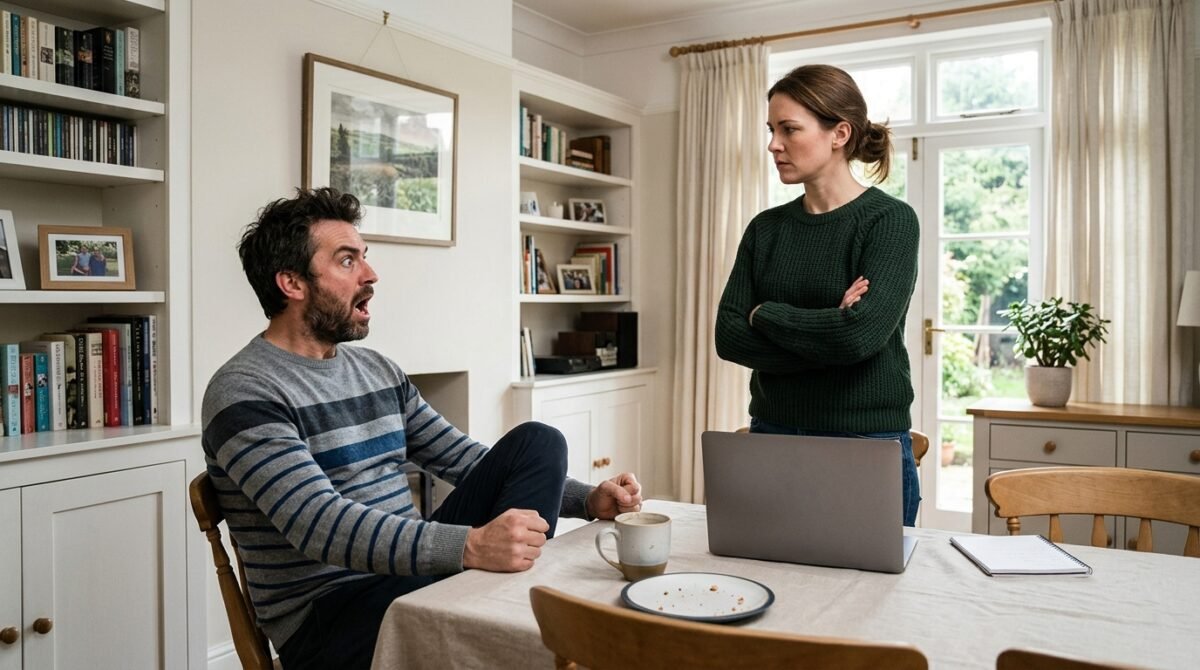
That evening, the house was silent. Mark came home expecting a dinner to celebrate his mother’s travel plans, but I had cooked nothing. I was sitting at the dining table with my laptop. He walked in, loosened his tie, and looked at me expectantly. ‘So, are we going to talk about this or are you going to keep giving me the silent treatment?’
I didn’t answer him. I opened the confirmation email for the birthday cruise he had been bragging about for months. It was a $6,000 package, an all-inclusive week in the Caribbean. He had been planning it for a year. He loved the ocean; he loved the luxury. It was his reward for working hard, or so he told me.
I hit the ‘Cancel’ button with a sense of grim satisfaction. The system prompted for a confirmation: ‘Are you sure you want to cancel this booking? A cancellation fee of $500 will apply.’ I didn’t hesitate. I clicked ‘Confirm.’ A moment later, the screen refreshed: ‘Cancellation Successful. Refund processing to original payment method.’
Mark saw the screen as he walked past to get a drink. He stopped cold. ‘What did you just do?’ he barked, his voice rising in volume. He lunged toward the table, but I closed the laptop. ‘I just made a financial decision, Mark. Just like you did this morning. I figured, since you want to prioritize your mother’s comfort over our daughter’s health, you can sacrifice your own comfort to pay for it.’
“You canceled the cruise? That was non-refundable! You just threw away thousands of dollars in fees! Are you insane? That was my birthday gift!”
I stood up, feeling a strange sense of calm. ‘It wasn’t a gift, Mark. It was an investment in our marriage, and you just liquidated that investment to buy your mother a vacation. I’m just balancing the books. If you want a vacation, tell your mother to sell her airline tickets.’
The Fallout and the Family Group Chat

The next forty-eight hours were a blur of screaming matches and frantic phone calls. Mark didn’t go to work. He spent the entire day calling his mother, his sister, and even his friends, telling them that I was ‘ruining his life’ and being a ‘spiteful, controlling wife.’ By the time evening arrived, my phone was blowing up with messages from his family.
His sister sent me a long, rambling paragraph about how I was ‘tearing the family apart’ and that I should be ashamed of myself for punishing a man for being a ‘loving son.’ His mother sent a message that was even worse, demanding to know why I was ‘holding the cruise hostage’ over a ‘minor financial misunderstanding.’
“I don’t know what you think you’re achieving, but cancelling that trip is a direct insult to me. If you’re that concerned about the money, you should have just asked me to contribute. You don’t get to punish Mark for being a good son.”
— Mark’s Mother, Family Group Chat
I didn’t reply to any of them. I blocked the mother and the sister, and muted the group chat. I didn’t want their opinions. I wanted to see if Mark had any capacity for self-reflection. But he didn’t. He spent the night on the couch, drinking beer and complaining to anyone who would listen on his phone.
When I finally went to the living room, he looked up at me with red, puffy eyes. ‘You’ve really done it this time,’ he whispered, his voice cracking. ‘My mom is crying. She feels like she can’t even go on the trip now because she feels guilty. Are you happy?’
I looked at him, realizing that he still didn’t get it. He wasn’t upset that he betrayed me and our daughter. He was upset that he was being held accountable. ‘I’m not happy, Mark. I’m disappointed. And the fact that you think her guilt is more important than our daughter’s teeth shows exactly where I stand in this family.’
The Orthodontist’s Perspective

I went to the orthodontist’s office the next morning, alone. I explained the situation to the front desk staff, feeling deeply embarrassed. I had to ask if we could move the appointment back or if there was any way to arrange a payment plan that didn’t involve the full upfront cost. The receptionist, a kind woman named Sarah, looked at my file and then back at me with a sympathetic expression.
She told me that many parents go through similar stresses, but what Mark had done—draining a child’s specific medical fund—was something she hadn’t seen before. ‘We can offer a monthly installment plan,’ she said, ‘but it’s going to be much more expensive over the long run because of the interest and administrative fees.’ I signed the papers, knowing that I would have to take on extra shifts at work to cover the difference.
As I walked out of the clinic, I saw a reflection of myself in the glass door. I looked tired, older than my years, and entirely done with the man who was supposed to be my partner. I realized that my anger wasn’t just about the money; it was about the total erosion of the ‘we’ in our marriage. Every decision we made was supposed to be a consensus. He had turned it into a monarchy where he was the king and I was the subject.
I drove to a local coffee shop and sat for an hour, just staring at the wall. I needed a plan. I couldn’t keep living like this. The financial betrayal was the tip of the iceberg. What else had he been hiding? What other ‘priorities’ had he been funding behind my back? The cruise cancellation was the first time I had ever pushed back, and the explosion it caused was terrifying, but also clarifying.
I finally understood that the marriage wasn’t broken by the cancellation of the cruise; it was already broken by the theft of our daughter’s future. The cruise was just the smoking gun. I decided that I would start consulting a lawyer, just to see what my rights were regarding our joint accounts. I couldn’t risk him draining the rest of our savings for his mother’s next whim.
Reddit Weighs In: The Community Verdict

I posted my story on a popular relationship subreddit, desperate for some perspective. I wanted to know if I was truly the villain as Mark claimed. The response was overwhelming. Within four hours, the post had over 15,000 upvotes and hundreds of comments. The consensus was shockingly unanimous: I was not the asshole.
“NTA. Your husband didn’t just ‘make a purchase.’ He committed financial infidelity and stole from his own child. The fact that he thinks his mother’s vacation is more important than his daughter’s health is a massive red flag. He sounds like a mama’s boy who never cut the cord.”
— u/FamilyLawyer_Throwaway, 18.2k upvotes
Another user provided a breakdown of why Mark’s behavior was so toxic. They pointed out that he had violated the core boundary of parenting: providing for the needs of the child before the wants of the extended family. Many users suggested that I check for other hidden financial accounts and ensure my name was on all assets.
“The cruise wasn’t just a gift; it was leverage. He wanted to go on that trip to feel like a big man. By cancelling it, you took away his status. He’s not mad about the money; he’s mad that he lost his power. Keep that cruise cancelled. Do not back down.”
— u/TruthTeller_88, 12.5k upvotes
Reading these comments helped me realize that I wasn’t crazy. The gaslighting Mark had been doing—calling me dramatic, saying I was ‘ruining the family’—was a tactic to make me feel guilty for defending myself. It was the classic manipulator’s playbook. I felt a wave of relief knowing that the internet, for all its faults, could see the situation clearly.
I spent the rest of the night reading through the comments, saving the ones that offered legal advice or tips on how to protect my assets. I felt empowered for the first time in years. I wasn’t just a wife being ‘difficult’; I was a parent protecting her child’s interests. The validation was exactly what I needed to prepare for the long road ahead.
The Confrontation of the Century
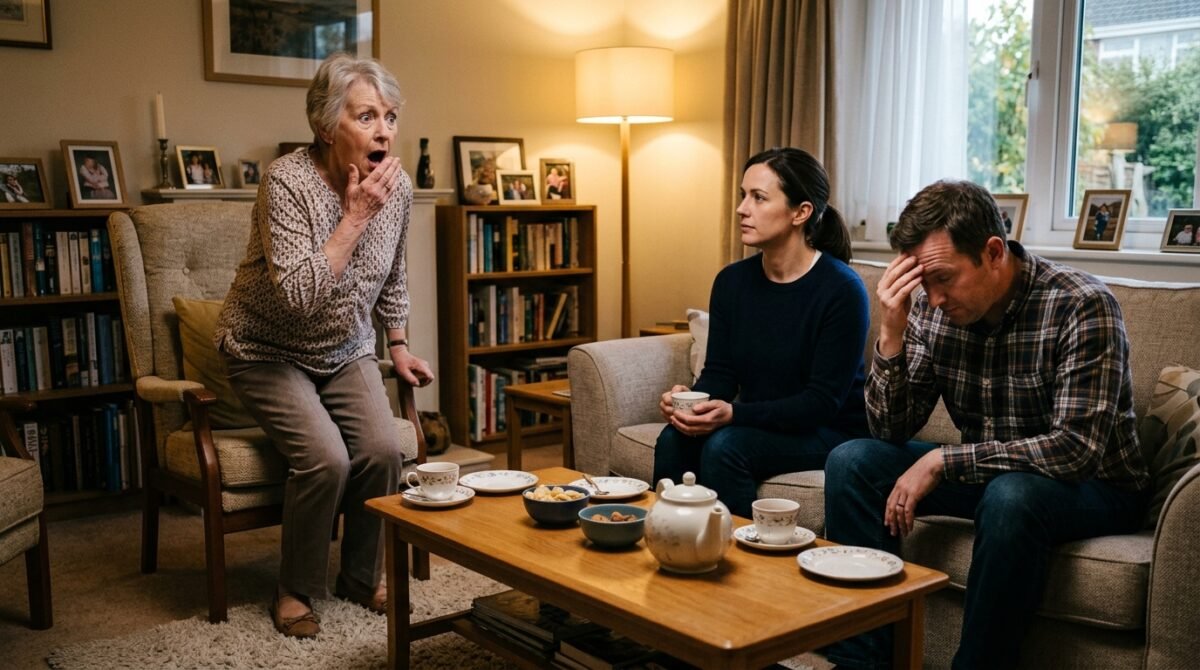
When Mark returned home from work the next day, he wasn’t alone. He had brought his mother with him. She was sitting on our couch, dabbing her eyes with a tissue, looking like the victim. Mark walked in, looking smug, as if he had brought his secret weapon to settle the score. ‘We need to talk,’ he said, his voice cold.
I didn’t even stand up. I stayed in my chair, looking at them both. ‘I think everything that needs to be said has been said, Mark. Why is your mother here? This is between us.’ His mother began to speak, her voice trembling, about how I was ‘destroying her relationship with her son’ and how I was ‘the most selfish person she had ever met.’
I listened for a full two minutes, letting her vent. When she paused for breath, I looked at Mark. ‘Did you tell her that you emptied Maya’s braces fund? Or did you just tell her that I canceled your cruise because I’m a monster?’ Mark’s face went white. He hadn’t told her. He had framed it entirely as my unprovoked attack on his birthday plans.
“Mom, did he tell you where the money for your Hawaii trip came from? Did he tell you it was the money we were saving for Maya’s orthodontics? He stole from his daughter, and he hid it from me.”
The room went silent. His mother looked at him, her mouth agape. ‘Mark? Is that true?’ she whispered. Mark tried to sputter an excuse, talking about how ‘it was just temporary’ and ‘Maya wouldn’t have noticed,’ but the damage was done. The look on his mother’s face shifted from performative sadness to genuine horror. She stood up, looked at him with disdain, and walked out of the house without another word.
Financial Reckoning and New Boundaries

After his mother left, the silence in the house was deafening. Mark stood there, looking defeated, his shoulders slumped. The ‘hero son’ narrative had collapsed. I didn’t say a word to him. I went to the kitchen and made myself a cup of tea. I was done arguing. I was done trying to make him understand. He needed to understand it on his own.
He spent the next hour trying to apologize, but it felt hollow. He talked about how he ‘didn’t think it was a big deal’ and how he ‘just wanted to make his mom happy.’ I realized then that he didn’t have the emotional maturity to be a partner. He was still the little boy trying to please his mother, and I was just the background character in his life.
I sat him down and laid out my terms. ‘We are going to have separate bank accounts from now on. You are going to put back every cent you took from the braces fund, and until that happens, there will be no extra spending, no dining out, no luxury items. If you can’t manage our money, I will manage mine, and you will manage yours.’
“I am not your mother’s caretaker, and I am not your financial enabler. You made this bed, Mark. You are going to sleep in it. You will work overtime, you will sell whatever you need to sell, but that money is going back into Maya’s account.”
He looked at me with shock, as if he couldn’t believe I was being so ‘cold.’ But I didn’t care anymore. I had found my voice, and I was using it. I wasn’t asking for permission anymore. I was setting boundaries. He sat in silence, realizing that the dynamic of our marriage had shifted permanently. The power he thought he held had evaporated.
The Slow Road to Recovery

It’s been six months since the incident. Mark has been working overtime, and the braces fund is finally growing again, although it’s been a painful, slow process. Our marriage is… different. We are in therapy, but the trust is still fractured. I find myself checking the bank accounts every single day, a habit I can’t seem to break. The scar of that betrayal is deep.
Maya got her braces three months ago. She was so excited, and watching her look in the mirror, smiling with her new hardware, brought me to tears. She doesn’t know the full extent of what happened—we told her it was a ‘financial scheduling conflict’—but she knows things have been tense. I try to shield her from the worst of it, but she’s observant.
Mark has tried to make amends, but it feels like he’s doing it because he’s afraid of losing me, not because he truly understands why what he did was so wrong. He still thinks that if he had just asked me, I would have been okay with it. He doesn’t get that it wasn’t a question of ‘asking’; it was a question of ‘prioritizing.’
“I’m not sure if we’re going to make it. Every time I see him, I see the man who thought our daughter’s self-esteem was worth less than a week in Hawaii. That’s a hard thing to get past.”
I don’t know what the future holds. Maybe we’ll make it through, and maybe we won’t. But I know one thing for sure: I will never again trust anyone with my daughter’s future without having full, absolute control. I’ve learned that the hard way. I’ve learned that sometimes, being a partner means knowing when to stop being a partner and start being a protector.
Final Reflections: A Lesson in Boundaries

Looking back at the whole ordeal, the most surprising thing wasn’t Mark’s betrayal—it was my own reaction. I always thought I was the type of person who would cry and try to fix things through communication. Instead, I turned into a woman who didn’t blink when she burned down the bridge. I realized that sometimes, you don’t need to communicate; you need to act.
People often ask me if I regret canceling the cruise. I don’t. That money was the price I paid for my dignity and my daughter’s future. It was the best money I ever spent. The cruise wasn’t just a trip; it was a symbol of our marriage, and by cancelling it, I signaled that the old way of doing things—his way—was officially over.
If you find yourself in a similar situation, don’t let anyone convince you that you’re being ‘mean’ or ‘dramatic.’ If your partner is spending money behind your back or prioritizing others at the expense of your children, you have every right to take drastic action. You are not a doormat. You are a human being with rights and responsibilities.
“Your bank account is a mirror of your values. If you don’t like what you see, you have the right to break the glass and start over. Don’t let anyone hold your future hostage.”
I am still here, still fighting for my family, but I am doing it on my terms. I am no longer the woman who waits to be told what’s going to happen. I am the woman who decides. And that, in itself, is a freedom I never knew I needed.
Conclusion
My story is just one among many, a cautionary tale of how quickly a marriage can unravel when financial and parental priorities collide. The debate over whether I was too harsh or entirely justified is one that I’ve seen play out across dozens of forums. Some believe I should have worked harder to save the marriage before ‘striking back’ with the cruise cancellation. Others believe I didn’t go far enough.
Ultimately, the lesson isn’t about the money or the vacation. It’s about the underlying respect that keeps a partnership alive. When that respect is replaced by entitlement and secrecy, the foundation is already gone. Whether you agree with my decision or think I was equally wrong for my retaliatory actions, the question remains: what would you have done in my shoes?
What is your take on the ‘braces fund’ disaster? Would you have stayed, or was the cruise cancellation the only way to send a message? Join the debate in the comments below.
What's your verdict on this dilemma?
Vote below to contribute to the official community consensus.

Have a Dilemma Keeping You Up at Night?
Share your real-life feud, wedding chaos, or relationship crossroads anonymously with our editorial team.
What do you think ?
0 Comments🛡️ Comments are moderated to protect community integrity. Your comment will appear once approved by the editorial team.