

It began over a simple, Tuesday night stir-fry. It was a weeknight, and I was exhausted from my own full-time job, yet I still found myself at the stove, chopping vegetables and searing chicken to ensure we had a healthy dinner. My boyfriend, Mark, was lounging on the sofa, scrolling through his phone. When I placed the plate in front of him, he didn’t thank me. Instead, he made an offhand comment that would eventually dismantle our three-year relationship.
“It’s nice you have time to cook, I guess,” he said, not even looking up from his screen. “It must be relaxing. Honestly, I don’t know why you act like it’s a contribution to the household budget. It’s just a hobby. It has zero monetary value compared to what I bring in.”
I stood frozen, the spatula still in my hand, feeling the heat rise from my neck to my face. The sheer audacity of the statement stung, but it also crystallized something I had been feeling for months: I was being treated like a live-in housekeeper whose labor was invisible. That night, I didn’t argue. I didn’t cry. I simply went to my laptop and opened a spreadsheet.
I wanted to see the math. I wanted to see if his “zero value” claim held up against the harsh reality of the service industry. I spent the next three days tracking back every meal I had cooked, every grocery run I had made, and every hour I had spent scrubbing the grease off the stove he never touched. I wasn’t just proving a point; I was building a case.
When I finally printed that document—all eighteen pages of it—and placed it on the counter, the silence in our apartment was deafening. He thought I was joking, but he had no idea that I had officially reached my limit. This is the story of how an itemized bill became the catalyst for my liberation.
The Tuesday Night Catalyst

The atmosphere in our apartment had been strained for weeks, but that specific Tuesday felt heavy with a sense of impending collapse. Mark had been working longer hours, and I had been picking up the slack in every domestic category: cleaning, cooking, laundry, and pet care. I had accepted these roles because we had talked about ‘partnership’ when we moved in together, but that word had clearly lost its meaning for him.
When he made that comment about my cooking having ‘zero monetary value,’ it wasn’t just an insult to my efforts; it was a erasure of my time. He truly believed that because I didn’t charge him for the labor, the labor didn’t exist in the realm of economic reality. The dismissiveness in his voice was what hurt the most—it was a casual, thoughtless rejection of my sacrifice.
“I just don’t see why you’re so tired. You were home all day. Cooking dinner is just a task, not a job. It has zero monetary value, Sarah. Maybe if you focused on your career instead of playing house, you’d be less stressed.”
— Mark, during the initial argument
I didn’t engage immediately. I needed to be cold, calculated, and precise. I knew that if I responded with emotion, he would just call me ‘hysterical’ and dismiss me again. I spent the next 72 hours in a state of hyper-focus, pulling bank statements, receipts, and even calendar logs from the last three years to quantify exactly what I had been doing for him.
By the third night, the spreadsheet was complete. I had categorized everything: Prep time, cooking time, grocery shopping time, and even the cost of raw ingredients he had consumed daily. I calculated a modest hourly rate for a professional cook, added a markup for convenience, and totaled it all up. The final number was staggering—over $42,000 for three years of labor.
I printed the invoice in a formal, professional font. I wanted it to look like something that would come from a debt collection agency. I even included a ‘due upon receipt’ note at the bottom. The preparation of this document was my form of mourning; I was closing the chapter on my service to him, one entry at a time.
The Kitchen Counter Confrontation

Mark arrived home at 7:00 PM on a Friday. He was in a good mood, probably expecting the usual routine: a hot meal, a glass of wine, and a clean living space. He walked into the kitchen, saw me standing there with my laptop closed and a document on the counter, and immediately sensed the shift in energy. He didn’t even say hello; he just stopped, sensing the friction.
I didn’t say a word as he approached the counter. I gestured toward the stack of paper. He picked it up with a smirk, thinking it might be a joke or some kind of weird, passive-aggressive list of chores he needed to do. As he flipped through the pages, his expression shifted from amusement to confusion, and finally to genuine anger. He didn’t understand the scope of what he was looking at.
“What is this? Are you actually serious? You think you’re a private chef now? You’re joking, right? This is insane, Sarah. Nobody charges their partner for dinner. You’re acting like a landlord.”
— Mark, upon seeing the invoice
I stood my ground, my hands steady. I explained that if he wanted to live with someone who provided ‘zero monetary value’ services, he should be prepared to lose access to those services immediately. I told him that my time had a price, and since he had explicitly stated that my labor was worth nothing, he clearly shouldn’t mind paying for it if he wanted it to continue.
The argument escalated quickly. He tried to gaslight me, claiming he had done plenty of things for me, but he couldn’t point to a single instance where he had relieved me of my domestic burden. The more he talked, the more he revealed his underlying entitlement. He genuinely thought my role was simply to exist for his benefit, and the fact that I was demanding recognition for it felt like a betrayal to his worldview.
He threw the papers onto the counter, scattering them across the floor. He paced back and forth, calling me names and telling me I was being ‘gold-digging’ and ‘delusional.’ I just watched him, realizing for the first time that I didn’t respect him anymore. The man I loved was gone; all that was left was a selfish person who felt entitled to my life.
The Digital Breadcrumbs and Leaked Messages
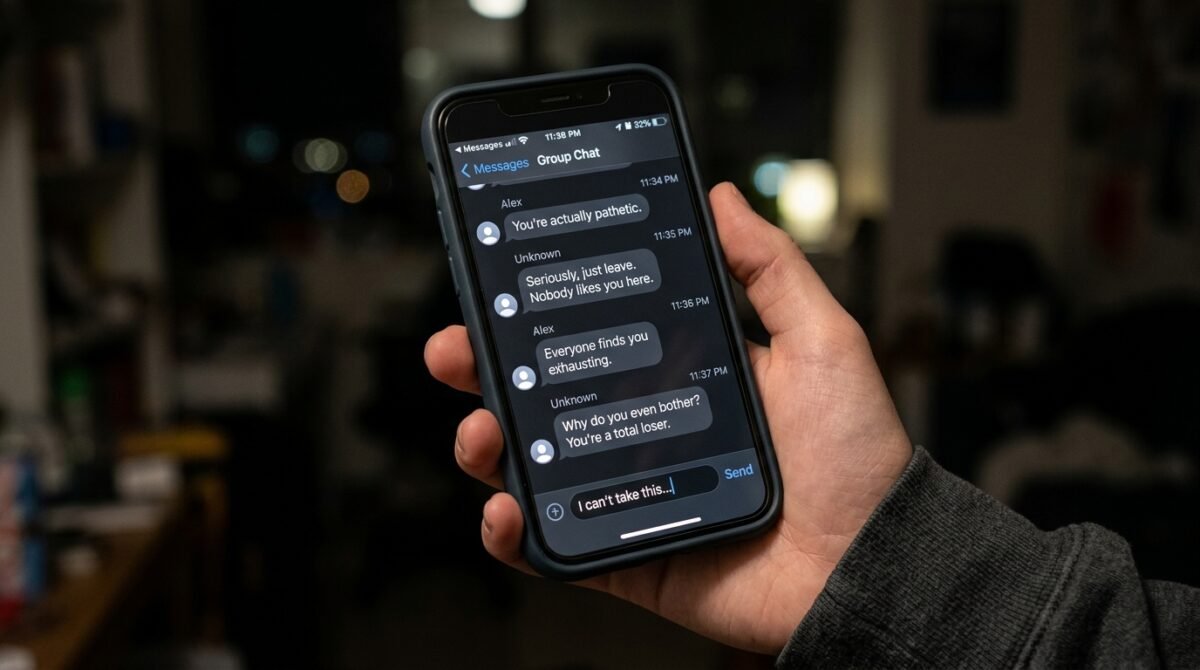
That night, things got worse. After Mark stormed out to go to the gym, I noticed his phone was left on the kitchen island. It lit up with a notification from a group chat titled ‘The Boys.’ Curiosity got the better of me—something I rarely did—but given the circumstances, I felt justified. The conversation was exactly what I feared: he was complaining about me to his friends, painting me as a nag.
“My girlfriend is literally losing her mind. She gave me an itemized bill for three years of cooking. Three years! Like I’m a restaurant. I’m going to have to dump her, she’s become so toxic and money-hungry. Who does that?”
— Mark, in a group chat with his friends
Reading those messages was like a bucket of cold water. His friends were egging him on, laughing at me, calling me ‘crazy’ and telling him he needed to ‘put me in my place.’ Seeing the way he talked about me behind my back erased any lingering guilt I felt about the invoice. I wasn’t just an employee to him; I was an object of ridicule.
I took photos of the chat. I didn’t know why at the time, but I felt like I needed insurance. The narrative he was spinning was that I was the aggressor, the person making ‘crazy demands’ out of nowhere. The truth was that I was simply reacting to a standard of behavior that he had set, and he was too oblivious to see the irony in his own complaints.
I realized then that this wasn’t about the food. It was about respect. It was about how he valued me as a human being. The fact that he was actively conspiring with his friends to humiliate me made it clear that the relationship was beyond saving. The invoice was just the match; the fire was his own ego.
The Public Reckoning

The next morning, Mark tried to act like nothing had happened. He made coffee for himself and didn’t offer me any. He walked around the apartment as if he owned the place, carefully avoiding eye contact with the papers that were still scattered across the kitchen floor. He wanted to return to the status quo, but the status quo had been permanently dismantled.
I waited until he was sitting down to eat his breakfast before I brought it up again. I didn’t yell; I spoke with the calm, flat tone of someone who had already checked out. I told him that I was moving out. The shock on his face was real. He hadn’t expected me to actually act on the threat, because he didn’t believe I had the spine to leave.
“You’re leaving? Over some stupid bill? You are really going to throw away three years because I said something you didn’t like? You’re being incredibly dramatic, Sarah. This is why you don’t have more friends.”
— Mark, trying to manipulate the situation
His attempt to belittle me and isolate me only reinforced my decision. I started packing my bags immediately. I told him that the ‘bill’ wasn’t about the money; it was about the fact that he didn’t value my time. I told him that if he found it so easy to live without my ‘hobby,’ then he would have the rest of his life to enjoy the silence of his empty kitchen.
The look on his face shifted from arrogance to panic. He started following me around, trying to apologize, trying to say he ‘didn’t mean it that way.’ But it was too late. I had already contacted my sister, and she was on her way with a truck. The house was already filled with boxes, and the reality of my departure was sinking in for him.
Reddit’s Verdict: The Community Weighs In
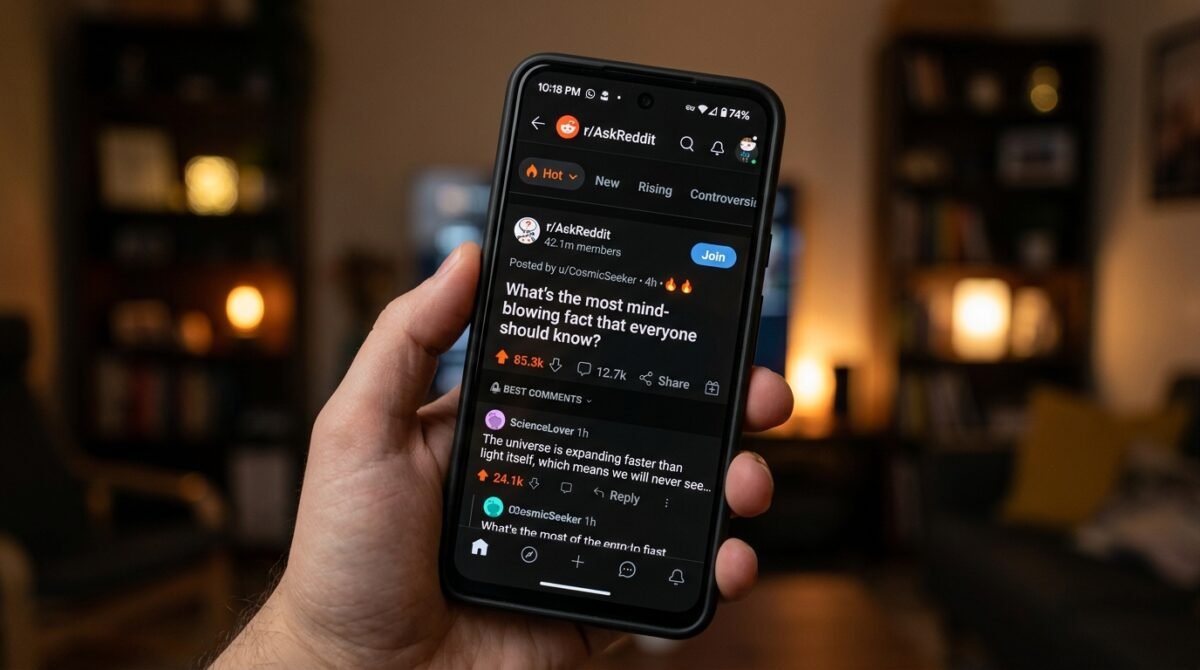
I posted my story on a popular subreddit later that week, needing a reality check. I wanted to know if I was actually the ‘crazy’ one, as Mark had insisted. The response was overwhelming. Within hours, the post had reached the front page, and the comments were pouring in, validating my feelings in ways I hadn’t expected.
“NTA. He told you your labor had ‘zero monetary value.’ You simply provided him with a quote for the service he’s been consuming for free. If he thinks it’s worth nothing, he shouldn’t have a problem losing it. This is a classic case of a man who takes domestic labor for granted.”
— u/LogicAndReason (28.4k upvotes)
The community was largely on my side, with thousands of people sharing their own stories of being taken for granted in relationships. There were also people who pointed out that my ‘invoice’ was a genius move because it forced him to acknowledge the economic reality of the home. It wasn’t about the cash; it was about the quantification of effort.
“My ex did this. He told me that cooking and cleaning weren’t ‘real work.’ I stopped doing both for two weeks. The house fell apart, and he was eating cereal for dinner every night. When he asked why I stopped, I just pointed to the chore chart. You did the right thing, OP. Run.”
— u/DomesticQueen (15.2k upvotes)
There were a few contrarian voices, of course—people who thought I was being ‘petty’ or ‘childish’ by making the invoice—but even they were outnumbered by the sheer volume of support. The consensus was clear: when you strip away the romantic veneer, domestic labor is a commodity, and if one partner treats it like a free service, they deserve to be billed for it.
Reading the comments helped me realize that I wasn’t alone. Thousands of women (and some men) had been through this exact scenario. It felt like a weight had been lifted off my shoulders. I wasn’t just a scorned girlfriend; I was part of a broader conversation about how we value labor in our personal lives.
The Final Move-Out

The day I moved out was one of the most surreal experiences of my life. My sister, Clara, helped me carry boxes out to the truck. Mark was sitting at the kitchen table, watching us, his phone in his hand. He didn’t offer to help, which was completely on brand. He just watched as the life we had built together was dismantled, piece by piece, box by box.
I made sure to take everything that was mine. I didn’t leave a single spoon or fork that I had bought. I even took the kitchen appliances I had purchased, including the high-end blender he liked to use for his morning smoothies. He watched, helpless, as his kitchen became empty. It was a visual representation of the ‘zero value’ he had assigned to my efforts.
“Are you really taking the blender? Seriously? That’s so petty, Sarah. You’re acting like a child. We’re in the middle of a breakup, and you’re looting the place like it’s a war zone.”
— Mark, watching me pack the blender
I looked him dead in the eye and told him that if the kitchen was so ‘non-productive,’ he wouldn’t need a high-end blender anyway. I walked out the door without looking back. As I drove away, I didn’t feel sadness. I felt an incredible sense of relief. The weight of the last three years—the pressure to cook, the pressure to clean, the pressure to be the ‘perfect partner’—was gone.
I moved into a small apartment of my own that weekend. It was simple, it was quiet, and most importantly, it was clean on my own terms. I didn’t have to cook for anyone else. I didn’t have to worry about someone criticizing my efforts. I was free, and that feeling was worth more than any relationship.
The Aftermath: Silence and Regret

For the first few weeks, I didn’t hear from Mark. I expected him to try to reach out, to argue, or to beg. But silence is a powerful thing. It was the best thing he could have given me. It gave me the space to breathe and the time to process what had actually happened. I started seeing a therapist to understand why I had allowed myself to be treated that way for so long.
I learned that I had a tendency to over-function in relationships, trying to earn love through service. It was a pattern I had carried from childhood, and recognizing it was the first step toward breaking it. I wasn’t just a ‘doer’; I was a person who deserved to be treated as an equal, regardless of what I brought to the table.
“I miss you. The place is a mess, and I haven’t had a decent meal in weeks. I’m sorry for what I said. Can we talk about this like adults? I didn’t mean that your labor was worth zero. I was just frustrated.”
— A text from Mark, sent three weeks after the breakup
I didn’t reply. I read the message, felt a pang of pity for him, and then deleted it. He wasn’t sorry for his perspective; he was sorry that his life had become inconvenient. He wasn’t missing *me*; he was missing the *services* I provided. That distinction was everything I needed to know.
He tried to call a few more times, but I blocked his number. I blocked his social media. I didn’t want him to have a window into my life. I was building something new, and it didn’t involve him. I was learning to cook for myself, for the joy of it, rather than out of obligation.
Financial Lessons in Disguise

One of the most surprising outcomes of this ordeal was how much I learned about my own worth. I started tracking my expenses more closely and realized that I had been subsidizing his lifestyle for years. I was paying for half the groceries, half the rent, and doing 90% of the labor. When I looked at the numbers, I realized how much money I could have saved if I hadn’t been carrying him.
I started a new savings account, one that I called my ‘Freedom Fund.’ Every time I saved money on something I used to waste on his habits—the expensive steaks he liked, the beer he drank, the fancy cleaning products—I transferred that money into the account. It became a game, a way to keep myself motivated and focused on my own growth.
| Category | Old Relationship Cost | New Solitary Cost |
|---|---|---|
| Groceries | $600/month | $250/month |
| Utilities | $150/share | $100/total |
| Cleaning Supplies | $50/month | $15/month |
| Emotional Labor | Priceless | Priceless |
The table above is a simple representation of how my life changed after the breakup. It wasn’t just about the money; it was about the efficiency of living alone. I realized that I had been losing money every single month by staying in a relationship that didn’t provide me with emotional or financial security.
I also started investing in my own career. I took a certification course that I had been putting off because Mark said it was ‘too expensive.’ With the money I saved from not supporting him, I paid for the course in full. It was the best investment I ever made, and it paved the way for a promotion that followed six months later.
Reclaiming the Domestic Space

Cooking has become a joy again. I don’t follow recipes that make enough for four; I make what I want, when I want. I learned to love the sound of the kitchen when it’s just me—the sizzle of the pan, the music playing in the background, the freedom to make a mess and not feel guilty about it. It’s a different kind of labor, one that isn’t for an audience or a judge.
I hosted my first dinner party a few months after the move. I invited friends who actually appreciated the food and the effort. It was a stark contrast to the dinners with Mark, where I felt like I was auditioning for a role I didn’t want. There was laughter, there was genuine gratitude, and most importantly, there was no ‘monetary value’ attached to the meal.
“You seem so much lighter. I don’t know what happened, but you look like you’re actually happy for the first time in years. Whatever you did, don’t ever go back to that.”
— My friend, during my dinner party
That comment hit home. I *was* lighter. I wasn’t carrying the weight of his expectations or the burden of his entitlement. I was just me. And that was enough. I realized that the best way to handle a partner who devalues your labor is to remove your labor from their equation entirely.
I stopped seeing the kitchen as a place of work and started seeing it as a place of creativity. I bought new spices, learned new cuisines, and discovered that I actually enjoyed being in the kitchen when I wasn’t being told it was a ‘hobby.’ My cooking became a reflection of my own tastes, not a performance for someone who didn’t appreciate it.
The Final Reflection on Partnership

Looking back, I don’t harbor any anger toward Mark. I feel sorry for him, in a way. He lives in a world where things that aren’t ‘monetizable’ don’t exist, and he’s going to spend his life looking for things to buy to fill the void that genuine human connection should occupy. He’ll never understand that the most valuable things in a relationship are the things you can’t invoice.
But I also learned that if you don’t value yourself, others won’t either. I had taught him how to treat me by accepting his behavior for so long. I had set the precedent that my time was free and my effort was expected. Breaking that cycle was the hardest thing I’ve ever done, but it was also the most important.
“Value is not just about money. It’s about respect, time, and acknowledgement. If your partner can’t see the value in what you do for them, they don’t deserve to have you do it at all.”
— A thought from my journal
I’m still single, and I’m perfectly okay with that. I’m not looking for someone to ‘complete’ me or to ‘provide’ for me. I’m looking for a partner—someone who understands that life is a team sport and that every member of the team needs to be valued, not just for what they bring to the bank account, but for who they are as a person.
My story went viral because it resonated with so many people who are tired of being taken for granted. It reminded me that we aren’t alone in our struggles. If you’re out there, and you’re feeling like your efforts aren’t being valued, know that you have the power to change the narrative. Sometimes, all it takes is a bit of math to show the truth.
Conclusion
The invoice was never really about the money. It was about the audacity to stand up for my own worth in a relationship where I was becoming invisible. When I handed Mark that paper, I wasn’t asking for payment; I was asking for him to see me. When he refused, I realized that I had to leave to find someone who would see me without me having to itemize my worth.
Today, I am in a place of peace. My kitchen is mine, my life is mine, and my value is defined by me, not by someone else’s narrow economic perspective. If you find yourself in a similar position, remember that you are the only one who can decide what your labor is worth. Don’t wait for permission to be respected.
What about you? Have you ever had to draw a line in the sand regarding domestic labor or financial fairness in your relationship? Do you believe itemizing your effort is a healthy way to communicate, or is it a sign the relationship is already over? Let us know in the comments below.
What's your verdict on this dilemma?
Vote below to contribute to the official community consensus.

Have a Dilemma Keeping You Up at Night?
Share your real-life feud, wedding chaos, or relationship crossroads anonymously with our editorial team.
What do you think ?
0 Comments🛡️ Comments are moderated to protect community integrity. Your comment will appear once approved by the editorial team.