

Living with roommates is often described as a delicate negotiation of boundaries, silent agreements, and shared utility bills. We all have our quirks—some leave dishes in the sink, others leave the lights on—but there is an unspoken social contract regarding personal property. You don’t touch the expensive skincare, you don’t wear the roommate’s clothes, and you absolutely, under no circumstances, touch the science experiment growing in the back of the refrigerator.
For me, that experiment wasn’t just a science project; it was a companion. My sourdough starter, which I affectionately named ‘Dough-ris,’ had been fed, nurtured, and traveled with me for over ten years. It had survived moves across three state lines, failed relationships, and the isolation of the 2020 lockdowns. It was a living piece of my history. To someone else, it might look like a jar of beige goo, but to me, it was a decade of dedication.
The trouble began when I moved in with Sarah. She was organized, maybe a little too much, and had a habit of ‘tidying’ things that didn’t belong to her. I had warned her specifically about the jar in the back of the fridge. I told her it was a sourdough starter, that it was alive, and that it was worth more to me than most of the furniture in our apartment. She nodded, smiled, and promised she wouldn’t touch it. I should have known that ‘tidying’ was her love language, and my boundaries were just a suggestion.
When I returned home from a week-long work trip to find my refrigerator shelf suspiciously empty and the glass jar sitting in the recycling bin—scraped clean and soaking in hot water—my heart didn’t just break; it hardened. This wasn’t a mistake; it was an erasure of my history. I didn’t scream. I didn’t cry. Instead, I sat down, calculated the cost of the lost time, the ingredients, and the sheer emotional labor of building a ten-year culture, and I made a choice that would ignite a firestorm in our living arrangement.
The Morning of the Great Purge
The day started with a sense of dread that I couldn’t quite place. I had just walked through the front door, my suitcase still in the hallway, when I felt an overwhelming urge to check on my starter. It had been fed just before I left, and I was eager to see if it was active enough to start a loaf that evening. I walked into the kitchen, the sun filtering through the window, illuminating the spot where the jar usually sat.
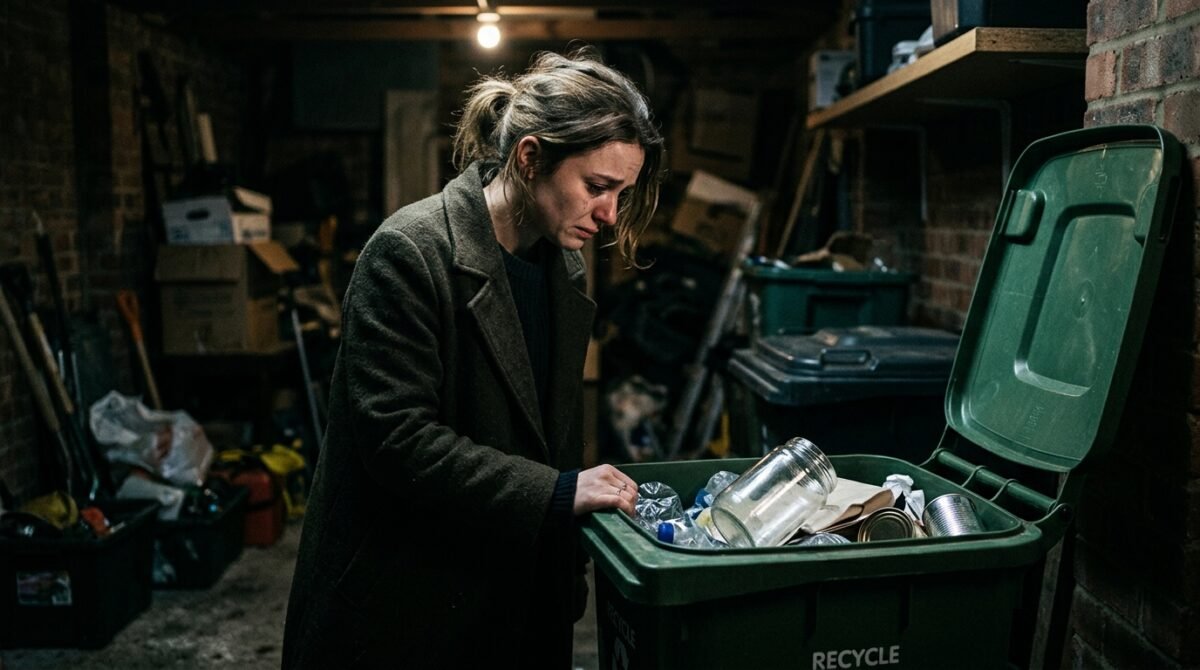
The fridge door opened with a familiar creak, but the shelf was barren. I blinked, confused. I checked the middle shelf, then the crisper drawer, then the freezer. Nothing. My pulse began to quicken. I walked over to the recycling bin, hoping against hope that I had somehow imagined moving it. There it was: the jar, sparkling clean, sitting upside down in the bin, drained of all its life.
I felt a cold shiver run down my spine. I didn’t want to believe that Sarah had done this, even though I knew she had spent the previous day ‘spring cleaning’ the entire apartment. I pulled out my phone, my hands shaking as I opened our group chat, not knowing if I wanted to be proven wrong or if I wanted to confirm my worst fears.
“Hey, did you happen to move my glass jar from the fridge? The one in the back?”
— Sent at 4:12 PM
I waited for the three dots to appear, feeling like I was waiting for a death sentence. When Sarah finally replied, her tone was frustratingly casual, as if she had simply moved a stack of magazines.
“Oh, yeah! I threw that out. It looked like it had been sitting there for months and smelled kind of funky. The fridge looks so much better now that it’s cleared out! You’re welcome.”
— Sarah’s Response
My blood went cold. She hadn’t just thrown it out; she had been proud of it. She thought she was doing me a favor. The lack of respect for my property was so profound that I couldn’t even formulate an angry text back. I just turned off my phone and sat on the kitchen floor, staring at the empty recycling bin.
The Calculus of Lost Time

I didn’t sleep that night. Instead, I found myself obsessing over the value of what was lost. People often talk about the monetary value of sourdough starter—it’s just flour and water, right? But that ignores the time. Ten years of daily feedings, the specific environmental adaptation of the yeast, the flavor profile that had been refined over thousands of loaves. It wasn’t just flour; it was a decade of cumulative effort.
I started calculating. At 365 days a year for ten years, that was 3,650 feedings. Even if I valued my time at minimum wage, the cost of labor alone was astronomical. I considered the cost of artisanal flours, the electricity for the oven, the failed experiments I had learned from. It was an investment that could never be fully replicated, but I needed a way to hold her accountable. The security deposit was the only leverage I had left.
I opened a spreadsheet. I broke down the costs: the cost of replacing the heirloom culture (which I sourced from a master baker), the time loss, and the ’emotional damages’ I felt were justified by her gross negligence. It came out to exactly $500. It wasn’t an arbitrary number; it was the amount I decided would hurt enough for her to finally understand the gravity of her actions.
I knew this would be the end of our roommate relationship, but I didn’t care. The level of entitlement required to throw away someone else’s property under the guise of ‘tidying’ was a character flaw I could no longer live with. I drafted the email to our landlord, CCing Sarah. I laid out the situation with cold, clinical precision, stating that $500 would be withheld from her portion of the security deposit for ‘unauthorized destruction of personal property.’
The silence that followed the email was deafening. My phone didn’t ping for hours. I could hear Sarah pacing in her room, the sound of her frustrated sighs echoing through the thin walls. I felt a strange sense of vindication, but also the weight of the bridge I had just intentionally burned.
The Confrontation in the Kitchen

Two days later, the confrontation finally happened. Sarah burst into the kitchen, her face flushed red with indignation. She didn’t look like someone who had made a mistake; she looked like someone who had been wronged. She slammed the door behind her and leaned against the counter, her arms crossed tight against her chest.
“Are you actually serious with this landlord email? Five hundred dollars? For a jar of moldy bread dough? You have to be out of your mind if you think you’re getting away with this.”
— Sarah, shouting in the kitchen
I didn’t flinch. I kept my voice low, steady, and calm. I had rehearsed this conversation in my head a dozen times. I told her that the value wasn’t in the ingredients, but in the ten years of history she had unilaterally decided to erase. I explained that she had been warned multiple times about that specific jar, and that her ‘cleaning’ was actually a violation of my personal boundaries.
“It’s just flour and water, OP! You’re acting like I killed a pet. People are going to think you’re insane when they find out you’re trying to charge me for a kitchen accident. It’s a jar! I’ll buy you a new one at the grocery store for five bucks!”
— Sarah’s defensive rebuttal
I laughed, a dry, humorless sound. She really didn’t get it. She thought the world revolved around her convenience. The fact that she compared my starter to a store-bought loaf showed exactly why she couldn’t understand the harm she had caused. I told her the money was staying deducted, and if she wanted to take it to small claims court, I would be more than happy to explain the concept of property rights to a judge.
She sputtered, unable to find an argument that didn’t sound selfish. The power dynamic in the room shifted. For the first time, she wasn’t the ‘tidy’ roommate; she was the one who had crossed a line, and she knew it. She turned and stormed out, leaving me alone in the kitchen, feeling older and much more cynical than I had been a week ago.
The Internet Weighs In

I took the story to a popular online forum, needing to know if I had lost my mind. I laid out the facts: the ten-year history, the warning, the clear instruction, and the subsequent ‘cleaning’ incident. I braced myself for the backlash, expecting at least some people to call me dramatic. The response was immediate and overwhelming.
Within an hour, the post had thousands of views. The comments flooded in, ranging from absolute horror at the destruction of the sourdough to legal advice regarding security deposits. The consensus was overwhelmingly in my favor, though there were a few voices who thought I was overstepping with the $500 figure.
“OP, that isn’t just ‘dough.’ That is a living biological legacy. She didn’t just throw out food; she threw out your time, your hobby, and your history. She is the one who is out of line. The $500 is a ‘stupid tax’ for someone who can’t keep their hands off other people’s stuff. NTA.”
— u/BreadWinner99 (Top Comment, 18.5k upvotes)
Reading the comments felt like a validation of my sanity. People understood that this wasn’t about the food; it was about the lack of respect. Some users shared their own stories of roommates throwing out expensive items, which made me realize I wasn’t alone in this nightmare. It was a strange comfort to know that thousands of strangers agreed that my sourdough starter was a valid, protected object.
However, there were dissenting opinions. Some argued that charging for ’emotional labor’ was legally shaky and could land me in trouble. I took their advice seriously, consulting a friend who worked in property law. They confirmed that while the deduction was morally satisfying, it might be legally complicated if she chose to fight it. But the psychological victory was already worth more than the money.
The Small Claims Threat

A week later, Sarah served me with a notice of intent to sue in small claims court. She was serious. She was going to drag me to court over the $500. I received the notice in the mail, printed on formal letterhead, looking remarkably official. My heart sank. I didn’t want to spend my weekends in a courtroom, but I knew I couldn’t back down now. If I backed down, it would validate her belief that my property was fair game.
I started gathering my evidence. I printed out the text messages from when I moved in, where I explicitly mentioned the starter. I took photos of the new starter I had started, documenting the time and cost. I even reached out to a sourdough community forum, asking for expert testimony on the value of a ten-year-old mother culture. I was going to be the most prepared person in that courtroom.
Sarah, meanwhile, was going around telling our mutual friends that I was trying to extort her. She played the victim, framing me as the ‘crazy sourdough hoarder’ who was obsessed with fermented sludge. It was exhausting to have to explain the nuance of the situation to people who only heard her side of the story. I stopped talking about it altogether, focusing my energy on the impending legal battle.
The stress began to take a toll. I found it hard to concentrate at work, and my sleep was plagued by nightmares of dough-covered courtrooms. But every time I felt like giving up, I looked at the new, young starter sitting in my fridge. It was a sign of hope, a reminder that I could start again, but that my past deserved to be respected. I was ready to defend it, no matter the cost.
The Mediation Meeting

Before the court date, our landlord insisted on a mediation meeting. He didn’t want his property involved in a legal dispute that would likely end with one of us moving out. We met in his office, the three of us sitting in uncomfortable chairs, the air thick with tension. The landlord was clearly tired of our drama.
“Look, I don’t care who started what. This is a mess. Sarah, you shouldn’t have touched the jar. OP, you can’t just decide to deduct $500 from a security deposit. That’s not how the law works. Let’s find a middle ground or you’re both being evicted.”
— The Landlord, during the mediation
The landlord’s words were a reality check. He was right. I was acting out of emotion, and Sarah was acting out of ignorance. We were both behaving like children. I looked at Sarah, who was staring at the floor, looking genuinely ashamed for the first time. The anger in the room had dissipated, replaced by a weary resignation. It wasn’t about the money anymore; it was about the loss of the peace in our home.
I proposed a compromise: I would reduce the deduction to $200, which covered the actual cost of supplies and the shipping of a high-quality replacement starter I had found from a reputable source. In exchange, she would have to issue a formal apology in writing and agree to never touch anything in the refrigerator again. It was a concession, but it was one that allowed us to move forward without a court battle.
Sarah agreed, though she still seemed bitter. She signed the agreement, and the landlord witnessed it. As we walked out of the office, we didn’t say a word to each other. The relationship was permanently fractured, but the immediate threat of a lawsuit was gone. It was a bittersweet victory, but it was progress.
The Cold Silence of Home
Life in the apartment changed after the mediation. We stopped communicating entirely. We were like ghosts passing in the hallway, avoiding eye contact at all costs. The kitchen, once a shared space of conversation and cooking, became a territory marked by invisible lines. My side of the fridge was off-limits; her side was off-limits to me. It was a sterile, lonely way to live, but it was peaceful.
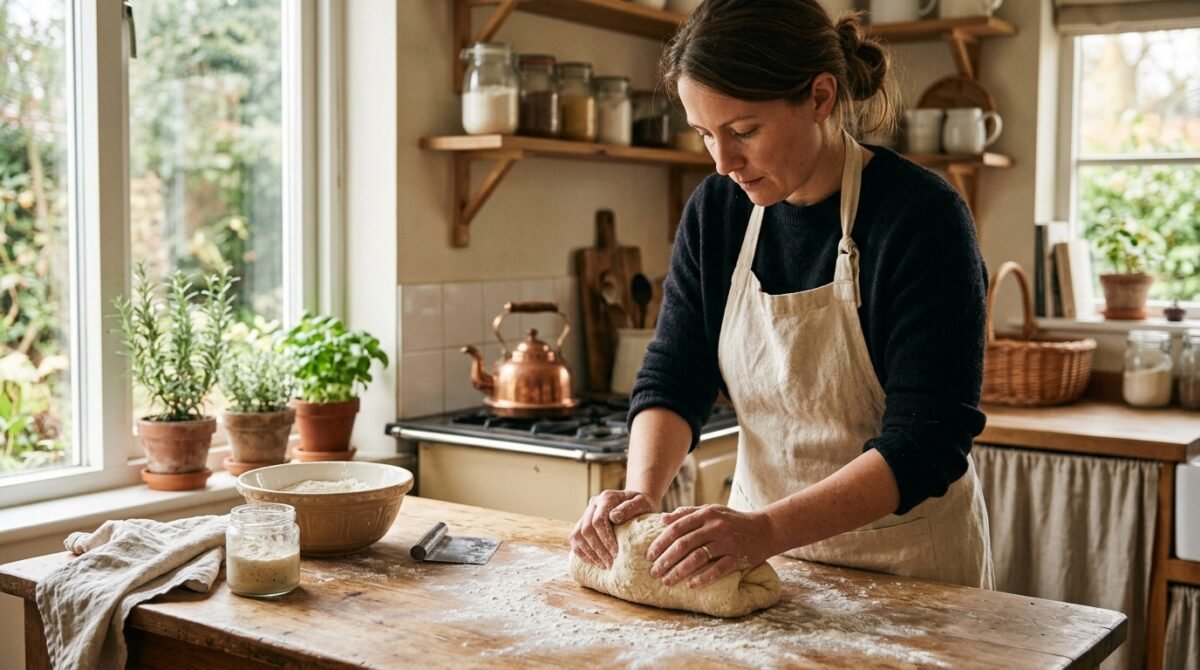
I spent my evenings baking. The act of kneading the dough, waiting for the rise, and listening to the crackle of the cooling crust became my therapy. It was a way to reclaim the space Sarah had violated. Every loaf I baked was a testament to the fact that I had not been defeated. The starter was growing stronger, faster than I expected, and the flavor was starting to develop that familiar, complex tang.
I realized that living in a state of constant conflict wasn’t sustainable. I started looking for a new place, something smaller, where I could be the only person in charge of my kitchen. I wanted a space where I could leave a jar of whatever I wanted on the counter without having to worry about it being tossed into the bin. The apartment had become a cage, and I needed to break out.
Sarah, for her part, seemed to be doing the same. I saw boxes stacked in her room, and she had started interviewing for apartments in the city. We were both ready to move on. The sourdough incident had been the catalyst for an inevitable separation. We weren’t compatible as roommates, and it had taken a jar of fermented dough for us to finally realize it.
The Final Moving Day

When the day finally came for me to move out, the atmosphere was thick with unspoken tension. I loaded my boxes into the truck, feeling a sense of relief that was almost overwhelming. I walked back into the apartment one last time to do a final walkthrough with the landlord. Sarah was sitting in her room, the door closed, not even bothering to say goodbye.
The landlord inspected the apartment, checking for damages. He paused at the refrigerator, looking at the empty, clean shelf where my starter used to live. He looked at me, then at the empty room where Sarah was hiding. He didn’t say anything, but he gave me a look of pity. He knew we were both glad to see the end of this arrangement.
As I walked out of the front door, I realized that I was taking more than just my belongings with me. I was taking a lesson in boundaries, in the importance of protecting the things that matter, and in the necessity of choosing the right people to share your life with. The ten-year sourdough starter was gone, but it had left behind a legacy of growth and change.
I got in my car and drove away, not looking back. The stress, the anger, and the legal threats were all behind me. I had a new, active starter in a cool bag on the passenger seat, ready to start its own history in my new, private kitchen. The future felt open, and for the first time in months, I felt completely at peace.
The New Beginning

My new apartment is small, but it’s mine. I have a dedicated shelf in the fridge, and I have a clear set of rules for anyone who comes over to visit. I have a new sourdough starter, which I’ve named ‘Dough-ris II,’ and it’s already thriving. It’s not the same as the old one, but it’s mine, and that’s what matters. I’ve started a small baking business, selling loaves to my neighbors, and it’s been a wonderful way to connect with my new community.
Looking back, the entire incident feels like a distant, strange chapter in my life. It’s hard to believe that a jar of dough could cause so much chaos, but I see now that it was never just about the dough. It was about the lack of respect, the disregard for personal history, and the necessity of standing up for yourself, even when people tell you that you’re being ‘dramatic.’
I still get messages from the Reddit thread every now and then, people asking for updates or sharing their own stories of sourdough-related conflicts. It’s become a small community of people who understand the value of their hobbies and their personal space. I’m glad I shared the story, not for the validation, but for the connection it created.
If you’re reading this, remember: your boundaries are valid. Whether it’s a sourdough starter, a sentimental item, or just your time, you have the right to protect what matters to you. Don’t let anyone minimize your passions or treat your belongings as disposable. Life is too short to live with people who don’t respect your history.
Reflections on the Human Element

What I learned most from this experience is that communication is often the first casualty of living together. We assume that because we share a roof, we share a mindset. But Sarah and I were worlds apart in how we valued objects and how we interpreted ‘tidiness.’ Her desire for a clean kitchen was her way of coping with stress, just as my baking was mine. We were both just trying to find stability in a chaotic world.
The $500 wasn’t just a penalty; it was a way for me to regain some sense of agency when I felt completely powerless. I would do it differently now—I would have had a calm, face-to-face conversation before involving the landlord—but I don’t regret standing up for myself. We all have moments where we reach our breaking point, and sometimes it takes a dramatic gesture to see where the boundaries really lie.
I hope Sarah has learned to ask before she touches, and I hope she’s found a roommate who is as obsessed with cleanliness as she is. We both deserved to be in environments that suited our needs. It wasn’t the right match, and that’s okay. Sometimes you have to go through a disaster to find the right path forward.
So, here’s to the sourdough, the broken friendships, the learned lessons, and the hope that we all find a place where our ‘stuff’ is safe, respected, and allowed to grow. Whether it’s a starter, a collection, or just a quiet life, protect what makes you, you.
Conclusion
The saga of ‘Dough-ris’ may have ended with a move and a bitter separation, but it serves as a profound reminder that our ‘stuff’ is often a proxy for our identity. When our belongings are disrespected, we feel like we are being disrespected. For those currently navigating roommate conflicts, my advice is simple: communicate your boundaries early, document your agreements, and never be afraid to walk away from a toxic living situation. The cost of peace is almost always worth it.
What about you? Have you ever had a roommate or family member destroy something precious to you, claiming it was ‘just junk’ or ‘clutter’? Did you handle it with grace, or did you seek the same kind of petty justice I did? Share your experiences in the comments below—the community is waiting to hear your stories of boundary battles and sourdough sagas.
What's your verdict on this dilemma?
Vote below to contribute to the official community consensus.

Have a Dilemma Keeping You Up at Night?
Share your real-life feud, wedding chaos, or relationship crossroads anonymously with our editorial team.
What do you think ?
0 Comments🛡️ Comments are moderated to protect community integrity. Your comment will appear once approved by the editorial team.