

Friendship is built on the unspoken currency of favors, shared time, and mutual support. We help each other move, we listen to rants about bad dates, and we offer fashion advice without a second thought. But what happens when one friend decides to commodify that support, turning a casual afternoon of shopping into a billable hour? This is the story of how a harmless trip to the mall escalated into a full-blown financial confrontation that eventually led to a birthday party uninviting.
My friend, let’s call her Sarah, has always been somewhat ‘extra,’ but I never expected her to treat our friendship like a consultancy firm. When I asked her to help me pick out a dress for my birthday dinner, I assumed it was just two friends doing what friends do. I didn’t realize that my request for an opinion was being tracked, timed, and ultimately, invoiced.
The notification hit my phone like a slap in the face. A PayPal request for ‘Personal Styling Time’ with a detailed breakdown of hourly rates. I initially thought it was a joke—a dark, sarcastic attempt at humor that she had failed to land. When the reality set in that she was serious, the dynamic of our years-long bond shifted permanently.
This article explores the unraveling of a friendship that collapsed under the weight of entitlement. From the bizarre invoice to the subsequent fallout in our group chats, we will look at how setting a boundary became an act of war, and why sometimes, protecting your peace means cutting off the people who think your time is their inventory.
The Innocent Request for Fashion Guidance

It started on a humid Tuesday afternoon. I was panicking about my upcoming 30th birthday dinner, a milestone event I had been planning for months. I needed a dress that felt special—something that bridged the gap between sophisticated and celebratory. Sarah, who has always prided herself on her fashion-forward sensibilities, seemed like the natural person to bring along.
I texted her, expecting a quick yes or no. We had gone shopping together dozens of times before. I figured we would grab a coffee, browse a few boutiques, and call it a day. Little did I know that Sarah had recently been ‘pivoting’ her career into freelance image consulting, a transition that apparently applied to every single person in her life.
“Hey! Any chance you’re free this weekend to help me look for a dress? You have the best eye for style and I really need your help!”
— Sent by OP to Sarah
Sarah responded almost instantly with an enthusiastic confirmation. She didn’t mention anything about fees or professional services. She sounded like the same supportive friend I had known for five years. We agreed to meet at the high-end mall in the city center at 1:00 PM on Saturday. I was genuinely excited to spend the time with her, unaware that she was mentally clocking in the moment she stepped out of her car.
Looking back, I can see the subtle signs I missed. She was dressed in an unusually sharp blazer, carrying a tablet instead of her usual tote bag. At the time, I thought she was just feeling confident. I didn’t realize she was dressing for a client, and that I was the client.
The shopping trip itself felt productive, though slightly intense. She was much more critical than usual, scrutinizing fabrics and seams with a level of detail that felt less like friendship and more like quality control. I brushed it off, grateful for the help. We spent three hours walking through four different stores before I finally found the perfect emerald silk dress.
The Ding of the PayPal Notification

I went home feeling accomplished and relieved. The dress was perfect, the birthday plans were solidifying, and I felt lucky to have a friend who cared enough to spend her Saturday helping me find the right look. I even messaged her later that evening to thank her again, feeling genuine appreciation for her time.
The next morning, I woke up to a notification that chilled me to my core. It wasn’t a text, nor was it a meme. It was a PayPal request. I opened the app, squinting at the screen, assuming it was a split bill for the coffee we had bought the day before. The total was $240.00.
“Description: Personal Styling Services. 3 hours at $80/hr. Included: Color palette analysis, store navigation, and final selection recommendation.”
— The invoice received via PayPal
I stared at the screen for a solid minute, waiting for the joke to register. I refreshed the app. I checked my bank account, wondering if I had somehow initiated a transfer. No, the invoice was very real. My stomach dropped. I felt a mixture of confusion, embarrassment, and a rising heat of anger in my chest.
I immediately called her, my heart hammering against my ribs. I wanted to give her the benefit of the doubt. I thought maybe she had accidentally sent it to the wrong person, or that she had meant to send a ‘mock’ invoice as a weird, quirky joke about her new career. But when she answered, her voice was professional—unnervingly so.
“Oh, hey! I see you got the invoice. I’m just trying to keep my business finances organized as I scale up. I hope you understand, but this is how I’m handling my time now that I’m taking on clients.”
— Sarah’s voice on the phone
I was rendered speechless for a moment. How could she not realize how absurd this was? We had been friends for years. I had helped her move twice, proofread her resume, and spent hours listening to her complain about her ex-boyfriend without once sending her an invoice for ’emotional labor’ or ‘logistical assistance.’ The disconnect was staggering.
The Confrontation in the Coffee Shop

We agreed to meet at a local cafe to talk about it. I was hoping that in person, she would see how ridiculous she was being. I brought the invoice printed out, just to make sure we were looking at the same source of madness. The atmosphere was thick with tension the moment I sat down.
Sarah didn’t look like she was planning to apologize. She looked like she was preparing for a board meeting. She sat straight-backed, hands folded neatly on the table, watching me with a calculated, patient gaze. I didn’t waste any time. I put the paper on the table and asked her, point-blank, if she was serious about this.
“Sarah, please tell me this is a joke. We are best friends. I am not a client. I am the person who helped you move your entire apartment into a third-floor walkup in July. Did I ever send you an invoice for that?”
— OP to Sarah
She sighed, a sound of exaggerated patience. She explained that because she was trying to launch a business, every hour spent ‘working’ had to be accounted for. She argued that because I asked for her opinion specifically because of her ‘styling expertise,’ she was providing a professional service. She claimed that friends should support each other’s career goals, not expect free labor.
The conversation spiraled quickly. I tried to explain that friendship exists in a different space than business, but she kept circling back to the idea of ‘respecting her craft.’ It was as if she had completely forgotten the history we shared. Every time I brought up a personal favor I had done for her, she dismissed it as ‘part of being a friend,’ while insisting that our shopping trip was ‘consulting.’
“Helping you move is different. That’s a favor. Shopping for clothes is my actual trade. If you didn’t want professional advice, you should have just asked a stranger. You sought me out because you knew I was the best.”
— Sarah’s response
I walked away from that table feeling more drained than I ever had in my life. The realization that she truly believed she was in the right was more upsetting than the invoice itself. I didn’t pay it, obviously, but the tension was now a permanent fixture in our relationship.
The Birthday Party Ultimatum

Two weeks later, the day of my birthday party arrived. I was still reeling from the fallout with Sarah. I hadn’t spoken to her since the cafe incident, but she was still on the guest list. A part of me hoped she would reach out, apologize, and maybe even acknowledge how insane she had been acting. Instead, she messaged me to ask if she could bring a ‘business contact’ to the dinner.
That was the final straw. It wasn’t just about the invoice anymore; it was about her inability to separate our personal lives from her new obsession with networking and billing. My birthday was supposed to be about family and friends, not a place for her to scout for new clients or expand her professional circle.
I made the difficult decision to uninvite her. It felt petty, but at the same time, it felt necessary. I couldn’t imagine having her there, hovering around the table, potentially trying to ‘style’ the other guests or making snide comments about their outfits. I sent her a brief, polite, but firm message explaining that I needed people there who were focused on celebrating the friendship, not ‘business transactions.’
“Sarah, given the recent tension regarding the invoice and our disagreement about professional boundaries, I don’t think it’s a good idea for you to come to my dinner. I need to be surrounded by people who view our relationship as a friendship, not a client list.”
— The uninviting text
The response was immediate and explosive. She accused me of being unsupportive, of being jealous of her success, and of being ‘cheap.’ She claimed that I was sabotaging her growth by not wanting to integrate her professional persona into my social life. It was a masterclass in gaslighting.
I didn’t argue back. I blocked her number. The relief I felt was instantaneous, though it was followed by a heavy sadness. I had lost a friend over an invoice, and the absurdity of it all was hard to wrap my head around. But as I look back, I realize that the friendship had been dying long before the invoice arrived.
The Group Chat Explosion

Of course, it didn’t end there. Our mutual friend group, which consisted of about six of us, was suddenly thrust into the middle of the drama. Sarah had taken the liberty of sharing her side of the story in the group chat, framing me as the ‘unsupportive, cheap friend’ who refused to pay for professional services. She even went so far as to screenshot our conversation, though she conveniently left out the parts where I mentioned the moving favors.
The group chat, usually a place for memes and weekend plans, turned into a battlefield. My phone didn’t stop buzzing for three hours. People were confused, asking what was going on, and Sarah was fueling the fire with every message. It was exhausting to watch my friends get caught in the middle of a conflict they had nothing to do with.
“Guys, I’m just trying to run a business. OP asked for my professional help and then refused to pay the invoice. It’s really disrespectful to my time and my career. I guess some people don’t want to see their friends succeed.”
— Sarah’s message in the group chat
I finally stepped in, not to defend myself against her narrative, but to set the record straight for the others. I didn’t want to drag everyone through the mud, so I kept it simple. I explained the situation, mentioned the moving favors, and emphasized that I never asked for a ‘professional’ service—I asked for a friend’s opinion. The responses were mixed, but mostly, people were shocked by her audacity.
The group chat eventually went quiet, but the damage was done. The dynamic had changed. Two of our friends sided with Sarah, claiming that she was just ‘hustling’ and that I should have supported her more. The others were firmly on my side, calling her behavior ‘delusional’ and ‘transactional.’ It was clear that the friend group was fractured.
I realized then that this wasn’t just about me and Sarah. It was about how different people value friendship. To some, loyalty and history matter more than career ambitions. To others, everything is a potential networking opportunity. It was a painful lesson, but one I needed to learn if I was going to move forward with my life.
The Financial Breakdown: Friendship vs. Service

To better understand the scale of the entitlement, I decided to map out exactly what had transpired. When you put the demands of the ‘friend’ against the actual favors performed, the disparity becomes glaringly obvious. This wasn’t a one-sided support system; it was a lopsided contract that I had never signed.
| Favor Type | The ‘Styling’ Demand | The Reality |
|---|---|---|
| Clothing Advice | $240 Invoice | 3 Hours of Casual Shopping |
| Moving Assistance | Free (Expected) | 12 Hours of Labor |
| Resume Review | Free (Expected) | 4 Hours of Proofreading |
| Emotional Support | Free (Expected) | Countless Hours |
When you look at it in black and white, the audacity is even more profound. If I had invoiced her for every hour of support I provided over the last five years, she would have owed me thousands of dollars. But that’s not how friendship works. You don’t keep a ledger of favors; you give because you care, and you trust that the balance will even out over time.
Sarah’s failure to see this wasn’t just a lapse in judgment; it was a fundamental shift in her personality. She had begun to view people as assets rather than companions. It’s a dangerous path to walk, especially when you start applying that logic to the people who have been there for you through your lowest moments. She wasn’t just losing a friend; she was losing her grounding.
I kept this ledger in my head for a while, not because I wanted to collect on it, but because I needed to justify my decision to myself. I had felt guilty for cutting her off, but seeing the math—the sheer volume of time I had invested in her vs. the transactional nature of her interactions with me—helped solidify my resolve.
Sometimes, we hold onto friendships out of habit, ignoring the red flags because we remember who they used to be. But people change, and sometimes they change in ways that make them incompatible with your life. I had to let go of the past version of Sarah to protect my future peace of mind.
Reddit’s Verdict: The Community Weighs In
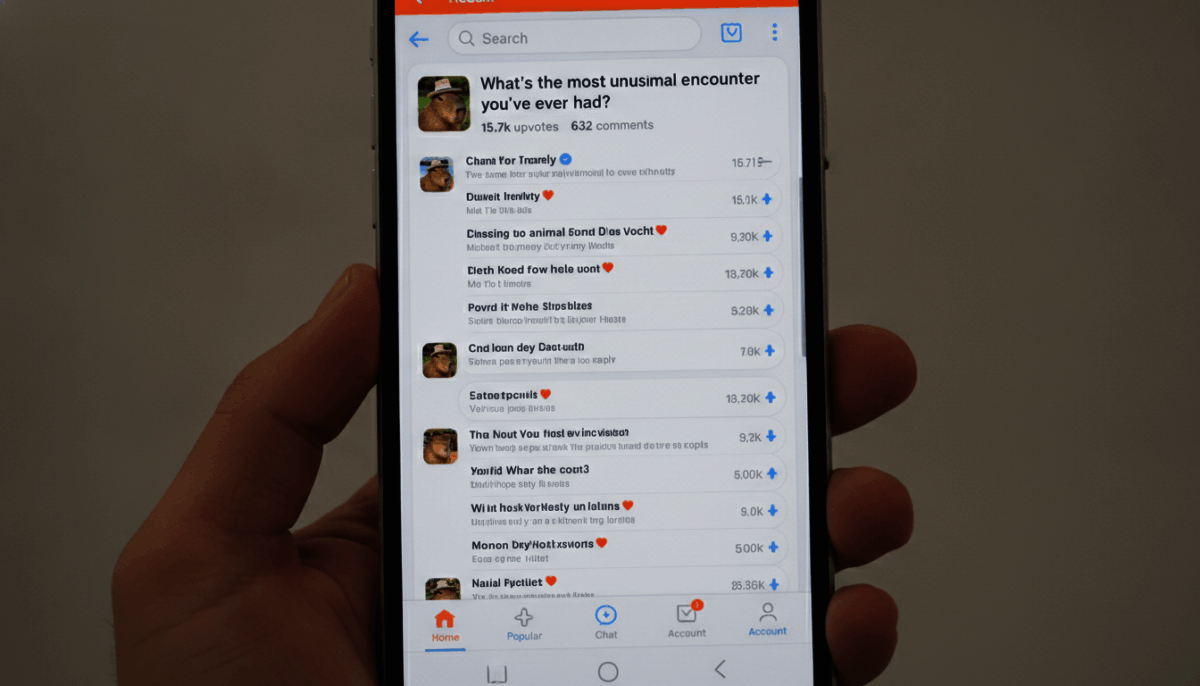
I eventually took to Reddit to vent, wanting to know if I was truly the villain in this scenario. The response was overwhelming. Within hours, the post hit the top of the subreddit, with thousands of comments debating the nature of friendship, boundaries, and the rise of ‘hustle culture’ in our personal lives.
“NTA. This is absolutely unhinged. You don’t invoice friends. If she wanted to start a business, she should have started by networking with actual strangers, not by charging her friends for their time. This is a classic case of someone trying to act like a ‘boss’ without understanding how human relationships work.”
— u/RetailWarrior (Top Comment, 32.4k upvotes)
The sentiment was largely in my favor. Thousands of strangers validated my feelings, many sharing their own horror stories of friends who had turned toxic or transactional. It was incredibly cathartic to see that I wasn’t alone in this experience. People shared stories of ‘friends’ who asked for commission on referrals or tried to sell them MLM products at family dinners.
“The fact that she thought she could just bill you for an afternoon of shopping is wild. If she’s a professional stylist, she should know that your first rule is to establish the scope of work BEFORE the project begins. Sending an invoice after the fact is not business; it’s a shakedown.”
— u/CorporateRealist (18.2k upvotes)
Of course, there were some who argued that I was wrong for uninviting her without ‘trying harder’ to communicate, but they were in the minority. Most people agreed that after the invoice was sent and the gaslighting began, there was really no ‘communicating’ left to do. The bridge had already been burned by her, not by me.
Reading the comments helped me realize that the ‘hustle’ mentality can sometimes be a mask for insecurity. By professionalizing her friendships, Sarah was trying to create a sense of importance and worth that she perhaps didn’t feel in her actual career. It was a sad realization, but it made her actions easier to understand, if not to forgive.
Reflecting on the ‘Hustle’ Mindset

The experience forced me to rethink my own boundaries and how I approach my friendships. I used to be the person who would say ‘yes’ to everything—helping with moves, proofreading, babysitting, styling—without considering the toll it took on me. I thought that was what made me a ‘good friend.’ But I realize now that when you don’t set boundaries, you invite others to walk all over you.
Sarah’s behavior was extreme, but it was a symptom of a larger issue. We live in a society that tells us to monetize every hobby, every skill, and every spare moment. We are constantly told to ‘turn our passions into profit.’ When that pressure is applied to our personal relationships, it can be devastating. Friendship is supposed to be the one place where we don’t have to perform or pay for value.
I’ve started to be more selective about who I give my time and energy to. I still love helping people, but I do it with people who value the relationship as much as the favor. I don’t feel guilty about saying ‘no’ when I don’t have the capacity, and I don’t apologize for expecting the same level of care and consideration that I offer to others.
Looking back, I don’t regret uninviting her. I regret that it came to that, and I miss the friend I thought she was. But I’ve learned that the people who truly love you don’t send you invoices. They show up, they support you, and they celebrate your milestones without looking for a payout. That is the kind of friendship I am prioritizing moving forward.
Lessons Learned in the Aftermath

Months later, the dust has settled. I still see Sarah’s posts on social media occasionally—she’s still ‘hustling,’ still trying to make a name for herself. I don’t wish her ill, but I certainly don’t wish for her back in my life. The experience was a crucible that refined my understanding of what matters.
I learned that when someone shows you who they are, you should believe them the first time. I spent weeks trying to interpret her behavior as a ‘quirky mistake’ when it was actually a fundamental shift in her values. I needed to trust my intuition instead of trying to justify her actions.
I also learned that it’s okay to mourn a friendship, even when you’re the one who ended it. You don’t have to be the ‘victim’ to be hurt by the loss of a bond. I miss the inside jokes, the shared history, and the way we used to talk for hours. But I also recognize that the person I miss no longer exists. She has been replaced by someone who views life through a ledger.
Ultimately, this was a maturing experience. It taught me how to stand up for myself in a way that is firm but kind. I didn’t need to scream or fight; I just needed to hold my ground and walk away. That is a skill I will carry with me for the rest of my life, in my career, my relationships, and my personal growth.
The Final Word on Boundaries

If there is one thing I hope you take away from this story, it is that you are allowed to have boundaries. You are allowed to protect your time, your energy, and your peace of mind. And you are allowed to demand that your friends treat you with the same level of respect and genuine care that you offer to them.
Friendship is not a transaction. It is not a business partnership, and it is not a service-based economy. It is a bond built on trust, love, and a willingness to show up for each other without keeping score. If someone in your life is trying to turn your friendship into a business deal, it is time to have a serious conversation, or, if necessary, to walk away.
Don’t be afraid to be the ‘unsupportive’ one if it means you are supporting your own integrity. Don’t be afraid to be the ‘difficult’ one if it means you are holding people accountable for their behavior. You deserve better than a transactional friendship. You deserve people who love you for exactly who you are, not for what you can do for them.
As for my birthday party? It was wonderful. Surrounded by people who truly cared, I felt a sense of relief and joy that I hadn’t felt in a long time. It was a celebration of the friends who show up, who support, and who never, ever send an invoice.
Conclusion
The saga of the ‘styling invoice’ is ultimately a story about the sanctity of our personal time and the definition of true friendship. It serves as a reminder that our value is not something to be measured in billable hours, and our friends are not a captive market. When we allow transactional behavior to infiltrate our most intimate relationships, we risk losing the very foundation of what makes those connections meaningful.
I hope this journey helps those of you who might be struggling with similar boundary issues. Whether it’s a friend asking for a ‘professional discount’ on your labor or a family member who treats your emotional support as a service they can exploit, remember that you have the power to say ‘no.’ You are not a service provider, and your time is yours to give, not theirs to take.
What about you? Have you ever had a friend turn a relationship into a business transaction? How did you handle the situation, and what would you have done differently? Let’s discuss in the comments below—I’d love to hear your experiences.
What's your verdict on this dilemma?
Vote below to contribute to the official community consensus.

Have a Dilemma Keeping You Up at Night?
Share your real-life feud, wedding chaos, or relationship crossroads anonymously with our editorial team.
What do you think ?
0 Comments🛡️ Comments are moderated to protect community integrity. Your comment will appear once approved by the editorial team.