
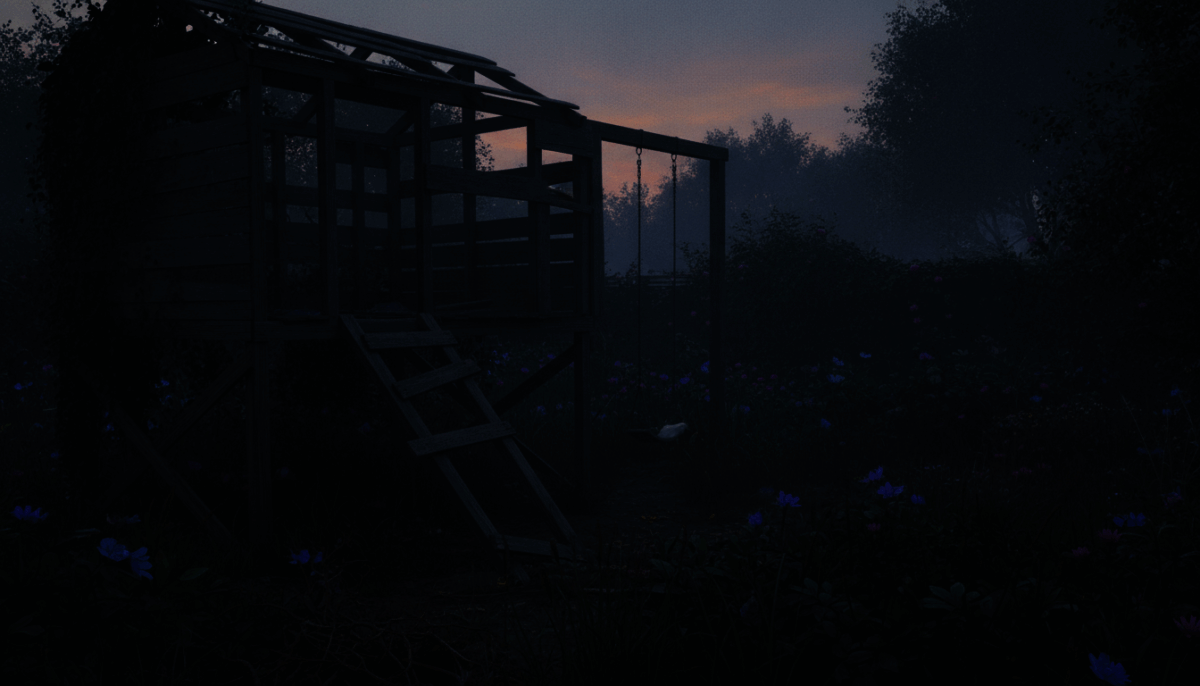
Grief is a strange, shapeshifting beast. For some, it manifests as a quiet, lingering sadness that stays under the skin like a splinter. For others, it’s a catalyst for radical change, a sudden, desperate urge to purge the past. But for my sister, Clara, grief became a currency. It wasn’t enough to mourn our father; she felt entitled to monetize his memory, one hand-planed board at a time. The treehouse in our backyard wasn’t just a collection of cedar and nails; it was the last thing he built before the cancer took him, a sanctuary where he taught us how to hold a hammer and how to listen to the birds.
We had an unspoken agreement—a mutual understanding that the property, including the garden and the structures he built with his own calloused hands, would remain untouched until the estate was settled. It was a space of transition, a place where his presence still echoed in the scent of sawdust and old pine. I visited every Sunday, weeding the garden, keeping the memories alive in the quiet, dusty sunlight of the backyard. I thought we were on the same page, preserving a piece of heaven that he had carved out of our reality.
Then came the Tuesday afternoon that shattered my complacency. I arrived with my usual gardening shears and a thermos of coffee, expecting the familiar sight of the weathered, shingled roof peeking through the oak branches. Instead, I was met with the visceral, sickening silence of a void. The structure was gone. In its place were scattered wood shavings, bent nails, and the hollow, jagged silhouette of a branch that had once supported a masterpiece of amateur architecture. I didn’t need to call the police to know exactly who had decided to turn my father’s labor of love into a liquidation sale.
My phone buzzed in my pocket, a notification from a local marketplace app that I hadn’t checked in months. A post, just three hours old, showcased ‘reclaimed, vintage cedar planks from a 1990s structure’ for sale at a price that made my blood run cold. It wasn’t just the money; it was the calculated audacity of it. The realization hit me with the force of a physical blow: Clara hadn’t just taken the wood. She had sold our childhood, our history, and our father’s final gift, all to fund a ‘wellness retreat’ she had been posting about on Instagram for weeks.
This isn’t a story about a petty disagreement over property. This is a story about the intersection of entitlement, the commodification of grief, and the moment a sibling decides that ‘family’ is just an obstacle to ‘financial freedom.’ As I stood in that empty backyard, looking up at the scarred oak, I knew that the bridge between us hadn’t just been burned—it had been dismantled, sold, and turned into a spa day. And I was about to make sure she understood exactly what that cost her.
The Morning the Backyard Went Quiet
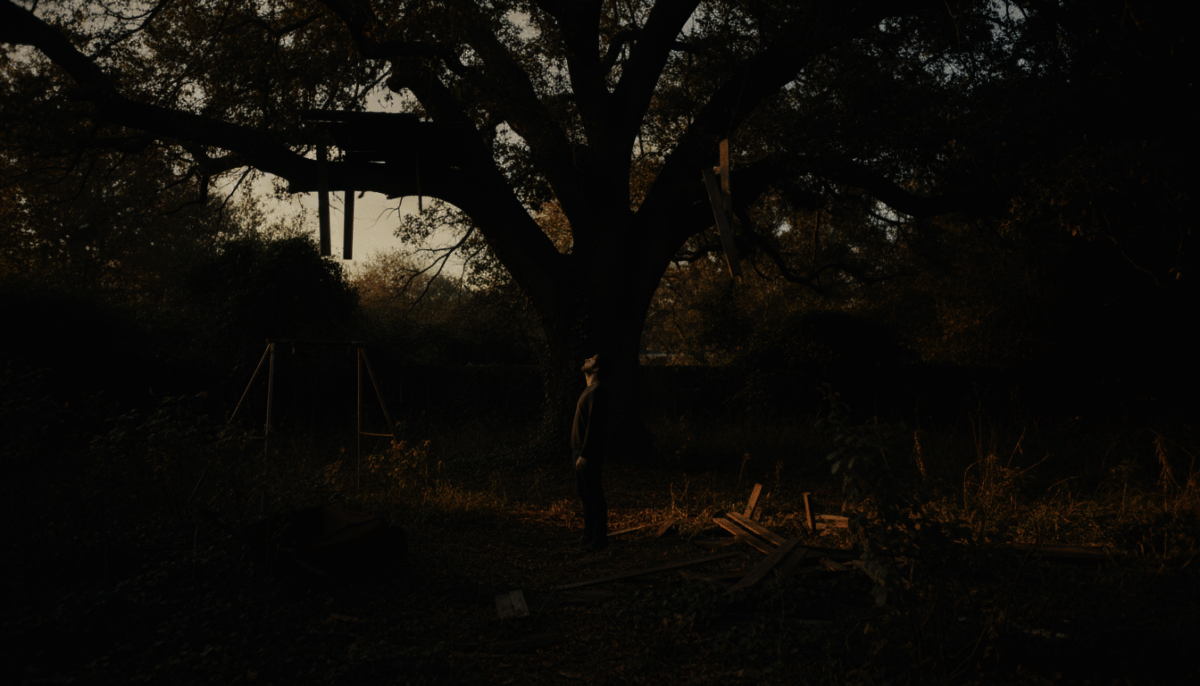
The silence in the backyard that morning was different. Usually, the wind would whistle through the gaps in the cedar siding of the treehouse, a soft, familiar lullaby that felt like a secret conversation with my father. When I stepped onto the lawn, the air felt thin, stripped of its character. I stood there, my gardening bag slipping from my shoulder, staring up at the empty sky. The oak tree looked naked, its branches gnarled and confused, missing the companion they had hosted for nearly three decades.
I paced the perimeter of the lawn, my boots crunching on something sharp. I looked down to find a pile of rusted iron nails—the very ones he had painstakingly pounded in, one by one, when I was ten years old. He had told me then, ‘Measure twice, cut once, and build things to last, because people move on, but wood remembers.’ Looking at the debris, I felt a wave of nausea. This wasn’t a renovation; it was an eviction of our history.
I pulled out my phone, my fingers trembling as I opened the neighborhood marketplace app. There it was. The first photo showed a close-up of a distinct, hand-carved groove in the wood—a mark he had made to align the flooring joists. The caption read: ‘Authentic vintage cedar, weathered perfectly. Perfect for a rustic feature wall. $1,200 for the lot. Serious inquiries only. Can deliver if you pay for the transit.’
I didn’t even have to look at the profile name to know it was Clara. The lack of punctuation and the ‘I know what I have’ attitude were her signatures. She had even taken a photo of the wood piled neatly on a flatbed trailer, the same trailer she had borrowed from our neighbor under the guise of ‘hauling away old garden waste.’ The betrayal felt like a betrayal of physics; how could something so solid simply vanish because someone felt like they deserved a manicure?
“I don’t think you understand the emotional labor of holding onto this house. I’m just trying to move forward, and the wood was literally just sitting there, rotting. I’m doing us both a favor by clearing the clutter.”
— Clara, via text message at 11:42 AM
I didn’t reply immediately. I knew that if I did, I would say something that couldn’t be taken back. I sat on the back porch, staring at the empty patch of grass where his workshop bench used to be. The sun hit the spot where the treehouse shadows once pooled, and for a moment, I could almost hear him laughing, telling me not to worry about the trivial things. But this wasn’t trivial. It was the physical manifestation of his love, and she had traded it for a weekend of mud masks and cucumber water.
The Audacity of the Spa-Day Justification

Clara’s justification arrived in a flurry of defensive texts that managed to be both condescending and utterly devoid of self-awareness. She framed the destruction of our father’s work as a ‘therapeutic necessity,’ as if her need for a massage outweighed the sanctity of the only thing we had left that felt like home. She spoke about ‘reclaiming the space’ as if the treehouse was a tumor rather than a tribute.
I finally picked up the phone. The conversation was less of a dialogue and more of a collision. I asked her how she could look at a piece of wood he had hand-sanded with his own failing hands and see nothing more than a price tag. Her response was chillingly clinical. She argued that the wood was ‘dying’ and that selling it ensured it wouldn’t go to a landfill, completely ignoring the fact that it was in pristine condition, maintained by my own hands for years.
The argument escalated when I pointed out that she had promised to let me have the rights to the backyard structures in the informal agreement we made after the funeral. She laughed—a sharp, brittle sound that echoed through the phone. She claimed that verbal promises made while ‘under the influence of grief’ weren’t legally binding. That phrase hit me harder than the theft itself. She had been planning this since the probate started, waiting for me to be distracted so she could clear-cut our history.
“You are obsessing over a pile of sticks. Dad is gone. He isn’t in the wood, and holding onto this stuff isn’t going to bring him back. I need this money, and frankly, I deserve to treat myself after the hell he put us through during the hospice weeks.”
— Clara during our heated phone confrontation
I realized then that we were mourning two different men. I was mourning the father who built us a sanctuary; she was mourning the man who had been difficult and demanding during his illness. Her trauma had warped her perspective, turning our shared past into a debt she felt entitled to collect. The realization that she saw our father’s final years as something she had to ‘pay’ for was a turning point for me. I stopped trying to appeal to her sentimentality and started looking at the cold, hard facts of the estate.
The Paper Trail of Petty Revenge
I didn’t stop at just being angry. I started digging. If she wanted to treat our inheritance like a business, I decided I would play the role of the auditor. I pulled out the original property deed and the supplemental paperwork our lawyer had drafted regarding the ‘sentimental assets’ of the estate. While the treehouse wasn’t specifically cited by name, the land and its fixtures were, and the unauthorized disposal of estate assets was, at the very least, a breach of our informal agreement.
I contacted the neighbor who had lent her the trailer. He was sheepish, admitting that he thought she was just clearing out old brush. When I told him she had sold the materials for over a thousand dollars, his face went pale. He hadn’t realized he was an accessory to the destruction of a local landmark. He agreed to provide a statement, and that was all the leverage I needed to start the real confrontation.
I spent the next three days documenting everything. I took photos of the remaining sawdust, the empty patches on the trees where the beams had been bolted, and saved screenshots of her marketplace listings. I even found a review from the buyer, a local contractor who had purchased the wood for a ‘restoration project.’ The irony was suffocating: she had sold it to a professional who knew exactly what the wood was worth, while she had pawned it off for a fraction of its true value just to get the cash fast.
“I checked with the local realtor. The treehouse added nearly $5,000 to the estimated value of the property as a unique, historical garden feature. By destroying it, you haven’t just stolen wood—you’ve diminished the estate’s value. I’m reporting this to the executor.”
— My text to Clara, 2:00 AM
The response was immediate. She didn’t call; she sent a barrage of emojis and insults, calling me a ‘petty, grieving child’ who couldn’t handle the reality of moving on. She thought she was still in control because she had the cash in her hand. She didn’t realize that in the world of estate law, possession is rarely nine-tenths of the law when you’re dealing with property that isn’t solely yours.
The Sunday Dinner Silence
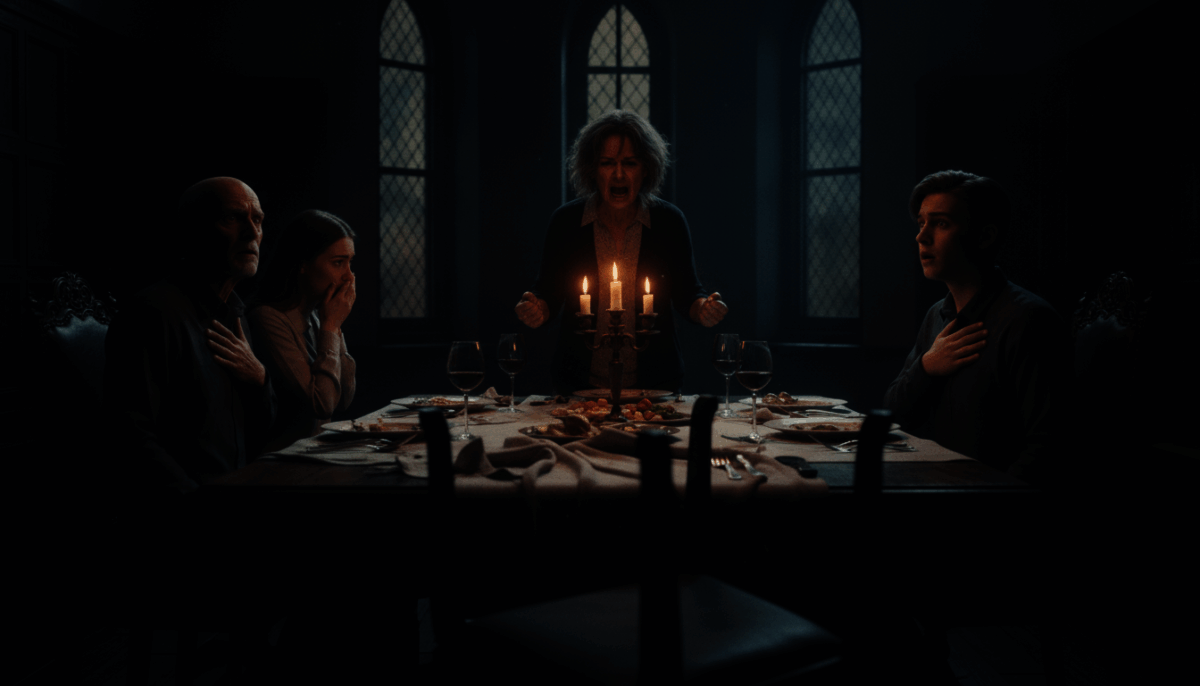
Our family dinner, usually a quiet affair, turned into a battlefield. My aunt, who had been the executor of the estate, sat at the head of the table, her eyes fixed on her wine glass. Clara arrived late, smelling of expensive perfume and looking smug, as if the spa weekend had already done its work. She didn’t say a word about the treehouse, acting as if the entire ordeal had never happened.
I waited until the dessert was served, my hands hidden under the table to stop them from shaking. I didn’t want to make a scene, but the tension was so thick I could practically feel it pressing against my lungs. When Clara started talking about her upcoming ‘getaway’ to a boutique resort, I finally broke the silence. I asked her if the wood-stained cedar was comfortable for her spa treatments.
The table went dead silent. My aunt looked up, her expression unreadable. Clara’s face flushed a deep, indignant red. She tried to deflect, calling me ‘unhinged’ and telling me to stop being ‘obsessed with the past.’ But the damage was done. The look on my aunt’s face wasn’t one of confusion; it was one of realization. She had been asking about the property’s maintenance for weeks, and now she had her answer.
“You sold a part of the estate for personal profit, Clara. That’s not a ‘lifestyle choice.’ That’s embezzlement from your own family. If you don’t return the money to the estate account by Monday, I’m filing a formal grievance.”
— My statement at the Sunday dinner table
Clara stood up, her chair scraping harshly against the floor. She accused me of being the one who had made our father’s life miserable, bringing up old arguments and twisting them to suit her narrative. She left the table in a storm, but the silence she left behind was louder than her shouting. For the first time, I felt like the weight of the secret had been lifted, even if it meant the bridge between us was finally and permanently burnt.
The Legal Reality Check
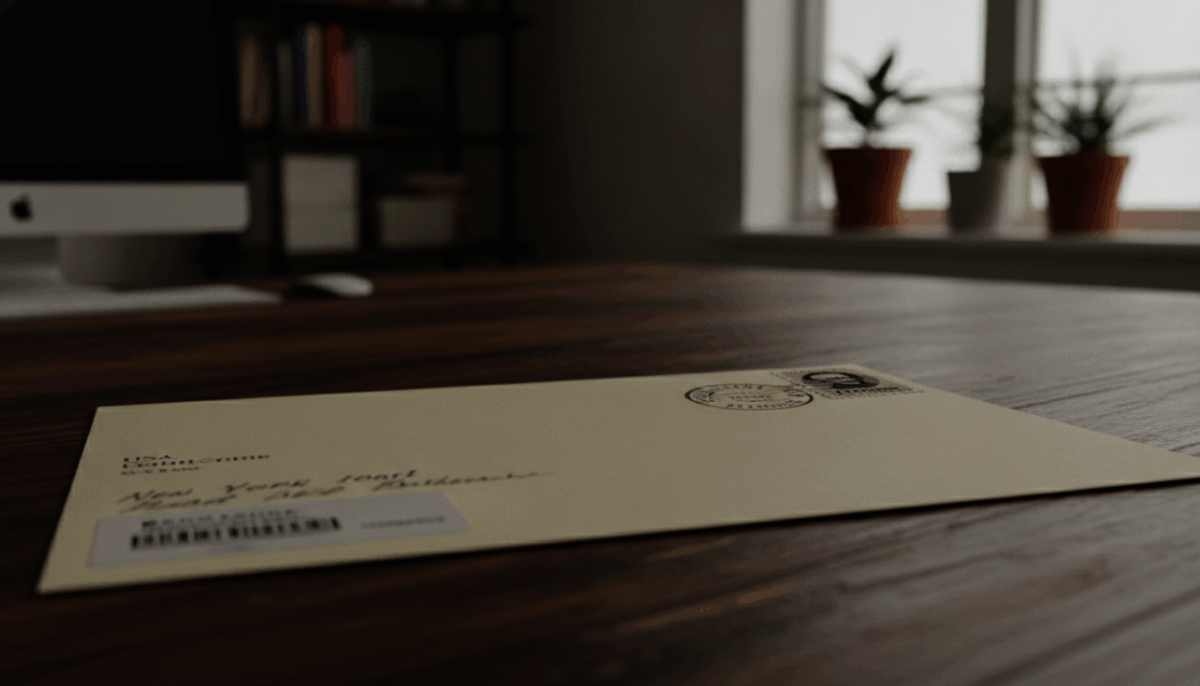
Monday morning brought the arrival of a certified letter. I hadn’t filed a lawsuit—not yet—but I had drafted a formal demand for the return of the funds. I had also included a copy of the appraisal report for the estate, which explicitly mentioned the treehouse as a ‘high-value architectural asset.’ I wanted her to know that this wasn’t just about my feelings; it was about the legal consequences of her actions.
Clara’s response was a flurry of panicked calls from her ‘legal counsel’—which, as it turned out, was just her boyfriend, a guy who had once tried to convince me that crypto was a stable investment. He tried to intimidate me, talking about ‘harassment’ and ‘emotional distress.’ I simply listened, took notes, and then sent him a copy of the state’s statutes regarding the unauthorized sale of estate property.
The shift in her attitude was palpable. The smugness evaporated, replaced by a desperate, frantic energy. She started trying to justify the sale, claiming she was ‘forced’ to do it because of her financial situation. It was a lie, and we both knew it. She had a steady job; she just had a taste for a lifestyle that exceeded her means. She wasn’t struggling; she was entitled.
“The law doesn’t care about your ‘financial situation,’ Clara. It cares about the facts. You sold property that was not yours to sell. You have 48 hours to remit the funds to the executor or face civil litigation.”
— Formal notice sent to Clara
I wasn’t doing this to get the money back for myself. I was doing it to make sure she realized that her actions had consequences that couldn’t be bought off with a spa weekend. She had treated our father’s legacy like a yard sale, and now she was learning that the past has a long reach. The realization that she couldn’t just sweep this under the rug was the final nail in the coffin of our relationship.
Reddit Weighs In: The Verdict of the Masses

I posted about the situation on a popular subreddit, needing to know if I was truly the ‘petty, grieving child’ she claimed I was. The response was overwhelming. Within hours, the post had thousands of upvotes and comments from people who had been through similar family betrayals. They didn’t see me as the villain; they saw me as someone who was holding onto the last shreds of sanity in a toxic family dynamic.
Many users pointed out that the destruction of the treehouse was a clear attempt to erase the memory of our father, a way for her to exert control over a situation she couldn’t master. Others shared stories of siblings who had sold family heirlooms, heirlooms that, like my treehouse, were irreplaceable. The consensus was clear: I was in the right, and her behavior was a textbook example of ‘narcissistic entitlement.’
“This isn’t just about wood. It’s about her disrespect for your mourning process and her blatant disregard for the law. You aren’t being petty; you are the only one acting like an adult in this situation. Don’t back down.”
— u/FamilyLawAdvice (Top Comment, 18.2k upvotes)
The feedback gave me the courage to stick to my guns. I had been doubting myself, wondering if I was holding on too tightly to a structure that was just ‘old wood.’ The internet helped me realize that it wasn’t the wood—it was the principle. She had violated the sanctity of our grief, and that was something I was allowed to be angry about. The validation wasn’t just about winning an argument; it was about feeling seen.
The Aftermath: Moving On Without the Structure

A month later, the dust has settled. Clara eventually paid the money back, though she insisted it was ‘just to get me off her back.’ We haven’t spoken since the Sunday dinner incident. I’ve moved into a place of my own, and I’ve spent the time focusing on my own healing. I still go back to the house to check on the garden, though it’s harder now without the treehouse to anchor the space.
I’ve started a small project of my own in the backyard—planting a memorial garden in the spot where the treehouse once stood. It’s not a replacement, and it’s not the same, but it feels like a way to honor our father without letting the bitterness of the situation take root. I’ve learned that sometimes, you have to let go of the things you love, but you don’t have to let go of the people who represent the best of those memories.
Clara is still posting about her luxury weekends, though I don’t follow her anymore. I heard from a mutual friend that she’s been telling people I’m the one who started the fight. It doesn’t bother me as much as it used to. I’ve learned that the truth doesn’t need a publicist; it just needs time. And in time, she’ll have to deal with the fact that she’s burned every bridge she ever had for the sake of a temporary high.
“I don’t hate her. I just realized that I don’t know who she is anymore. And I don’t think I want to.”
— My reflection in my journal
I’m not the same person I was when I found the backyard empty. I’m stronger, more guarded, and definitely more aware of the boundaries that need to be in place. The treehouse is gone, but the lessons I learned in it—about patience, integrity, and building things that last—have remained. I’m building a new life now, one board at a time, and I know this one is built on a foundation that no one can tear down.
The Final Accounting of the Loss
Looking back, the financial loss was trivial compared to the emotional cost. The $1,200 she received for the wood was a pittance, a pathetic sum for the destruction of a legacy. It made me wonder what she really thought she was buying with that money. A weekend of comfort? A moment of feeling superior? It was never about the money, and that’s what makes the entire situation so profoundly sad.
I sat down and calculated the value of what was lost—not in dollars, but in memories. The hours of teaching me to use a level, the late nights spent trying to fit a stubborn piece of siding, the laughter that rang out when we finally got the roof to hold. These were the things she traded away. She had a price tag for everything, and that, ultimately, was her biggest loss. She would never understand the value of things that can’t be sold.
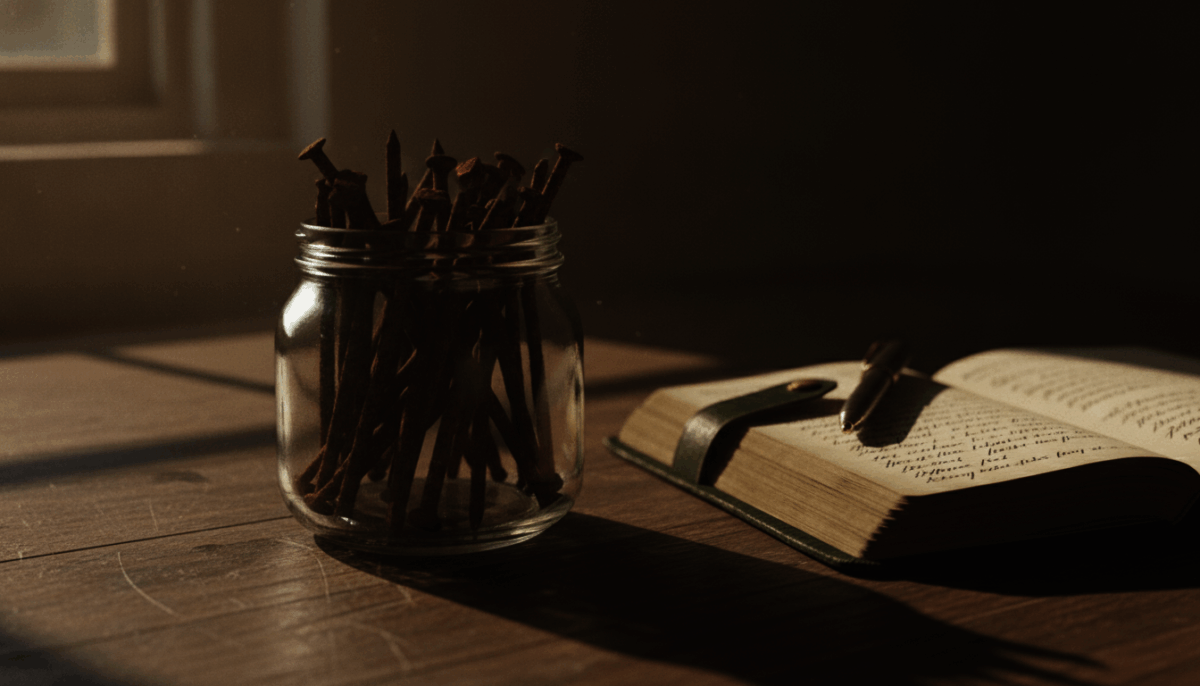
I’ve kept the nails. I have a small jar of them on my desk, a reminder of what was built and what was destroyed. They are just bits of metal, rusted and bent, but they are a testament to the fact that we were there, that we did something meaningful, and that we loved each other. Clara can’t touch that. She can’t sell that. It belongs to me, and it belongs to him.
“The things that hold the most value are the things you can’t put a price on. She’ll spend the rest of her life trying to find something that gives her as much meaning as that treehouse gave us.”
— My aunt, during our last conversation
I’ve reached a point where I can look at the empty space in the backyard and feel peace instead of pain. The void isn’t a reminder of her betrayal; it’s a space for something new to grow. And that, I think, is the best kind of revenge. Not to hurt her, but to be happy, to be whole, and to continue to honor the legacy she tried to destroy. I’m moving forward, and I’m doing it with my head held high.
Reflecting on the Boundaries of Grief

Grief is a deeply personal experience, and I’ve learned that expecting everyone to grieve in the same way is a recipe for disaster. But there’s a difference between grieving and acting out. There’s a difference between needing space and invading someone else’s. Clara’s actions were an invasion, a clear sign that she didn’t respect my boundaries or our father’s memory. It wasn’t just about the treehouse; it was about the lack of empathy that had been festering for years.
I’ve spent a lot of time thinking about what I could have done differently. Could I have been more clear? Could I have been more patient? Maybe. But at the end of the day, I didn’t steal her property. I didn’t destroy her work. I was the one who was left to clean up the mess, both literal and metaphorical. And I think that’s an important lesson: you can’t control how others act, but you can control how you respond to them.
I’ve decided to be more vocal about my needs, to set firm boundaries, and to walk away when those boundaries are crossed. I’m done trying to fix people who don’t want to be fixed. I’m done trying to force a connection that has clearly outlived its purpose. It’s a hard lesson, but it’s a necessary one. I’m surrounding myself with people who respect the things I value, and I’m letting go of the rest.
“Setting boundaries isn’t about being mean. It’s about being clear. If someone doesn’t like your boundaries, it’s usually because they were the ones who benefited from you not having any.”
— A piece of advice I read online that changed my perspective
I hope that, in time, Clara will find her own way to heal, without needing to tear down someone else’s work. I hope she finds something that gives her life meaning that isn’t bought at a spa or a marketplace. But until then, I’m going to keep building, keep growing, and keep honoring the memories that are truly mine. The treehouse is gone, but the foundation it provided is still there, and that’s more than enough.
The Final Lesson: What Remains

As I write this, I’m reminded of the final piece of advice my father gave me before he passed. He said, ‘The things you build aren’t just for you. They’re for the people who come after you.’ He was talking about the treehouse, but he was also talking about the life he wanted me to live. He wanted me to build something that would last, something that would be a source of strength when things got hard.
Clara tried to destroy that, but she failed. She didn’t destroy the memories, and she didn’t destroy the impact he had on my life. She only destroyed a structure, and structures can be rebuilt. Or, in my case, replaced with something even more meaningful. I’m building a new garden, a place where people can sit and talk and remember. A place where the memories are alive, not sold for parts.
I’m finally at peace. It took a while, and it cost me a relationship, but I feel lighter. I’m no longer carrying the weight of her entitlement or the bitterness of the betrayal. I’m moving forward, and I’m doing it with grace. And I think, if he could see me now, my father would be proud. Not of the treehouse, but of the way I’ve handled the loss.
“You’ve learned the most important lesson of all: you are the only one who can define the value of your own life. Don’t let anyone else put a price tag on it.”
— My own internal monologue
So, to everyone who has been through something similar: don’t let anyone make you feel small for what you value. Hold onto your memories, protect your boundaries, and keep building. Because at the end of the day, that’s all we have—the things we build and the people we build them with. And that’s worth more than any spa weekend in the world.
Conclusion
The saga of the treehouse has finally reached its end, leaving me with a profound, if painful, clarity. We often assume that our siblings are the keepers of our history, the witnesses to our shared past. But when money and entitlement enter the chat, those ties can snap with frightening speed. I have learned that grieving is not a permission slip to violate the property or the heart of another, and that sometimes, the most loving thing you can do is to walk away from those who have turned your history into their convenience.
I now look back at the empty space in our yard not as a missing piece of my childhood, but as a cleared landscape—a blank canvas for the next chapter of my life. The wood is gone, but the lessons of craftsmanship, honor, and resilience remain etched into my own character. If you find yourself in a similar position, standing in the ruins of something you once held dear, know this: your history belongs to you. Do not let anyone auction it off.
What about you? Have you ever had a family member monetize a shared memory or violate a sacred boundary in the name of ‘moving on’? How did you reclaim your peace, and do you regret the boundaries you were forced to draw? Share your stories below—the comment section is open for those who need to be heard.
What's your verdict on this dilemma?
Vote below to contribute to the official community consensus.

Have a Dilemma Keeping You Up at Night?
Share your real-life feud, wedding chaos, or relationship crossroads anonymously with our editorial team.
What do you think ?
0 Comments🛡️ Comments are moderated to protect community integrity. Your comment will appear once approved by the editorial team.