
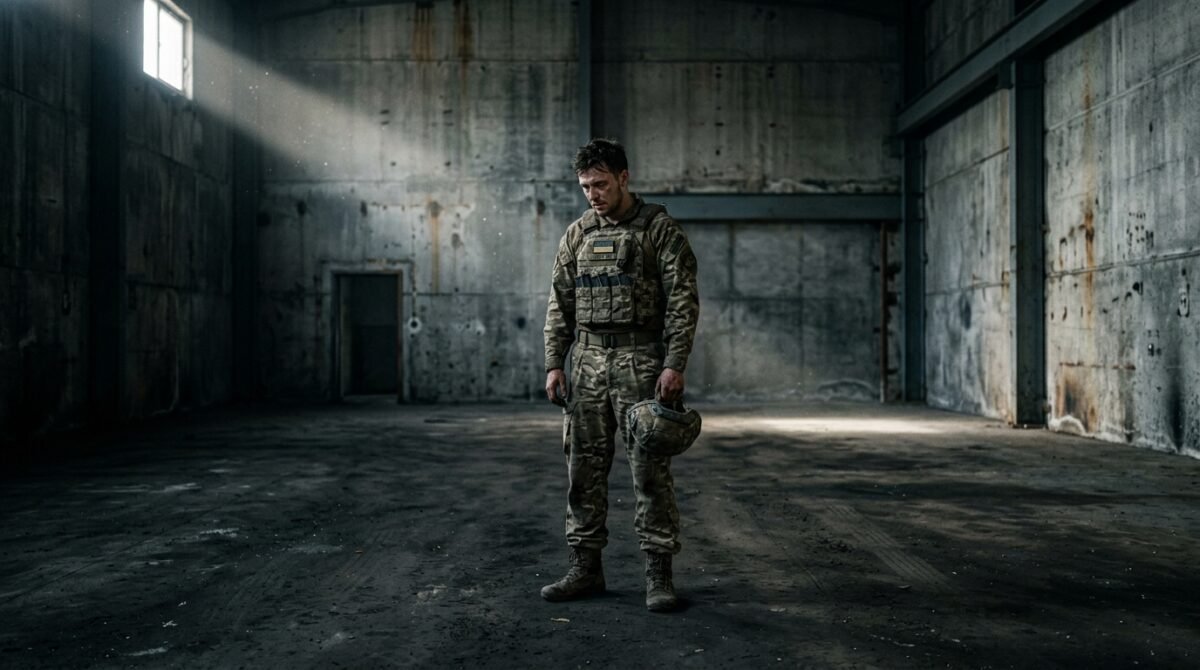
Deployment changes a person. You spend months in a state of hyper-vigilance, living out of a ruck, dreaming of the day you can finally unpack, breathe, and reclaim a sliver of the life you left behind. For me, that meant a climate-controlled storage unit in my hometown, filled with everything I had spent years curating: vintage furniture, my grandfather’s tools, a high-end sound system, and the boxes of personal keepsakes that defined my civilian identity.
I kept that unit paid up with automatic bank drafts, a silent anchor ensuring that when I stepped off that plane, I wouldn’t be starting from zero. My parents were the only people with the secondary key, a decision born out of years of perceived trust. I thought that by giving them access, I was being responsible—ensuring that if a leak or a fire occurred, someone local could intervene. I never, in my wildest nightmares, considered that ‘intervention’ would mean emptying the unit for someone else’s benefit.
When I arrived at the facility, key in hand, I expected to be greeted by the familiar scent of cardboard and wood polish. Instead, the heavy roll-up door rattled upward to reveal nothing but a pristine, vacant concrete box. The floor was swept clean. There wasn’t a single stray screw or forgotten box lid. It was as if I had never existed in that space at all.
The realization didn’t hit all at once. It was a slow, agonizing slide into cold fury. I checked the office records. My parents had checked in with their key two weeks prior, claiming I had authorized a ‘moving out’ procedure. They hadn’t just moved my things; they had liquidated my life to furnish my cousin Sarah’s new luxury apartment, claiming I ‘wasn’t using it anyway’ and that family should help family. They didn’t just cross a boundary; they obliterated it.
This is the story of how my trust in my own blood was shattered, the confrontation that followed, and the painful path of reclaiming what was mine in the face of family gaslighting and the crushing weight of entitlement. It is a lesson in why, sometimes, the people who raised you are the last ones you should trust with your future.
The Empty Locker and the Surreal Realization
Standing in that empty unit felt like being punched in the gut, the air rushed out of my lungs, leaving me breathless in the sterile, fluorescent-lit corridor. I stood there for nearly twenty minutes, staring at the empty space, waiting for some kind of logical explanation to manifest. I checked my phone repeatedly, looking for an email, a text, or even a carrier pigeon—anything that would explain why my life had been erased.
I walked to the front desk, my heart hammering against my ribs, and asked the manager to see the logs. He looked at me with a mix of pity and annoyance, pulling up the digital trail. The dates were clear. My father had accessed the unit three times in the span of a week. He had used a moving company, one I didn’t recognize, and had signed a waiver releasing the facility from liability.
“Sir, your father told us you were being stationed indefinitely and that you had given him full power of attorney over your belongings. We followed protocol. He had a key, he had the gate code, and he provided identification. We aren’t responsible for familial disputes.”
— Facility Manager
The manager’s cold, professional tone felt like a razor blade. I left the facility, my hands shaking so violently I could barely grip the steering wheel of my rental car. I didn’t go to my parents’ house. I drove to my cousin Sarah’s apartment complex, a high-end building in the trendy part of town. I didn’t know the unit number, but I knew the car. It was sitting in the visitor spot, a sleek sedan that I’d helped her buy years ago.
As I walked up the stairs to the third floor, I could hear music—my music—blaring from behind a door. It was a distinctive bassline from a vintage speaker system I’d spent two years tracking down. My blood ran cold. The violation wasn’t just hypothetical anymore; it was auditory, visceral, and happening in real-time. I didn’t knock. I waited, listening to the muffled sounds of laughter inside, and felt a dangerous, sharp clarity start to settle in my chest.
A Casual Sunday Dinner Turned Into an Interrogation
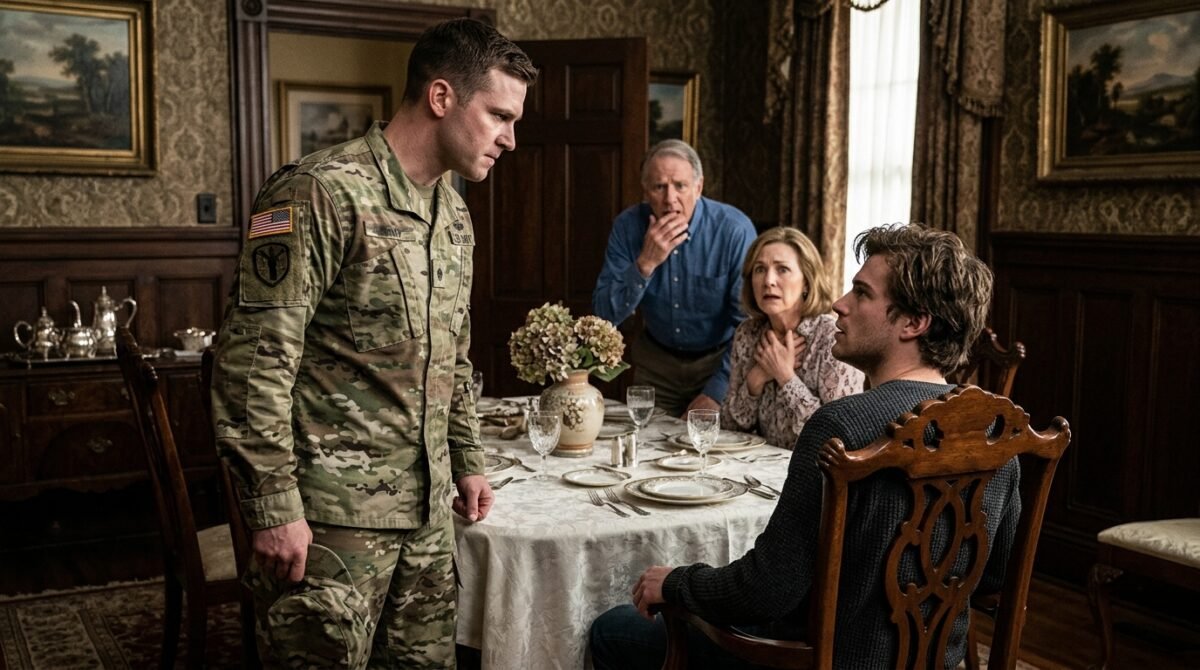
I didn’t confront Sarah immediately. I went home and waited for the Sunday family dinner, the ritual that usually masked the cracks in our family foundation. My mother had prepared a roast, the smell of rosemary and slow-cooked meat filling the house, a scent that usually signaled safety. But that evening, the air felt heavy, saturated with a tension that was palpable to everyone except, perhaps, my parents.
Sarah was there, looking radiant, sitting on a velvet armchair I recognized as my own—one that had been in my grandfather’s study for thirty years. She was holding a wine glass, gesturing toward the room with a sense of ownership that made my skin crawl. When I walked in, the room went deathly silent. My mother’s smile faltered, her hand hovering over a serving spoon.
“Oh! You’re home early, dear. We didn’t expect you until Tuesday. Sarah was just showing us how beautifully she’s settled into her new place. It’s so nice to see family things being put to good use instead of gathering dust, isn’t it?”
— Mother
I didn’t answer her. I walked straight to the armchair Sarah was sitting in and stood over her, my shadow looming large. My father entered the room from the kitchen, holding a bottle of wine, his face pale when he saw me. He knew. He saw the look in my eyes—a look that didn’t belong to the son who had left for deployment. It belonged to a man who had seen too much to be cowed by domestic pleasantries.
“Dad, tell me why I just spent an hour listening to my own sound system in Sarah’s living room. Tell me why my grandfather’s chair is currently supporting her weight. And keep it brief, because I have a lawyer on speed dial and the police on the other line.”
— OP
The silence that followed was suffocating. My father tried to put on his ‘disappointed father’ mask, the one he used to manipulate me into compliance for two decades. It didn’t work. The air in the room seemed to vibrate with the tension. My mother started to make excuses, talking about how ‘Sarah was struggling’ and how ‘it was just temporary,’ but the lie had already curdled into something much darker.
The Justification of the Entitled

The excuses that followed were a masterclass in gaslighting. My mother insisted that because I was ‘away,’ the items were essentially communal property. She claimed that Sarah had been ‘going through a hard time’ and needed a boost, and that they had assumed I wouldn’t mind helping out family. It was a narrative designed to make me feel like the villain for wanting my own property back.
My father, ever the coward, blamed the logistics. He claimed the storage facility was ‘harassing’ them about fees, which I knew was a lie—I had receipts for six months of prepaid rent. He insisted they were ‘doing me a favor’ by decluttering, as if my life’s work was merely debris to be swept away. The audacity was breathtaking. They weren’t just taking my things; they were rewriting the history of my ownership to suit their current needs.
“You’ve been gone for so long, and honestly, you don’t even know what you have anymore. We kept the best pieces for ourselves and gave Sarah the furniture. It was rotting in that unit. We saved it. You should be thanking us for keeping it in the family.”
— Father
I listened to them, my jaw tight, realizing that they truly believed they had done nothing wrong. They viewed me as an extension of themselves, not as an individual with rights, boundaries, or a life independent of their whims. It was a realization that destroyed any remaining illusions I held about their parental guidance. They weren’t family; they were vultures who felt entitled to the spoils of my labor.
I looked at Sarah, who was trying to look small, attempting to disassociate from the fallout. She knew. She had to have known. She had accepted items she knew were mine, items she had seen in my apartment before I deployed. The realization that she was a willing participant in the theft stung more than the betrayal of my parents. I realized then that I was alone in this. No one in this room was on my side.
The Group Chat Explosion

The fallout moved from the dinner table to the dreaded family group chat. Within an hour of me leaving the house, my mother had already spun the narrative to the rest of the extended family. My phone started vibrating incessantly with messages from aunts, uncles, and cousins I hadn’t spoken to in years, all of them acting as self-appointed arbiters of my morality.
“I heard you were being very rude to your mother today. She only wanted to help Sarah. Can you really not spare a few pieces of old furniture for family? You’re acting like a spoiled brat.”
— Aunt Linda
“It’s just things. You’re in the military, you’re supposed to be disciplined and selfless. Your parents are hurting right now because of your attitude.”
— Cousin Dave
I didn’t engage in a back-and-forth. I simply replied once, a message that I knew would stop the chatter, at least for a moment. I attached a screenshot of the storage facility’s report and a list of the items that had been taken, along with an estimated value—nearly twelve thousand dollars of personal property. I made it clear that if the items weren’t returned or reimbursed within forty-eight hours, the next communication would be from a lawyer specializing in property theft.
“To everyone asking: My parents broke into a private storage unit I paid for and gave away my property without my consent. This is theft. I am not ‘rude’ for expecting my property to be returned. If you want to support them, feel free to write them a check to cover the damages they’ve caused. Do not contact me again until you understand the concept of personal boundaries.”
— OP
The group chat went dead silent. The sudden absence of noise was almost as loud as the accusations had been. People don’t like facts when they’re busy enjoying a good drama. By calling out their behavior as theft rather than a family squabble, I had forced them to acknowledge the reality of the situation, and it made them extremely uncomfortable.
The Legal Ultimatum
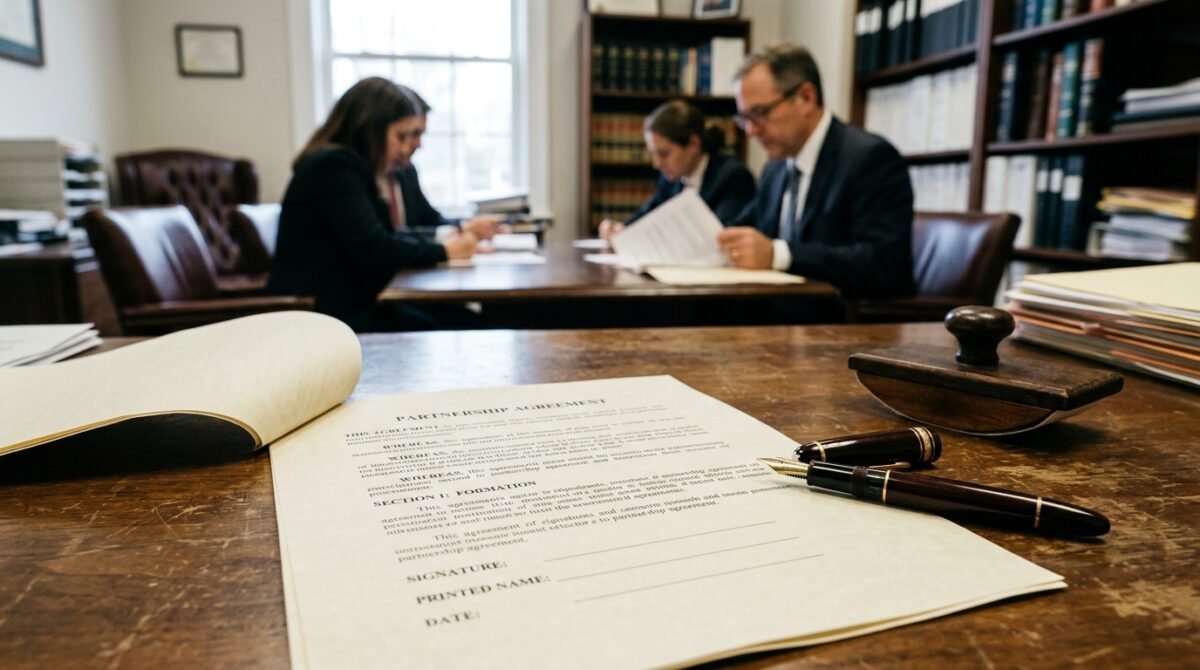
The next day, I didn’t wait for a response. I went to a local attorney who specialized in civil disputes. We drafted a formal demand letter. It was a cold, hard document that listed every single item that had been taken, including proof of purchase and photographs of the items from before I left. We sent it via certified mail to my parents’ home and to Sarah’s apartment, with a copy sent to the parents’ lawyer for good measure.
The letter wasn’t just a request; it was a deadline. It laid out the consequences of their actions in clear, legal terms. If the items were damaged, they would be billed for the replacement cost. If they were sold, they would be billed for the current market value. The legal fees, the time off work, and the emotional distress were all being calculated into the final demand. It was the only language my father understood: cold, hard currency.
I felt a strange sense of detachment as I signed the papers. This was the final severing of the tie. I wasn’t fighting for the furniture anymore; I was fighting for the principle that my life was my own. If I let this go, if I let them ‘apologize’ without consequences, I would be signaling that my boundaries were optional. I wasn’t going to be the child who accepted ‘family’ as an excuse for abuse anymore.
My mother called me twelve times that day. I didn’t pick up. I sent her a single text: ‘Talk to my lawyer.’ The sheer power of that one phrase felt better than any screaming match could have. It took the emotion out of the equation and placed it squarely on the outcome. For the first time in my life, I felt in control of the narrative, and it was a terrifyingly liberating feeling.
The Reddit Verdict: Echoes of Validation

I posted a summary of the situation to a popular subreddit dedicated to family conflicts. I wanted to see if I was losing my mind, if there was some cultural expectation of ‘family’ that I was missing. The response was immediate and overwhelming. Thousands of people weighed in, and the consensus was absolute: I was not the asshole. In fact, people were horrified by the level of entitlement my family displayed.
“This is not ‘family helping family,’ this is grand larceny. Your parents committed a crime because they view you as a resource, not a person. Block them, sue them, and never look back. The audacity is staggering.”
— u/JusticeSeeker (Top Comment, 32.1k upvotes)
“The way they used your deployment as a cover to loot your belongings is sickening. It’s a classic move by toxic parents to wait until the child is away to ‘reorganize’ their life. You owe them nothing. Get your money and your items back, then go NC.”
— u/LegalEagle99 (15.2k upvotes)
Reading these comments provided a weird kind of comfort. It confirmed that my internal alarm bells were correct—that the gaslighting I had endured wasn’t just ‘the way families are.’ It was toxic, it was illegal, and it was deeply wrong. The sheer volume of support made me feel less alone, like I had a giant, invisible army standing behind me, confirming that my anger was justified and my actions were necessary.
There were, of course, the few ‘family-first’ contrarians who tried to argue that I should forgive them, but they were quickly shouted down by the community. Seeing people articulate exactly why my parents were wrong helped me process my own feelings. I realized that my guilt was a conditioned response, a survival mechanism I had been taught to use to protect them from the consequences of their actions. I was finally unlearning that behavior.
The Cost of ‘Helping Family’

When the reality of the potential lawsuit began to sink in, my parents finally cracked. My father tried to call my lawyer, but was told in no uncertain terms that he could only communicate through written channels. My mother eventually sent a long, rambling email, full of ‘I’m sorry you feel this way’ apologies and attempts to frame their theft as a misunderstanding. She didn’t offer to return the items; she offered to ‘buy me new ones’ once I settled down.
I didn’t take the bait. I told them that I wanted the original items returned in their original condition, or the full market value in cash. I provided a spreadsheet of the items, their age, their condition, and the cost of replacement. I didn’t budge. I knew that if I accepted a compromise, they would feel they had won, that they had successfully ‘handled’ me.
| Item | Status | Claimed Value |
|---|---|---|
| Vintage Sound System | Sold to third party | $2,400 |
| Antique Oak Chair | Kept by Sarah | $850 |
| Personal Keepsakes | Discarded/Lost | $1,500 (Emotional Value) |
| Tools/Misc | In Sarah’s apartment | $1,200 |
The total came to over $5,950 in hard assets, plus the emotional cost. I made it clear that if the check wasn’t in my account by the end of the week, the lawsuit would move to the next phase. My father finally capitulated. He sent the money, but he didn’t send an apology. He sent a note saying that ‘money is all that matters to you now,’ a final, pathetic attempt to cast me as the greedy one in the scenario.
I deposited the check and immediately transferred the funds to a savings account. I didn’t care about the ‘message’ they were trying to send. I cared about the fact that I had recovered a portion of the value of my life. It wasn’t about the money; it was about the fact that they were forced to pay for their actions. It was the only form of accountability they were capable of understanding.
The Unmaking of a Daughter

Sarah, meanwhile, was the one who suffered the most visible fallout. She had to return the furniture, and she had to face the reality that her apartment was now empty. My parents, who had promised her everything, suddenly turned on her as well, blaming her for ‘making them’ steal my stuff. It was a beautiful, albeit tragic, display of how toxic people always turn on each other when the pressure is applied.
I saw her at a local grocery store a few weeks later. She tried to talk to me, to ‘explain’ that she didn’t know they were stolen. I didn’t stop. I walked right past her, my eyes fixed forward. I didn’t owe her an explanation, and I certainly didn’t owe her my time. She was an adult who had accepted stolen goods; she was a participant in the betrayal, not a victim.
“Please, just listen! I didn’t know they did that to you. I thought you gave it to them. They told me you didn’t care!”
— Sarah
I stopped and looked at her, truly looked at her. I realized that she was just as much a product of their manipulation as I had been. But that didn’t absolve her of responsibility. She had seen my things. She had been in my unit. She knew. The fact that she chose to believe the lie that suited her best was a character flaw, not a tragedy. I walked away, leaving her standing in the produce aisle, realizing that the bridge wasn’t just burned—it was demolished.
This was the hardest part of the process, realizing that the people I thought were family were actually just obstacles to my growth. By cutting them off, I was creating space for people who actually respected me, people who would never dream of looting my life for their own convenience. The loneliness was real, but it was a better kind of loneliness than the one I had felt surrounded by people who didn’t respect me.
Boundaries as a Survival Mechanism

After the settlement was final, I went completely no-contact. I changed my number, moved to a new city, and didn’t leave a forwarding address. My parents tried to track me down, using extended family as proxies, but I had already preempted that by setting boundaries with everyone else. I told them that if they gave my information to my parents, they would also be cut off. It worked.
I started therapy to deal with the fallout of the betrayal. It wasn’t just about the storage unit; it was about years of small boundary violations that had culminated in this final, explosive act. I learned that my parents’ behavior was a pattern, one that I had been enabling by constantly trying to please them. I had to learn how to exist without their approval, how to validate my own choices.
It’s been a year now. I’m living in a new place, furnished with things I bought for myself, things that I love. Every time I walk into my apartment, I feel a sense of peace that I never had before. I don’t have to worry about who has a key, or who is ‘helping’ me by rearranging my life. I am the sole owner of my space, and that is a victory worth more than any antique chair.
I still think about that day at the storage facility, the way the air felt so cold and empty. But it doesn’t hurt the same way anymore. It’s just a memory now, a reminder of the day I stopped being a child to my parents and started being an adult for myself. I learned that trust is not a default setting—it is something that must be earned, and it is something that can be revoked when it is violated.
Reflections on the Cost of Truth

People often ask me if it was worth it—the legal fees, the family alienation, the sheer amount of stress. They wonder if I could have saved the relationship if I had just ‘let it slide.’ My answer is always the same: what relationship? A relationship built on theft and gaslighting isn’t a relationship; it’s a hostage situation. I didn’t lose anything that was truly valuable.
I have realized that the people who tell you to ‘forgive and forget’ are usually the ones who want to continue exploiting you without consequence. They don’t value your autonomy; they value the status quo. By standing my ground, I didn’t just reclaim my furniture; I reclaimed my dignity. I proved to myself that I was worth protecting, that my boundaries were non-negotiable, and that I could survive the worst of what they threw at me.
I hope that if anyone is reading this who is currently in a similar position, you understand that you aren’t being mean by standing up for yourself. You are being necessary. You are honoring the person you are, rather than the person they want you to be. It’s a painful process, but it is the only way to build a life that is actually your own.
I have no regrets. The anger has faded into a quiet, steady resolve. I don’t need my parents’ validation, and I don’t need their permission to be who I am. I have my own home, my own life, and most importantly, I have my own integrity. And that is something that no one—not even my parents—can ever take away from me again.
Conclusion
The story of my storage unit is more than just a tale of lost furniture; it is a testament to the importance of radical self-advocacy. When we allow others—even family—to erode our boundaries, we slowly lose pieces of ourselves until we are left with nothing but the expectations of others. Reclaiming my life was the hardest thing I’ve ever done, but it was also the most vital.
If you have ever felt the sting of family entitlement or the pressure to sacrifice your autonomy for the sake of ‘keeping the peace,’ remember that peace at the cost of your self-respect is just surrender. You are the architect of your own boundaries. Do not let anyone—no matter who they are—demolish what you have worked so hard to build.
What about you? Have you ever had a family member treat your life and belongings as their own? How did you enforce your boundaries when the people who were supposed to love you the most were the ones who betrayed you the most? Share your stories below—let’s discuss the reality of setting boundaries in toxic family dynamics.
What's your verdict on this dilemma?
Vote below to contribute to the official community consensus.

Have a Dilemma Keeping You Up at Night?
Share your real-life feud, wedding chaos, or relationship crossroads anonymously with our editorial team.
What do you think ?
0 Comments🛡️ Comments are moderated to protect community integrity. Your comment will appear once approved by the editorial team.